My 35W Bridge Collapse Story – August 1, 2007

David Dahl looks out from a bench where his mother, Kimmy, talks with Red Cross volunteers. Kimmy was driving a school bus with 20 children in it on the I-35W bridge, including David, when it collapsed in 2007. Everyone in the bus survived and no children were injured. Minnesota Red Cross volunteers responded to the I-35W bridge collapse, providing emotional support during the tragedy. Talia Frenkel/American Red Cross

Story by Kathryn Schmidt, Red Cross Volunteer

I was out running errands when I heard of the bridge collapse on the car radio. It had to have been only minutes after it happened. I pulled over and called in to the Red Cross chapter to see if I was needed and was told, “Yes. Come right away.”

I arrived fairly quickly, but I think I was the last vehicle to drive right to the chapter, then the roads were closed off. The Red Cross chapter, being just a couple blocks away from the bridge was already set up as the staging area for all emergency responders, so the parking lot and surrounding roads were filled with police and fire vehicles, including a large mobile office which became their command center.

I went directly into the chapter to a meeting that was just starting, which assigned volunteers to various duties. I was assigned to open a Family Assistance Center, which was to be located in the nearby hotel on Washington Ave, a Holiday Inn at the time. Because of this assignment, I didn’t see more of what took place at the chapter that evening.

A Family Assistance Center is a place of comfort, a place to wait for information, a place to worry until your questions are answered. We had snacks and beverages available, which can help with stress. But mostly we had counselors: both the Red Cross stress team made up of Minnesota licensed psychologists, psychiatrists, social workers, etc. who are specially trained to work with folks stressed by the shock and uncertainty of disasters, and whether their loved ones are okay. Also we had a team of faith-based counselors such as pastors, priests, rabbis, chaplains, for those who find comfort in faith-based support.

My thoughts of this event continue to include: appreciation for the preparedness and actions of first responders and the opportunity to help through the American Red Cross; encouragement for the survivors who continue to struggle with physical and emotional after effects of such a traumatic experience; and hope that our infrastructure is being updated and maintained so this doesn’t happen again.

As family members arrived at the scene looking for loved ones, they were escorted to the hotel to share their story and concerns with a counselor and wait for information. Mostly these were people who knew their loved ones crossed the bridge about that time, generally their usual commute. Or if someone didn’t come home when expected, their family was worried thinking they had been on the bridge.

One by one news arrived that a loved one was safe. Often it was by chance, they stayed at work late, stopped for a beer with a friend, took a different route either hearing the news or by chance. Some who were on the bridge were rescued safely, some taken in ambulances to hospitals, some bodies recovered. People were escorted out of the Family Assistance Center by their counselor, some greatly relieved, some in tears or grief. Over the course of the evening our clients became fewer until there was just one woman left. The divers finally located her husband, at the bottom of the river, a large piece of the bridge on top of him.

It still affects me to think of what she and others went through that night. It was not possible to save every life, but our emergency responders found every single person. The Red Cross continued to support families and first responders for many weeks after the bridge collapse.

Sound the Alarm with the Red Cross

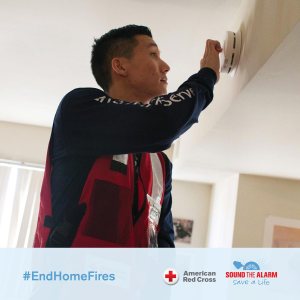
Most fire deaths are preventable. One major tool for prevention is a working smoke alarm. Yet, last year in Minnesota seven people died in fires in homes without working smoke alarms. And fire deaths are up 36 percent over this same time last year. To reduce home fire deaths and injuries volunteers and partners with the American Red Cross Minnesota Region will participate in Sound the Alarm.

“We need the public’s help to keep the number of fire deaths from climbing.” Bruce West, Minnesota State Fire Marshal

Between September 23 and October 15, 2017, the American Red Cross will install 100,000 free smoke alarms in more than 100 high-risk neighborhoods nationwide. During this period, the Red Cross will install its one-millionth free smoke alarm. This includes installing 1,525 alarms in the Minnesota Region of the American Red Cross. This surge expands the Home Fire Campaign, which the Red Cross launched in 2014. Since then, the Red Cross and its partners have made 368,000 households safer through smoke alarm installation.

“Having those smoke alarms was a blessing… we probably would have burned to death.” Crystal Parkinson, a home fire survivor thanks to a smoke alarm installed by Red Cross volunteers

Already the smoke alarms have saved 258 lives in the country. In the Minnesota Region, the Red Cross and partners have made 3,283 homes safer through installation of nearly 10,000 free smoke alarms. To further this effort, the Red Cross is asking people in the Minnesota Region to support Sound the Alarm home fire safety events this fall.

“This million-alarm milestone will focus the nation on the importance of having working smoke alarms in homes.” Phil Hansen, CEO of the American Red Cross Minnesota Region

Installation events will happen in 7 locations, including Minneapolis, St. Paul, Melrose, Goodhue, Rochester and McLeod County in Minnesota, and in Superior, Wisconsin. People can volunteer to install free smoke alarms in local communities. They also can raise money, or make a donation to support Sound the Alarm. Learn more today. Watch the new Sound the Alarm video and then visit soundthealarm.org/mn.

Story by Lynette Nyman/American Red Cross. Minnesota fire statistics provided by Minnesota State Fire Marshal

Centennial blood drive honors those who serve

On June 26, 2017, American Red Cross Minnesota Region board members sponsored a blood drive celebrating a century of service in Minnesota. The drive honored men and women in uniform who serve our communities. It came at a critical time: during the summer months when blood donations decline. 87 pints of blood were collected at this drive, helping the Red Cross continue supplying hospitals with blood so patients can receive treatment they need. Below, we share stories about some who helped make this lifesaving blood drive a success.

Laura Antelman is an assistant at a rehab facility. She’s pictured here with Coco, who’s being trained as a service dog at PawPADs (Pawsitive Perspectives Assistance Dogs). While service dogs aren’t therapy dogs, they have the same gentle demeanor and help calm people who are afraid of giving blood. Coco did a wonderful job helping people relax, and she got along very well with Laura.


Gene Olesen (pictured left) has donated more than 20 gallons of blood over the past 50 years. He’s been married to Nancy (also pictured), of 48 years. Nancy came with Gene to the drive to donate and to have a lunch date! Less than 7% of the world’s population has Type A negative blood, and Gene is one of them. He says his main reason for donating is to help cancer patients. And despite moving across the country he has continued to donate – from St. Paul to California, and from California to Wisconsin.
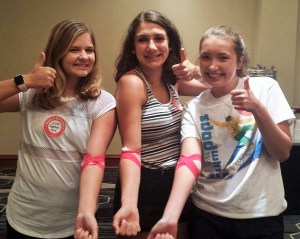
Sophia Sexton (far left in photo with friends) is the daughter of Red Cross board member Amy Rolando. It was Sophia’s first blood donation, and she brought 16 of her friends with her. Thank you to Sophia for all the lives she helped save.


Lisa Bardon, the regional accounts manager for the North Central Blood Services Region, shares a caring moment with her husband, Al Wivell (pictured left with Lisa). They both donated blood.
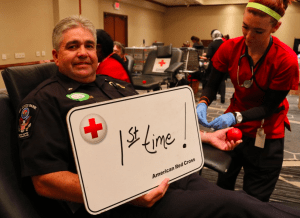
 

Several donors came in uniform to roll up a sleeve, including Officer Mike Harcey from the St. Louis Park Police Department (pictured left), a first-time donor. He said, “I’ve always wanted to give blood and never made the time. I thought this was the perfect opportunity to do it.”

A special thanks goes out to all board members who helped recruit blood donors or helped with the centennial drive. These board members truly demonstrated the Red Cross mission with their hard work. Pictured below, left to right: Amy Rolando, Phil Hansen, Minde Frederick, Jan Hallstrom, Lani Jordan, Joan Purrington, incoming board member Ole Hovde, and Dave Adriansen.

You can help, too
The Red Cross is facing a critical blood shortage this summer and has issued an emergency call for eligible blood and platelet donors of all blood types to roll up a sleeve now to help save lives. Blood donations are being distributed to hospitals faster than donations are coming in, and more donations are needed now to replenish the supply.

  • Click here to find a blood drive near you
  • Use the Blood Donor App, visit redcross.org or call 1-800-RED CROSS (1-800-733-2767) to schedule your blood or platelet donation appointment
  • Encourage friends, family members and your social networks to make an appointment to donate blood or platelets this summer

Story and photos by Meha Jain, Communications & International Services Intern for the American Red Cross Minnesota Region