Dedicated platelet donor hits 800-units/100-gallon milestone and encourages others to give during Red Cross national blood and platelet shortage
Tom Meyer donated blood for the first time when he was in high school. Several years later, in the late 70’s, he became a platelet donor when his cousin who headed the platelet donation program at the American Red Cross St. Paul Donation Center informed him that he had an appointment the next day at 7:30 a.m. “I believe I was one of the first platelet donors in our region,” says Tom.
That was the beginning of a decades-long journey of giving back.
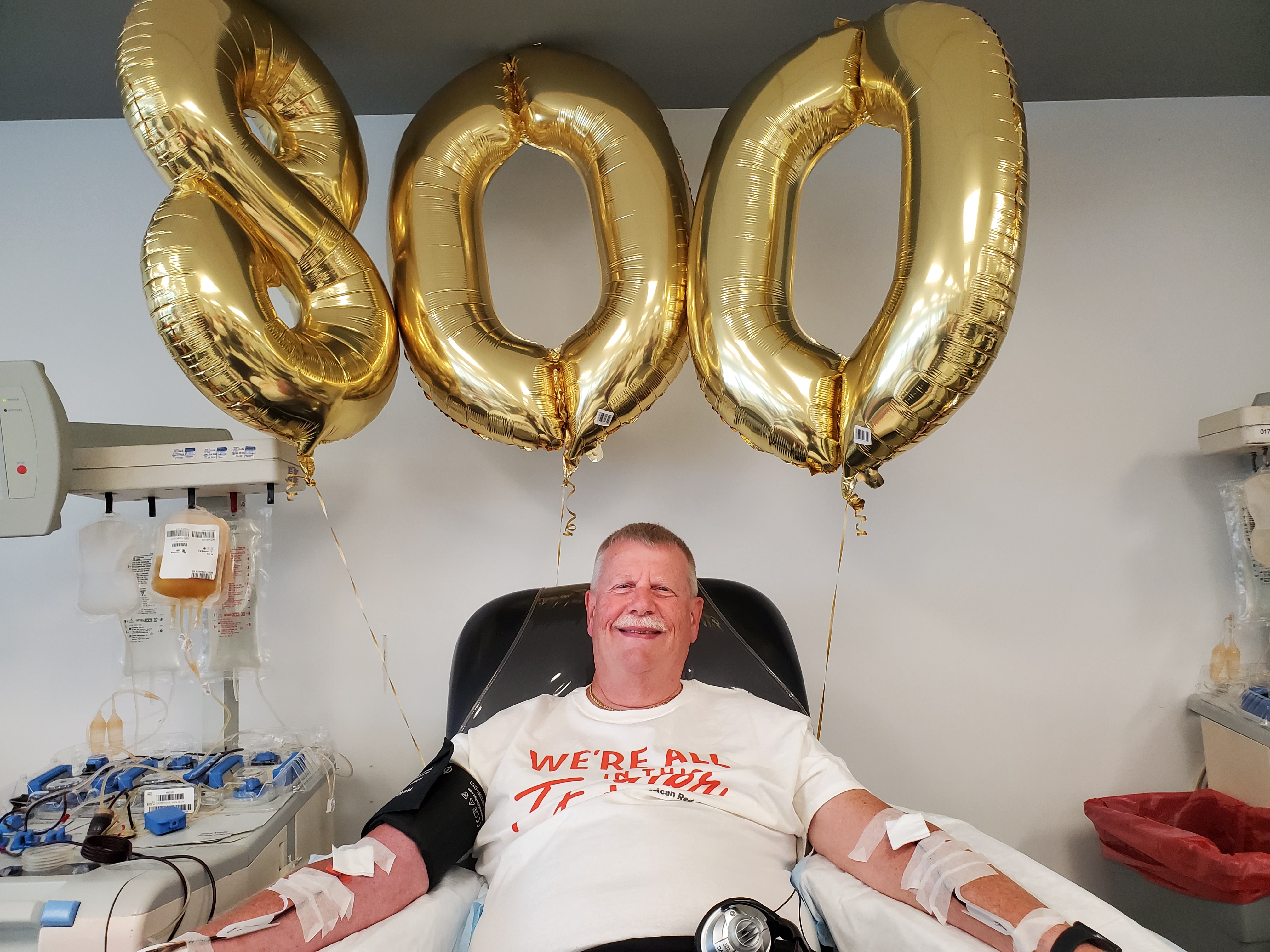
Since then, Tom tries to donate platelets every two weeks (24 times a year) and often has his appointments scheduled six months in advance through the Red Cross Blood Donor App. “There’s no substitution for blood – it’s a big priority for me!”
Tom’s donations are vital because of his high platelet count and O+ blood type. Type O positive is the most transfused blood type and can be transfused to Rh-positive patients of any blood type.
Recently, Tom hit a milestone when his donations reached 800-units/100-gallons.
“The number is less important than the impact on patient care,” says Tom. “I think there’s a good chance that I’ve made a difference in a few lives somewhere along the way. If we can give people more days with their family and friends, that’s a gift.”
Tom urges Minnesotans to become regular donors to help the cause and possibly save the lives of strangers. “One of the most enjoyable experiences I’ve had was assisting young students coordinate a blood drive at their school,” says Tom. His advice for first time donors is to be courageous. “Don’t be afraid of a small needle, but instead think of the impact of your donation and the patients you are helping.”
In addition to being a platelet donor, Tom serves on the Red Cross Minnesota and Dakotas Region Board of Directors. For the past 25 years, he has served two terms as chair of the region’s Blood Services Board, has been involved in multiple board committees, and has been an advocate for the Red Cross – from lobbing state legislature to change the blood donor age in the State of Minnesota to 16 years old with parental consent, to emceeing the region’s annual 12 Hours of Giving holiday blood drive, to serving as a disaster relief volunteer.
WHY ARE PLATELETS IMPORTANT
Every 15 seconds someone in the U.S. needs a platelet transfusion. Platelets are tiny cells in your blood that form clots and stop bleeding and play a critical role in the treatment of millions of Americans fighting cancer and other chronic diseases, as well as those recovering from traumatic injuries. Since platelets must be used within five days of donation, platelet donors are constantly needed.
During a platelet donation, blood is collected by a device that separates platelets, along with some plasma, from whole blood and returns the remaining blood components back to the donor. Ideal blood types for a platelet donation are A positive, A negative, B positive, O positive, AB positive and AB negative.
Learn more about platelet donors at RedCrossBlood.org/Platelets
NATIONAL BLOOD AND PLATELET SHORTAGE
Tom hopes his story will inspire others to give, especially now as the Red Cross is facing a national blood shortage. Fewer donors than needed gave blood this summer, drawing down the national blood supply and reducing distributions of some of the most needed blood types to hospitals.
HOW YOU CAN HELP
Donors of all blood types are urgently needed and there is an emergency need for type O blood donors, as well as platelet donors. More donors are needed now to ensure patients at hospitals across the country continue to receive critical medical care.
Don’t delay – make your appointment today: rcblood.org/platelets or rcblood.org/appt.

 American Red Cross Minnesota and Dakotas Region