In Seconds Her Face Turned Blue

As friends and family members enjoyed an outdoor barbecue on a beautiful spring day in Delano, Minnesota, things took a turn for the worst in a split second.  While eating, Josh and Sarah Kiecker noticed that their one-year-old daughter, Reese, was no longer breathing.  In a sudden panic, her parents began patting her back and looking for the obstruction in her mouth and throat.  As Reese started turning blue, her mother desperately asked if anyone had training or knew what to do.

Derek_COMSaveStory

Luckily, Derek Horeis, a friend of Josh and Sarah, was there and ready to help.

“It took me a split second to figure out what was going on, but I quickly felt relief because I knew the steps to follow based on training from American Red Cross,” says Horeis.

Horeis applied a couple quick pops of pressure below the sternum (with a protruding thumb), which released the obstruction.  As Reese began to cry and breathe in, everyone was relieved to see the blue color leave her face and her lips regain color.

“What I now realize is that the training was a true gift,” says Horeis.  “It allowed me to step into the situation with knowledge and some confidence that I could make a positive difference.”

Because of his extraordinary life-saving action, Horeis is being nominated for an American Red Cross Certificate of Merit. This national recognition is given to every day people who save or sustain a life using skills learned in Red Cross training.  Honorees receive an award signed by the President of the United States and a medal that bears the Red Cross logo and the words, “Lifesaving Award of Merit.”

Horeis’s life-saving actions are example of how Red Cross training can become crucial in emergency situations. Click here to learn more and to find classes near you.

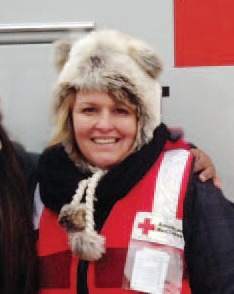
Story by Shannon Lewis/Communications Intern/American Red Cross Northern Minnesota Region. Photo provided courtesy of Derek Horeis.
Regional Volunteer Award Winners Go Above and Beyond (Part 3)

(Part 3 of 3)

This is our third and final blog post featuring the 2013 Regional Volunteer Award Winners. This year’s winners show the dedication and passion that many volunteers have for the Red Cross mission to alleviate human suffering in the face of emergencies. We thank these and all Red Cross volunteers for their service. 

Judi Blomberg – Volunteer of the Year: Outreach

Judy Blomberg

In the past year Judi has been an integral part of the Preparedness program, filling an important gap by skillfully presenting preparedness topics to community groups. Judi is an excellent representative of the Red Cross, often going above and beyond by finding ways to add more value to her audience by tailoring her material. She also serves as a mentor to other volunteers, frequently sharing her ideas and experience with new presenters.

Christina Hujanen – Volunteer of the Year: Rookie

Christina H_crop-bmp (1)When you look at Christina’s service to the Red Cross and our communities, it’s hard to believe she’s only been involved for one year! She began serving on the Northland Board of Directors in July of 2012, and quickly became trained in disaster response. When Superstorm Sandy hit Christina deployed 3 times to assist East Coast residents as a caseworker, serving away from home for over eight weeks. In addition she is on-call for local disasters and has responded to a number of single family fires, displaying compassion and willingness to ensure that clients receive the referrals needed recovering from disaster.

Interested in becoming a Red Cross volunteer? Now, there’s an app for that. Check our our new Team Red Cross app and get started today.

Gardens and Art Bring Color and Life to Veterans

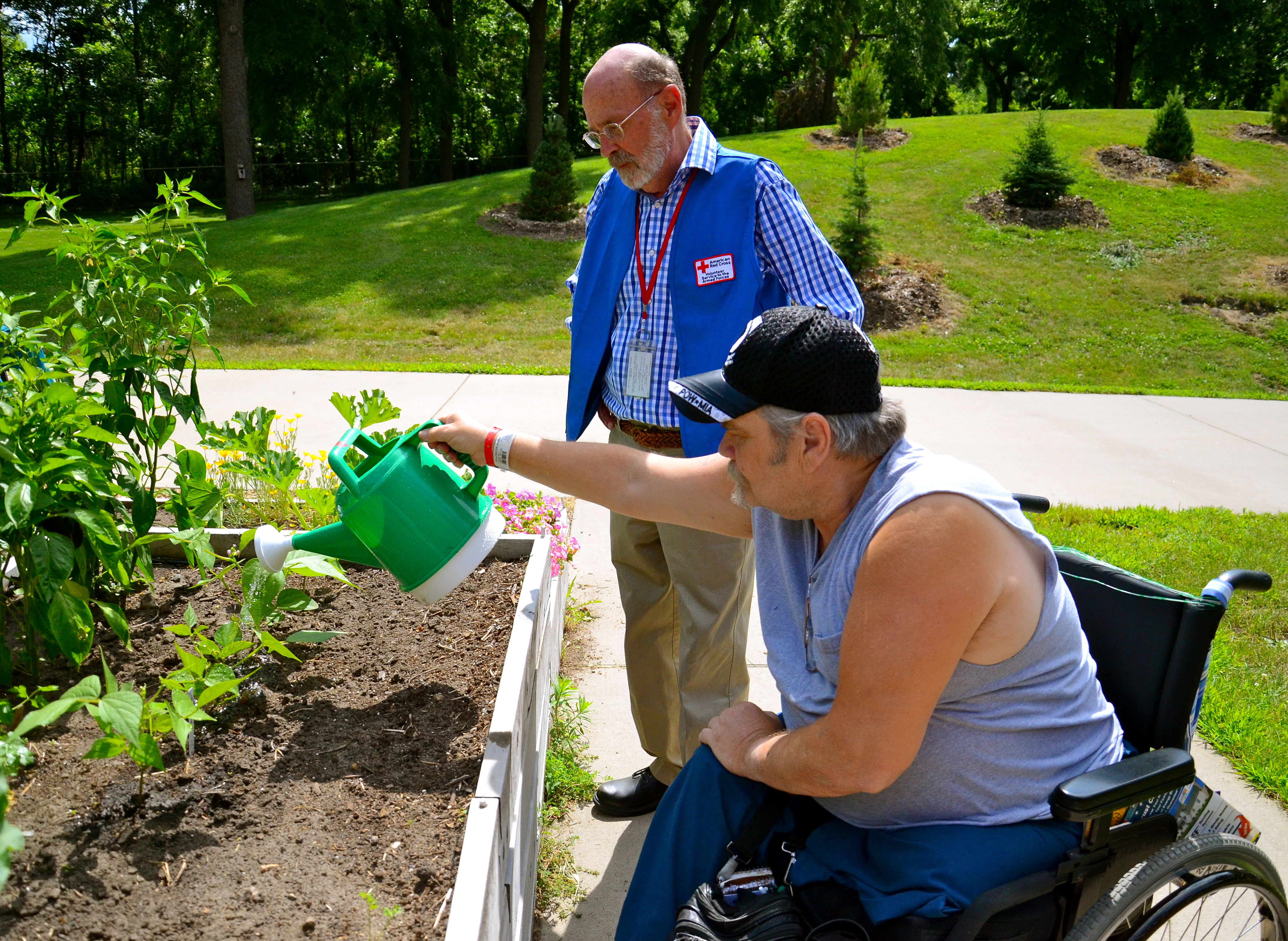
Veteran Bob Hilleshiem and Red Cross worker Mike Booth tend to a garden at the VA Hospital in Minneapolis, July 24, 2013.

On a beautiful summer day, Bob Hilleshiem basks in the sun as he waters flowers and tomatoes in the garden at the VA Hospital in Minneapolis. 

“Growing up on a farm, my mother had three gardens that I tended to,” says Hilleshiem, a current patient at the VA hospital.  “I like keeping an eye on the progress the plants make each day.”

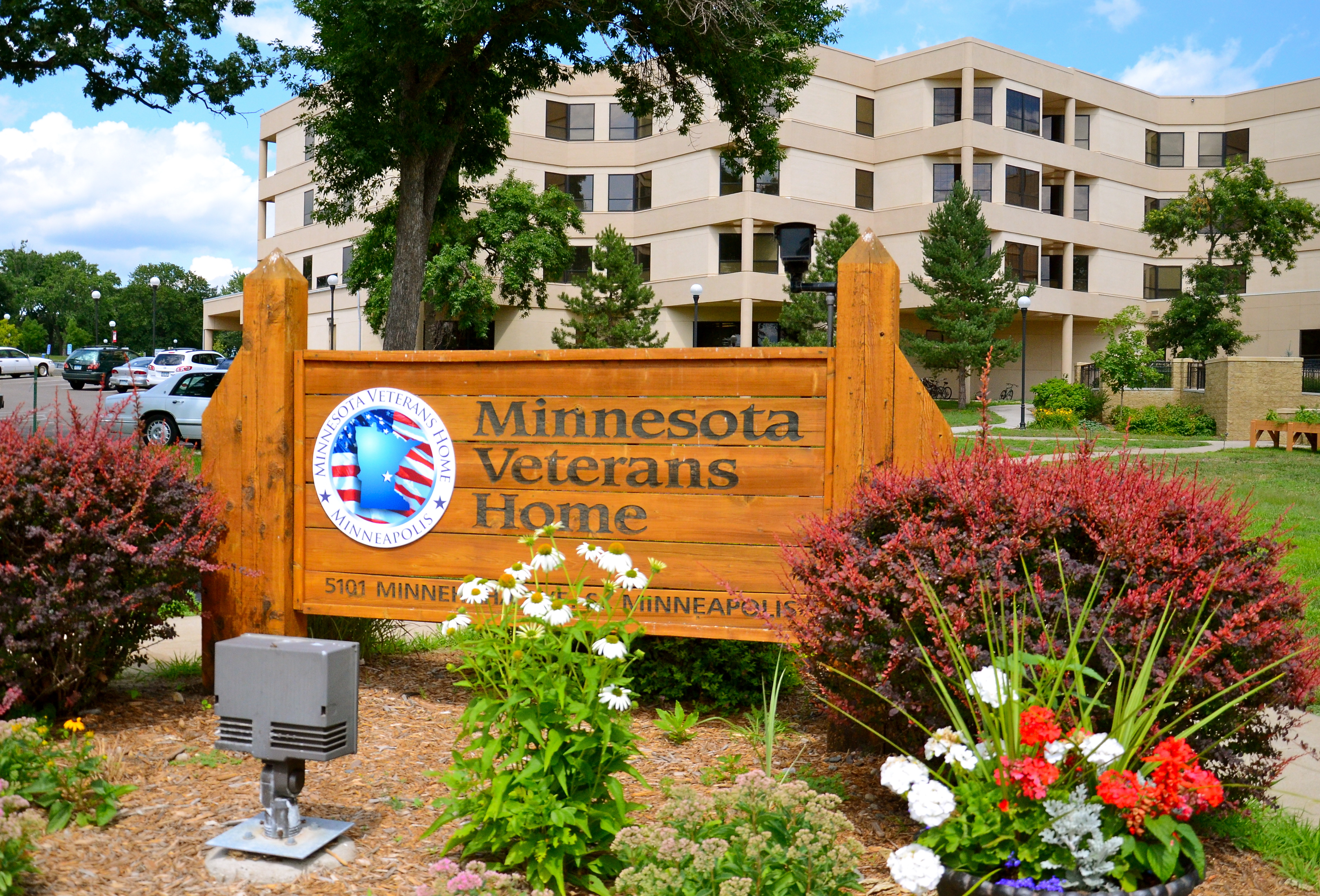
Hillsheim is one of many veterans who are able to enjoy the outdoors by cultivating flowers and vegetables in the gardens at the VA Hospital and the Minnesota Veterans Home, also in Minneapolis.

The Veterans Home in Minneapolis received garden supplies from the Red Cross via a Department of Defense grant for direct patient support, July 24, 2013.

“The veterans and their families appreciate the gardens as a place to get out and enjoy nature,” says Shirlee Peterson, Director of Recreation Therapy at the Veterans Home.  “It’s therapeutic for them to get fresh air, dig in the dirt and feel the sun on a nice day.”

The American Red Cross Service to the Armed Forces (SAF) program donated the gardening supplies to the veterans hospital and home. Funding for the donation came from a U.S. Federal Government grant of $4,500 for direct patient support for veterans.

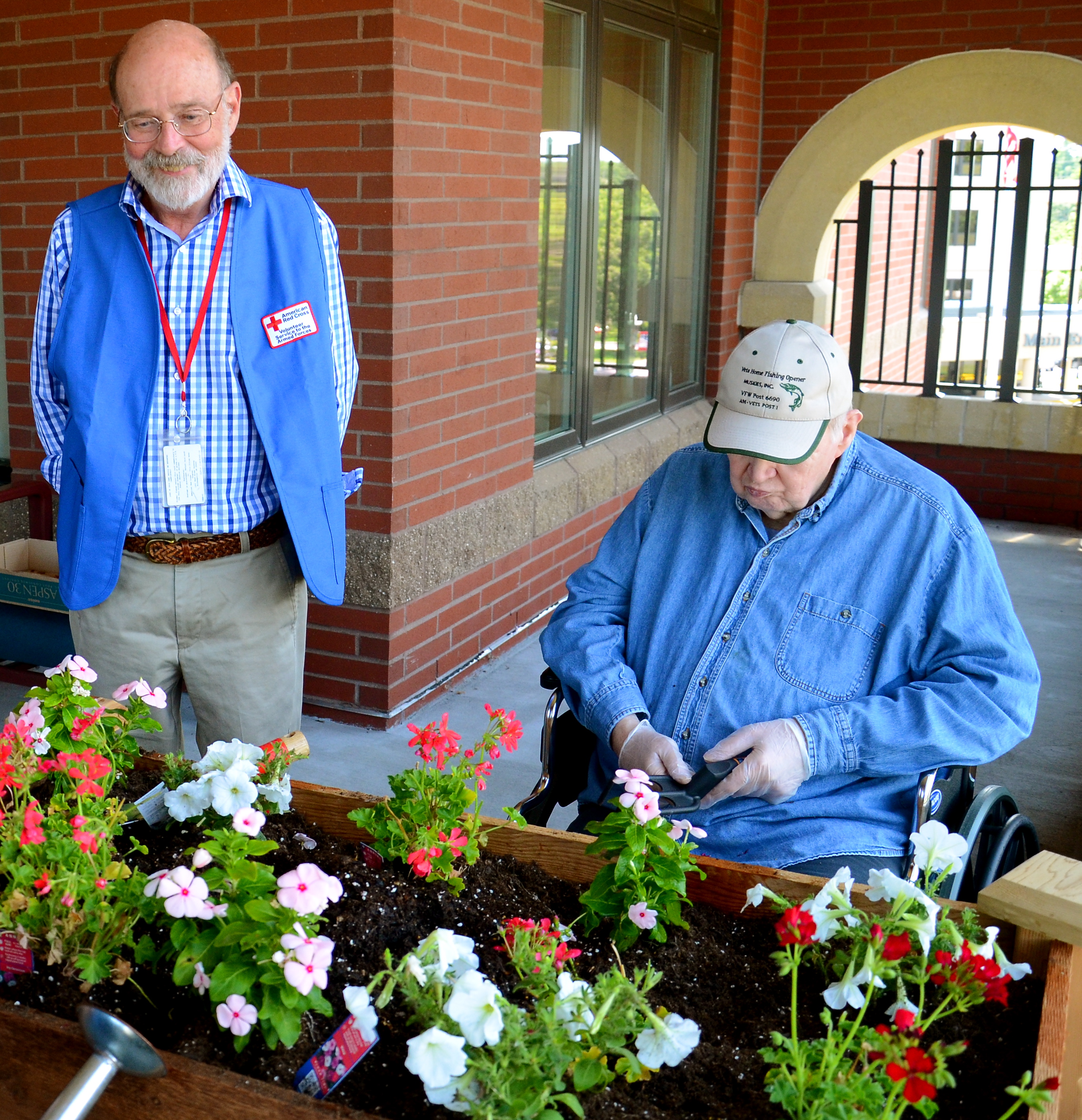
Red Cross worker Mike Booth visits with veteran Harold Palm at the Minnesota Veterans Home garden in Minneapolis, July 24, 2013.

The VA Hospital and Veterans Home were given planters of flowers, peas, tomatoes, peppers, beans, herbs, strawberries, mint, and rhubarb.  In addition, the Red Cross provided special ergonomic tools and plentiful amounts of soil. 

The Red Cross also used the grant money to buy art supplies for the VA Hospital in Minneapolis and the Veterans Home in Silver Bay, MN. The art supplies– such as oven-baked clay, painting materials, and model cars– will be used in art therapy programs for the veterans.

“These types of therapy give veterans a chance to use both motor skills and creativity,” says Angie Erickson, an art therapist at the VA Hospital. “All of the supplies are being put to great use and are very generous.”

Click here to learn more about Red Cross services for military members and their families. Story and photos by Shannon Lewis, Communications Intern, American Red Cross Northern Minnesota Region. 
Regional Volunteer Award Winners Go Above and Beyond (Part 2)

Here’s part 2 in our 3 part series on our region’s 2013 volunteer award winners. This year’s winners are dedicated and inspiring supporting of the American Red Cross. Please join us in congratulating and thanking these wonderful people for their service. 

patbovee

Pat Bovee – Volunteer of the Year: Behind the Scenes

Pat goes very quietly about making a difference every day in our community through her Red Cross work. She has been a valued member of the St. Croix Valley Chapter Board of Directors for the past 6 years and has championed the chapter’s fundraising efforts as Chair of the Philanthropy Committee and Chair of the Evening In Red Special event. This past year the Evening in Red raised nearly $70,000 for the Red Cross!

Terry Sluss

Terry Sluss – Volunteer of the Year: Disaster

Terry is a volunteer who continually goes above and beyond to serve the Red Cross and his community. He has worked hard to build a strong cohort of volunteers in the North Star Chapter, even hosting Disaster Action Team meetings in his home and skillfully mentoring new volunteers. In the past year, Terry responded to both the Duluth Floods and Superstorm Sandy, representing the Red Cross as a government liaison. He is a great spokesperson for the Red Cross and often assists with both volunteer recruitment and fundraising. Most recently, Terry was selected as the Deputy Chair for the Regional Disaster Leadership team, a role in which he can spread his expertise and leadership throughout the Northern Minnesota Region.

Charles Anderson

Charles Anderson – Volunteer of the Year: Health and Safety

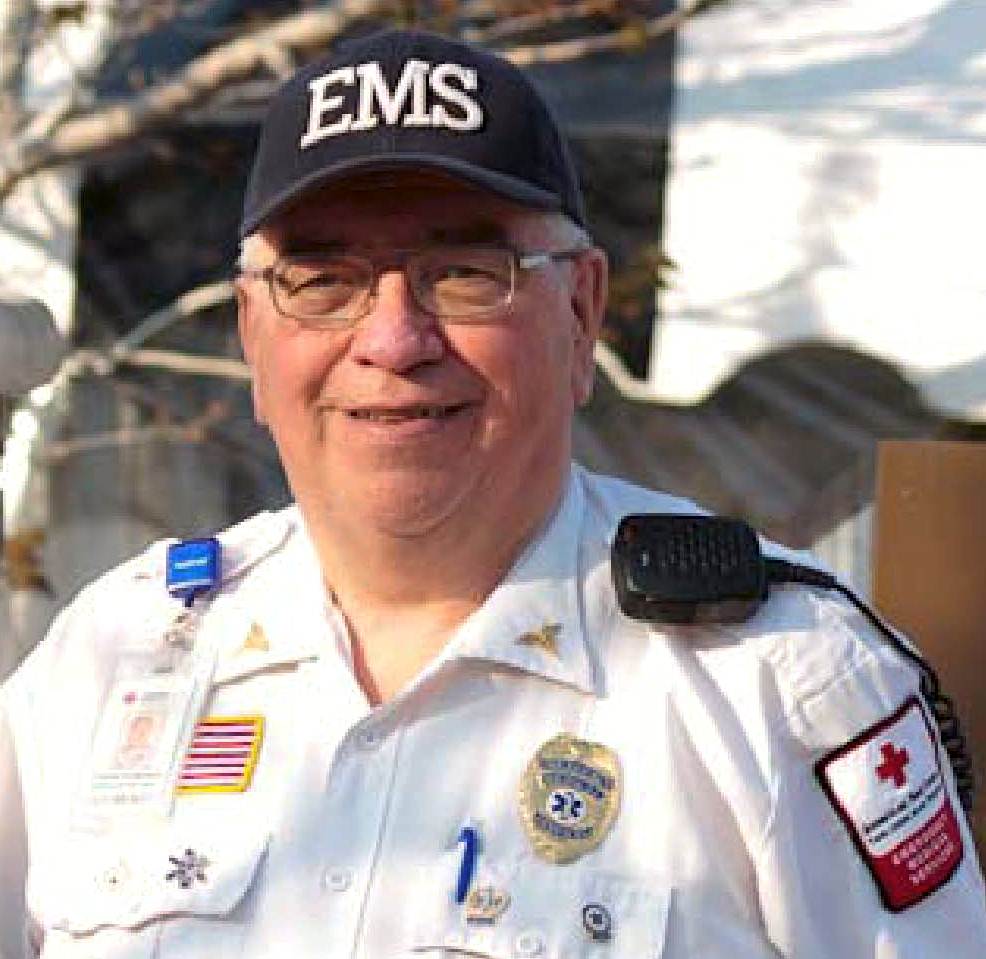
Charles has been volunteering with the Emergency Medical Services (EMS) team since its inception over 40 years ago. He continues to be a vital resource to team members and staff, and was particularly helpful during the staffing transition this past year. On countless occasions he has come into the office to assist with cleaning equipment, new member interviews, and a variety of other tasks. Charles is a strong advocate for team members and is always looking for ways to get others involved in new events or in new ways. He is a strong mentor for team members who are new to the field and to the Red Cross.

Interested in becoming a Red Cross volunteer? Now, there’s an app for that. Check our our new Team Red Cross app and get started today.

Regional Volunteer Award Winners Go Above and Beyond (Part 1)

Part 1 of 3

Red Cross volunteers are truly amazing. In order to give special recognition to those who continually go above and beyond, each year we undertake a thorough nomination process to select an elite group of volunteers to receive our Regional Volunteer Awards. This year’s winners are all dedicated, inspiring supporters of the Red Cross, and we’d like to introduce you to them through a series of three blog posts. Please join us in congratulating and thanking these wonderful volunteers!

Red Cross Distinguished Volunteer of the Year Karen Campion on deployment.
Red Cross Distinguished Volunteer Leader of the Year, Karen Campion, on deployment.

Karen Campion
Distinguished Volunteer Leader

Karen is a kind and compassionate leader who brings a wealth of skills to both the Twin Cities Area Chapter and the Northern Minnesota Region. In the past year she led Disaster Assessment teams during the Duluth flooding response, served as a Human Resources consultant and Staff Relations Lead within Emergency Services, and worked with the Regional Advisory Team to develop and implement the new disaster leadership structure. She is an instructor and also regularly deploys both locally and nationally; in the past year she and husband Rick served for two weeks as Emergency Response Vehicle drivers after Hurricane Isaac, and also assisted after the Northern Minnesota Wildfires.

Disaster Mental Health Team
Outstanding Volunteer Group

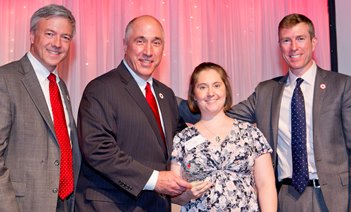
Red Cross Disaster Mental Health volunteer Leslie Hong accepts award on behalf of the regional team. From left to right - Phil Hansen, Regional CEO; Mark Capaldini, Board Chair; Leslie Hong and Josh Lockwood, Red Cross Regional CEO for Greater New York Area.
Red Cross Disaster Mental Health volunteer Leslie Hong accepts award on behalf of the regional team. From left to right – Phil Hansen, Regional CEO;  Mark Capaldini, Board Chair; Leslie Hong and    Josh Lockwood, Red Cross Regional CEO for    Greater New York Area.

The Disaster Mental Health (DMH) group is a quiet pillar of support among disaster clients, volunteers, and staff across the region. Anytime there is a situation that requires emotional support – whether that is a fire, loss of a pet, loss of life, stress, or a need for comfort and resources – the DMH team is ready to serve at all hours of the day and night. Volunteers from this team are called out on every major national disaster. Within the region, the DMH team calls each volunteer when they return from deployment – which included over 130 calls during the Superstorm Sandy response. This group often goes unnoticed because their work is confidential, but for those who are served, they are truly invaluable.

Ellie Deans, Ian Deans, Hannah Holstein, Natalie St. Martin
St. Croix Valley Chapter Board Members – Youth Volunteer Leadership

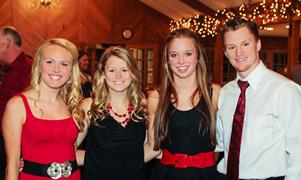
St. Croix Valley Chapter Board Members and Youth Volunteer Leaders (from left to right) - Natalie St. Martin, Ellie Deans, Hannah Holsten, and Ian Deans.
St. Croix Valley Chapter Board Members and Youth Volunteer Leaders (from left to right) – Natalie St. Martin, Ellie Deans, Hannah Holsten, and Ian Deans.

Natalie, Ellie, Hannah and Ian serve on St. Croix Valley Chapter Board of Directors. They also support other service and program activities in our community as Red Cross volunteers. Their volunteer activities have included Holiday Mail for Heroes, driving the Emergency Response Vehicle, and assisting with fundraising events like the Evening in Red and FORE the Red Golf Tournament. These four young people are a wonderful example of youth involvement with the American Red Cross.

Interested in becoming a Red Cross volunteer? Now, there’s an app for that. Check our our new Team Red Cross app and get started today.


Red Lake Kids Get Red Cross Trained

Red Lake, MN, fifth-graders learn skills to save a choking victim during an American Red Cross Babysitter's Training class on June 20, 2013.
Red Lake, MN,fifth-graders learn skills to save a choking victim during an American Red Cross Babysitter’s Training class on June 20, 2013.

On a sunny, warm morning in Red Lake, Minnesota, 29 fifth-graders from Red Lake Elementary School were not out enjoying weather.  Instead, they were inside a classroom learning how to care for others as part of an American Red Cross Babysitter’s Training class.

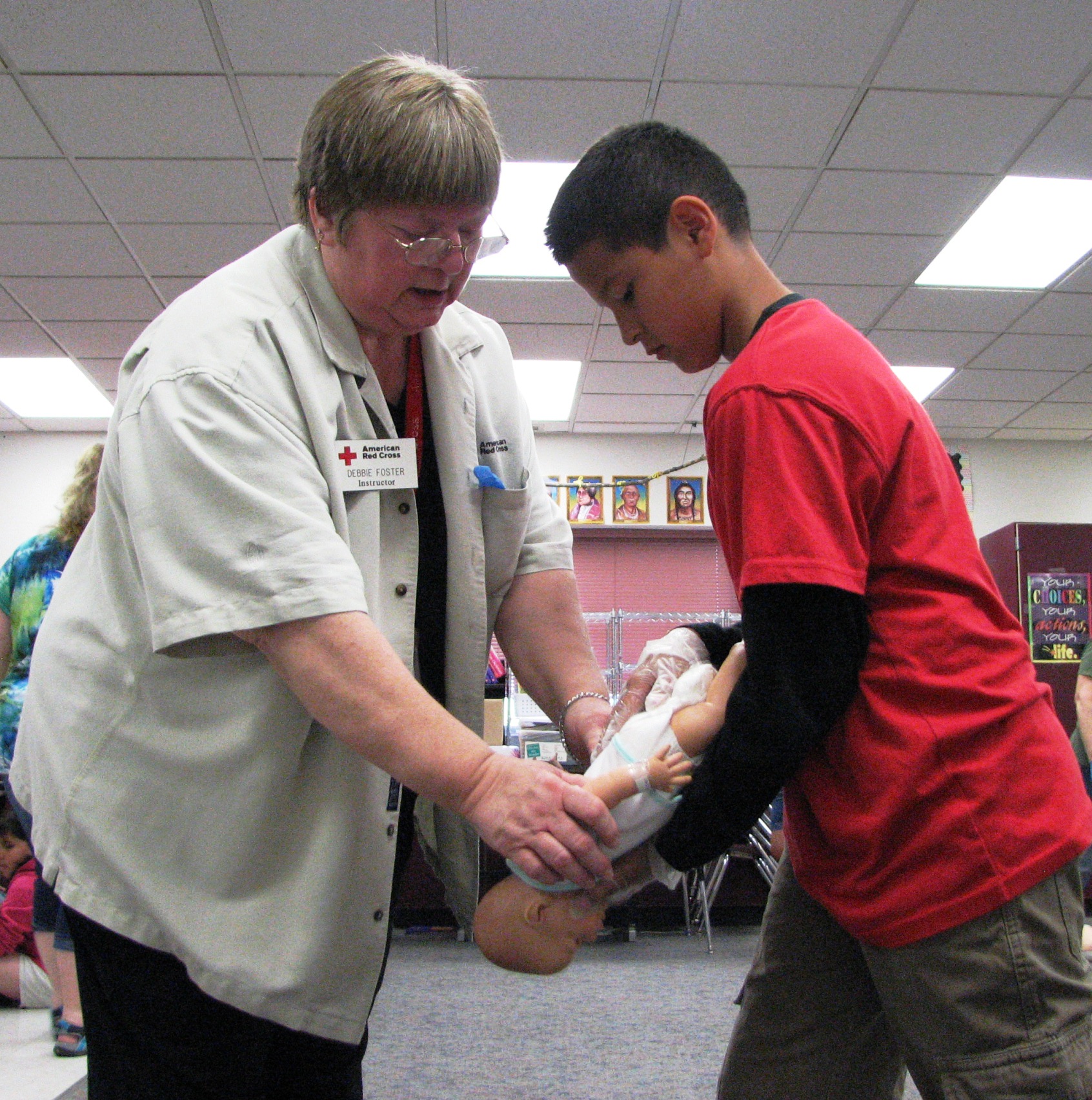
Wearing gloves while cradling baby dolls, the children stood in two-person teams practicing skills and repeating Red Cross instructor Debbie Foster’s directions for how to respond to a choking emergency.

“Keep coughing!  Are you okay?  Call 911!” were some of the verbal directions given by Foster and her co-instructor Lois Holman. With laughing and learning, the children loudly repeated the directions as they worked with the dolls, child-sized manikins, and each other.

Red Cross instructor Debbie Foster helps a student during a babysitter's training class at Red Lake Elementary school in Red Lake, MN, on June 20, 2013.
Red Cross instructor Debbie Foster helps a student during babysitter’s training at Red Lake Elementary school in Minnesota on June 20, 2013.

During babysitter’s training, students learn how to respond to emergency situations, protecting children during common local disasters, such as house fires, tornadoes and lightening strikes. They learn first aid for choking victims, how to hold an infant and how to keep an injured person safe when responding. They also get tips on how to entertain youngsters, deal with tantrums and to care for scraped knees.

Arleen Swenson, their regular school teacher, has worked at Red Lake Elementary for 15 years. She says that her students are right for this training.

“Our kids need to be able to take care of themselves, their siblings and children in their extended families,” says Swenson.  “Many of our 10 and 11 year-olds are already active babysitters. We’re glad the Red Cross is here to teach them how to be safe.”

Red Cross Babysitter Training teaches vital skills to youth entrusted with the care of children. From now until July 31, 2013, the Red Cross is offering 20% off all Babysitter Training classes, including our online course Babysitting Basics. For more information, click here. Use coupon code INDY200913 when registering.

Story and photos by Judy Hanne-Gonzalez/American Red Cross. The Red Lake training was made possible with grant funding from the Otto Bremer Foundation.

Children, too, are grateful for Red Cross

Clear Springs Elementary Students with their well earned donations.

While the American Red Cross has hundreds of people donating money or blood every day, some of the Northern Minnesota Region’s most enthusiastic donors, as well as the cutest, are children.

Within the past year our region has received generous donations and letters of encouragement from several elementary schools across the state of Minnesota. Recent contributors have included children from Clear Springs Elementary, Lake Country Elementary, Oxbow Creek Elementary, and Richardson Elementary.

Most of these donations were given to support victims of the Moore, Oklahoma, tornado which occurred on May 20, 2013. Students and staff of Richardson Elementary School from St. Paul, Minnesota, raised an impressive $1,021.95 specifically for Oklahoma tornado relief efforts.

Four Lake Country Elementary students raised money for the Red Cross.
Four Lake Country Elementary students raised money for American Red Cross Disaster Relief.

Not only has our region received various donations, we have also received letters of encouragement from students as well. Clarissa, from Oxbow Creek Elementary of Champlin, Minnesota, sent a wonderful letter expressing her gratitude for all of the American Red Cross’s hard work, “The United States are very grateful for the American Red Cross.”

The support of children like Clarissa brings hope for a new generation of Americans who are learning to help each other in times of crisis. The American Red Cross would not be able to do what it does without the continuing support of the community around it.

Story by Lia Capaldini, Communications Intern, American Red Cross Northern Minnesota Region

Oklahoma Strong

OKTShirt_DeckerDespite the devastation from the May tornadoes, the people in Oklahoma are showing incredible strength and hope during the recovery process. Vonnie Thomas and John Decker, American Red Cross Health Services volunteers, say both the tornado survivors and the volunteers responding to the disaster demonstrate positive teamwork during the ongoing recovery.

“It’ll be a long recovery, but people here are so resilient,” says Decker.

Weeks after the tornadoes hit Oklahoma, more than 1,600 Red Cross workers are helping people get back on their feet – providing shelter, food, relief supplies, health services and emotional comfort.  Thomas says volunteers have come from Florida, Georgia, Texas, Hawaii, Iowa, California, Illinois and a number of other states to help the tornado victims.

“Our outreach team finds families that have fallen through the cracks and need help with medical referrals,” Thomas explains. Since the tornadoes hit, the Red Cross has provided more than 20,000 health services and mental health contacts. “About 75 health services people have passed through, and they’re phenomenal. They’re working so hard and I can’t thank them enough.  It’s amazing teamwork.”

photo_car__deckerRed Cross disaster health services include:

-delivering medical equipment

-finding health resources in the community

-working with shelters to help people with functional needs

-providing transportation to people for their medical needs

– working with hospitals to contact families of hospitalized

-helping with medications

In addition, the Red Cross Safe and Well website is monitored to help communication between family members and friends to make sure missing victims are safe. “We’ve worked closely with Safe and Well looking for people who were missing,” says Thomas.  “We have only one person they haven’t been able to locate, which is good progress.”

decker_1

The tornado victims also display immense strength and hope throughout the long recovery process. “I admire all of the people involved,” says Thomas. “The volunteers are giving 110%–they go above and beyond to help the victims. The victims are so strong and want to be so independent. They are trying to get out on their own, and that’s why the shelters only have a small number of people.  The families stay in tents or with friends in the area to maintain their independence.”

Decker says mental health teams are going into community to help people cope and get their story out. “It’s a great community,” Decker says.  “Some people are standing in front of their completely destroyed homes and are still extremely nice and pleasant.”

“It’s Oklahoma strong,” adds Thomas. “The people are phenomenal and inspiring.”

Reporting and story by Shannon Lewis, Communications Intern, American Red Cross Northern Minnesota Region. Photos provided courtesy of John Decker.
Disaster Gets Me Going

I’ve always admired seeing people respond to disasters and I’ve wished that I could be right there with them. It’s hard for me to put my finger on why I’ve felt that way, but there’s something about arriving early to a scene of a disaster that gets me going.

Terry Menge training for disaster response in Minnesota, June 2013. (Photo courtesy of Terry)
Terry Menge, wearing his Red Cross disaster response vest, demonstrates doing Red Cross disaster relief paperwork, Minnesota, June 2013. (Photo provided courtesy of Terry.)

As a child I was intrigued by disasters, whether it was a tornado, flood, hurricane or earthquake. But after school my life took different direction and I went into sales where I’ve spent much of my career, working mostly at AT&T and then with StayWell, a partnership organization with the American Red Cross. Several years ago, I accepted a health and safety services sales position with the Red Cross. This brought me closer to my life-long interest in disaster relief response. And soon I applied to become–and was accepted to be–a Red Cross Emergency Services Volunteer who responds to disasters in the Northern Minnesota Red Cross Region.

To date, I’ve had the opportunity to respond to three fire disasters: one duplex fire and two single family resident fires. It’s hard to explain, but getting a call to respond at 3:00 in the morning gets my adrenalin flowing as I never know what to expect until I get there. One of my first lessons learned was to bring my reading glasses as I felt very much unprepared in assisting my response partner in filling out forms and having to admit out loud “I can’t read this without my glasses!” How embarrassing was that! Well, never again. The next day I went straight to Office Max and bought some supplies to better prepare myself for the next response. I’m happy to report that it’s going more smoothly now that I can read the Red Cross disaster documents.

My experience with the disaster team members has been very positive. I’m learning new skills by taking training courses, such as Disaster Assessment, Disaster Action Team  Simulation, Client Case-Work, Shelter Fundamentals, Psychological First Aid, and Emergency Response Vehicle Operation.

Being a Red Cross disaster volunteer has many benefits. Having first-hand disaster response experience, for example, has added credibility to my social and business speaking presentations. But for me what’s most rewarding is being able to help people get through a difficult time. I’ve learned that a hug and kind word gives them strength to move on from tragedy. For me, each call to action brings its own unique circumstances. I’m grateful for those who’ve welcomed me to use their home, car, or other space for warmth on a winter night while I’m helping their neighbors affected by disaster. I enjoy the human connections and can confirm that the comfort we bring, the smiles we create and the words of thanks we receive are some of the reasons that I’m a disaster volunteer.

Guest Blog Post by Terry Menge, Prepardness, Health & Safety Services Sales Manager, American Red Cross Northern Minnesota Region (AND Red Cross Volunteer Disaster Relief Worker)

Need a summer vacay idea?

IMG_0298_cropUndecided about your summer vacation destination? Want to get out-of-town and see someplace new? Like tossing in a bit-o-history during summer vacay? Love the American Red Cross? Desire to know more about Clara Barton? If you’ve answered “yes” to any of the above questions, then we’ve got a summer destination idea for you: see the Clara Barton National Historic Site in Glen Echo, Maryland.

A couple of us had the pleasure of visiting the site earlier this spring while taking part in Red Cross training. The National Park Service Rangers were informed, kind and patient while answering dozens of questions about the house, its history and items on display. Here are some samples:

IMG_0308_cropQ: Was that Clara Barton’s cat in the painting?

A: Yes. His name was Tommy. Clara liked cats a lot.

IMG_0301Q: What’s holding up the lamp?

A: Bandages. Not the original bandages, of course, but new ones showing the utilitarian approach to life here.

Q: Did Clara really sleep in that bed?

A: Yes, that was Clara Barton’s bed. Its the same bed where she died on April 12, 1912.

IMG_0316_cropQ: Did Clara live here alone?

A: No, there were guests and others, including Dr. Julian Hubbell, who was the first American Red Cross field agent and also the primary designer of the warehouse.

Q: Were Miss Barton and Dr. Hubbell, um, you know, sweethearts?

A: Not as far as we know. Dr. Hubbell was for a time engaged to marry. His fiance was not fond of Clara Barton, who kept Dr. Hubbell busy with Red Cross work.

IMG_0300Q: Can we sample the canned pickles?

A: We’re unable to share them with you. They’re on display to show how disaster relief supplies were once stored here.

Q: Did Clara really write with those pens?

IMG_0314_cropA: One-third of the items on display are actual historical items that, like the bed, Clara Barton used. The others, like the pens, are antique period pieces demonstrating what Clara’s life was at that time.

Q: Can we sit in the attic chair next to stained-glass window and pretend that we’re thinking great thoughts about how we can help people?

A: You’re welcome to look, not touch or sit, and think great thoughts.

IMG_0320

So many more questions. So little time. If you’re unable to visit, then consider taking the online interactive tour of the building or testing your knowledge about Clara Barton and earn a Junior Ranger Badge. There’s no age limit for the badges. And as we say in Minnesota: that’s nice.

Photos and article by the often too curious like a cat Lynette Nyman/American Red Cross