Because of Ryker: A family’s lifesaving commitment

Amy Slater’s journey as a blood donor began two years ago, sparked by a deeply personal experience: her four-year-old nephew, Ryker, was diagnosed with leukemia. Watching him go through treatment, she quickly realized that blood donation isn’t just a kind gesture — it’s a lifeline.

“Ryker needed multiple transfusions throughout his treatment just to have the strength to keep fighting,” Amy recalls. “That changed everything for me. I saw firsthand how critical donated blood was to his recovery.”

Amy stands strong beside her nephew Ryker, who is bravely battling leukemia. Picture submitted.

Since that moment, Amy has become a passionate advocate for blood donation. At Federated Insurance, where she works, she actively supports the company’s blood drives, held three times a year. She never misses a chance to donate — and always encourages her coworkers to join her.

“It only takes a little bit of your time, and it’s absolutely worth it,” she says. “The staff are so kind and professional — they make the whole experience smooth and meaningful.”

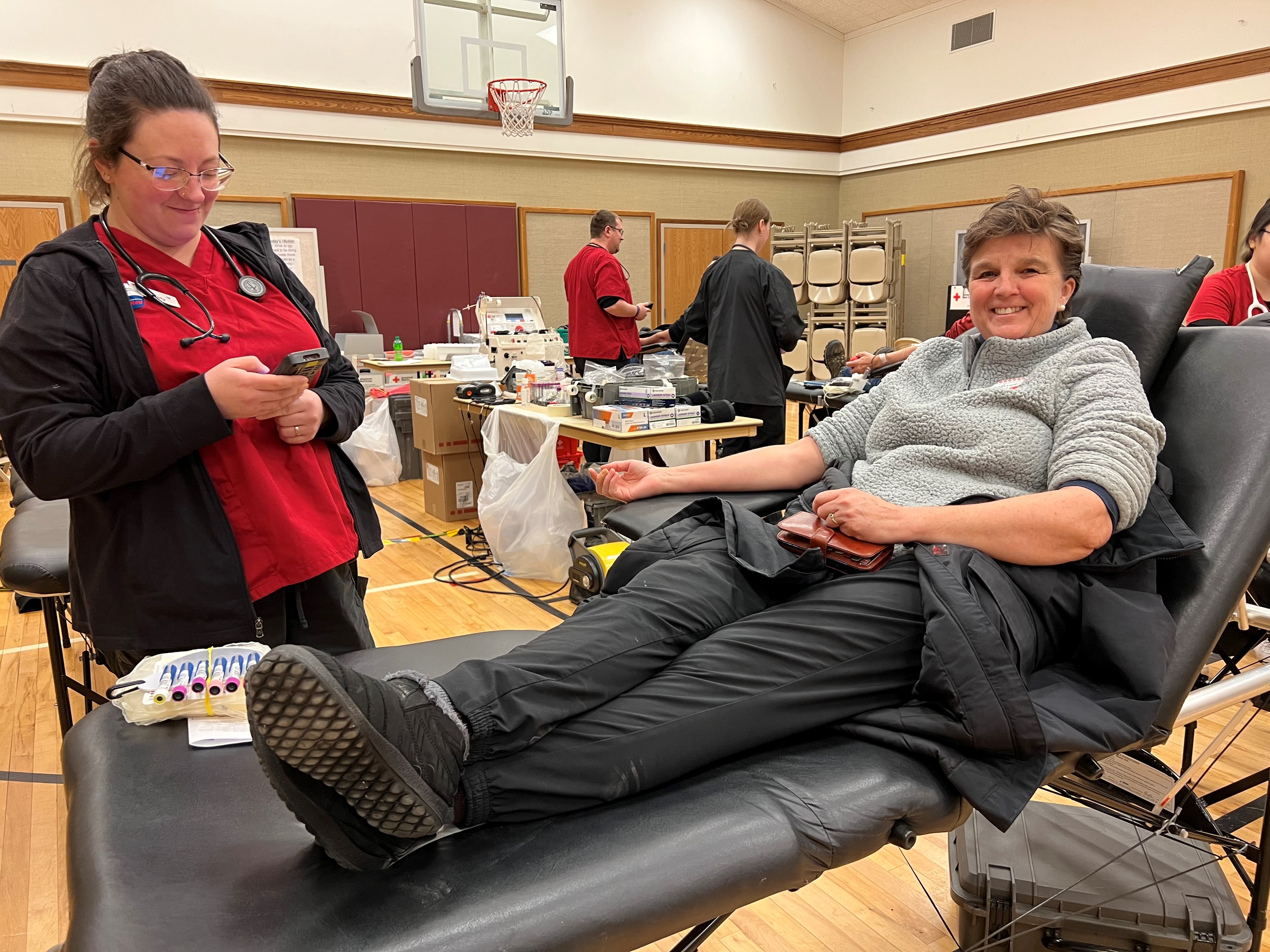
Amy proudly donates blood in support of her brave nephew, Ryker, who is currently undergoing treatment for leukemia. Her donation is one small way to help him in his courageous fight.
Photo: Sue Thesenga/American Red Cross

Though Ryker is now cancer-free, his journey left a lasting impact on the entire family. “I had never donated blood before his diagnosis,” Amy shares. “But once I saw the difference it made in someone I love, I knew I had to keep going.”

As a mother of two, Amy feels the importance of donation even more deeply. “I can’t imagine being told one of my own kids had cancer — and then finding out there might not be blood available,” she says. “That’s why I donate. That’s why I keep encouraging others to step up.”

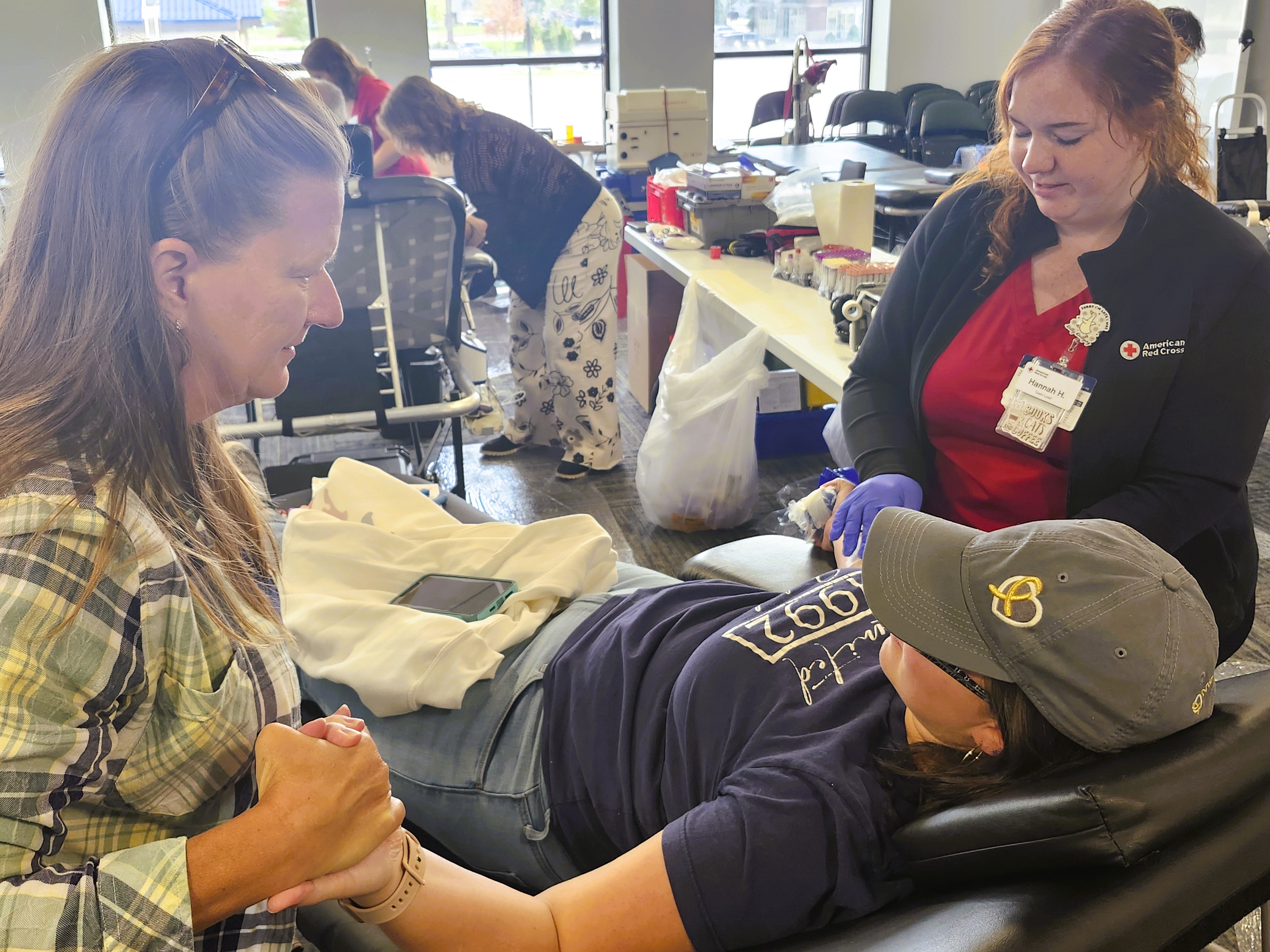
Alissa donates blood for the first time in honor of her son Ryker. Right by her side is her stepmom Kim, offering love, support, and a whole lot of encouragement.
Photo: Sue Thesenga/American Red Cross

At this year’s Rock ‘N Roll Up Your Sleeve Blood Drive in Mankato, Amy’s dedication became a family affair. She was joined by her sister and Ryker’s mother, Alissa, and their father and stepmother, Tim and Kim — all eager to give back. For Alissa, it was her very first-time donating blood.

Alissa donates blood for the first time, inspired by her son Ryker’s leukemia treatment. A little nervous at first, she’s all smiles, proud to give back in such a meaningful way.
Photo: Sue Thesenga/American Red Cross

“I was a little nervous at first,” Alissa admits. “But it was easier than I expected. After seeing Ryker receive blood during his treatment, I knew I could do it and I’m so glad I did — having my family there made it even more meaningful.”

Their motivation runs deep. Ryker is nearing the end of his treatment. On September 18, he’ll receive his final dose of liquid chemotherapy — a powerful milestone for a resilient little boy and a hopeful family.

“I truly believe every blood donor is a blessing. If you can donate, just do it. You could be helping save someone’s life — it made a lifesaving difference for Ryker.”

Amy, Alissa, Tim, and Kim proudly show off their PEANUTS Snoopy T-shirts after donating blood — all Because of Ryker. This family’s lifesaving commitment is a powerful tribute to the brave little boy at the heart of it all. Photo: Sue Thesenga/American Red Cross

Stories like this remind us that donating blood is a testament to the power of family, community, compassion, and the courage it takes to care.

You can help save lives, too. Eligible individuals are encouraged to schedule a blood or platelet donation appointment by using the Red Cross Blood Donor app, visiting RedCrossBlood.org or calling 1-800- RED CROSS (1-800-733-2767).

Farming accident victim and family credits blood donations with helping to save his life

On September 24, 2023, Travis Muller faced a life-altering event. It was fall harvest time and while working in a grain bin in Windom, Minnesota, his legs got trapped in the machinery. “I knew instantly my legs were in trouble,” Travis shared, recalling the harrowing moment.

The main arteries in his legs had been severed and blood began pouring from his injuries. His quick-thinking uncle, who was working alongside him, yelled to Travis’ brother outside the grain bin to shut it down. They leaped into action and made makeshift tourniquets from their belts to stop the bleeding – a crucial first step in saving his life.

Local first responders arrived almost immediately. Travis received two units of blood from an ambulance onsite. A helicopter, equipped with additional units of blood, arrived to airlift him to a regional trauma hospital. Midway to the hospital, the pilot landed for more units of blood because he calculated that they didn’t have enough for the entire flight to keep Travis alive. “I think I received at least seven pints of blood before I even arrived at the hospital,” says Travis.

Travis’ situation was grave and time was of the essence. “I was hemorrhaging so bad that the doctor figured at one point I was down to two units of blood left in my body,” recalls Travis. “They had to replace the majority of my blood volume.”

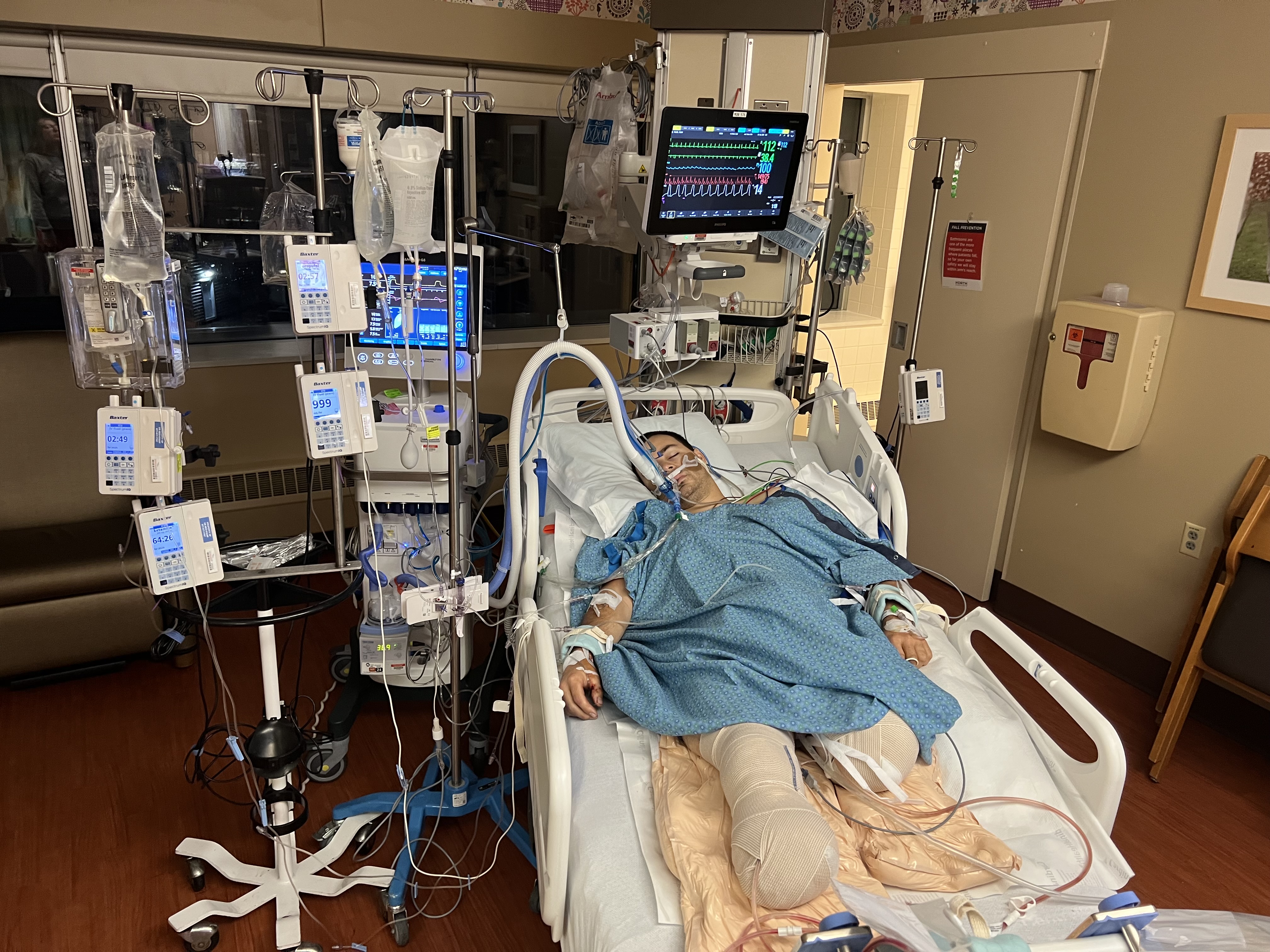
Travis Muller in the hospital following a tragic farm accident that lead to both of his legs being amputated (photo submitted).

Upon arrival at the hospital, Travis faced the unimaginable. Emergency surgery revealed the extent of his injuries to save his life: both legs had to be amputated. Six additional surgeries soon followed. “I believe I received blood in at least five of those surgeries,” he says.

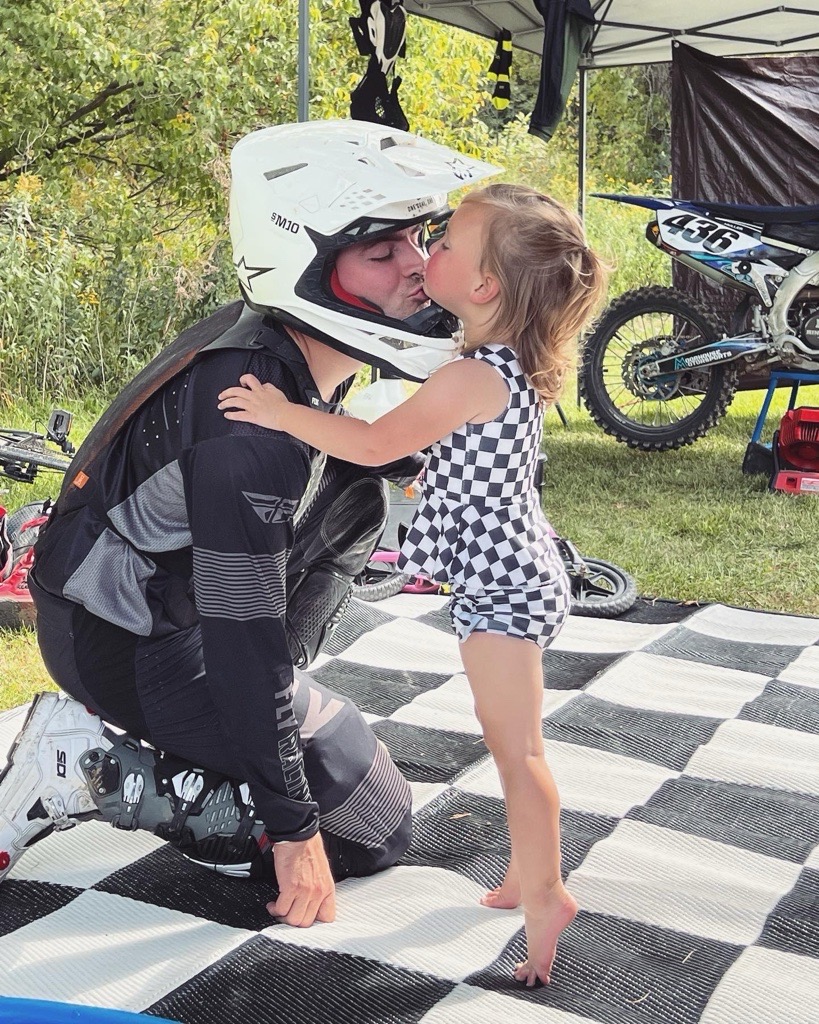
As Travis reflects, he’s filled with gratitude for the first responders and the blood donors who never knew they’d be saving his life that day. His wife Jasmine, and their toddler daughter Shaylie, are thankful for every additional moment they now share with Travis. “As life changing as this injury is, and heartbreaking to lose his legs, the doctor said just a few more seconds without blood transfusions and he would no longer be with us,” says Jasmine.

Travis, and daughter Shaylie, prior to the accident (photo submitted).

Travis agrees and adds, “What can you say except thank you to everyone – thank you for thinking of other people and taking time out of your day to make a difference.”

To raise awareness about the need for blood donations to help patients like Travis, his aunt, Monica Muller, a long-time Red Cross volunteer, organized a blood drive in his honor in his hometown of Windom, Minnesota.

“I’ve been a Red Cross volunteer for 15 years because I believe that when you donate you give the gift of life – and that’s what happened in Travis’ situation,” says Monica. “You just don’t realize the importance until it hits home. Whether it’s a serious illness or an accidental injury, people never know when they’ll be on the receiving end of a simple act of kindness.”

Monica adds, “this blood drive in honor of Travis is a call to action! It really makes a difference. Blood can’t be manufactured. There’s no other way than donating to ensure our hospitals have blood on the shelves.”

Holiday tree decorated with hand-made Red Cross blood bag ordaments to help promote the blood drive in January in honor of Travis (photo submitted.)

January is National Blood Donor Month, and the American Red Cross celebrates those who give blood to help save lives – especially now as we work to ensure a stable blood supply after a busy holiday season. The new year is a great time for people to donate for the first time or get back into giving, if it’s been awhile. Make a resolution to help save lives in 2024!

To schedule an appointment, download the Red Cross Blood Donor App, visit RedCrossBlood.org, or call 1-800-RED CROSS (1-800-733-2767).

Guest Post – DeAnna Murphy was “saved by blood”

I’m super grateful for people who gave blood and made it possible for me to live…”

The phrase “saved by blood” was something I always associated with a great Easter sermon – that is, until a stranger’s blood literally saved my life 35 years ago.  Gratefully, that person cared enough to be a donor, and doing so, saved two lives on that fateful day.

Mother/daughter duo DeAnna and Mandy volunteered together at the Red Cross blood drive held at the Church of Jesus Christ of Latter-day Saints in Waconia, MN on Jan. 31, 2023.

I was a 23-year old soon-to-be mother of a new baby girl, and unlike so many other expectant mothers, I loved being pregnant! I loved the feeling of life inside me as she squirmed and kicked and reminded me that she was coming. I loved making baby blankets and spending long hours oohing and aahing over the baby girl clothes in the discount store near our home. My husband and I talked often and excitedly about the day when she would finally join our little family. 

One beautiful early June afternoon, I could feel the summer sun calling to me. Our two-year old son, Matt, was as thrilled as I was to be going on a long walk, and our hearts were light as we made our way toward the duck pond that we often frequented. 

Matt tightly held the breadcrumb bag and chattered energetically as we walked along.  Then the moment he could see the pond, he begged to get down. I lifted him out of the stroller, taking a mental picture of his radiant face as he enthusiastically bounded toward the ducks. “Duckie, duckie,” he called, as he went. From their reaction, I’m pretty sure that they were as happy about his visit as he was to be there. 

After he had emptied his bread bag, I lifted him again to put him back in the stroller. It was then that I felt the muscles pull in a strange way across my swollen belly. It didn’t feel right.  There wasn’t much I could do about it in that moment, except to slow my pace as I gingerly made my way back home. The stroller felt much heavier than it had before, and I knew I needed to be off my feet as soon as possible. 

A few hours later, I found myself in an emergency room, losing blood so fast that even the medical staff seemed worried. I had a condition known as placenta previa, something that had taken the life of many an expectant mother through the years. Apparently, the combination of the long walk pushing a stroller, and lifting our little son in and out of it, had put extra pressure on the womb, and caused the bleeding to start. And it didn’t seem to be slowing or stopping.

One of the many worries in this equation was that our baby girl still needed another 10 weeks in the womb in order to survive. Our neonatologist was particularly scared, given that our daughter also had an open spine and would need surgery right after birth. Our obstetrician was worried – and we were terrified.

The next 24 hours passed like a bad dream. I was in and out of consciousness, vomiting until there was nothing left in my stomach. The lights seemed to burn at my eyes whenever I tried to open them, and the voices around me often seemed far away. In fact, there were times when I almost felt disconnected from my own body. 

I do remember one very lucid moment when I awoke to see a unit of blood flowing into one arm, with an IV in the other. As my eyes fluttered open just then, no doubt reflecting the confusion I felt, Dr. Parker explained that a blood transfusion had been necessary to save my life, not to mention the life of our little girl. 

Several units of blood and many hours later, I awoke to find my husband next to my bed still holding my hand.  His eyes were blood shot and he looked as if he hadn’t slept in days.  He smiled wanly at me as he said, “you’re finally back with us.”  He told me that they thought the bleeding had nearly stopped, and that it looked like I was going to be okay.

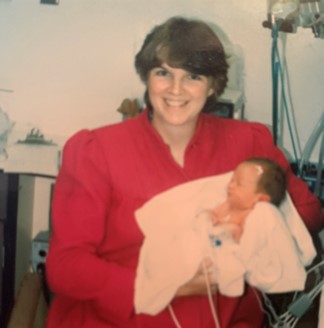
That was the first miracle. The second came five weeks later, when four-and-a-half-pound Mandy was finally placed in our arms.  She was premature, but her lungs were formed, and she was beautiful!  She had a full head of dark hair and bright blue eyes that looked from one of us to the other. 

In that moment, I smiled tiredly down at her, knowing that we had both been saved by blood.  The seemingly small act of a stranger had produced great miracles that changed the course of our lives and our family’s history forever. 

We’ll never be able to thank our anonymous hero, but if you are someone who cares enough to donate blood, just know that someone out there is thanking God tonight for you.  You are a hero to somebody!

I’m super grateful for people who gave blood and made it possible for me to live to give birth twice more after that and be here to raise my children!

This blog story was written by DeAnna Murphy – American Red Cross co-blood program leader for The Church of Jesus Christ of Latter-day Saints in Waconia, MN, blood donor, author and Top 100 Global Coaching Leader. She is also the mother of three, and grandmother of four. She currently lives in the Minneapolis area.

Want to be someone’s hero? Schedule a blood donation today. Simply download the American Red Cross Blood Donor App, visit RedCrossBlood.org or call 1-800-RED CROSS (1-800-733-2767) to make an appointment or for more information.

Let’s Kick Cancer’s Butt

Blood donors can help ‘Barrett the Brave’ and other children with cancer

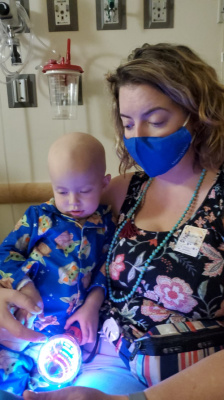
Barrett has needed multiple blood and platelet transfusions during cancer treatment.

“Today my baby’s health was improved because someone gave blood,” wrote Abby Gregory on June 4 in his CaringBridge journal when Barrett received his first transfusion. This was a couple months after she found “a lump the size of a grape” in her son Barrett’s cheek this spring.

The lump – in a muscle – is a rare and serious form of pediatric cancer called rhabdomyosarcoma. Barrett – not yet two years old when diagnosed – started several weeks later on a brutal treatment plan of chemotherapy, radiation, and possibly surgery, over a 12-to 14-month period.

“We’re fighting for his life, which is still hard for me to wrap my head around,” says Abby.

Part of this fight for a boy “who loves trucks, shovels and his mom and dad” has involved multiple, hours-long transfusions of red blood cells and platelets during a time of shortages across the country. Both are often critical for giving lifesaving strength and time to patients enduring aggressive treatments against cancer.

Barrett’s first transfusion was the day before his second birthday – when he was in the hospital with his platelets and red blood cell counts too low. “It was overall fairly simple but, for some reason felt extra scary to us. But I guess all of this is scary,” says Abby.

“Barrett the Brave”

In October, Barret completed 28 proton radiation treatments and during this time he’s needed more lifesaving transfusions. He’s a brave boy experiencing great physical suffering, but “he’s keeping us smiling even through the pain,” says Abby.

Abby holds Barrett during chemo.

Barrett will need more transfusions to keep his red blood cell count high enough for more chemotherapy treatments during the coming months.

Grateful for blood and platelet donors, Barrett’s mom encourages people to donate or host a blood drive. Witnessing her son’s bravery, Abby asks for others to donate blood or platelets to help “kick cancer’s butt.”

Visit redcrossblood.org to schedule your blood donation appointment.

Story by Lynette Nyman/American Red Cross; Photos courtesy of Barrett’s family. Visit Barrett’s CaringBridge journal here. #BraveBarrett

First-Time Blood Donor : “Each of us was going to save lives.”

“It was the thing to do!” 

“My parents donated and inspired me to give.” 

“To help fill a need!” 

“It was always on my ‘bucket list’ to make a donation.” 

The different responses given by American Red Cross blood donors show there’s no uniform reason that sparks their first donation. Personally, I had not found my reason until several weeks ago. Prior to that, the only time blood donations had been brought up in my life was by a friend who, despite nearly passing out at the mention of needles, would be back at a donation center every couple of months. I would always ask why she would put herself in that situation, and her answer would always be similar to that of other donors – she wanted to help. 

Only a couple of hours after scheduling my donation time, I was answering questions at the center and beginning the donation process. I spent the ten minutes it took to fill the bag by looking around the room. All of the Red Cross members working the drive as well as the donors were radiating positivity, despite the needles in their arms, and I found that I, too, could only think of the overwhelming good that everyone’s presence in the room was doing. No matter each person’s unique background or reason for being there, each of us was going to save lives.  

The couple hours that had passed from deciding to schedule my appointment to leaving the donation center had flown by, but had filled me with a new understanding of the simple answers people give when asked why they donated blood. There did not have to be one significantly motivating event that got the donors there. They had just wanted to help.  

“No matter each person’s unique background or reason for being there, each of us was going to save lives.”

If there could be one reason to broadly represent all of the donors who have shared why they donate, this would be it. I had always understood the basis of this when people said it, but the realization of what blood donations do for real people – not to mention the impact on the families and friends of the recipients – made the statement “wanting to help” much bigger.  

Due to the severe blood shortage, people all over the country have had to wait to receive blood transfusions or have not received them at all. Not receiving the proper blood transfusions takes away significant parts of people’s lives, but each donor’s decision to donate gives the opportunity to change that for at least one person. There’s no reason too small to motivate this. 

Story by Julia Clingen – American Red Cross Volunteer

Give Blood to Give Time

Supporting cancer patients through blood donation

In August 2016, Myel Bowers-Smith received an unexpected and life-changing medical diagnosis

Sunday, June 6, is National Cancer Survivors Day, and we’re celebrating Myel. In August 2016, Myel received an unexpected and life-changing medical diagnosis. What she thought was an infection from a mosquito bite was actually stage 4 inflammatory breast cancer.

Myel’s treatment included chemo. She needed the support of platelet & plasma transfusions during her treatment. The need for blood products in cancer care is important & often untold. Patients may need blood products regularly due to chemo side effects or surgery complications.

After months of treatment, Myel was told her cancer was in remission in February 2017. “I was more than excited because I survived. I won, and it was time to get my life back! This couldn’t defeat me,” she says.

Myel knows the important role blood products had in helping her get through treatment & encourages others to give. “Everyone needs someone, and this is your time to help someone who needs your blood or platelets. Be a blessing. A pint of blood can help save lives.”

You might not be able to change a cancer diagnosis or treatment, but you can help those going through it by donating blood or platelets. Join the Red Cross and American Cancer Society and make your appointment to #GiveBloodToGiveTime at rcblood.org/3bYtlqn.

The American Red Cross and the American Cancer Society have teamed up this June to encourage people across the country to Give Blood to Give Time and help ensure loved ones have the strength and support they need as they undergo cancer treatment.

According to the American Cancer Society, many patient visits and procedures were forced to delay or cancel early in the pandemic to reduce the risk of exposure to COVID-19. With procedures resuming, blood donations are critical for cancer treatments. Unfortunately, the Red Cross is seeing fewer blood and platelet donors give as the nation begins to climb out of this pandemic. This downturn comes at a time when the Red Cross continues to see strong demand for blood products − including platelets − by hospitals, causing concern for the sufficiency of the blood supply this month and throughout the summer.

We currently have an emergency need for eligible donors to make an appointment now to give platelets to ensure critical patient needs are met. Platelets, the clotting portion of blood primarily given to cancer patients during treatment, must be transfused within five days of donation and, therefore, are always in great demand.

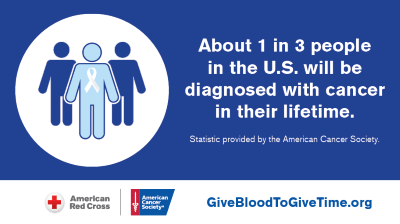
Source: American Cancer Society

“Many cancer patients, especially those going through chemotherapy, will have a need for blood products during treatment,” says Dr. Baia Lasky, medical director for the Red Cross. “When someone donates blood or platelets, they may not only help prevent life-threatening bleeding that can cause stroke or relieve some symptoms, like shortness of breath and headaches, but also give patients and their families the time and hope they need to fight back.”

Some types of chemotherapy can damage bone marrow, reducing red blood cell and platelet production. Other times, the cancer itself or surgical procedures cause the need for blood products. About six blood products are needed every minute to help someone going through cancer treatment. Yet only 3% of people in the U.S. give blood. It is vital that more people donate blood and platelets regularly to meet that need.

“Without the blood I needed, I may not have survived.”

Crediting blood with saving his life, Bryan Joas advocates for blood donations.

Shauna and Bryan Joas at the March 5, 2021, Joas Strong 5th anniversary blood drive held at Easter Lutheran Church in Eagan, Minn.

While riding his bicycle home from work in 2016, Bryan Joas was involved in a hit-and-run accident. He suffered life-threatening injuries including a broken back, hips and ribs, and damaged lungs, liver, kidney, and intestines. He needed 12 surgeries during his 88-day hospital stay and received nearly 50 transfusions of blood products that helped save his life.

“Without the blood I needed, I may not have survived,” says Bryan. “I’m grateful to blood donors for ensuring there was blood on the shelves when my life was on the line.”

Five years later, Bryan spends little time thinking about the accident or that the vehicle driver has never been found. He chooses to focus on his health, family and replenishing the blood supply that was used to save his life. Bryan and his wife, Shauna, are both advocates for blood donations. “It’s important to me to help pay it forward. I’m living proof that blood helps save lives, and I urge anyone who is able to donate,” says Bryan.

To make an appointment to give blood dowload the Red Cross Blood Donor App or visit RedCrossBlood.org or call 1-800-RED CROSS  (1-800-733-2767).

For patients in the emergency room, fighting cancer or facing a life-threatening illness, help can’t wait. Blood donations are essential. Healthy donors are needed now to ensure that patients have lifesaving blood products available for emergency and everyday medical treatments. 

Blood donation safety precautions

To protect the health and safety of Red Cross staff and donors, individuals who do not feel well or who believe they may be ill with COVID-19 should postpone their donation.

Each Red Cross blood drive and donation center follows the highest standards of safety and infection control, and additional precautions – including temperature checks, social distancing and face coverings for donors and staff – have been implemented to help protect the health of all those in attendance. Donors are asked to schedule an appointment prior to arriving at the drive and are required to wear a face covering or mask while at the drive, in alignment with Centers for Disease Control and Prevention public guidance.  

April is National Volunteer Month

April is National Volunteer Month – the perfect time to give blood, platelets or plasma. There’s no substitute for volunteer donors: Blood cannot be manufactured. In thanks, come to give by 4/30 to be entered for a chance to win a $1,000 e-gift card. Give: rcblood.org/Gift

Story and photo by Sue Thesenga, American Red Cross, Minnesota and Dakotas Region

Six things to know before blood donation

Do you know that only 3 out of 100 Americans donate blood each year, but every two seconds someone in the U.S. needs blood? Here’s another surprise: blood donation can be super easy. Once you’re seated comfortably, the actual donation time takes only 8 to 10 minutes.  To help bring more ease for new and continuing donors, below are six things we’d like you to know before donating blood. 

  1. You do not need to know your blood type. A national survey conducted earlier this year for the Red Cross revealed that 54% of people believe they need to know their blood type to donate blood. Find more eye-popping results here.
  2. You should be well-hydrated. Blood has a lot of water. To promote a good flow during donation and to prevent dizziness during or after, we recommend drinking an extra 16 oz. of liquid before donating. Hydrate after, too. Check out our fave water bottle that will help keep you hydrated on the go. 
  3. You should eat a healthy meal rich in iron and vitamin C while avoiding high-fat foods just prior to donation.  Your body needs iron to make new blood cells, replacing the ones lost through blood donations. Vitamin C promotes iron absorption. Find a list of iron rich foods here. Yum! 
  4. You should wear cozy clothes. Whatever’s on top should be loose and comfortable with short sleeves or sleeves that can be easily rolled up above the elbow during your donation. Find our classic T-shirt here in many colors. 
  5. You can speed up your appointment time. Complete a RapidPass® on the day of your donation, prior to arriving, and you’ll save time completing your health history that’s required before your donation can begin. Click here for more.
  6. You should remember to bring a picture ID.  Your ID can be one primary ID, such your Red Cross blood donor card or state driver’s license; or two other forms of secondary ID. Click here to check for acceptable forms of ID.

Now that you’re feeling more confident about blood donation, click here to schedule an appointment near you.  Need more tips? Watch this video of some pro blood donors. They make it look easy, because it is. Thanks!

Post by Lynette Nyman for the American Red Cross Minnesota Region
Sources include American Red Cross  and Red Cross Chat 

Volunteer spotlight: Blood Donor Ambassador Flora Holmberg

From serving meals to disaster victims to briefing soldiers before deployments, Red Cross volunteers contribute throughout our communities in many ways. Flora Holmberg serves in another important role: Blood Donor Ambassador at blood drives and fixed donation centers.

Flora Holmberg

What do you do as a Red Cross volunteer?
I work as a Donor Ambassador in Minneapolis, St. Paul and Stillwater areas. I greet people who are coming to donate, thank them for coming in, and register them for their donation appointment.

What’s your favorite part or memory of volunteering?
I enjoy meeting and visiting with all the great people who come in to donate.

Would you recommend volunteering with the Red Cross to others?
Yes!  Very much so!! It’s a great organization to volunteer for – it gives you such a great feeling to know that you are a part of something that helps so many people.

How does it feel to help save a life? Watch this video:

We’re always looking for volunteers to help their neighbors in need after disasters like home fires. To volunteer or for more information, click here. Or join us during upcoming 30-minute “Call to Serve” conferences calls:

  • Tuesday, April 23, 12-12:30 pm
  • Thursday, April 25, 4-4:30 pm
  • Wednesday, May 1, 12-12:30 pm
  • Sunday, May 5, 2-2:30 pm

RSVP to MNRecruit@redcross.org.

Be a holiday hero at the 6th annual 12 Hours of Giving Blood Drive on Dec. 20

The arrival of the holiday season often means spending time and exchanging gifts with family and friends. But what if the gift you needed couldn’t be bought? For patients like Mike McMahon, the generosity of blood donations was the perfect gift and didn’t cost anything other than a bit of someone’s time.

Following a tragic tree felling accident on Nov. 10, 2016, McMahon, a Stillwater, Minnesota resident, suffered life-threatening injuries. He needed 11 units of blood during emergency surgery to keep him alive.

He spent the next six weeks in the intensive care unit and inpatient rehab, including three weeks during which he had to be intubated as he was unable to breathe on his own.

During his hospital stay, he also experienced an ulcer on a major artery in his intestines. The ulcer was so severe that he needed an additional seven units of blood and the artery was coiled to stop the hemorrhaging.

Mike McMahon

“I remember clearly as my nurse hooked me up to the first bag of blood,” said McMahon. “The thought of blood passing through another person’s heart and now into me, to keep me alive, was very emotional. From the first pint to the last, each one was equally moving.”

McMahon was told that he might not be able to do a lot of things ever again – his future was uncertain. However, just a few days before Christmas he was released from the hospital.

McMahon is thankful for blood donors and credits blood donation with helping save his life. “I’m grateful for the donors who gave me such an amazing gift – to spend Christmas and more holidays with my family. I was an occasional blood donor before the accident – today I donate as often as I can to help ensure others receive the same gift of life.”

You can give patients like McMahon more time and memories this holiday season by donating blood at the American Red Cross 6th annual 12 Hours of Giving Blood Drive at Inwood Oaks in Oakdale, Minnesota. As a special thanks, all who come to give will be treated to free parking, complimentary gift wrapping, a special gift bag, a long-sleeved Red Cross T-shirt, and holiday food and entertainment and will be automatically entered into hourly prize drawings including grand prizes – a large flat panel TV and a HP laptop computer.

To make an appointment to give blood at the 12 Hours of Giving Blood Drive, donors can click here or use sponsor code 12 hours on the Red Cross Blood Donor App, online at redcrossblood.org or by calling 1-800-RED CROSS (1-800-733-2767).

We hope to see you at the 12 Hours of Giving Blood Drive. Happy holidays from your friends at the Red Cross!

Story and photo by Sue Thesenga/American Red Cross