Because of Ryker: A family’s lifesaving commitment

Amy Slater’s journey as a blood donor began two years ago, sparked by a deeply personal experience: her four-year-old nephew, Ryker, was diagnosed with leukemia. Watching him go through treatment, she quickly realized that blood donation isn’t just a kind gesture — it’s a lifeline.

“Ryker needed multiple transfusions throughout his treatment just to have the strength to keep fighting,” Amy recalls. “That changed everything for me. I saw firsthand how critical donated blood was to his recovery.”

Amy stands strong beside her nephew Ryker, who is bravely battling leukemia. Picture submitted.

Since that moment, Amy has become a passionate advocate for blood donation. At Federated Insurance, where she works, she actively supports the company’s blood drives, held three times a year. She never misses a chance to donate — and always encourages her coworkers to join her.

“It only takes a little bit of your time, and it’s absolutely worth it,” she says. “The staff are so kind and professional — they make the whole experience smooth and meaningful.”

Amy proudly donates blood in support of her brave nephew, Ryker, who is currently undergoing treatment for leukemia. Her donation is one small way to help him in his courageous fight.
Photo: Sue Thesenga/American Red Cross

Though Ryker is now cancer-free, his journey left a lasting impact on the entire family. “I had never donated blood before his diagnosis,” Amy shares. “But once I saw the difference it made in someone I love, I knew I had to keep going.”

As a mother of two, Amy feels the importance of donation even more deeply. “I can’t imagine being told one of my own kids had cancer — and then finding out there might not be blood available,” she says. “That’s why I donate. That’s why I keep encouraging others to step up.”
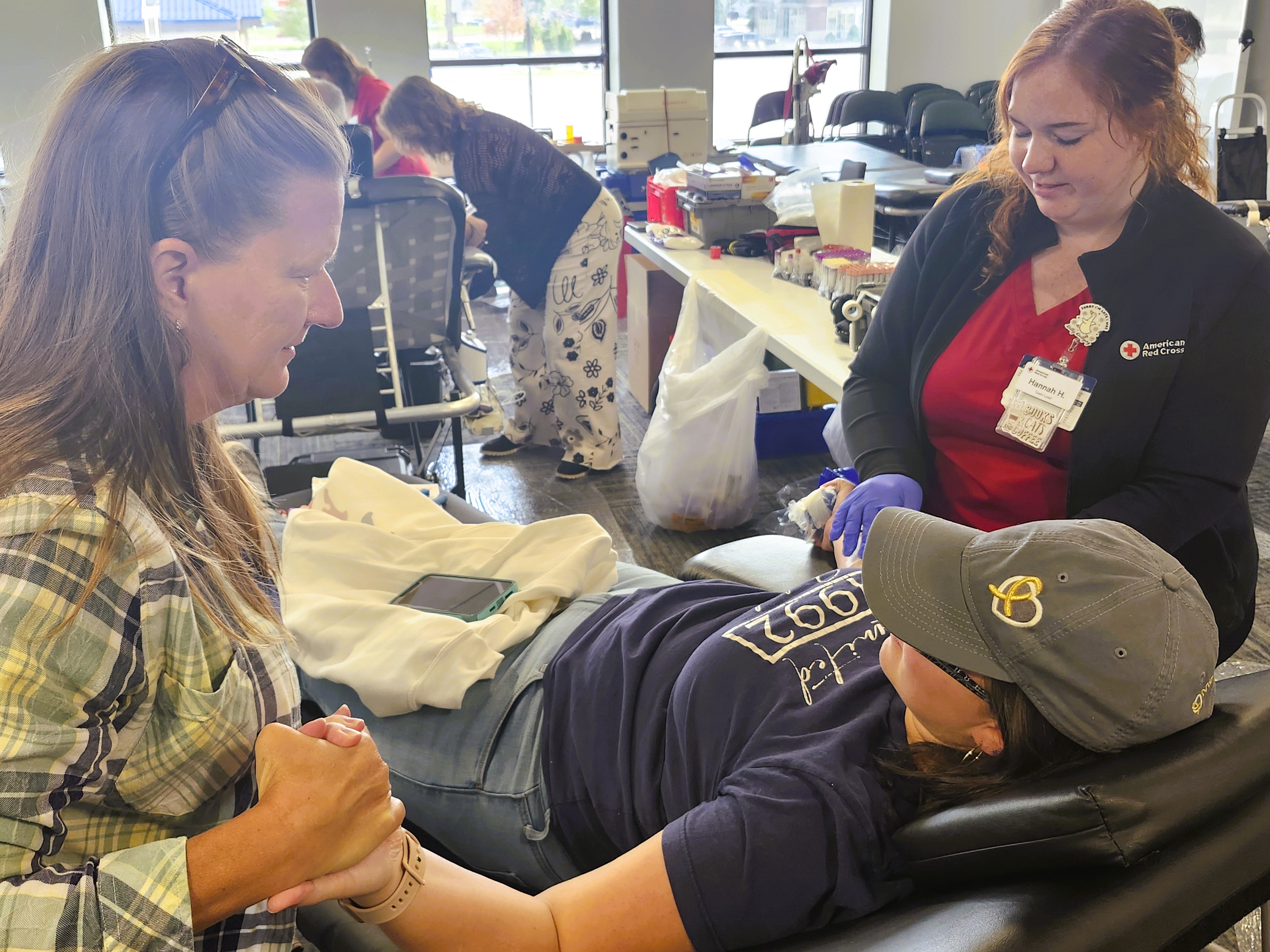
Alissa donates blood for the first time in honor of her son Ryker. Right by her side is her stepmom Kim, offering love, support, and a whole lot of encouragement.
Photo: Sue Thesenga/American Red Cross

At this year’s Rock ‘N Roll Up Your Sleeve Blood Drive in Mankato, Amy’s dedication became a family affair. She was joined by her sister and Ryker’s mother, Alissa, and their father and stepmother, Tim and Kim — all eager to give back. For Alissa, it was her very first-time donating blood.

Alissa donates blood for the first time, inspired by her son Ryker’s leukemia treatment. A little nervous at first, she’s all smiles, proud to give back in such a meaningful way.
Photo: Sue Thesenga/American Red Cross

“I was a little nervous at first,” Alissa admits. “But it was easier than I expected. After seeing Ryker receive blood during his treatment, I knew I could do it and I’m so glad I did — having my family there made it even more meaningful.”

Their motivation runs deep. Ryker is nearing the end of his treatment. On September 18, he’ll receive his final dose of liquid chemotherapy — a powerful milestone for a resilient little boy and a hopeful family.

“I truly believe every blood donor is a blessing. If you can donate, just do it. You could be helping save someone’s life — it made a lifesaving difference for Ryker.”

Amy, Alissa, Tim, and Kim proudly show off their PEANUTS Snoopy T-shirts after donating blood — all Because of Ryker. This family’s lifesaving commitment is a powerful tribute to the brave little boy at the heart of it all. Photo: Sue Thesenga/American Red Cross

Stories like this remind us that donating blood is a testament to the power of family, community, compassion, and the courage it takes to care.

You can help save lives, too. Eligible individuals are encouraged to schedule a blood or platelet donation appointment by using the Red Cross Blood Donor app, visiting RedCrossBlood.org or calling 1-800- RED CROSS (1-800-733-2767).
Nolan the Heart Warrior: A Story of Strength, Survival, and Giving Back

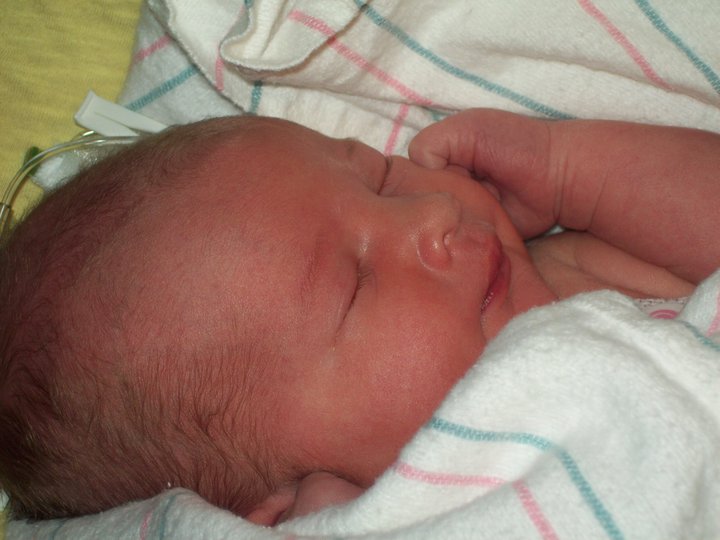
Nolan arrived 2.5 weeks early, a healthy, 8-pound, 10-ounce baby boy. But within hours, the joy of his birth turned to fear. His mother, Sara Jutz, sensed something wasn’t right. Together with her husband, Joe, they pushed for closer observation. Trusting their instincts and speaking up made all the difference, that decision ultimately saved Nolan’s life.

Newborn Nolan made an early entrance, arriving 2.5 weeks ahead of schedule and weighing in at a healthy 8 pounds, 10 ounces. Photo submitted.

Doctors diagnosed Nolan with a serious congenital heart defect: a coarctation of the aorta, a narrowing of one of the heart’s main arteries. Just 10 hours after birth, he was rushed by ambulance to Children’s Hospital in Minneapolis. At only four days old, Nolan underwent his first major surgery. Surgeons accessed his heart through his back and used a Gore-Tex (synthetic) patch to widen the narrowed artery. During that operation, Nolan received his first blood transfusion, one of many he would need. That donated blood played a critical role in saving his life.

Nolan recovered quickly and was able to go home on his ninth day of life. As he grew, his spirited personality and big heart, both literally and figuratively, became his trademarks. At age six, he underwent a second procedure. Since the synthetic patch placed earlier couldn’t grow with him, doctors used a balloon catheter to stretch it and improve blood flow. The minimally invasive procedure was a success, and Nolan bounced back to his usual self within days.

By the time he was 11, Nolan was thriving. Though he saw his cardiologist regularly and understood he’d never “outgrow” his condition, that never held him back. Active, strong, and fiercely determined, Nolan proudly embraced life as a heart warrior. He even led his elementary school in fundraising for the American Heart Association, raising more money than anyone else.

Nolan, Eli, and Katelyn were each born with different heart defects. Only Nolan needed surgery, but their resilience unites them. Photo submitted.

His journey is made even more remarkable by his family’s story. Nolan’s two younger siblings were also born with congenital heart defects, each different, each unique. While Nolan required surgeries, his siblings have not needed medical interventions. Doctors remain unsure why all three children were affected, but what is clear is the strength and resilience of the family.

The Jutz family has long been dedicated to supporting their community, but Nolan’s experiences ignited a deeper sense of purpose: a personal commitment to give back. Watching his mom organize a blood drive, motivated in part by her own father’s need for weekly transfusions, Nolan jumped in to help. He manned the registration table, witnessed firsthand the importance of blood donation, and knew he wanted to do more.

Following the success of last summer’s blood drive, Nolan and Sara set out to organize another, this time at Nolan’s middle school. They transformed his personal journey into a powerful mission to raise awareness and inspire others to make a life-saving difference.

There is a lot that goes into organizing a blood drive, but Nolan’s greatest test came on April 18.

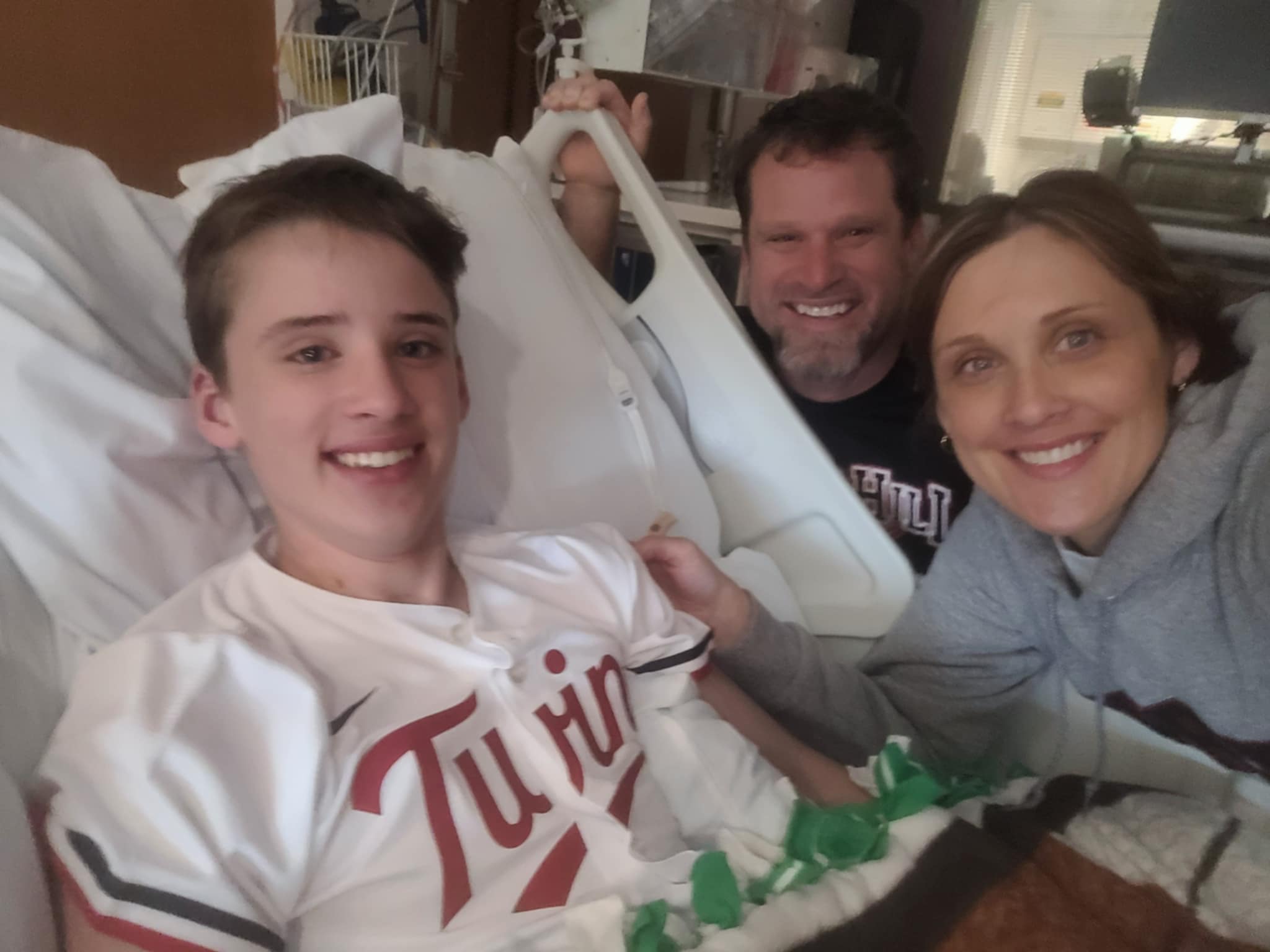
Pictured with his parents, Nolan recovered in the hospital after a lifesaving procedure that required 18 units of blood – April, 2025. Photo submitted.

During what was expected to be a routine stent placement, Nolan’s aortic valve ruptured, triggering cardiac arrest that lasted nearly 20 minutes. As blood rapidly filled his chest cavity, his left lung collapsed. In an urgent fight to save his life, doctors performed emergency surgery, relying on chest compressions to place the seven stents needed to repair the valve. Nolan required 18 units of blood that day, blood made available thanks to the selfless donations of others. That generosity is what saved his life.

Incredibly, just six weeks later, Nolan was back on the baseball field with his friends. His family, still overwhelmed by that day, speaks of how the experience changed them. “When you hear ‘18 units of blood,’ it hits different when it’s your child,” Sara said. “You don’t realize how much one small body can need, or how vital it is that the blood is there.”

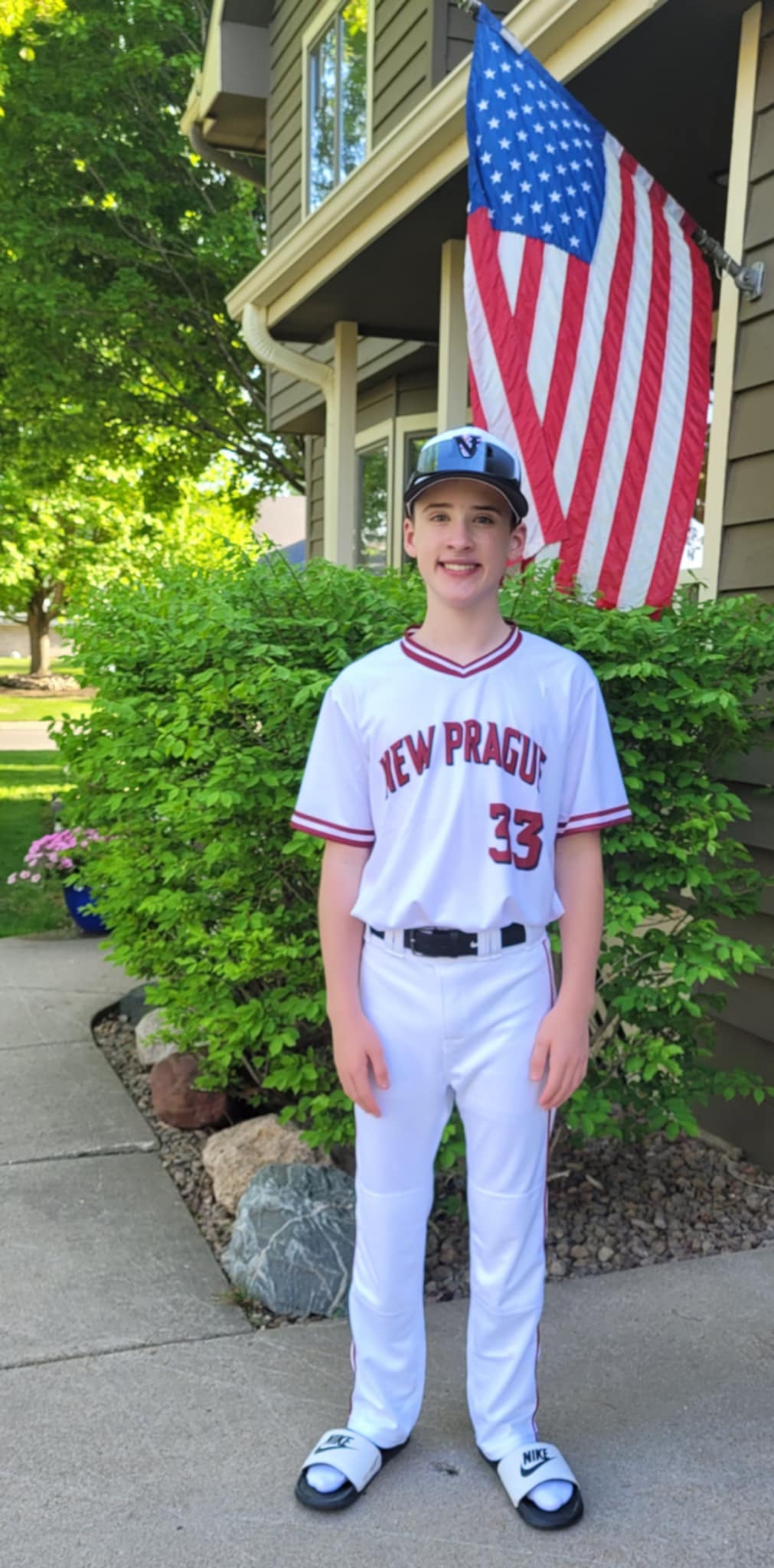
Just six weeks after emergency surgery and 18 units of blood, Nolan is back and ready to hit the baseball field! Photo submitted.

Today, at 14 years old, Nolan is more than a survivor. He’s a fighter, an advocate, and a leader. He’s a student, a friend, an athlete, a big brother, and a boy whose strength has already changed so many lives. And he’s not done yet.

On June 30, family and friends supported a blood drive organized by Nolan and his mother at his middle school. Nolan greeted donors at the registration desk before joining his siblings for a well-earned lunch break. Each donor received a copy of Nolan’s story and was encouraged to share it to help raise awareness about the ongoing need for blood donations.

On June 30th, family and friends came together to donate blood at the drive Nolan and his mother organized at his middle school. Their hope was to collect enough to give back, to pay it forward for the many donations that once helped save Nolan’s life. They collected 41 pints of lifesaving blood – each one a testament to the power of giving and the impact of Nolan’s story.

Nolan continues to raise awareness and encourage others to donate blood, to give the gift of life, because he understands better than most just how vital it truly is.

He is, and always will be, a heart warrior.

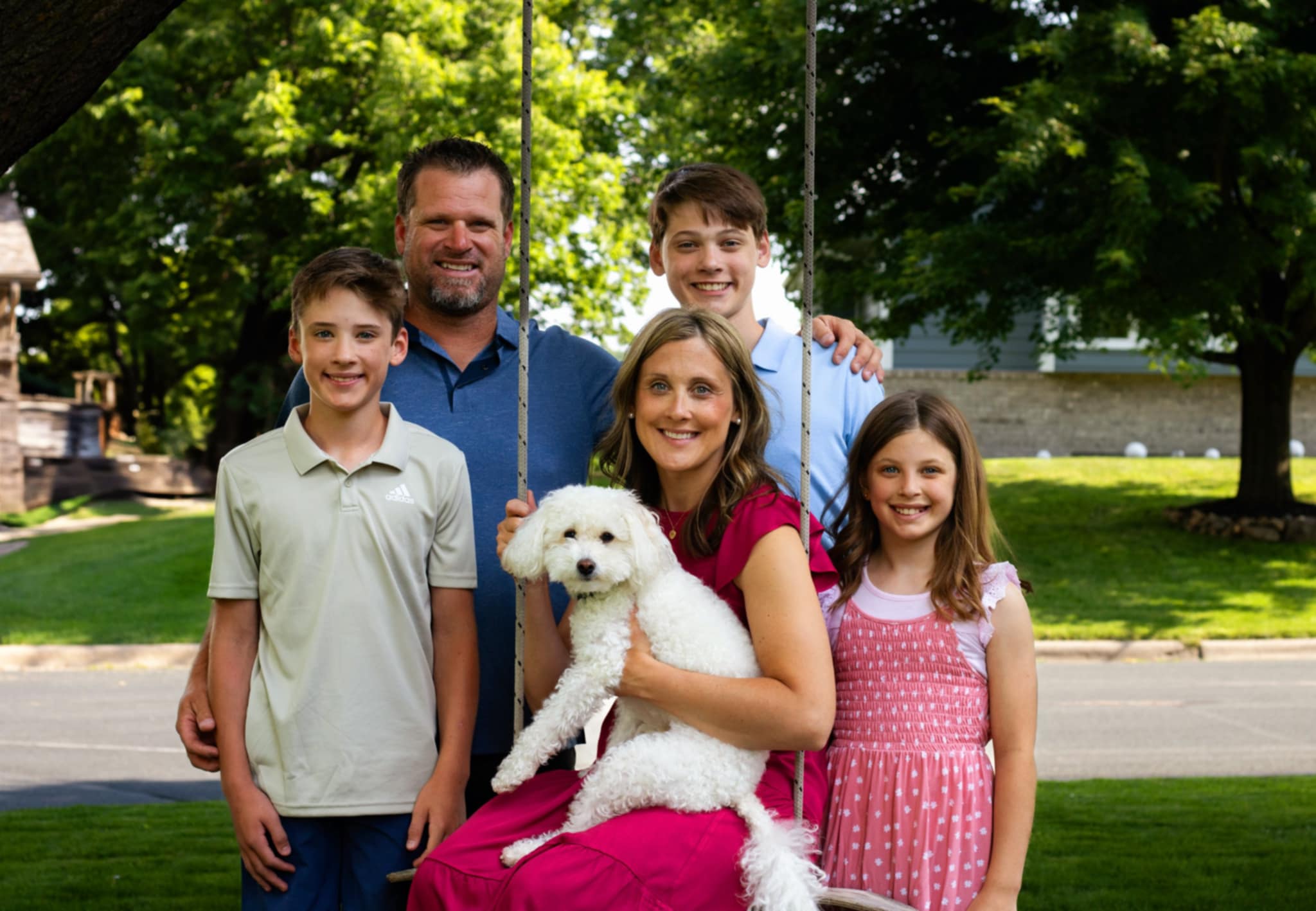
The Jutz family. Photo submitted.

Make an appointment to give blood or platelets now by using the Red Cross Blood Donor App, visiting RedCrossBlood.org or calling 1-800-RED CROSS (1-800-733-2767).

My Blood Donation Story – The Power of Red

By Mary Patterson, Minnesota and Dakotas Region digital communications volunteer

When I first started high school, a banner in our cafeteria for the school’s fall blood drive caught my eye. I wasn’t old enough to donate, and I wasn’t yet part of the student groups organizing it. By my junior year, all that changed.

In the fall of 2021, I joined the Student Council and become a member of the National Honor Society. My math teacher, Ms. Arnold, was the advisor for both of these groups. On the agenda of the first student council meeting was the topic of the fall blood drive. Ms. Arnold shared her personal story about donating blood in memory of her father, who had been a lifelong blood donor after receiving a blood transfusion following a motorcycle accident.

I had volunteered in various ways before but never felt a spark or drive to a specific cause. However, I was eager to complete my service hours, and the blood drive sounded like a great way to get started.

Mary Patterson gives a thumbs up during a successful blood donation – December, 2024. (Photo submitted.)

Having turned 16 in 2020, I had to ask my parents’ permission to donate at the drive. Minnesota is one of 37 states to allow 16-year-old blood donors! With their blessing, I registered to donate and signed up to volunteer at the drive.

I woke up nervous the day of the drive. I had made sure to sleep well the night before and eat a good meal before heading to school. But what if the needle hurt a lot? What if I fainted? In the end, I felt completely well after my donation. We wrapped up the day with 71 donors and 217 lives saved!

“Besides the ‘good feels’ of being a teacher, this is one of the things I am most proud of – teaching the next generation to help people around them, even those they don’t know, is so important,” said Ms. Arnold. “Donating blood is something almost everyone can do so I encourage all my eligible students to do it. I know some students volunteer just so they can get out of class, but hopefully a habit is starting to form.”

I was eligible to donate again at the Spring 2022 blood drive, no longer requiring parental permission at age 17. This time, however, I ended up on a mat on the gym floor, dizzy and pale. A few weeks later, a letter from the Red Cross arrived in the mail explaining that I had an iron deficiency and was now ineligible to donate for one year. While this did explain the drastic difference in my donations, I was incredibly disappointed, as I had just been eligible to donate a few short months before. Not only that, what if this deficiency lasted so long I couldn’t donate again? Despite this, I knew how it had felt to give my time as well as my blood, so I was determined to remain involved in the school drives, taking volunteer shifts during my lunch hour at the sign-up table and helping donors at the drives feel at ease both during and after donating.

From my first two donations, I learned three valuable things: I had a health condition, but it was treatable, and, most importantly, I wouldn’t have known if I hadn’t tried to donate blood. I was committed to donating again: I adjusted my diet to include higher iron intake, got cleared by my physician, and fulfilled the one year waiting period, I signed up to donate again, and was successful! I was so relieved to know I was healthy enough to donate again, as I went into this donation attempt even more nervous than my first. Since regaining eligibility, I donate close to every 56 days as possible.

Miss Dakota County volunteers at the University of Minnesota Red Cross Club blood drive, lending her support to this important cause. (Photo submitted.)

In my first year of college, I got involved with the University of Minnesota Red Cross Club as a blood donor. In my second year, I got more involved by volunteering at four on campus drives in the fall semester. Then, in October 2024, at age 19, I ran for a local title to the Miss Minnesota Scholarship Program, through the Miss America Opportunity. As a contestant, I needed to create a Community Service Initiative to focus on during my candidacy and potential year of service. For me, it was a no-brainer: my passion for blood donation had only grown since I started. After seeing the critical need for blood in our nation, having learned from the representatives that spoke to my school and from Ms. Arnold, I was finally feeling that spark towards a cause. To run for Miss Dakota County, I created The Power of Red: Blood Donation and Blood Health Awareness.

The Power of Red aims to enhance donor accessibility as well as create awareness about the critical need for blood. This is accomplished through my social media campaign that features weekly blood drive locations, fun facts about donation and blood health, and provides resources to help individuals schedule and prepare for donation appointments. This platform shows the benefits to both the donor and recipient: the urgent need for blood is combined with the knowledge that donors receive about their health. My personal experience showed me that blood donation has benefits beyond saving others: it just may help you save yourself.

Miss Dakota County, Mary Patterson, shares exciting news on Instagram: she’s now a Red Cross digital volunteer! Mary is using her platform to raise awareness and educate her followers about the critical need for blood donations.

Today, at age 20, I am honored to share that I won the title of Miss Dakota County 2025 this past October. I’ve started 2025 by becoming an official American Red Cross volunteer. I am eager to take The Power of Red to the Miss Minnesota stage this summer and show this great state the impact we can make by rolling up a sleeve to give the gift of life! I will be continuing my work by keeping my social media campaign up to date, continuing my volunteering with the U of M Red Cross Club in addition to regular donation, and finally, hosting my first blood drive in early June.

I recently asked Ms. Arnold what she would say after seeing me go from a first-time blood donor to an advocate volunteering with the Red Cross, and raising awareness for this cause on a state level as a Miss Minnesota candidate. She replied, “Thank you! Any way to bring attention to this lifesaving opportunity is a great one!”

Blood donation appointments can be scheduled by downloading the free Red Cross Blood Donor App, visiting RedCrossBlood.org or calling 1-800-RED CROSS (1-800-733-2767).