For his 81st birthday, Minnesota and Dakotas Region biomed volunteer and blood and platelet donor Gordy Kircher was deeply touched when his grandchildren — Will, Johanna, and Ethan — donated blood for the first time in his honor, carrying forward his lifesaving legacy.
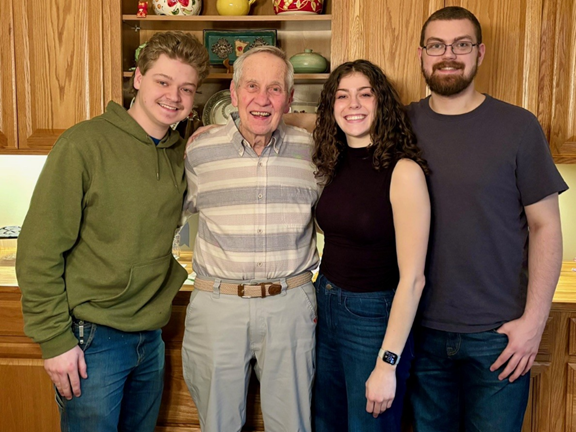
Photo submitted.
“There’s no greater gift I could have imagined for my birthday than seeing my grandchildren step up to save lives,” Gordy shared. “Knowing they became blood donors fills me with pride and joy beyond words. It’s truly a blessing to witness their generosity and courage.”
“My grandpa has spent many years volunteering and donating blood and platelets with the Red Cross. He’s given so much of himself to help others, and that’s always inspired me and my brothers,” said Johanna, Gordy’s granddaughter. “When he was no longer able to donate, it was really hard for him. Donating together in his honor means a lot to us, and we plan to keep going so that, in a way, his spirit of giving can continue through us.”
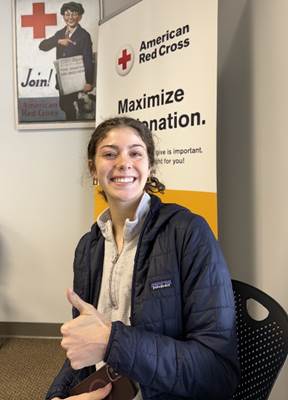
Photo submitted.
Gordy began donating blood in the early 1980s at a workplace blood drive and later transitioned to donating platelets. Although his journey included a few detours due to cancer scares, his commitment to helping others has remained strong.
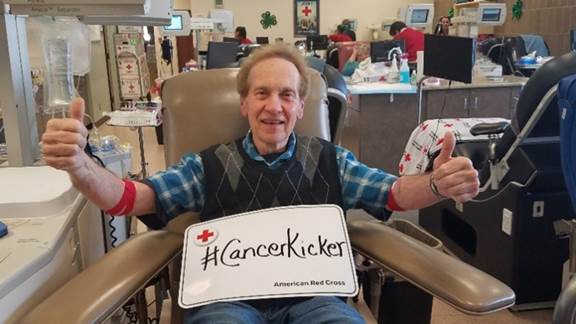
Photo: Sue Thesenga/American Red Cross
In July 2011, after being deferred from donating for the first time, Gordy found a new way to give back by volunteering as a blood donor ambassador — a role he quickly came to love. He greets donors and ensures they feel appreciated and cared for throughout the donation process.
About a year ago, Gordy had to stop donating platelets after starting a medication that made him ineligible. He had already made more than 400 donations — the equivalent of nearly 98 gallons of lifesaving blood products.
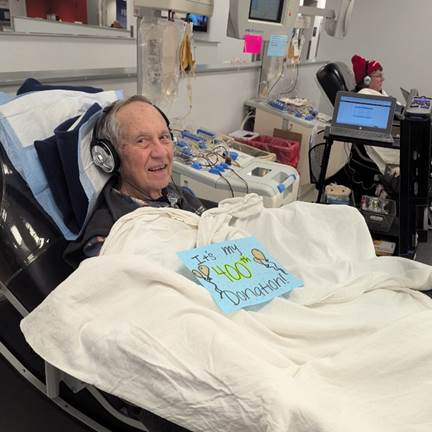
Even though he can no longer donate, Gordy remains deeply committed to the Red Cross mission and continues to serve as a blood donor ambassador. He gladly helps mentor new volunteers at blood drives, having them shadow him for hands-on experience. In 2025 alone, he volunteered at 95 blood drives, educating donors and reinforcing the importance of their contributions.
Every Wednesday, Gordy can be found at the Red Cross Mary Coultrap Blood Donation Center in St. Paul, Minnesota, talking with blood and platelet donors. It’s his personal mission to share the importance of donation and inspire others to get involved. When he’s able, he also volunteers at community blood drives — including the region’s annual holiday 12 Hours of Giving blood drive.
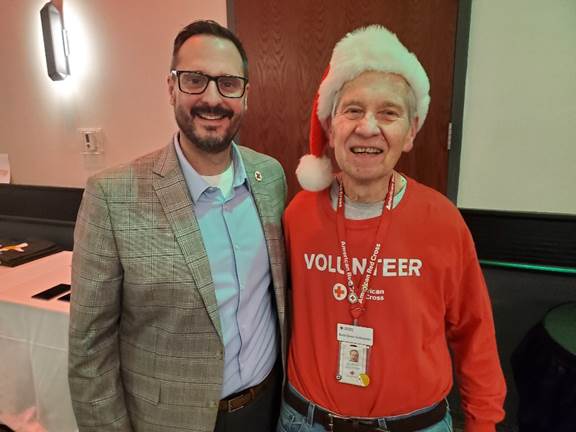
One of Gordy’s favorite parts of volunteering is thanking donors for stepping up to help others. “Thanks for being part of the 3 percent,” he often tells them, referring to the small percentage of Americans who donate blood even though 62% are eligible. Donors are often surprised by that statistic. He encourages them to return as often as they can and to spread the word so even more lives can be saved.
Gordy also enjoys sharing lifesaving stories and hearing from donors about their own experiences — whether they’ve needed blood themselves or know someone who has. These conversations get to the heart of why blood donation matters and help strengthen the connection to the cause.
A huge thank you to Gordy for all he does to support the Red Cross lifesaving mission and for being such an extraordinary role model. And a warm welcome to Will, Johanna, and Ethan to the lifesaving team. Talk about rock stars!
Join the Red Cross lifesaving team! Make an appointment to give blood or platelets now by using the Red Cross Blood Donor App, visiting RedCrossBlood.org or calling 1-800-RED CROSS (1-800-733-2767).


 American Red Cross Minnesota and Dakotas Region