Passing the Torch: Volunteer’s Dedication Inspires Grandchildren’s First Blood Donations

For his 81st birthday, Minnesota and Dakotas Region biomed volunteer and blood and platelet donor Gordy Kircher was deeply touched when his grandchildren — Will, Johanna, and Ethan — donated blood for the first time in his honor, carrying forward his lifesaving legacy.
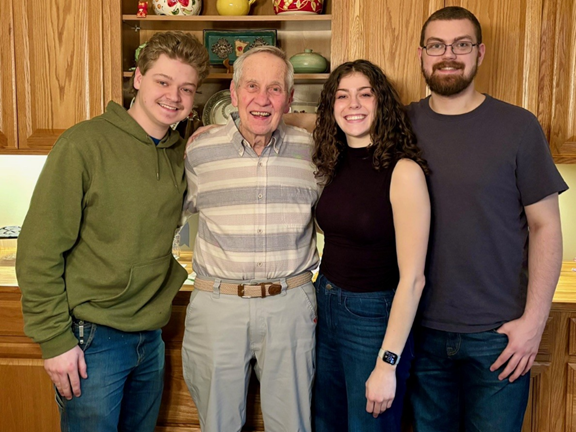
Gordy, beaming with pride, pictured with his grandchildren Will, Johanna, and Ethan.
Photo submitted.

“There’s no greater gift I could have imagined for my birthday than seeing my grandchildren step up to save lives,” Gordy shared. “Knowing they became blood donors fills me with pride and joy beyond words. It’s truly a blessing to witness their generosity and courage.”

“My grandpa has spent many years volunteering and donating blood and platelets with the Red Cross. He’s given so much of himself to help others, and that’s always inspired me and my brothers,” said Johanna, Gordy’s granddaughter. “When he was no longer able to donate, it was really hard for him. Donating together in his honor means a lot to us, and we plan to keep going so that, in a way, his spirit of giving can continue through us.”
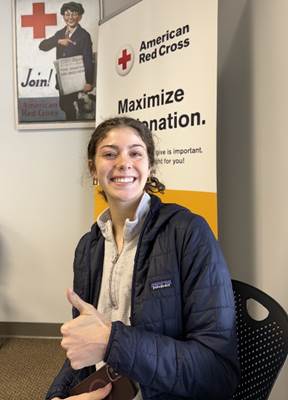
Johanna excited to donate blood for the first time, honoring her grandfather Gordy’s lifelong commitment to helping others and carrying forward his inspiring legacy.
Photo submitted.

Gordy began donating blood in the early 1980s at a workplace blood drive and later transitioned to donating platelets. Although his journey included a few detours due to cancer scares, his commitment to helping others has remained strong.
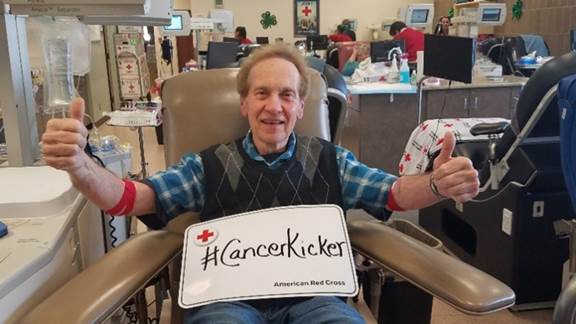
Gordy donating platelets — although he has never needed blood himself, he gave regularly to help patients who rely on lifesaving blood products.
Photo: Sue Thesenga/American Red Cross

In July 2011, after being deferred from donating for the first time, Gordy found a new way to give back by volunteering as a blood donor ambassador — a role he quickly came to love. He greets donors and ensures they feel appreciated and cared for throughout the donation process.

About a year ago, Gordy had to stop donating platelets after starting a medication that made him ineligible. He had already made more than 400 donations — the equivalent of nearly 98 gallons of lifesaving blood products.
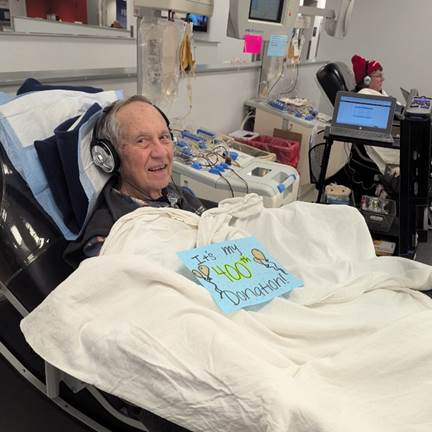
Gordy celebrates his 400th donation, marking decades of dedication to helping others. Photo submitted.

Even though he can no longer donate, Gordy remains deeply committed to the Red Cross mission and continues to serve as a blood donor ambassador. He gladly helps mentor new volunteers at blood drives, having them shadow him for hands-on experience. In 2025 alone, he volunteered at 95 blood drives, educating donors and reinforcing the importance of their contributions.

Every Wednesday, Gordy can be found at the Red Cross Mary Coultrap Blood Donation Center in St. Paul, Minnesota, talking with blood and platelet donors. It’s his personal mission to share the importance of donation and inspire others to get involved. When he’s able, he also volunteers at community blood drives — including the region’s annual holiday 12 Hours of Giving blood drive.
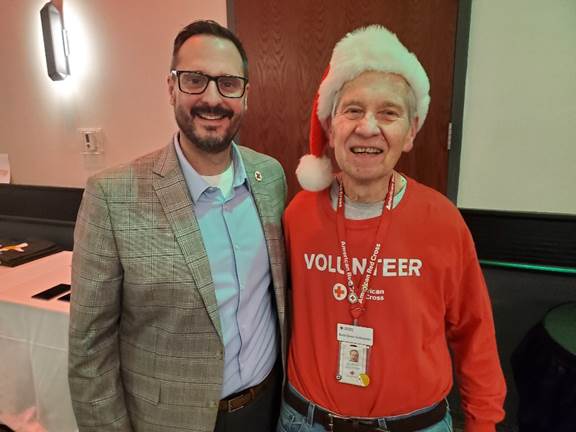
Gordy volunteers each year at the annual Holiday 12 Hours of Giving blood drive. Pictured with Brice Johnson, CEO of the Red Cross Minnesota and Dakotas Region, at the 2023 drive. Photo: Sue Thesenga/American Red Cross.

One of Gordy’s favorite parts of volunteering is thanking donors for stepping up to help others. “Thanks for being part of the 3 percent,” he often tells them, referring to the small percentage of Americans who donate blood even though 62% are eligible. Donors are often surprised by that statistic. He encourages them to return as often as they can and to spread the word so even more lives can be saved.

Gordy also enjoys sharing lifesaving stories and hearing from donors about their own experiences — whether they’ve needed blood themselves or know someone who has. These conversations get to the heart of why blood donation matters and help strengthen the connection to the cause.

A huge thank you to Gordy for all he does to support the Red Cross lifesaving mission and for being such an extraordinary role model. And a warm welcome to Will, Johanna, and Ethan to the lifesaving team. Talk about rock stars!

Join the Red Cross lifesaving team! Make an appointment to give blood or platelets now by using the Red Cross Blood Donor App, visiting RedCrossBlood.org or calling 1-800-RED CROSS (1-800-733-2767).

Let’s Kick Cancer’s Butt

Blood donors can help ‘Barrett the Brave’ and other children with cancer

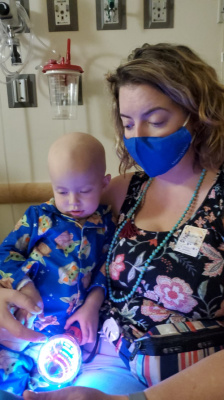
Barrett has needed multiple blood and platelet transfusions during cancer treatment.

“Today my baby’s health was improved because someone gave blood,” wrote Abby Gregory on June 4 in his CaringBridge journal when Barrett received his first transfusion. This was a couple months after she found “a lump the size of a grape” in her son Barrett’s cheek this spring.

The lump – in a muscle – is a rare and serious form of pediatric cancer called rhabdomyosarcoma. Barrett – not yet two years old when diagnosed – started several weeks later on a brutal treatment plan of chemotherapy, radiation, and possibly surgery, over a 12-to 14-month period.

“We’re fighting for his life, which is still hard for me to wrap my head around,” says Abby.

Part of this fight for a boy “who loves trucks, shovels and his mom and dad” has involved multiple, hours-long transfusions of red blood cells and platelets during a time of shortages across the country. Both are often critical for giving lifesaving strength and time to patients enduring aggressive treatments against cancer.

Barrett’s first transfusion was the day before his second birthday – when he was in the hospital with his platelets and red blood cell counts too low. “It was overall fairly simple but, for some reason felt extra scary to us. But I guess all of this is scary,” says Abby.

“Barrett the Brave”

In October, Barret completed 28 proton radiation treatments and during this time he’s needed more lifesaving transfusions. He’s a brave boy experiencing great physical suffering, but “he’s keeping us smiling even through the pain,” says Abby.

Abby holds Barrett during chemo.

Barrett will need more transfusions to keep his red blood cell count high enough for more chemotherapy treatments during the coming months.

Grateful for blood and platelet donors, Barrett’s mom encourages people to donate or host a blood drive. Witnessing her son’s bravery, Abby asks for others to donate blood or platelets to help “kick cancer’s butt.”

Visit redcrossblood.org to schedule your blood donation appointment.

Story by Lynette Nyman/American Red Cross; Photos courtesy of Barrett’s family. Visit Barrett’s CaringBridge journal here. #BraveBarrett

Stuart’s Back – Rolling Up a Sleeve to Help Patients in Need

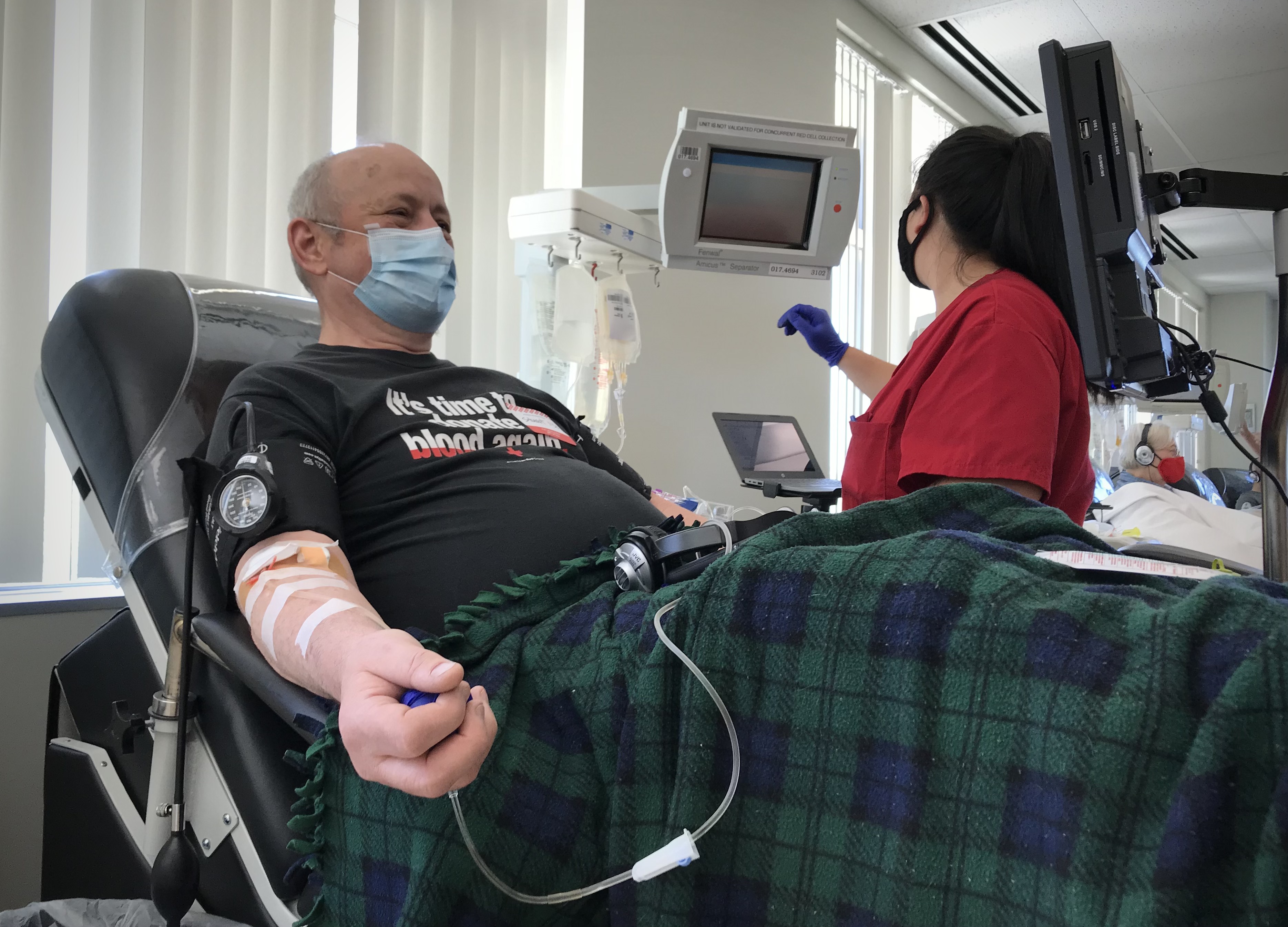
Stuart Anderson at the Red Cross Blood Donation Center in Minneapolis, June 4, 2021.

“It’s time to donate blood again,” reads the message on his vintage Red Cross T-shirt, speaks to his moment: Stuart is back, helping others have time together in the midst of cancer treatment or other traumatic events that touch so many of us. He has time and good health so he wants to help anyway he can.

“It’s been a while,” says Stuart Anderson while starting his platelet donation at the Red Cross Blood Donation Center in Minneapolis. For years he donated, starting in 1984, but then time passed and he got busy, like most of us.

Then tragedy happened. Stuart’s son developed cancer, specifically a brain tumor in the midst of being fully alive and studying to be an oncologist. “We had a few years together after his diagnosis,” says Stuart. Donated platelets for cancer treatment helped give them time. “I talked to him every day.” His son died six years ago at 30 years old.

More motivation comes from his own need for blood after falling out of a tree when he was a child. His wife and daughter have received blood, too.

Red Cross phlebotomist Suriya and platelet donor Stuart, Minneapolis, June 4, 2021.

Just steps away from the Mississippi River, a team works inside the Red Cross donation center to help Stuart and other donors be comfortable during a process that can take, on average, around two hours. Blankets keep them warm and movies keep them entertained. Stuart is patient while a phlebotomist adjusts his donation lines.

This Navy veteran served years in active duty and in the reserves. While getting his platelet donation underway, he recalled turning to the Red Cross for emergency financial assistance when he was a young recruit and newly married. “We were living off base,” he says, “and got a loan, $250, to help us.”

“Great people at the Red Cross,” he says. “Thanks for all you do.” We’d like to say thank you to Stuart and to all who donate to help patients in need. His return is a great reminder for donors who’ve been away for a while to make time. It’s super easy to make an appointment via the Red Cross Blood Donor App, which also allows you to follow your donation journey.

Story and photos: Lynette Nyman/American Red Cross

You could be a cancer kicker

Emery has needed both blood and platelets during cancer treatments.

You may be surprised to learn that you can play a direct role in helping patients kick cancer simply by donating platelets through the Red Cross.

Take someone like 5-year-old Emery, who was diagnosed with acute lymphocytic leukemia last spring. During her intense cancer treatments, Emery has needed both blood and platelets.

“Emery would not be able to recover from chemotherapy without lifesaving transfusions,” says her mom, Morgan. “Every time they hang a bag of platelets or blood up on her IV pole, I wish whoever donated that could see who it’s going to. There would be no chance for her to live, taking that chemotherapy, if it weren’t for the blood products.”

Cancers, such as leukemia and lymphoma, and certain types of chemotherapy drugs and radiation, can damage the bone marrow where red blood cells and platelets are produced. Platelet transfusions may be needed to prevent life-threatening bleeding and help cancer patients continue receiving lifesaving treatments. More than half of all platelet donations are given to cancer patients.

Platelets are tiny cells that form clots and stop bleeding. About 2 million units of platelets are transfused each year in the U.S., and more than half of all donated platelets go to cancer patients. While cancer patients undergo treatment, a major side effect is low platelet counts. Without a platelet transfusion, cancer patients face life-threatening bleeding since platelets help blood to clot.

The Red Cross needs your help to keep up with hospital demand for platelets. Because platelets must be transfused within five days of the time they are donated, there is a constant, often critical need for new and current donors to give.

This is where you come in.  You can help the fight against cancer in the following ways:

  • Please give platelets or blood. Appointments can be made using the Red Cross Blood Donor App, online at RedCrossBlood.org/Cancer or by calling 1-800-RED CROSS (1-800-733-2767).
  • Invite family and friends to donate platelets or blood too. All blood types, except types O negative and B negative, are encouraged to give platelet donation a try. Type O negative and B negative donors are encouraged to give whole blood or a Power Red donation, where available.
  • Did you or a family member receive platelets or blood? Let us know. Please contact Sue Thesenga at sue.thesenga@redcross.org or 651-895-7542 so we can consider sharing it for  inspiring others to donate.

Learn more and sign up to be a #CancerKicker at RedCrossBlood.org/Cancer.