Three Heroes of Compassion: Rebekah, Sharon, and Tracy – Blood Donors Making a Difference

At Sabathani Community Center, three remarkable women – Rebekah, Sharon, and Tracy – recently stepped up to give the gift of life, each with a personal story and a shared mission: to make a difference in the lives of those in need of blood donations.

Rebekah: Leading by Example

As the Community Health Navigator at Sabathani, Rebekah is no stranger to encouraging others to take action for their health and well-being. When the call went out for blood donations, she knew she couldn’t ask others to do something she wasn’t willing to do herself.
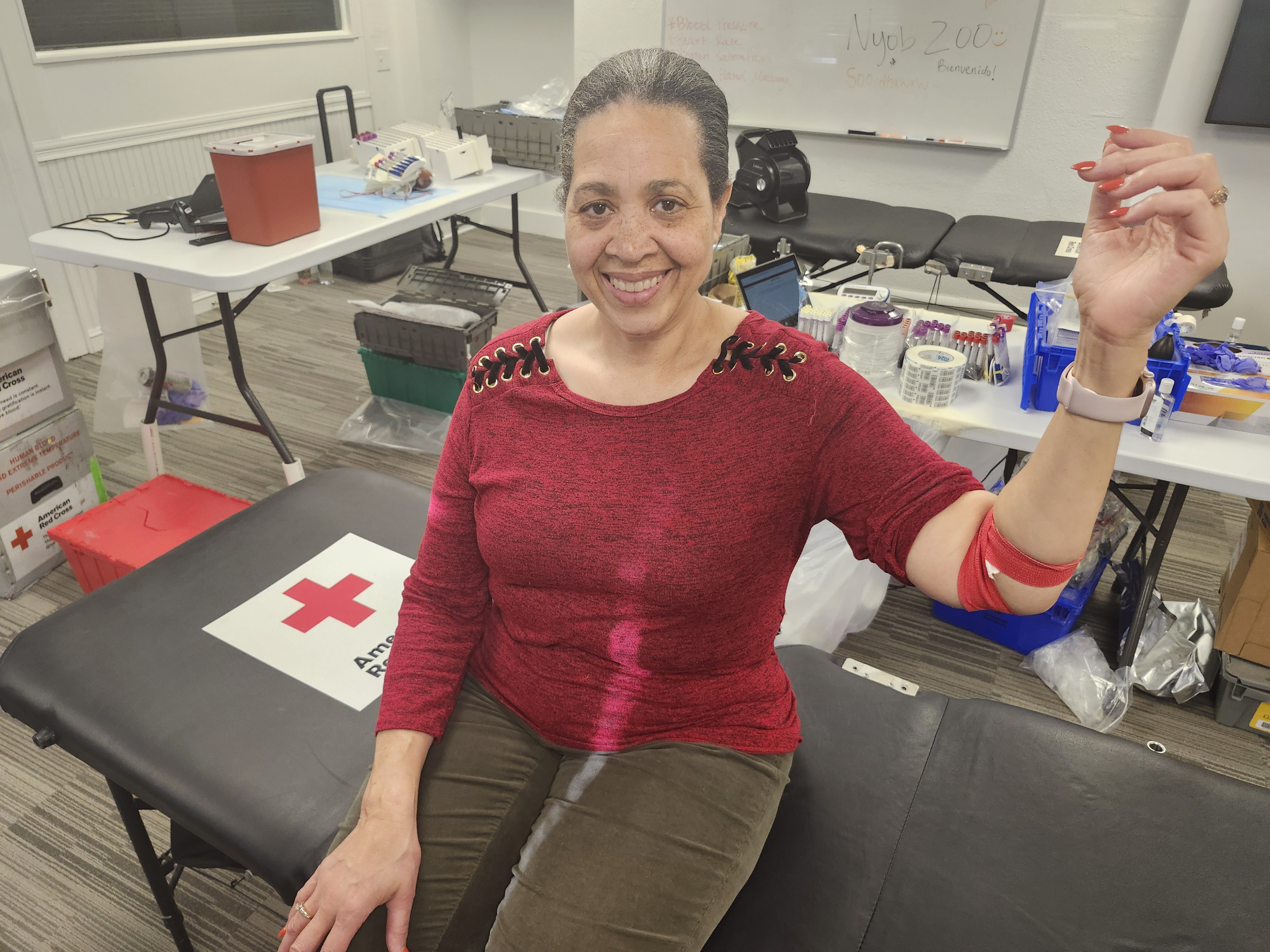
Leading by example, Rebekah rolls up a sleeve for the first time at Sabathani Community Center’s first blood drive.

“I believe in leading by example,” she said, reflecting on her decision to donate. Despite some initial nerves, Rebekah’s jitters were quickly put to rest by the phlebotomist, who guided her through the process with care and ease.

What made her donation even more meaningful was her understanding of the critical role blood transfusions play for patients, particularly those with sickle cell disease. While sickle cell hadn’t personally impacted her family, Rebekah felt deeply passionate about the cause, especially when considering the importance of matching ethnicities in blood donations for those affected by the disease.

Sharon: Returning to a Lifesaving Tradition

Sharon, a former Red Crosser, hadn’t donated blood in several years, but when her niece Rebekah called on her to help with the drive, she knew it was time to get back into the fold. Sharon’s return to the blood donation chair wasn’t just a personal milestone, it was a heartfelt way to support her community.

Former Red Crosser and blood donor, Sharon, returned to donating blood at the Sabathani Community Center’s blood drive, November 11, 2024.

“I knew it was time,” Sharon shared. “When Rebekah reached out, I couldn’t say no. It feels good to be able to help others in such a simple yet profound way.”

Her decision to donate wasn’t just about family – it was about making a difference in her community and giving back to a cause that had always been close to her heart.

Tracy: From Volunteer to First-Time Donor

Tracy’s story is one of transformation and inspiration. She began as a volunteer at Sabathani’s blood drive, helping organize and assist others who came to donate. But today, she took the next step: she became a first-time blood donor herself.

Tracy donates blood for the first time and encourages others to roll up a sleeve.

Tracy’s mantra that is etched on her arm, “Each day is a gift,” is a reminder to live life with gratitude and purpose – and today, she was able to share that gift of life by donating blood.

“I want to encourage others to donate too,” Tracy said with a smile. “It doesn’t take long, and you’re helping save lives. If more people knew how easy it is, we’d have more donors for sure!”

A Community Coming Together

These three incredible women – Rebekah, Sharon, and Tracy – show us the power of compassion and the difference one person can make in the lives of others. Their stories are a testament to the power of community, the importance of blood donation, and the lives that can be saved with a simple act of kindness.

A heartfelt thanks goes to Sabathani Community Center for organizing their very first blood drive and for continuing to raise awareness about the critical need for blood donations. Together, we can ensure that patients with sickle cell disease and others in need of transfusions have access to this life-saving resource.

Here’s to many more inspiring stories and to the continued partnership with Sabathani, as we work together to make a lasting impact on the health and well-being of our community.

Visit here to learn more about the importance of a diverse blood supply here.

Living with sickle cell disease

Bathesheba Benson, a sickle cell warrior, keeps her eyes on the future

Bathesheba Benson knows hope and pain more than most. Known as Sheba, she’s among the estimated 100,000 people in the United States living with sickle cell disease.

Sickle cell disease turns soft and round red blood cells into hard and crescent-shaped cells that clump together, reducing blood flow.

Sheba’s first sickle cell crisis happened when at home in New Hope, Minnesota. She was just five years old and had a stroke. It was then that her family learned she had inherited the sickle cell trait from both of her parents.

“My parents kind of knew because I would swell up. They knew something was wrong, but they didn’t know I had sickle cell,” she says.

“I want to see the world. There’s so much to do. ” – Sheba Benson, a sickle cell warrior

Now thirty-seven years old, Sheba knows well the challenges facing ‘sickle cell warriors’ who shape their days, weeks, and years into a life that prevents pain and reduces crises to the best of their abilities.

Sometimes a crisis can’t be prevented. Certain factors, like extreme cold, elevate risks. Even something quite ordinary, such as five-minute walk to a nail salon, can ignite the spiral.

“Oh, my goodness, it’s so hard,” she says. “I have to plan life out ahead of time. I have to double think about my decisions that I take in life.”

One decision – staying in college to study childcare – came to halt when she was twenty-one years old. She suffered a second stroke. The event also triggered a bout of depression so she went with her mom to visit relatives in Ghana. 

“I feel healthier once I get blood in my system – I feel brighter, stronger and healthier – you can see it in my face – my sister says ‘you look better’.”

Sheba Benson – Sickle Cell Warrior

“I was depressed there, too, because I wasn’t doing anything and not going anywhere. So, I decided to come back to Minnesota,” she says.

A critical, lifesaving treatment through all of this is blood transfusion. Red cell transfusion increases oxygen in the blood, boosting her immune system and reducing a severe pain crisis, stroke or other life-threatening conditions. Sheba’s transfusions have been numerous throughout the years, including more intensive apheresis therapy.

“They always transfuse me when my hemoglobin is low. Sometimes they give me an apheresis transfusion when I’m very very sick. They place a tube in my neck or groin area, and then hook me up to a big machine where they exchange blood,” she explains.

The transfusion transforms her in moments.

“I feel a lot lot better, like instantly – I feel stronger instantly – I feel healthier once I get blood in my system – I feel brighter, stronger and more healthier – you can see it in my face – my sister says ‘you look better’.”

“I feel healthier once I get blood in my system.” – Sheba Benson receives blood transfusion when she has a sickle cell crisis.

Sickle cell warriors like Sheba rely on blood donors for this crisis mitigating and lifesaving therapy, which could be needed any day of the year. Finding a blood match beyond well-known blood types like A, B and O is essential.

The hardship of finding a match lessens with a more diverse blood supply. The most likely matches are with donors who are Black. And because blood compatibility decreases with each transfusion, ongoing diversity from new and regular Black donors makes the difference for Sheba and other sickle cell patients.

“My blood bags always have Red Cross on it,” she says. “Please donate because it really goes along way – it helps me, it helps other patients out there. If I could donate, I would donate. Please go out there and donate if you can.”

When feeling well, meaning her pain is okay, Sheba holds her gaze on happiness, especially being with her friends and family. Meeting new people brings her joy, too.

“I want to see the world. There’s so much to do. My dream for 2022 is to stay out of the hospital and travel more. The ocean is my peaceful place. I want to be on the beach somewhere!”

To learn more about sickle cell disease, click here. To find a donation appointment, click here.

Story by Lynette Nyman/American Red Cross. Photos provided by Sheba Benson

Fall 2021 Sickle Cell Initiative Blood Drive

Our profound thanks to everyone who supported our Sickle Cell Initiative blood drive on September 25 at Fellowship Missionary Baptist Church in North Minneapolis. We had a great turn out – collected 51 units! Many thanks to Sickle Cell Initiative local partners and sponsors, including HealthPartners, Sickle Cell Foundation of Minnesota, Black Nurses Rock Twin Cities Chapter, Fellowship Missionary Baptist Church, Epsilon Rho Chapter of the Omega Psi Phi Fraternity, Delta Sigma Theta Sorority, and KMOJ. A diverse blood supply every day helps sickle cell patients in crisis. Learn more.

One of two Red Cross buses, including the regional fleet’s newest, supported the blood drive. In total, 55 people, including 17 new donors, presented to donate. 51 units were collected on the two buses.
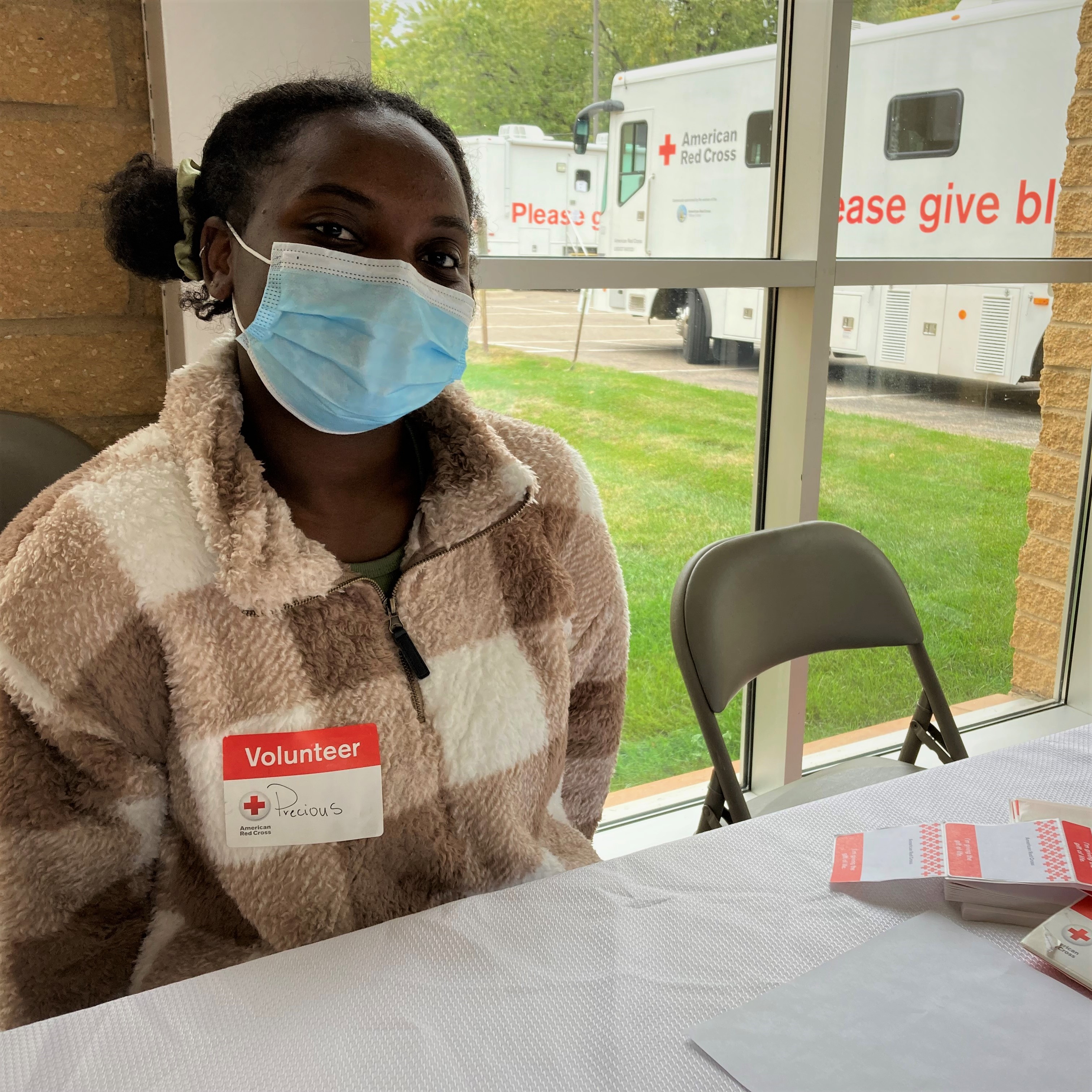
Precious, a new Red Cross volunteer and a recent college graduate, checked in donors as they arrived throughout the day at Fellowship Missionary Baptist Church in North Minneapolis.
Twin Cities Red Cross board chair, Dr. David Hamlar, helped plan the drive and donated blood. “There’s more work to do,” he says. We’re grateful for his ongoing support for this long-term initiative.
Epsilon Rho Chapter of the Omega Psi Phi Fraternity helped organize the blood drive and encouraged people, especially first-time donors, to roll up a sleeve for sickle cell and other patients in need of blood transfusion.
Community partners like Rae (l) with the Sickle Cell Foundation of Minnesota and Beverly (r), a Red Cross volunteer who’s also with Fellowship Missionary Baptist Church, are critical for blood drive success.

Infographic – Blood Donors and Diversity

People come in all different shapes, sizes and blood types. Most blood types fall into one of the four major groups: A, B, AB, O. However, some people have rare blood types that fall outside the major groups, and for these patients, we need a more diverse blood supply.

For example, blood donors who are Black play a critical role to help ensure patients with sickle cell disease have continued access to the treatments they need. You can make a difference in the life of someone with sickle cell disease.

Black donors are more likely to be deferred due to low hemoglobin. This deferral is temporary and is to help protect the health of both the donor and the recipient. To help avoid a blood donation deferral due to low hemoglobin, the Red Cross recommends that individuals who have low iron levels begin preparing for their blood donations six to eight weeks prior to their appointment. This is because it can take several weeks for the body to absorb iron. We encourage anyone interested in donating blood to consult with their healthcare provider about taking multivitamins with 18 mg of iron. In addition, eating a nutritious, well-balanced diet with foods rich in iron and in vitamin C helps to maintain healthy iron levels.

Make your appointment.