For a while, they called me Firestarter

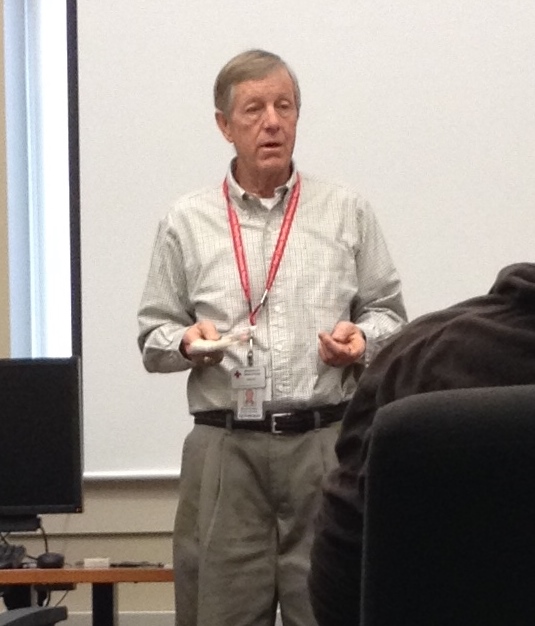
Story by Grace Littlefield (pictured left), an American Red Cross volunteer based in Bemidji, Minnesota

As we enter the busy season for house fires, I can’t help but think of when I accidentally started one myself as a teenager. It happened so much faster than I ever imagined it could, and the terrifying experience has made fire safety and preparedness an extremely important part of my home life (and now as a volunteer with the American Red Cross).

Unlike the more common cause of house fires in our area (improper heating sources), though, the one I was involved in started because of…fried ice cream.

My older brother, Sam, went to Purdue in West Lafayette, IN for civil engineering. He and his girlfriend lived in an apartment complex not far from campus, which housed around 30-40 people. My parents, little brother and I went to visit him regularly.

Still in high school, I made it a point every time we visited to impress him somehow with new knowledge I’d gained over the months since I’d last seen him. I did not want him thinking that just because he was in college that I couldn’t whip out a few culturally interesting tidbits that would wow him and his girlfriend. During one visit, I insisted that I make fried ice cream for dessert. So culturally interesting, right? (I’d been making it constantly since the previous semester of Spanish class because I couldn’t cook much else for a particular assignment and come on, fried ice cream is good.)

For those not familiar with the process of making fried ice cream: yes, actual frying is involved. You have to heat your oil and plop a little ball of ice cream — coated in flour or cereal or whatever — in it, and then quickly take it out of the oil and put it on a plate. A few sprinkles, chocolate syrup, caramel, whipped cream, etc., and BOOM. Delicious fried ice cream.

You have to watch the oil, though. That was the first thing I’d learned when going over the recipe; if the oil gets too hot, it could start on fire and oil fires are not easily put out.

HA! How could anyone be so stupid as to not watch the oil? Even before learning how to make this, it was a no-brainer that unattended, burning-hot oil was a recipe for disaster. After dinner, I put the oil on the stove and talked and talked and talked with Sam and his girlfriend, trying to be cool and seem like I knew things about politics and literature. There was suddenly a smell that wafted in from the kitchen, which I thought was burning hair but was not.

After a few seconds, I felt like an idiot. And then I panicked. With all the hubbub of the evening, I had completely forgotten that approximately 30 minutes before, I had put two cups of oil into a pot and turned the heat on their electric stove all the way up (we’d finished dinner and I started late, so I was in a hurry to get it going). I ran into the kitchen, where the pot had caught entirely on fire and sparks were leaping from the pot to the walls, quickly turning the wallpaper brown then black. My parents and little brother ran around trying to find a fire extinguisher, which was not immediately found. Sam was trying to smother the flames with towels, which only caught fire themselves. The kitchen became too hot to stand in.

As I was turning to run out of the kitchen, I laughed out loud. There was a pan hanging on the opposite wall! I could just put the pan on the top of the oily pot and this whole stupid mess will be over!

It was a somewhat smart move, and it did work—for a moment. However, the walls were still burning and the oil on the stove was smoking so much that I knew I needed to get out of there anyway.

Someone had finally called the fire department and people in the other apartment units were spilling out onto the sidewalk because of the dense smoke.

My dad, however, was nowhere to be seen. We were freaking out, trying to figure out whether he was still inside or not. Within moments, we were given an answer: he ran out of the apartment building and threw the burning hot pot outside. (I was standing right there and was hit by some of the oil, which sucked, but he was later forgiven.) He had grabbed flour-coated washcloths WITH HIS BARE HANDS, scooped up the pot and sprinted outside to save the building and whoever was still inside. The pot continued to burn, and he fell to the ground as his hands bubbled up from the red-hot metal.

My nickname was “Firestarter” for a while after that.

There were a few things that could have gone better in this scenario, a few of which you have probably already thought of:

  1. DO NOT LEAVE OIL BURNING UNATTENDED. Stand in the kitchen. Have your dialogue partners join you, if you really need the company.
  2. Know where the fire extinguisher(s) is/are in your environment (even if you’re just visiting). Get a Class K fire extinguisher for your kitchen, too — a lot of people only have Class A/B/C fire extinguishers, which are useless for grease fires.  (We found this out the hard way after someone actually found the fire extinguisher and tried to use it.)
  3. Don’t run back into a burning building/don’t be a hero. My dad, despite throwing the burning pot outside and probably saving the building from completely burning down, did not need to run back inside. Not only did he severely burn his hands (he couldn’t work for two months because they melted, more or less), but the hot oil hit me, too. We also later found out that most of the apartment building’s tenants, hearing their fire alarms going off and smelling smoke, had already evacuated the apartment building, as per the emergency evacuation plan given to them on move-in day. The building, as is required by law, was covered by insurance and so was I; it would have been devastating for people who lost their homes, but at least he wouldn’t have put his life at risk.
  4. Keep a ton of baking soda in your kitchen, just in case. Baking soda neutralizes oil fires better than flour or other commonly-used baking ingredients.
  5. Have an emergency evacuation plan for your dwelling. Sam, bless his heart, was trying to put out the fire instead of directing people where they should go. Again, don’t be a hero — just stick to the plan and keep people’s safety at the forefront of your mind.

During the past six weeks or so, the American Red Cross Northern Minnesota Region has helped more than 10o families affected by fires at home. Most house fires start in the kitchen. To get more house fire safety tips click here

Thanks Grace for sharing your story. We like the name Grace a lot more than Firestarter.

Students and seniors sign holiday mail for heroes

Erica Harmsen (l) and Priscilla Miller (r) sign holiday cards American military, Bemidji, Nov. 11, 2013.
Erica Harmsen (l) and Priscilla Miller (r) sign holiday cards for the American Red Cross Holiday Mail for Heroes program, Bemidji, Nov. 11, 2013.

Several TrekNorth High School students joined forces with residents of the WindSong Senior Living Center in Bemidji this past Veterans Day to help write holiday card messages as part of the American Red Cross Holiday Mail for Heroes program.

“I like to include that we’re writing from Bemidji,” Erica Harmsen, the accompanying TrekNorth teacher said to one of the residents. She explained that troops might like seeing where their correspondence is coming from – and that making it more personal is nice, especially with cards being sent overseas.

TrekNorth students and Windsong residents sign holiday cards, Bemidji, Nov. 11, 2013.

Students and residents had no trouble writing out several cards each. All participants were pleased they will bring a bit of holiday cheer to American veterans, military families and active-duty service members.

This is the second year that TrekNorth has partnered with WindSong to create holiday cards for Holiday Mail for Heroes. WindSong Volunteer Coordinator Alice Stark-Anderson and Senior Services Administrator Linda Barkley helped organize the event.

Lil Humenick (l) and Kassandra Zanter (r) work together on signing holiday cards, Bemidji, Nov. 11, 2013.
Lil Humenick (l) and Kassandra Zanter (r) write holiday cards, Bemidji, Nov. 11, 2013.

American Red Cross North Star Chapter volunteers will convene to write out more cards on November 21. Those interested in participating may contact North Star Chapter Community Coordinator Lynn Arlt at 218-444-9490.

Story and photos by Grace Littlefield, American Red Cross Volunteer 

Our Fabulous “SAF FIVE”

In celebration of Veterans Day on November 11, 2013, the American Red Cross Northern Minnesota Region would like to recognize its Service to the Armed Forces (SAF) volunteers and thank them for their service, both for the Armed Forces and the Red Cross. SAF volunteers provide vital information about Red Cross services to military members and their families prior to basic training and deployment. These services include emergency communications and financial assistance during active-duty and deployment.

In the Minneapolis-St. Paul metro area, the “SAF Five” include Jim Kinzie, Brent Jordahl, Bill Johnson, Jim McKinney, and Bill Kelvie. Each came to the Red Cross with different military service stories, but they had one thing in common: the desire to give back.

Jim Kinzie - archiveJim Kinzie served in the Army for 29 years. “I enjoyed my service.” He joined the Army in 1966 on active duty, went through Basic Combat Training, Advanced Individual Training (AIT), and Officer Candidate School (OCS). Kinzie was commissioned in 1967 and served in the Air Defense Artillery at the Chicago-Milwaukee Defense Area until 1969. He then served the remaining 26 years in the Army Reserves at Fort Snelling. When asked about what brought him to volunteer for the Red Cross, Kinzie simply said, “Payback time.” and further explained that “The Red Cross was helpful in many situations that I was involved in with the military, so this is my opportunity to give back.”

Johnson, William 1-24-12Bill Johnson served in the Army as a nurse for nearly 24 years – five and a half years on active duty and 18 years in the Army Reserves. Bill primarily worked at the Letterman Army Medical Center in San Francisco, CA, on the mental health unit. At this time, after the Vietnam War, there were a lot of service members admitted for “shell shock” or “battle fatigue,” and Bill spent a lot of his time exploring the diagnosis of PTSD. Bill reflected on this experience and said “it taught me to be patient.” After spending some time with the local Medical Reserve Corps, he was recommended to go to a Red Cross presentation where he saw the SAF team in action. Bill has now been an active member of SAF for two years and said, “My passion is now SAF, but I also work with Disaster Health Services and Disaster Mental Health.”

Brent - MEPSBrent Jordahl enlisted in the Minnesota Army National Guard Aviation during the Vietnam War era. He served for 6 years mostly as crew chief in helicopter maintenance, while stationed at Holman Field in St. Paul, MN. Thankfully the government did not activate the Guard during this time, so Brent was not deployed overseas to fight in the war. He started volunteering with the Red Cross in other areas long before his professional retirement, but afterwards he wanted to expand his volunteer service and was led to SAF.  Brent speaks highly of the Red Cross, saying that it’s “one of the most well respected and admirable organizations there are. There are so many different things the Red Cross does and I felt like I wanted to be a part of it.”

Kelvie, Bill Sept 2011Bill Kelvie served in the Army for almost 22 years. He went to Military Police School and was active for his first 3 years, and then served his remaining 18-19 years in the Army Reserves. During this time, Kelvie was stationed in Germany and worked at an airport in U.S. Customs. His volunteer service with the Red Cross began shortly after he heard of Holiday Mail for Heroes. Kelvie’s main goal in working with SAF is “to give back to those that are serving our country.” He said he “sympathizes with them” and wants to do as much as he can to help out.

Jim McKinney - archiveJim McKinney enlisted in his senior year of college and served in the Army from 1968-1970. He was stationed at the on duty meeting zone in the Korean Demilitarized Zone at Panmunjom for the United Nations joint security. McKinney originally came to volunteer for the Red Cross after the 35W Bridge collapse, and was later recruited into the SAF program. He recalled one of many standout moments during his time so far with SAF when three mothers thanked him for their sons’ safe return home. McKinney says, “The system really works. It felt very rewarding.”

Please celebrate the on-going achievements of all SAF volunteers, including those across our region in Duluth, Bemidji, Alexandria, and St. Cloud. Last year, the region’s SAF volunteers provided nearly 2,400 emergency communication services between military members and their families; and they gave more than 3,500 pre-basic training and pre-deployment briefings for military members across our Red Cross region.

Story by Kelly Lynch, Communications Intern for the American Red Cross Northern Minnesota Region. For more information on Red Cross Service to the Armed Forces click here. For more information about how to become a Red Cross volunteer click here

Winter, again?

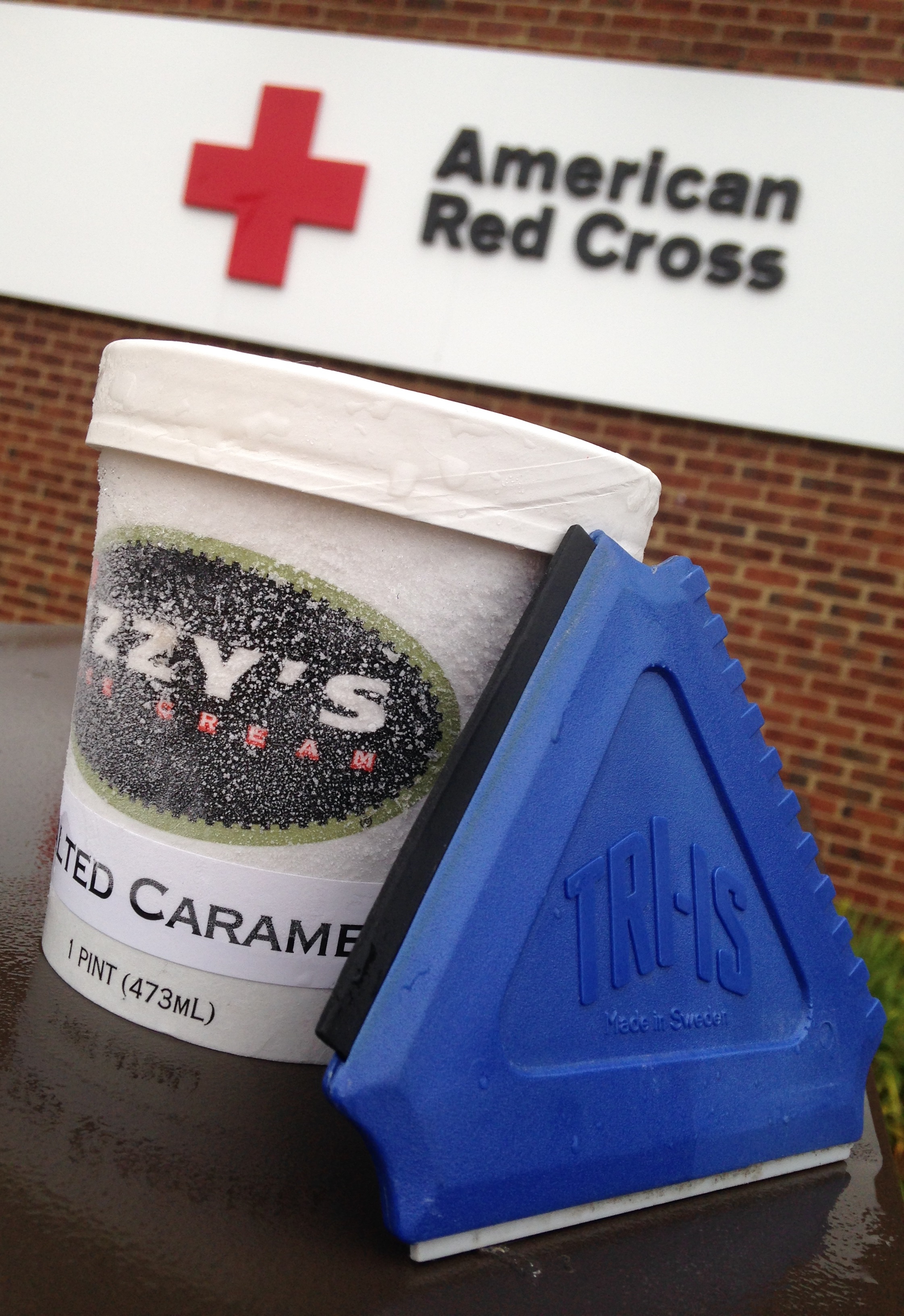
Ice cream vs. ice scraper? Hmmm, what would the Red Cross chose?

Are you, like me, scattered, doing too much, not thinking AT ALL about winter, stormy weather, and its hazards? Seriously, where is that ice scraper, snow brush, hat, gloves (matching? HA!), and that I-thought-it-was-high-tech (light, warm, and breathable) coat that’s supposed to resist getting wet when snow lands on it? They’re nowhere around when I hear a weather report from a silky voice, all calm and dolce vita-like coming from my radio, saying something DUMB like there’s 3 to 5 inches of snow expected (HEY, dogs, stop barking!) tomorrow night (or tonight?) and the day after. Okay, FINE, whether (or weather) it’s tonight or tomorrow (or every other day thereafter), it’s time to check my life kit, car kit, hunker down kit. It’s time to click here and review Red Cross tips (about, prepare, respond) for winter storms and get my ice and snow act together AGAIN. How about you?

From Lynette Nyman, American Red Cross Communicator, and Cali Gal Ex-Pat in MN