Carol Holm of the American Red Cross surveys flooding caused by Hurricane Hanna, in Edcouch, TX on Tuesday July 28, 2020. Photo by Scott Dalton/American Red Cross
Fulfilling our humanitarian mission to alleviate human suffering continues in response to disasters in the midst of the COVID-19 pandemic. For example, 17 volunteers from across our three-state region are helping people affected by Hurricane Hanna in Texas. These deployments include volunteers like Carol Holm (pictured above and below) who are on-the-ground in Texas while others are responding remotely from home.
In response to Hurricane Hanna, more than 200 Red Cross disaster workers are beginning detailed damage assessment work across Texas, in addition to supporting additional response efforts. Feeding missions are underway in the hardest hit counties where the power has been out and food is unavailable. So far, more than 5,900 meals and snacks have been served with partners. Over 470 overnight shelter and hotel stays have been provided with partners. More than 400 contacts have been made to support any physical, mental health, disability and spiritual needs.
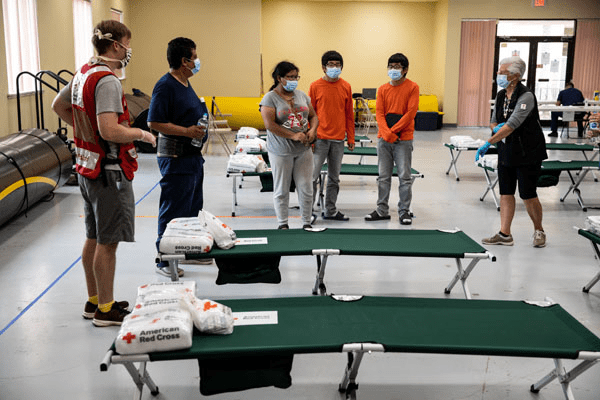
Red Cross volunteers Carol Holm, right, and Marc Lazerow, left, show the Cantu family to their cots at a Red Cross shelter for people displaced by Hurricane Hanna in Edcouch, TX on Tuesday July 28, 2020. Family units are grouped closer together while other cots are spaced further apart for social distance from others to help protect against COVID-19. Photo by Scott Dalton/American Red Cross
Throughout the 2020 hurricane season, dedicated Red Cross relief workers, mostly volunteers, will continue to prepare for and respond to each round of storms providing comfort and care as affected communities assess damage and attempt to return to daily life, amidst the continued struggle against the Coronavirus Outbreak.
We’ve undertaken a suite of risk mitigation activities for our disaster workforce, including prioritizing non-congregate lodging for our responders, mandating the use of face coverings for everyone working at a Red Cross work site, pre-arrival COVID-19 testing when required by the receiving state, departure testing for all deployed workers, and maximizing virtual work.
You can help people affected by disasters like storms and countless other crises by making a gift to American Red Cross Disaster Relief or by becoming a Disaster Relief Volunteer. You can donate or start your volunteer journey at redcross.org/mndaks.
Animals can sometimes be overlooked when creating a disaster preparedness plan for your household but are still at risk during an emergency.
Floods and home fires are some of the most common disasters that families in Minnesota and the Dakotas face. It’s important to have a plan in place for your family members, pets, and livestock in the event that a disaster strikes close to home. Below are some ways to include your pets and livestock in your disaster preparedness plan. Note: This post mainly focuses on cats, dogs, and livestock. For information on other pet species, visit the links in the Additional Resources section at the end.
10 Ways to Include Your Pets in Your Disaster Preparedness Plans
1. Include pets in evacuation practice drills so they feel comfortable riding in their travel carriers. Practice transporting your pet by taking them for rides in a vehicle similar to one you would be evacuating in.
2. Microchip your pet(s). Register your pet’s microchip with the manufacturer and keep your contact information updated at all times.
3. Prepare a Pet Disaster Kit so evacuation will go smoothly for your entire family. This kit should include:
– Sturdy leashes, harnesses and/or carriers to transport pets safely and ensure that they can’t escape.
– Food, drinking water, bowls, cat litter/pan and a manual can opener.
– Medications and copies of medical records stored in a waterproof container
– A first aid kit.
– Current photos of you with your pet(s) in case they get lost.
– Information on feeding schedules, medical conditions, behavior problems, and the name and number of your veterinarian in case you have to foster or board your pets.
– Pet beds and toys, if easily transportable
4. Communicate which family member is tasked with grabbing the emergency pet disaster kit. Make sure each member of your family knows your pet evacuation plan.
5. Ensure that your pet’s vaccinations are current and that all dogs and cats are wearing collars with securely fastened, up-to-date identification. Many pet shelters require proof of current vaccinations to reduce the spread of disease.
6. Know where your pet might hide when stressed or scared. Practice catching your pet, if needed.
7. Identify which pet friendly hotels and motels along your evacuation route will accept you and your pets in an emergency. The majority of Red Cross shelters cannot accept pets because of health and safety concerns. Service animals that assist people with disabilities are allowed in Red Cross shelters.
8. Create a buddy system with neighbors so everyone is prepared to help if a disaster strikes when a family is away.
9. Affix a pet alert window cling to a visible front window and write the number of pets in your house. This is critical for first responders to know how many animals may need to be evacuated.
10. Download the Red Cross Pet First Aid App for access to training on dog and cat first aid and other resources to be prepared for a disaster.
When Disaster Strikes
If you must leave your pet behind in the event of a disaster NEVER leave them chained outside. Leave them loose inside your home near entrances with plenty of food and water.
While the best way to ensure your pet stays safe during a disaster is to evacuate them with you, remember never to delay escape or endanger yourself or family to rescue a family pet.
Caring for Pets After Disaster
Be aware of hazards at ground level, particularly debris, spilled chemicals, fertilizers and other substances that could injure your pet.
Watch your animals closely and keep them under control as fences and gates may be damaged or destroyed.
Disasters can alter the scents and the appearance of areas your pet is familiar and comfortable with. Make sure you monitor their well being and be aware that changes in levels of aggression and defensiveness are possible.
10 Ways to Prepare Livestock for Disasters
1. Ensure all animals have some form of identification.
2. Evacuate animals whenever possible. Map out primary and secondary routes in advance.
3. Hold disaster drills and practice emergency procedures with all employees and animal owners.
4. Make sure you have the trailers needed for transporting and supporting each type of animal.
5. Make available experienced handlers and drivers that understand your evacuation plans.
6. Help organize safe holding facilities in your community such as fairgrounds, farms, and racetracks for use in an emergency.
7. Ensure destinations have food, water, veterinary care, and handling equipment.
8. For flooding disasters, move animals, feed, and water supplies to higher ground. Act quickly at the first sign of rising water.
9. Do not let animals loose to fend for themselves during a disaster unless a wildfire threatens your area. Animals on the road can be injured and can create a hazard for evacuating motorists.
10. Post a sign for rescue workers noting the number and types of animals left behind.
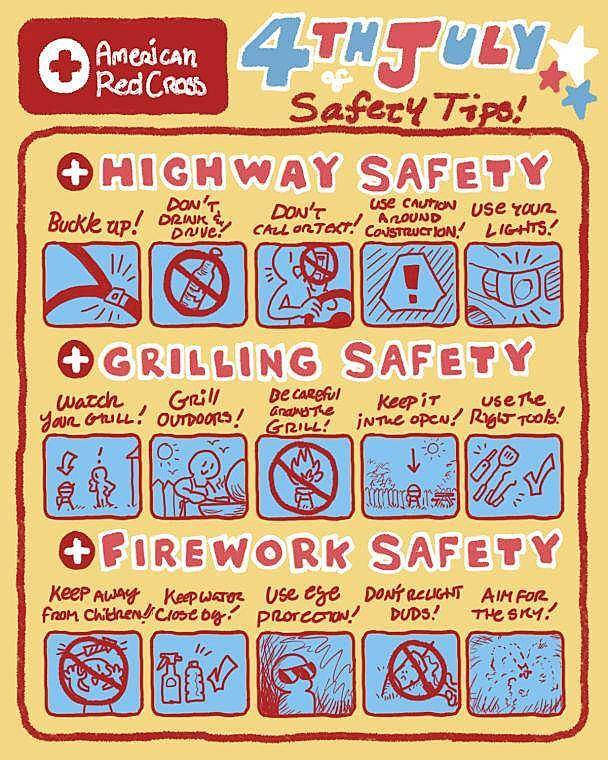
This year, celebrating Independence Day will be different due to the ongoing COVID-19 pandemic. We have safety tips that you can follow, especially if your community is re-opening.
COVID-19 Safety
• Continue to social distance by staying 6 feet away from others, especially if you are at high risk for serious illness from COVID-19 (over age 65 or any age with underlying medical conditions).
• Continue to wear cloth face coverings in public. Face coverings are most essential when social distancing is difficult.
• Follow guidelines for your area when it comes to how large gatherings can be. Avoid crowds and mass gatherings.
• Clean and disinfect frequently touched surfaces daily.
• Stay home if you are sick.
Fireworks Safety
Many public fireworks shows are canceled this summer to avoid holding events where large crowds will gather. If you plan to use your own fireworks, check first if it is legal in your area.
• Never give fireworks to small children, and never throw or point a firework toward people, animals, vehicles, structures or flammable materials. Always follow the instructions on the packaging.
• Keep a supply of water close by as a precaution.
• Make sure the person lighting fireworks always wears eye protection.
• Light only one firework at a time and never attempt to relight “a dud.”
• Store fireworks in a cool, dry place away from children and pets.
Grilling Safety
Grilling fires spark more than 10,000 home fires on average each year in the U.S. Do these things to help prevent a home fire:
• Always supervise a barbecue grill when in use.
• Don’t add charcoal starter fluid when coals have already been ignited.
• Never grill indoors — not in the house, camper, tent or any enclosed area.
• Make sure everyone, stays away from the grill, including children and pets.
• Keep the grill away from the house or anything that could catch fire.
• Use the long-handled tools especially made for cooking on the grill.
DYK: The Red Cross offers a series of free mobile apps to put lifesaving safety information in the palm of your hand. Download these apps by searching for “American Red Cross” in your app store or at redcross.org/apps.




 American Red Cross Minnesota and Dakotas Region