Red Cross volunteer Dun Bui talks with a Hurricane Irma survivor at the Red Cross shelter in Estero, Florida. Photo credit: Daniel Cima for the American Red Cross
Dun Bui is following the example of her mother and father by supervising an American Red Cross shelter for people in Estero, Florida, affected by Hurricane Irma. “Mom and Dad did charity work back home (in Vietnam),” she says.
Though they live in the United States, Dun’s parents went back to Vietnam to buy food and water to help an orphanage and others in need. “That’s what they did in the past so I thought it would be a wonderful idea to do,” she says. “America’s my home, so I want to volunteer here.”
A volunteer from the Twin Cities Chapter of the Red Cross in Minnesota, Dun has been working as night supervisor in a shelter for more than 450 displaced people, making sure people temporarily living there have food and other services – “that everything that’s needed is available and ready.” She also translates for those who speak Vietnamese and need disaster relief.
She started with the Red Cross after the terrorist attacks on Sept. 11, 2001, took a break for a while and then reactivated, deploying to help last year after flooding in North Carolina. Dun is one of more than 2,700 Red Cross workers who are responding to Irma. “Giving back to the community … really inspires me,” she says.
Story by Pauline Jelinek. Click here to learn more about the Red Cross response to hurricanes Harvey, Irma and Maria.
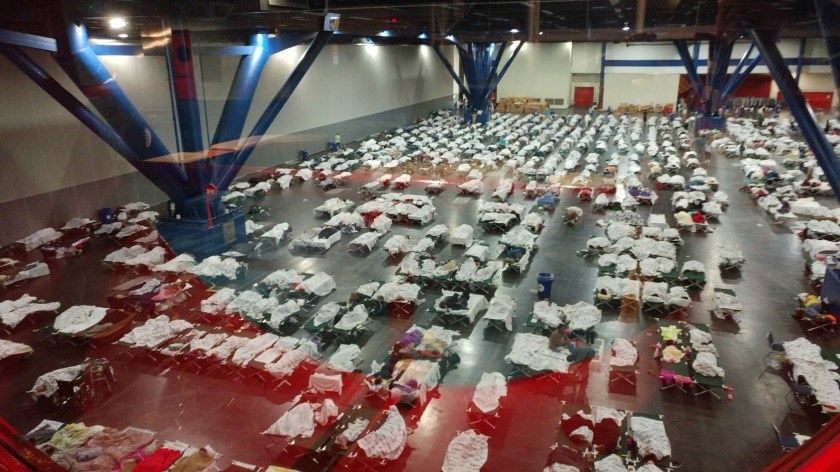
As the winds, rain, and flooding caused by Hurricane Harvey last week pummeled Southeast Texas, first hundreds, then thousands of residents sought refuge at the George R. Brown Convention Center in downtown Houston. By Tuesday night, August 29, more than 9,400 people had sought shelter at the center, a mammoth 5-block long structure with five large halls covering over half a million square feet.
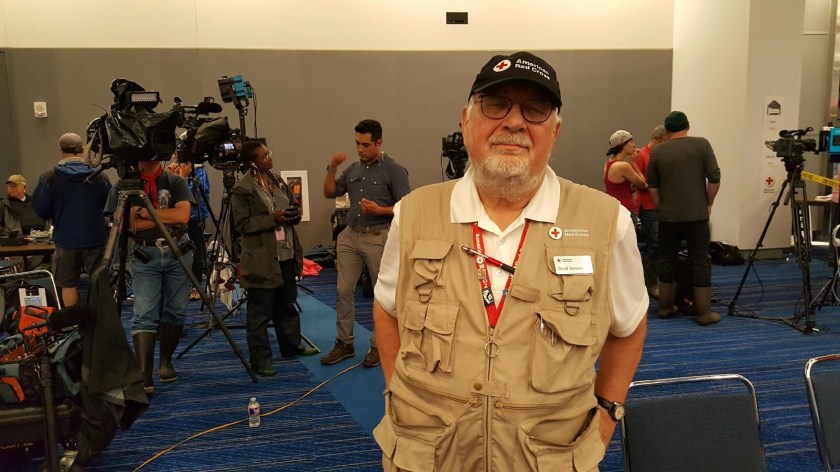
They came as individuals, as families, as extended families, as neighbors. Often with only the wet clothes on their back, they needed a safe, secure place to stay, dry clothes, a hot meal, and most of all, hope. And the Red Cross was there for them. Working closely with government partners such as the city, the county and the state, Red Cross shelter workers welcomed them in, helped them dry off, fed them a hot meal, and saw to their health needs and concerns.
Dave Schoeneck, Red Cross Volunteer
Where only a few days before, there was an empty cement floor, within 48 hours a village, then a town, then a city of over 10,000 residents sprang up. Neighborhoods developed. One hall was reserved for people with pets, another for families. People of many different heritages and backgrounds from all over Texas were united as survivors of a terrible natural tragedy. All entered this giant “lifeboat” mega-shelter knowing that they would now be safe and cared for.
The Red Cross rushed workers from across the nation to Houston, even before Harvey struck. By the end of the week, more than 2,700 trained disaster workers were on the ground, and another 800 were on the way, along with more than Red Cross 200 emergency relief vehicles. Over 37,000 people stayed in 270 Red Cross and partner shelters across Texas on Saturday.
At the George Brown Shelter, hundreds of local Houstonians reached out to help their neighbors. They sorted donated clothes, provided meals and food service, and rendered medical assistance. Boy Scout troops served up an oatmeal breakfast, and were introduced to folks who live outside of their middle-class neighborhoods.
Stories were shared of rescues by strangers from rising flood waters, as neighborhoods were suddenly inundated. Travel around the area was difficult, as major freeways were under water for several days. Sad stories were also shared of relatives who had tried to drive to safety, but were swept away by the floods. Red Cross Mental health and health services professionals have provided over 11,000 contacts to provide support and care for the evacuees.
Shelter for Hurricane Harvey evacuees
Journalists from all over the world rushed to cover the story, with TV crews based here sending stories and pictures back to networks in countries such as Germany, France, Belgium, Czech Republic, United Kingdom, and Denmark. In addition, all of the national networks, the local and regional television and radio stations, were well represented, as well as many Texas and national newspapers.
While squeezing nearly 10,000 people into one shelter isn’t optimal, everyone there was safe, out of the weather, and had access to hot food and medical assistance. Additional shelters opened up the next day and relieved pressure on the George R. Brown Convention Center shelter.
One survivor summed it all up. When told to make sure she held on to a certain document, as she slide it back into a large manila envelope, she simply said, “Don’t worry. My entire life is in this envelope.”
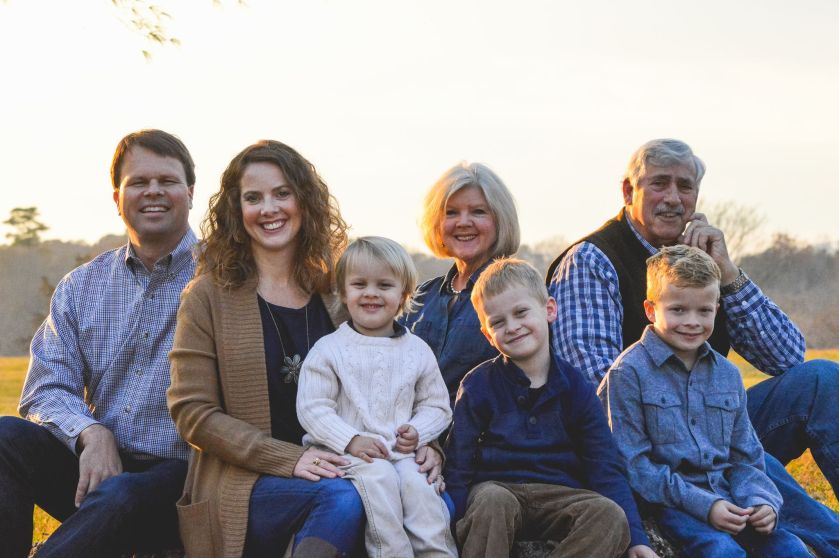
Glenna Housman and her family. Photo courtesy of Housman family.
It’s officially that time of year again: back-to-school. We know many of you may be getting your little ones ready for their first day, or settling into the groove of things with classes back in session. It’s a chaotic week for families, students and staff. In an effort to help get your kids prepared and to help prepare teachers, we talked to some experts in education, namely Glenna Housman, a middle school nurse in Virginia.
“We know that when it’s time to get kids ready to come back to school, parents’ lives get a little hectic,” says Glenna. “Staff members tend to rely on parents to share a lot of information about their students, but I think it’s also very important for teachers and school administrators to take certain prep steps, too.”
Here are 6 tips for teachers and students alike to be Red Cross Ready as they embark on the new school year:
Get a Kit
Think about emergency preparedness items you don’t already have in your classroom. Some good supplies to have on hand are a flashlight and cell phone charger in case the power goes out. We tend to rely on our technology in times of crisis, especially to communicate.
Talk to your school nurse and ask for an extra batch of first aid items like gauze pads and bandages without latex (in case of allergies), for emergencies or if you can’t get to the nurse’s station right away.
Know which students have allergies and which ones do not. If you’re a parent, we suggest putting a supply kit together in your student’s backpack. If they have allergies or certain medical needs, be sure to have those things noted for the teacher. If you’re a teacher, have some snacks in your classroom that can be used for kids with allergies or diabetes. Some examples include non-peanut snacks, non-perishables, hard candy. Also be aware of allergies to things like grass or wood chips often found on playgrounds, in case a student has an allergic reaction at recess.
Make a Plan
Know where to go for emergencies like a tornado or fire in the cafeteria. Most schools have policies in place and practice drills regularly. If your school doesn’t have these policies already in play, talk to your administrators and staff about how to protect your students.
Don’t forget to update your child’s school health records. These records should be updated at the beginning of every school year. Any health care plans signed by the doctors are needed each fall for food allergies, inhalers, diabetics, sickle cell anemia, etc. so teachers and nurses are well-equipped to treat your kids.
Talk with your class about what to do in emergencies. Keeping the steps simple and easy to follow will help them remember when you practice.
Be Informed
While we hope your school year goes off without a hitch, we know it’s always best to be prepared for whatever may happen.
If you’re on top of emergency preparedness, then you’ll be teaching your students a good life skill and making their parents feel better while they’re under your care.
Story by Jonna Meidal, American Red Cross volunteer
Albert Fulton with two of his grandchildren. Photo courtesy of Mr. Fulton.
If a picture is worth a thousand words, then a conversation with Albert Fulton is worth a million. He has lived a cinematic kind of life—a story so incredible it’s hard to believe it’s true. And yet, Albert is the epitome of humility. His enthusiasm for sharing his life, especially the part about how the Red Cross helped him find his long-lost brother, is contagious.
Albert and Charles Fulton were born in Tennessee and raised in a family of eight children. They shared the same bed as kids, were only a grade apart in school, and did everything together. Everything, that is, except play the piano.
“Every single person in my family went in to music, except me,” Albert states defiantly. “There was no way I was gonna sit down at no piano. I was rough and tough and loved sports,” he adds in his charming southern drawl. Despite his mother’s innate musical talents, she was never able to pass on her gifts to Albert. It’s a good thing too, because instead, Albert poured himself into science and made huge advancements for his field.
Albert studied chemical engineering in college and would later go on to advancing the mammogram machine at Xerox, teaching Nuclear Physics at Yale, and becoming the Lead Engineer for NASA and the Department of Defense. For most people, even just one of these contributions would be commendable, but for Albert, he feels the proudest about the family he created. Today, Albert lives in Austin, Minnesota. He has seven children and 42 grandbabies, all of whom he talks with “almost every single day.” This value on family started when he was young and was cemented by the bond he had with his brother Charles.
Charles ended up doing many amazing things in his life as well. He studied music at the University of Munich and started his own opera company. He toured all over Europe and Africa blessing the world with his musical talent. Albert says it was during this time that they started to lose touch, however.
They were able to reconnect in 1967 at their mother’s funeral. But then afterward, Charles went back to Amsterdam and was never heard from again. Most of the Fulton family figured the worst had happened to Charles. They figured he had either “died or was in a mental institution.” But Albert knew Charles was just “off doing his own thing,” which is why he tirelessly started looking for him.
This was no easy feat, given the fact that email wasn’t widely used at that time, so after over thirty years of searching, he finally turned to the American Red Cross Minnesota Region for help. Through the international Restoring Family Links program, in a matter of two months the Red Cross had found his brother Charles.
Albert remembers the day Charles called him like it was yesterday. He immediately started asking Charles, “What’s your mama’s name?” and “What are the names of all of your brothers and sisters?,” hoping that the caller really was who he said he was. It wasn’t long before both brothers were crying and catching up, joking around and telling stories about their childhood. They talked for three hours that day and have stayed in touch ever since.
When asked if there were any hard feelings about Charles’s disappearance, Albert states emphatically, “Absolutely not! There’s no bad blood between us. No bad blood at all! He’s my brother.” And that is that.
Albert is undeniably grateful to the Red Cross for finding his brother Charles. He becomes teary-eyed and emotional just discussing it. “I love you all for it!” he keeps saying over and over again. He mentions as well that the timing couldn’t have been more perfect, as both brothers are fighting similar diagnoses of cancer. “We can now fight it together,” he states. “Thank you Red Cross. You have changed my life forever!”
Click here to learn more about Restoring Family Links.
David Dahl looks out from a bench where his mother, Kimmy, talks with Red Cross volunteers. Kimmy was driving a school bus with 20 children in it on the I-35W bridge, including David, when it collapsed in 2007. Everyone in the bus survived and no children were injured. Minnesota Red Cross volunteers responded to the I-35W bridge collapse, providing emotional support during the tragedy. Talia Frenkel/American Red Cross
Story by Kathryn Schmidt, Red Cross Volunteer
I was out running errands when I heard of the bridge collapse on the car radio. It had to have been only minutes after it happened. I pulled over and called in to the Red Cross chapter to see if I was needed and was told, “Yes. Come right away.”
I arrived fairly quickly, but I think I was the last vehicle to drive right to the chapter, then the roads were closed off. The Red Cross chapter, being just a couple blocks away from the bridge was already set up as the staging area for all emergency responders, so the parking lot and surrounding roads were filled with police and fire vehicles, including a large mobile office which became their command center.
I went directly into the chapter to a meeting that was just starting, which assigned volunteers to various duties. I was assigned to open a Family Assistance Center, which was to be located in the nearby hotel on Washington Ave, a Holiday Inn at the time. Because of this assignment, I didn’t see more of what took place at the chapter that evening.
A Family Assistance Center is a place of comfort, a place to wait for information, a place to worry until your questions are answered. We had snacks and beverages available, which can help with stress. But mostly we had counselors: both the Red Cross stress team made up of Minnesota licensed psychologists, psychiatrists, social workers, etc. who are specially trained to work with folks stressed by the shock and uncertainty of disasters, and whether their loved ones are okay. Also we had a team of faith-based counselors such as pastors, priests, rabbis, chaplains, for those who find comfort in faith-based support.
My thoughts of this event continue to include: appreciation for the preparedness and actions of first responders and the opportunity to help through the American Red Cross; encouragement for the survivors who continue to struggle with physical and emotional after effects of such a traumatic experience; and hope that our infrastructure is being updated and maintained so this doesn’t happen again.
As family members arrived at the scene looking for loved ones, they were escorted to the hotel to share their story and concerns with a counselor and wait for information. Mostly these were people who knew their loved ones crossed the bridge about that time, generally their usual commute. Or if someone didn’t come home when expected, their family was worried thinking they had been on the bridge.
One by one news arrived that a loved one was safe. Often it was by chance, they stayed at work late, stopped for a beer with a friend, took a different route either hearing the news or by chance. Some who were on the bridge were rescued safely, some taken in ambulances to hospitals, some bodies recovered. People were escorted out of the Family Assistance Center by their counselor, some greatly relieved, some in tears or grief. Over the course of the evening our clients became fewer until there was just one woman left. The divers finally located her husband, at the bottom of the river, a large piece of the bridge on top of him.
It still affects me to think of what she and others went through that night. It was not possible to save every life, but our emergency responders found every single person. The Red Cross continued to support families and first responders for many weeks after the bridge collapse.
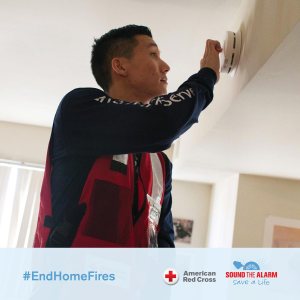
Most fire deaths are preventable. One major tool for prevention is a working smoke alarm. Yet, last year in Minnesota seven people died in fires in homes without working smoke alarms. And fire deaths are up 36 percent over this same time last year. To reduce home fire deaths and injuries volunteers and partners with the American Red Cross Minnesota Region will participate in Sound the Alarm.
“We need the public’s help to keep the number of fire deaths from climbing.” Bruce West, Minnesota State Fire Marshal
Between September 23 and October 15, 2017, the American Red Cross will install 100,000 free smoke alarms in more than 100 high-risk neighborhoods nationwide. During this period, the Red Cross will install its one-millionth free smoke alarm. This includes installing 1,525 alarms in the Minnesota Region of the American Red Cross. This surge expands the Home Fire Campaign, which the Red Cross launched in 2014. Since then, the Red Cross and its partners have made 368,000 households safer through smoke alarm installation.
“Having those smoke alarms was a blessing… we probably would have burned to death.” Crystal Parkinson, a home fire survivor thanks to a smoke alarm installed by Red Cross volunteers
Already the smoke alarms have saved 258 lives in the country. In the Minnesota Region, the Red Cross and partners have made 3,283 homes safer through installation of nearly 10,000 free smoke alarms. To further this effort, the Red Cross is asking people in the Minnesota Region to support Sound the Alarm home fire safety events this fall.
“This million-alarm milestone will focus the nation on the importance of having working smoke alarms in homes.” Phil Hansen, CEO of the American Red Cross Minnesota Region
Installation events will happen in 7 locations, including Minneapolis, St. Paul, Melrose, Goodhue, Rochester and McLeod County in Minnesota, and in Superior, Wisconsin. People can volunteer to install free smoke alarms in local communities. They also can raise money, or make a donation to support Sound the Alarm. Learn more today. Watch the new Sound the Alarm video and then visit soundthealarm.org/mn.
On June 26, 2017, American Red Cross Minnesota Region board members sponsored a blood drive celebrating a century of service in Minnesota. The drive honored men and women in uniform who serve our communities. It came at a critical time: during the summer months when blood donations decline. 87 pints of blood were collected at this drive, helping the Red Cross continue supplying hospitals with blood so patients can receive treatment they need. Below, we share stories about some who helped make this lifesaving blood drive a success.
Laura Antelman is an assistant at a rehab facility. She’s pictured here with Coco, who’s being trained as a service dog at PawPADs (Pawsitive Perspectives Assistance Dogs). While service dogs aren’t therapy dogs, they have the same gentle demeanor and help calm people who are afraid of giving blood. Coco did a wonderful job helping people relax, and she got along very well with Laura.
Gene Olesen (pictured left) has donated more than 20 gallons of blood over the past 50 years. He’s been married to Nancy (also pictured), of 48 years. Nancy came with Gene to the drive to donate and to have a lunch date! Less than 7% of the world’s population has Type A negative blood, and Gene is one of them. He says his main reason for donating is to help cancer patients. And despite moving across the country he has continued to donate – from St. Paul to California, and from California to Wisconsin.
Sophia Sexton (far left in photo with friends) is the daughter of Red Cross board member Amy Rolando. It was Sophia’s first blood donation, and she brought 16 of her friends with her. Thank you to Sophia for all the lives she helped save.
Lisa Bardon, the regional accounts manager for the North Central Blood Services Region, shares a caring moment with her husband, Al Wivell (pictured left with Lisa). They both donated blood.
Several donors came in uniform to roll up a sleeve, including Officer Mike Harcey from the St. Louis Park Police Department (pictured left), a first-time donor. He said, “I’ve always wanted to give blood and never made the time. I thought this was the perfect opportunity to do it.”
A special thanks goes out to all board members who helped recruit blood donors or helped with the centennial drive. These board members truly demonstrated the Red Cross mission with their hard work. Pictured below, left to right: Amy Rolando, Phil Hansen, Minde Frederick, Jan Hallstrom, Lani Jordan, Joan Purrington, incoming board member Ole Hovde, and Dave Adriansen.
You can help, too The Red Cross is facing a critical blood shortage this summer and has issued an emergency call for eligible blood and platelet donors of all blood types to roll up a sleeve now to help save lives. Blood donations are being distributed to hospitals faster than donations are coming in, and more donations are needed now to replenish the supply.
This year the Minnesota Region of the American Red Cross honors seven people whose humanity, generosity, and courage show us the best of what we believe a hero to be. Chosen for acts of bravery, kindness, and service ranging from supporting military veterans to donating gallons of blood, these people inspire us to be the best humanity can be every day and during times of crisis. Click on the links below to see their video stories. Or, click here for the video play list.
Mohamed Ahmed
Community Hero Mohamed Ahmed, Burnsville
Sponsored by Anime Twin Cities
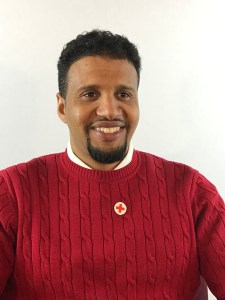
The road from a refugee camp in Kenya to community hero in Minnesota is a long one. But Mohamed (Mo) Ahmed has traveled that road, bringing with him the spirit and action of helping others. Today, as a youth soccer team coach for more than 10 years, Mohamed continues to give time, money, and guidance to disadvantaged and diverse youth, including Somali, Oromo, Hmong, and Latino players. His time devotion alone adds up to more than 300 hours of volunteer service every year.
“Mohamed has set-up a wonderful mentoring network with himself and former coaches, contributing physically, financially, and emotionally to the youth on these teams,” says Michelle Swanson, who nominated Mohamed for the Community Hero Award. “It’s hard to explain everything that this network does,” says Swanson.
The teams play in multiple tournaments in the United States and Canada. One team has won several regional and national tournaments under Mohamed’s leadership. But for Mohamed, coaching is about more than building winning teams. For him, coaching provides an opportunity to give struggling youth, especially those new to this country, guidance that he needed as a new boy in America. Kids who might otherwise be unable to afford club soccer can participate at minimal cost, giving them soccer and life skills helpful for doing well in this country.
Five years in a refugee camp was a long time, and a long-time ago, for Mohamed, whose transition and triumph makes him most deserving of being our 2017 Community Hero.
Julia Weegman
First Responder Hero Julia Weegman, Stillwater Sponsored by Abbott
Very early on the morning of June 15, 2016, Julia Weegman was that person for Chris Jesmer when he called 9-1-1 for emergency assistance after finding his wife, Jeanine, unresponsive. “As a panicked husband who knew his wife was dying before his eyes, and as someone who had no experience with CPR, I felt totally helpless,” says Chris.
Julia immediately provided Chris and his daughter with instruction for helping Jeanine. Julia guided them through moving Jeanine to the floor, clearing her throat, and beginning chest compressions until professional assistance arrived.
Today, Jeanine has fully recovered from her cardiac emergency. Many people, including EMTs, emergency room doctors, intensive care nurses, and others, are responsible for saving Jeanine’s life, says Chris, but “I firmly believe that all of these professionals would not have been able to assist Jeanine were it not for Julia first guiding me through the lifesaving CPR.”
Julia is a true first responder hero, whose compassion and training saved the life of a wife and mother when help was most needed.
Gordy Kircher
Give Life Hero Gordy Kircher, St. Paul
Sponsored by Smiths Medical
Among those helping to save lives every day is Gordy Kircher. A Red Cross volunteer with more than 200 hours of service for last year alone, Gordy gives selflessly to help those who need lifesaving blood and platelets.
Gordy has for decades donated blood and platelets. While being treated for cancer and unable to donate, Gordy became a Donor Ambassador assisting other donors with reception and hospitality at the St. Paul donor center.
“Gordy is a strong volunteer who is always willing to do what he can to help,” says Allison Belting, who nominated Gordy for the Give Life Hero Award. “Whether he’s working at a blood drive, training new volunteers, or assisting with recruitment efforts in his community, Gordy is an exceptional volunteer.”
Gordy’s efforts support the American Red Cross North Central Blood Services Region, which last year collected more than 248,000 blood units for hospitals and patients. Heroes like Gordy are critical to this lifesaving work.
Mikael Tekeste
Good Samaritan Hero Mikael Tekeste, St. Paul
Sponsored by CenterPoint Energy
Human suffering comes in many forms, including the kind that drives someone to attempt suicide. On August 9, 2016, Mikael (Mike) Tekeste was walking across the Wabasha Bridge in St. Paul on his way to work when he came across a woman in that place of deepest despair.
Without regard for his personal safety, Mikael grabbed the woman by her arms and pleaded with her not to jump from the bridge. She pleaded with him in reverse, asking him to let her die. He did not, and he stayed with her until first responders arrived. With assistance from several Ramsey County Sheriff’s Deputies, Mikael pulled the woman over the railing to safety.
“We feel that a true testament of a person’s character is how they respond when they see another person in need,” says Brenna Atz with the Ramsey County Sheriff’s Office. “Mr. Tekeste demonstrated his true character on this day.”
Mike’s action was a courageous and selfless demonstration of the Red Cross mission to alleviate human suffering in the face of emergencies.
David Winkler
Military Hero
David Winkler, Newport
Sponsored by UnitedHealth Group
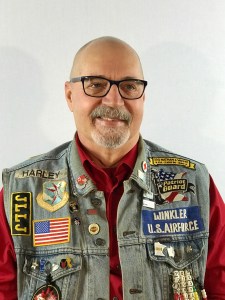
Vietnam veteran David (Dave) Winkler lives a life committed to honoring people who have served in the United States armed forces.
On behalf of veterans, Dave attends rallies, speaks at high schools, serves as a member of the 8th Air Force Historical Society, and volunteers for the annual Patriot Ride benefit. As an active motorcyclist, Dave joined the Minnesota Patriot Guard Riders in 2006. Since then, he has been on numerous missions, honoring fallen heroes at memorial services.
Dave’s volunteer service ranges from boots-on-ground work, such as shuttling people to and from parking lots, to leadership support as a charity board member.
For Dave, his work is simply “the right thing to do.” This includes helping a fellow Vietnam veteran who’s unable to walk more than a few feet. Dave takes “Doc” to VA visits, patriot missions and funerals. “Most importantly, Dave makes regular visits to a friend preparing to die,” says Ray Guest, who nominated Dave for the Military Hero Award.
In addition to honoring American military veterans, Dave has donated blood since 1970.
Because of Dave’s work, many military veterans and their families feel less alone in the world, making Dave a true representation of honorable service helping others in need.
Youth Good Samaritan Heroes John Marcella and Beau Foix, Virginia Sponsored by Medica Foundation
John MarcellaBeau Foix
Last year, in the dark of an early morning, John Marcella, Beau Foix, and Cody Hermann headed for duck hunting at West Two Rivers reservoir.
While preparing gear in their boat, John heard a splash, looked around in darkness, and saw nothing. John thought the splash was odd. He could have ignored it, but thankfully he did not. Grabbing his headlamp, he looked more along the shore and on the dock, and noticed Cody was nowhere. Peering into the water, he spotted Cody face down and not moving.
John yelled to Beau. They put a rope into Cody’s hand, but he did not respond. Cody, they later learned, had suffered a seizure.
In the darkness, Cody jumped in the water while still wearing his waders. He plunged to the bottom and pushed from the ground, gaining momentum to get Cody’s face out of the water and his body closer to shore where John helped pull their friend from the lake. John’s phone, which earlier had no signal, finally had one strong enough for him to call 9-1-1- for emergency assistance while Beau started CPR on Cody.
“That morning, two ordinary people did something extraordinary,” says Lisa Perkovich, Virginia High School principal and award nominator. “John and Beau did more than save a friend that day. They saved a son. They saved a nephew. They saved a grandson. They saved a teammate. They saved a school and most of all they saved a community from irreversible devastation.”
The Red Cross joins the Virginia community in celebrating and recognizing two remarkable youth who were courageous and selfless in their humanitarian actions.
The 2017 Heroes were recognized on May 19 during the Heroes Awards and Centennial Celebration, which was held at U.S. Bank Stadium in Minneapolis. Thanks to an outstanding effort on the part of dedicated Red Cross supporters, including 921 guests and 65 volunteers, the Heroes Awards and Centennial Celebration raised more than $479,000 for American Red Cross programs and services. Many thanks to our guests and volunteers, sponsors and partners, centennial co-chairs, special guests and speakers, gala co-chairs, entertainment, and staff, who helped make the night a great night! Click here to learn more about our history, centennial year activities, and to share your story.
Post by Lynette Nyman/American Red Cross Minnesota Region Heroes videos and photos by Patterson Companies
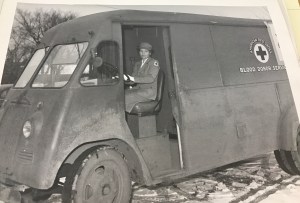
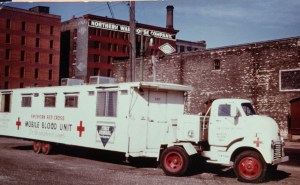
Red Cross blood truck, ca. 1940s. Image: University of Minnesota
You’ve probably seen one rolling down the road or through your town on its way to a blood drive — an American Red Cross bloodmobile. They allow blood drive organizers to host drives anywhere, making it more convenient for donors to give near home, work or school.
A self-contained bloodmobile from 1957. Among the first in the nation, it was paid for by the St. Paul Masonic Women.
Throughout the years, Red Cross bloodmobiles have changed, but their mission has stayed the same—to help fulfill the need for blood donations.
As far back as WWII and the Korean War, requests for blood for the armed forces reached St. Paul and donated blood was included in air shipments overseas. The successful efforts of collection centers throughout the war spurred calls from the nation’s hospitals and other medical facilities for an ongoing civilian blood program.
Train bloodmobile
In January 1949, the first mobile operation from the St. Paul Blood Center was deployed to North Branch, Minnesota. This was one of the first self-contained, traveling blood donation centers and transformed blood collection. Another bloodmobile was put into operation in the St. Paul region in 1950 to help serve 32 additional counties. Since then, self-contained bloodmobiles have been adopted across the nation and world.
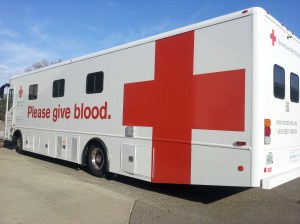
American Red Cross bloodmobile of today
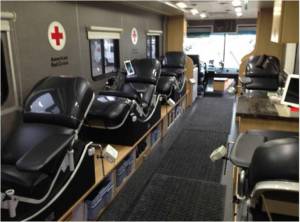
Today’s bloodmobiles are fully equipped for blood collection and short-term blood storage, featuring open floor plans, climate control, advanced technology and spacious interiors. They are designed to be more comfortable and enhance the donor experience. The newest bloodmobiles include special features for donors, such as iPads on each donor bed with all of the Red Cross apps and an LCD billboard on the exterior that tells passersby which blood types are currently most needed.
Today’s bloodmobile interior
Bloodmobiles travel all over the state every day to fulfill the constant need for blood. From planes, trains and bloodmobiles, the mission of the Red Cross is to ensure patients get the blood products they need wherever they need them, whenever they need them. Some things never change!
Help us celebrate 100 years of Red Cross service in Minnesota. Click here to find a blood drive near you. Click here to share your Red Cross story.
During National Volunteer Week (this year, April 23-29) we like to do an extra shout out of appreciation for our volunteers who help fulfill the American Red Cross mission to reduce human suffering in the face of emergencies. The generous donation of time, expertise, and compassion make our hearts swoon with gratitude. Below, check out several spotlights featuring volunteers from selected areas around our Minnesota Region. Thanks!
Northern Minnesota
Tim Rose
Two northern Minnesota volunteers, Tim Rose and John Keith, have gone above and beyond our expectations with their diligent work in making appointments and installing smoke detectors in people’s homes. Within the last few months they have installed 419 alarms in 130 homes in our 17 county northern Minnesota chapter jurisdiction. We find this mission extremely important as our chapter alone has had 8 people perish due to a home fire this past winter season. We could hot ask for more dedicated and caring volunteers, like Tim and John, to help carry out this important initiative of the American Red Cross!
John Keith
We are assured when they go to someone’s home that they provide them with the preparedness information needed for making a plan to evacuate in case of an emergency. From hearing their stories on their return from a smoke alarm installation, we also know they make a personal connection with the homeowner. They went to one home to install free smoke alarms where a World War II veteran mentioned the story of the Red Cross charging for donuts and coffee to active service members when in Europe. The veteran told John he had to walk 10 miles to get coffee and a donut and paid a nickel for it. After John told him that the Red Cross started charging only because the U.S. Secretary of War asked it to do so because free Red Cross donuts caused tension with British soldiers who had to pay for theirs. The Red Cross complied, after protesting to no avail. The veteran said with a big smile “looks like I got my nickel back.”
Southwest Minnesota
Don and Betty Gedrose
Don and Betty Gedrose from Southwest Minnesota have been hard at work supporting the Red Cross Home Fire Campaign. Together, they have installed over 130 smoke alarms in the Brown County area since mid-December. They’re also taking a huge role in helping to plan a Brown County Home Fire Campaign on April 22. “We encourage people to take advantage of this free initiative, to check their smoke alarms regularly, and to regularly conduct two-minute fire drills at home,” says Betty Gedrose.
Biomedical Services
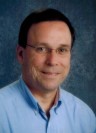
Mark Steffer
Since joining the Biomedical Team as a Transportation Specialist in December 2016, Mark Steffer has far exceeded the commitments placed before him. Not only has he managed to accrue twice as many work hours required, he has become an integral member of our volunteer driving force. His dedication to the driving program, and to the Red Cross in general, has enabled us to deliver life-saving blood products to area hospitals during critical need asks—and has helped save and improve countless lives. Mark has continuously gone above and beyond as a Red Cross volunteer, holding an impressive 30+ positions within the organization as both Biomedical Services and Humanitarian Services volunteer. In the last year alone, Mark has donated over 700 hours of his time to helping our organization provide support to those in need. Throughout it all, Mark has exhibited a passion for the humanities—both through his volunteer work, and in the arts. He, like all of our volunteers, remind us every day of how lucky we are to be able to give back to the communities we serve. Thank you, Mark!
To learn about becoming a Red Cross volunteer, click here.

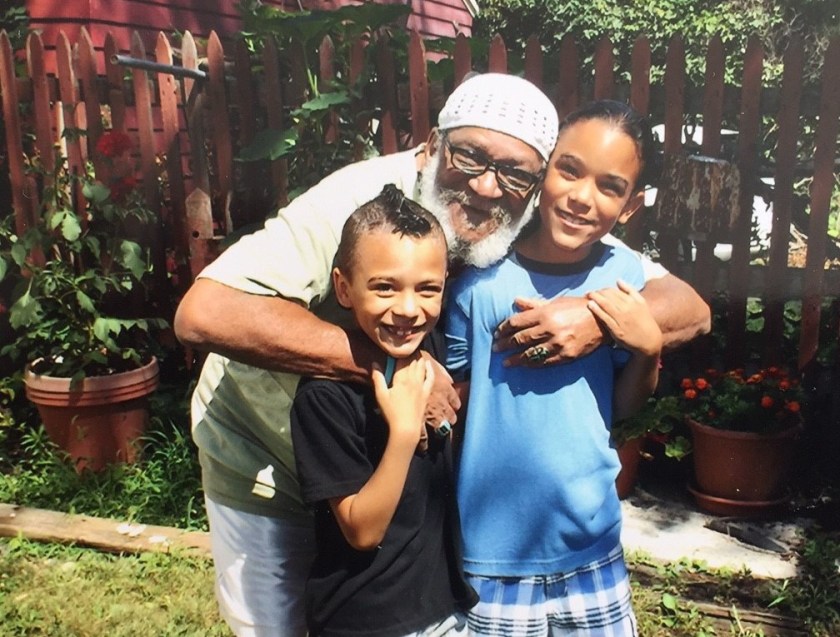



 Gene Olesen (pictured left) has donated more than 20 gallons of blood over the past 50 years. He’s been married to Nancy (also pictured), of 48 years. Nancy came with Gene to the drive to donate and to have a lunch date! Less than 7% of the world’s population has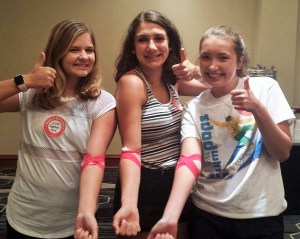
 Lisa Bardon, the regional accounts manager for the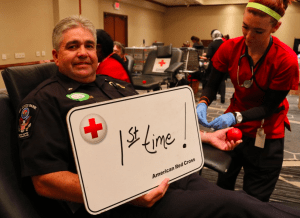







 a Red Cross volunteer, holding an impressive 30+ positions within the organization as both Biomedical Services and Humanitarian Services volunteer. In the last year alone, Mark has donated over 700 hours of his time to helping our organization provide support to those in need. Throughout it all, Mark has exhibited a passion for the humanities—both through his volunteer work, and in the arts. He, like all of our volunteers, remind us every day of how lucky we are to be able to give back to the communities we serve. Thank you, Mark!
 American Red Cross Minnesota and Dakotas Region