This year’s highest Red Cross nursing honor goes to…

Janice Springer (c) receives the Ann Magnussen Award from Gail McGovern (l) and Linda MacIntyre (r) during the American Red Cross National Awards and Recognition Dinner on February 18, 2015, in Washington D.C. Photo by Jason Colston/American Red Cross
Janice Springer (c) received the Ann Magnussen Award from Gail McGovern (l) and Linda MacIntyre (r) during the American Red Cross National Awards and Recognition Dinner on February 18, 2015, in Washington D.C. Photo by Jason Colston/American Red Cross

Each year the American Red Cross presents the Ann Magnussen Award to a Red Cross volunteer or employed registered nurse who has made an outstanding contribution to strengthening and improving Red Cross programs and services. This year, our very own Janice Springer received this great honor, which is the highest honor of nursing achievement in the American Red Cross, at the National Awards and Recognition Dinner on February 18, 2015, in Washington, D.C.

Janice Springer, DNP, PN, PHN, has worked with the American Red Cross for 12 years. Based in central Minnesota, Janice serves as the Disaster Health Services Advisor for the American Red Cross Minnesota Region. She is responsible for overseeing all health services activities, including sheltering, disaster mental health and disaster health. Additionally, Janice is a disaster volunteer with more than 20 regional and national deployments, and is the Public Health Consultant in the Red Cross Regional Nurse Network.

Janice is actively building regional disaster health services leadership. She supported Superstorm Sandy relief as a liaison among the Red Cross, the FEMA Disability Office, local community partners and the shelters. She has been instrumental in promoting the Disaster Health and Sheltering Course for nursing students, which will build capacity in regions and chapters and provide nursing students with an opportunity to assist during disasters. She also teaches numerous courses at the chapters.

Janice’s background also includes research in disaster shelters, and she completed her doctoral study in Public Health Nursing: Meeting Access and Functional Needs in Congregate Care Shelters in Disasters. After recognizing that her initial plan, developed with multiple federal partners, did not meet the needs of shelter clients and staff during pilot studies of disaster relief operations, she reconvened the federal interagency group to develop the current Red Cross shelter intake process to identify the needs of clients with access and functional needs. Her approach has been adopted by Disaster Cycle Services and is an integral part of the new Shelter Prototype Project.

To learn more about the American Red Cross, click here

Will You Be Mine?

valentinedayblogphotoI want to stand on the roof top and shout it: We love you, donors! Because of you, disaster assistance is free. Because of you, families divided are reunited. Because of you, trauma patients don’t need to wait, or wonder if there will be enough blood—there will be, because you gave it.

You give from your hearts, from your belief in our mission, and from your trust in the Red Cross to be ready and to be there—in a moment’s notice—whenever and wherever disaster strikes. Thank you!

We love you because, with your generosity, you are there beside us: giving back what fire takes, reconnecting military families after deployment, making sure the nation’s blood supply never falls short. Together with you, we help the people of Minnesota, the United States, and the entire world every day.

Thank you for your compassion. Thank you for your generosity. Thank you for your trust. Thank you for helping us to always be ready. We do—we love you!

And if you ever have questions about your giving experience, or if I may be of service, please call or email me anytime—I am here and happy to help.

Amanda Hedlund, Stewardship Officer, American Red Cross Minnesota Region
Reach me at 612-872-3246 or amanda.hedlund@redcross.org

When a fire takes a home, it takes everything in it.

GWFT_FacebookPostShoesFire takes. Fire takes security. Fire takes a lifetime of cherished moments. Fire takes without regard to race, income, or social stature. When a home fire happens, it can take everything.

While we can’t begin to replace all the intangible things that make a house a home, we can begin to provide some useful items that offer immediate care and comfort to those in need.

We need your help! Become a fundraiser for the Red Cross and help us provide care and comfort to people in your community and around the country.   The dollars you raise could help us install smoke detectors, provide blankets, clothes and shoes or financial assistance for families. Your symbolic gift will help those affected by disasters like home fires.

Sign up to raise funds as an individual or a team with our Give What Fire Takes Campaign on CrowdRise today.


Measles anywhere is measles everywhere

Story and photo by Niki McMillian, Senior Associate in International Communications with the American Red Cross

Children visited by Red Cross volunteers during a social mobilization effort for measles in Benin. Photo: American Red Cross/Niki Clark
Children visited by Red Cross volunteers during a social mobilization effort for measles in Benin. Photo: American Red Cross/Niki McMillian

It’s almost become a cliché in the headlines. But in many ways, it’s true. It is a small world. While news of the measles outbreak at California’s Disneyland and information about vaccinations are making headlines this week, the American Red Cross has been focused on the virus—and its elimination—for nearly a decade and a half. Because measles anywhere means measles everywhere.

Even though measles was eliminated from the United States in 2000, outbreaks can occur when unvaccinated travelers pick up the measles abroad, importing the virus as an unwelcome, and often unknown, souvenir. Last year’s outbreaks in Ohio, Washington state, New York, San Diego and Nebraska have all been linked back to unvaccinated Americans that had recently visited measles hotspots abroad.

Those hotspots are exactly the type of places where the Measles & Rubella Initiative (M&RI) is working the hardest. Since 2001, the Red Cross, as a partner in the M&RI, has vaccinated 1.1 billion children in some 80 countries, helping to raise measles vaccination coverage to 84% globally, and reduced measles deaths by 71%. This means there are fewer chances of measles being imported into countries that have already eliminated the virus. And while health advances have been impressive, outbreaks like the one in California—now confirmed at 51 cases—have clearly demonstrated that the work of M&RI is far from over.

The Red Cross serves a unique role in measles and rubella campaigns. In a world where one in every 500 people on the planet is a Red Cross volunteer, our reach is unsurpassed. And that reach enables us to go door to door in communities where campaigns are happening, both before, during and after, spreading the word to mothers and families. In order for a campaign to be considered successful, a 95% coverage rate is needed. Red Cross volunteers, neighbors living in the communities in which they work, can help this happen.

Measles is a highly contagious virus, spread by contact with an infected person through coughing and sneezing. When one person has measles, 90% of people they come into close contact with will become infected, if they are not already immune through vaccination or previous contraction.

Before the formation of M&RI, more than 562,000 children died worldwide from measles complications each year, some 1,539 every day, mostly children under five years of age. While there have been great improvements, today an estimated 122,000 children—approximately 330 per day—still die from measles-related complications every year. This number is even more tragic when considering that is only costs $1 to vaccinate a child, making it one of the most cost effective global health interventions.

It is a small world. Outbreaks in Africa, Asia and Europe later show up as outbreaks on our own front doors. But together, we can eliminate measles once and for all.

For more information or to donate, visit measlesrubellainitiative.org. To see how Red Cross volunteers help spread the word during measles campaigns, watch Door to Door: A Measles Campaign in Benin.

This story originally appeared on the American Red Cross blog

Gray Ladies celebrate 60th anniversary

Story and photo by Amy Chaffins, a journalist with the Echo Press newspaper.

L_GrayLadies_102914_7359
Gray Ladies members include (back row, left to right) Rhonda Steinberg, Sue Jelen, Marlene Strehlow, Marlien Lohrman, Luella Peterson, Judy Schjei, Judy Steidl, Janet McHugh and Pat Pederson; (front row) Candy Bohjanen-Hammitt, Sylvia Klimek, Irene Wheeler, Hazel Holt, Myrtle McKay and Irene Bundy. Not pictured are Pat Katzmsarek, Linda Kuhlman, Kathleen Linn, Julie Roering, Fran Schultz, Ruth Steidl and Renee Stomberg. (Amy Chaffins/Echo Press)

The American Red Cross Gray Ladies of Alexandria, Minn., celebrated its 60th anniversary on October 30, 2014. The group primarily helps out during Red Cross bloodmobile events.

A special meeting brought the women together at the Traveler’s Inn in Alexandria to celebrate and share stories. There are currently 22 active local members.

In 2013, the Alexandria Gray Ladies volunteered about 1,951 hours at more than 50 bloodmobile events in Douglas County, according to member Candy Bohjanen-Hammitt.

Since its start in 1954, 170 Gray Ladies have served as members.

About the Gray Ladies

The Gray Ladies, formerly known as Hostess and Hospital Service and Recreation Corps, was founded in 1918 at Walter Reed Army Hospital and became a unique and enduring symbol of the Red Cross service in military and later civilian hospitals.

Their gray uniforms worn by the female volunteers at the hospitals prompted wounded soldiers in their care to affectionately call them Gray Ladies.

In 1947, the name was officially changed to the Gray Lady service.

The Gray Ladies do not provide medical care, rather recreational services to patients and assistance where needed at military and civilian hospitals, blood centers and disaster response.

Early on in the Alexandria chapter, the Gray Ladies would visit nursing home patients, write letters and sometimes transport patients to appointments.

Nationwide, during World War II, the service reached its peak with almost 50,000 women serving as Gray Ladies in military and other hospitals across the U.S.

The Gray Ladies continued serving in hospitals until the mid-1960s when the Red Cross shifted to a unified concept of volunteers.

This story is published on our blog with permission. It was originally published in the Echo Press on November 5, 2014.

If you’re interested in volunteering for the American Red Cross, click here.

Resources to help youth prepare for emergencies

The Red Cross has free and easy resources to help young people and their families prepare their households for several types of situations from power outages to tornadoes:

  • monster-guard-flood-screenshotThe Monster Guard: Prepare for Emergencies App provides 7-to-11 year-olds a fun, gaming environment to learn how to prevent emergencies, like home fires, and what to do if severe weather or natural disasters occur. Using the app is an exciting way for children to learn, practice the lessons and share the information with family and friends.
  • The Red Cross worked with Disney to develop the “Mickey and Friends Disaster Preparedness Activity Book.” The book teaches children and families how to prepare for and respond to a wide range of disasters and emergencies through interactive games and activities. The book is available to download in English and in Spanish.
  • Other Red Cross emergency preparedness apps contain a ‘Make a Plan’ feature that allows users to create their plan and share it with their loved ones.
  • A Family Disaster Plan Template is available to download.

In the New Year…Volunteer!

The New Year is a great time to evaluate your priorities and begin new adventures. If you’re looking to improve your health, expand your social circle, and build new skills, volunteering with the Red Cross may be the perfect new experience to dive into in 2015. And if you’re already among our amazing cohort of volunteers, this may be just the time to explore a new opportunity.

Icon Disaster ServicesWhy Volunteer?

Volunteering has many benefits – it allows you to expand your skill set, meet new people, have fun, and make a difference in your community. But did you know it also has positive health benefits? A Corporation for National and Community Service report found that volunteering leads to better health, including lower mortality rates and lower instances of heart disease. So, if your New Year’s list includes hitting the gym and eating more veggies, consider volunteering as another (and more fun) way to improve your health.

Why the Red Cross?

Volunteers are so important to the Red Cross that they’re right in our mission statement:

The American Red Cross prevents and alleviates human suffering in the face of emergencies by mobilizing the power of volunteers and the generosity of donors.

Red Cross volunteers are both generous and committed. In the past 6 months, volunteers from the Minnesota Region have devoted over 57,000 hours to the Red Cross mission – a value of over $1.3 million to the organization and our community.*

What Can I Do?

The Red Cross has a wide variety of volunteer opportunities – from teaching CPR/First Aid courses and to responding to local disasters, to assisting with fix-it projects around our buildings. You can check out the opportunities listed below, and find a more complete overview of opportunities on our website. If you’re ready to get started, you can apply here.

If you already volunteer with the Red Cross but would like to get more involved (or try something different), we have some great new opportunities available:

Volunteer Champion – The Volunteer Services Department is seeking  Volunteer Champions to support and implement ways to recognize, retain, and increase satisfaction of volunteers.

Disaster Action Team (DAT) Administrator – The Disaster Services Department is seeking a DAT Administrator volunteer to manage the DAT calendars, communicate schedules with after-hours answering service, monitor DAT schedules to ensure ongoing on-call coverage, and enter response data after an event.

Donor Appreciation Volunteer – The Financial Development Department is seeking volunteers to thank donors for giving generously to the American Red Cross.

Latino Outreach Volunteer – The Preparedness Department is seeking  volunteers to go to a variety of events in the Latino community and have conversations with individuals and families about the importance of being prepared. Must be fluent in Spanish.

Current volunteers can view full job descriptions and express interest in any of these opportunities on Volunteer Connection or by emailing Kelly.Clark2@redcross.org.

Cheers to all Red Cross volunteers – both new and veteran – in 2015!

Lisa Joyslin,
American Red Cross Minnesota Region Volunteer Director

*According to the Independent Sector’s estimated value of volunteer time of $22.55 per hour.

Happy NAT Graduates

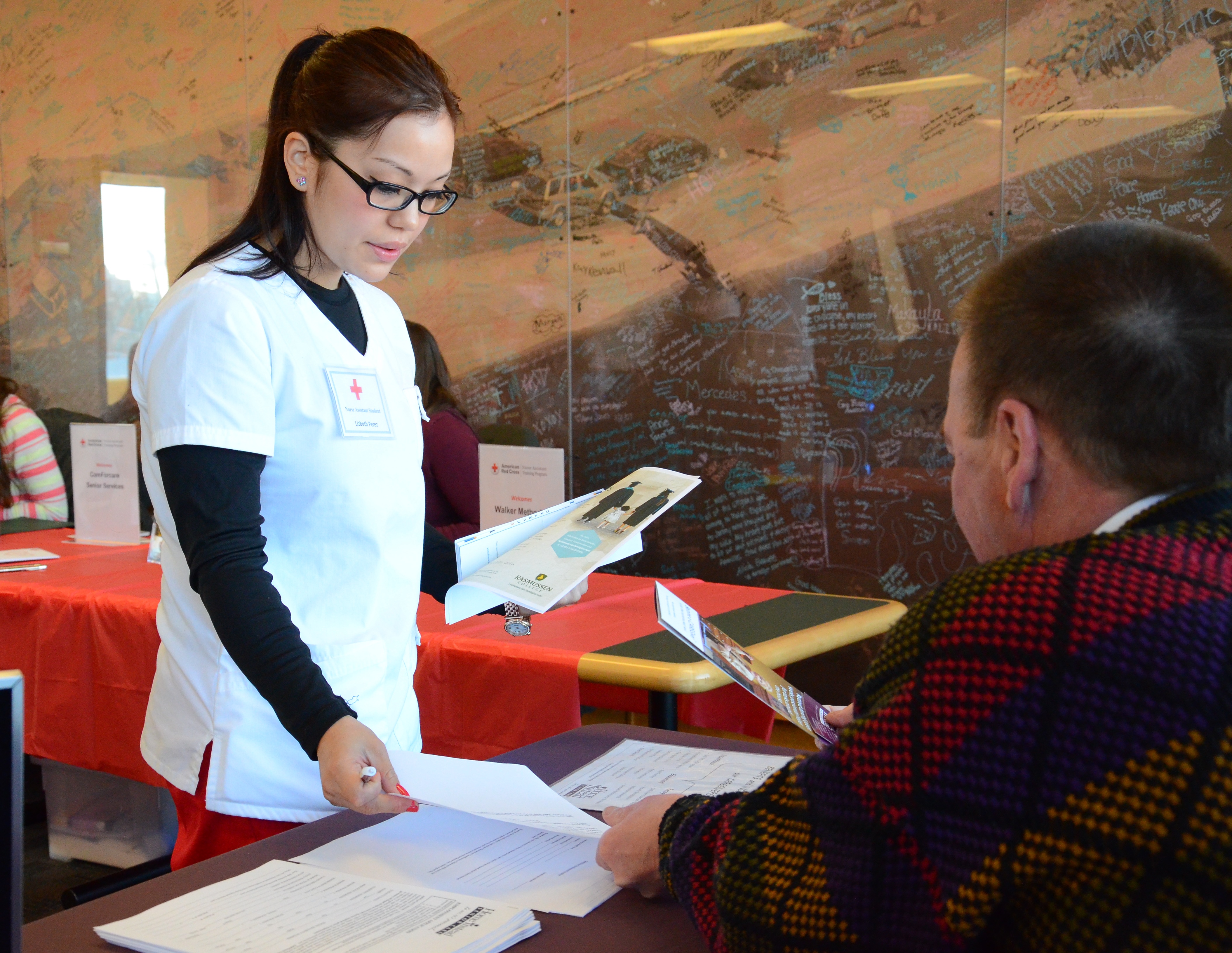
Congratulations! to our most recent American Red Cross Nurse Assistant Training (NAT) graduates in Minnesota. Family and friends turned out to celebrate this achievement on December 30, 2014. Also, potential employers were on-hand to share information about their work places and to meet the graduates who are future caregivers.

DSC_4412NAT graduates display their new American Red Cross certificates.

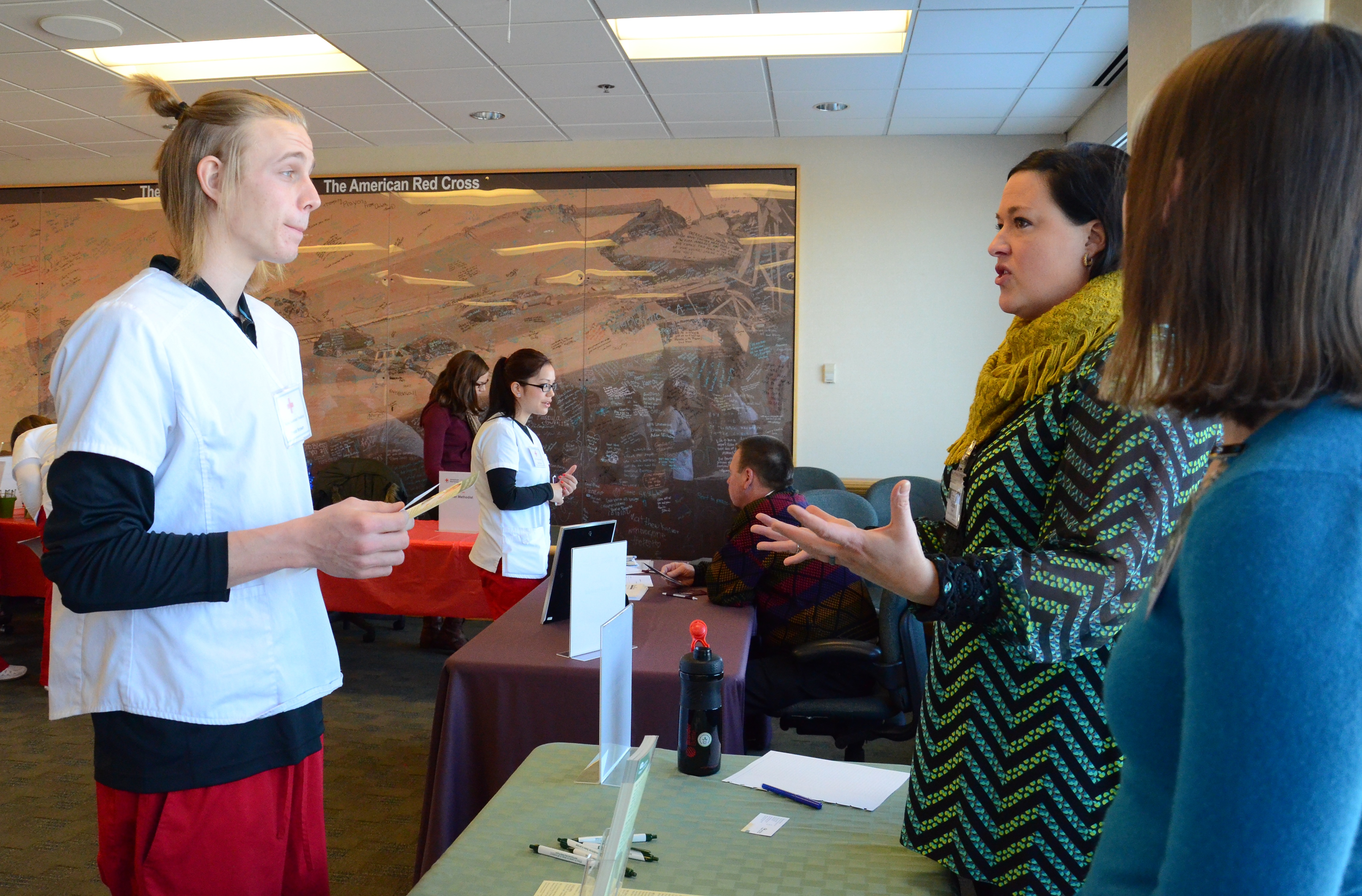
DSC_4371NAT graduate Lizbeth Perez visits with a healthcare provider during the job fair.

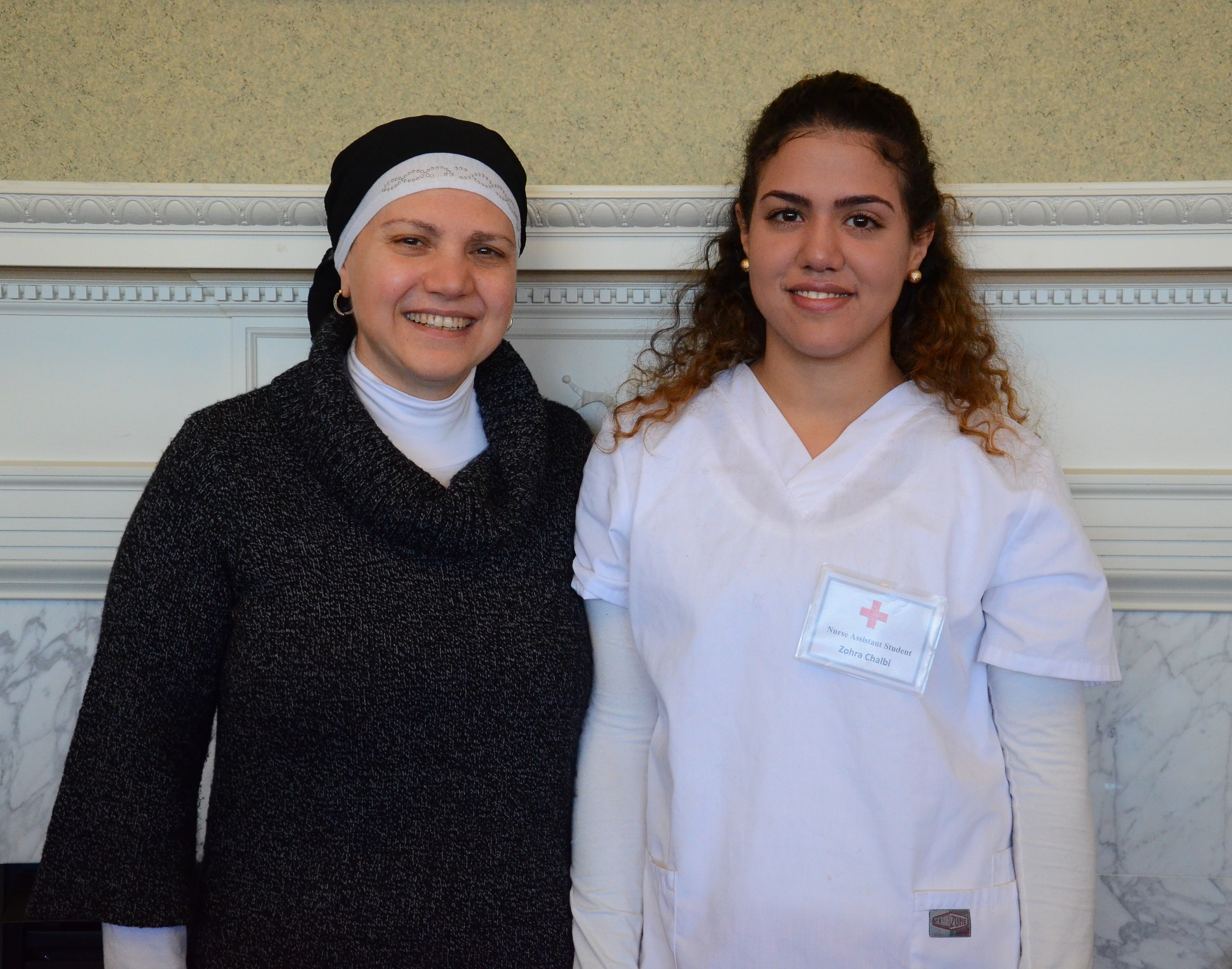
DSC_4374Hayet Chalbe (l) celebrated with her daughter Zohra on graduation day.

DSC_4379NAT student Erica Parker was one of 7 graduates from Red Cross NAT on December 30.

DSC_4388NAT instructor Yelena McCormick reads Oh, the Places You’ll Go by Dr. Suess.

DSC_4364NAT graduate Trevor Brown gets employer information from a healthcare provider.

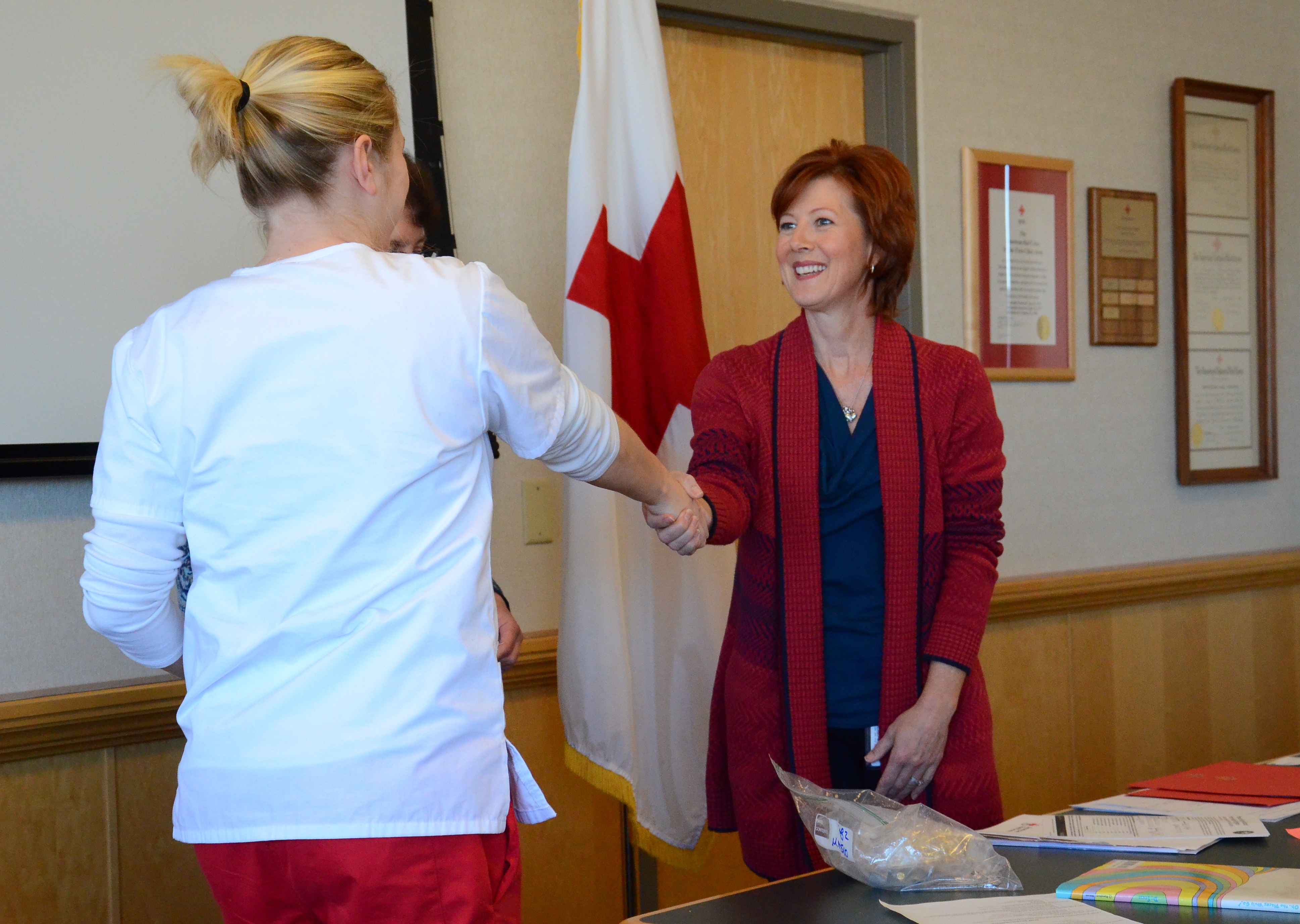
DSC_4403NAT coordinator Kimberly Fullmer offers congratulations to student Jordin Melchert.

The American Red Cross is the premier provider of Nurse Assistant Training (NAT) and has prepared individuals for work in the nursing field for over 100 years. The program is designed with input from educators, caregivers, and long-term industry representatives from across the United States. To learn more, click here.

All photos, credit: Lynette Nyman/American Red Cross

This year, resolve to be more prepared for emergencies

What are your 2015 resolutions? Losing weight? Yep. Eating healthy? For sure. Preparing for emergencies? Um, no, you’d not thought of that, right? We ask that you do because we see every day the impact disasters–mostly house fires–have on people. So, below are 12 actions, one for each month, that you can take to become more prepared by the end of 2015!

  1. Download a Red Cross mobile app.m40340177_everyday_apps_763x260
  2. Learn about how to prevent fires in your kitchen (the number one cause of house fires).
  3. Talk with your family about having two ways out of every room in the house to ensure that each of you knows how to get out in case of a fire.
  4. Make a disaster plan with your family. By having a disaster plan each member of your family will know where to go if there is a disaster as well as having other important information on hand.fireescape_image
  5. Check your smoke detectors twice a year to ensure that they are in working condition.
  6. Complete the home fire preparedness checklist.
  7. Build a disaster kit, so you have the items you would need in case you have to evacuate.
  8. Learn how to prepare for members of your family with special needs like children, pets, individuals with disabilities and seniors.
  9. Purchase a weather radio so you can be informed during weather related disasters.
  10. Learn about the weather warning systems and what each warning means.m37640104_196x176-emergency-radio
  11. Put together a car kit that has items you might need if you get stuck during a winter storm.
  12. Tell your family and friends about the importance of being prepared and challenge them to take the steps above.

Report back about your success as you move forward. Want additional guidance? We’re here for you. Call us at (612) 871-7676 and ask for Jenn in Disaster Cycle Services.

Have a fabulous 2015!

2014 Disaster Cycle Services Highlights

By Megan Mrozek, Regional Disaster Officer, American Red Cross Minnesota Region

During 2014, a year when disasters were not major headlines in Minnesota, our region’s Disaster Cycle Services team was hard at work. The team responded to 716 disasters and delivered humanitarian aid to more than 1,104 families, helped prepare 22,180 people for emergencies, and trained to make sure we’re ready to respond to disasters big and small here in Minnesota and, when needed, across the nation. Highlights of our year include:

  • January:
    • Cedar-Riverside Apartment Fire: Response teams worked with people in the affected community with recovery immediately after the fire and preparedness throughout year.NDSI_2
    • Round-Tables: We started monthly response and recovery round-tables with disaster leaders across the state, sharing best practices and lessons learned from responses throughout the region.
    • DAT Captain Training: We established an initiative to refine and develop the role of Disaster Action Team (DAT) captains, culminating in new training simulation for disaster response captains in December.
  • March:
    • Casework for DATs: We implemented a training course that enables Disaster Action Team members to help clients begin their recovery immediately after a disaster.
  • April:
    • Leadership Summit: Around 100 disaster leaders came together for two days of training, team building, and direction-setting for the year to come.
    • Board Preparedness Challenge: 100% of our regional board members took an action to become more prepared for emergencies.
    • CAS 2.0: We rolled out the new CAS 2.0 database for recovery information, as well as new forms and procedures for response and recovery.
  • May:
    • DSC_3633_cropLatino Community Partnership and Leadership Summit: We held our first partnership and leadership summit with Latino community leaders and advocates in the Minneapolis and St. Paul metro area.
    • Under One Roof: Co-sponsored the “Under One Roof” sheltering conference that included 250 participants from 5 states and Canada. Fifty-four Red Crossers attended. Our conference mission was to establish new relationships, to strengthen sustainable partnerships, and to learn about the latest developments, trends, and best practices related to sheltering and emergency preparedness.
  • June and July:
    • Flooding Response: On the US-Canadian border, 66 Red Cross volunteers served 1058 meals and 27,116 snacks; distributed 85 clean up kits; and provided 23 health services contacts to flood affected communities in 13 counties. In addition, disaster relief workers responded to flooding relief efforts in the Twin Cities metro area and southwest Minnesota.
  • August:
    • National Night Out: On this night, more than 1600 people were reached with preparedness messages from their neighbors.DSC_4013
    • Vigilant Vortex: At least 50 Red Cross workers took part in a 5-day, statewide exercise with the Minnesota National Guard and more than 30 other agencies practicing response to an epic string of devastating tornado touchdowns.
    • Minnesota State Fair: This year at the fair, 2,735 people completed disaster preparedness plans. Also, 12,876 people were reached through preparedness planning and blood pressure screening.
  • October:
    • North Star Disaster Training Institute: Our signature, annual disaster training program included 39 courses offered to 160 attendees during a 4-day period.
    • Shelters Mobilized: Disaster relief teams mobilized two shelters for people displaced by disaster in the Twin Cities and Marshall, MN.
  • November:
    • Statewide Meet-Up: For the first time, our former southern and northern region teams came together as the new combined Minnesota Region team.

IMG_0580I am incredibly thankful for the tireless effort from our Disaster Cycle Services volunteers and employees. Day and night, 365 days-a-year, they bring compassion, flexibility, and dedication to the important work of helping others during great times of need and making our communities more resilient before, during, and after emergencies. Here’s to 2015!

To learn more about getting involved with the Red Cross, click here.