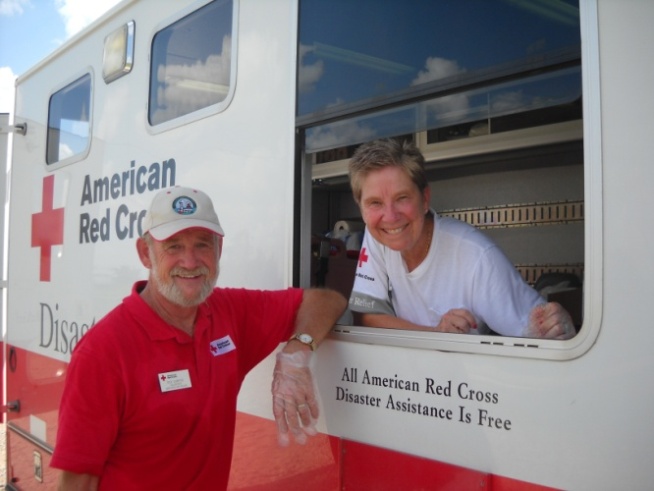
It’s National Volunteer Week. And to celebrate, we’d like to say “thank you, thank you, thank you…” to all of the volunteers in the Northern Minnesota Region who helped make the Red Cross happen this past year.
Because of you…
6 chapter facilitiesand supplies well-maintained,
102 Health and Safety classes taught,
473 families assisted during 319 disaster responses,
6,426 holiday cards created for active military members and veterans at 22 events,
7,748 individuals reached through Preparedness events,
10,755 children educated on Safety Mobile topics,
16,476 worked volunteer hours achieving the mission to alleviate human suffering,
70,539 on-call volunteer hours standing at-the-ready to help,
Having an amazing group of generous, dedicated, skilled volunteers serving at the American Red Cross… Priceless!
Summer Raffo. I think I will always remember this name. This name, seen in a New York Times cover photo on March 28, 2014, made the Oso mudslide real for me. Seeing a personal plea for her rescue, wrapped by words for emergency workers and Red Cross, from someone who loved her forced my own tears to roll in a public place, surrounded by people sipping coffee, using their computers, and chatting with friends and neighbors. My reaction to the photo, I think, was normal. Finally, after seeing other images and reading other stories, this tragic, heartbreaking, life-changing event became real in my own heart. From a distance, I was affected, feeling the grief of losing someone dear, as if Summer were someone I knew. And so I was reminded that taking care of myself, even from many many miles away, is important for me and the people around me. The Red Cross tips mentioned below remind me that taking care of myself is a way of helping. Later that morning, I searched online for Summer’s name, wondering if there was an update. And there was. Summer Raffo was one of those who perished in the mudslide. Her brother said in one news report that there was some relief for her family to find her and to know. And from miles away, me too.
Some tips from the American Red Cross for taking care during disaster response…this is a difficult time for the entire community responding to and watching this event. It’s important for people to connect with and support each other. Events like this can cause feelings of uncertainty and anxiety since no one knows for sure what will happen next. Remember that it’s okay to feel nervous. Take care of yourself. Eat healthy, drink plenty of water and get enough rest. Be patient with yourself and others. It’s common to have any number of temporary stress reactions such as anger, frustration and anxiety. This is a time where people should take care of themselves and their families. For example, reach out to others to offer and receive support. Parents should let their children talk about their fears and then reassure them about their safety. People should also be careful not to overexpose themselves to media reports about the tragedy.
Lori Peterson (far right), and other Red Cross workers. Photo provided courtesy of Ms. Peterson.
I call myself a flood baby. I was born on April 28 during the height of the great flood of 1965. In my scrapbook, I have collected pictures of the St Croix River reaching Highway 95 in downtown Stillwater, Minnesota. Every year, I enjoy driving past Boom Site park, seeing how high or low the river is in the spring. Are the islands showing yet? How do the trees survive each year covered in water for so long? (I am sure there is a scientific reason for all of this, but science was not my best subject in school.)
Because of the river and its mighty strength, I learned to swim at a young age. My mother never learned to swim so this was a big concern living so close to the river. We learned at a very young age to respect the river. It is constantly changing each year from the snowfall, the many creeks that flow into it and the number of trees that float down during the annual thaw. (My great, great grandfather was one of the loggers that hauled lumber down the river many years ago. I bet that he knew how to swim!) When I was five, my mother signed me up for Learn to Swim classes, which was my first experience with the American Red Cross. My siblings and I continued to take swimming lessons until we passed the test to tread with our clothes and shoes on while blowing up our long sleeved shirt to serve as a life preserver.
The Stillwater Lift Bridge during the 1965 flood. Image provided courtesy of the Washington County Historical Society (http://wchsmn.org/).
The St. Croix Valley Chapter of the American Red Cross also has helped friends and families during fires and other natural disasters throughout the St. Croix Valley in Minnesota and across the river in Wisconsin. Most often trained Red Cross volunteers are those who perform these mini miracles of comfort and care quietly in the background. We often don’t hear of these amazing, local humanitarians, but they are out there assisting our communities everyday.
So, are you a flood baby, too? Were you born during the great flood of 1965? How did the flood affect your family in 1965, 1967, 70s, 80s, 90s and 2000s? If you grew up in the St. Croix Valley area, enjoying the scenic views, camping on one of the islands, watching the ice come off the river in the spring, fishing in the river with your grandfather or learning to swim because of the river’s strong current, then it’s likely that the American Red Cross touched you or a family member along the way.
I challenge you and other flood babies born throughout the years to respect our beloved river and honor the Red Cross this spring by supporting Evening in Red, our annual fundraiser supporting local programs and services.
Will you join me April 25, 2014, in honor the community we have been so blessed to live in? If so, click here to purchase tickets online. I would love to see you there!
Kelly Vetter holds and cherishes her grandma Nana’s American Red Cross 10-year volunteer service pin. Photo credit: Lynette Nyman/American Red Cross
If you were lucky enough to have known my grandmother Eileen, warmly referred to by her eight grandchildren as Nana, you would know that volunteering at the American Red Cross was a perfect role for her. She was a “people-person,” and I think of the Red Cross as the ultimate “people-organization.”
My Nana made you feel like you were the most important person in the room. That must explain why each of us grandchildren can proudly proclaim, “I was her favorite.” I envision the people she sat with, perhaps after donating blood or after learning the steps they would need to take to recover from a home fire, left the building knowing without question that they mattered to her and that they mattered to the Red Cross. She could sit, listen and empathize better than anyone else I know.
And isn’t it surprising how a few simple words or actions can lighten one’s suffering? One of the many lessons I learned from my Nana is that small gestures can be as powerful and meaningful as grand gestures. The finer details, which my Nana never overlooked and which the Red Cross is so good at (being available day or night, offering an assuring smile and hug, treating every person’s experience like the lead story of the day), can produce such great comfort.
Grandma Nana holds baby Kelly, only 2 days old. Also pictured is Kelly’s grandpa Walter. Photo provided courtesy of Kelly Vetter.
I began working for the Red Cross just a few short months ago. I am impressed daily by the dedicated staff and volunteers I meet here and now know why my kind-hearted Nana fit in so well with this organization. I keep my Nana’s 10 Years pin displayed on the bulletin board next to me. I wish I could ask her more about her Red Cross story, but she lost her battle with cancer 10 years ago. So instead, I will build my own Red Cross story and know that she would be proud to see that I, too, am contributing to the mission of preventing and alleviating human suffering, a mission that she carried out every day through small gestures.
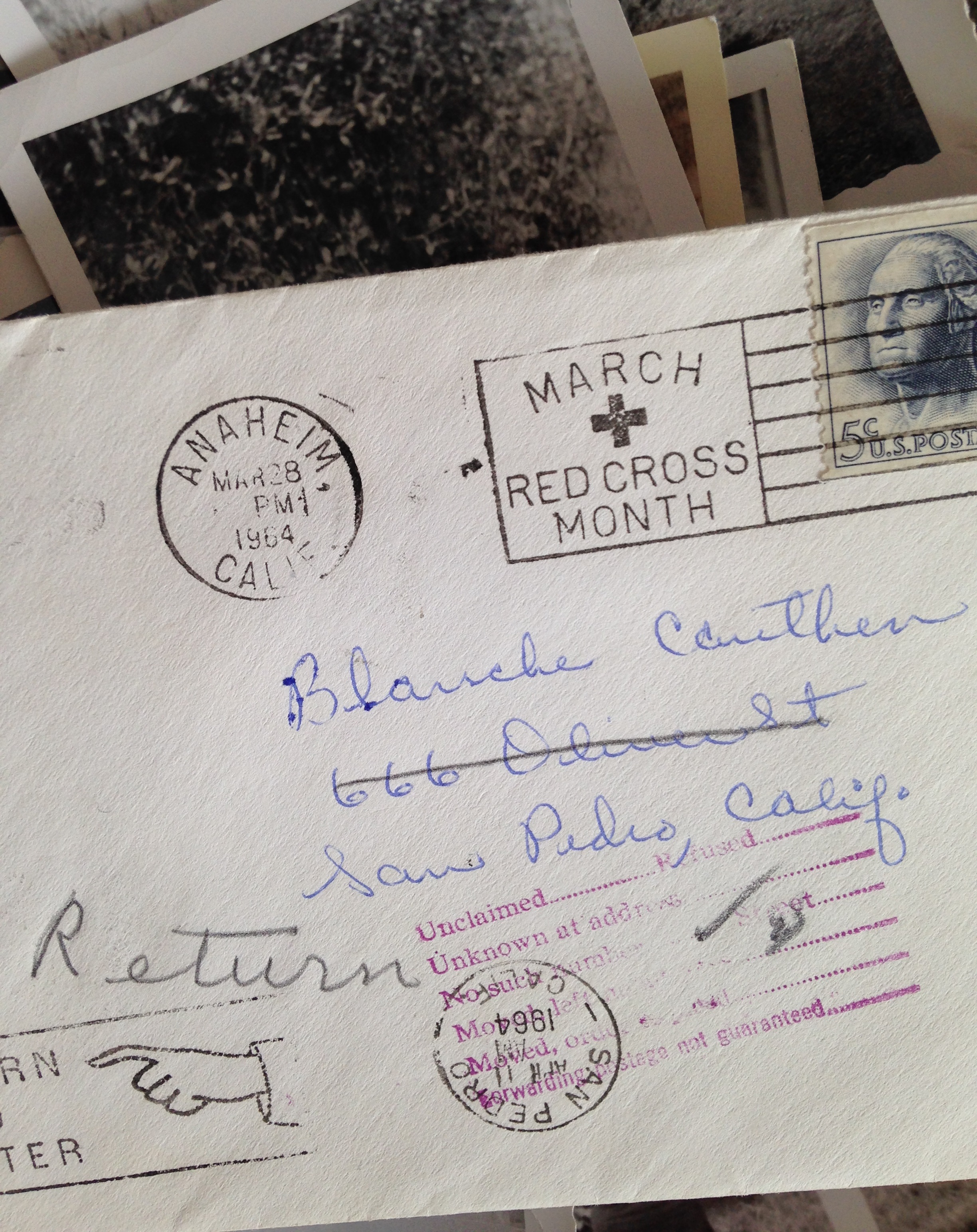
A 50-year-old letter with stamp cancelled “March is Red Cross Month” mark.
Recently, I was sorting through some old photos when I came across a letter that my mother Yvonne wrote nearly fifty years ago. She wrote it after her mother died in 1964. It was addressed to a family friend, but was sent back “return to writer” because no such address number was found. The 5 cent stamp on the envelope was cancelled with a mark that caught my eye: March is Red Cross Month. And so I opened and read it and learned of my mother’s great sadness from a loss too soon. While sharing the letter now, I wonder if Red Cross training in first aid and learning the signs of heart attack could have made a difference, giving everyone more years together and breaking fewer hearts.
March 26, 1964
My Dearest Blanche,
…Mom had a heart attack Feb. 28, 4:30 A.M. She was taken to the hospital and lived seven days. We thought she would pull through but apparently the heart was damaged over half after the first attack. She suffered two more attacks Fri. night on March 6 and passed away 10:30 A.M. Sat. morning March 7.
Our hearts are just broken. All of us are still in a state of shock as you know what this can do to a person.
Mom was looking real well before this happened. We did not know her heart was bad at all.
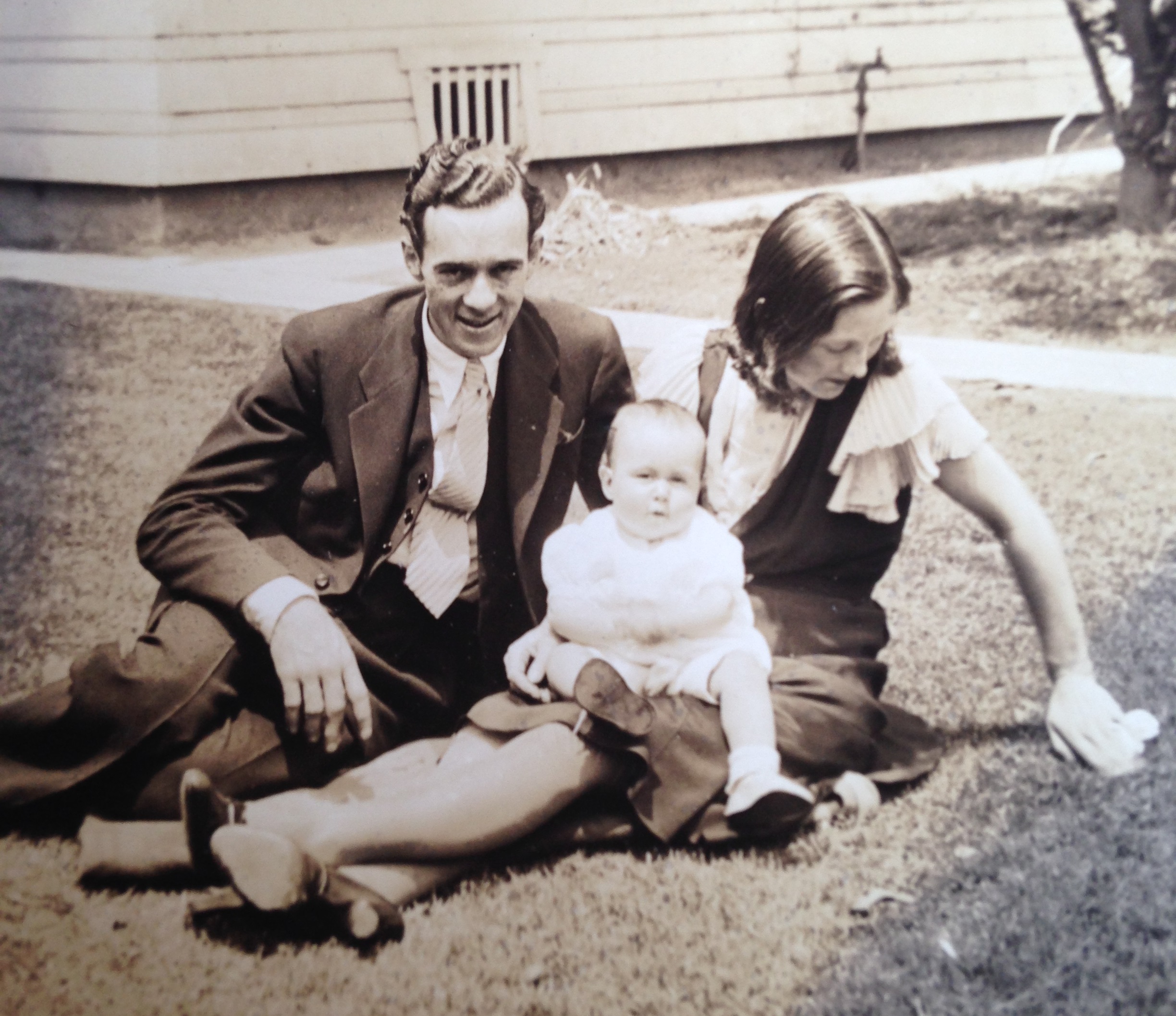
Baby Yvonne with her mother Nola and father George in Los Angeles, circa 1930s.
Mom was with Bill & I the weekend before. She & dad came over on Saturday and she had her 58th birthday Feb. 23. I baked her a cake and we had dinner home. I took them home on Tues. and she looked fine as far as I could tell.
…on Thurs. night…just about 4:30 A.M. Dad woke up and heard her praying. He thought she was dreaming and reached over to shake her as he always did if she had a bad dream and when he did she said to him don’t it’s my heart. He jumped out of bed and asked her if he could get her some water. By the time he got back she was vomiting. She had an acute attack and vomited most of the time while in the hospital.
Blanche, I will never get over this. I never dreamed mom would go this young in life. She was such a wonderful mother always. I feel like everything is drained from me. I just miss her terribly. Dad is broken hearted. He never thought mom would go so fast. He said he knew she would get well.
Blanche, I guess life ends very quickly sometimes & we are never prepared or ready for death ever. And it is so hard to accept. If you are ever out here come to see us! Dad will be with me now. Hope you are fine.
Love, Yvonne
Yvonne and “her lover boy” Bill, circa early 1950s.
Decades later my father Bill (pictured left) had several heart attacks in his early 50s. We recognized the heart attack signs the second time around, but no one in the family was Red Cross-trained in lifesaving skills. Several years later I became a Red Cross volunteer instructor in C.P.R. and First Aid. Finally, one person in our household was trained. Because of my personal experience with life-threatening emergencies and because it’s March, the official month of the year that we celebrate all things Red Cross, I encourage every one to take any step that can make a difference. Take time to take a Red Cross class and get trained with lifesaving skills that could benefit both you and your loved ones.
March is a great time to celebrate the American Red Cross. Why? Because March is national American Red Cross Month.
During this time, we like to applaud all of the everyday heroes who make the Red Cross what it is. These heroes help by giving blood, learning and using lifesaving skills, serving as volunteers during disasters, or giving money that makes Red Cross humanitarian work possible at all.
Right here, across our disaster response region, volunteers have worked around the clock, responding to 84 disasters, helping 328 people following fires during January and February. This is a 38 percent increase during the same period last year! We want to thank them for being heroes to all of us. Their selfless service helps keep our communities strong during challenging times. They are super heroes to us and to those they’re helping.
During this month, we want to encourage others more than ever to think about embracing their inner hero and becoming part of the Red Cross. Train to be a volunteer before disaster strikes. Take a class and learn lifesaving skills before an emergency happens. Create a plan that will prepare your family for emergencies. Give blood and keep supply shelves stocked. Donate money and support the Red Cross humanitarian mission all year.
Chief Warrant Officer Michele Jammer and Red Cross volunteer Jim Kinzie at the Yellow Ribbon event in Minneapolis on February 8, 2014. Photo credit: Lara Leimbach/American Red Cross.
On Saturday, February 8, American Red Cross volunteers from our region participated in a Yellow Ribbon Reintegration Program conference in Minneapolis, which focused on promoting well-being by connecting service-members and families with resources throughout the deployment cycle.
The Red Cross volunteers worked with over 500 military service and family members from 30 states to discuss the manners by which the Red Cross can serve them. Some examples include linking military families during an emergency, connecting people with local community resources, providing resiliency training and supporting wounded warriors and military hospitals.
Chief Warrant Officer Michele Jammers shared how she benefited twice from the Red Cross service of linking family members during an emergency. During one deployment, it enabled her to receive news about her grandmother in a timely manner. During a later deployment, the service assisted her with receiving news about her father in the presence of a chaplain and returning from the (military) theater.
Sergeant Carol Crowe, the Community Partners Coordinator for the conference, expressed the importance of connecting military service members and families with pertinent community partners. She cited an example of when she referred a military parent with four kids to the Red Cross for assistance when that parent was down to his/her last $20.
Story by Red Cross volunteer Geno Sung and photo by Red Cross volunteer Lara Leimbach. Click here to learn more about the American Red Cross Service to the Armed Forces Program. Click here to donate and support Red Cross SAF activities.
Like so many others, I am obsessed with House of Cards, the political drama starring Kevin Spacey and Robin Wright as Frank and Claire Underwood. No plot spoilers here I promise, just some thoughts about the connection between Frank and Clara. Clara Barton that is. I freely admit to watching multiple episodes in one sitting, complete with popcorn and fuzzy pajamas. And honestly, the weather lately has been rather conducive to Netflix marathons.
Part of the show’s popularity may stem from the references to real life events, issues, people and places. One of the episodes my husband and I watched last night, included a Civil War re-enactment at the Battle of the Wilderness. On hand to commemorate the 150th anniversary of the battle, Frank is approached by one of the re-enactors who suggests one of Frank’s ancestors fought and died in the battle, with thousands of others.
What does this have to do with Clara Barton? She was at the Battle of the Wilderness. Before the Red Cross was even a formal organization, Clara Barton brought medical supplies and nursed wounded soldiers on Civil War battlefields, including during the Wilderness Campaign. She, theoretically, could have comforted Frank Underwood’s great-great-great-grandfather and connected him to his family after his death.
Clara’s work during and after the Civil War became the first mission of the American Red Cross – caring for the wounded and displaced and their families. More than 150 years later, the Red Cross proudly continues our Service to Armed Forces, supporting military members and their families, connecting them in times of crisis and by their side wherever they are around the world.
Check out this video for a great mini-history lesson on Red Cross SAF programs and services. Then, if you haven’t already, check out House of Cards, but don’t tell me what happens after episode five of the second season.
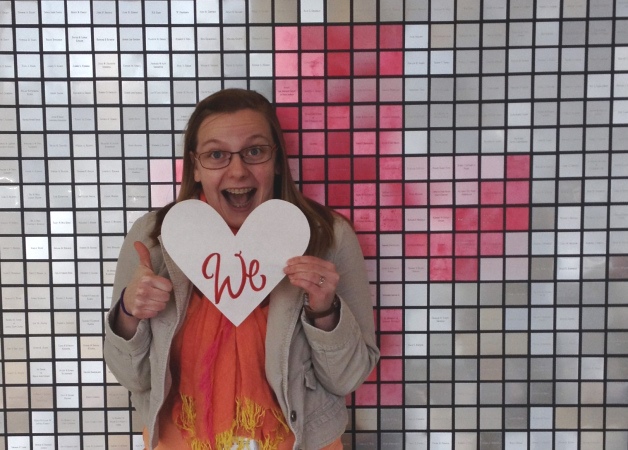
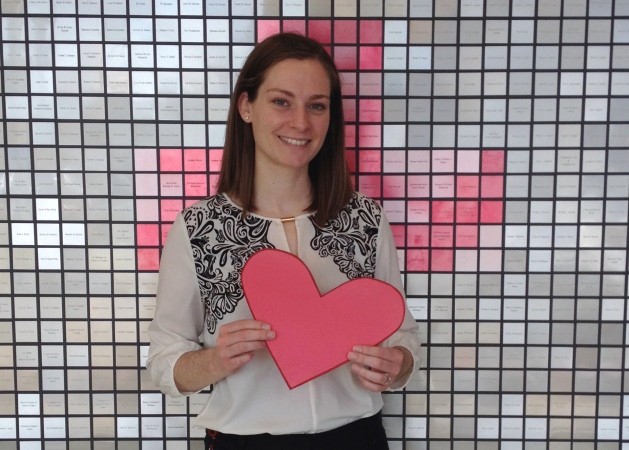
With Valentine’s Day just around the corner, the American Red Cross would like to show appreciation for our volunteers and say “we heart you!” Volunteers constitute 94% of the total workforce to carry out our humanitarian work.
When asked to describe how volunteers make a difference, Red Cross employee Mike Schroeder said “they are unselfish and what they do is very meaningful.” We took a quick poll around the office asking, “In one word, how would you describe Red Cross volunteers?”
The answers:
indispensable,
giving,
generous,
invaluable,
gracious,
dedicated,
and lifesavers.
The more than 1,700 volunteers in the Northern Minnesota Region embody these words and much more. We ❤ them, this
Valentine’s Day and every day.
Many Red Cross volunteers help in their communities as well as get trained to respond when other parts of the country are hit by a major disaster. If you want to join the Red Cross as a volunteer, visit www.redcross.org/support/volunteer to search and apply for opportunities in your community.
(R to L) Students Shea Brennan, Jenny Leestma, and Bella Wheeler, with Red Cross northern Minnesota regional executive Phil Hansen (far left).
Last fall, two Eden Prairie High School business clubs engaged their entire school in a massive Holiday Mail for Heroes card-signing event for the American Red Cross.
The group, led by seniors Jenny Leestma, Bella Wheeler and Shea Brennan, worked with their principal to distribute blank cards to each homeroom, hang posters and banners throughout the school building, and even created a program where students could sign multiple cards in exchange for required volunteer hours. In the end, the students collected over 1,500 cards for deployed soldiers and veterans and estimated that 1,000 students participated in the project.
After the event, students read through the signed cards to ensure all messages were appropriate. “We saw that [the project] touched the students when we began to read through the cards and saw the amazing thought and effort put into so many of them,” says Jenny Leestma, one of the student leaders of the project. “It was truly a blessing to contribute to such an amazing program!”
Holiday Mail for Heroes is an annual event coordinated by the Red Cross Service to the Armed Forces Department, which supports members of the U.S. Military, its veterans and their families. This past year, people from across the country sent a record number of 2.1 million cards, including the cards from the Eden Prairie High School students.
The American Red Cross also has additional way for groups of youth to get involved with our programs. For more information please visit our website.
Thank you to the students at Eden Prairie High School for enthusiastically participating in Holiday Mail for Heroes, and extra thanks to the DECA/BPA students who worked so hard to make this year’s event a huge success!
Story by Lisa Joyslin, Volunteer Resources Director, American Red Cross Northern Minnesota Region. Photo credit: Lynette Nyman/American Red Cross




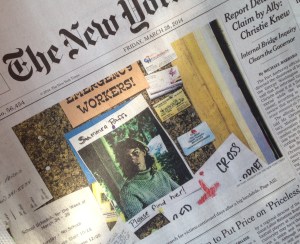 Summer Raffo. I think I will always remember this name. This name, seen in a New York Times cover photo on March 28, 2014, made the Oso mudslide real for me. Seeing a personal plea for her rescue, wrapped by words for emergency workers and Red Cross, from someone who loved her forced my own tears to roll in a public place, surrounded by people sipping coffee, using their computers, and chatting with friends and neighbors. My reaction to the photo, I think, was normal. Finally, after seeing other images and reading other stories, this tragic, heartbreaking, life-changing event became real in my own heart. From a distance, I was affected, feeling the grief of losing someone dear, as if Summer were someone I knew. And so I was reminded that taking care of myself, even from many many miles away, is important for me and the people around me. The Red Cross tips mentioned below remind me that taking care of myself is a way of helping. Later that morning, I searched online for Summer’s name, wondering if there was an update. And there was. Summer Raffo was one of those who perished in the mudslide. Her brother said in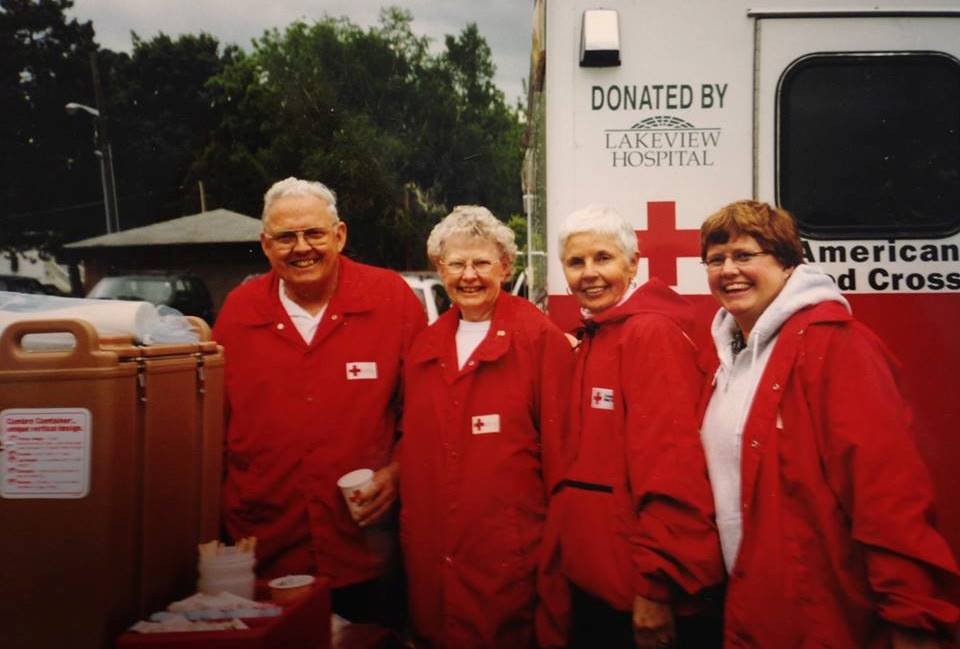






 American Red Cross Minnesota and Dakotas Region