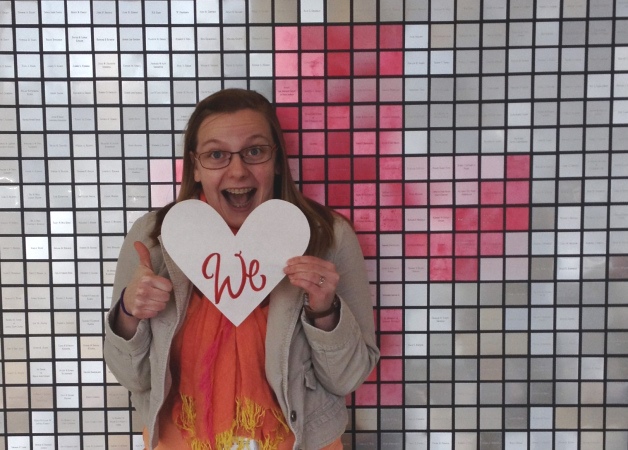
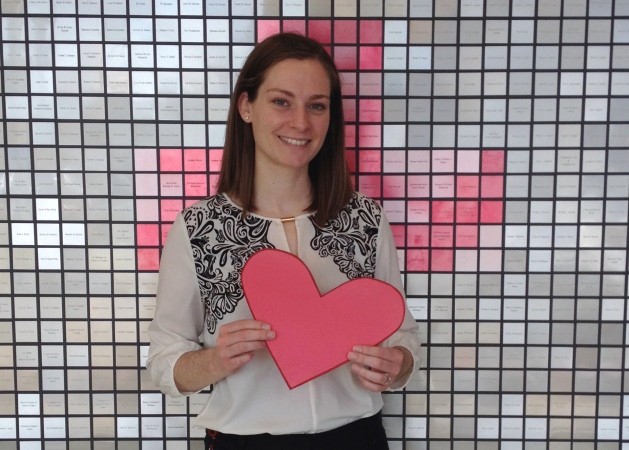
With Valentine’s Day just around the corner, the American Red Cross would like to show appreciation for our volunteers and say “we heart you!” Volunteers constitute 94% of the total workforce to carry out our humanitarian work.
When asked to describe how volunteers make a difference, Red Cross employee Mike Schroeder said “they are unselfish and what they do is very meaningful.” We took a quick poll around the office asking, “In one word, how would you describe Red Cross volunteers?”
The answers:
indispensable,
giving,
generous,
invaluable,
gracious,
dedicated,
and lifesavers.
The more than 1,700 volunteers in the Northern Minnesota Region embody these words and much more. We ❤ them, this
Valentine’s Day and every day.
Many Red Cross volunteers help in their communities as well as get trained to respond when other parts of the country are hit by a major disaster. If you want to join the Red Cross as a volunteer, visit www.redcross.org/support/volunteer to search and apply for opportunities in your community.
(R to L) Students Shea Brennan, Jenny Leestma, and Bella Wheeler, with Red Cross northern Minnesota regional executive Phil Hansen (far left).
Last fall, two Eden Prairie High School business clubs engaged their entire school in a massive Holiday Mail for Heroes card-signing event for the American Red Cross.
The group, led by seniors Jenny Leestma, Bella Wheeler and Shea Brennan, worked with their principal to distribute blank cards to each homeroom, hang posters and banners throughout the school building, and even created a program where students could sign multiple cards in exchange for required volunteer hours. In the end, the students collected over 1,500 cards for deployed soldiers and veterans and estimated that 1,000 students participated in the project.
After the event, students read through the signed cards to ensure all messages were appropriate. “We saw that [the project] touched the students when we began to read through the cards and saw the amazing thought and effort put into so many of them,” says Jenny Leestma, one of the student leaders of the project. “It was truly a blessing to contribute to such an amazing program!”
Holiday Mail for Heroes is an annual event coordinated by the Red Cross Service to the Armed Forces Department, which supports members of the U.S. Military, its veterans and their families. This past year, people from across the country sent a record number of 2.1 million cards, including the cards from the Eden Prairie High School students.
The American Red Cross also has additional way for groups of youth to get involved with our programs. For more information please visit our website.
Thank you to the students at Eden Prairie High School for enthusiastically participating in Holiday Mail for Heroes, and extra thanks to the DECA/BPA students who worked so hard to make this year’s event a huge success!
Story by Lisa Joyslin, Volunteer Resources Director, American Red Cross Northern Minnesota Region. Photo credit: Lynette Nyman/American Red Cross
During this last week of National Blood Donor Month, we share this personal story from Michelle Rydberg at the American Red Cross St. Croix Valley Chapter based in Bayport, Minnesota. Thank you blood donors who helped save Madeline Rose’s life!
Michelle and Chris hold their baby girl two weeks after her premature birth, St. Paul, MN, 2006.
August 2006 was the scariest time of my life. What was supposed to be a routine prenatal visit, ended days later with an emergency c-section when I was diagnosed with preeclampsia, a condition that’s defined as high blood pressure and excess protein in the urine. Left untreated, preeclampsia can lead to serious, even fatal, complications for both the mother and baby. The only cure for this is delivery at 29 weeks. My little girl was about to be born 11 weeks early and I knew that she wasn’t ready. They were able to keep me stable enough for two days so that I could get a steroid injection to help develop her lungs. I wasn’t allowed to have visitors, phone calls, watch TV or even have bright lights on for fear that I would have a stroke or seizure. I just listened to that little heartbeat.
When it came time for delivery, I was terrified. I didn’t know what to expect. I was scheduled to take my first birthing class that night! They needed to do a c-section because the baby was breech and moving her for a natural delivery would cause too much stress on me and her. The procedure was fast and she was born without complications. They brought her to me for only a moment before taking her to the Neonatal Intensive Care Unit (NICU) at Children’s Hospital in St. Paul, Minnesota. Two pounds, ten ounces, fifteen inches long; my husband called her a “keeper walleye.” I couldn’t believe how small, yet how perfect she looked. Like a tiny rosebud. And so, her name came to be Madeline Rose.
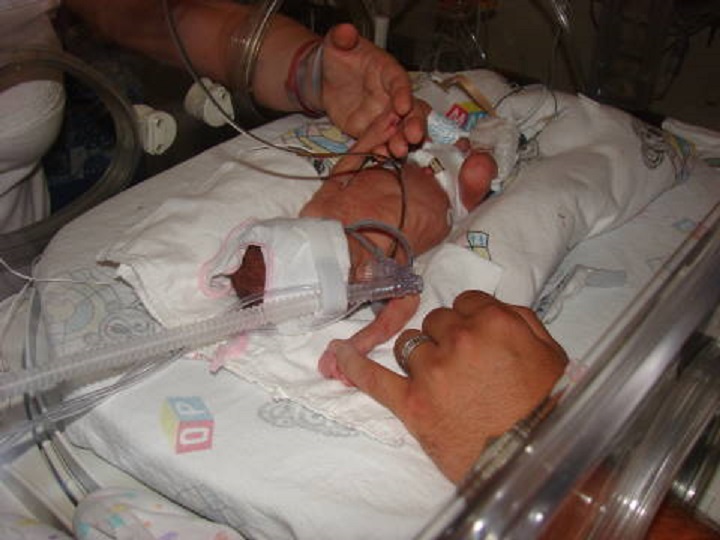
Madeline Rose, two days old, needed blood donations that would help save her life, St. Paul, MN, 2006.
The excitement of becoming new parents was taken away from us as we had to see our little girl hooked up to machines, with wires monitoring everything. Her hands were so little that they fit through her dad’s wedding ring. Luckily the steroid shots worked, because her lungs were strong enough that she did not need a ventilator. Her hemoglobin, however, was low and she was very weak. She wasn’t interested in eating and was having several “episodes” where she would stop breathing. They recommended doing a blood transfusion.
I work for the American Red Cross and have been telling people for years the importance of blood donation. It wasn’t until my own daughter needed one, that I realized just how important this truly is. She needed something to help her survive and it was not something that myself, my husband, the doctors could just fix with medication or a procedure. She needed blood. Blood from a complete stranger. Madeline was in the NICU for two months before we were able to bring her home. During that time she had two blood transfusions. Without them, I don’t know if she would have had the strength to survive.
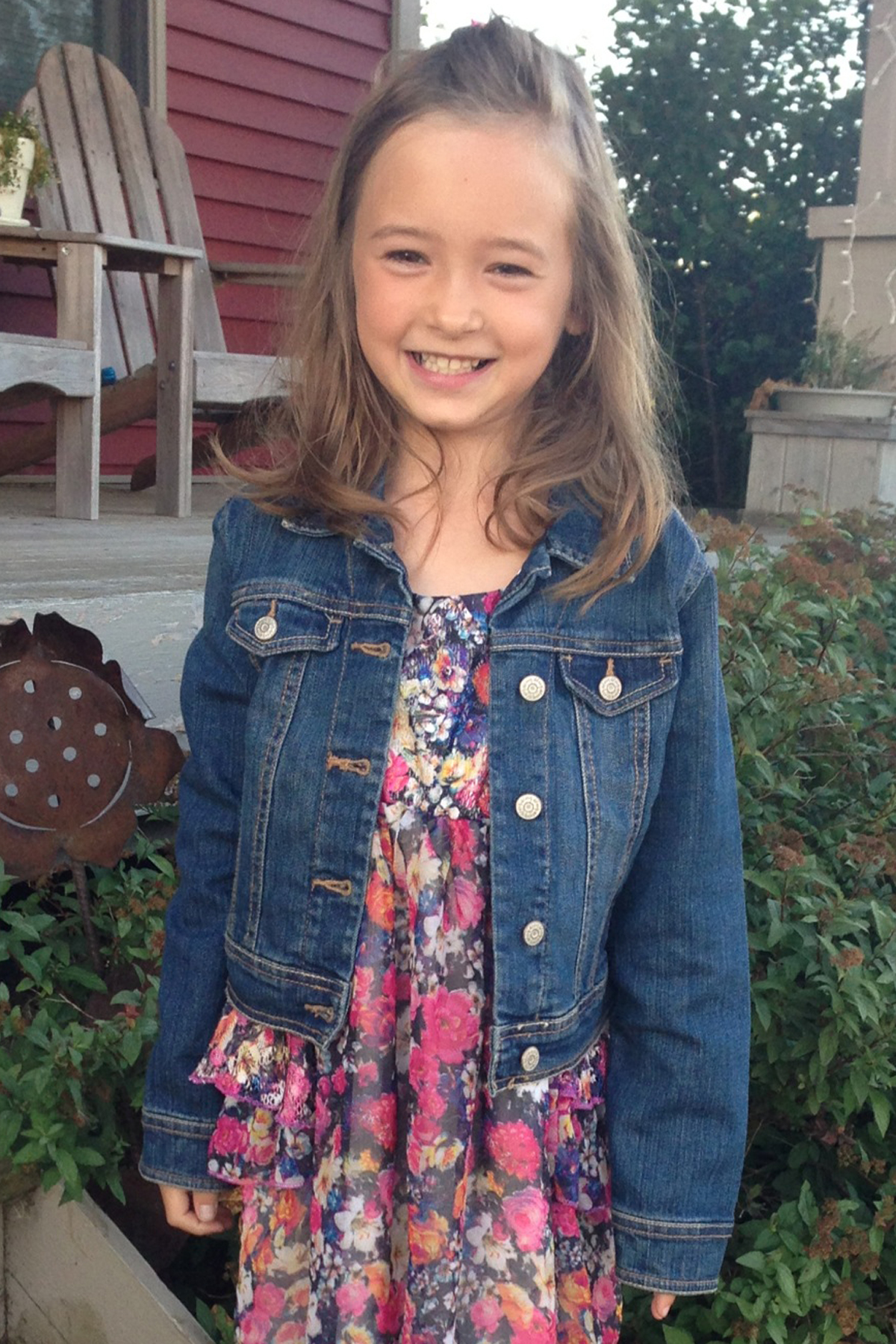
Madeline Rose, 7 years old, received blood transfusions that helped save her life after she was born prematurely in 2006.
Madeline Rose beat the odds and graduated from the NICU follow-up clinic with flying colors. She has absolutely no developmental delays or complications from being a preemie. She is now a happy, healthy, smart, beautiful, feisty seven-year-old who excels in school and life.
I recently gave blood and brought Madeline with me, not only because she was interested in the process, but because I wanted her to see the kindness in people, giving their own blood to save the lives of others. I asked her what she thought as we were leaving and she said, “that’s pretty cool.” Yes, it is pretty cool. I encourage anyone who is healthy, to donate blood. It’s only an hour of your time, but can mean a lifetime to someone who needs it.
Click here to learn more about blood donation and to schedule a blood donation appointment.
Pets are an important part of many families, and a new Red Cross Pet First Aid App puts lifesaving information right in the hands of dog and cat owners so they can provide emergency care until veterinary assistance is available.
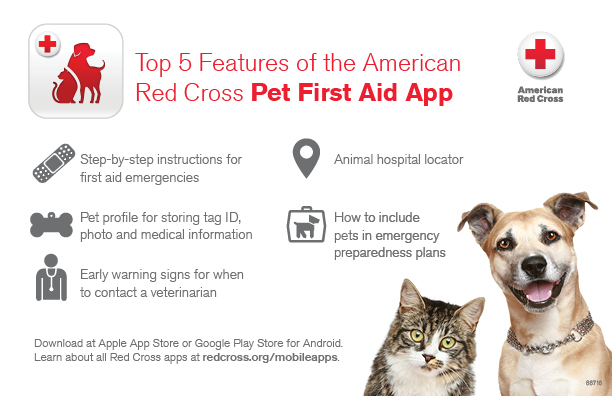
The 99 cent Pet First Aid app from the American Red Cross gives iPhone and Android smart phone users instant access to expert information so they learn how to maintain their pet’s health and what to do during emergencies. Pet owners learn how to recognize health problems and when to contact their veterinarian.
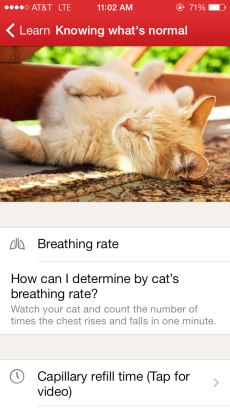
The Pet First Aid App provides step-by-step instructions, videos and images for more than 25 common first aid and emergency situations including how to treat wounds, control bleeding, and care for breathing and cardiac emergencies. Additional topics include burns, car accidents, falls and what to do for cold- and heat-related emergencies.
Other features in the app allow pet owners to:
Create a pet profile including tag identification number, photos, list of medications and instructions.
Use the list of early warning signs to learn when to call their veterinarian.
Use “click-to-call” to contact their veterinarian.
Find emergency pet care facilities or alternate veterinarians with the “animal hospital locator.”
Locate pet-friendly hotels.
Test their knowledge with interactive quizzes and earn badges that they can share on their social networks along with their favorite picture of their pet.
History shows that people have not evacuated during disasters because they did not want to leave their pets behind. The Red Cross app contains resources to help owners include pets in their emergency action plans. Pet owners may also take a Red Cross Pet First Aid course so they can practice the skills and receive feedback. People can go to redcross.org/takeaclass for information and to register.
The Red Cross has made great strides in making emergency information available whenever and wherever people need it. The Pet First Aid App and other Red Cross apps can be found in the Apple App Store and the Google Play Store for Android by searching for American Red Cross or by going to redcross.org/mobileapps.
Drayton Carlberg, donating blood for the first time at the 12 Hours of Giving on December 23, 2013.
As National Blood Donor Month, January is a great time to recognize our incredible donors and remind everyone that the need for blood is constant. Just a few weeks ago on December 23, 55 new blood donors, joined hundreds of veteran donors for the 12 Hours of Giving Holiday Blood Drive. First-time blood donors, Drayton Carlberg (right), Lia Capaldini (below), and Hunter Carlberg (bottom right) participated in this extraordinary event which collected 458 pints of blood – which was 92% of our goal!
Lia Capaldini, Augsburg College senior, donating blood for the first time at the 12 Hours of Giving on Decbember 23, 2013.
Weather and road conditions have improved, but recent severe winter weather has taken a toll on blood and platelet donations, both regionally and across the country. As of Thursday, Jan. 9, approximately 300 blood drives across 25 states were canceled across the U.S. due to the snow and extreme cold. The blood drive cancellations resulted in a shortfall of nearly 8,800 blood and platelet donations since Jan. 2. The Red Cross is seeing an urgent need for platelet donors, as well as blood donors with types O positive and negative, A negative and B negative blood. Eligible donors with these blood types are strongly encouraged to make an appointment to give in the coming days.
Hunter Carlberg, donating blood for the first time at the 12 Hours of Giving on December 23, 2013.
So, in honor of National Blood Donor Month this January, please help us meet our blood donation goals. On average, the American Red Cross must collect about 15,000 pints of blood every day from volunteer blood and platelet donors to meet the needs of patients. Eligible donors in the North Central Blood Services Region can help boost donations immediately. Red Cross blood donation centers in the Region will temporarily offer extended hours to allow for more blood donation appointments. From Jan. 10 to Jan. 20, 2014 Red Cross blood donation centers will add one additional hour each day. Also, please join the Red Cross in thanking all blood donors for their help in ensuring a stable blood supply for patients all across the country.
Red Cross and African immigrant community field trip, Minneapolis, MN, December 5, 2013.
The tragic explosion and fire on January 1 in the Cedar-Riverside neighborhood of Minneapolis was a reminder for us that working ahead of disaster to reach out to diverse communities remains a top priority for the Red Cross. Most recently, on December 5, 2013, nine Red Cross volunteers and staff, representing multiple aspects of disaster prevention, relief, and recovery, met with five African immigrant community leaders to discuss the ways in which we could work together in a culturally sensitive manner. Together, we toured the Cedar Cultural Center, the Brian Coyle Center and areas around a Cedar-Riverside apartment building. Each step of the way there were conversations about the ways they could partner together on different projects including sheltering, cultural training, and preparedness. We know that connections made during this community walk-about, as well as previous community outreach activities, has helped lessen the stress of a tragic event and enabled the Red Cross and its community partners, both organizations and individuals, to provide emergency aid to people during a time of great need.
Story and photo from Jenn Hamrick, a preparedness coordinator for the American Red Cross Northern Minnesota Region. Several community partner groups are taking donations for the Cedar-Riverside fire survivors. Click here for information about how to help.
We have so much to be grateful for this past year. For tens of thousands of hours given by volunteers. For millions of dollars given by donors. For countless comforting hugs given to families coping with disasters. For hundreds of thousands of blood products collected to save lives. For tens of thousands trained in lifesaving skills. For thousands of heartwarming messages sent to military members and veterans. For tens of thousands reached in our communities with vital preparedness information. For more than one million connected to our region through digital outreach. For every hour, every hug, every dollar, every story shared to fulfill our mission of alleviating suffering – thank you. For sleeves up, hearts open, all in–the essence of everyone who supports the Red Cross. This past year you helped. For that we’re the most grateful of all.
To you and yours, and everyone, we wish a happy, healthy and bright New Year!
After five years of searching on her own, Asha Sugule turned to the Red Cross in Minneapolis for help finding her sister somewhere, she believed, in east Africa.
Story by Katie Kusnierek. Photos by Daniel Soderstrom.
Asha Sugule (above) was separated from her sister Layla for five years when the Red Cross reconnected them in a few months time. Photo credit: Daniel Soderstrom.
In 2006, Asha Sugule married and moved with her new husband from east Africa to the United States, leaving behind her 5-year-old sister Layla. Fortunately, Asha was able to leave Layla with family friends who had a telephone. The separation left a huge void in Asha’s life, but she was grateful to be able to speak with her sister and know that she was doing well.
Asha continued to have regular conversations with Layla for two to three years until the family caring for young Layla abruptly left Nairobi, Kenya, and could no longer be reached by phone. The family could not afford to have a phone and Layla was too young to find the means to contact Asha. So, Asha and Layla lost all contact with each other. Distraught at the thought of her sister being so far away from her and so alone, Asha feared for Layla’s safety who was now a young lady and in need of her older sister’s guidance and love.
Asha tried desperately to find out any information that she could on the whereabouts of her sister. Asha only had hearsay from friends and neighbors to go off of and continued searching for Layla for five years with no success.
In Minneapolis, Yahye Mohamed (right) was the first Red Cross worker to meet with Asha and start the search for her sister Layla. Photo credit: Daniel Soderstrom.
Finally, Asha contacted friends in Yemen who told her to try contacting the Red Cross for help in the search for her sister. Much to Asha’s surprise, Red Cross workers with the Restoring Family Links program were able to track down Layla in a matter of months and deliver a message to Asha with Layla’s contact information on September 23, 2013. After years of separation, Asha was able to reconnect with her sister, who had moved to Ethiopia, married, and was pregnant with her first child.
Today, Asha and Layla are able to speak on the phone and are once again a part of each other’s lives. Asha is hopeful that someday Layla may move to the United States so that they can be reunited, but for now she is happy to have her sister back in her life.
Asha encourages others in her community to contact the Red Cross for help and support. “I am so happy because someone was able to find my family member,” says Asha. She wants others to feel the same sense of relief and joy that the Red Cross gave her.
Last year the Northern Minnesota Red Cross region worked with 53 families on searches for loved ones across international borders. If you have lost contact with a family member following war, disaster, migration, or other humanitarian crisis, please contact us at 612-871-7676 so that we can start your reconnection query.
Story and photo by Carrie Carlson-Guest, American Red Cross
Tiet Nguyen (r) gives a $3,000 donation to Mike Schroeder, a Major Gifts Officer with the American Red Cross, to help those affected by Typhoon Haiyan.
In November, the day before Thanksgiving, a kindly cabinetmaker named Tiet Nguyen came to our local Red Cross office in Minneapolis to help those affected by the recent typhoon in the Philippines. When asked why he brought the check in personally, he said he wanted to hand it to someone –not just put it in the mail– and to share his story.
Tiet and his family escaped Viet Nam 1989 after his brothers and father were killed fighting with the Americans against communism. Fleeing for their lives on a small, wooden boat with more than 70 people, Tiet and his family were shot at for hours as they escaped out to sea. After 10 days with very little food and water, they were rescued by a Filipino fisherman, who took them to the island where he lived. Tiet said, “The people so poor – they have no clothes, but so nice, so nice and kind. They gave us everything.”
He and his family stayed in the Philippines for years and survived even more disasters, including a volcano eruption in ’91 and subsequent deadly mudslides. Remembering the details, he said his oldest son Rung was still in a cradle. Tears welled up in his eyes as he recalled all those lost in the devastation. “The Red Cross was there – they were always there,” said Tiet, “They are always there when anything happens.”
Eventually, Tiet and his family moved to Minnesota to connect with family. They had another son and Tiet built a cabinet-making business with skills he learned in Viet Nam. Today, he and his wife, Hanh Le live in Coon Rapids. One son recently graduated from Hamline and the other is currently a student at Creighton University in Omaha. When he heard the Red Cross was helping those who had helped him and his family so many years ago, he knew he had to help. He collected donations from friends and family, including his sons, and then he and his wife matched it. “Your sons must have gotten you and your wife’s heart,” I commented. He laughs, smiles and cries at the same time, beaming like a proud papa.
“This is what I do, because of what you do – give a little bit of myself to help. I’ve been there, I know. You helped me and my family and who knows when I might need help again, we never know,” says Tiet.
Tiet shared a check for $3,000. Three thousand inspired, connected, paid forward dollars to help those in need. Because, as Tiet said, we never know. We never know when disasters will strike, we never know when it will affect us or someone we love, we never know what tomorrow will bring. But we – and Tiet – know what we can do, we can help now.
Click here to learn about how you can support the Red Cross and its humanitarian mission.
What is never the wrong size, never requires assembly, never goes out of style and always means something? A gift from the American Red Cross. Our 2013 Holiday Campaign is in full swing and shoppers can go through the online Red Cross gift catalog and purchase a variety of symbolic gifts in the name of people on their gift list and give a gift that means something to those in need.
The holiday gift catalog includes items such as:
Hot meals, a warm blanket or a full day of shelter for a victim of disaster
A comfort kit for an injured service member containing things such as a robe, shower shoes, toiletries and a music gift card
Infant care supplies for babies caught up in a disaster, items such as formula, diapers and more
Vaccinations to help people, especially children, around the world avoid contracting what can be a deadly disease
Gifts that give help the Red Cross in many ways, such as sending trained volunteers, like Karen and Rick Campion from Minnesota, to help people affected by disasters. Most recently, and pictured below, they responded to the Illinois disaster relief operation following the tornadoes that hit November 17, 2013.
The purchase of each symbolic gift item is a tax-deductible contribution that supports the mission of the Red Cross. The catalog gifts are contributions toward a Red Cross program area, not a donation to a specific project or item. Those who participate will receive free gifts such as a Red Cross Water Bottle for a donation of $100 or more or a Family First Aid Kit for a donation of $200 or more.
Other ways you can give something that means something include:
We are there when people need help – assisting someone during a disaster, sending emergency communications to members of the Armed Forces, providing blood to a hospital patient, training people in life-saving skills, or helping people in need around the world. Support the American Red Cross 2013 Holiday Campaign and remember all those who look to the Red Cross for help – give something that means something.
 volunteers make a difference, Red Cross employee Mike Schroeder said “they are unselfish and what they do is very meaningful.” We took a quick poll around the office asking, “In one word, how would you describe Red Cross volunteers?”



 American Red Cross Minnesota and Dakotas Region