Story and photos by Andrea Bredow, Red Cross Volunteer
Scott Webber & Mary Ellen Fox, volunteers on the sand bagging line in Hastings, Minnesota. Photo credit: Andrea Bredow/American Red Cross
It was a chilly 17 degrees on Saturday morning, but the cold spring air and piles of snow did not stop the Hastings, Minnesota, community from banding together to fight the looming Mississippi River waters.
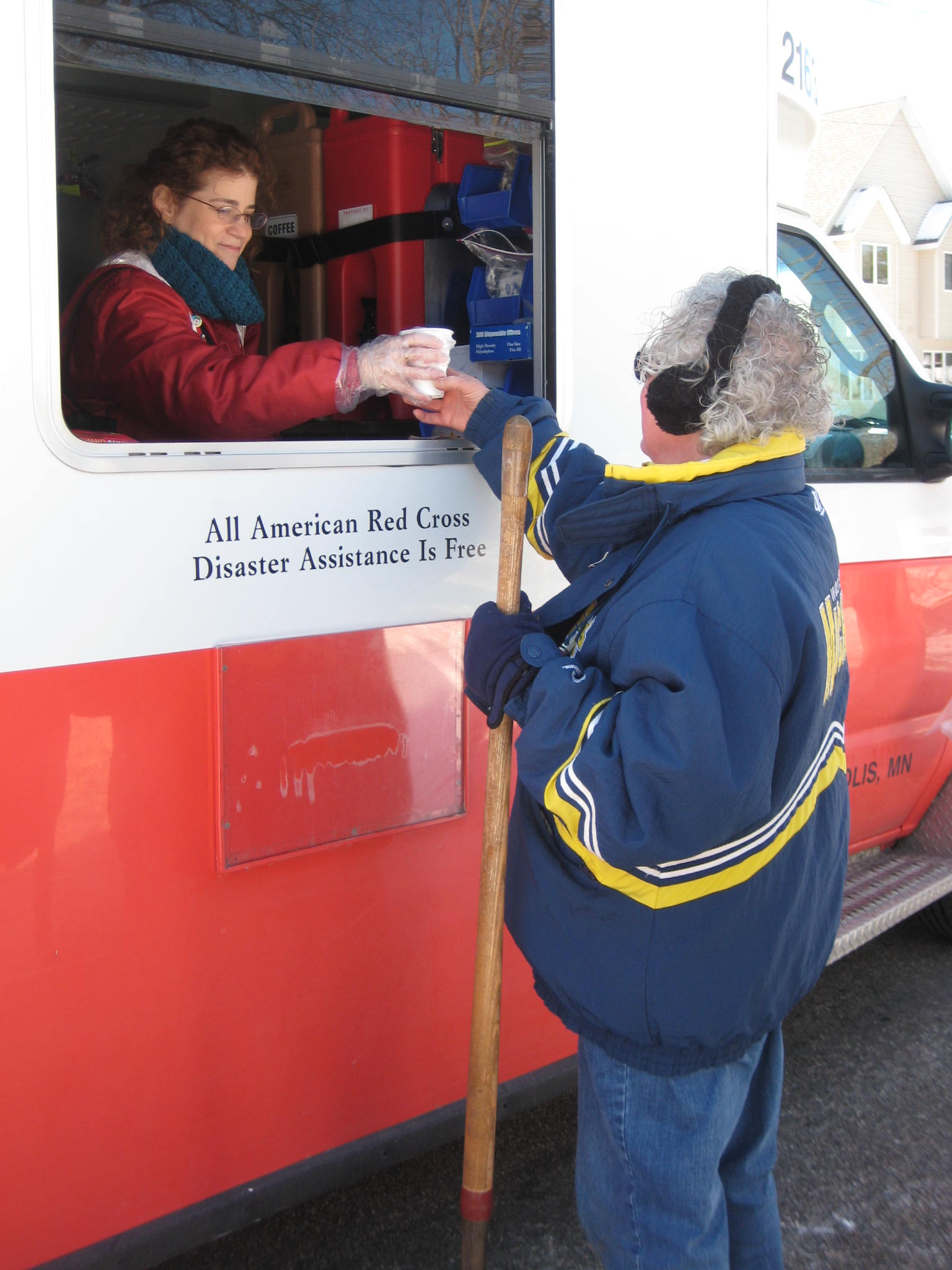
An estimated 700 volunteers spent Saturday sandbagging homes along the river. The American Red Cross Twin Cities Chapter volunteers were there as well. The Red Cross feeding vehicle, also know as the ERV, was on hand to provide hot beverages and snacks to keep volunteers warm and energized.
Red Cross volunteers served coffee, hot chocolate, & snacks to people sand bagging in Hastings, Minnesota. Photo credit: Andrea Bredow/American Red Cross
The call for volunteers went out early in the week and hundreds responded with shovel in hand. Family’s worked filling bags, youth groups stood in the “bucket line” delivering sandbags to homes and Scott Webber even showed up on his birthday to help.
“This is what the city of Hastings does. We help each other,” said Webber.
Webber and a hundred other volunteers were sent to surround Lloyd Fanum’s river side home with sandbags. Fanum has lived on the river for 30 years and is always overwhelmed by the communities outpouring of help.
“The boys and girls giving their weekend to help me is overwhelming! I can’t thank them enough,” said Fanum.
Homeowner Lloyd Fanum is interviewed about the outpouring of help to save his home from the impending flood. Photo credit: Andrea Bredow/American Red Cross
The army of volunteers turned out 20,000 sandbags in only four hours!
“When the neighbors are in trouble, we are ready to reach out and help,” said Patrick Walker, one of the sand bagging organizers.
Walker says they are ready to gear up the sandbagging operation at any time. If more homes along the river need help, the Hastings community will be there.
Click here to learn more about Red Cross services and opportunities.
The Red Cross relies on multiple generous hands during disaster response. Behind the scenes hands include the folks who locate water and food donations, the people who are around to help unload the relief supplies when they arrive, and the person who grabs a camera running after those who are doing the heavy lifting, literally. xoxo, redcrosstc
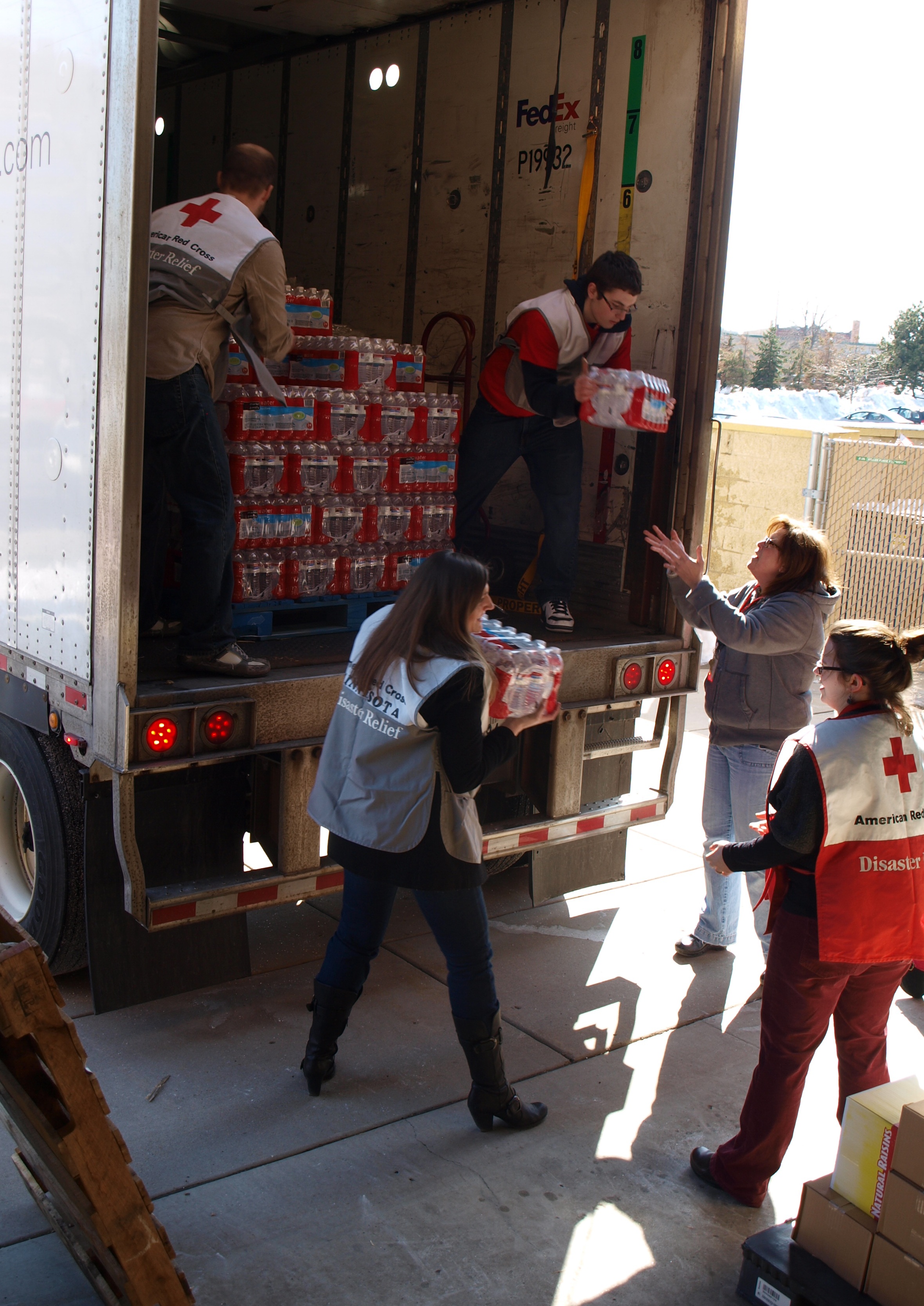
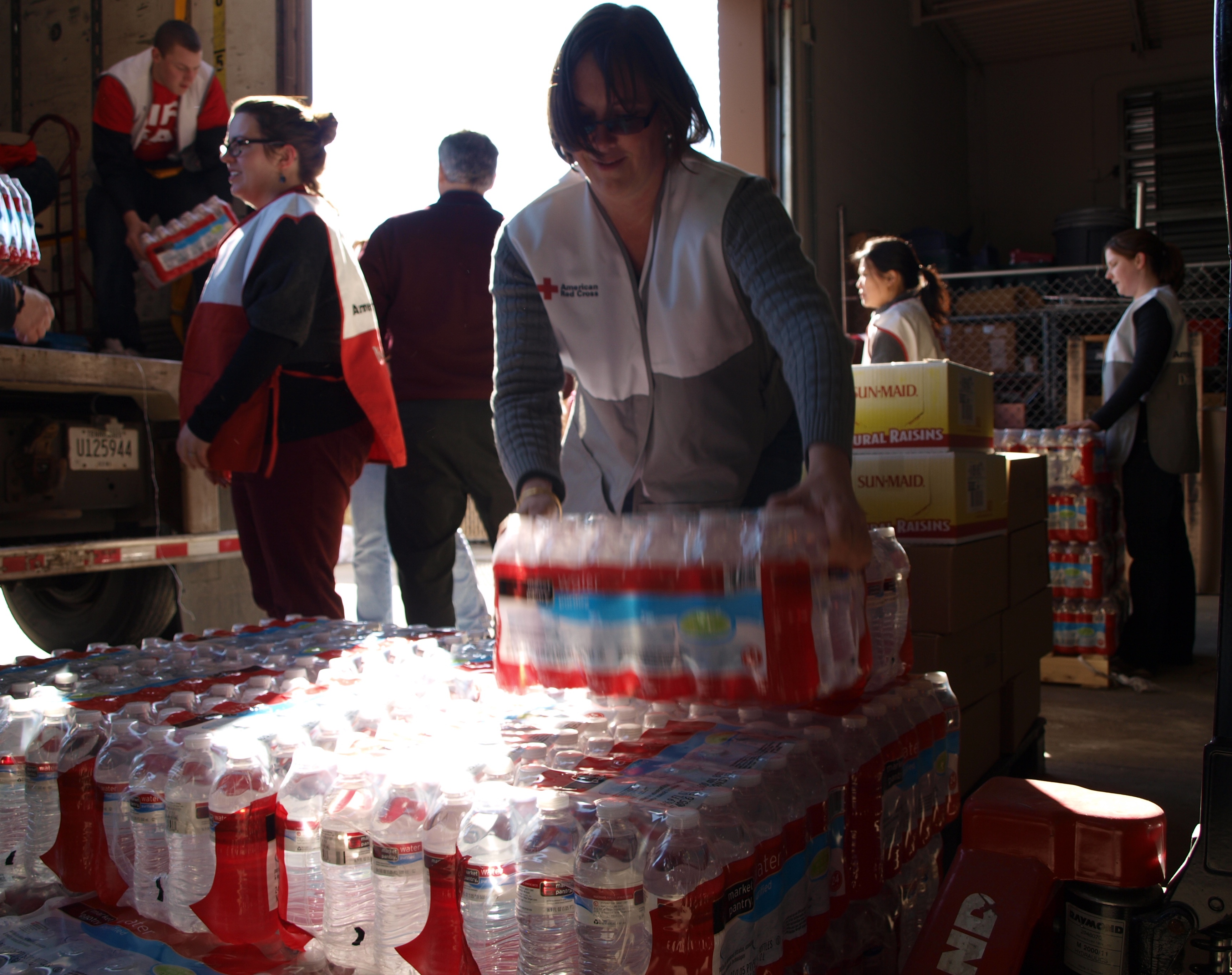
Pallets upon pallets of donated water, juice, and snacks arrive Friday afternoon at the Red Cross in Minneapolis. These items are to feed hundreds of people who will be sand bagging on Saturday as part of flood mitigation. Photo credit: Lynette Nyman/American Red Cross
Red Cross workers unload snacks that sand baggers will be grateful to have. Photo credit: Lynette Nyman/American Red Cross11 pallets, 10868 pounds. They're getting a work out! Photo credit: Lynette Nyman/American Red Cross Even the best of the best lends a hand to the off load. Photo credit: Lynette Nyman/American Red CrossThank you, Target, for your donation. Photo credit: Lynette Nyman/American Red Cross
Photos and story by Anne Florenzano, Red Cross Volunteer
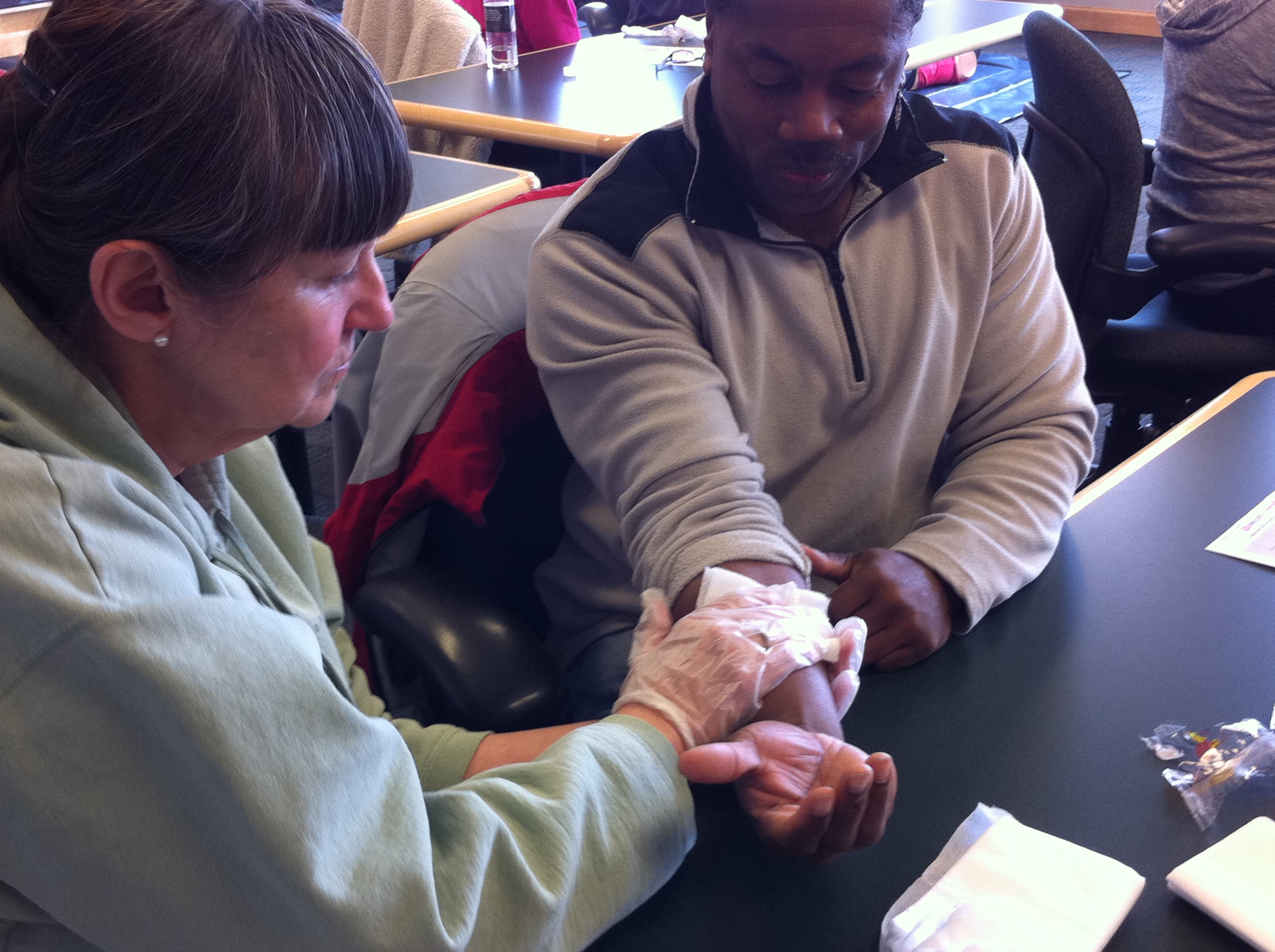
Phyllis Skinner (l) and Kenny Jackson (r) practice how to treat wounds at a Save A Life Saturday CPR class in Minneapolis. Photo credit: Anne Florenzano/American Red Cross
Over a hundred and fifty people signed up to get free, hands-on CPR training at the Twin Cities, Minnesota Chapter of the American Red Cross on Saturday, March 19. They were participants in the national Red Cross “Save a Life Saturday” event held in honor of Congresswoman Gabrielle Giffords.
Just over a month ago, the events that unfolded in Arizona reminded the nation of the importance of being prepared in the event of an emergency. Many of the bystanders knew CPR and first aid and were able to save the lives of several victims, including Representative Gabrielle Giffords, who received help from her intern Daniel Hernandez.
Instructor Christen Asher reminds volunteers at a Save A Life Saturday CPR class to compress the chest 2 inches when doing CPR, and to keep an even rhythm. Photo credit: Anne Florenzano/American Red Cross
In honor of those lifesaving efforts, the Red Cross provided fast and easy classes in more than 100 locations across the country to teach the basics of hands-only CPR, the treatment of shock and how to treat wounds. The classes were shortened versions of Red Cross training courses, lasting approximately 45 minutes in sessions offered all day. The courses were offered free of charge through the generosity of sponsors Safeway and Walgreens.
Kenny Jackson and Phyllis Skinner were two participants who attended a morning session in Minneapolis, and are pictured here practicing how to treat wounds. Phyllis, a retired nurse, babysits her grandchildren a lot and wanted a refresher on CPR.
“It’s been a while,” says Phyllis, “and I want to feel confident if I ever need to use it.”
Kenny spends a lot of time at his lake place in the summer.
Instructor Tasha Nembhard goes over the basics of responding in an emergency situation with participants in a Save A Life Saturday CPR session. Photo credit: Anne Florenzano/American Red Cross
“I’m up at the lake every weekend I can from springtime on. I wanted some emergency training in case something happens. When I’m at the lake there often are not a lot of people around, and I want to be prepared,” says Kenny.
Regardless of the reason, many who attended Save-a-Life day in Minneapolis took will be better prepared if someone in an emergency needs help. If you could not make these introductory classes, click here to sign up for one of the many Health and Safety courses provided by the Twin Cities Red Cross. You can also click here to find video instruction on hands-only CPR, controlling external bleeding, and managing shock.
by Andrea Bredow and Mark Smith, Twin Cities Red Cross Volunteers
When fire broke out on an early morning in Bloomington, Minnesota, a family of four found the only way to escape to safety was to break the second floor window, drop the oldest child out the window and then have her catch her two younger siblings. She caught one by the leg and the other around waist. Not only is everything she owned now gone, she is also experiencing emotional reactions from an event no school aged girl should ever have to go through. The American Red Cross Disaster Stress Team steps in to help victims like this young girl work through the emotions from a traumatic life event.
On a sub-zero morning, people jumped out windows to escape this burning apartment building near Minneapolis, Minnesota. Photo credit: Anne Florenzano/American Red Cross
Cay Shea Hellervik, a member of the disaster response stress team, is one of many volunteers at the Bloomington shelter helping the residents from the apartment fire get back on their feet. As important as finding clothes, shelter and food after a tragic event so is dealing with the event its self and all the emotions that come with a major life tragedy. Cay says it is important to have someone around who wants to listen.
“It is important to talk through what they just experienced when it is still vivid,” says Cay.
When she first arrives at a shelter, Cay checks with the manager and other volunteers to get a general feel for who may need to talk to the stress team.
“I make sure I touch base with everyone, asking how they are doing, how they are feeling and get them to talk through the event, ” says Cay.
For many, a step in the healing process is getting back in their routine. One young girl in the shelter was concerned about missing school, the problem; she only had the pajamas full of soot from the fire. Cay realized returning to her regular schedule was important for the young girl. Cay and the pastor from the church where fire victims are staying found clothes the church had on hand. A phone call was made to the school district and with in 15 minutes the young girl was dressed and ready for the yellow school bus that arrived at the shelter. Cay noticed a tear run down the girls face as she stepped on the bus as she return to her “normal” schedule.
Play time with a Red Cross volunteer helps children heal after a traumatic fire disaster near Minneapolis, Minnesota, which displaced more than 30 people. Photo credit: Cathryn Kennedy/American Red Cross
Along with her professional background in psychology, Cay credits the training the Red Cross provides.
“Red Cross training is so important and prepares you so well for events like this,” says Cay.
All members of the stress team are all trained degreed professionals, but Cay challenges this community to “join the Red Cross regardless of your training, find out what your roll could be and use the great knowledge and training of the Red Cross to contribute to the community.”
For more information about volunteer opportunities, please visit redcrosstc.org.
By Cathryn Kennedy, Red Cross Volunteer, Twin Cities Area Chapter
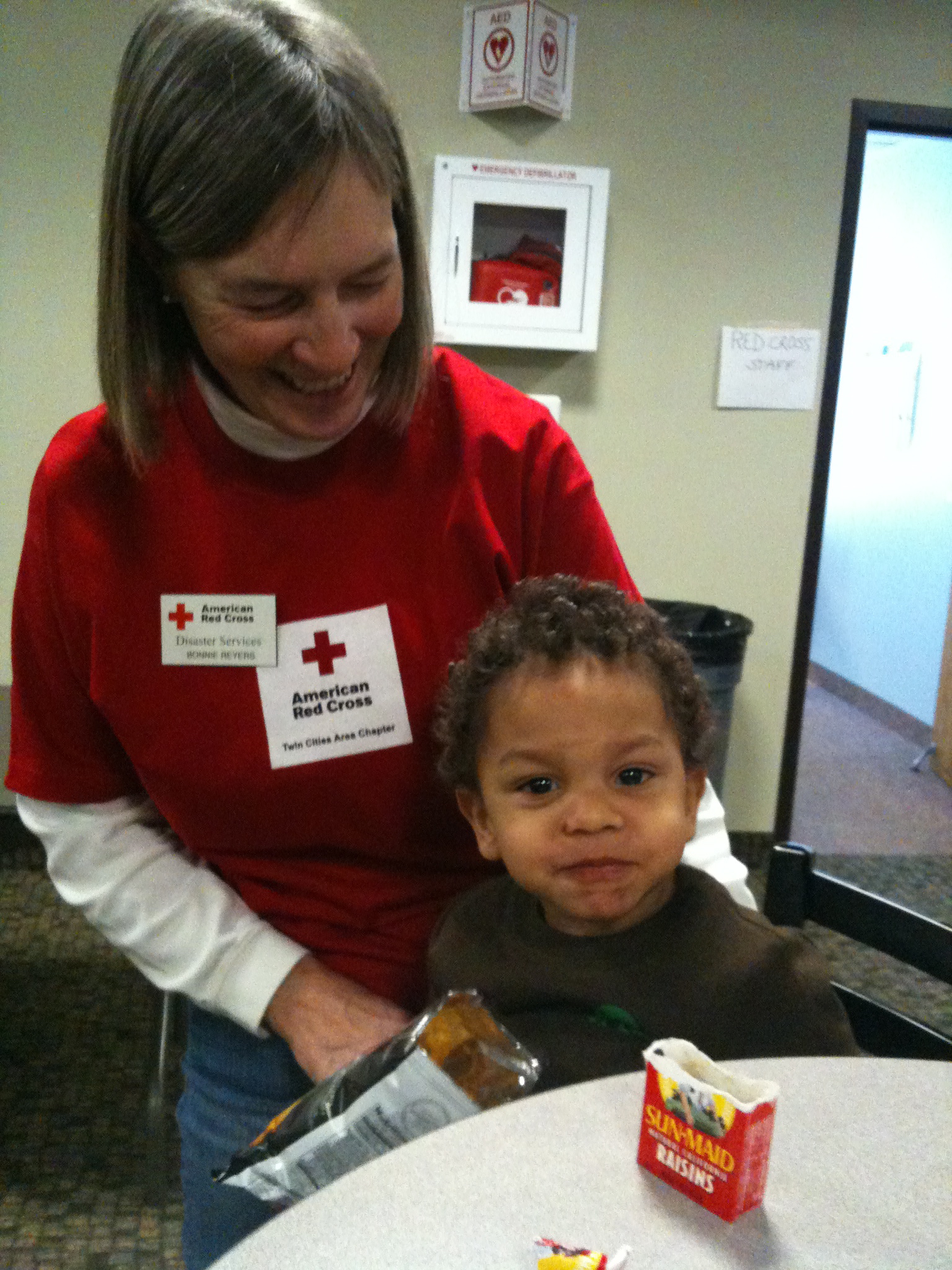
Riley, 2, gets a snack with help from Red Cross volunteer Bonnie Reyers at the Bloomington shelter. Riley and his mother escaped the apartment fire early Tuesday morning. Photo credit: Cathryn Kennedy/American Red Cross
By 10 a.m. the list of tasks was getting long. Shelter Manager Ruth Talford needed to order pizzas for lunch, arrange transportation to off-site showers, and set up two family meeting rooms, including one for discussing financial assistance and another for providing stress relief and counseling. Later in the afternoon, Talford would need to help families get to where they could request government emergency assistance funds.
Meanwhile families in the shelter were busy, too.
Grandmother Eva Dale needed emergency medical care for care of her feet, but first she had to prepare granddaughter Kiara for kindergarten. That meant finding some school clothes and transportation to Kiara’s elementary school.
Red Cross volunteers sprung into action and within 15 minutes Kiara was decked out in a school outfit and winter coat, but she still needed shoes. So did her sister, Kiana, as well as Grandmother Eva. Shoes were in short supply so one volunteer was given names of two nearby neighbors who had offered to help.
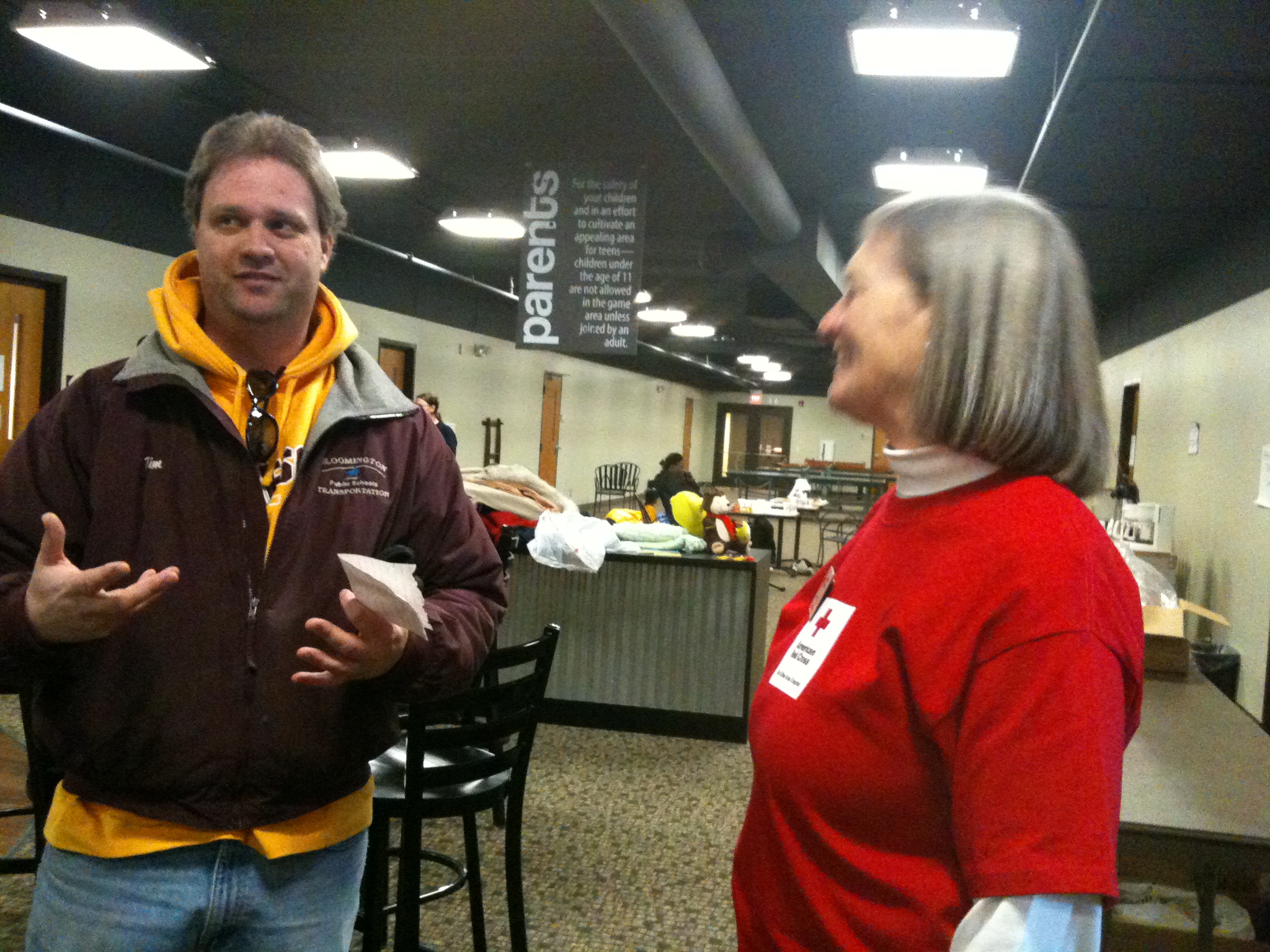
School bus driver Tim Hamm stopped by the shelter to check on one of his students. Hamm offered to help and later dropped off diapers for younger children. Photo credit: Cathryn Kennedy/American Red Cross
The night of the fire Eva was caring for her granddaughters, while their mother was in Iowa. Eva woke up in the night smelling smoke and when she opened the window for ventilation, she saw flames leaping out of a neighbor’s apartment and a parent yelling for help. She awoke her granddaughters and dropped them out the window to waiting rescue workers before jumping out herself. With no time to get shoes, Eva suffered frostbite, and getting her to a doctor was added to the shelter manager’s list urgent things to do.
Meanwhile, Bloomington school bus driver Tim Hamm, who had Kiara on his route, stopped by to see if she was all right. Asking how he could help, he offered to purchase some diapers for a couple of younger children.
Two-year-old Riley and his mother were waiting for a cab to take him to day care, and other families were headed out to go buy new clothes with Red Cross vouchers.
Before noon nine pizzas arrived and after some nourishment everyone went back to work helping families get lives back in order after a fire disaster.
By Red Cross Volunteers Dave Schoeneck and Grace Thompson
When fire struck an apartment building on a recent sub-zero morning in Minnesota, residents had little time to do more than escape. Some leaped from second- and third-story windows while others dropped their children into the arms of first responders.
Eleven apartments suffered extensive damage, displacing more than 30 people. Within minutes, Twin Cities Red Cross volunteers responded to assist them.
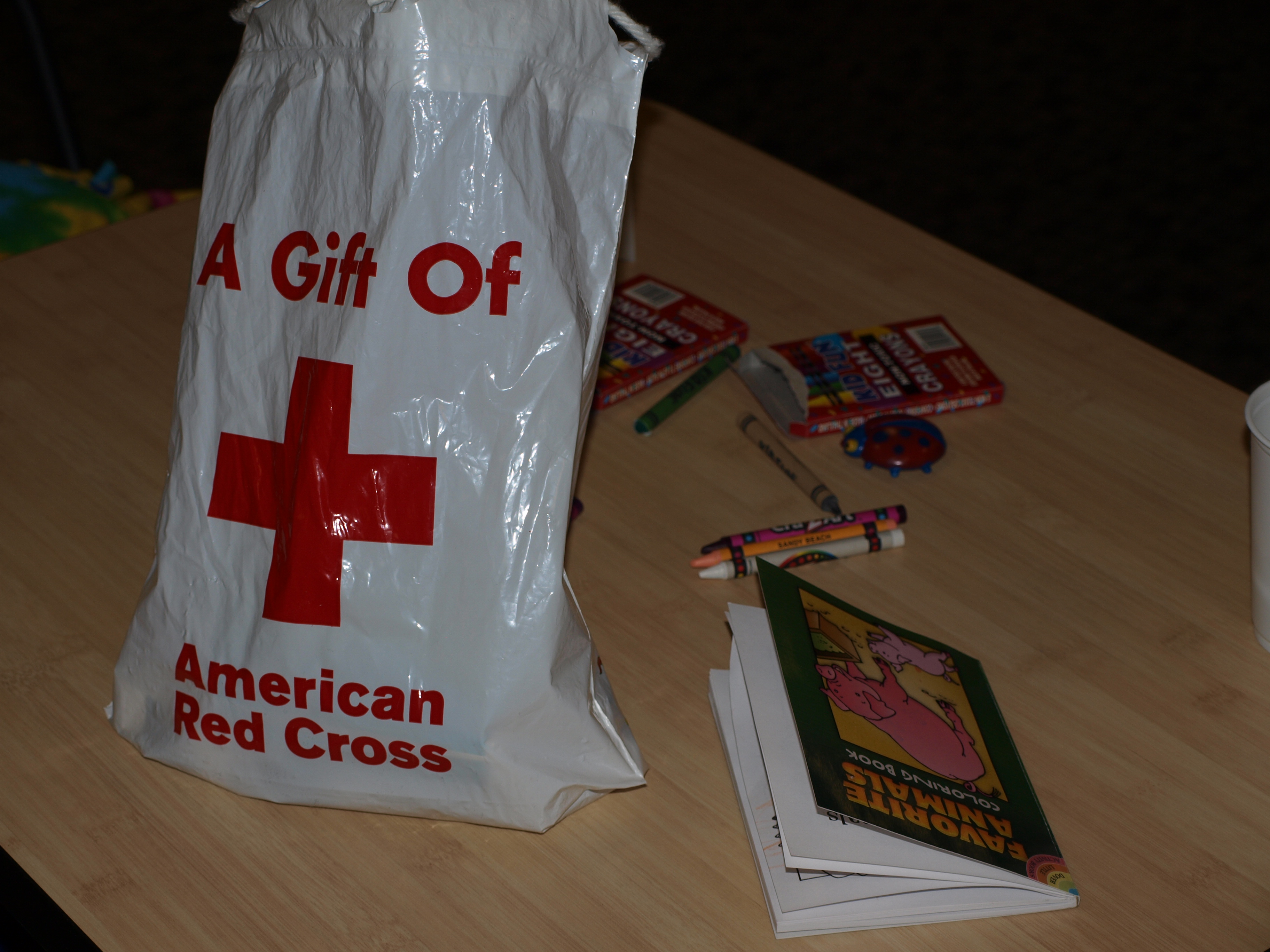
A simple Red Cross Comfort Kit, which includes shampoo, soap, and other essential personal care items, helps people with immediate disaster relief. Photo credit: Grace Thompson/American Red Cross
“Some people fled the burning building in nothing more than shorts,” said Anne Florenzano, a Red Cross volunteer who arrived on the scene early Tuesday.
Heated buses provided initial refuge while residents wondered where they’d sleep that night. By 10:30 AM, the Red Cross had opened a shelter offering a safe and warm place for families to sleep and make plans for rebuilding lives torn apart by disaster.
Kiara Faalafula, a six year-old girl living with her grandmother, was dropped from the second story window because smoke filled the halls made escape by stairs impossible. A police officer caught the kindergartener and took her to a heated bus where she was given a blanket, and later a coat.
Melvin Saballos, 31, who also lived on the second floor, was woken by his father about 5:45 AM. The hall was so filled with smoke that the only exit was through a window.
Melvin, 31, escaped the burning building on a ladder and later sought refuge in a Red Cross shelter. Photo credit: Grace Thompson/American Red Cross
“The Red Cross has been very attentive to the needs of the people, making sure that nobody panics,” said Saballos. “The Red Cross has been incredibly helpful. We are warm and safe.”
Britney Godfrey and Roderick Diggins, along with their daughter, MaKayla, and Roderick’s sister, Ladietra Diggins and her son, Tre’von Diggans, lived in a third floor apartment.
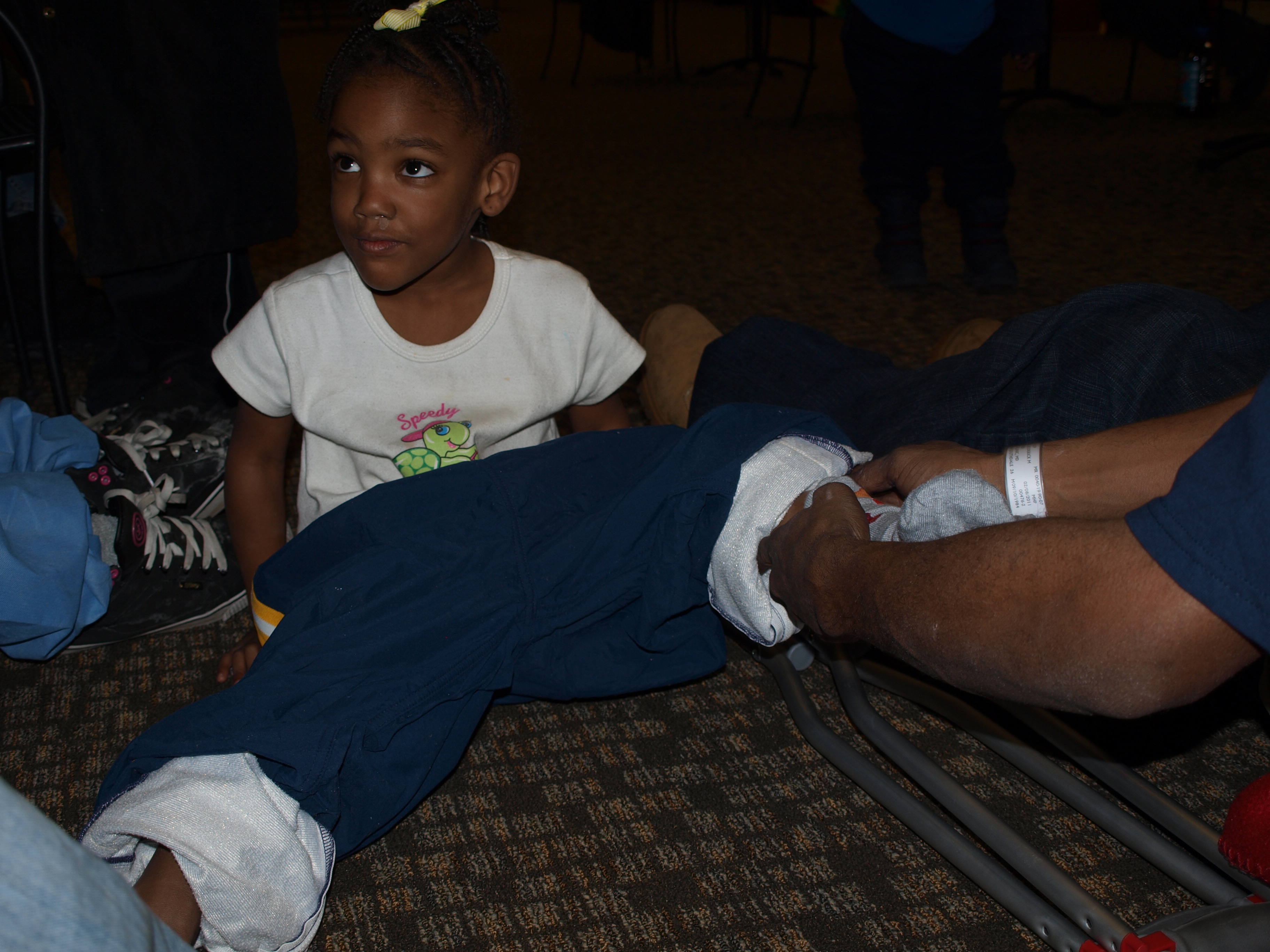
MaKayla, 3, was dropped from a third-story apartment window and caught by a police officer. Here, she's getting clean socks and pants (that are way too big for her). Photo credit: Grace Thompson/American Red Cross
Britney woke up, smelled smoke, and tried to get everyone out, but the smoke-filled hallway was impassible. Godfrey realized that the window was the only way out. After dropping the children into the arms of first responders, the three adults then jumped to save their own lives. All are grateful for the Red Cross help they’ve received.
Since January 1, The Twin Cities Red Cross has responded to 80 fire disasters, providing comfort and other immediate disaster relief for more than 250 people. More than 75 Red Cross volunteers have assisted these families.
Residents affected by the Bloomington apartment fire or other recent disasters can call (612) 871-7676 for more information about the Red Cross and disaster relief services.
By Grace Thompson, American Red Cross Twin Cities Area Chapter
For many, it’s hard to remember the hot days of the Minnesota State Fair this time of year, but for Muriel Olson the smell of corn dogs and the sounds of the “great Minnesota get together” are vivid as she reflects upon her last 50 years of service with the American Red Cross.
Muriel’s story began in 1956 when she was asked by her school’s nursing program director to volunteer for the American Red Cross booth at the state fair. “It was minimal work, washing people’s feet and dressing blisters.”
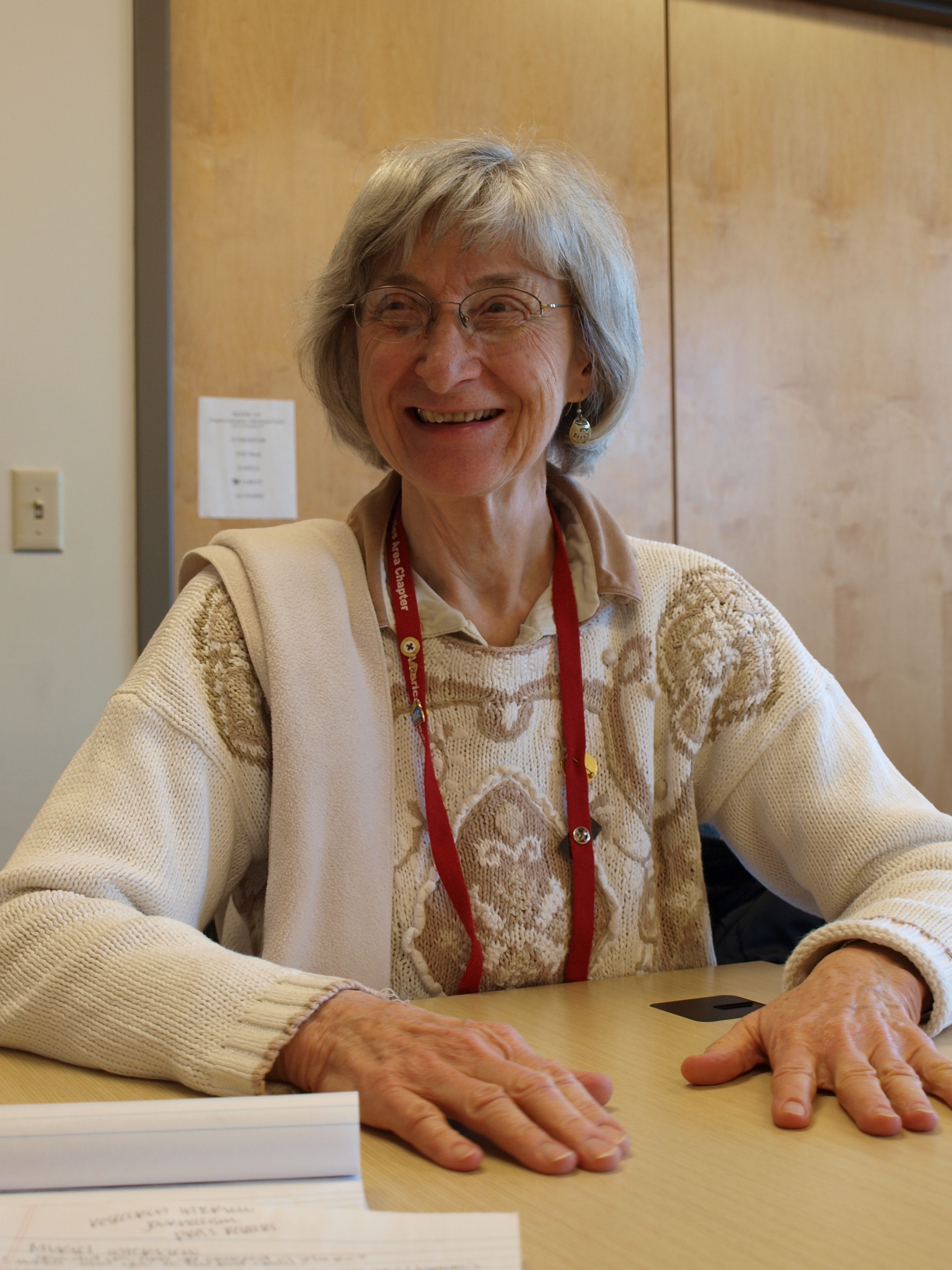
Muriel Olson has been a Red Cross volunteer for 50 years.
Little did she know, this agreement would begin a remarkable span of years sharing her time and talent with the American Red Cross, for which she was recognized this past year with a 50-year service pin.
“I didn’t really choose [volunteering for the American Red Cross], it kind of just happened and it never stopped. I don’t plan on it stopping anytime soon!”
As a recent volunteer with the American Red Cross (or as Muriel might call me, a “newbie”) I was both honored and excited by the chance to interview the Red Cross veteran. I naturally had all kinds of questions I wanted to ask her—such as how many disasters have you responded to (“too many to count”), why do you continue to volunteer (“because I love helping people”), and was there any experience that was particularly meaningful for you (“the embrace of a family member who suffered the loss of their home to a fire”).
She kindly replied to all of my questions and also offered three nuggets of wisdom I’m excited to pass along:
1. “Be passionate about helping people”
To Muriel, this is the most important quality of a Red Cross Volunteer. The reason why the American Red Cross makes a difference is because its volunteers show compassion to every person, regardless of who they are or what his or her circumstances may be. “Even if it is a single-family fire, it’s a disaster to them. Sometimes they just need people to help them- whether it be filling out paperwork, or sitting with them.”
2. “Be willing to adapt to changes”
Muriel enthusiastically expanded upon this, “if there is one thing I can tell you, volunteering with the American Red Cross will never be boring! There is always something new to learn or some challenges to overcome… you are responding to disasters, disasters by nature are never planned.” According to Muriel, the power of the American Red Cross is its ability to offer relief in the midst of uncertainly.
3. “Be ready to work as a team, and to make life-long friends.”
Muriel attributes much of her achievement to the supportive Red Cross community. “I have been able to volunteer and remain positive throughout these last 50 years because of he wonderful friends I have made. The American Red Cross is filled with people of every skill and generation.” This diversity is seen in the classroom where Muriel teaches Disaster Medical Assistance to the “next generation” of Red Cross volunteers. For Muriel, the opportunity to see young volunteers dedicate their time and skills gives her hope for the future of the American Red Cross. “It is a volunteer run organization, without these newbies…[and] without this community, we wouldn’t have a Red Cross.”
In many ways, Muriel’s first actions as an American Red Cross volunteer are symbolic of her continued benevolence over these past 50 years. It’s because of people like Muriel that the American Red Cross, a volunteer-led organization, continues to make an inspiring impact on the world. The Red Cross is grateful for Muriel’s years of service and Muriel hopes her story encourages others to, in turn, “use their skills and talents to help people.”
Click here to learn more about becoming a Red Cross volunteer.
Our Nurse Assistant Training students are buzzing around the American Red Cross Twin Cities Area Chapter these days demonstrating their skills before clinical practice. There’s a ton-o-stuff they need to have down so that their future patients will be well cared for!Click here to learn more about our Nurse Assistant Training (NAT) program and the upcoming class schedule.









 American Red Cross Minnesota and Dakotas Region