“Everything Comes Full Circle”: Deb Perkins, Army Veteran and Red Cross Volunteer

One day in Buffalo, Minnesota, early in 1973, a girl named Deb Butman came home from high school with an announcement. “Hey dad, I’m going to join the army.”  

Deb Perkins, ca. 1973. Submitted photo.

Her dad, an U.S. Army Air Corps staff sergeant who served in the UK and Africa during World War II, laughed because he knew his daughter ‘did not like being told what to do’ says Deb, when reflecting on her impulse to enlist. And yet, Kenneth Butman stood by his daughter and was proud she chose to carry on the family’s legacy of military service.  

Deb hoped to attend the army’s language school with a focus on Russian. Being unable to get the right security clearance, the found herself presented with other recommendations like becoming a cook. “No thanks,” she said.

Even so, that summer at the tail end of the Vietnam War, she found herself in the thick humidity surrounding Fort Anniston in Alabama. There she stood, barely 18, among a group of female soldiers of different ages and backgrounds attending bootcamp.

Julie (l), Jonetra (c) , and Deb (r), taking a break during bootcamp, ca. 1973. Submitted photo.

She made friends with Julie, another soldier. A friendship grew and soon they were chosen to call out drills, earning the nicknames ‘Putt and Butt,’ which referred to their last names. Deep bonds developed with soldiers and leaders. “You respect those people training you,” she says. “You build a kind of family, whether you mean to or not.” 

Despite the challenges for women, Deb proved herself and established credibility. She went from Alabama to Texas where she trained to become a medical corpsman. “You’re smiling,” said one instructor. “I’m a happy person,” she said. “You won’t be after you spend a few days with me,” the instructor said.

One day, tragic news arrived from her first lieutenant, who approached Deb while she was standing at attention. “I don’t know how to tell you this. Your dad died,” she said simply and, with what Deb recalls, little empathy. It turned out that Deb’s dad did not survive a heart attack.

Kenneth Butman, ca. 1940s. Submitted photo.

Thankfully, and within moments of receiving the life-changing news, Deb’s first sergeant wrapped an arm around her. “We’ll get you home,” he promised and brought her to the American Red Cross office on base where a flight was arranged. She was back home the same day to be with her family in Minnesota.

Deb Perkins, circa 1973. Submited photo.

The next year, “we were in the middle of nowhere” Deb says about being at Fort Dix in New Jersey. She when to work, administering shots to deploying soldiers and tending to children in the pediatrics unit. Her patients included a young man with severe burns from a stove explosion. “You have a nice touch,” she remembers him saying through bandages and pain. “I’m glad I can help you feel better,” she replied, meaning every word.

Deb’s military service lasted three years, which was the length of commitment at the time. She received her honorable discharge under President Nixon, one of the last before he resigned.  

“Things will be as they’re meant to be.”

After the army, Deb used the G.I. Bill to pay her way through school and eventually found herself back where her heart had always been – working with kids. First as a teacher and then, after earning her master’s degree, as a licensed mental health therapist. 

She married Clark Perkins, also a licensed therapist. Together, they opened a small practice in Brookings, South Dakota. The work was meaningful and rewarding. And yet she found room in her life for more. She was, in fact, called to Red Cross service, especially because it was “instrumental when I was a struggling soldier.”  So, in 1997, Deb took up another uniform – that of the Red Cross volunteer.
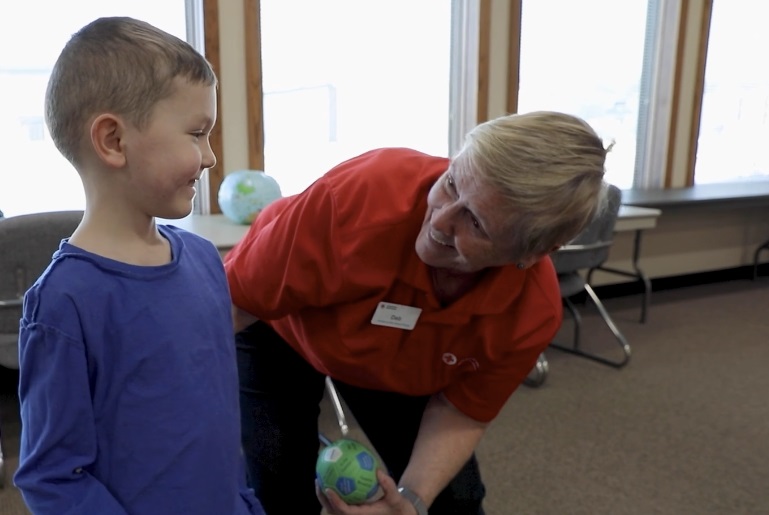
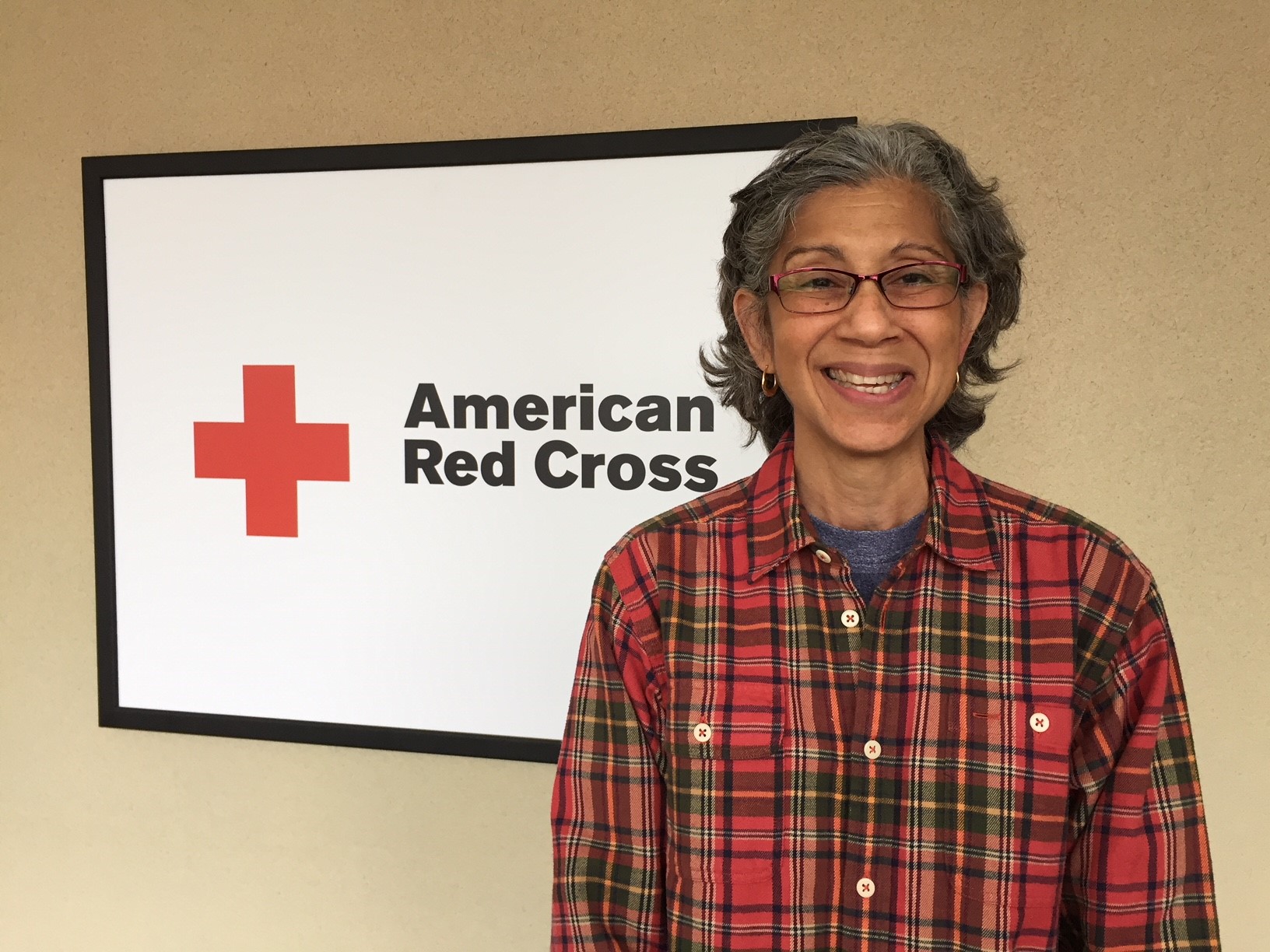
“Play is our language,” says Deb Perkins, who was in Fargo this past April to lead an ’emotional grit’ workshop for military families. Photo: Mutz Media

At first, she was a general volunteer, but her long-time connection to working with children and families led her to disaster mental health. Then, someone suggested that she would be a great fit for supporting military families and veterans through Service to the Armed Forces (SAF), a program going back to the beginning of the Red Cross.

That fit has turned out to be true and an echo of her dad’s often shared sentiment that “things will be as they’re meant to be.”

For nearly 14 years, Deb and Clark have traveled across the country, helping military families through deployments, separations, and loss. “This work is near and dear to my heart,” confesses Deb. Together, they’ve been to Michigan, Alabama, New Hampshire, Texas, Minnesota, Iowa and the Dakotas. They’ve also provided virtual support and training to service members and families in Hawaii and Japan.

Deb Perkins leading an ’emotional grit’ workshop in Fargo, ND, April 14, 2025. Photo: Mutz Media

She recalls one time at a military camp for kids. “Of course, the first day it rained, so we handed out garbage bags to keep the boys dry.” But one boy stood apart, telling everyone that he didn’t have a daddy, that he’d killed himself after Iraq. “It was profound. And it was amazing how the rest of the kids came together to support him,” she remembers.

Over the years, they’ve seen some kids multiple times – before and after deployments. “When they know us, they feel more comfortable and more willing to share,” says Deb. One boy told them, “Hey, I remember you guys!”

That familiarity matters when supporting kids and families through grief, laughter, and healing. Serving in partnership with her husband Clark helps, too. “We’ve learned to bounce off each other and it works. Play is our language,” she says. “And really, we should all play more.” 


U.S. Army veteran and Red Cross volunteer Deb Perkins supports resiliency and other ’emotional grit’ workshops. Photo: Mutz Media

Today, Deb credits her military service for shaping her, helping her grow up. “I’m glad I did it,” she says. Her goal is to grow old with grace while continuing with the Red Cross. “Volunteer work helps you stay involved, connected, and giving back.”  

To learn about current opportunities, pleasle visit RedCross.org/GiveTime.
Northland Embraces Purple Up! for Military Kids

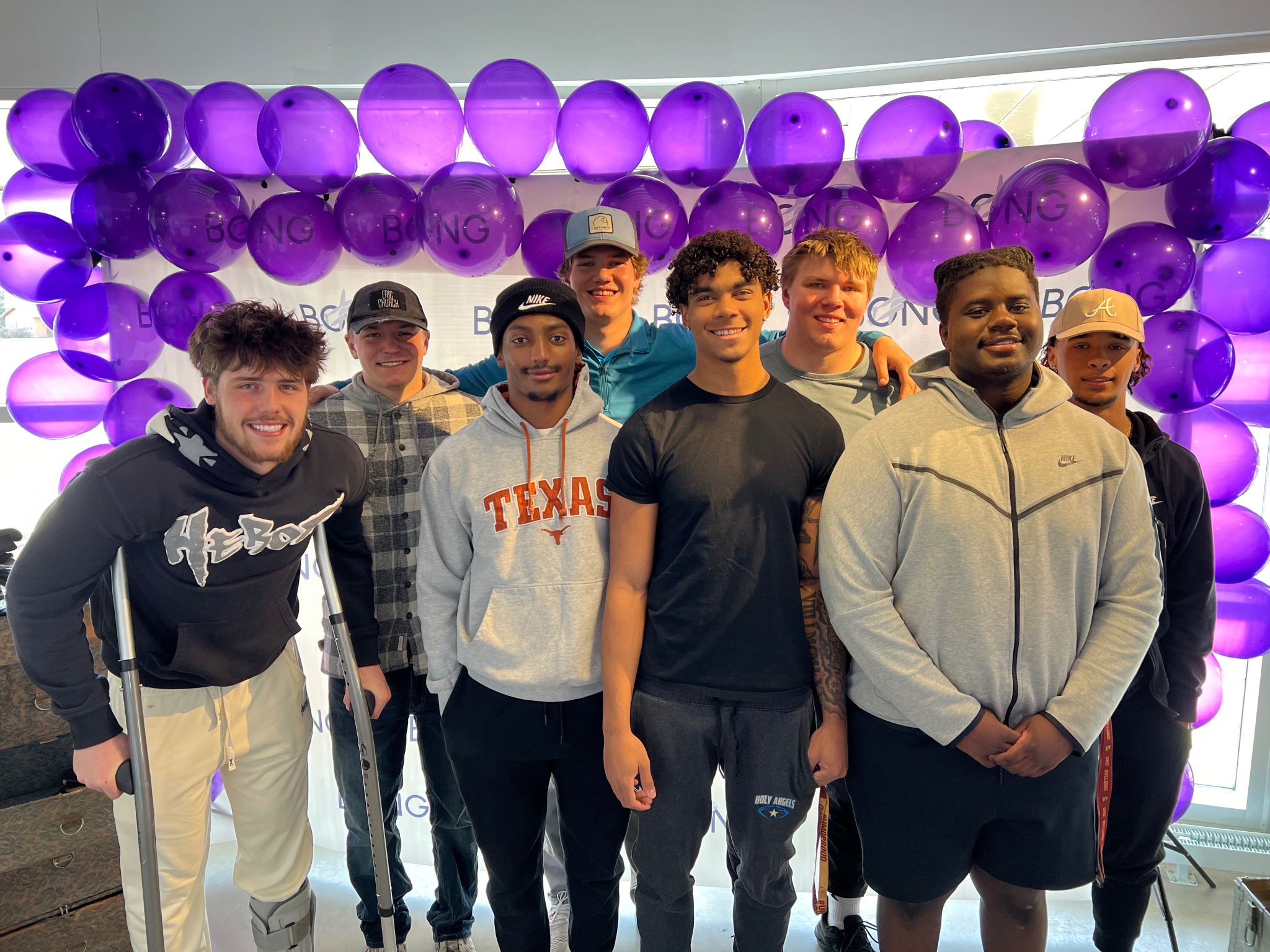
University of Minnesota Duluth (UMD) football players who volunteered at the first Purple Up! Northland event which held this year on Saturday, April 13, 2024, in Superior, Wisconson.

On Saturday, April 13, we were able to bring Northland military families some Purple Up! support that generally happens in the Twin Cities or other large metro areas. These events happen around the nation each April, which is the Month of the Military Child. (A little more about the background of Purple Up! events here.)

This year, there was a desire by the local military community to bring an event like this to the Northland. And we were delighted to take part. We had families come from as far away as Ely and Willow River to participate!

We had partners from a bunch of organizations and local Red Cross volunteers, including those who serve with the Minnesota Army National Guard and those who work with local community partners like Essentia Health and US Bank. And through our partnership with University of Minnesota – Duluth Athletics, we had nine football players who volunteered. The students did an amazing job interacting with the around 40 military kids and their parents.

Our football volunteers ran games outside and tasked kids identifying who built up others, who were supporting their fellow participants, hyping up their friends as well as kids they did not know.  When the end of the event came and it was time to give out special prizes, the football players called kids one by one and shared what they had done to be selected – ranging from “you helped your little brother” to “you were cheering for everyone!” A big part of work like this is to make sure military families feel connected and supported by each other and the community.  The UMD football players were 100% that. 

Our favorite picture is the compilation above when our Regional Service to the Armed Forces Director (SAF), Jeff Kazel gave a young man the final ‘grand prize.’ After, the young man shook the hand of each and every one of the football players.  It was very sweet, and we think a couple of them might have got a little ‘dusty’ from it.

P.S. Much, much thanks to Red Cross volunteer Julie M. for tracking down some great giveaway prizes and to 148th Fighter Wing Family readiness leader Suzy H. for wanting to get this going in the Northland.

Red Cross helps unite military family following explosion and home fire

“I didn’t know that emergency communications for military families in times of a disaster was something the Red Cross could help with.”

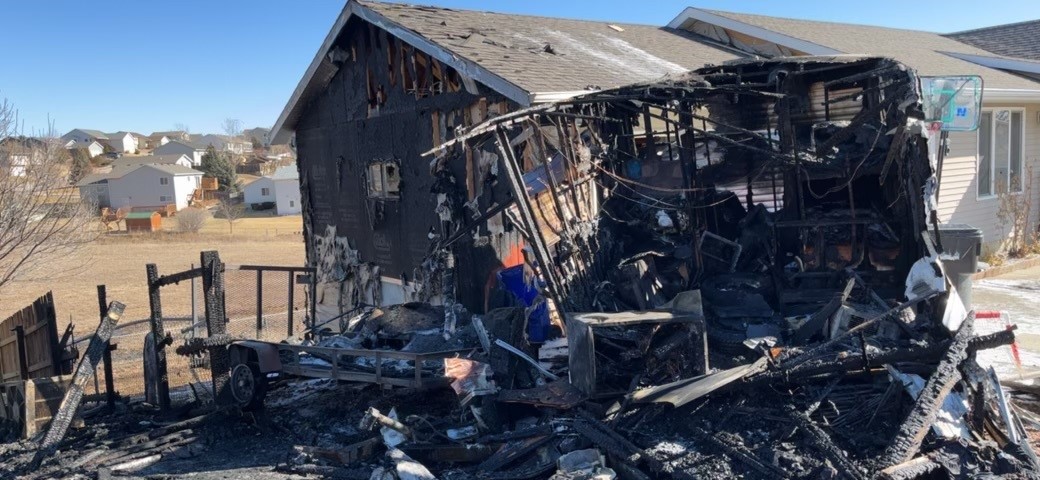
Early one morning in February, in Rapid City, South Dakota, a loud noise awakened Misti O’Connor. “Startled, I rushed outside to see what was going on and I could ‘hear’ the gas,” said Misti. A vehicle had crashed through the camper parked in her driveway, and then into her neighbor’s home, rupturing a gas line and causing the home to explode. This set the O’Connor’s garage on fire.

Aerial view of the damage at the O’Connor’s and neighbor’s houses. Submitted photo.

Misti ran back into the house to get her kids and that’s when they heard the next explosion. “It was really scary,” recalls Raenan, her 8-year-old son.

The O’Connor’s garage and camper following an explosion at their neighbor’s house. Submitted photo.

Back outside, Misti tried calling her husband, Jason, a staff sergeant deployed with the South Dakota Army National Guard on U.S. southern border. “He didn’t pick up at first because it was the middle of the night.  I had to try several times.” Finally, they connected and once Misti explained what was happening, they both started making calls to see if they could get him home. Jason informed his guard command that there was an emergency at home and he needed to go.

Meanwhile, the local Red Cross disaster action team (DAT) was dispatched to respond to the fire and immediately mobilized volunteers, staff and the emergency response vehicle. On-site they provided hot chocolate to the first responders and people affected – and made sure everyone had a warm place to stay.

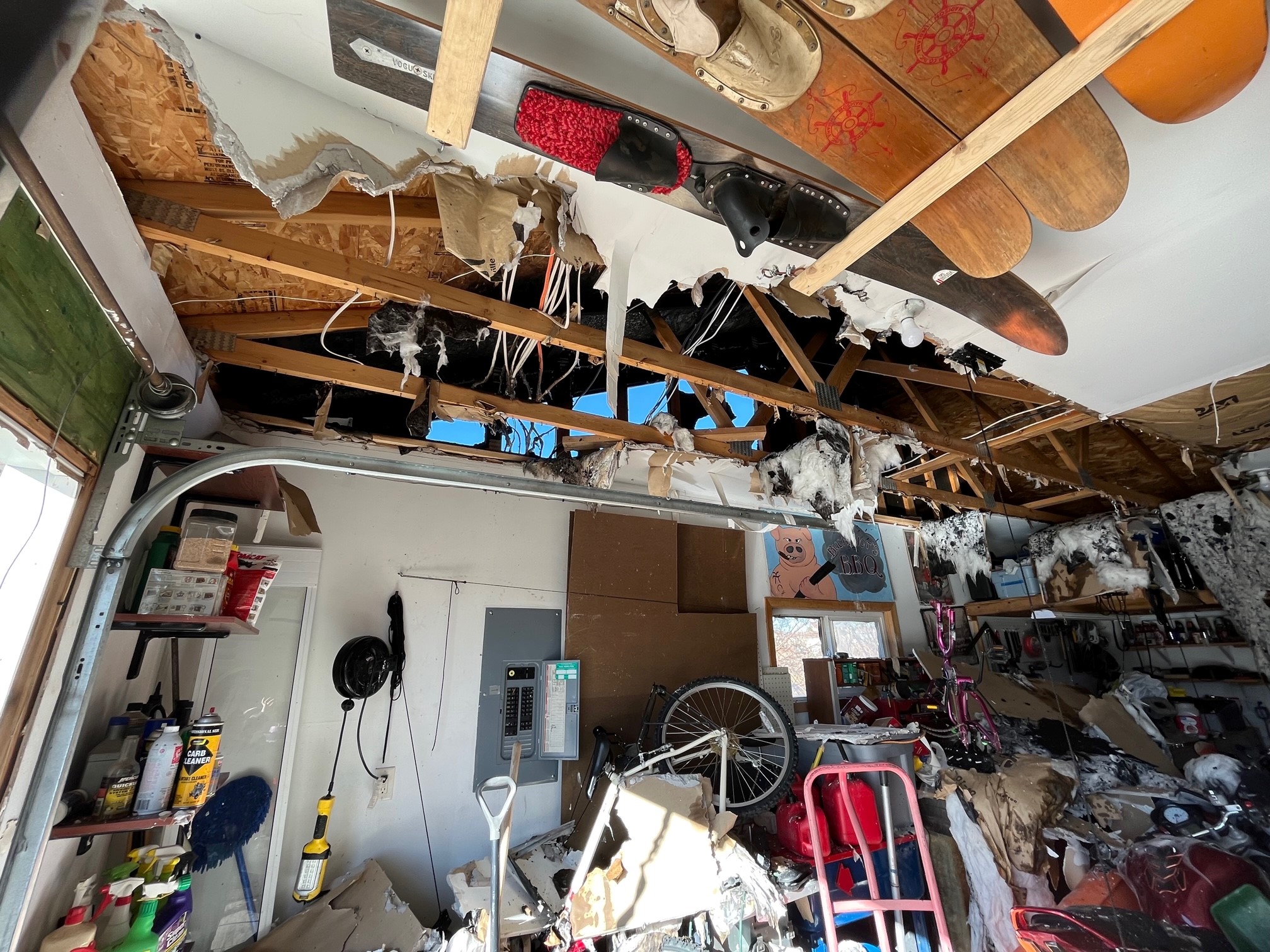
Extensive damage inside the O’Connor’s garage. Submitted photo.

Richard Felix, regional manager for Red Cross’s Service to the Armed Forces program in South Dakota, was part of the fire response team. Once he found out that Jason was deployed, he informed them of the Red Cross emergency communications program for military members. “Being on-scene was crucial in helping this family make a connection and getting Sgt. O’Connor home when his family needed him most,” said Richard.

“I didn’t know that emergency communications for military families in times of a disaster was something the Red Cross could help with,” said Misti. “We don’t like to accept help from others, so I was very reluctant, but I’m glad the Red Cross was there to help!”

They made the necessary arrangements through the Red Cross and Jason was on a plane headed home to be with his family by Saturday afternoon – just a day after the disaster. “The Red Cross made it so easy,” Jason said.

Having her husband home during this time was “everything” to Misti. “At first, we didn’t know the extent of the damage, but once I saw it, I realized I needed him home. I don’t think I could have done it without his help – I could have, but it would have been hard.”

“I definitely needed to come home to be with my family – to provide moral support,” said Jason who was able be at home for 10 days before returning to his deployment.

The O’Connor family spent five nights in a hotel before returning to their home. There’s still no electricity in the garage, but they’re getting close to having the work completed. “We’re just grateful things weren’t worse, and Jason was able to be home with me and the kids during such a scary and uncertain time,” said Misti.

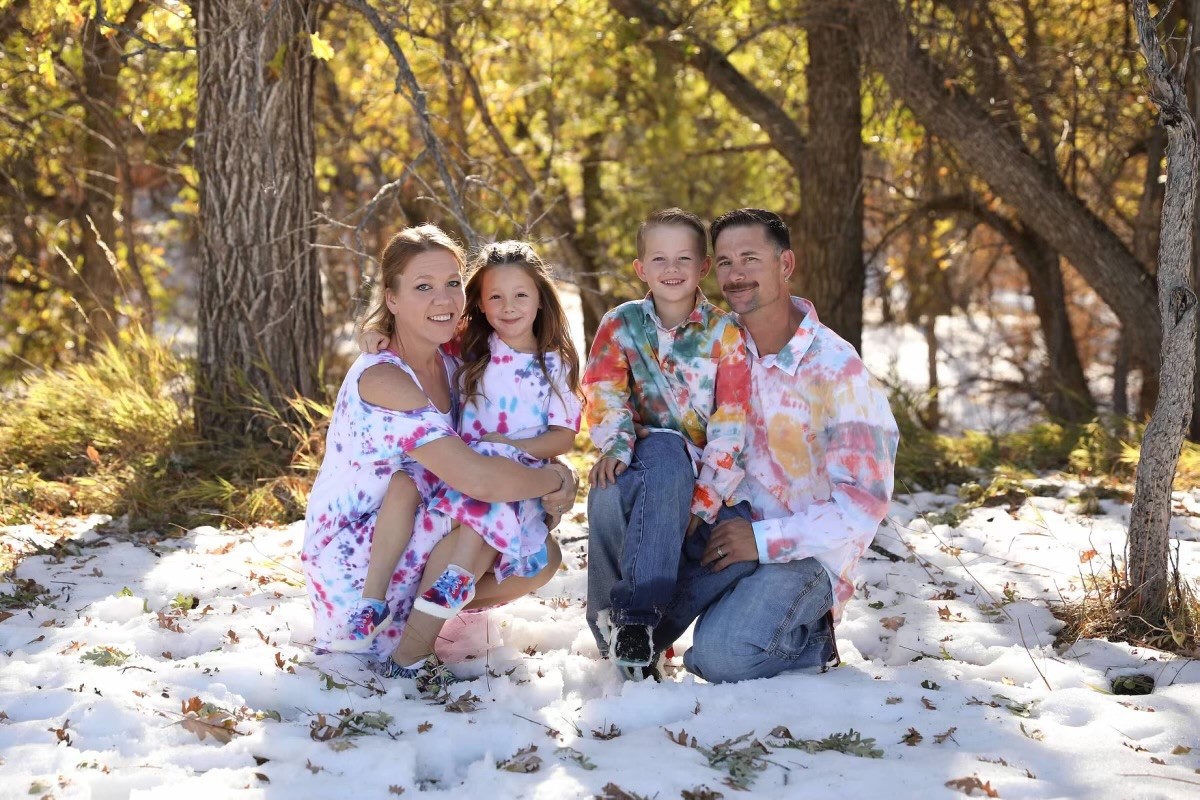
Misti and Jason O’Connor with their children Raenan (8) and Lorelai (6). Submitted photo.

The Red Cross helps members of the military, veterans and their families prepare for, cope with, and respond to, the challenges of military service. Click here to learn more about Red Cross services for military and veteran families.

May is Military Appreciation Month

As part of our Service to the Armed Forces (SAF) activities, we’re proud to celebrate national Military Appreciation Month with service members, veterans and their families.

The American Red Cross has a long history of serving the U.S. military going back to the Civil War. Our founder, Clara Barton, also known as, “the angel of the battlefield,” participated in 16 separate battles during the war.

This proud service to our Armed Forces continues today in our region:

✔️ In April 2022, the Minnesota and Dakotas Region assisted with 56 emergency communications requests. The Red Cross is federally chartered to handle all emergency communications to our active-duty forces.

✔️ In April, we participated in deployment events where 54 military members and their families received much needed resiliency training. The Red Cross provides much needed resiliency training to deploying units and their families.

✔️ We also follow up with family members of deployed service members. In April, for example, 240 critical community service cases were completed.

🤗 These services happen only with the outstanding efforts of our SAF volunteers. We’d like to share our profound thanks to them for their generosity of time, kindness and expertise. You’re the best!

📷 This May, Red Cross youth volunteers delivered messages of gratitude and Girl Scout cookies at Veterans Affairs clinics in Hibbing, MN and Superior, WI and to VA homes in Silver Bay and Fergus Falls. Photo credit: Dan Williams/American Red Cross

Supporting Service Members: What is a Stand Down?

Starting this August and continuing through fall, the Minnesota Red Cross will be among many organizations providing services for military veterans at Stand Down events. Below, we explain.

Minneapolis Stand Down for veterans, 2016. Photo by Lynette Nyman/American Red Cross

What is a Stand Down?

In times of war, exhausted combat units, requiring time to rest and recover, were removed from the battlefields to a place of relative security and safety. At secure base camp areas, troops were able to take care of personal hygiene, get clean uniforms, enjoy warm meals, receive medical and dental care, mail and receive letters, and enjoy the camaraderie of friends in a safe environment. Stand Down afforded battle-weary soldiers the opportunity to renew their spirit, health and overall sense of well-being.

Today, Stand Down refers to a grassroots, community-based intervention program designed to help the nation’s estimated 200,000 homeless veterans “combat” life on the streets. Homeless veterans are brought together in a single location and are provided access to the community resources needed to begin addressing their individual problems and rebuilding their lives. A Stand Down also affords the same respite and renewal to all veterans in an atmosphere conducive to change and recovery.

December 1970. Firebase Tomahawk, Vietnam. Grunts just in from the field open Red Cross ditty bags on Christmas morning. “This lonely outpost is  located in northern South Vietnam about 30 miles northwest of DaNang.” Photo by American Red Cross

What happens at a Stand Down?

Hundreds of homeless and at-risk veterans are provided with a broad range of necessities including food, clothing, medical, legal and mental health assistance, job counseling and referral, and most importantly, companionship and camaraderie. It is a time for the community to connect with the homeless veteran population and address this crisis that affects each and every town, city and state in this country. The hand up, not a handout philosophy of Stand Down is carried out through the work of hundreds of volunteers and organizations throughout the nation.

Who organizes and delivers theses services?

Hundreds of caring volunteers and professionals give of their time and expertise to address the unique needs of homeless veterans. Most Minnesota Stand Downs are organized by Minnesota Assistance Council for Veterans (MAC-V), a non-profit focused on ending veteran homelessness in our state.

What does the Red Cross do at Stand Downs?

The Minnesota Red Cross, led by the Service to the Armed Forces team, comprised mostly of volunteers, has a booth at every Stand Down. We provide comfort kits containing items, such as soap, toothbrush, toothpaste, shampoo, deodorant, comb, and other personal hygiene items. Many of these kits are generously donated to us by supportive members of our community. We might also provide other support items, such as socks, emergency blankets, and first aid kits. We also help to connect veterans to other resources the Red Cross and our community partner’s provide.

At Stand Down events, the Red Cross provides comfort kits containing items, such as soap, toothbrush, toothpaste, shampoo, deodorant, comb, and other personal hygiene items. Minneapolis Stand Down, 2016. Photo by Lynette Nyman/American Red Cross.

Where are the Minnesota Stand Downs held?

This year’s upcoming Minnesota Stand Downs are taking place at the following locations:

  • Minneapolis: Target Field, Aug. 16
  • International Falls: Backus Community Center,  Aug. 22
  • Duluth: Bayfront Festival Park, Aug. 23
  • Bemidji: National Guard Armory, Sept. 25
  • Grand Rapids: IRA Civic Center, Sept. 26
  • St. Cloud: River’s Edge Convention Center, Oct. 18
  • Mankato: Civic Center, Oct. 26

Want to Learn More?

If you have any questions or would like to learn more about becoming a Red Cross volunteer supporting service members, feel free to contact Alex Smith at alexis.smith3@redcross.org — author of this post. Thanks Alex!

Click here to learn more about our history providing relief to the wounded during times of war. And watch the video below.

Veteran becomes Red Cross volunteer

Story by Kathleen Todd for the American Red Cross Minnesota Region

Sharon Azan (Credit: ARC/LynetteNyman)

On  Veterans Day, the American Red Cross honors people like Sharon Azan.

In 1985, Sharon Azan was stationed in Naples, Italy, with the United States Air Force when she got a call from the American Red Cross. Five thousand miles away, Azan’s uncle had passed away, and her family contacted the Red Cross to relay an urgent message about his death.

It was that one phone call—all those years ago—that recently prompted Azan to connect with the American Red Cross in Minnesota. Now, she’s training to become a Red Cross Service to the Armed Forces (SAF) volunteer.

“I figured this was a good time for me to help someone else,” Azan says. “I am so appreciative of what the Red Cross does and what it stands for.”

For more than 100 years, the Red Cross has been hard at work supporting the men and women of the American armed forces. Today, no matter where American armed service members are in the world, the Red Cross is dedicated to delivering emergency communications messages through the American Red Cross Hero Care Network, which is available 24 hours a day, 365 days a year.

Minnesota State Veterans Day Celebration 2016 (Credit: ARC/LynetteNyman)

The Red Cross provides around 370,000 services each year to active-duty military, veterans, and their families—including more than 3,000 in Minnesota last fiscal year. In addition to emergency communications, the Minnesota Red Cross provides courses and workshops to help military families cope with life after deployments.

The Red Cross invites you to say “thanks” by signing and sending cards through Holidays for Heroes to U.S. military and veterans. Click here for information, including where cards to send cards, the program deadline, and other important guidelines for the cards.

Gardens and Art Bring Color and Life to Veterans

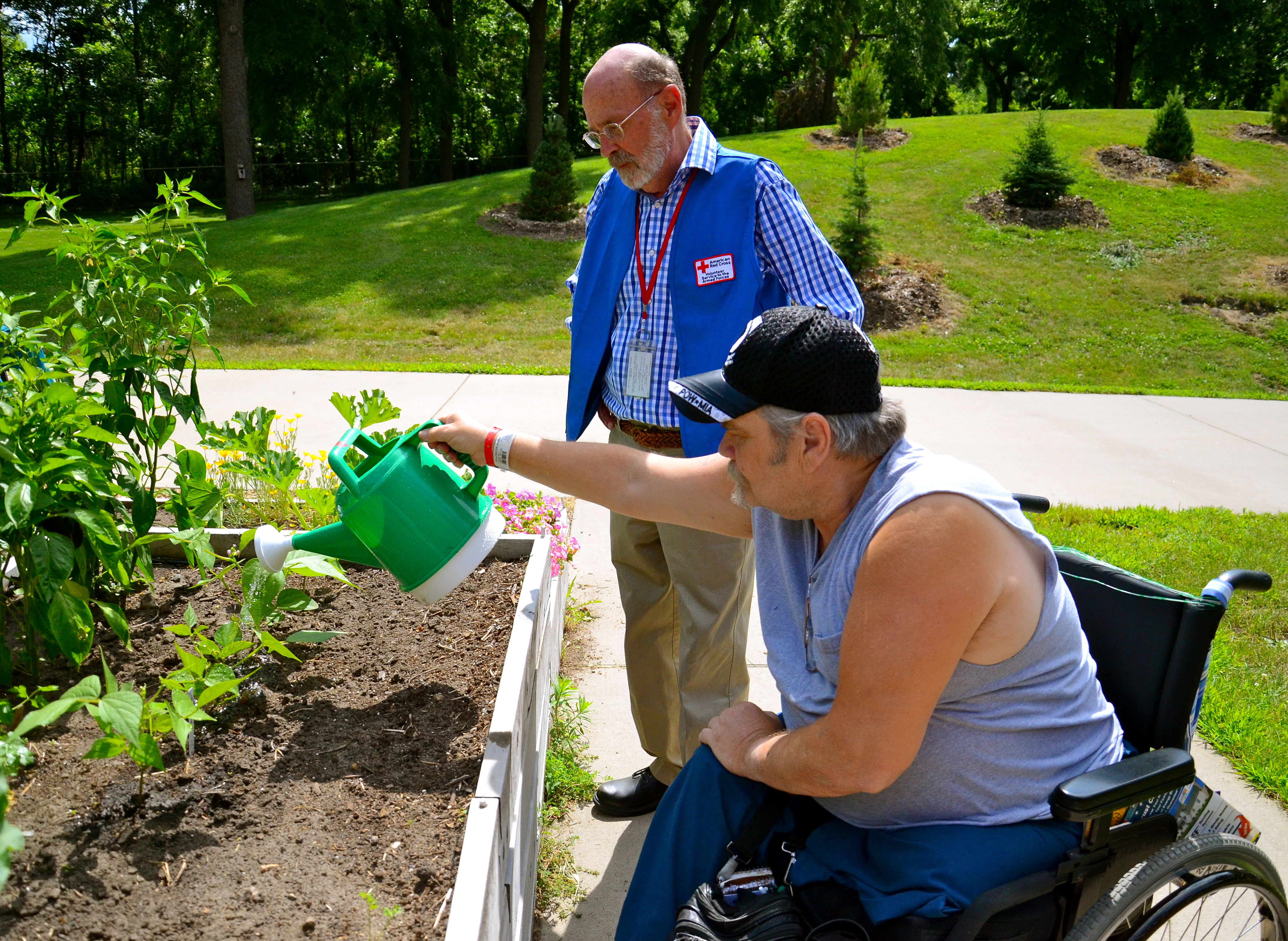
Veteran Bob Hilleshiem and Red Cross worker Mike Booth tend to a garden at the VA Hospital in Minneapolis, July 24, 2013.

On a beautiful summer day, Bob Hilleshiem basks in the sun as he waters flowers and tomatoes in the garden at the VA Hospital in Minneapolis. 

“Growing up on a farm, my mother had three gardens that I tended to,” says Hilleshiem, a current patient at the VA hospital.  “I like keeping an eye on the progress the plants make each day.”

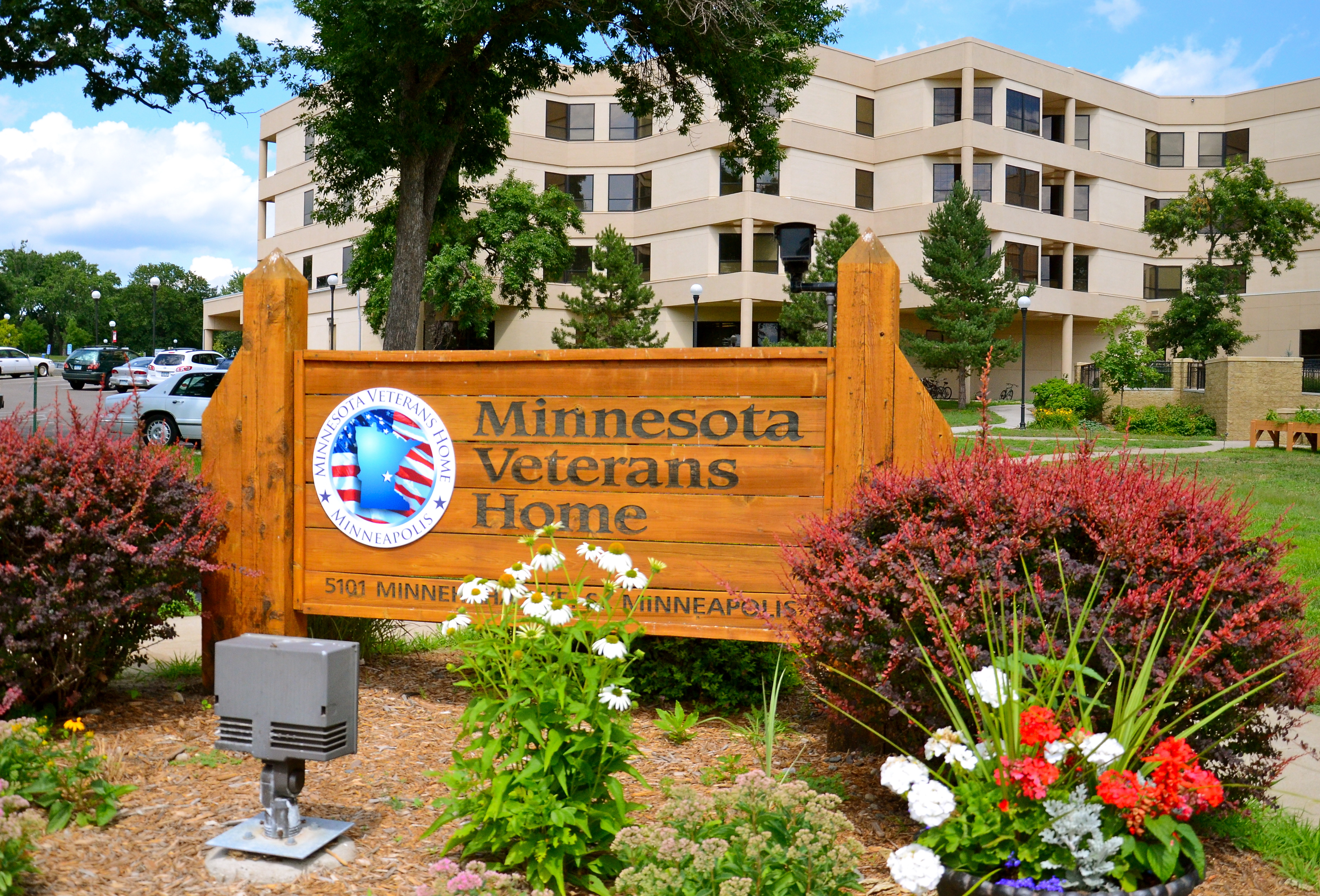
Hillsheim is one of many veterans who are able to enjoy the outdoors by cultivating flowers and vegetables in the gardens at the VA Hospital and the Minnesota Veterans Home, also in Minneapolis.

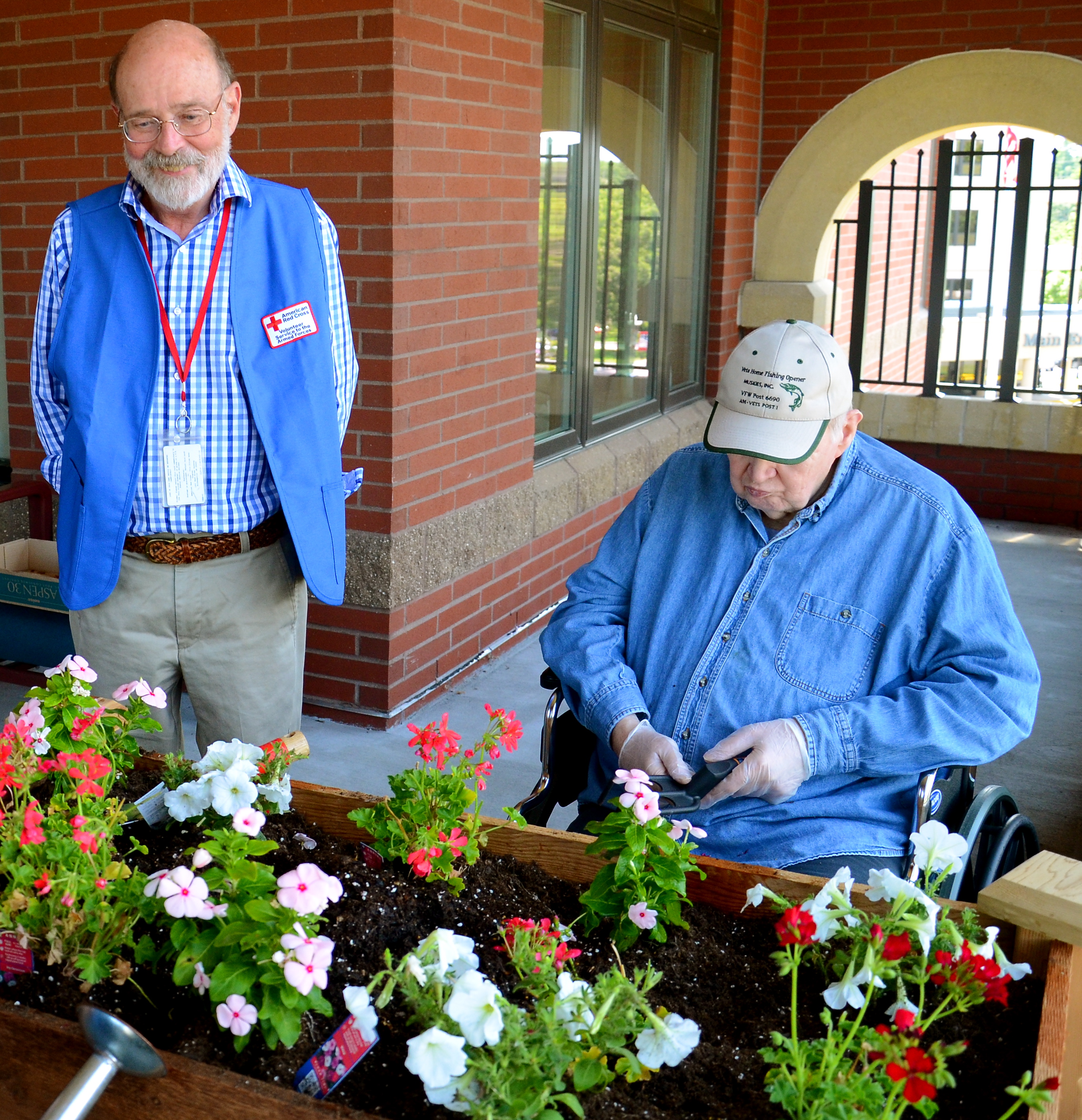
The Veterans Home in Minneapolis received garden supplies from the Red Cross via a Department of Defense grant for direct patient support, July 24, 2013.

“The veterans and their families appreciate the gardens as a place to get out and enjoy nature,” says Shirlee Peterson, Director of Recreation Therapy at the Veterans Home.  “It’s therapeutic for them to get fresh air, dig in the dirt and feel the sun on a nice day.”

The American Red Cross Service to the Armed Forces (SAF) program donated the gardening supplies to the veterans hospital and home. Funding for the donation came from a U.S. Federal Government grant of $4,500 for direct patient support for veterans.

Red Cross worker Mike Booth visits with veteran Harold Palm at the Minnesota Veterans Home garden in Minneapolis, July 24, 2013.

The VA Hospital and Veterans Home were given planters of flowers, peas, tomatoes, peppers, beans, herbs, strawberries, mint, and rhubarb.  In addition, the Red Cross provided special ergonomic tools and plentiful amounts of soil. 

The Red Cross also used the grant money to buy art supplies for the VA Hospital in Minneapolis and the Veterans Home in Silver Bay, MN. The art supplies– such as oven-baked clay, painting materials, and model cars– will be used in art therapy programs for the veterans.

“These types of therapy give veterans a chance to use both motor skills and creativity,” says Angie Erickson, an art therapist at the VA Hospital. “All of the supplies are being put to great use and are very generous.”

Click here to learn more about Red Cross services for military members and their families. Story and photos by Shannon Lewis, Communications Intern, American Red Cross Northern Minnesota Region. 

“Gray Lady” Uniform Preserves Red Cross History

"If you keep busy and volunteer, you stay alive a little longer," says Terry Dugger, 80, who served as a Red Cross volunteer from 1968 to 1970. Photo credit: Lynette Nyman/American Red Cross

Among the treasures Terry Dugger has kept through the decades is a uniform that she wore as a Red Cross volunteer at the military hospital on Offutt Air Force Base near Omaha, Nebraska.

“We saw the fellas coming in from motorcycle accidents. I went to different rooms and passed out shaving equipment, playing cards, and other things like that. There wasn’t anybody else on the base to do it,” she says.

Dugger’s Red Cross uniform is different from those the Gray Lady Service volunteers used during World Wars I and II. This has blue and white pin stripes. Worn for only two years and in excellent condition, the uniform is now a gift from Dugger as a means to share and preserve Red Cross history.

A "Gray Lady" volunteer uniform circa 1960s preserves Red Cross history. Photo credit: Lynette Nyman/American Red Cross

Dugger, who was an air force wife for twenty years, did volunteer work when her six children were in school, serving in the Red Cross from 1968-70. Now 80 years old, Dugger still shares valuable time doing a variety of volunteer activities.

“I couldn’t wait until I got old and now I’m too old, but rather than sit home I want to get out and help people.”

Being a volunteer has given—and continues to provide—Dugger with a greater sense of purpose. Currently, she’s a volunteer at the Armed Forces Service Center at the Minneapolis-St. Paul airport.

In the late 1960s, Terry Dugger served as a Red Cross volunteer at the military hospital on Offutt Air Force Base near Omaha, Nebraska. Photo credit: Lynette Nyman/American Red Cross

Born in Saint Paul, Minnesota, Dugger attended Saint Mark’s elementary school, located a couple blocks from her residence for thirty years. Growing up, both of her parents worked so she often tended to the “roomers” they had to help pay bills. Dugger says that the experience taught her to be independent, a characteristic she cherishes so much that she would never consider getting herself a boyfriend.

“Are you kidding!?! I had a good husband. I can do what I want. I can eat ice cream for breakfast. I’ve got a lot of things to do,” she says.

Dugger also has no use, she says, for a computer or a cell phone. Instead, she looks forward to getting letters from the postal service everyday.

She advises everyone, including her 40 or so grandchildren, great-grandchildren, and great-great-grandchildren, to stay busy throughout life.

“If you keep busy and volunteer, you stay alive a little longer.”

Story and photos by Lynette Nyman/American Red Cross, Northern Minnesota Region