Partnership in pictures: Women in manufacturing

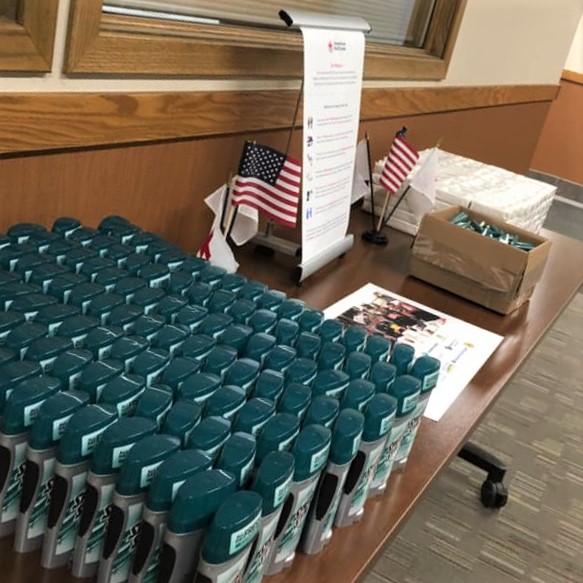
On July 23, 2019, at the Women in Manufacturing conference in Cloquet, women made hygiene kits that American Red Cross volunteers will distribute to people in need of humanitarian aid. Photo by Jamie Lund with Pine Journal and published with permission.

USG Corporation hosted more than 50 women during the conference, which was held July 23 and 24. Part of the program included a day of service activity, which focused on supporting the Red Cross mission to prevent and alleviate human suffering in the face of emergencies.

To support service day, USG donated the kit supplies, including pillowcases, that turned into 250 comfort and hygiene kits. The kits will help at-risk military veterans and families affected by disasters, mostly home fires in northern Minnesota and northwest Wisconsin.

The service day event showed great leadership, teamwork and camaraderie. Special thanks go to local Red Cross volunteers Kyra, Penny, Mattie, Diane and Sophia, as well as Northern Minnesota Red Cross executive director Dan Williams.
For more about the conference, read this Pine Journal article by Jamie Lund. Click here to help the Red Cross provide shelter, food, and other relief during disasters. To learn more about Red Cross support for military families and veterans, click here.

Unless otherwise noted, all photos are provided by Dan Williams with the American Red Cross Minnesota Region. Thanks Dan!

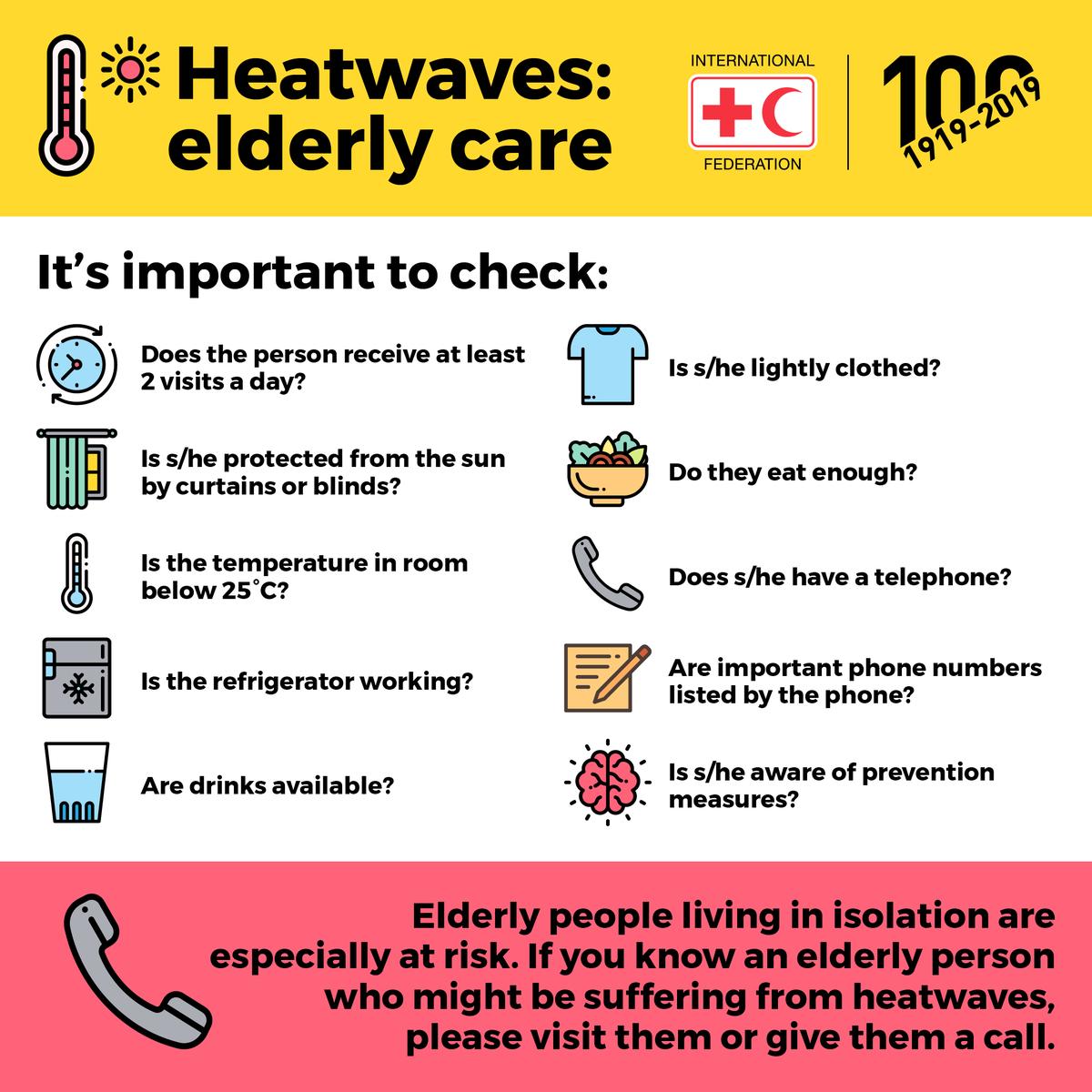
Infographics to share : Heatwave

Hot weather safety tips for you, and for your to share with others, especially your elderly friends, neighbors and family members.

Many thanks to the International Federation of Red Cross and Red Crescent Societies (IFRC) for the helpful tips and easy-to-share infographics.

Stay cool!

Responding to disasters: “Flexible is the word”

Rick’s got to get on a plane soon. So, let’s get right to this. Rick Emanuel (in the video below) is going south to support people affected by the powerful storm approaching the Gulf Coast.

This will be Rick’s third deployment to a major disaster response in just over a year. His first, last fall, was Hurricane Florence, where he worked at a shelter in Havelock, North Carolina. “Feeding, setting up cots, making sure everybody has what they need,” he says were the main things he did in his volunteer role supporting shelter operations for the American Red Cross. “And getting people to the right resources when they’re in crisis.”

Rick Emanuel

In North Carolina, the water rose so fast in some areas that first responders, national guard soldiers and community helpers were bringing in people, especially the elderly, in massive dump trucks because those vehicles could reach them through the flood waters. “They were bringing in people as fast as they could,” he says. Supplies arrived anytime and needed to be off-loaded as fast as possible. Sometimes this was in the middle of the night when volunteers like him might get some sleep. “That was the biggest part of the deal, finding down time.”

With this deployment to Louisiana he’s even more ready to help others because he knows that “flexible is the word” when it comes to providing disaster relief.

If you would like to support disasters big and small, including training and deploying volunteers like Rick, visit redcross.org/mn.

Story by Lynette Nyman/American Red Cross

Help replenish the blood supply

American Red Cross staff member Deshayla Tran finishes collecting a whole blood donation from Terry Smith, who has been regularly donating blood for the last five to 10 years. Amanda Romney/American Red Cross

Donors of all blood types, especially type O, are needed to help replenish the blood supply as the Red Cross faces an emergency need right now. Blood from generous volunteer donors helps families like the Jolliffes.

In February 2018, Meghan Jolliffe suffered an amniotic fluid embolism. During childbirth her heart stopped beating for 14 minutes resulting in the need for an emergency cesarean section. Her organs began to shut down, and her blood would not clot.

Meghan received nearly 100 units of blood within a seven-hour period during her procedures. The doctors were able to stop the bleeding and stabilize Meghan’s condition. Over the next several days, Meghan underwent five surgeries, dialysis and more to repair the damage to her body.

Type O negative red blood cells are kept in a Red Cross storage refrigerator before being distributed to a hospital. Type O negative is the universal blood type and what emergency room personnel reach for when there is no time to determine the blood type of patients in the most serious situations. Amanda Romney/American Red Cross

After her son Sullivan was delivered, he went without oxygen for seven minutes. Doctors performed a process called therapeutic hypothermia, or whole-body cooling, to preserve his neuro function, and he also received several units of blood.

In all, Meghan and Sullivan received 109 units of blood.

Meghan and Sully

“My family and I are forever grateful for the generosity of Red Cross volunteer blood donors,” says Meghan. “Donating blood is so important. You or a loved one may never need these lifesaving products, but I can assure you that someone, somewhere will.”

Please don’t wait to donate.  You can make an appointment now to give blood or platelets by downloading our free Blood Donor App, visiting RedCrossBlood.org or calling 1-800-RED CROSS (1-800-733-2767).

Thank you!

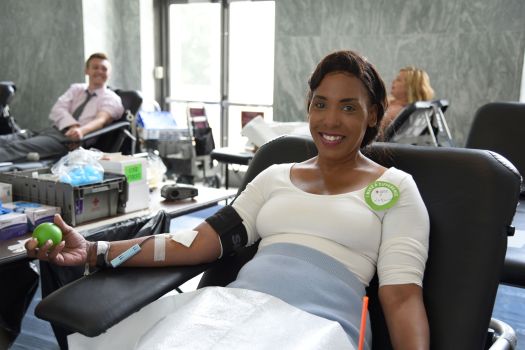
LaDeodra Drummond donates blood. Jeanette Ortiz-Osorio/American Red Cross