Thank you to everyone who helped make the 2011 Heroes Breakfast an outstanding event celebrating remarkable women and men in our community.

Thank you to everyone who helped make the 2011 Heroes Breakfast an outstanding event celebrating remarkable women and men in our community.

By Kami Buccellato, RN, Red Cross Volunteer

After a tornado hit the town I was born in, destroying half the city a couple years ago, I decided to become a Red Cross volunteer disaster responder.
Today I serve as a disaster health services responder for the American Red Cross Twin Cities Area Chapter. Most often I work via telephone, helping people rebuild their lives, starting with replacing everyday basics such as eyeglasses, medications, or medical equipment that were lost in a home fire.
Disaster health services team members also provide assistance in Red Cross shelters. For example, this past winter an apartment building fire in Bloomington, Minnesota, left several dozen people without safe and warm place to stay. So, the Red Cross opened a shelter and I signed up for a night shift.
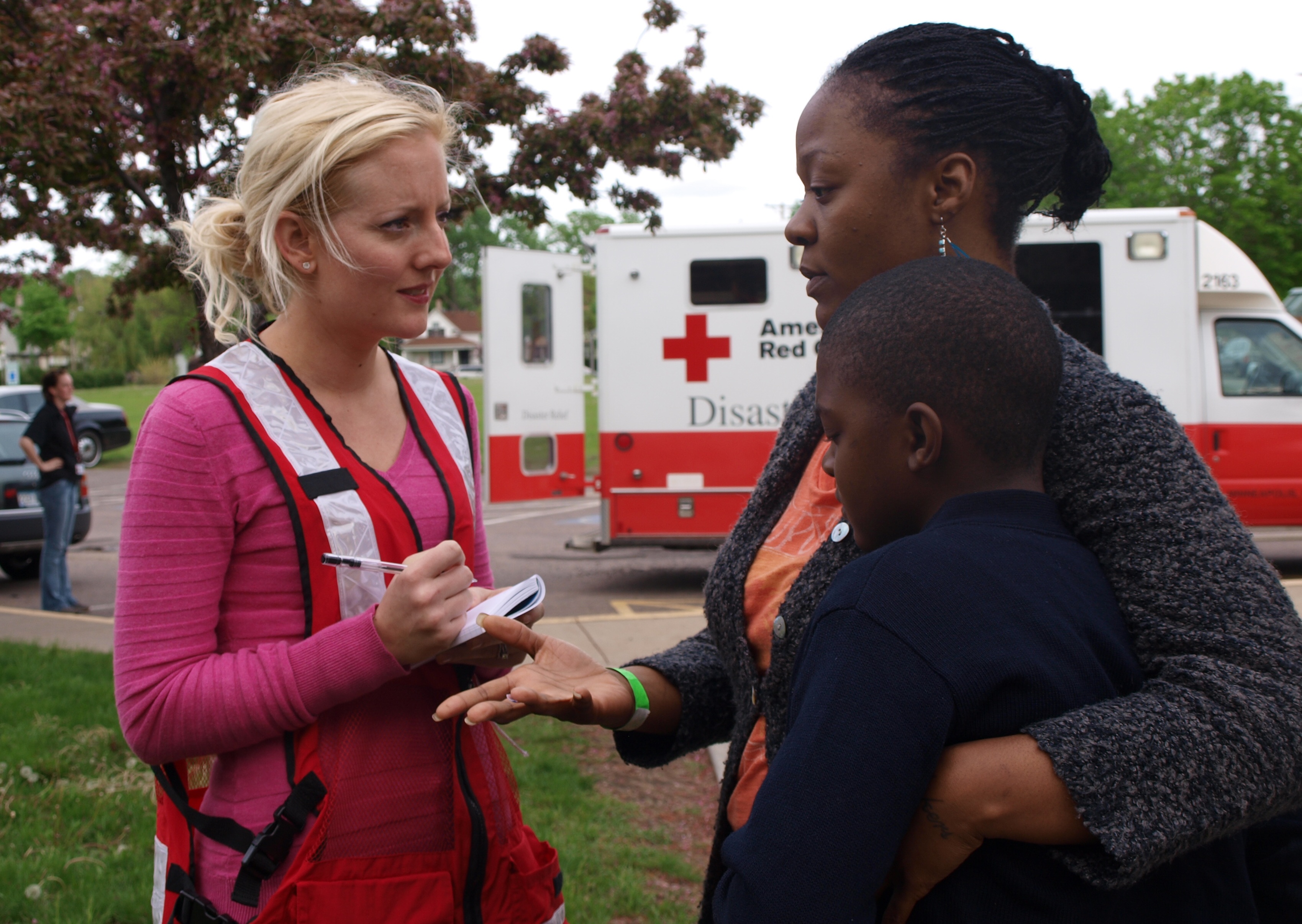
This was my first time as a health services volunteer working in-person with people after disaster. The moment I walked into the Bloomington shelter I felt welcomed. I received a tour around the facility, updated on possible clients, introduced to the families that were staying there, shown where the medical supplies were kept, and given a list of resources for questions or concerns.
It was a calm night and my shift went quickly. I got to meet new people, see the operations of a shelter and how vital all volunteers are in running and providing services at a shelter. My favorite part was getting an extra blanket for a little girl so she could get some rest and stay warm from the cold.
Another experience was just listening to families talk about their recovery steps and the search for a new place to live. I did not realize how much the fire impacted people until I heard that families were searching for ground level apartments to live in because they never wanted out to have to jump out a third floor apartment window during winter.
My first on-scene experience was great. What I loved most, and made the work all worthwhile, was an email card later sent by a family expressing its sincere thanks to Red Cross Volunteers.
Click here to learn more about becoming a Red Cross volunteer.

By Lynette Nyman, American Red Cross
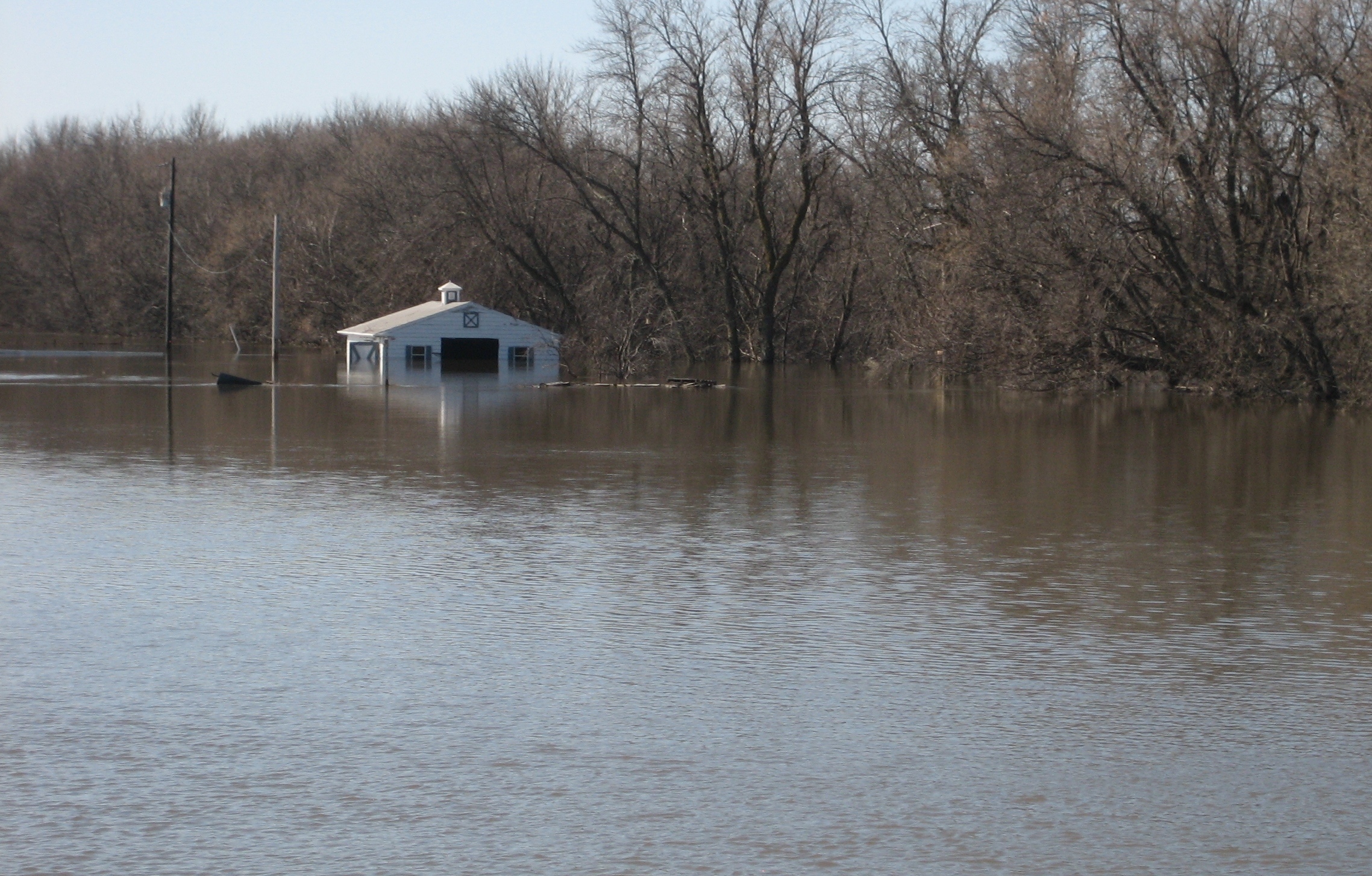
To appreciate the rising of the Red River, you have to see it. Water appears to spread from horizon to horizon across this northern prairie landscape.
With waters reaching nearly 40 feet in some areas, what would have been a major crisis in past years is mostly a threat under control because of preparation.
For example, clay dikes and sump pumps are protecting many homes, including one in Oakport Township north of Moorhead, Minnesota, where Joan Egge has lived for eighteen years.
“Because we’ve been preparing and preparing you’d kind of hate it if didn’t flood,” says Egge.

Sandbagging started in early February. Since then the Red Cross has providing more than 150,000 beverages and meals to community volunteers and other responders who have worked to hold back the water both day and night.
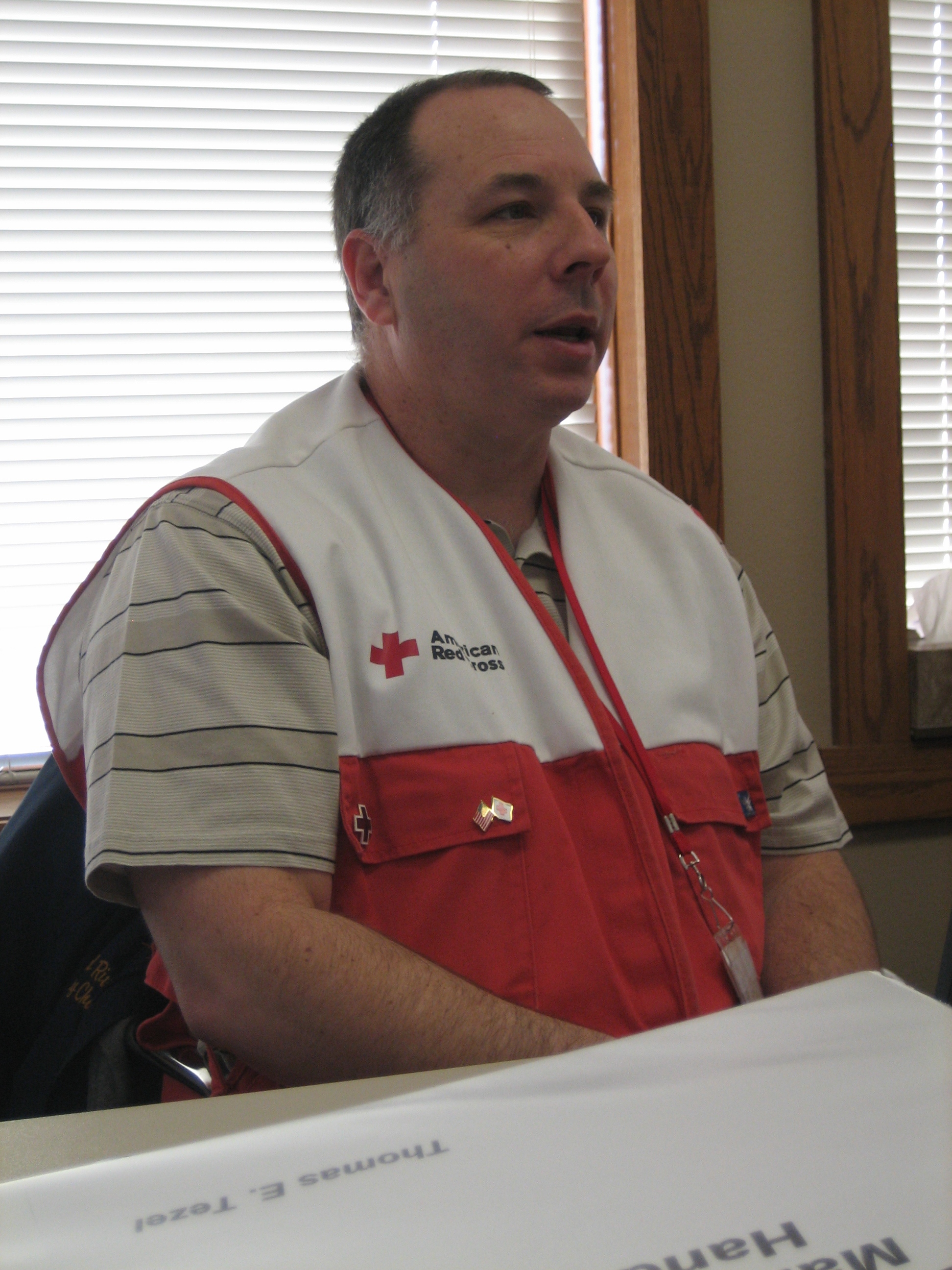
“Preparedness is in many ways the greatest piece of what the Red Cross does,” says Tom Tezel, a Red Cross emergency services director leading the response on the ground.
Every disaster is different, but in general the Red Cross responds when the disaster is done, such as when a tornado has swept through a town or an earthquake has struck.

Here, the Red Cross response started during the preparedness phase before the waters started to rise.
“Our mission includes preparedness,” says Tezel. “We can’t wait for disaster.”
Red Cross disaster responders continue to watch and respond, especially as the high water flows north into largely rural areas, cutting off families from essential resources.
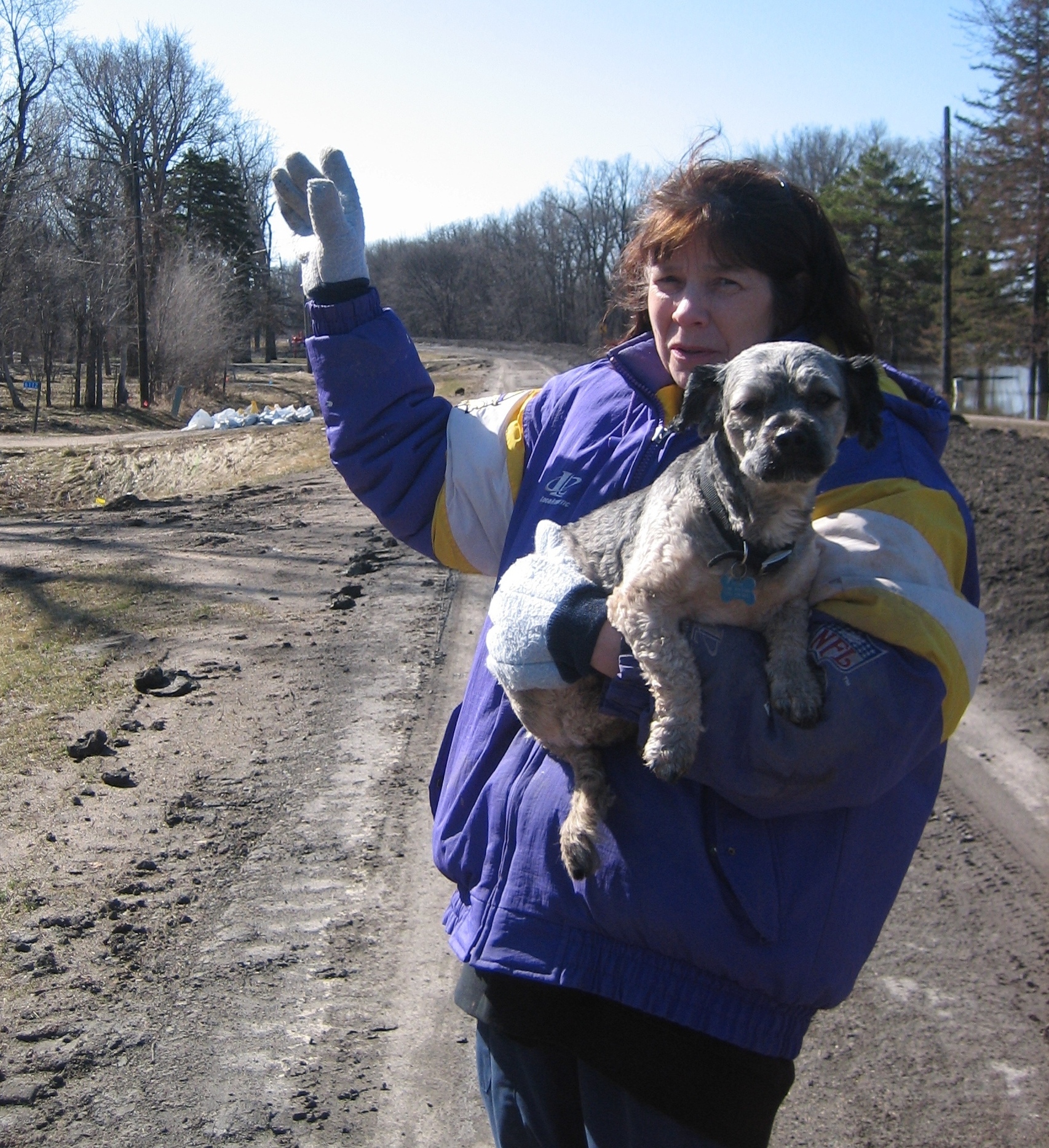
Egge, whose family and dog Henry are safe only yards from the Red River, agrees that preparedness is very important. She’s grateful for the help her community has received.
“I know the Red Cross does a wonderful job,” says Egge. “The people here are true heroes.”
Jill, our director of emergency services, answers:

We have shelters ready to open their doors for us in the Twin Cities metro area if flooding displaces people from their homes. We have clean-up kits containing mops, brooms, cleaning supplies, gloves, and other necessities, ready to hand to people who are cleaning up their homes. We have thousands (literally!) of snacks and bottles of water in our garage, for us and other chapters around the state to share from mobile feeding trucks (ERVs) or at shelters. We have lots of trained and willing volunteers, many who have stepped forward and have added to their training in recent months so their skills are fresh. Many, many volunteers have stepped forward to help in all of these efforts so that we’re more ready to quickly help people…whether it floods or not! So my answer is a resounding, “yes!”
Red Cross TC: Thank you!! We suspected this was the case, but wanted to ask anyway, being the curious types that we are!!
The Red Cross has served thousands of meals to people working to hold back the rising Red River waters. Right now, Mark Doble, a Red Cross volunteer from the Twin Cities, is up north managing mass care (aka watering and feeding) for this disaster operation.
Mark reports: “In Fargo, we are getting ready to start sandbagging operations. What I mean is that we are going to start feeding people as all of the sand bags that have been pre-made are now being put around the homes. It’s been great here and the Red Cross Minn-Kota Chapter has been wonderful. I’m looking forward to getting home.”

Story and photos by Andrea Bredow, Red Cross Volunteer

It was a chilly 17 degrees on Saturday morning, but the cold spring air and piles of snow did not stop the Hastings, Minnesota, community from banding together to fight the looming Mississippi River waters.
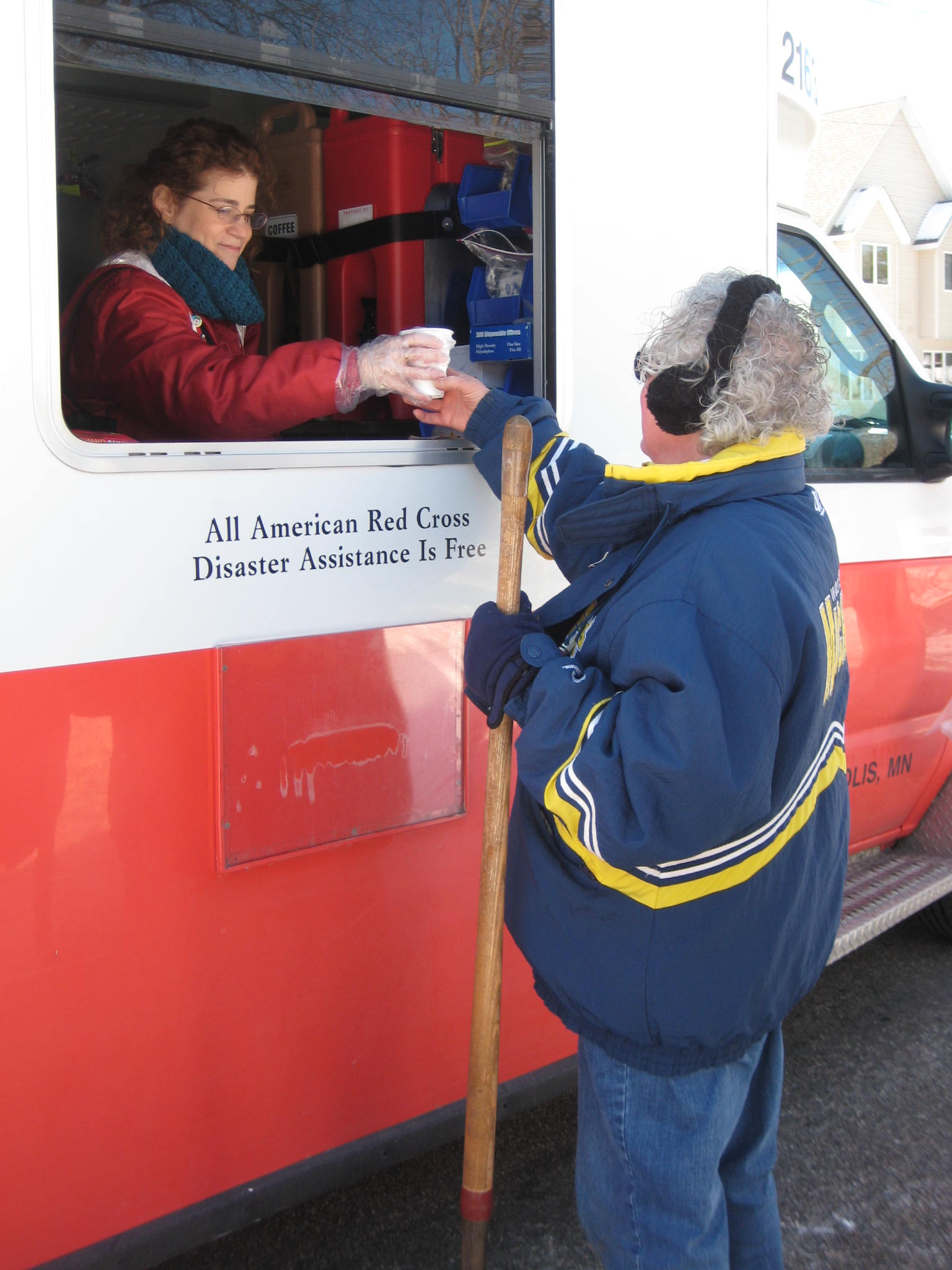
An estimated 700 volunteers spent Saturday sandbagging homes along the river. The American Red Cross Twin Cities Chapter volunteers were there as well. The Red Cross feeding vehicle, also know as the ERV, was on hand to provide hot beverages and snacks to keep volunteers warm and energized.

The call for volunteers went out early in the week and hundreds responded with shovel in hand. Family’s worked filling bags, youth groups stood in the “bucket line” delivering sandbags to homes and Scott Webber even showed up on his birthday to help.
“This is what the city of Hastings does. We help each other,” said Webber.
Webber and a hundred other volunteers were sent to surround Lloyd Fanum’s river side home with sandbags. Fanum has lived on the river for 30 years and is always overwhelmed by the communities outpouring of help.
“The boys and girls giving their weekend to help me is overwhelming! I can’t thank them enough,” said Fanum.

The army of volunteers turned out 20,000 sandbags in only four hours!
“When the neighbors are in trouble, we are ready to reach out and help,” said Patrick Walker, one of the sand bagging organizers.
Walker says they are ready to gear up the sandbagging operation at any time. If more homes along the river need help, the Hastings community will be there.
Click here to learn more about Red Cross services and opportunities.
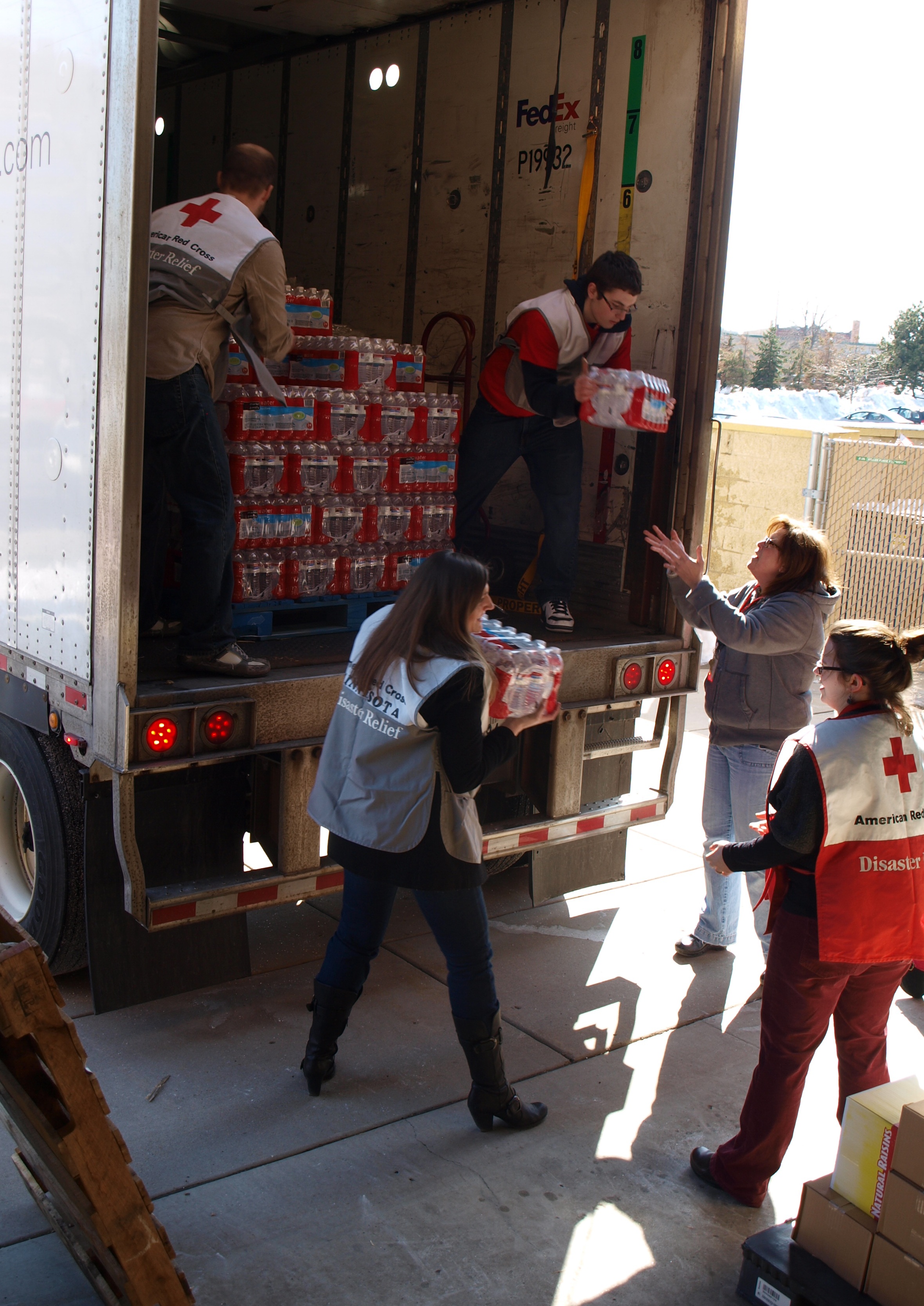
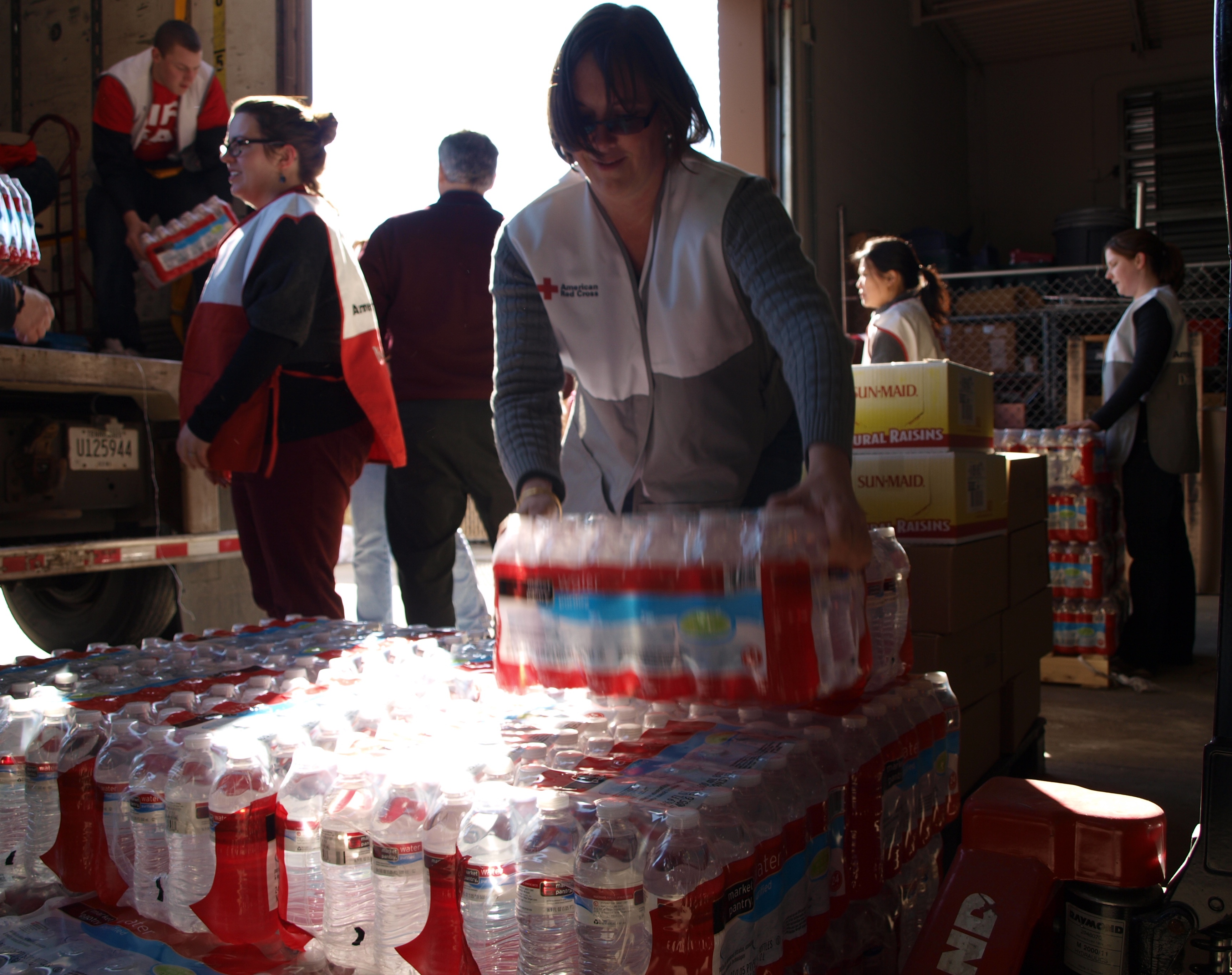
The Red Cross relies on multiple generous hands during disaster response. Behind the scenes hands include the folks who locate water and food donations, the people who are around to help unload the relief supplies when they arrive, and the person who grabs a camera running after those who are doing the heavy lifting, literally. xoxo, redcrosstc


Photos and story by Anne Florenzano, Red Cross Volunteer

Over a hundred and fifty people signed up to get free, hands-on CPR training at the Twin Cities, Minnesota Chapter of the American Red Cross on Saturday, March 19. They were participants in the national Red Cross “Save a Life Saturday” event held in honor of Congresswoman Gabrielle Giffords.
Just over a month ago, the events that unfolded in Arizona reminded the nation of the importance of being prepared in the event of an emergency. Many of the bystanders knew CPR and first aid and were able to save the lives of several victims, including Representative Gabrielle Giffords, who received help from her intern Daniel Hernandez.

In honor of those lifesaving efforts, the Red Cross provided fast and easy classes in more than 100 locations across the country to teach the basics of hands-only CPR, the treatment of shock and how to treat wounds. The classes were shortened versions of Red Cross training courses, lasting approximately 45 minutes in sessions offered all day. The courses were offered free of charge through the generosity of sponsors Safeway and Walgreens.
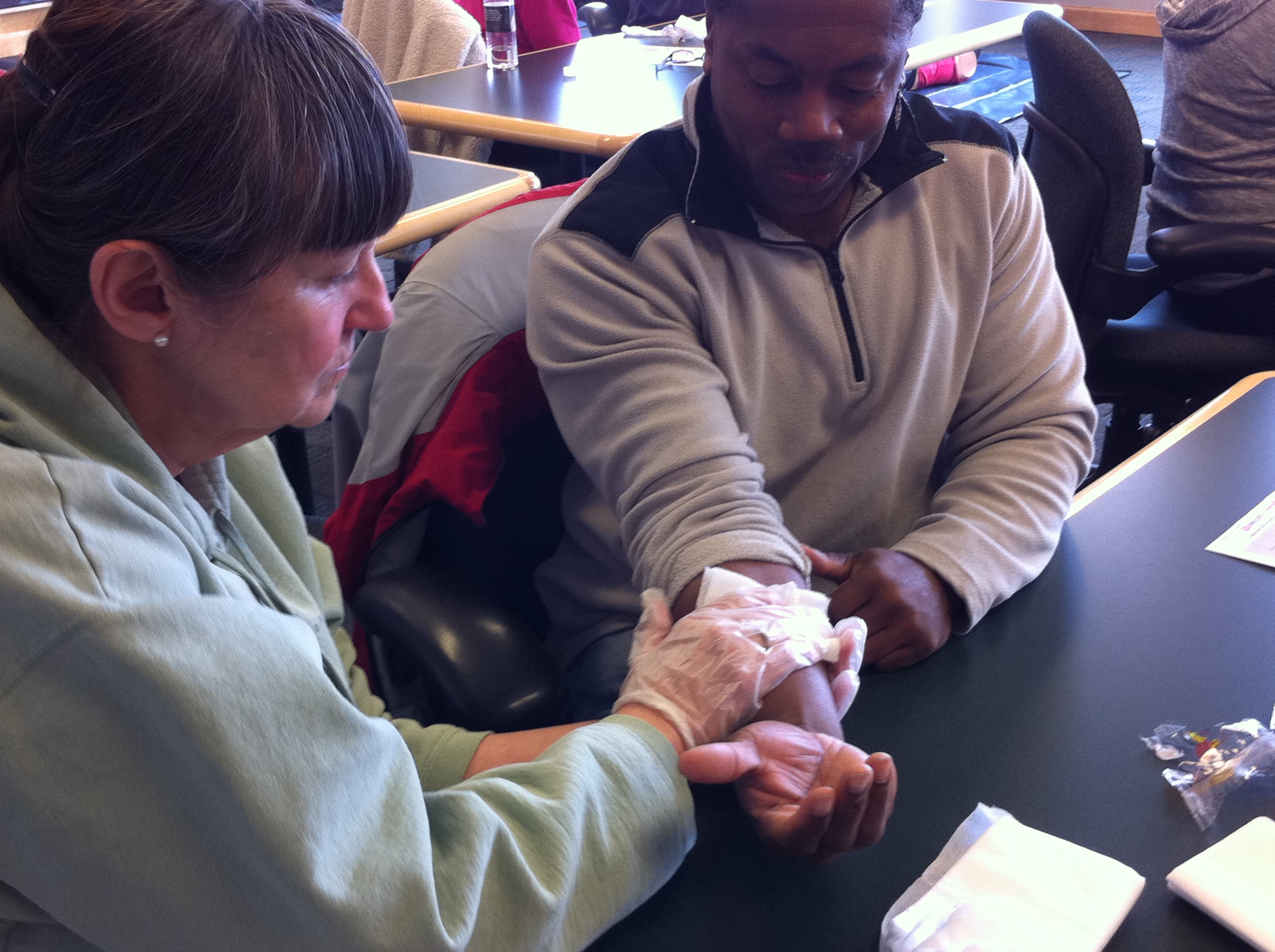
Kenny Jackson and Phyllis Skinner were two participants who attended a morning session in Minneapolis, and are pictured here practicing how to treat wounds. Phyllis, a retired nurse, babysits her grandchildren a lot and wanted a refresher on CPR.
“It’s been a while,” says Phyllis, “and I want to feel confident if I ever need to use it.”
Kenny spends a lot of time at his lake place in the summer.

“I’m up at the lake every weekend I can from springtime on. I wanted some emergency training in case something happens. When I’m at the lake there often are not a lot of people around, and I want to be prepared,” says Kenny.
Regardless of the reason, many who attended Save-a-Life day in Minneapolis took will be better prepared if someone in an emergency needs help. If you could not make these introductory classes, click here to sign up for one of the many Health and Safety courses provided by the Twin Cities Red Cross. You can also click here to find video instruction on hands-only CPR, controlling external bleeding, and managing shock.
It’s hard to escape the news about potential flooding in the upper Midwest this spring. We wanted to let you know that we, the American Red Cross Twin Cities Area Chapter, is preparing to provide disaster relief in our backyard and, if needed, around the region.

There are two phases for us: preparedness and response. We anticipate an all-hands-on-deck spring, with plenty of ways that Red Cross volunteers, donors, and others, can pitch in, whether you prefer to be on the front lines assisting clients through damage assessment, sheltering, feeding, and casework, or in supporting roles such as public affairs, staffing, logistics, dispatching, fundraising and more.
Our flood preparedness goals:
Our flood response plans:
We will update you as preparedness and response plans are fine-tuned.
Thank you for everything you do year-round to make sure that the Red Cross stands ready to help those in greatest need during the most difficult times.
Click here to learn more about Red Cross services and programs.
by Andrea Bredow and Mark Smith, Twin Cities Red Cross Volunteers
When fire broke out on an early morning in Bloomington, Minnesota, a family of four found the only way to escape to safety was to break the second floor window, drop the oldest child out the window and then have her catch her two younger siblings. She caught one by the leg and the other around waist. Not only is everything she owned now gone, she is also experiencing emotional reactions from an event no school aged girl should ever have to go through. The American Red Cross Disaster Stress Team steps in to help victims like this young girl work through the emotions from a traumatic life event.

Cay Shea Hellervik, a member of the disaster response stress team, is one of many volunteers at the Bloomington shelter helping the residents from the apartment fire get back on their feet. As important as finding clothes, shelter and food after a tragic event so is dealing with the event its self and all the emotions that come with a major life tragedy. Cay says it is important to have someone around who wants to listen.
“It is important to talk through what they just experienced when it is still vivid,” says Cay.
When she first arrives at a shelter, Cay checks with the manager and other volunteers to get a general feel for who may need to talk to the stress team.
“I make sure I touch base with everyone, asking how they are doing, how they are feeling and get them to talk through the event, ” says Cay.
For many, a step in the healing process is getting back in their routine. One young girl in the shelter was concerned about missing school, the problem; she only had the pajamas full of soot from the fire. Cay realized returning to her regular schedule was important for the young girl. Cay and the pastor from the church where fire victims are staying found clothes the church had on hand. A phone call was made to the school district and with in 15 minutes the young girl was dressed and ready for the yellow school bus that arrived at the shelter. Cay noticed a tear run down the girls face as she stepped on the bus as she return to her “normal” schedule.

Along with her professional background in psychology, Cay credits the training the Red Cross provides.
“Red Cross training is so important and prepares you so well for events like this,” says Cay.
All members of the stress team are all trained degreed professionals, but Cay challenges this community to “join the Red Cross regardless of your training, find out what your roll could be and use the great knowledge and training of the Red Cross to contribute to the community.”
For more information about volunteer opportunities, please visit redcrosstc.org.