Peg Schaefer: A National Treasure – Celebrating 60 Years of Red Cross Service

We are deeply saddened to share that Peg passed away on Saturday, September 20, 2025. Her unwavering dedication and years of service to the Red Cross left an indelible mark on our organization and all who had the privilege of working alongside her. As we remember Peg, we honor the incredible legacy she leaves behind – a legacy built on compassion, commitment, and a true passion for helping others.

For six decades, Peg Schaefer from Rochester, Minnesota, has embodied the spirit of the American Red Cross. Her remarkable journey of service has taken her across the globe, working at blood drives, responding to disasters, providing comfort and making a lasting impact on communities in need.
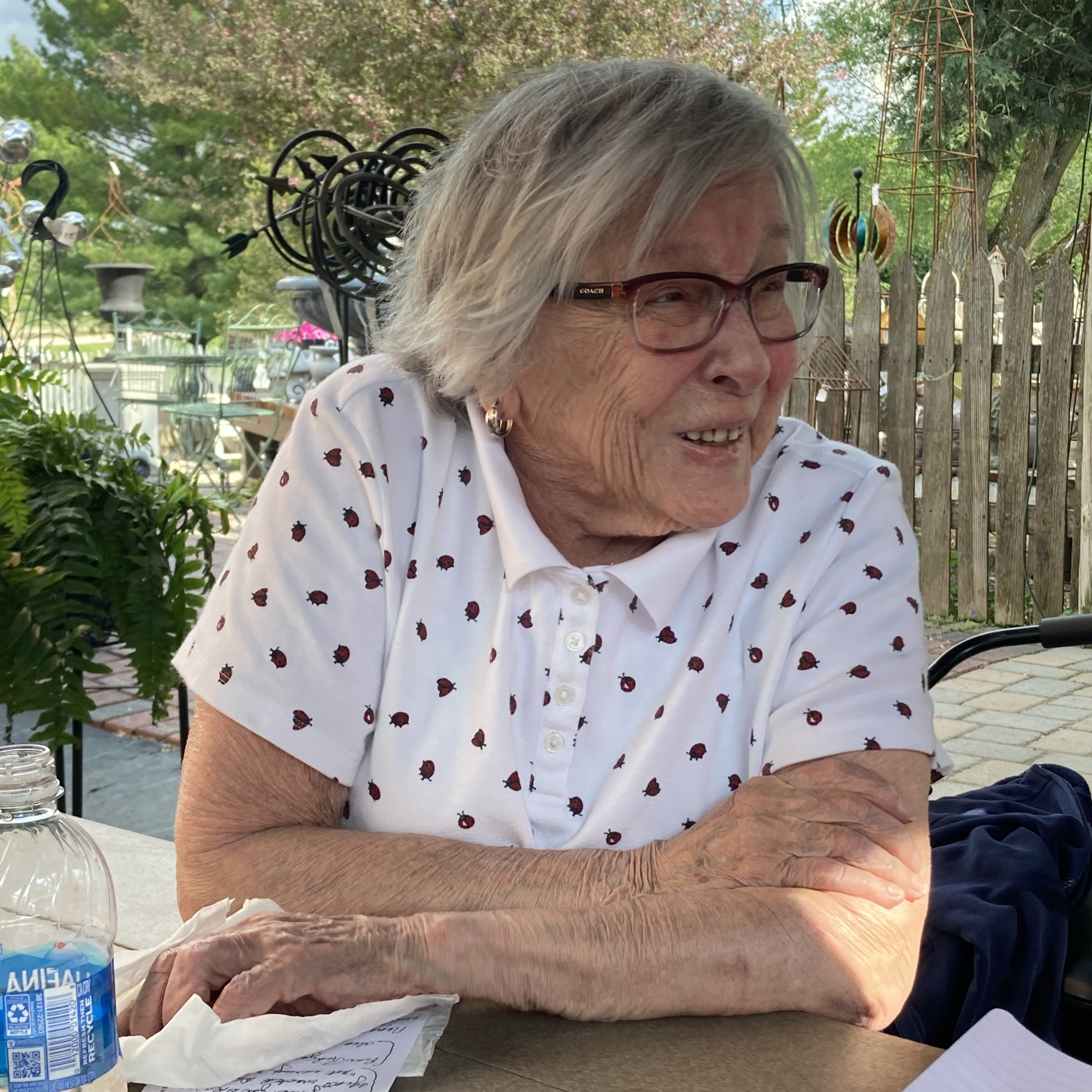
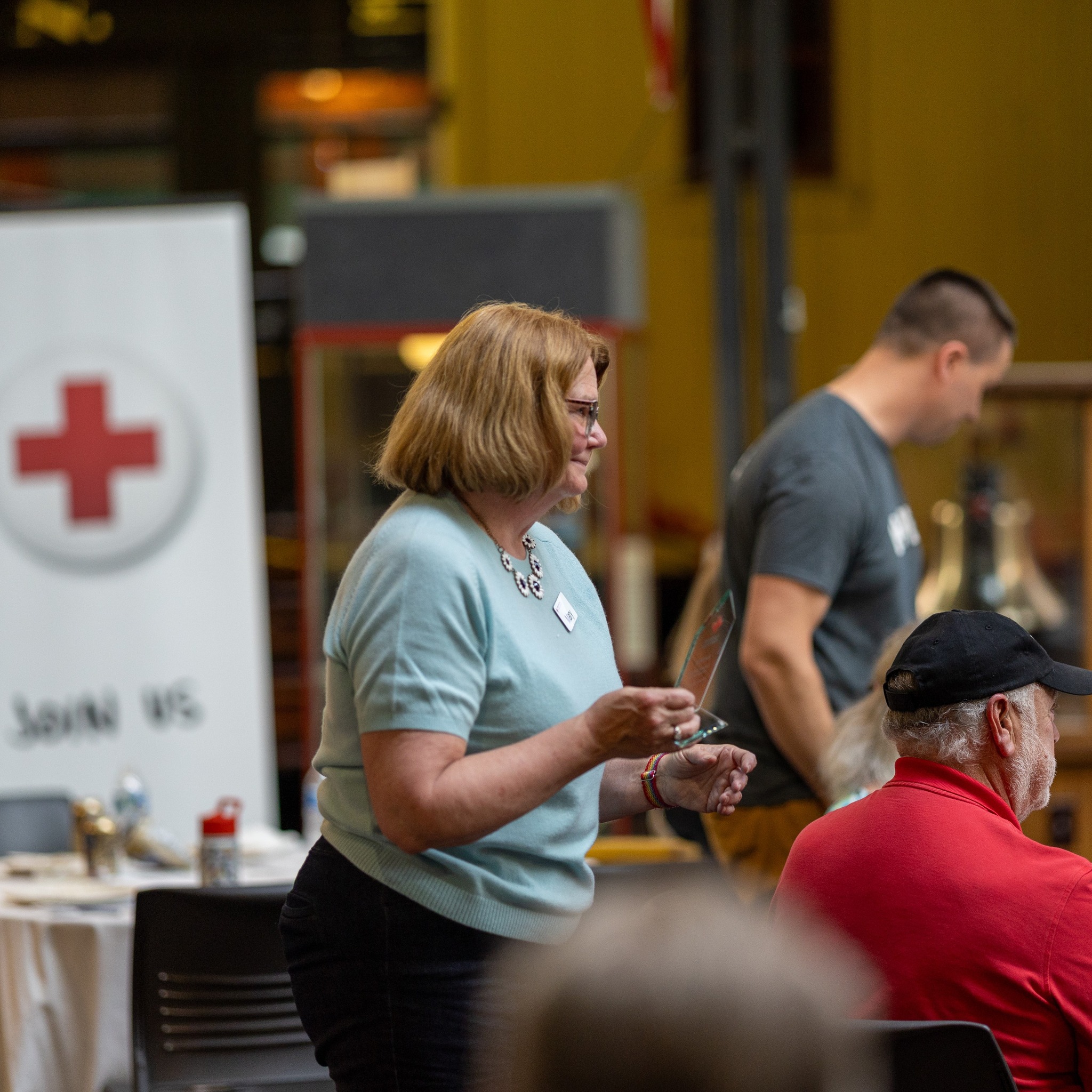
Peg, photographed in Byron, Minnesota (May 2025), ahead of an Employee Recognition Event, reflecting on her 60 years of service with the Red Cross. Photo submitted.

Beginning as a volunteer, Peg transitioned into staff roles, only to return to volunteering, demonstrating her unwavering commitment to the Red Cross mission. From earthquakes to tornados, typhoons to hurricanes, forest fires to floods, Peg has been there – comforting, supporting, and serving. Her dedication has taken her from Saipan to Alaska, from Hawaii to Puerto Rico, and across the mainland U.S., with every stop adding a chapter to her extraordinary story.

In February, Peg celebrated her 90th birthday. In addition to this milestone, there was a beautiful reason to celebrate: almost 60 years of Red Cross service. Officially, she will reach the 60-year milestone in January 2026, but as Peg jokes, “They don’t have a pin for 59 and a half years, so we just rounded it up and had a 60th celebration.”

Peg and Melanie Tschida, executive director of the Red Cross of Southern Minnesota, share a joyful moment celebrating Peggy’s 90th birthday and 60 years of service to the American Red Cross – a beautiful day filled with stories, laughter, and lasting friendships. Photo submitted.

Peg’s journey with the Red Cross began in 1966 while living in Alaska, where her husband was stationed with the military. At the time, the Red Cross was one of the “approved” ways for military wives to give back and it quickly became a perfect fit. Encouraged by an officer’s wife to get involved, Peg began volunteering at Bassett Army Hospital in Fort Wainwright.

Just a year later, in August 1967, a devastating flood hit Fairbanks, and hospital volunteers like Peg were asked to step in. “Would you be willing to do casework?” someone asked. “Sure!” Peg responded with enthusiasm. She vividly recalls the whirlwind of activity: “It was a zoo! Back then, we used adding machines,” she says with a laugh. “I’d take a long slip of itemized expenses to my supervisor so they could issue a check for the essentials people needed.”

Over the following years, Peg became the go-to person for anything Red Cross-related in her community. “That’s how it is in a small town,” she explained. “The Red Cross wasn’t in the phone book, so people who saw me at blood drives or knew me as a military wife would just call me directly. We always found a way to make it work.”

In 1984, Peg went on her first disaster assignment outside of her home chapter to help respond to flooding in Kentucky. That was just the beginning of many more to come.
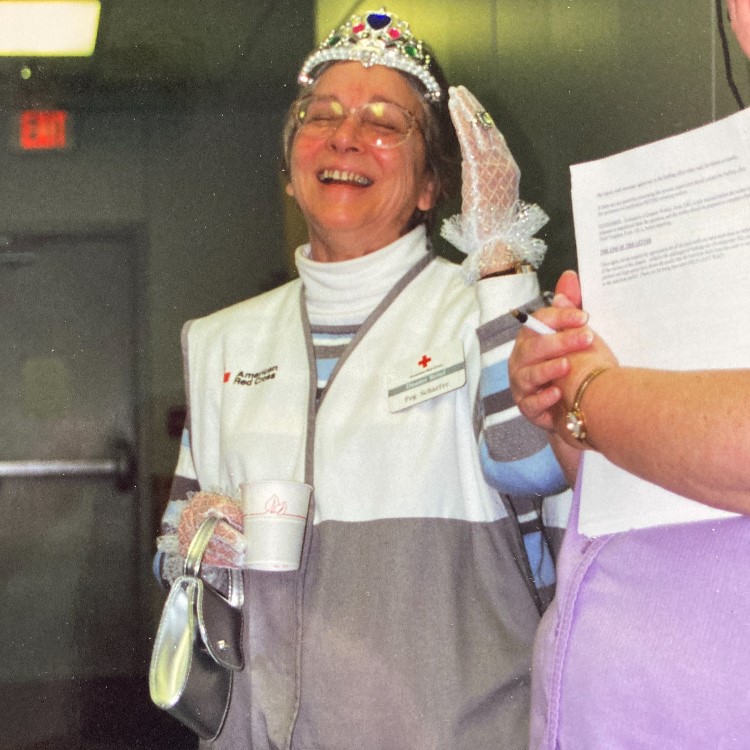
Peg captured during a lighthearted moment while responding to floods in the Quad Cities — her experience along the Mississippi earned her the title “Queen of the Mississippi,” complete with crown and royal regalia! Photo submitted.

The Red Cross became a second family to Peg. “Even though she was away from us,” her daughter Sherri Demos shared, “we knew she was with her other family.” Peg echoed that sentiment: “I was never with strangers. There were always familiar faces – people I’d worked with before. We’d just pick up right where we left off, like no time had passed.”

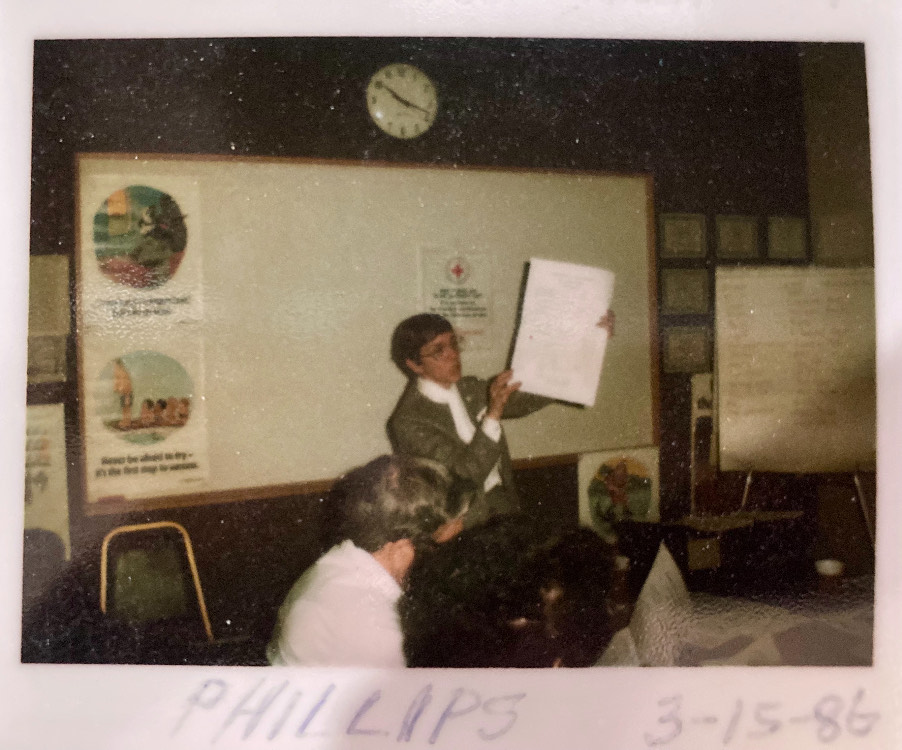
After transitioning from volunteer to employee in 1989, her day-to-day work focused on visiting chapters across the Midwest, teaching classes, and evaluating disaster preparedness plans to help them get ready for emergencies they hoped would never come.

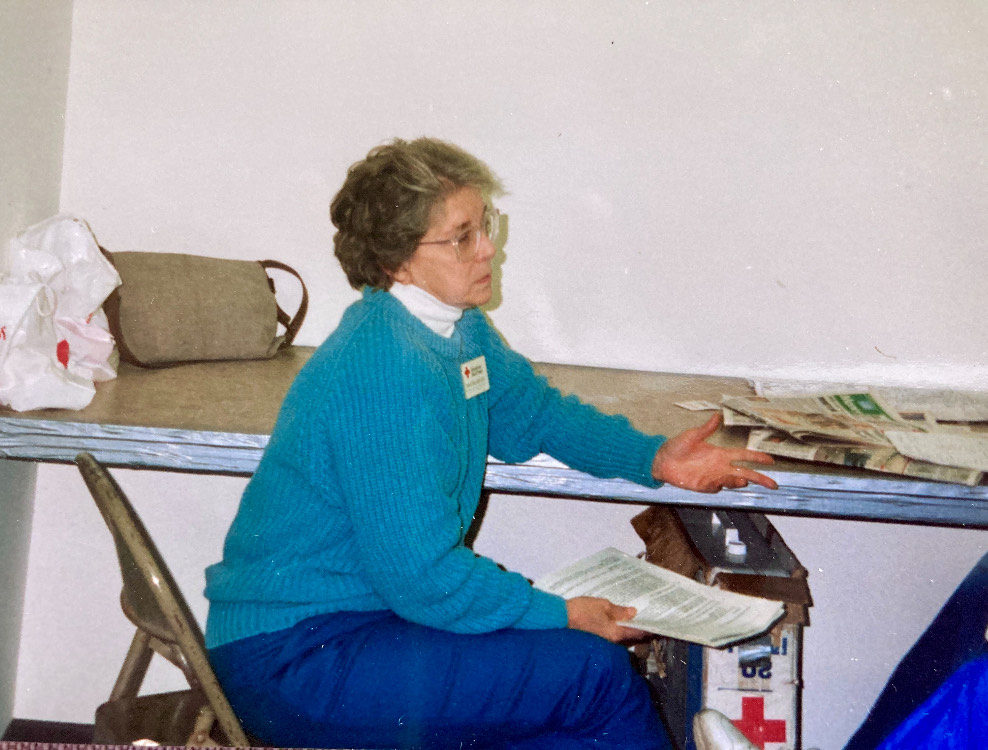
Peg working in her office at the Red Cross Dane County Chapter, Madison, Wisconsin. Photo submitted.

Peg quickly earned a reputation for her no-nonsense approach – she didn’t accept excuses and firmly believed that all members of the community must be included in the planning process, “because everyone deserves a helping hand.” More than once, Red Cross staff thanked her for pushing them to do the hard work upfront – “those detailed plans proved invaluable when disaster did strike their communities,” she says.

Peg credits her social work degree with helping her navigate disasters and support people during their most difficult moments. “Sometimes it’s tough to take,” she reflects, “but I think of the families and their needs.”
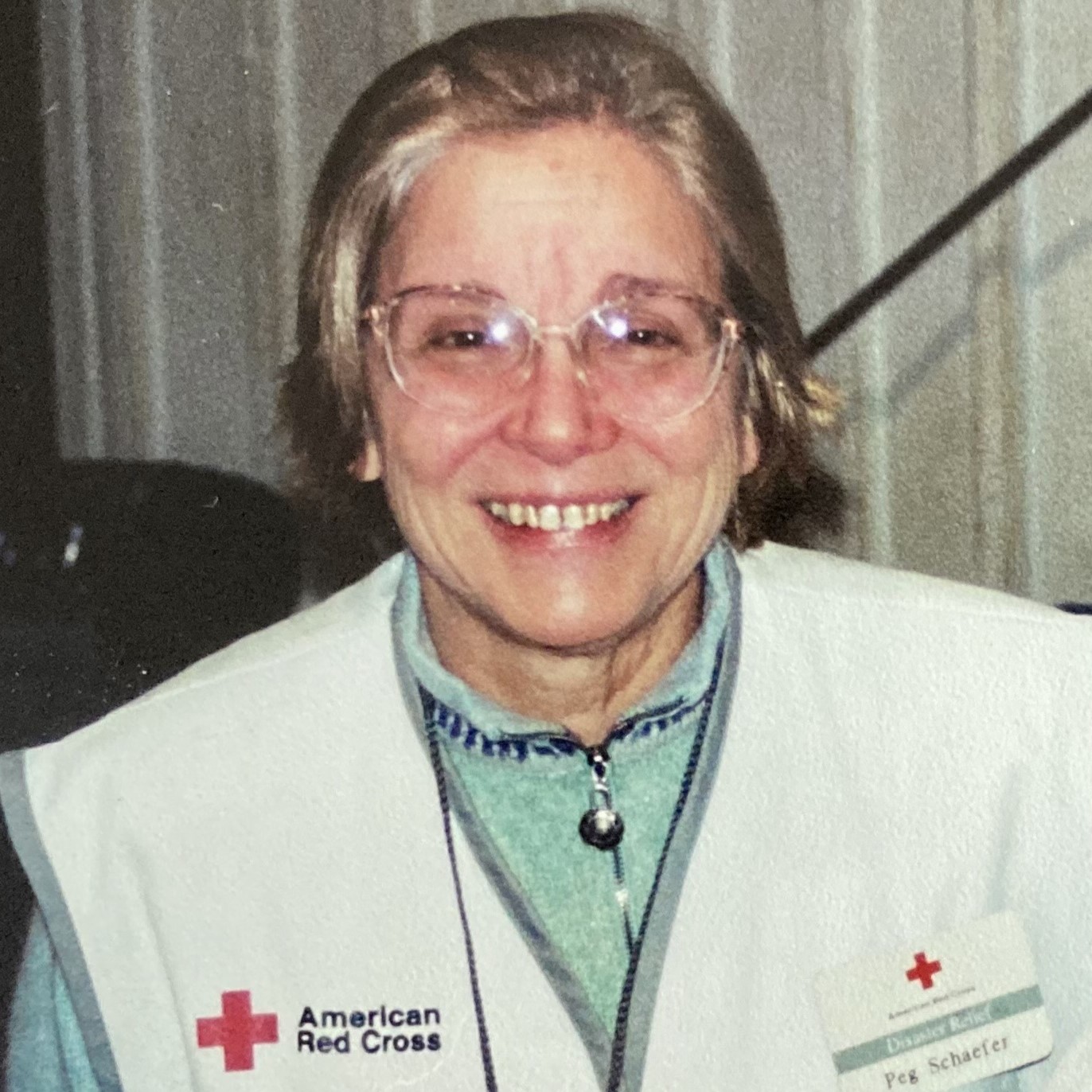
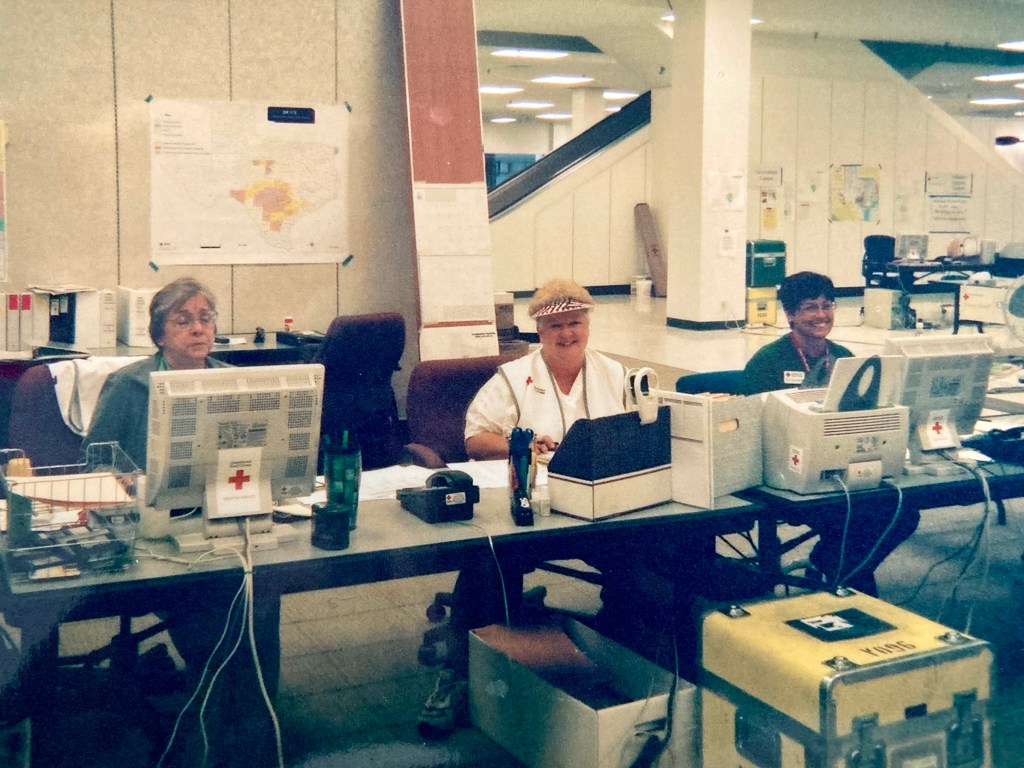
Peg deployed to Tuscaloosa, Alabama to support tornado response efforts in December 2000. Photo submitted.

One of her most meaningful memories was being deployed during the holidays in Alabama. Wanting to create some holiday cheer, she and other volunteers went to Walmart and bought the last Christmas tree available — a humble “Charlie Brown” tree – and a few ornaments. Back at their headquarters, she and her fellow volunteers decorated with whatever they had to make it festive for all who were away from home.
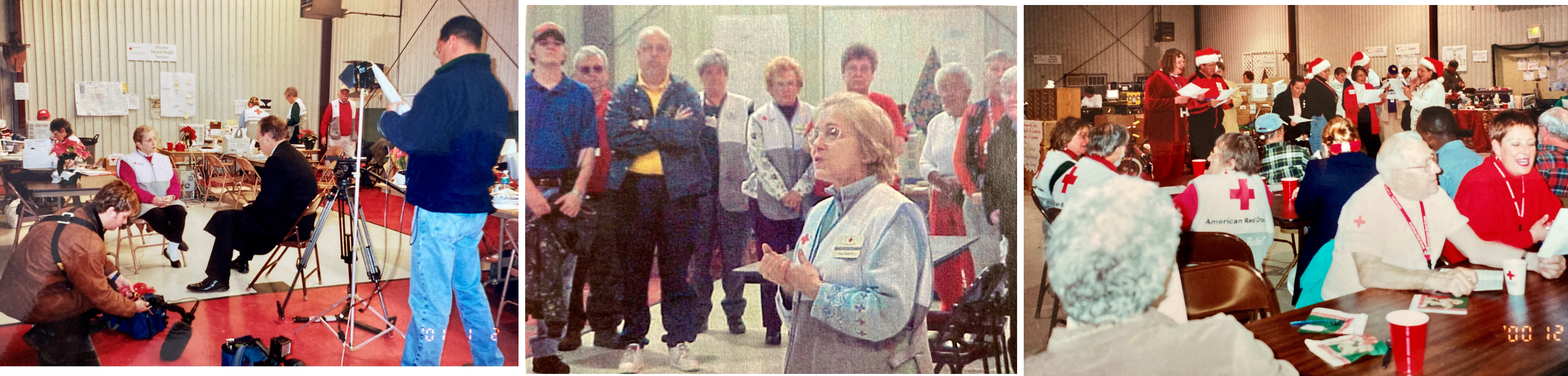
During the December tornado response in Tuscaloosa, Alabama, Peg was interviewed by CNN, offering insight from the front lines of disaster relief. On Christmas Day, she led an interfaith moment of reflection, inviting everyone to “silently ask for blessings in your own traditions,” as Red Cross staff paused to celebrate with food, music, and community in the midst of their tireless efforts. Photos submitted.

Since restaurants were set to be closed on Christmas Day, Peg asked the Mass Care team to find one that could prepare a holiday meal in advance. They located a restaurant willing to provide a traditional Christmas dinner – complete with three kinds of pie – for just $5 per person. The only requirement was that the meals be picked up early in the afternoon on Christmas Eve.

On Christmas Day, she and her team – Red Cross volunteers, FEMA staff, and volunteers from partner organizations – warmed each meal one by one in the microwave. “It was the most moving holiday I’ve ever had,” she recalls. “And also one of the funniest,” she adds with a smile. “Some of the volunteers rewrote ‘The 12 Days of Christmas’ with things every volunteer wishes for on deployment – like their own rental car. We couldn’t stop laughing.”

Over the years, Peg has witnessed countless changes in how the Red Cross operates, but her commitment has never wavered – even after retiring in 2011. “It’s in my blood,” she says. And true to her word, she continues to volunteer whenever she can: welcoming blood donors, teaching families about fire safety, and helping to recruit the next generation of volunteers. Though Peg admits, “I still have the urge to pack my suitcase,” she concedes that she no longer has the physical stamina for deployments. Still, her heart remains with the mission.

Her daughter Sherri adds, “Don’t underestimate my mom – she may be little, but she’s mighty. She’s a national treasure.”
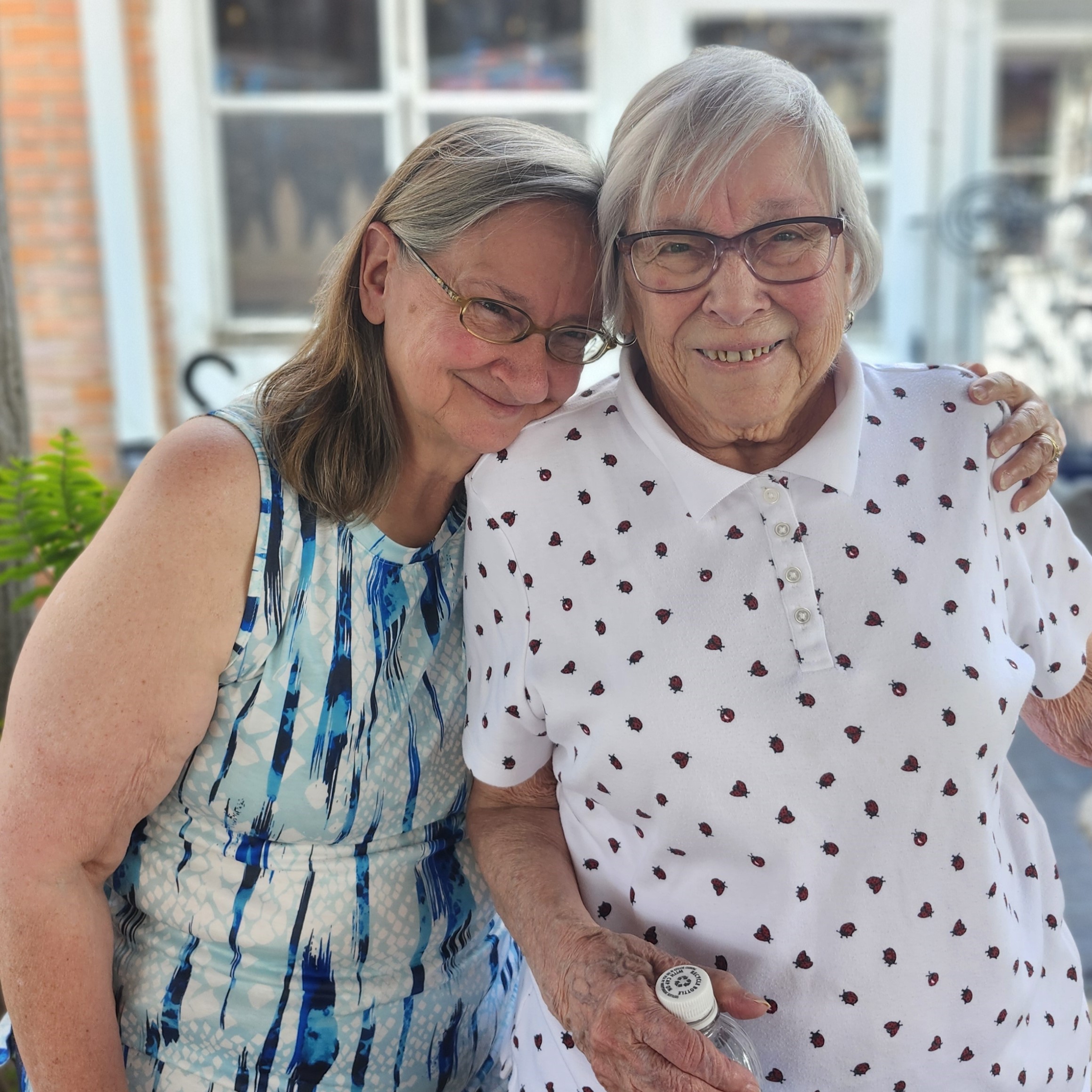
Sherri shares an embrace with her mother Peg. “Don’t underestimate my mom,” Sherri says. “She may be small, but she’s mighty — a true national treasure.” Photo: Sue Thesenga/American Red Cross.

As Peg reflects on her 60 years of service, she effortlessly fills the conversation with stories of the people she’s met and the lifelong friendships she’s formed along the way. Her memories are rich and vivid, but what shines through the most is her conviction that it was never about her. For Peg, it was always a team effort – people coming together, each doing their part to make a difference.

What began in 1966, when a general’s wife encouraged her to volunteer with the Red Cross, blossomed into a lifetime of service. “It’s what I believe in – the mission and principles,” Peg says simply.

Thank you, Peg Schaefer, for your deep and enduring commitment to the American Red Cross. Your service has left a lasting legacy of compassion, resilience, and hope. You truly are a national treasure.

Slideshow of additional photos of Peg through the years:

Leading with Purpose: Meet Makayla Anderson, Red Cross Youth Powerhouse 

When Makayla Anderson first applied to volunteer with the Red Cross, she was 14 years old, shy, and just starting high school. A phone call with a Volunteer Services screener turned into a life-shaping conversation—one that set her on a path she never expected. “I wasn’t sure I could help because of my age and little experience,” Makayla recalls. “But he said, ‘I believe in you and you will go far.’ That moment meant everything.” 

And go far, she has. 

Over the last four years, Makayla has become a driving force in youth engagement with the Red Cross—founding a club at her virtual high school, starting the region’s Youth and Young Adult Council (YAYAC), and stepping into national roles including her current position as a Youth Action Campaign (YAC) Intern with the International Humanitarian Law (IHL) team. Along the way, she’s brought creativity, courage, and compassion into everything she does. 

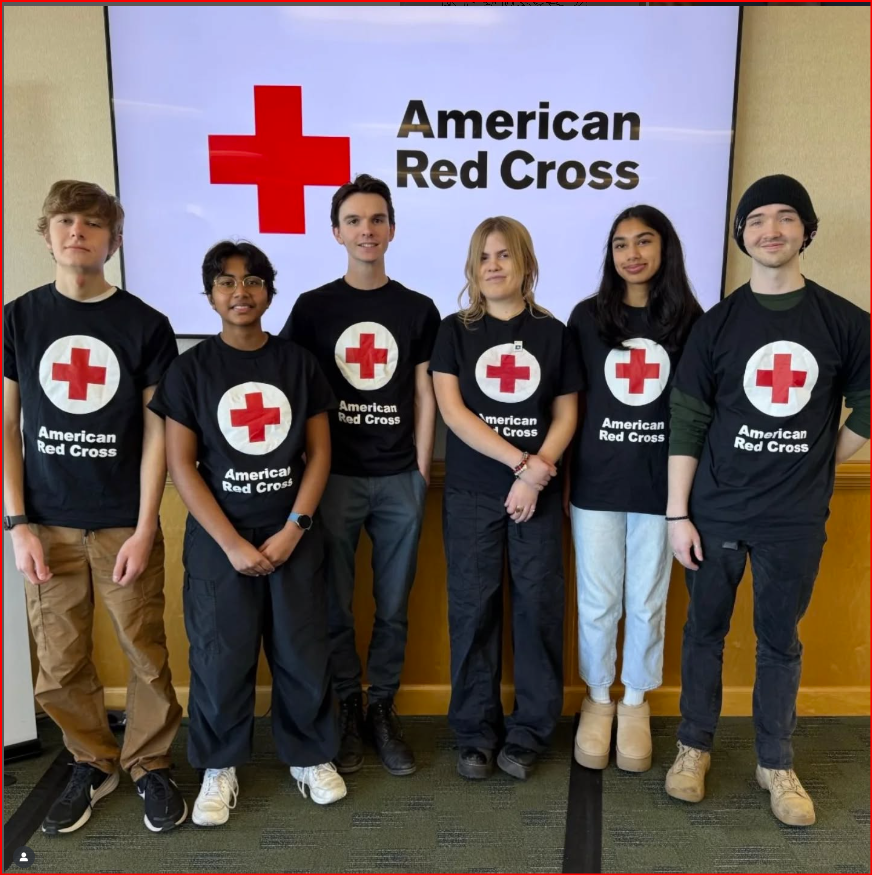
Makayla pictured with fellow members of the Red Cross Minnesota and Dakota’s Youth and Young Adult Council (YAYAC). Pictured left to right: Erik, Jay, Joel, Makayla, Shaivi and Alan (not pictured Nuna and Dawson). Photo submitted.

Finding Her Voice Through Service

Makayla’s journey began with behind-the-scenes support in Volunteer Services—working in Volunteer Connection and helping screen new volunteers. She gradually took on more responsibility, eventually creating her own Red Cross club at school and joining the IHL Youth Action Campaign. That’s when things clicked. 

“I never thought I was really interested in law,” she says. “But hearing from speakers at the national YAC Summit and working 1-on-1 with Red Cross staff opened my eyes to a new way of leadership.” 

It was also where she learned how to blend purpose and creativity—skills that came to life in her standout YAC project: a virtual art show on the theme of nuclear conflict. As a lifelong artist, Makayla leaned into her passions and invited others to explore difficult topics through visual expression. The show reached across the globe—from Minnesota to Dubai—and included an educational presentation on IHL and the role of art in activism. 

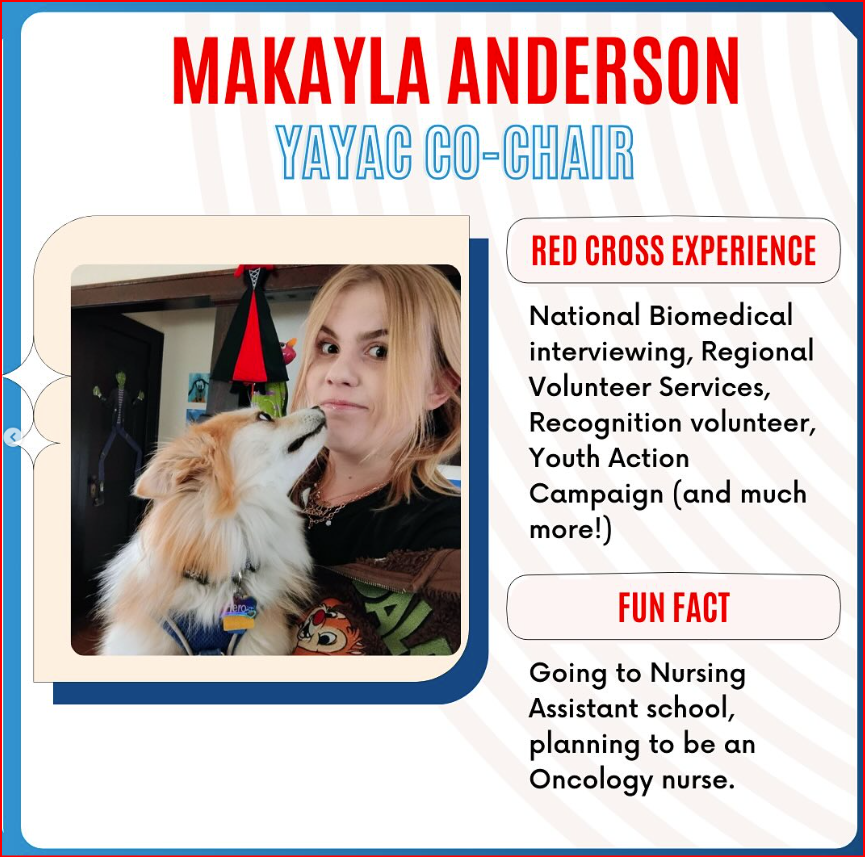
Makayla’s engagement on social media plays a key role in promoting the activities and programs of the region’s Youth and Young Adult Council (YAYAC).


Creating Change, One Youth at a Time 

After seeing the difference youth leaders were making in other regions, Makayla realized her own region was missing a critical piece: a strong network for youth engagement. Rather than waiting for someone else to fill that gap, she helped build the Minnesota and Dakotas Youth and Young Adult Council (YAYAC) from the ground up.  

“I don’t think it has too much to do with how confident you are with yourself,” she reflects. “It’s about your ability to take action and how well you understand the steps it takes. If you care enough about something, you just start eating it a bite at a time.” 

She’s now leading the council with big goals: to grow awareness, host engaging events, and make sure the youth voice is part of Red Cross decisions across departments. 

Wisdom Beyond Her Years

Makayla has also faced her share of challenges—especially working in adult-dominated spaces. “The biggest thing to remember is to listen and learn,” she says. “You don’t need to be the loudest in the room to make an impact.” 

She’s found guidance in mentors like Mark Giammona, Ashley Sheehy, and Tracy Elder, and credits them with shaping both her leadership style and her vision for the future. “I’m a Nursing Assistant now,” she says, “but I have high hopes of getting a job with the Red Cross in IHL one day. This work brings me a sense of fulfillment I haven’t found anywhere else.” 

Makayla pictured with one of her mentors Mark Giammona, Volunteer Engagement for the Minnesota and Dakotas Region, whose guidance has helped shape her leadership style and inspired her vision for the future

Fueling Her Fire

While much of her free time goes toward volunteering, Makayla still makes time for creative pursuits. She’s a published poet and an avid dog walker, often spotted strolling around town with her pups. “This is my fun!” she laughs. 

And when it comes to advice for other youth thinking about getting involved, her message is clear:  

“Find your passion, run toward it, and don’t take no for an answer. There will be slammed doors and setbacks but remember who you are and why you started.”

Learn more about youth like Makayla making a difference at Red Cross IHL Youth Action Campaign

Want to learn more about International Humanitarian Law through the lens of pop culture? Check out our IHL YouTube channel and explore the rules of war through Andor, Star Wars, Saving Private Ryan, Ghostbusters, House of the Dragon, and Godzilla

What Wasn’t Lost: Lexi, Hunter, and the Power of Community 

When the wind finally stopped and the trees had settled into splintered piles across their yard in Erie, North Dakota, Lexi stood next to Hunter and took a deep breath. 

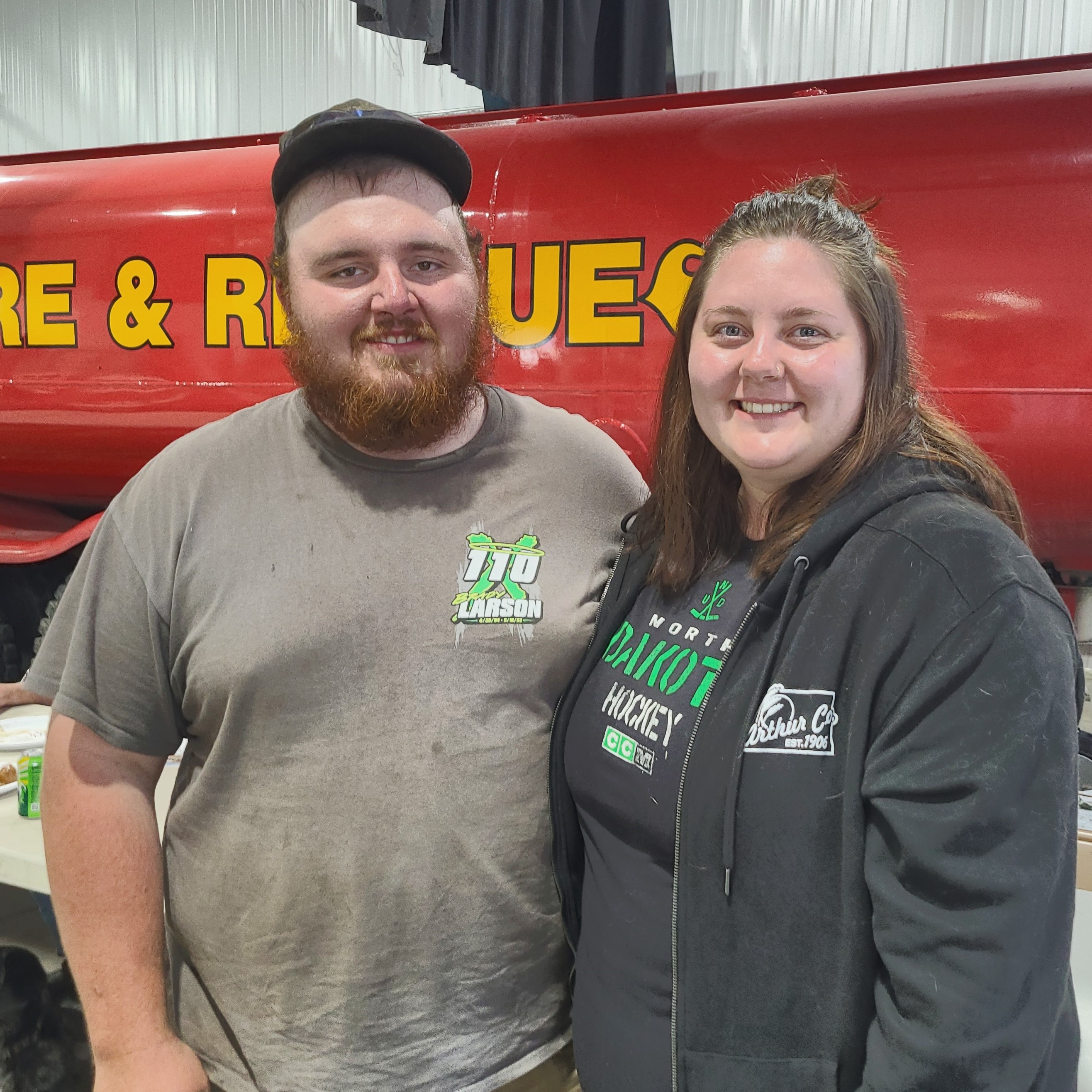
Lexi and Hunter smile with relief, thrilled their wedding plans are still intact — the storm devastated much of the town but spared both their ceremony and reception venues.
Photo: Carrie Carlson-Guest/American Red Cross.

“This wasn’t how we imagined the summer before our wedding,” she said. 

Just days earlier, the young couple had been finalizing details for their ceremony in September. Now, instead of focusing on a celebration, they were cleaning up.  

Then on June 20, storms with hurricane force winds ripped through towns big and small in eastern North Dakota, leaving the tiny village of Erie—population barely 30—reeling. 

The storm took their shade trees, littered the road with branches, and left everyone asking the same question: Where do we even begin? 

That answer came quickly. First, neighbors and family came to help. Then, church groups and people from across the region who drove for hours turned up. And then, the American Red Cross arrived. 

“It went from warm water and silence to trucks, volunteers, and kindness pouring in from every direction,” Lexi said. 

In the nearby town of Page, the fire station turned into a hub of comfort. Red Cross volunteers helped serve meals while neighbors gathered around folding tables to share food, stories, and sighs of relief. 

In Page, the fire station became a refuge as Red Cross volunteers served meals and neighbors shared food and comfort. Photo: Carrie Carlson-Guest/American Red Cross.

“It wasn’t just about feeding people,” Lexi said. “It was about creating a space where we could breathe. Where we could sit with people who understood.”

Lexi’s dad used a company volunteer day to come and help cleanup in Erie. “He could’ve spent the day anywhere,” she said. “But he chose here. Not just for me—but for our community.” 

Hunter spent those days helping others before even touching their own yard. “That’s who he is,” Lexi said quietly. “And that’s why I love him.”  

Though many buildings were damaged, two small miracles stood out. The church where Lexi and Hunter plan to marry and the community hall where they’ll hold their reception — were untouched by the storm. “Out of all the places that could’ve been hit,” she said, “ours were spared. That has to mean something.” 

The City of Page, ND’s fire station opened its doors as a community gathering place. Knox, who celebrated his his 3rd birthday in the Fire Hall, and his sister Kora, age 5.
simply enjoyed being kids, blowing bubbles and zooming trucks.
Photo: Carrie Carlson-Guest/American Red Cross

Their wedding is still on. But now, the meaning behind their vows has strengthened.  

“We’ve seen what it looks like when people show up for each other,” Lexi said. “People we’ve never met before—just neighbors we hadn’t met yet.” 

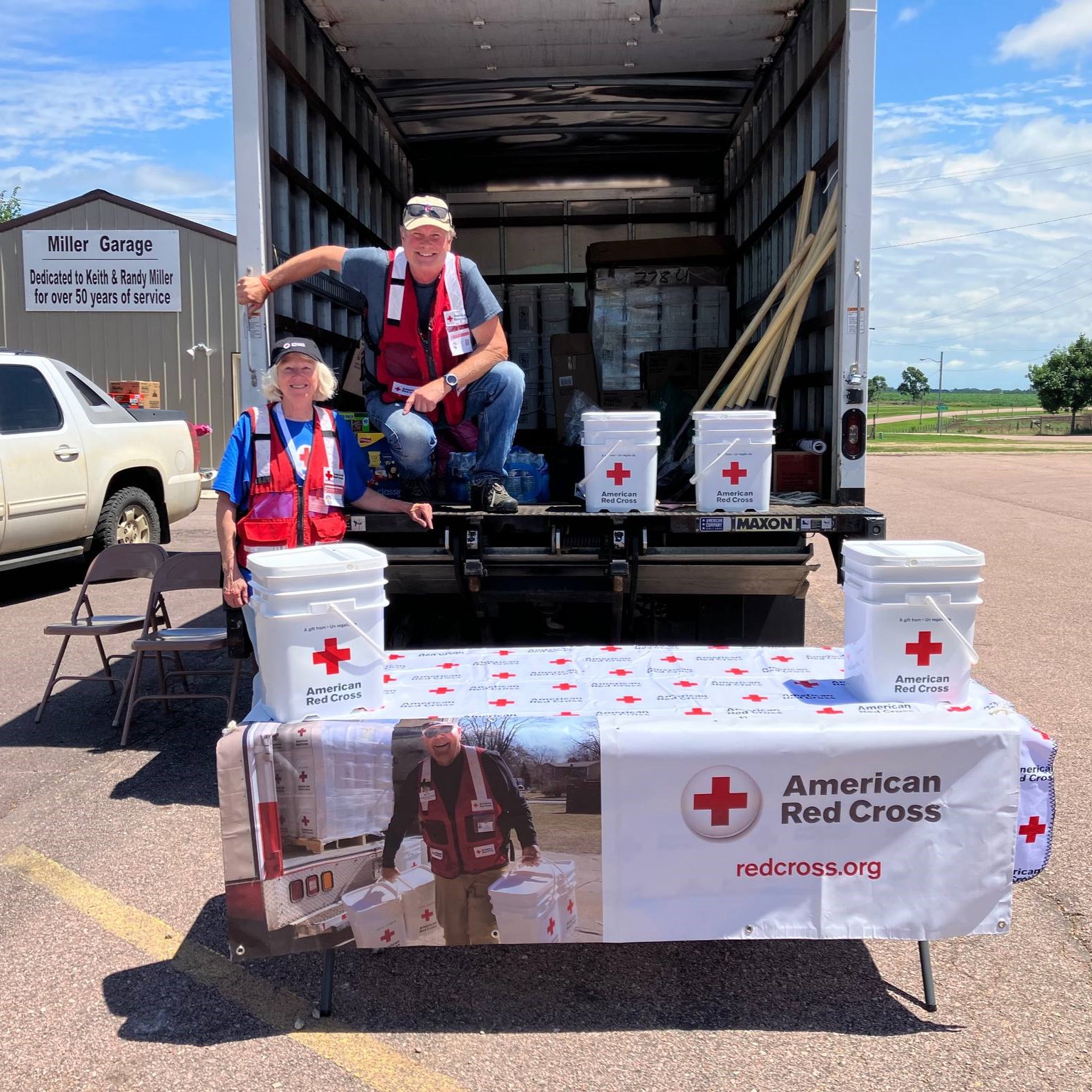
Red Cross Volunteer serving food to boy in a black t-shirt.
On his first deployment, Red Cross Health Services volunteer Daniel Odubura of Grand Forks, N.D., pitches in with a smile to serve hot meals to storm survivors in Page, N.D. Photo: Carrie Carlson-Guest/American Red Cross

In a part of the world where towns are small and pride runs deep, asking for help doesn’t come easy. But what Lexi and Hunter discovered is that sometimes, you don’t have to ask—people just come. 

And when they do, they bring more than food or rakes or tarps. They bring hope. 

“This is just our passion, it’s part of our DNA— to help people.”

Red Cross Disaster Mental Health volunteer,
Mary Parker, shares her experience

Disasters are traumatic events. And while many Red Cross volunteers are trained in myriad roles, such as staffing shelters, handing out cleanup kits, driving box trucks and the like, there are also volunteers trained specifically to support the emotional health of individuals and families affected.

Mary Parker is one such volunteer, “We’re all trained in the mental health field, either currently working or done working. This is just our passion, it’s part of our DNA— to help people.”

Red Cross disaster mental health volunteer Mary Parker
Red Cross Disaster Mental Health Volunteer Mary Parker from Side Lake, MN at a disaster training conference. Volunteers participate in free training specific to their position.

A Red Cross volunteer for six years, Mary is currently helping people impacted by flooding in Minnesota and South Dakota. Her role is to manage Disaster Mental Health (DMH) services for the response. To reach more people, she says they’ve embedded with other service teams.

“Mental Health has been accompanying crews as they deliver emergency supplies and cleanup kits, talking to clients, providing as much emotional support as we can…We also went out with the damage assessors. As they were going out to assess damage, we did some ride-alongs to talk to people in real time.”

Mary monitors the pulse of the Red Cross relief effort, keen to tap any opportunity that will ensure a Disaster Mental Health presence, “Basically, any activity that’s going on, if I have a mental health provider available, they go. That way there’s more good face-to-face interaction. It’s a good way to determine if we need to do a follow-up call with them.”

Mary continued, “The DMH role really is to be able to listen to their story and have someone to hear their hardships and struggles. We validate their hardships, give them a hug if they need one, remind them that they are resilient, and offer compassion and empathy. We’ve been at fixed sites, we’ve been on the [emergency response] vehicles, we’ve also had DMH at the shelters and alongside caseworkers at resource centers.”

Mary Parker sharing her experiences with fellow Red Cross volunteers at a recent volunteer event.

The Red Cross hosted several resource centers for individuals displaced by recent flooding in Minnesota and South Dakota where trained Red Cross volunteers can open recovery casework for those whose homes sustained major damage or were destroyed. “We’re coordinating health services, mental health and spiritual care, so at least one if not more have been represented at each site.”

In addition to standard Red Cross disaster assistance, individuals and families may of course request to speak with a disaster health, spiritual health, or mental health volunteer about their needs.

“It’s what we do!”

Resources Every eight minutes, the Red Cross responds to a disaster somewhere in the United States. Often it’s a single family home fire. Sometimes it’s a larger disaster like a flood or a tornado. Homes, which are supposed to be places of comfort and stability, can be destroyed, and with them that sense of comfort and stability can be turned on its head at a moment’s notice.

As the physical and emotional impacts of this disaster come into sharper focus for those affected, Red Cross caseworkers and mental health volunteers are on the front lines, providing one-on-one support to individuals and families. Their unwavering commitment helps address the evolving needs of residents during this challenging time.

The Red Cross encourages people to remember to take care themselves, their loved ones, and neighbors:

  • Support Each Other: In difficult times, it’s crucial for people to lean on one another. Reach out to friends, family, and neighbors—your collective strength makes a difference.
  • Be Patient: Floods can evoke a range of emotions and reactions. It’s okay to feel worried or drained. Give yourself the grace to process these feelings.
  • Children’s Needs: Traumatic events impact children differently than adults. Sometimes, their worries manifest in behavior rather than words. Be attuned to their needs and emotions.

If you or someone you know requires assistance, don’t hesitate to contact the free 24/7 multilingual Disaster Distress Helpline at 1-800-985-5990. They’re there to provide support and guidance during challenging times.

Volunteers Needed Do you have a background as a current or former licensed mental health practitioner? Looking for a unique and much needed way to help your community in times of disaster? Consider joining the Disaster Health Services team! Learn more here.

Story by American Red Cross Volunteer Nate Russell.

Husband and wife duo hit the road to help people affected by flooding

“We make a good team after 45 years of marriage,” chuckled Jackie, a Red Cross volunteer who recently journeyed to Sioux Falls with her husband Rick to distribute essential disaster relief items to people affected by flooding. “It’s a great way to spend time together – Rick’s the driver, and I’m the navigator.”

Rick and Jackie Fredricksen loading disaster relief supplies unto a truck at the Red Cross building Minneapolis for transport to the Sioux Falls area June 27, 2024.
Photo: Lynette Nyman/American Red Cross
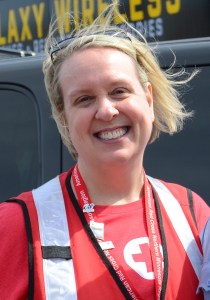
The husband and wife duo, from Long Lake, MN, joined the Red Cross family last August after they both bid farewell to working life. A former volunteer firefighter, Rick, was eager to keep serving the community so helping with Sound the Alarm events seemed a fantastic place to start. “We once made an alarm installation at a deaf person’s house,” shared Rick. “With the help of another volunteer’s sign language skills, we were able to ensure her home was safer. We were so thrilled about it; we exchanged high-fives! It was truly special.”

This past December, Rick happily helped train fellow disaster team members in Houston, TX and even spent a couple of weeks there in May assisting those impacted by flooding and tornadoes. In the meantime, Jackie was finalizing her own training. “As volunteers, we’re truly embraced by the Red Cross family,” said Rick. “You develop friendships with fellow volunteers – I still get friendly check-in messages from time to time – recently a photo from two volunteers that I deployed with that wanted to say hello.”

Last week, was their first Red Cross deployment together.

Jackie and Rick Fredricksen ready to distribute disaster relief supplies including clean up kits in South Dakota. Photo: Turner County South Dakota Emergency Management.

“Hearing people’s heartfelt stories while they were picking up supplies was so touching,” said Jackie. “Just knowing that we could help them a little while they’re going through so much – they were so appreciative of the Red Cross being there.”

Ricks adds, “People are so resilient. We met a young woman who lived on a farm – they thought they were going to have a bumper crop this year but now have lost everything, but she still had a positive outlook. Or another woman who had skin cancer and was going through treatment – but remained hopeful that things would get better.”

Their Sioux Falls deployment wrapped up on Sunday when the last person came to pick up supplies. “We all signed the top of the clean-up kit!”

When asked about retirement and volunteering with the Red Cross, they both agreed, “We recommend it! It’s so rewarding to meet different people and other Red Cross team members.”

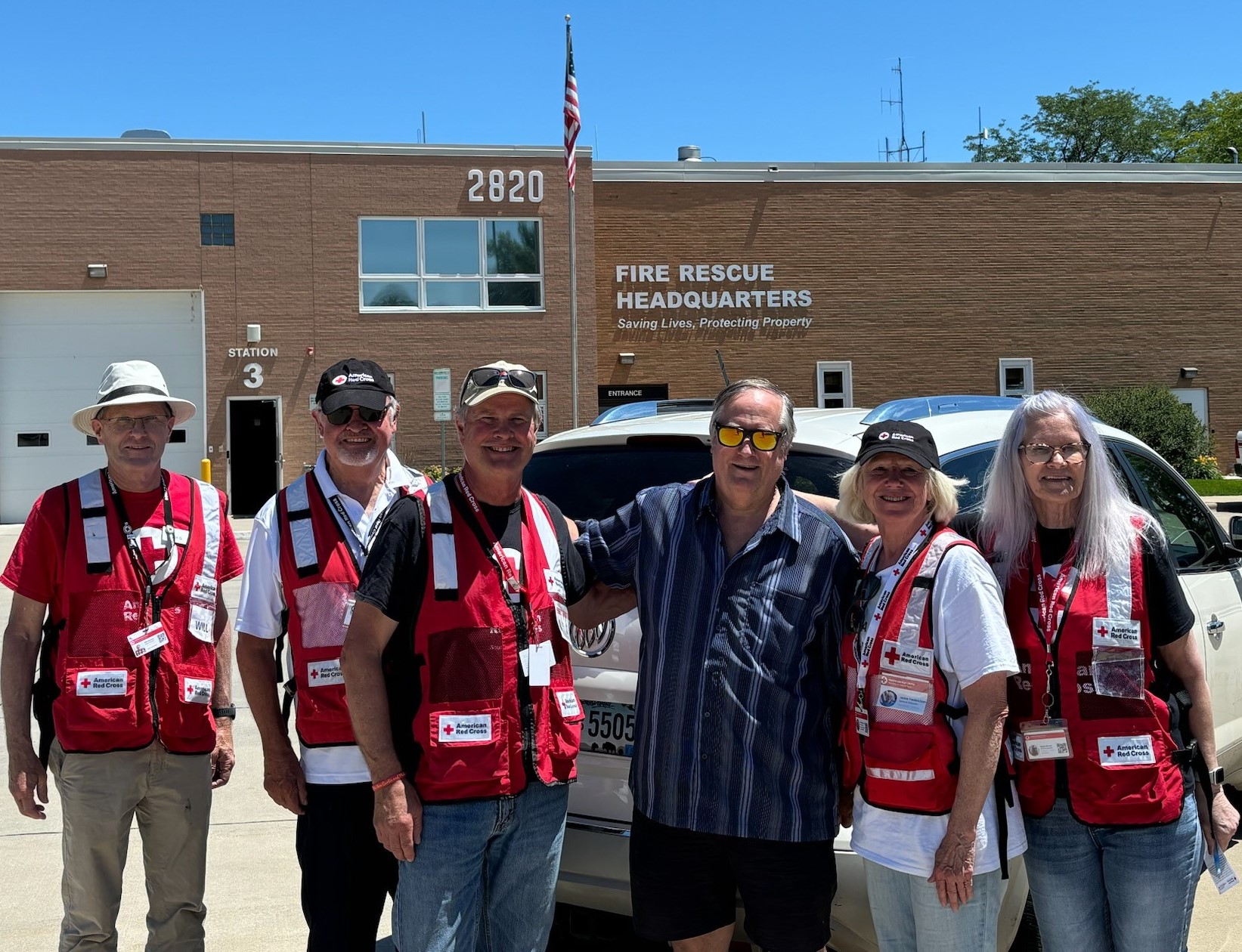
Red Cross volunteer team, including Jackie and Rick Fredricksen, meet Mark, a local hero who stepped up to assist not just himself, but also a neighbor impacted by the recent floods.
Photo submitted.

“It gives you another level of energy and positive feelings that you can help,” said Jackie. “There’re so many different ways to be involved with the Red Cross – there’s something for everybody!

Rick added, “It’s a great opportunity to meet new people and make new friends. I feel blessed that Jackie and I get to share this journey together. We return home inspired, exchanging stories, and praying for brighter days for those we’ve met.”

Jackie and Rick Fredrickson with fellow Red Cross disaster volunteer Willis Gravning.

Our work is possible because of trained volunteers like Rick and Jackie. Join our volunteer team – to find a role that works for you, visit RedCross.org/GiveTime.

5 Red Cross Resolutions you can do in ONE hour (or less)

As we step into a new year, many of us are looking for ways to make a positive impact in our lives and the lives of others. The American Red Cross offers a variety of quick and meaningful ways to make a difference. Here are five resolutions you can accomplish in one hour or less, not only benefiting those in need but also enhancing your own well-being.


Cassie and Ben, parents of 3-year-old Oliver who is battling kidney cancer, recently rolled up a sleeve at a blood drive held in their son’s honor. Oliver has needed multiple blood transfusions during his treatment so they are helping pay it forward. Every donation helps patients like Oliver.
  1. Donate Blood
    One of the most significant contributions you can make is donating blood – and it’s simple. In just about one hour, you can make a real difference in the lives of patients requiring life-saving transfusions. It may be the only resolution that includes cookies. Schedule on our free app and follow your blood donation’s journey every step of the way as it makes its way to a hospital to help patients in need.

  2. Learn Hands-Only CPR Learning hands-only CPR is a quick, vital skill that could save a life. The Red Cross offers online resources and local classes that can teach you this life-saving technique in under 30 minutes. By knowing how to perform hands-only CPR, you can help keep a person alive until professional help arrives. Bonus: have fun practicing the rhythm by checking out these “Next Gen Life Beats” friends at the Australian Red Cross. And yes, it includes a Taylor Swift song.

  3. Check Smoke Alarms and Practice an Escape Plan
    Ensuring your home is prepared for emergencies is crucial. Take a few minutes to test your smoke alarms and replace any batteries if needed. Then, spend some time with those you live with drafting and practicing a home escape plan. Knowing what to do in the event of a fire can significantly increase your chances of safely escaping.  And you probably haven’t checked your smoke alarms since last time you burnt pizza. Check out how-to videos and other resources at SoundTheAlarm.org/MNDAKS.

  4. Find your Fit, Take the Volunteer Quiz
    The American Red Cross depends on volunteers to carry out its humanitarian work. In less than an hour, you can explore various opportunities online and sign up for something that resonates with your skills and interests. Whether it’s assisting at a local blood drive, helping with disaster response, or supporting military families, your time and effort can make a huge impact. Punch in your zip, take a our quick quiz and we’ll match you up with cool opportunities near you.

  5.  Make a Gift in Someone’s Honor
    Making a charitable donation in honor of a loved one is a meaningful way to recognize special occasions. It’s a simple process that takes just a few minutes online. Your gift can support various Red Cross initiatives, from disaster relief to supporting military families, and it’s a beautiful way to spread kindness and compassion. Bonus, warm and fuzzy feelings for you and them. Visit RedCross.org/MNDAKS to make a gift.

As you consider your resolutions for the year, remember that even the smallest acts can have a significant impact. By dedicating an hour or less to any of these Red Cross activities, you’re not only helping others but also fostering your own health and happiness*.

Here’s to a year filled with kindness, compassion, and community support!

For more resolution ideas, RedCross.org/MNDAKS


*From the Mayo Clinic Health System, “Kindness has been shown to. increase self-esteem, empathy and compassion, and improve mood. It can decrease blood pressure and cortisol, a hormone directly correlated with stress levels. People who give of themselves in a balanced way also tend to be healthier and live longer.”

Dedicated Red Cross worker retires after 46 years

“It was a nice feeling that I could be there to help someone in their time of need. ” – Nancy Rogers

Nancy Rogers is passionate about the mission of the American Red Cross and helping veterans.

Rogers, a former longtime employee of the Red Cross serving northern Minnesota, has spent nearly her entire professional career assisting military members, their families and Red Cross volunteers. In July, Rogers retired after 46 years with the Red Cross.

Her former supervisor, Dan Williams, executive director of the northern Minnesota chapter, called Rogers’ appreciation of Red Cross volunteers and veterans “unmistakable.”

Her famous chocolate chip cookies weren’t the only reason people were drawn to her, according to Williams.

“I think (Rogers) took it that people were thankful for her cookies, but really what they were thankful for was her hospitality; her welcoming nature; her wanting our volunteers or partners to be there,” Williams said.

Rogers started working as a receptionist for the Red Cross, but over the years she took on other duties, such as disaster relief services and casework for military families. The northern Minnesota chapter, which is based in Duluth, serves several counties in Minnesota and along the Wisconsin border.

Nancy Rogers retired after 46 years with the Red Cross. Submitted photo.

Rogers said she enjoyed the Red Cross’s Services to the Armed Forces work she was involved in, including providing support to military families during deployments and emergencies.

“It was a nice feeling that I could be there to help someone in their time of need,” she said.

She is also a guardian for the Honor Flight Network, which transports American veterans to Washington, D.C., to visit veteran memorials. She also goes on the flights in honor of her late father, who was a World War II veteran.

“You can tell my heart is with the veterans,” Rogers said, adding that she’s been on five Honor Flights.

Despite retiring, Rogers is continuing her work with the Red Cross as a volunteer, organizing the Holidays for Heroes Program, which involves collecting holiday cards and gifts for veterans and military members.

Rogers said she’s committed to the vital work of the Red Cross because she believes in the organization’s mission: to help people in need.

“I believe in the mission of the Red Cross and everyone does a great job at helping folks in fires and the military and all that. We’ve got everybody covered,” she said.

Story by Blair Emerson, American Red Cross Minnesota and Dakotas Region. There are many rewarding career opportunities supporting the Red Cross humanitarian mission. Start your search here.

March is Red Cross Month: Lifesaving Awards

“I request that during that month (March) our people rededicate themselves to the splendid aims and activities of the Red Cross.”

President Franklin D. Roosevelt in the first President Proclamation of March as Red Cross Month in 1943

Every March we take extra care in celebrating the Red Cross mission to alleviate human suffering in the face of emergencies.

One way you can join this effort is search within your community and find everyday people to nominate for our national Lifesaving Awards.

Nominees are people who have used lifesaving skills, such as those learned in Red Cross CPR and First Aid classes.  On average each year, more than 9 million people in businesses, schools and communities take Red Cross health and safety classes. Many put those skills to use every day.

For example, on July 23, 2018, Meghan Knutson and Julian Meehl helped save the life of a young boy who was found unconscious in a pool at an aquatic center in Faribault, Minnesota. Together, they used their skills learned in Red Cross health and safety courses to save a boy until professional medical help arrived. Or take the story of Tom and Stewart: Why would you stop?

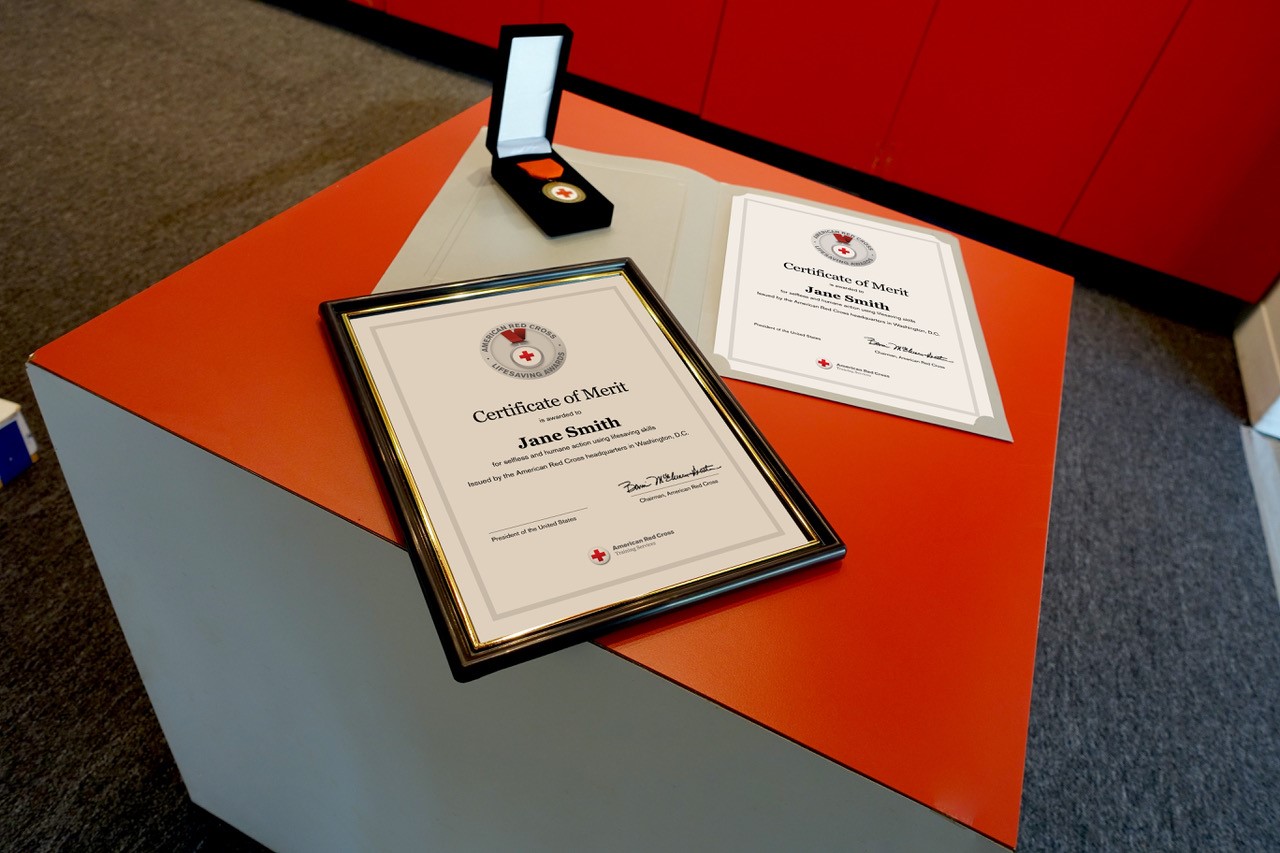
Issued by the American Red Cross headquarters in Washington, D.C., your nominees could be recognized with one of three awards:

Certificate of Merit, which is for individuals and off- duty professional responders. This certificate will be signed by the sitting President of the United States, a custom that began in 1913.

Lifesaving Award for Professional Responders, which is for Red Cross-trained professional responders and healthcare professionals acting while on duty.

Certificate of Extraordinary Personal Action, which recognizes individuals and teams who are not Red Cross trained.

Nominate today to help and inspire others to learn important lifesaving skills that could save a life.

Post by Zabiba Sameru/American Red Cross

Celebrating a Century of Service

rco_blog_img_1917-1918-comfort-kit-shop-mnhs
1917-18 Comfort Kit Shop. Courtesy of the Minnesota Historical Society

In 1917, as the United States entered World War I, the American Red Cross quickly emerged as the largest social welfare agency throughout Minnesota and across the nation. The community quickly embraced the Red Cross mission to prevent and alleviate human suffering in the face of emergencies by mobilizing the power of volunteers and the generosity of donors and by the end of the war, 20 percent of all Minnesotans had joined the organization.

This year, as we celebrate a century of service, the American Red Cross Minnesota Region invites individuals and organizations to join us as we prepare for whatever may come in the next 100 years. Click here to learn more about our Centennial Year.

1960-nurses-with-blood-mnhs
1960 Red Cross nurses with blood. Courtesy of the Minnesota Historical Society

During the past century, we have served millions of people. Through disaster services, we have provided immediate, emergency housing, food, clothing, medical supplies, and essential household items to victims of the more than 600 disasters that occur in the Minnesota Region annually. From preparedness education and health and safety programs to ensuring the daily demand for blood is met, we have worked vigilantly to prepare our communities with the tools and resources that save lives before urgent situations happen. We have supported our military heroes and their families before, during and after deployment and have reconnected families separated by conflict around the globe.

chawa_yang
2011 Minneapolis Tornado relief effort. Photo credit: Lynette Nyman/American Red Cross

Today, 100 years since our inception, the American Red Cross Minnesota Region stands ready 24 hours a day, 365 days a year with volunteers and staff on standby to bring comfort, care and relief to victims of disasters or critical emergencies, work as health and safety trainers, and meet demand for area blood supplies.

We welcome you to join us!

rco_blog_img_centenniallogo

Become our newest community hero

Jennifer Pluhar (l) is a Red Cross volunteer who has helped dozens of families after disasters in Minnesota. Photo credit: Lynette Nyman/American Red Cross

Red Cross volunteer Jennifer Pluhar spent her birthday helping more than 25 people displaced from their apartments after a fire in Minneapolis on February 23. Like hundreds of other Red Cross volunteers across Minnesota, Jennifer puts her own life on hold to help others during a great time of need. People rely on Red Cross volunteers to help them find safe and warm shelter after disasters. Sometimes they count on volunteers like Jennifer to hold a hand, listen and support them on the path to rebuilding their lives.

Jennifer’s contribution, along with hundreds of other volunteers across Minnesota, is invaluable. This is why the American Red Cross sets aside the month of March as Red Cross Month, a time to celebrate our everyday heroes and to ask you to become one of our newest community heroes.

The Red Cross depends on people like you to deliver help and hope to others, both neighbors and strangers, during emergencies. During the 2015 fiscal year, the American Red Cross Minnesota Region supported 2,541 people affected by local disasters, provided 2,459 emergency communications to military families and trained 122,656 people in lifesaving and caregiving skills. And, people from this area donated 215,091 units of blood. These acts of service truly save lives.

133903-March-is-Red-Cross-Month-Twitter-FINAL1March is the time for you to become a community hero by taking two simple steps. First, be ready for the next emergency by creating a preparedness plan for your home. Find help at redcross.org. Second, test your smoke alarms, and ask your neighbors to do the same. If you don’t have smoke working alarms, click here to get free smoke alarms in your home. You can also sign-up to be a Red Cross volunteer, blood donor or financial contributor by going to redcross.org/mn.

Thank you Jennifer. And thank you to all of the Red Cross volunteers, donors, and contributors in this region, across the nation, and around the globe who assist others during life’s darkest hours.