Some more fortunate than others

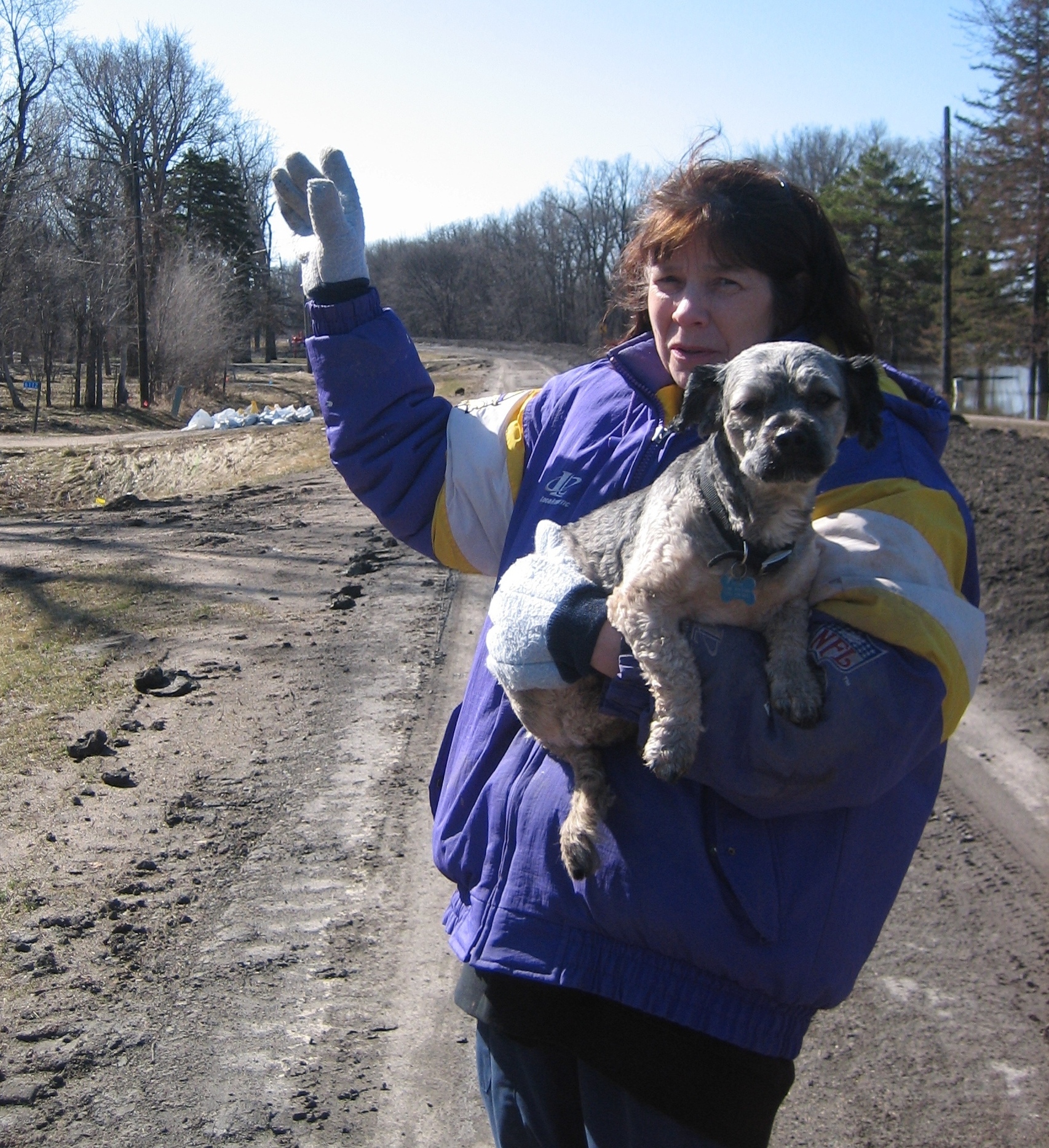
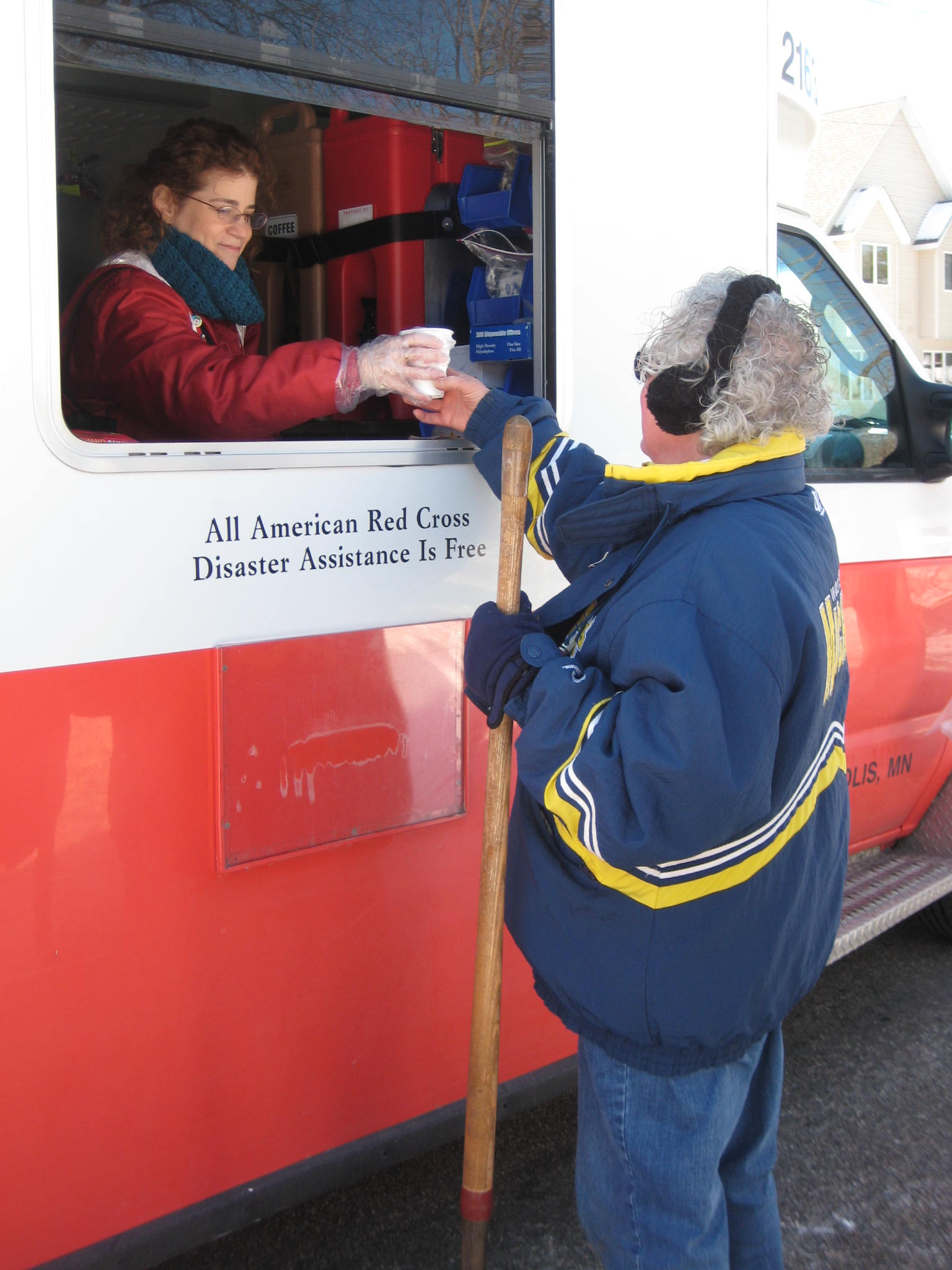
Minneapolis tornado survivor Cathy Stolte shares her harrowing story with Red Cross volunteer Dave Schoeneck. Photo credit: Jason Viana/American Red Cross

Kathy Stolte was working on a cross word puzzle Sunday when she heard a crashing sound. She grabbed her dog and headed for the basement, but the tornado had already passed her north Minneapolis bungalow, leaving behind a path of twisted trees, broken homes and destruction.

Kathy, her husband, and her dog were fortunate — no injuries, just property damage. Part of the roof of their home blew off, and rain soaked the insulation, making the house uninhabitable. Her son’s car was skewered by a five inch tree branch, from windshield to floorboard. The worst damage was to the garage, parts of which currently reside in her neighbor’s kitchen.
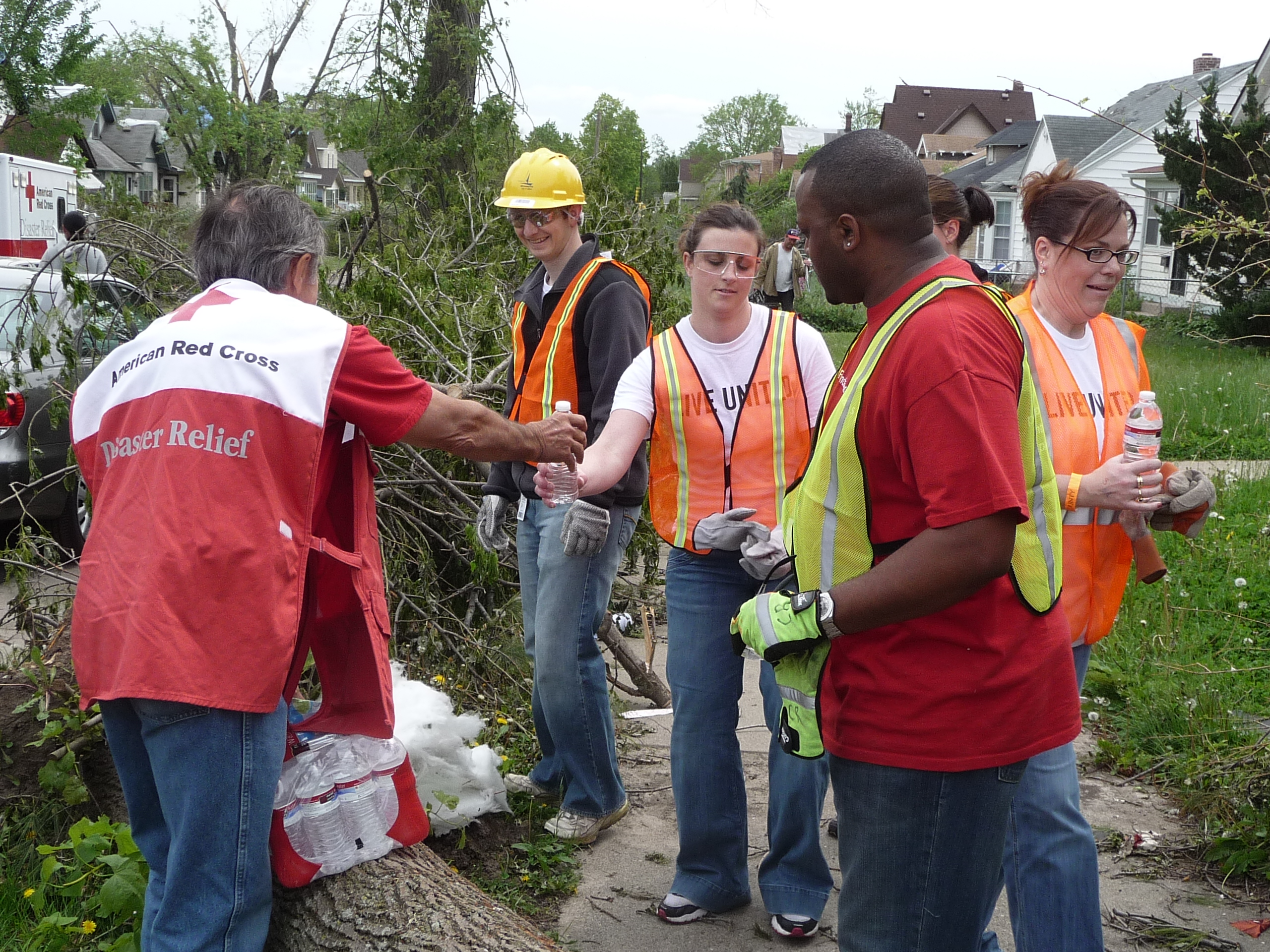
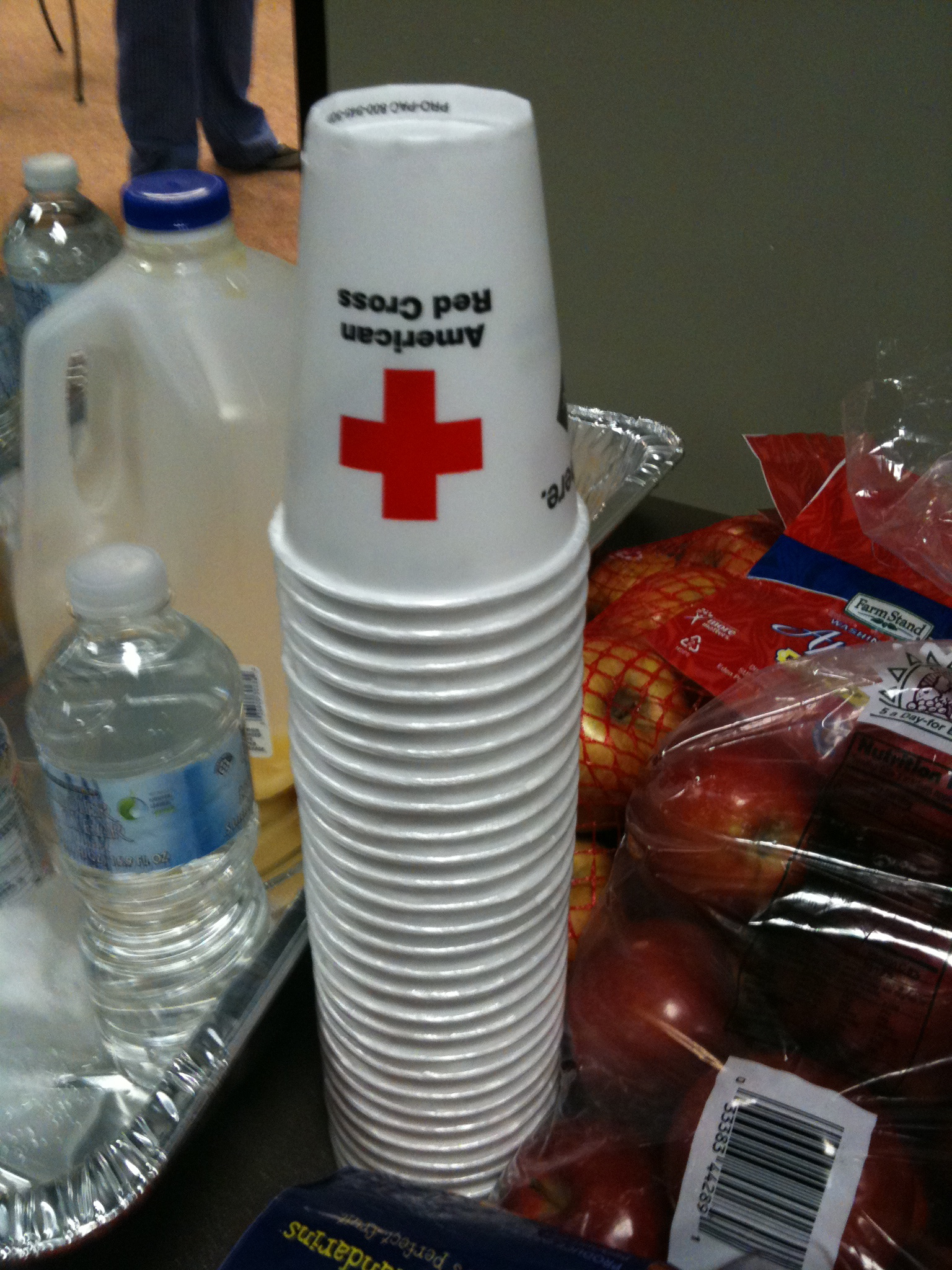
Red Cross volunteers are providing water and snacks to people helping to remove debris after the May 22 tornado in Minneapolis. Photo credit: Jason Viana/American Red Cross

On Wednesday, as repair crews from the City of Minneapolis were hauling away the remains of large trees from their block, and crews from Xcel Energy were restoring electric power to their block, Kathy was grateful when a Red Cross disaster team from the St. Croix Chapter of the American Red Cross came down the street, offering food and water to anyone who needed it. Eric Nickolai and Sherm Boucher were busy handing out water, sandwiches, energy drinks and fruit to residents, volunteers, and work crews.

While Kathy faces weeks before her house can be reoccupied, she is one of the lucky ones who had homeowner’s insurance and has a place to stay temporarily. Hundreds of others were out trying to salvage their belongings and working to find food, clothing and shelter for themselves and their families.

(Reporting by Red Cross volunteer Dave Schoeneck)
Many wonder where they’ll live

The reality of a long road to recovery is becoming clear for families displaced or homeless following the powerful tornado that swept through Minneapolis on Sunday, May 22.

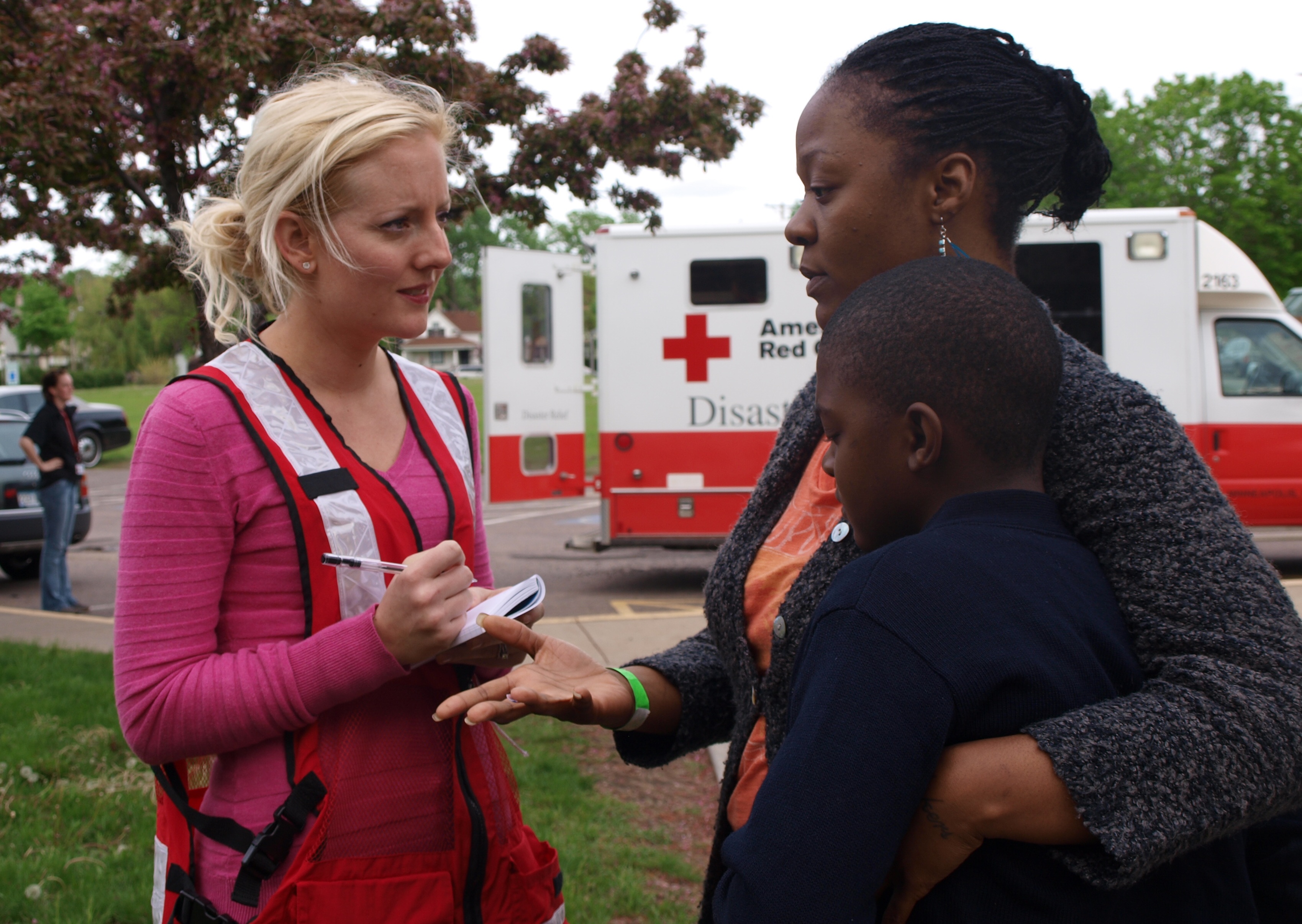
Red Cross responder Sarah Russell talks with Lillian Scott and her son Damon about next steps for their recovery from the May 22 tornado in Minneapolis. Photo credit: Lynette Nyman/American Red Cross

Standing outside the shelter located at the armory in northeast Minneapolis Lillian Scott welcomes her son Damon, 9, who has returned from a day at school.

Scott has been living at the shelter since Sunday, when the tornado touched down in what she describes as a neighborhood that now faces even more challenges.

“Already the neighborhood was bad,” says Scott. “Now it’s not safe for my son to play. There’s so much debris. It’s covered with trees. We can’t stay there. It’s just bad.”

An estimated 5,000 people are affected. Many have found temporary refuge with friends and family.  While others, like Scott, have made a new home at a shelter where the Red Cross is providing cots, blankets, and hugs during a tough time.

Scott, whose top priority is finding a new home, is standing strong for her son.

“If I cry, then he’ll cry,” says Scott. “If I’m okay, then he’s okay. Eventually we’ll be taken care of. I know something good will happen.”

(Reporting by Red Cross responders Lynette Nyman and Sarah Russell)

Letter from Alabama

(Guest Post from Karen & Rick Campion)

Some of you already know this information, but we wanted to update everyone at the same time. We are deployed by the Red Cross to the Alabama tornadoes for up to three weeks.

We are on the Disaster Assessment team – the first Red Cross representatives on site to do initial damage assessments.  Our data gets relayed to the Red Cross Command Center and then on to FEMA. We’re using new technology – hand held collection units.  The info is used to assess future aid and services needed.

So far, we’ve been assigned to gather data in 3 counties, which includes the city of Huckleburg.  Most of the homes here were destroyed and there is no electric and limited cell phone coverage.

We’ve included a couple pics of what we’ve seen.  One of the interesting sights in the middle of town was the cemetery.  Headstones had beautiful flowers completely untouched and the grass was perfectly manicured.  Total chaos surrounded the cemetery.

The affected people are doing amazingly well (at least for now).  They are very gracious and appreciative of those who have come to help.  Keep them in your prayers.

Take care,
Karen and Rick

Our 2011 Red Cross Heroes

Thank you to everyone who helped make the 2011 Heroes Breakfast an outstanding event celebrating remarkable women and men in our community.

The 2011 American Red Cross Twin Cities Area Chapter Heroes Awards were presented during the annual Heroes Breakfast. Photo credit: Andy King/American Red Cross

Red Cross Shelter Night Shift Adds Perspective

By Kami Buccellato, RN, Red Cross Volunteer

When needed after a disaster a Red Cross shelter is a safe & warm place where displaced people can get a cup of coffee and also meet with health services volunteers. Photo Cathryn Kennedy/American Red Cross

After a tornado hit the town I was born in, destroying half the city a couple years ago, I decided to become a Red Cross volunteer disaster responder.

Today I serve as a disaster health services responder for the American Red Cross Twin Cities Area Chapter. Most often I work via telephone, helping people rebuild their lives, starting with replacing everyday basics such as eyeglasses, medications, or medical equipment that were lost in a home fire.

Disaster health services team members also provide assistance in Red Cross shelters. For example, this past winter an apartment building fire in Bloomington, Minnesota, left several dozen people without safe and warm place to stay. So, the Red Cross opened a shelter and I signed up for a night shift.

This was my first time as a health services volunteer working in-person with people after disaster. The moment I walked into the Bloomington shelter I felt welcomed. I received a tour around the facility, updated on possible clients, introduced to the families that were staying there, shown where the medical supplies were kept, and given a list of resources for questions or concerns.

It was a calm night and my shift went quickly. I got to meet new people, see the operations of a shelter and how vital all volunteers are in running and providing services at a shelter. My favorite part was getting an extra blanket for a little girl so she could get some rest and stay warm from the cold.

Another experience was just listening to families talk about their recovery steps and the search for a new place to live. I did not realize how much the fire impacted people until I heard that families were searching for ground level apartments to live in because they never wanted out to have to jump out a third floor apartment window during winter.

My first on-scene experience was great. What I loved most, and made the work all worthwhile, was an email card later sent by a family expressing its sincere thanks to Red Cross Volunteers.

Click here to learn more about becoming a Red Cross volunteer.

Preparedness Has Made the Difference

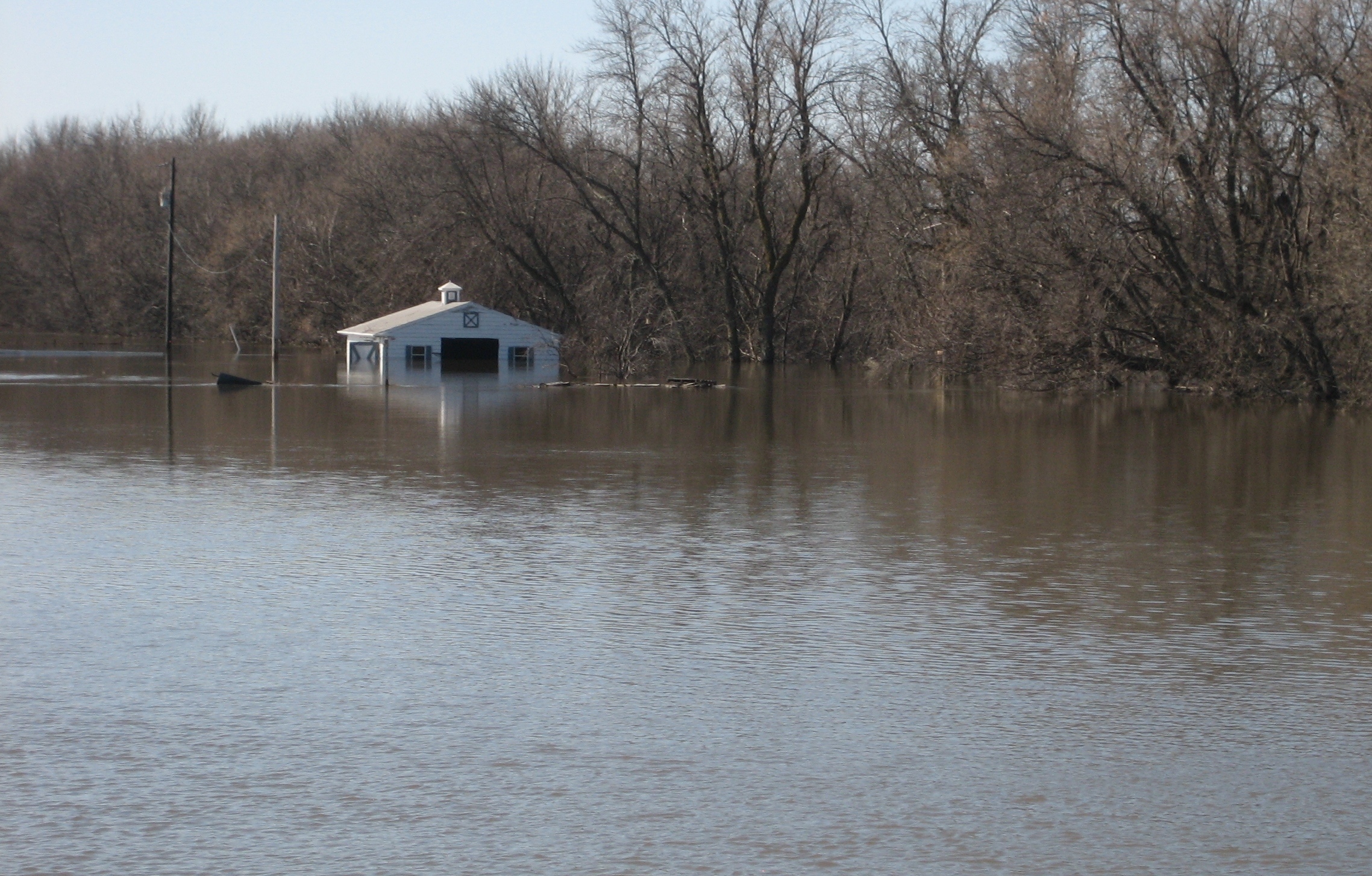
Joan Egge's family is safe from the Red River’s high waters because of preparedness measures, such as temporary clay dikes. Photo credit: Lynette Nyman/American Red Cross

By Lynette Nyman, American Red Cross

To appreciate the rising of the Red River, you have to see it. Water appears to spread from horizon to horizon across this northern prairie landscape.

With waters reaching nearly 40 feet in some areas, what would have been a major crisis in past years is mostly a threat under control because of preparation.

For example, clay dikes and sump pumps are protecting many homes, including one in Oakport Township north of Moorhead, Minnesota, where Joan Egge has lived for eighteen years.

“Because we’ve been preparing and preparing you’d kind of hate it if didn’t flood,” says Egge.

Red Cross vigilance remains high as the Red River’s high waters continue to move north and threaten rural communities. Photo credit: Lynette Nyman/American Red Cross

Sandbagging started in early February. Since then the Red Cross has providing more than 150,000 beverages and meals to community volunteers and other responders who have worked to hold back the water both day and night.

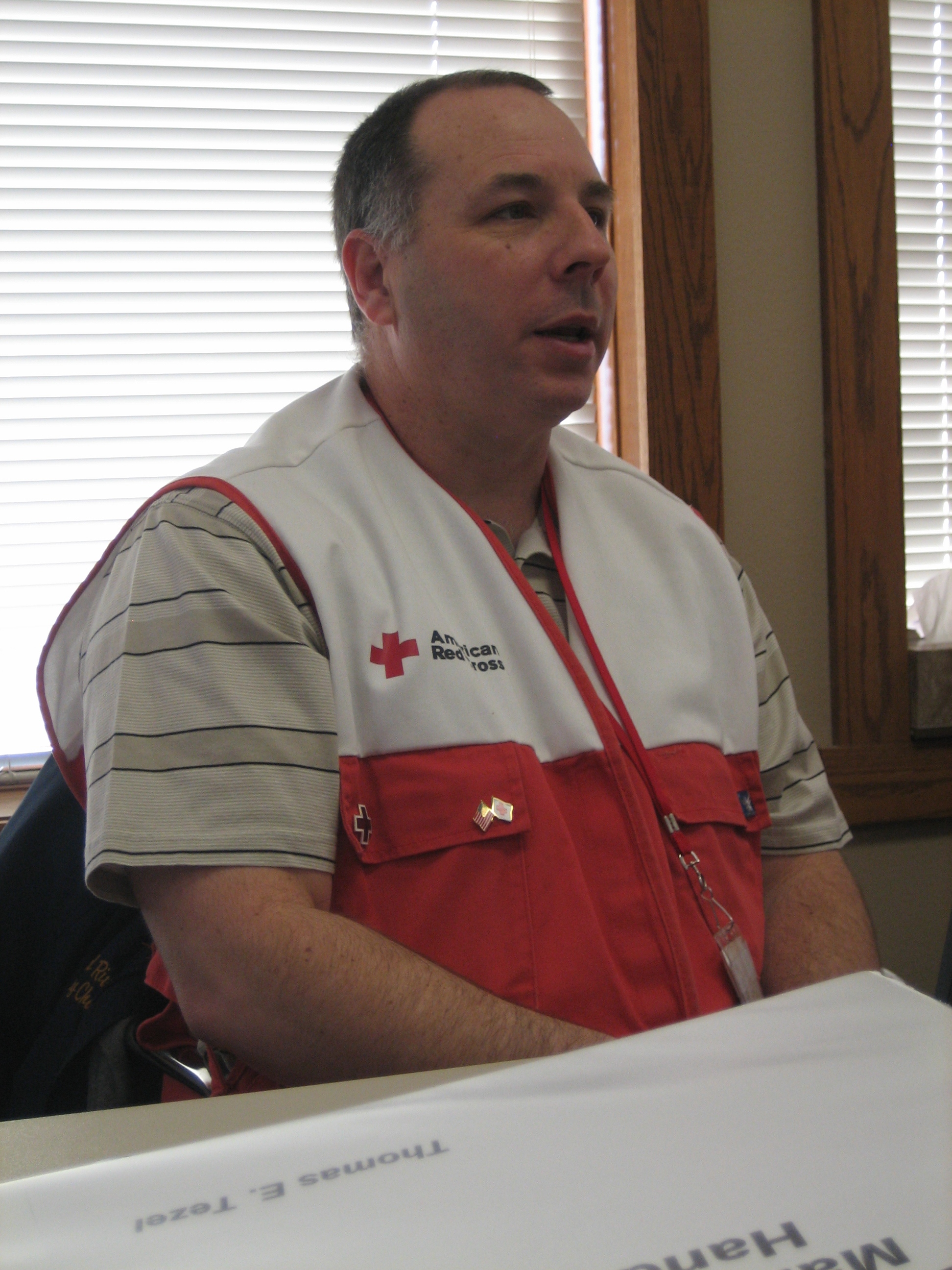
“Preparedness is in many ways the greatest piece of what the Red Cross does,” says Tom Tezel, a Red Cross emergency services director leading the response on the ground.

Every disaster is different, but in general the Red Cross responds when the disaster is done, such as when a tornado has swept through a town or an earthquake has struck.

Since early February, Tom Tezel has been leading the Red Cross disaster response to the 2011 Red River flood. Photo credit: Lynette Nyman/American Red Cross

Here, the Red Cross response started during the preparedness phase before the waters started to rise.

“Our mission includes preparedness,” says Tezel. “We can’t wait for disaster.”

Red Cross disaster responders continue to watch and respond, especially as the high water flows north into largely rural areas, cutting off families from essential resources.

Egge, whose family and dog Henry are safe only yards from the Red River, agrees that preparedness is very important. She’s grateful for the help her community has received.

“I know the Red Cross does a wonderful job,” says Egge. “The people here are true heroes.”

Red Cross TC asks: Is the Red Cross ready if it floods?

Jill, our director of emergency services, answers:

A Red Cross volunteer hands out snacks during the flood preparations in Hastings, Minnesota. Photo credit: Andrea Bredow/American Red Cross

We have shelters ready to open their doors for us in the Twin Cities metro area if flooding displaces people from their homes.  We have clean-up kits containing mops, brooms, cleaning supplies, gloves, and other necessities, ready to hand to people who are cleaning up their homes.  We have thousands (literally!) of snacks and bottles of water in our garage, for us and other chapters around the state to share from mobile feeding trucks (ERVs) or at shelters.  We have lots of trained and willing volunteers, many who have stepped forward and have added to their training in recent months so their skills are fresh.  Many, many volunteers have stepped forward to help in all of these efforts so that we’re more ready to quickly help people…whether it floods or not!  So my answer is a resounding, “yes!”

Red Cross TC: Thank you!! We suspected this was the case, but wanted to ask anyway, being the curious types that we are!!

Red Cross “mass care” means food + drink

The Red Cross has served thousands of meals to people working to hold back the rising Red River waters. Right now, Mark Doble, a Red Cross volunteer from the Twin Cities, is up north managing mass care (aka watering and feeding) for this disaster operation.

Mark reports: “In Fargo, we are getting ready to start sandbagging operations. What I mean is that we are going to start feeding people as all of the sand bags that have been pre-made are now being put around the homes. It’s been great here and the Red Cross Minn-Kota Chapter has been wonderful. I’m looking forward to getting home.”

Our mass care man, Mark Doble, up north. Photo credit: Tammie Pech/American Red Cross

Just when you thought disaster giving couldn’t get any easier

First, you could give online, then via text, now right at a Wells Fargo ATM. Grab some cash and share some with those affected by disasters like the Japan earthquake and Pacific tsunami. How cool is that?

Jean Hopfensperger at the Star Tribune thought so too – check out today’s article.

Overwhelming Response Includes the Red Cross

Story and photos by Andrea Bredow, Red Cross Volunteer

Scott Webber & Mary Ellen Fox, volunteers on the sand bagging line in Hastings, Minnesota. Photo credit: Andrea Bredow/American Red Cross

It was a chilly 17 degrees on Saturday morning, but the cold spring air and piles of snow did not stop the Hastings, Minnesota, community from banding together to fight the looming Mississippi River waters.

An estimated 700 volunteers spent Saturday sandbagging homes along the river.  The American Red Cross Twin Cities Chapter volunteers were there as well. The Red Cross feeding vehicle, also know as the ERV, was on hand to provide hot beverages and snacks to keep volunteers warm and energized.

Red Cross volunteers served coffee, hot chocolate, & snacks to people sand bagging in Hastings, Minnesota. Photo credit: Andrea Bredow/American Red Cross

The call for volunteers went out early in the week and hundreds responded with shovel in hand.  Family’s worked filling bags, youth groups stood in the “bucket line” delivering sandbags to homes and Scott Webber even showed up on his birthday to help.

“This is what the city of Hastings does. We help each other,” said Webber.

Webber and a hundred other volunteers were sent to surround Lloyd Fanum’s river side home with sandbags.  Fanum has lived on the river for 30 years and is always overwhelmed by the communities outpouring of help.

“The boys and girls giving their weekend to help me is overwhelming!  I can’t thank them enough,” said Fanum.

Homeowner Lloyd Fanum is interviewed about the outpouring of help to save his home from the impending flood. Photo credit: Andrea Bredow/American Red Cross

The army of volunteers turned out 20,000 sandbags in only four hours!

“When the neighbors are in trouble, we are ready to reach out and help,” said Patrick Walker, one of the sand bagging organizers.

Walker says they are ready to gear up the sandbagging operation at any time.  If more homes along the river need help, the Hastings community will be there.

Click here to learn more about Red Cross services and opportunities.