Five steps to take against the flu and other germs

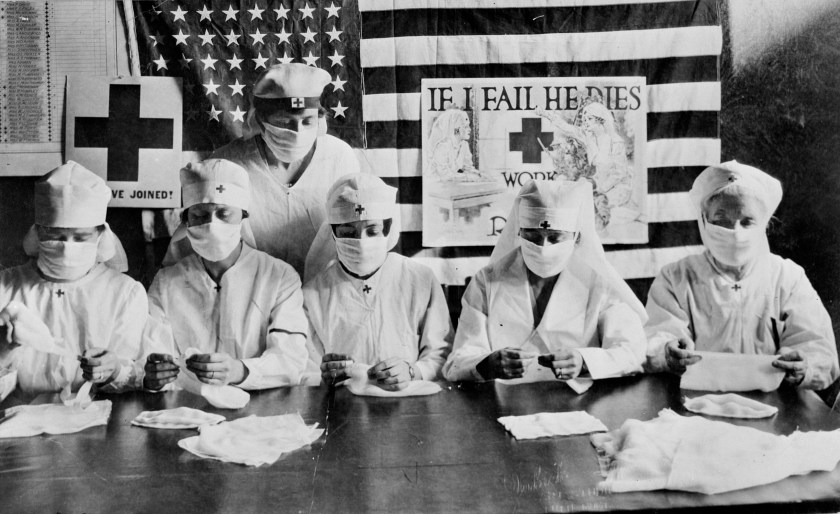
Red Cross volunteers make influenza face masks during the influenza epidemic in 1918. Photo: American Red Cross Photo Library
Red Cross volunteers make germ face masks during the influenza epidemic in 1918. Source: American Red Cross Photo Library

Waa! Waa! Do I have to get a flu shot? No, you don’t have to do anything you don’t really want to do. On the flip side, the annual flu shot is your best protection against influenza (also known as the flu), a contagious respiratory disease caused by different virus strains.

In the United States, the flu season begins every fall and ends every spring. The type of flu people get during this season is called seasonal flu. Flu viruses spread when people who are infected cough or sneeze.

In addition to the annual flu shot, take these five (Sniff! Sniff!) steps to stop spreading germs, including the seasonal flu:

  • Wash hands frequently with soap and water
  • Reduce contact with people who are sick
  • Avoid touching your eyes, nose, and mouth
  • Cover your mouth and nose with tissues when you cough and sneeze. If you don’t have a tissue, cough or sneeze into the crook of your elbow
  • Stay away from others as much as possible when you are sick

Click here for more seasonal flu basics and easy to download checklist and tip sheet for taking care of people with the flu from the Red Cross.
Click here for in-depth resources, including the 2016-17 Flu Season Frequently Asked Questions from the CDC.

Red Cross prepares for disasters that could cross the northern border

Across northern Minnesota, American Red Cross disaster relief responders are working towards hosting a disaster shelter workshop in each county and tribal community. Most recently, the Red Cross teamed up with Koochiching County employees. In addition, the Red Cross connected with response partners across the U.S.-Canadian border because, as we know, ‘disasters don’t go through customs.’

Nancy Johnson with
Nancy Young with the American Red Cross Dakotas Region guides shelter training participants during a workshop in Koochiching County, March 2016. Photo credit: Richard Johnson/International Falls Journal

The training week started with a shelter set-up that included twenty-four Koochiching County employees. (The workshop was a smaller version of what was used for the statewide Vigilant Guard exercise in Duluth in the fall of 2015.) Before the participants arrived they completed the American Red Cross Shelter Fundamentals course online. During the on-site part of the training, a Red Cross team of three volunteers from the Minnesota and North Dakota guided the shelter participants. (The cross-border collaboration between states has been in place for more than two years because we’re often called to respond together.) The workshop was set-up in three stations: registration, dormitory, and feeding. There was also a training for disaster nursing. After the two-hour workshop there was an open-house for the community members who were not in the training to ask questions and to see how the Red Cross and Koochiching County can work together to shelter displaced people during disaster relief response. The Salvation was also on hand serving lunch to all who participated. (Thanks!)

rco_blog_img_CrossBorderConference2016A cross-border conference called “Disasters Do Not go Through Customs” followed the shelter training. Sponsored by the Rainy River Cross Border Planning Group, the conference  brought together around one hundred people from both sides of the U.S.-Canadian border who could work together during major disasters affecting both sides of the international border. Presentations included managing potential threats, such as train derailments, floods, tornadoes, biological outbreak, communication failures, quarantine, wild fires and terrorism. All levels of government were represented from both Canada and the United States. Railroad representatives addressed one of the biggest concerns throughout the emergency management world: train derailments involving large amounts of oil carried by rail.

Less than twenty fours after the end of the conference there was a train derailment in Callaway, Minnesota. The accident forced the town of more than 200 people to be evacuated. Red Cross volunteers from North Dakota and Minnesota as well as Salvation Army relief workers were on-scene, providing the care and sheltering that we have trained for and do so well.

Story by Tony Guerra, Disaster Program Manager for the American Red Cross Serving Northern Minnesota. You can be a Red Cross disaster relief volunteer.

Make 2016 the year of no more excuses

By Cassie Sage, American Red Cross Intern

Flood survivor Marcia Walsh welcomes hot meals from Red Cross volunteers James Brown; Sherri Brown and Devyn Brown in Missouri, January 4, 2016. Photo credit: Daniel Cima
Flood survivor Marcia Walsh welcomes hot meals from Red Cross volunteers James Brown, Sherri Brown and Devyn Brown in Missouri, January 4, 2016. Photo credit: Daniel Cima

It’s once again a new year and probably 2016 already has seen broken resolutions. This year the Red Cross wants to encourage you to do something that will truly make you happy: help others.  This may be the best way to bring happiness not just to others but to you as well.  Instead of a spin class, maybe a CPR class would benefit the mind, body and soul.

How can you be healthy if you’re not internally happy? It’s supposed to be the little things in life that make us the happiest and by doing something for others, you’re not just helping someone else but inspiring a change for the better in the world. In a time like this there is nothing more important than shining bright with a positive light.

Step One: Donate blood
Donors of all blood types are needed to give blood to help ensure a sufficient supply throughout the year. During winter seasonal declines often occur because of severe winter weather and illnesses, like the flu.  Click here to find blood donation appointments near you.

Step Two: Donate time
Everyone is welcome to volunteer and make a difference. The Red Cross encourages you to volunteer, assisting during home fires responses and other disasters all across the United States. Click here to learn about volunteer opportunities. (Click here to see the latest about volunteers responding to disasters in Missouri and Texas.)

Step Three: Donate money
The Red Cross depends on the generous support of the American public to assist people affected by disasters. Consider making a donation today by visiting redcross.org, calling 1-800-RED CROSS (1-800-733-2767) or texting the word REDCROSS to 90999 to make a $10 donation.

Step Four: Take a class
Next on your resolution list should be taking a Red Cross class. These classes include CPR, First Aid, Lifeguard Training and Disaster Preparedness. We can’t think of a better way to keep a happier you new year’s resolution than to learn lifesaving skills that could help you and your family. Click here to find classes near you.

Make this year the year that you begin taking positive steps that bring happiness to you and assistance to others. The new year brings a new you and finding a resolution that really sticks can be hard, but helping others may be the perfect way to start!

Sparklers, Sunscreen and Safety

So, you’re getting ready for the big holiday weekend. Making a list and checking it twice – wait, wrong holiday. You hit the store:

  • hot dogs and hamburgers – check.
  • s’mores and cherry pie fixings – check.
  • uber bug repellent and sunscreen – check.
  • completely, absolutely legal fireworks (a.k.a. sparklers) – check.

…something I’m forgetting…

Before all the excitement begins this 4th of July weekend, take two minutes and brush up on these Red Cross safety tips. The best and safest way to enjoy fireworks is to attend a public fireworks show put on by professionals. But if you do celebrate at home, here are five safety steps:

Fireworks

  1. Never give fireworks to small children, and always follow the instructions on the packaging.
  2. Keep a supply of water close by as a precaution.
  3. Make sure the person lighting fireworks always wears eye protection.
  4. Light only one firework at a time and never attempt to relight “a dud.”
  5. Never throw or point a firework toward people, animals, vehicles, structures or flammable materials.

And just to be safe, download our free First Aid App.
It puts expert advice for everyday emergencies at your fingertips – even if they’re covered in melted marshmallows.

Learning Preparedness in Spanish

On May 29, our Red Cross region hosted its first Latino Leadership Summit. Held at Urban Ventures in Minneapolis, the summit brought together local Red Cross leaders and Latino community representatives for a conversation about emergency preparedness. Eleven people representing Latino groups, businesses or service organizations attended. They learned more about the importance of being prepared before disasters happen as well as Red Cross services and programs. They offered, in return, insights into how the Red Cross can do a better job sharing its preparedness message with Spanish-speaking communities and helping them become more disaster resilient in Minnesota.

Here are some highlights:

Victoria Krook, a K-12 educator in Brooklyn Center, says that reaching families one-on-one is best. Winter, she says, is a major emergency issue to address: "Parents don't know frostbite, how quickly it can happen."

Victoria Krook (above), a K-12 educator in Brooklyn Center, says that reaching Latino families one-on-one is best. Winter, she says, is a major emergency issue to address in Latino communities: “Parents don’t know frostbite, how quickly it can happen.”

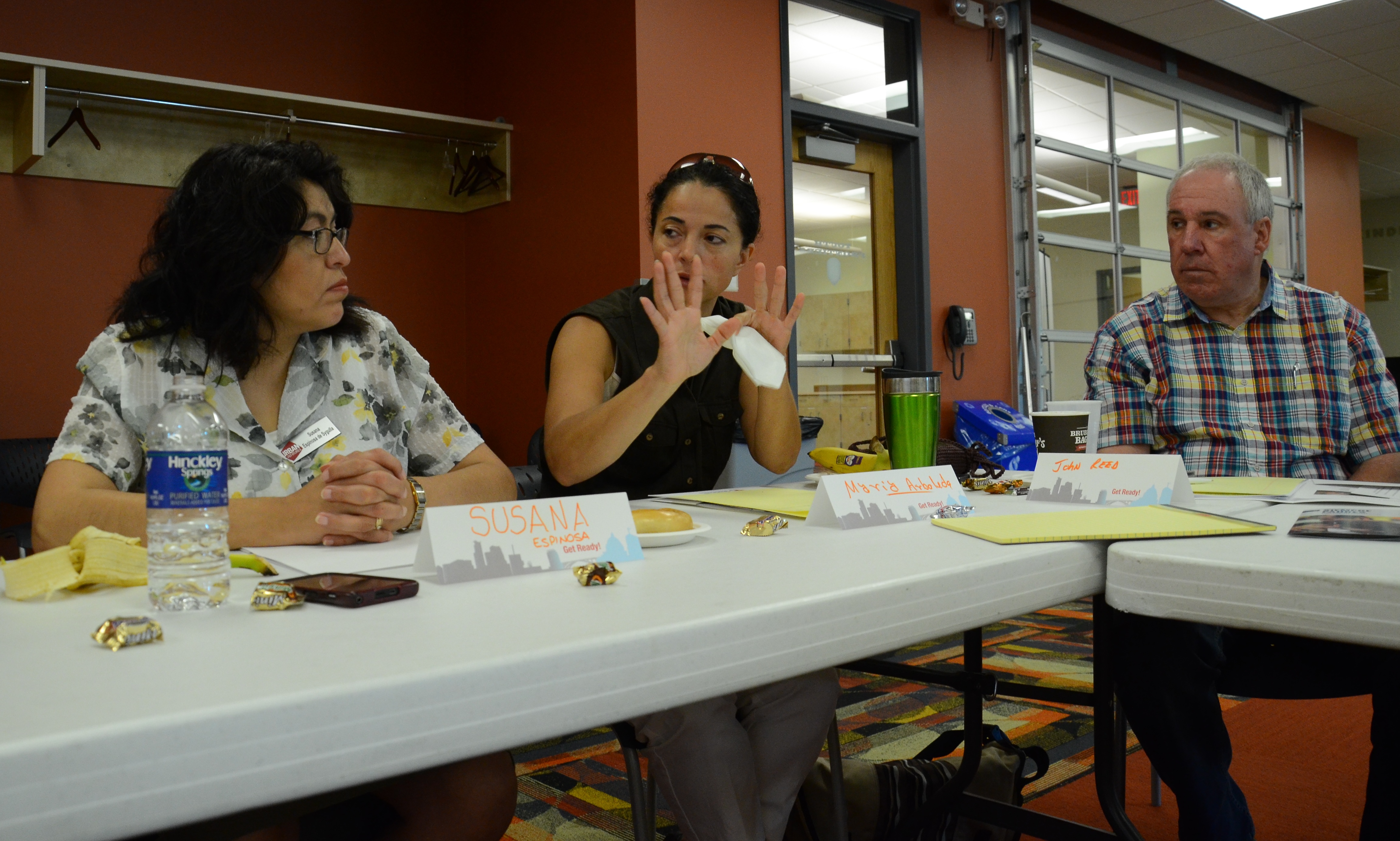
Maria Arboleda, a program coordinator in higher education, says that many people have resources to be prepared, but that "if we want get this education out to communities, then we need more Spanish speakers and more people from the communities."

Maria Arboleda (above center), a program coordinator in higher education, says that many Latino families have resources to be prepared for disasters, but that “if we want to get this education out to communities, then we need more Spanish speakers and more people from the communities.”

DSC_3657_crop

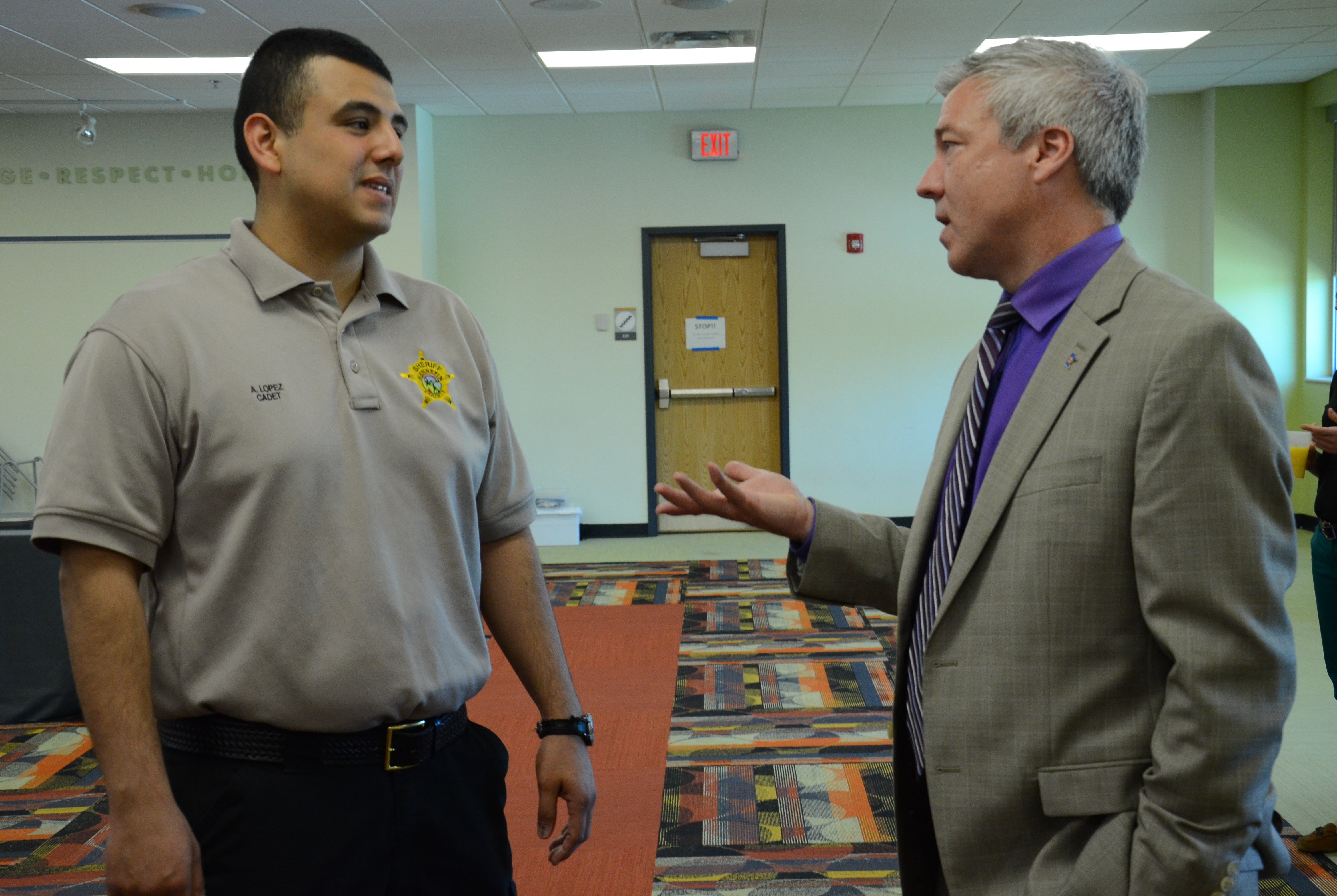
“Every mom is a first responder,” says Arturo Lopez (above left), a cadet in law enforcement training. Lopez says that building trust, reaching children and training women are keys to sharing preparedness messages with Latino families.

Our Latino community partners left the summit with fresh enthusiasm and concrete action steps for preparing and preventing emergencies at home and work. Our Red Cross action plan includes helping them reach their goals and building on our new shared energy.

Story and photos by Lynette Nyman/American Red Cross

50-Year-Old Letter Brings Red Cross Reminder

Post by Lynette Nyman/American Red Cross

returned letter
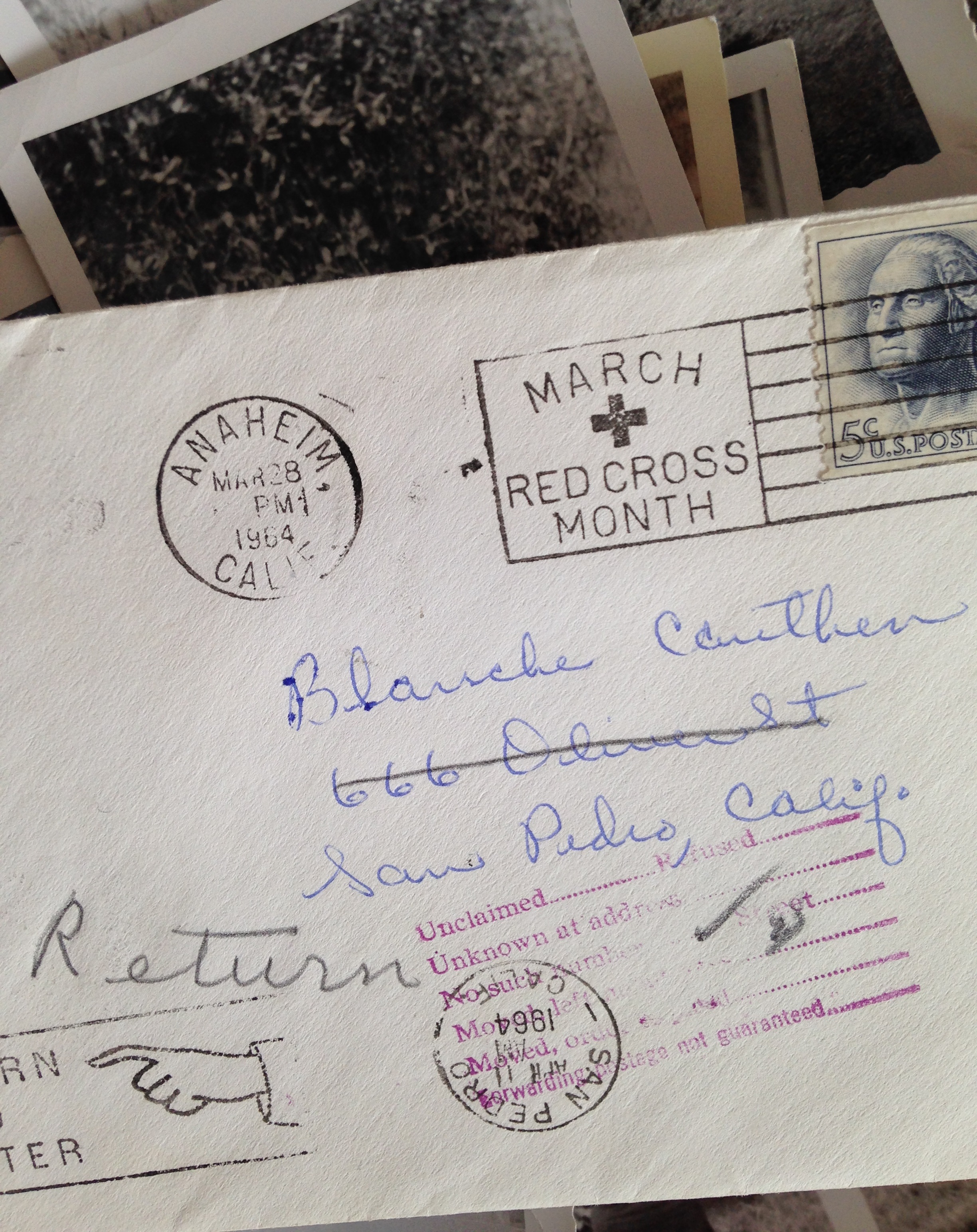
A 50-year-old letter with stamp cancelled “March is Red Cross Month” mark.

Recently, I was sorting through some old photos when I came across a letter that my mother Yvonne wrote nearly fifty years ago. She wrote it after her mother died in 1964. It was addressed to a family friend, but was sent back “return to writer” because no such address number was found. The 5 cent stamp on the envelope was cancelled with a mark that caught my eye: March is Red Cross Month. And so I opened and read it and learned of my mother’s great sadness from a loss too soon. While sharing the letter now, I wonder if Red Cross training in first aid and learning the signs of heart attack could have made a difference, giving everyone more years together and breaking fewer hearts.


March 26, 1964

My Dearest Blanche,

     …Mom had a heart attack Feb. 28, 4:30 A.M. She was taken to the hospital and lived seven days. We thought she would pull through but apparently the heart was damaged over half after the first attack. She suffered two more attacks Fri. night on March 6 and passed away 10:30 A.M. Sat. morning March 7.

     Our hearts are just broken. All of us are still in a state of shock as you know what this can do to a person. 

     Mom was looking real well before this happened. We did not know her heart was bad at all.

george and nola
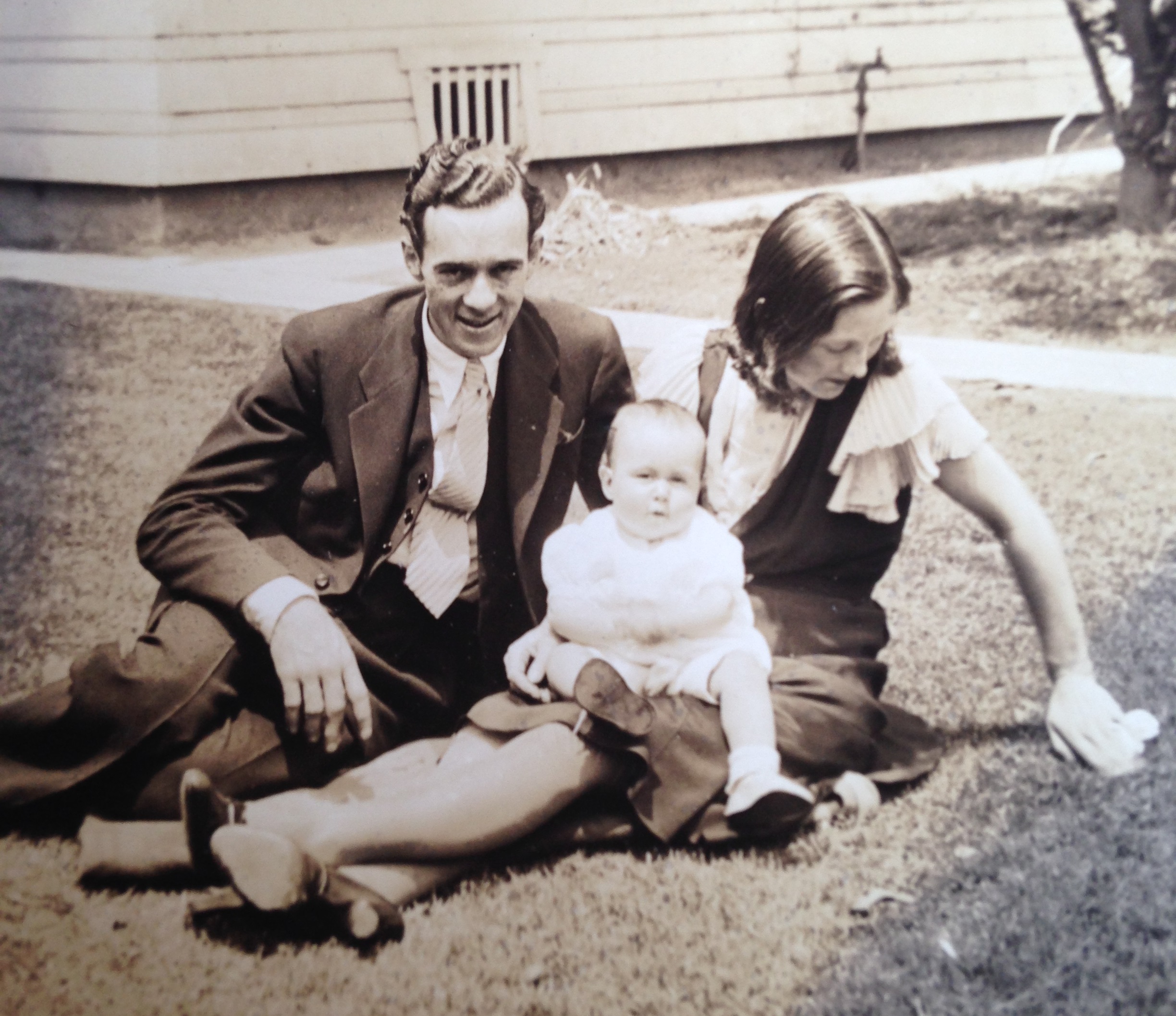
Baby Yvonne with her mother Nola and father George in Los Angeles, circa 1930s.

     Mom was with Bill & I the weekend before. She & dad came over on Saturday and she had her 58th birthday Feb. 23. I baked her a cake and we had dinner home. I took them home on Tues. and she looked fine as far as I could tell.

     …on Thurs. night…just about 4:30 A.M. Dad woke up and heard her praying. He thought she was dreaming and reached over to shake her as he always did if she had a bad dream and when he did she said to him don’t it’s my heart. He jumped out of bed and asked her if he could get her some water. By the time he got back she was vomiting. She had an acute attack and vomited most of the time while in the hospital.

     Blanche, I will never get over this. I never dreamed mom would go this young in life. She was such a wonderful mother always. I feel like everything is drained from me.
I just miss her terribly. Dad is broken hearted. He never thought mom would go so fast. He said he knew she would get well.

     Blanche, I guess life ends very quickly sometimes & we are never prepared or ready for death ever. And it is so hard to accept. If you are ever out here come to see us! Dad will be with me now. Hope you are fine.

Love,
Yvonne

Yvonne and "her lover boy" Bill, circa early 1950s.
Yvonne and “her lover boy” Bill, circa early 1950s.

Decades later my father Bill (pictured left) had several heart attacks in his early 50s. We recognized the heart attack signs the second time around, but no one in the family was Red Cross-trained in lifesaving skills. Several years later I became a Red Cross volunteer instructor in C.P.R. and First Aid. Finally, one person in our household was trained. Because  of my personal experience with life-threatening emergencies and because it’s March, the official month of the year that we celebrate all things Red Cross, I encourage every one to take any step that can make a difference. Take time to take a Red Cross class and get trained with lifesaving skills that could benefit both you and your loved ones.

Your Disaster Kit: Better Than a Magic Wand?

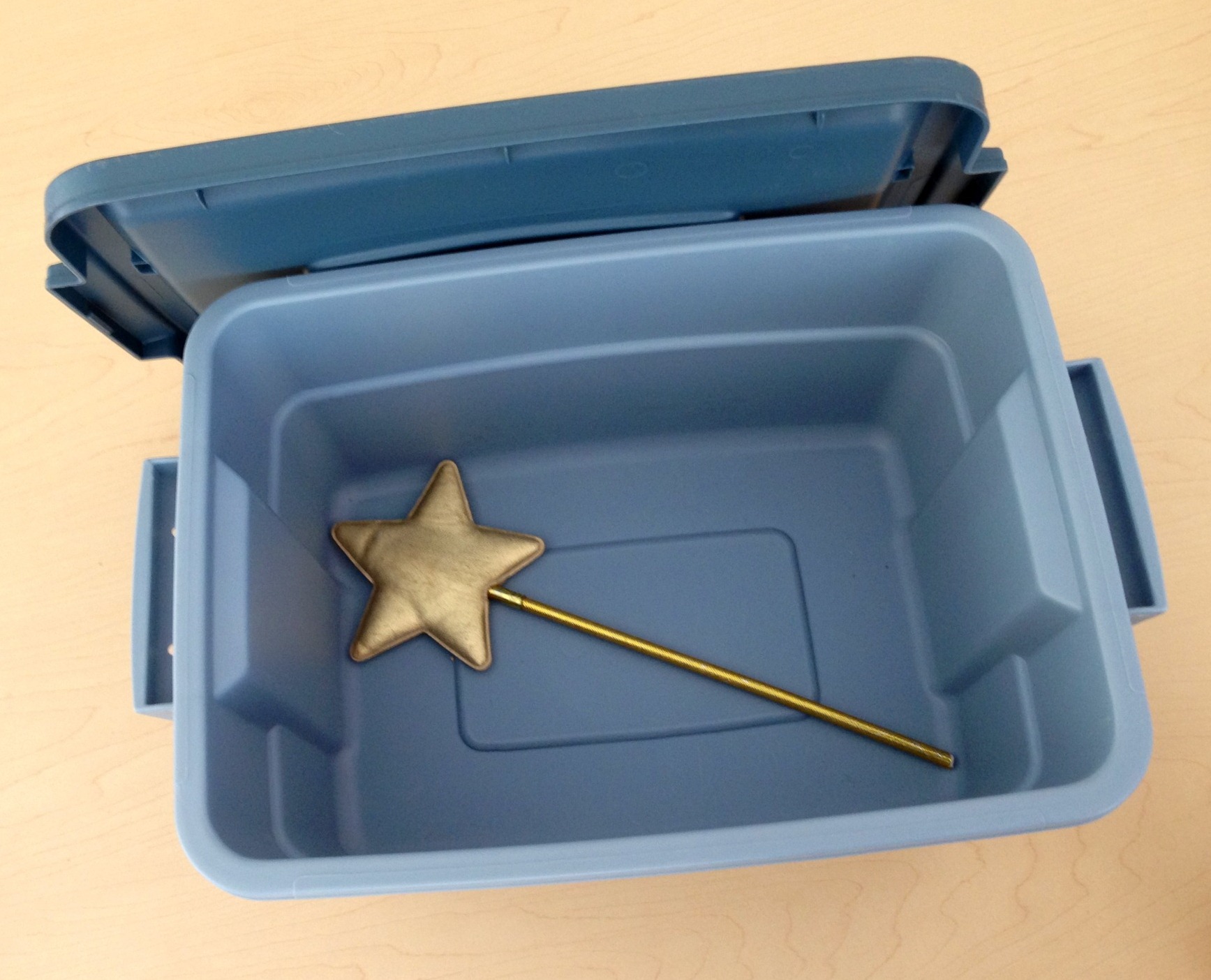
Magic Wand or Bust? Or, Our Favorite Disaster Kit Fail courtesy of Carrie Carlson-Guest.

September is National Preparedness Mont and a great time to get Red Cross Ready for disasters. 

We know – so far your approach to preparedness has looked like a magic wand in a bin. Or maybe it looks like this “kit you don’t want to have” or one of these disaster kit fails.

While we can’t auto-magically get you prepared for disasters, we can give you the tools you need.  The basic steps include making a plan, building a kit and being informed.

Make a Plan Planning together is important. Everyone in the household should help develop the emergency plan and know what they should do if something occurs. The plan should include ways to contact and find one another. Include two places to meet – one near the home in case of a sudden emergency like a fire, and one outside the neighborhood in case circumstances prevent people from returning home. The plan should also identify an emergency contact person from outside the area in case local telephone lines are overloaded or out of service.

Often people are not at home when a disaster occurs and they may not be able to get back into their neighborhood. Plans should include decisions about where everyone will go if ordered to evacuate and what route they will take to get there. When discussing evacuation, everyone should include several different routes in case roads are closed. If pets are part of the household, they should be considered, including where they could be safe if the family has to evacuate such as pet-friendly motels and animal shelters along the evacuation route.

Get a Kit Another step to get ready is to build an emergency kit. Use an easy-to-carry container so the family can use it at home or take it with them if asked to evacuate. It should contain a three-day supply of water (one gallon, per person, per day), nonperishable food, a flashlight, battery-powered or hand-crank radio, extra batteries, a first aid kit, a 7-day supply of medications, a multi-purpose tool, sanitation and personal hygiene items and copies of important personal documents. The Red Cross also recommends having at least two weeks worth of supplies at home.

Be Informed Everyone also needs to stay informed about what types of disasters are most likely to occur where they live or where they plan to visit, and how officials will communicate with you during an emergency. It’s also important to take a first aid and CPR/AED course—a vital component of disaster preparedness in case emergency help is delayed. Click here to find a class near your local Red Cross chapter.

Red Cross Apps People can be ready for whatever comes their way by downloading the free Red Cross apps for mobile devices which not only help people during emergencies, but offer help creating their emergency plan. The apps give people vital information to use during emergencies, even if they can’t connect to the internet. The apps can be downloaded from the Apple App Store and the Google Play Store for Android by searching for American Red Cross.

Happy National Preparedness Month!

Need a summer vacay idea?

IMG_0298_cropUndecided about your summer vacation destination? Want to get out-of-town and see someplace new? Like tossing in a bit-o-history during summer vacay? Love the American Red Cross? Desire to know more about Clara Barton? If you’ve answered “yes” to any of the above questions, then we’ve got a summer destination idea for you: see the Clara Barton National Historic Site in Glen Echo, Maryland.

A couple of us had the pleasure of visiting the site earlier this spring while taking part in Red Cross training. The National Park Service Rangers were informed, kind and patient while answering dozens of questions about the house, its history and items on display. Here are some samples:

IMG_0308_cropQ: Was that Clara Barton’s cat in the painting?

A: Yes. His name was Tommy. Clara liked cats a lot.
IMG_0301Q: What’s holding up the lamp?

A: Bandages. Not the original bandages, of course, but new ones showing the utilitarian approach to life here.

Q: Did Clara really sleep in that bed?

A: Yes, that was Clara Barton’s bed. Its the same bed where she died on April 12, 1912.

IMG_0316_cropQ: Did Clara live here alone?

A: No, there were guests and others, including Dr. Julian Hubbell, who was the first American Red Cross field agent and also the primary designer of the warehouse.

Q: Were Miss Barton and Dr. Hubbell, um, you know, sweethearts?

A: Not as far as we know. Dr. Hubbell was for a time engaged to marry. His fiance was not fond of Clara Barton, who kept Dr. Hubbell busy with Red Cross work.

IMG_0300Q: Can we sample the canned pickles?

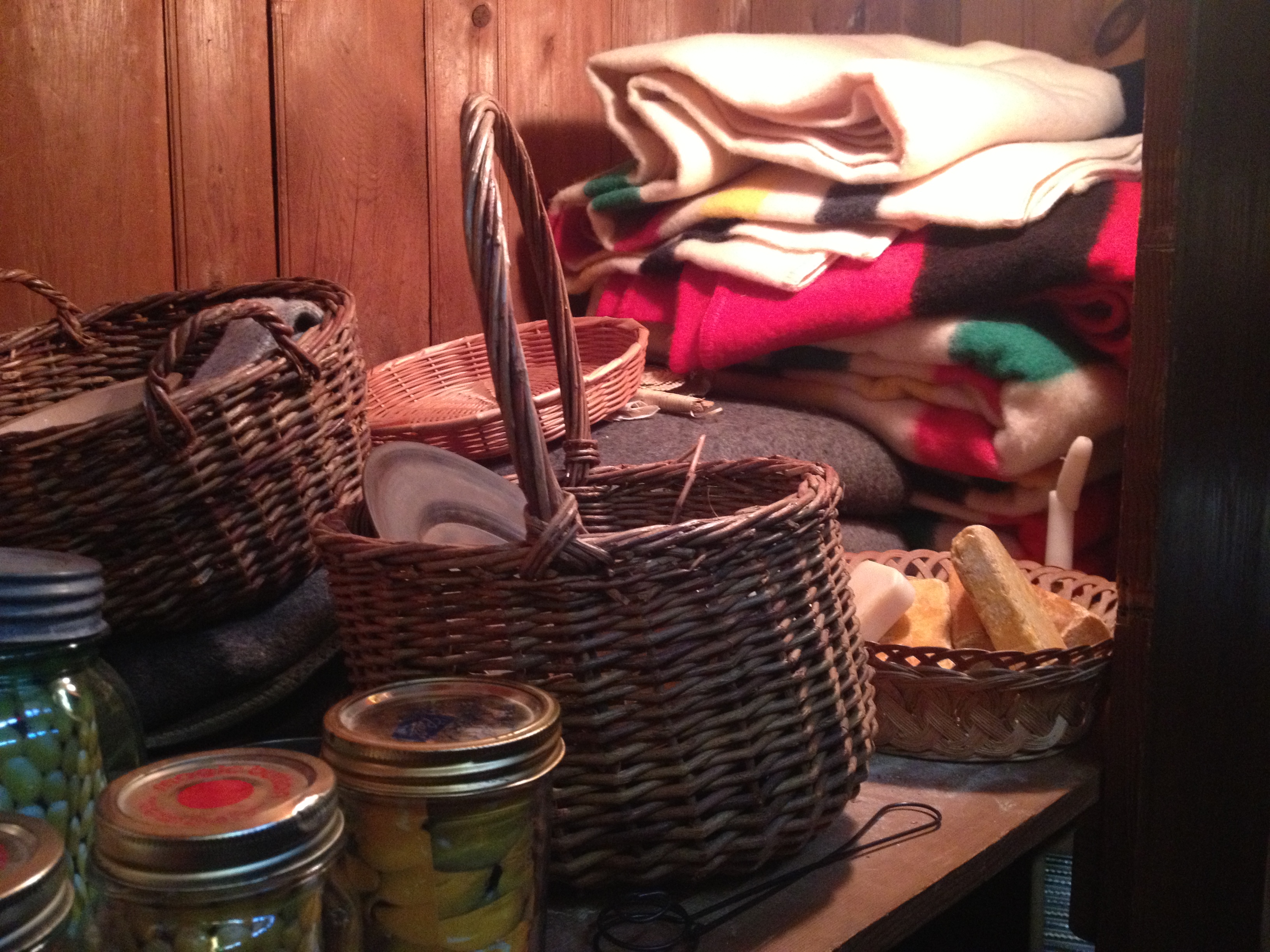
A: We’re unable to share them with you. They’re on display to show how disaster relief supplies were once stored here.

Q: Did Clara really write with those pens?

IMG_0314_cropA: One-third of the items on display are actual historical items that, like the bed, Clara Barton used. The others, like the pens, are antique period pieces demonstrating what Clara’s life was at that time.

Q: Can we sit in the attic chair next to stained-glass window and pretend that we’re thinking great thoughts about how we can help people?

A: You’re welcome to look, not touch or sit, and think great thoughts.

IMG_0320

So many more questions. So little time. If you’re unable to visit, then consider taking the online interactive tour of the building or testing your knowledge about Clara Barton and earn a Junior Ranger Badge. There’s no age limit for the badges. And as we say in Minnesota: that’s nice.

Photos and article by the often too curious like a cat Lynette Nyman/American Red Cross
What is World Red Cross Day?

Henry Dunant, Founder of the Red Cross
Red Cross founder Henri Dunant.

More than 150 years ago, a single man inspired a movement to alleviate suffering around the world.  This week, on May 8, we celebrate Henri Dunant’s birthday and honor his legacy.

In 1859, in what was known as the Battle of Solferino (in modern Italy), Henri Dunant, a social activist from Switzerland, and winner of the first ever Nobel Peace Prize, worked tirelessly to bring food, shelter, and medical aid to the tens of thousands of wounded soldiers on both sides of that battle.

Five years later, the First Geneva Convention was signed, establishing a neutral organization that would care for sick, wounded, displaced, and even imprisoned, regardless of race, religion, ethnicity, or military affiliation in armed conflict. That organization would become known as the Red Cross.

In 1948, after it was suggested that an annual “Red Cross Truce Day” be held between the Czech Republic and Slovakia, once Czechoslovakia. This initiative became broadened to encompass countries from across the globe and evolved into what we now call the World Red Cross & Red Crescent Day, which celebrates the International Red Cross and Red Crescent Movement. Today, the Red Cross is comprised of more than 13 million volunteers. It assists more than 300 million people worldwide each year. May 8 also marks Henry Dunant’s birthday (born in 1828). We celebrate his vision for a more peaceful world and what it’s meant for all future generations.

–Hayes Kaufman/American Red Cross

Do You Speak DR?

Hey there, we recently received this digital postcard from one long-time Red Cross disaster relief volunteer Marian Green, who’s in Illinois responding to spring floodingWe’ve inserted a few translations for the layperson and Red Cross disaster rookie readers.

Dear Red Cross Pals,

Marian and Tejas working together during the 2013 Spring Flooding response in the Midwest.

I met Tejas Patel in Baton Rouge, LA, last summer for Hurricane Isaac. He was the Log Chief [logistics boss]. It was great to run into him here as the Assistant Director [the #2 in charge of this disaster relief response]. As soon as he saw me walk into the room, he pointed to me and said “You are the FSI Lead!” [FSI = all things related to tracking numbers for the relief operation like meals & clean-up kits distributed, etc.] “Umm, OK,” I stammered brilliantly! It is great to be back in the field as a new FSI [actually stands for Financial Statistical Information] Supervisor. It was even better when an FSI Manager, Elizabeth Norcross from Hawaii, showed up yesterday. This is the first time I worked a DRO [Disaster Relief Operation] with three regions, each having its own staff, plus a DRO. Trying to get four sets of numbers compiled without duplications is a real challenge, but it’s been a great learning experience and Elizabeth is a great mentor. I plan on being here until May 4th but could be talked into a few more days if needed.

Thanks,
Marian in Peoria, Illinois

Our reply: Take care Marian, Tejas and the others who are responding to the spring flooding. You’re brilliant and for sure you have hearts bigger than three regions. And to our readers, both rookies and veterans, click here to see more about how the Red Cross is helping in Michigan, Illinois, Iowa, Minnesota and North Dakota during the 2013 Spring Floods disaster response.