Red Cross helps find a sister and best friend

After years of not knowing, a Minnesota couple from Cuba learn their beloved family member is alive and well

In one way, it took hardly any time at all to find Felipe’s sister in Cuba. Just months, in fact, once the Red Cross search formally started. In another way, it lasted years: Felipe lost contact with his sister Carmela in 1992 when he and his wife moved to Minnesota. Around that time, they exchanged their last letter with Carmela.

There was no phone number to call. More letters were sent. They received no replies. Maybe she was sick. Or worse. They assumed something bad had happened. This struck Nila the hardest. “I love her too much,” she says. For her, Carmela was more than her husband’s sister: Carmela was her sister, her family, her best friend.

Felipe and Nila left Havana in 1966 and moved to the United States where they joined her mother. Photo: Susan Bourgerie/American Red Cross

JoAnn, a long-time family friend in Minnesota, alerted Felipe to the possibility of working through the Red Cross to find Carmela. JoAnn knew that every day for years Felipe wondered about his sister. Papi and Mami are “like my parents,” she says.

JoAnn reached out through email to the Red Cross to learn more about family tracing. Once Felipe agreed to search, local volunteers moved the process forward, informing JoAnn, who updated Felipe. When she knew it worked – meaning, when she knew Carmela was found and, most importantly, alive – JoAnn went to Felipe and Nila at once with the great news.

Married 60 years, Felipe and Nila have 4 children, 12 grandchildren and 8 great-grandchildren. For five years in Cuba, they went on dates always with a chaperone.

The first phone call was short. Felipe’s sister used a friend’s phone to reach him. Nila was on the call too.  They shared short phrases. Hardly said anything in word count. And yet the meaning of Nila’s basic words — my sister, I miss you, I love you – say everything. “Are you well?” Felipe asked Carmela. They’ve had several more calls and exchanged more email messages with JoAnn receiving and translating them.

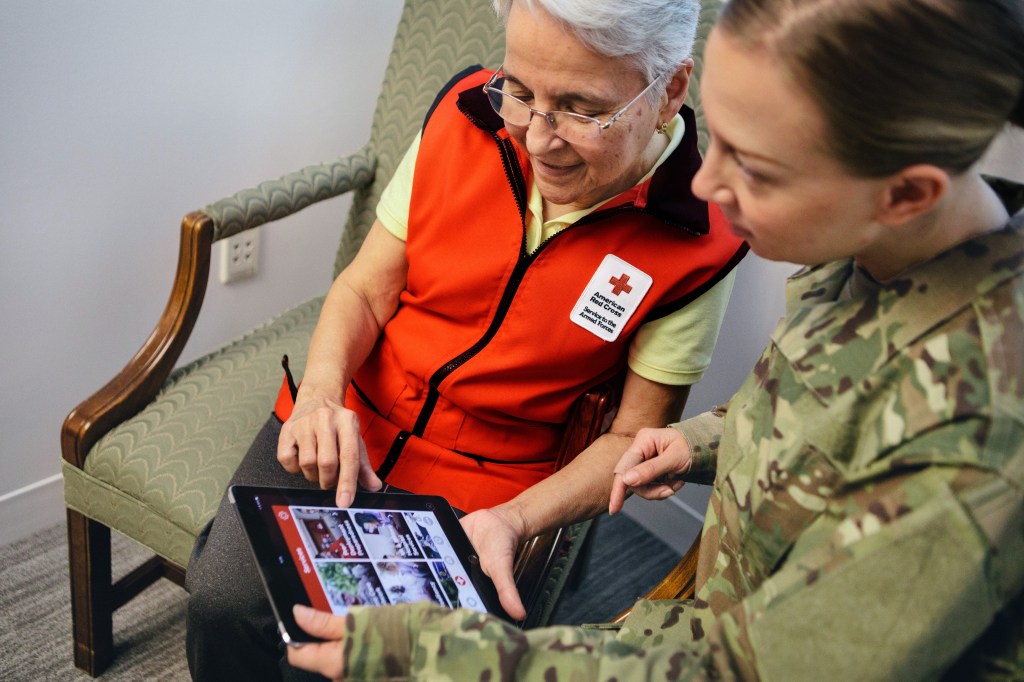
Red Cross volunteer Kalay helped reconnect Felipe and Nila with their sister in Cuba. Photo: Susan Bourgerie/American Red Cross

“I appreciate the Red Cross,” says Felipe, who was excited and happy to learn that his sister was alive and well. His sister Carmela was excited, too. Her blood pressure went up, he says. They’ll have more calls, emails and letters. They’ll not lose contact again.

Story by Lynette Nyman / American Red Cross. To learn more about family reconnecting services, click here.

Holiday safety in Minne-snow-ta

In Minnesota, the holiday season requires us to be extra cautious. While holiday cooking and decorations increase risks of fire and injury, the winter weather conditions create additional hazards on the roads. For example, every year across the country there are on average more than 150,000* crashes due to icy roads. With the spirit of safety first, we offer below some helpful tips for a fabulous and fun holiday season.

Roads

1. Keep a windshield scraper and emergency kit including food and warm clothing in your vehicle.

2. Test your car battery. As temperature drops, battery power drops as well.

3. Allow extra time to drive to your destination. Not only will there be more traffic than usual, but it is safest to drive more slowly on snowy roads.

4. Practice braking on icy roads in an empty parking lot.

5. Check tire pressure and tread life. Consider installing winter tires.

Homes

1. Check all smoke alarms to verify that there is a working smoke alarm on each level of the home. Review your home fire escape plan.

2. Turn off decorative lights and blow out candles before leaving the house or going to sleep.

3. Remain in the kitchen while something is cooking.

4. Wash hands and cook food to safe minimum standards to avoid food poisoning.

5. Keep children and pets at least 3 feet away from hot ovens and stove tops.

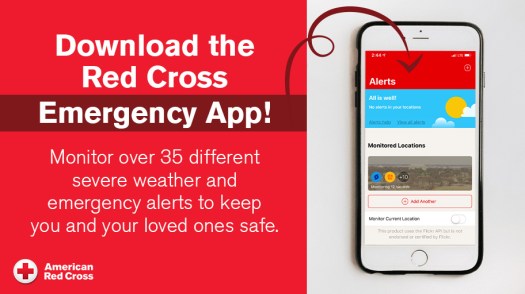
For immediate access to weather updates and information on treating common first aid emergencies, download the American Red Cross Emergency App for free.

*Source: NHTSA and Federal Highway Administration

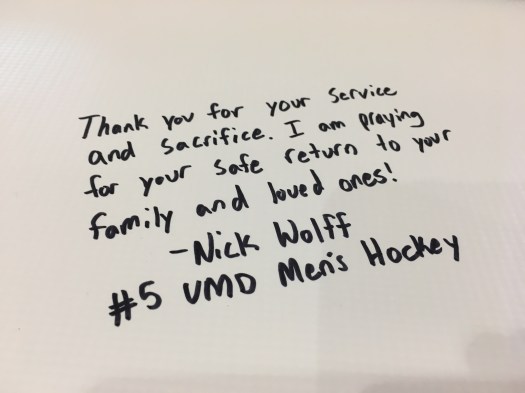
“Thank you for your service and sacrifice.”

A Holidays for Heroes message from a UMD student-athlete.

Our Holidays for Heroes program is an effort to collect handwritten messages on holiday cards to thank and recognize service members and veterans for their service and sacrifice.

This year, the American Red Cross serving Northern Minnesota teamed up with University of Minnesota Duluth student hockey teams to sign cards that will bring holiday joy to the men and women who keep, and have kept, us safe.

UMD Women’s Hockey captain Jalyn Elmes  signs Holidays for Heroes cards.

“It’s a really good way to reach out and show our appreciation to people that we may never get the chance to tell in person. It took less than an hour of our time,” says Jalyn Elmes, captain of the University of Minnesota Duluth, Women’s Hockey team.  Elmes has participated in Holidays for Heroes in the 2018 and 2019 holiday seasons.

Director of the local Red Cross, Dan Williams, has helped facilitate Holidays for Heroes for a number of years. Dan says his favorite part about this proactive effort is reminding service members and veterans that they’re cared about. “We’re not waiting for service members to raise their hand and say ‘I wish the community would show me how much they appreciate us.’”

UMD Men’s Hockey team thanks military veterans.

During the past four years, UMD student-athlete teams have signed around 4,000 cards. Football, women’s volleyball, and men’s and women’s hockey have joined these efforts. The signed cards will be distributed to local military service units and veterans clinics and homes.

Other upcoming activities include blood drives and humanitarian law training through our Red Cross Youth outreach. And getting involved Holidays for Heroes s as easy as bringing holiday cards to your local Red Cross chapter. We’ll do the rest!

Story by Caroline Nelson and photos by Dan Williams, American Red Cross Minnesota Region. Click here to learn more about Red Cross services for military families and veterans.


Red Cross volunteer spotlight: Marilee of Marshall, Minnesota

When you see hope start to grow, that’s the most rewarding thing.

Marilee Thomas volunteers in many capacities with the Red Cross, including as a Disaster Action Team (DAT) member providing comfort and essentials for people after local disasters such as home fires or floods.

“Going on a DAT call, you never know what you’re going into,” says Marilee. “Typically, you’re meeting someone during what they’re probably going to remember as one of the worst times in their life.”

We were interested to hear more about her experience especially, as she says, “I can talk all day about the Red Cross because that’s what I love.”

Marilee Thomas, on the left, pictured with volunteer Amanda Schafer.

Have you deployed to national disasters? 

I went to Houston for flooding. I went to Kentucky for another flood; it was a very violent flash flood—that was different. I went to North Carolina. I was in Wilmington. I did a virtual deployment for South Dakota and I did casework review for them.  

What is your favorite part about volunteering with Red Cross? 

Doing casework is probably my most favorite thing, I always come back to casework. Starting out just listening to them, letting them tell their story, then making the connection of referrals or what we can do to help them so that they start on their path to recovery. And it’s very rewarding to see them—sometimes they’re upset, sometimes they’re still kind of in shock, trying to process things. But then, when you see hope start to grow, that’s the most rewarding thing.  

What memories of responses stand out to you?

In Houston, I’ll always remember this man that [said] “I’m sorry if this is too much information, but I don’t even have a pair of dry underwear.” Just the story of how he had taken in his niece—her father had recently passed away from cancer and her mom was going through foreclosure. So, he gave her a stable place to live—or so he thought. Then the flood came, and they eventually sat on their kitchen counter tops. He was nearly crying when he said she looked at him and asked if ‘we’re going to die’ and he didn’t know what to say to her.  

In Texas, we had gone into a restaurant to eat supper and as we left, all the people stood up and they applauded—we got a standing ovation! It was just nice to know that we were appreciated that much. We don’t ask for the recognition, but we were pleased that they were that happy about us being there to help. No matter what you do with the Red Cross, you’re going to make a difference in someone’s life.

We’re always looking for more volunteers to help their neighbors in need after disasters like home fires. Tuesdays this November (5, 12, 19 and 26) from 12:00 p.m. – 1:00 p.m., the Red Cross is hosting informational calls to learn more about volunteering. Please email mnrecruit@redcross.org for call-in details or to set up a time that works for you.

Interview by Caroline Nelson/American Red Cross Minnesota Region

12 Safety Tips for a Booooo-ti-ful Halloween!

Halloween is approaching and it’s safest to plan well in advance. It’s fun to dress up and collect candy, but there’s nothing fun about getting hurt! Children are twice as likely to be struck by a car on Halloween than any other night of the year. By following these simple tips, everyone can enjoy the holiday without injury.
  1. Use only flame-resistant costumes.
  2. Plan the trick-or-treat route – make sure adults know where children are going. Set a time when older children must return home. Children under 12 years old should not trick-or-treat unsupervised.
  3. Make sure trick-or-treaters can see and be seen. Give them a flashlight to light their way. Add reflective tape to costumes and trick-or-treat bags. Have everyone wear light-colored clothing to help be seen.
  4. Use face paint instead of masks that can potentially obstruct vision.
  5. Swords and wands should be short and flexible.
  6. The FDA recommends consulting an eye doctor before using colored contact lenses. Non-prescription contact lenses can cause permanent vision impairment.
  7. Only visit homes that have a porch light on. Accept treats at the door – never go inside.
  8. Walk only on the sidewalks, not in the street. If no sidewalk is available, walk at the edge of the roadway, facing traffic. Look both ways before crossing the street, and cross only at the corner. Don’t cut across yards or use alleys. Don’t cross between parked cars.
  9. Make sure an adult checks the treats before eating. Remove loose candy, open packages and choking hazards. Discard any items with brand names that you are not familiar with.
  10. Drivers – use extra caution. Excited kids may forget to look both ways before crossing.
  11. People distributing candy should turn lights on to provide visibility and remove any tripping hazards, such as a garden hose. If snow is on the ground, shovel a path.
  12. Download the American Red Cross Emergency App for free. It provides immediate access to weather updates and information on treating common first aid emergencies.

Post by Caroline Nelson/American Red Cross Minnesota Region 

Minnesota nurse receives highest international Red Cross award

This year, our own Janice Springer is among the selected recipients of the prestigious Florence Nightingale Medal. This honor from the International Committee of the Red Cross is the highest international distinction a nurse can receive.

Janice Springer, DNP, RN, PHN, received this prestigious recognition for extraordinary service in disaster situations and in public health and nursing education.

Dr. Springer co-authored the American Red Cross Disaster Health and Sheltering course, used to teach more than 18,000 nursing students nationwide how to serve as Disaster Health Services volunteers. Students who complete the course may go on to become official Red Cross nurses after graduation, expanding the pool of prepared Disaster Health Services volunteers. She also created the evidence-based Cot-to-Cot© model to assist clients with functional and access needs in American Red Cross shelters.

Dr. Springer is a Red Cross volunteer who has deployed to 15 disaster relief operations since 2005, often as a leader. Having held several Red Cross leadership roles within Disaster Cycle Services and the International Services Department, she is currently serving as Volunteer Partner for International Recovery, expanding her public health nursing expertise internationally.

Dr. Springer serves as a disaster public health and disability integration subject matter expert for the North American Humanitarian Response Summit, a coalition of U.S. and international government and humanitarian response organizations, helping plan for international cross-border catastrophic disasters. She has published extensively in nursing textbooks and professional journals and has presented papers and posters on her research and best practices throughout the world.

Dr. Springer’s contributions to public health nursing, disaster nursing and the Red Cross are exceptional. The effects of her dedication, leadership and work will continue to spread their positive impact on Red Cross nursing and support individuals affected by disasters around the world.

Click here for more about becoming a Red Cross volunteer.

Five years on, Home Fire Campaign continues to save lives: 11 to date in Minnesota

Smoke alarm installation day, Federal Dam, August 17, 2016. Photo: Mike Auger

For five years, we’ve been working with our partners to install free smoke alarms in high-risk communities and help families create escape plans through our Home Fire Campaign.

Every day, seven people die in home fires in the U.S., most in homes that don’t have working smoke alarms. That’s why the Red Cross launched our national Home Fire Campaign in 2014. We would like to thank everyone for their support to help prevent these needless tragedies.

So far, the campaign has saved 11 lives (details below) in Minnesota. Across the country, the national campaign efforts have saved at least 638 lives.

Our local impact includes:

Local Lives Saved

  • In Two Harbors, two lives were saved in January, 2019.  Thanks to Red Cross volunteers Tim and John who had installed the smoke alarms before the fire as part of Home Fire Campaign activities a couple years ago.
  • In Virginia, three lives were saved on May 20, 2019. The family received notification of a fire through a Lifetone bed-shaker smoke alarm installed just three months prior. The special alarm helps alert people who are deaf or hard-of-hearing. Thanks to the entire Virginia Fire Department for supporting this effort.  For more, see this story by WDIO ABC News in Duluth.
  • In Federal Dam, six lives were saved on January 2, 2019. Special thanks to Red Cross volunteer Mike Auger who responded to the fire to help the family and also installed the smoke alarm in August, 2016.  Thanks to partners Federal Dam Fire Department and the Leech Lake Band of Ojibwe. For more, see this story by KBJR NBC News in Duluth.

You Can Help
Home fires are the nation’s most frequent disaster, and while we can’t always stop them from happening, we can help ensure families are prepared. Please help us to sound the alarm about home fire safety and save lives. Visit soundthealarm.org/mn to learn how you can join us by becoming a volunteer or making a donation to support our lifesaving services.

Now accepting nominations for 2020 Heroes Awards

Every year, our Minnesota Red Cross region recognizes courageous people who have performed acts of bravery and service helping people in local communities. We’re now accepting nominations for our 2020 Heroes Awards. Selected honorees will be recognized during our annual Heroes Breakfast, which will be held on May 29, 2020, at the Radisson Blu – Mall of America.

Heroes will be honored in six categories:

  • Community Hero: Presented to an individual who displays leadership and commitment to his or her community by making a positive and significant impact.
  •  Give Life Hero: Presented to an individual whose commitment to blood and platelet donation plays a significant role in ensuring the health of patients in our local communities and throughout the country.
  • Good Samaritan Hero: Presented to an individual who displays courage and compassion upon encountering an unusual, significant or unexpected incident.
  • First Responder Hero: Presented to an individual or group of the public service community, such as EMS, firefighter or law enforcement) who went above and beyond the call of duty.
  • Military Hero: Presented to an active, reserve or retired member of the U.S. Armed Forces of ROTC or civilian that has made a significant impact on the military community.
  • Youth Good Samaritan Hero (under 21): Presented to an outstanding young person who displays courage and compassion upon encountering an unusual, significant or unexpected incident .

Watch below a call for nominations from our regional CEO Phil Hansen. See the stories of our 2019 Heroes, and then nominate a hero today. Thanks!

The heroic event must have taken place during the past year. All nominations must be submitted by January 6, 2020.

For one woman seeking refuge from Hurricane Dorian, a Red Cross vest evokes memories of Minnesota childhood

Pretty in purple:  Virginia Marciniak chats with Bob Wallace.

Among the more than 9,000 people seeking refuge from Hurricane Dorian is Virginia Marciniak, a shelter resident at the St. Cloud Senior Center in Florida.

Virginia offers a hand and takes great delight in sharing that she grew up in Minneapolis, Minnesota, and attended Clara Barton Elementary School (now Open School) that was named after the founder of the American Red Cross.

“Her picture was everywhere,” says Virginia. “They told us all about her … she was really a remarkable woman … I bet no one else in here can tell you a story like that,” she says with a smile.

Although she is residing in the shelter to escape the expected wind and water wrath of Hurricane Dorian, Virginia retains an insuppressible sense of humor.

“One of the nurses here, one named Jane, has a vest with ‘Nurse Jane’ on the back followed by ‘Disaster Relief.’ I think that could be a great TV serial,” she says with a chuckle.

The shelter at the senior center is for residents of Good Samaritan Retirement Village. It’s operated by the Osceola County Health Department and supported by the American Red Cross.

Shelter resident Virginia Marciniak and Red Cross volunteer Bob Wallace.

Story by Bob Wallace with photos by Daniel Cima for the American Red Cross. Click here for more stories and photos. Click here to make a financial gift helping people affected by Hurricane Dorian.

Our Annual Blood Drive at the Minnesota State Fair

Every day a Red Cross blood donation bus will be at the “Great Minnesota Get-Together”

Our blood drive at the Minnesota State Fair comes as we continue to experience a blood emergency. Blood products are being distributed to hospitals as fast as donations are coming in to help patients in need of lifesaving treatments.

Help by donating during our daily blood drive at the Great Minnesota Get-Together. Find us Aug. 22 – Sept. 2 from 8:30 a.m. to 9 p.m. just outside the Agriculture Horticulture Building, west of the Space Tower (see map below).

Click here to schedule your donation appointment on your day at the fair.

See you at the fair!