Flood survivor Marcia Walsh welcomes hot meals from Red Cross volunteers James Brown, Sherri Brown and Devyn Brown in Missouri, January 4, 2016. Photo credit: Daniel Cima
It’s once again a new year and probably 2016 already has seen broken resolutions. This year the Red Cross wants to encourage you to do something that will truly make you happy: help others. This may be the best way to bring happiness not just to others but to you as well. Instead of a spin class, maybe a CPR class would benefit the mind, body and soul.
How can you be healthy if you’re not internally happy? It’s supposed to be the little things in life that make us the happiest and by doing something for others, you’re not just helping someone else but inspiring a change for the better in the world. In a time like this there is nothing more important than shining bright with a positive light.
Step One: Donate blood
Donors of all blood types are needed to give blood to help ensure a sufficient supply throughout the year. During winter seasonal declines often occur because of severe winter weather and illnesses, like the flu. Click here to find blood donation appointments near you.
Step Two: Donate time
Everyone is welcome to volunteer and make a difference. The Red Cross encourages you to volunteer, assisting during home fires responses and other disasters all across the United States. Click here to learn about volunteer opportunities. (Click here to see the latest about volunteers responding to disasters in Missouri and Texas.)
Step Three: Donate money
The Red Cross depends on the generous support of the American public to assist people affected by disasters. Consider making a donation today by visiting redcross.org, calling 1-800-RED CROSS (1-800-733-2767) or texting the word REDCROSS to 90999 to make a $10 donation.
Step Four: Take a class
Next on your resolution list should be taking a Red Cross class. These classes include CPR, First Aid, Lifeguard Training and Disaster Preparedness. We can’t think of a better way to keep a happier you new year’s resolution than to learn lifesaving skills that could help you and your family. Click here to find classes near you.
Make this year the year that you begin taking positive steps that bring happiness to you and assistance to others. The new year brings a new you and finding a resolution that really sticks can be hard, but helping others may be the perfect way to start!
Story by Jason Bengtson, Regional Recovery Manager for the American Red Cross Minnesota Region
Since 1997, American Red Cross volunteers in spiritual care have responded to large disasters across the country, providing what is for some people a basic need for disaster relief. Now, the Red Cross will offer spiritual care during disasters small, medium and large. This program expansion comes following a national Red Cross leadership decision to make spiritual care a part of basic comfort and care in local communities across the country.
A major component of the Red Cross Disaster Spiritual Care Program is collaboration with our Integrated Care and Condolence Teams (ICCT). These teams coordinate services to families whose loved ones are injured, missing, or deceased because of disaster. Immediate relief and long-term recovery planning, health services, mental health support, and spiritual care is offered together as a way to decrease intrusion into people’s lives while increasing care, comfort and support, during a time of great need.
Our region is fortunate to have Greg Bodin leading the local spiritual care team. Greg is a Red Cross volunteer who helps lead the national spiritual care program. He’s also head of pastoral care for North Memorial Health Care. He has deep experience providing spiritual care after emergencies.
“This is an exciting opportunity for the Red Cross to expand the basic services it provides to people affected by disasters in Minnesota,” says Greg. “The Red Cross Disaster Spiritual Care program represents excellent community care across faith traditions.”
Spiritual care volunteers respect the Fundamental Principles of the global Red Cross and Red Crescent Movement. The principles ensure that services are provided with neutrality and impartiality in a way that supports the Red Cross mission to alleviate human suffering. The volunteers provide consistent and reliable services in all regions and to all persons regardless of faith traditions. They are trained to spiritual care during a house fire, the most common disaster the Red Cross responds to, as well as major natural disasters and mass casualty events.
Recruitment and training for this new opportunity will take place during the coming months. To be eligible for a spiritual care volunteer position an individual must be a professional chaplain or an endorsed faith-based provider. Active leaders of local faith-based organizations are encouraged to become Red Cross spiritual care responders.
For additional information about this opportunity, please email Jason at jason.bengtson@redcross.org. Image credits: Lynette Nyman
Are you still looking to find the perfect holiday gift for someone on your list? The American Red Cross Holiday Gift Catalog offers symbolic, inspired gifts that warm hearts and support people during times of great need.
Take a look at these ideas:
The chef in your family knows the importance of a hot meal. Give the gift of a hot meal and help give people the energy needed during hard times after disaster strikes.
The talker in your family knows the importance of staying connected. Give the gift of emergency communications and help ensure military families reach loved ones during family emergencies.
Your friends who own homes know the importance of working smoke alarms. Give the gift of home fire preparedness and help keep people safe from the most common disaster threat.
The world traveler in your life knows the importance of health and wellness. Give the gift of vaccination and protect children abroad from measles and rubella for a lifetime.
The caregiver in your life knows the importance of lifesaving blood. Give the gift of blood donation by supporting the process that gets blood from donors to patients.
Thank you for supporting the Red Cross humanitarian mission!
This past weekend there were two home fire deaths in Minnesota. One was a woman 25 years old and the other was a girl 5 years old. These sad and tragic deaths bring the number of home fire deaths to 46 this year in Minnesota. And like the people closest to these disasters, we feel our heart break each time we learn of a home fire death, and we especially feel the heart ache when Red Cross volunteers are responding to these disasters, helping the survivors rebuild their lives.
We do not know details about how the most recent home fires started. But we encourage everyone to practice home fire safety, especially during the busy holiday season. Here are several resources that will get you started:
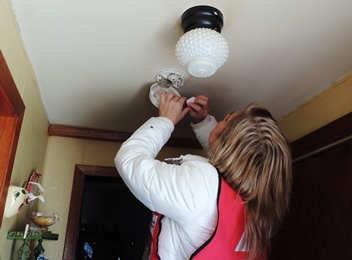
One thing we’re passionate about is making sure that every household has working smoke alarms. Please check the alarms in your home to see if they’re working. If not, replace the batteries or the alarms. We can help you do this. Our Home Fire Campaign makes it possible for the Red Cross to install free smoke alarms that will help save lives during home fires.
Remember: if a fire starts in your home get out to safety, and then dial 9-1-1 for emergency assistance.
Red Cross volunteer Robin Chattopadhyay is helping to build The Pillowcase Project across Minnesota. Photo credit: Lynette Nyman/American Red Cross.
Robin Chattopadhyay can trace his Red Cross connection to early childhood when, like many of you, he had Red Cross swimming lessons. But there was an additional connection. Red Cross tracing services helped his family confirm that his uncle and his family were safe and well following the Union Carbide factory gas leak disaster in Bhopal, India, in 1984. The gas leak killed thousands and injured tens of thousands more.
Today, Robin is on special paid leave from his employer Wells Fargo. The leave allows Robin to dedicate ten weeks towards developing the national Pillowcase Project across Minnesota. The Pillowcase Project aims to increase disaster preparedness among kids in third through fifth grades. First up, he says, will be presenting the project to his own kids at an elementary school in the Minneapolis-St. Paul metro area. “I think that it will be great to present in front of my
A sample pillowcase from The Pillowcase Project, which is sponsored by Disney. Photo credit: Robin Chattopadhyay/American Red Cross.
kids’ classmates.” The overall goal during his special assignment is to increase awareness of the project among teachers and parents, and to encourage others to become presenters. “First I’m starting with the home crowd,” says Robin, whose easy-going manner will likely inspire kids to tell parents about their Pillowcase Project experience.
After this stint, Robin will continue his Red Cross volunteer service both in emergency preparedness, and in disaster response as a Disaster Action Team member. If you’re interested in learning more, becoming a presenter or having a presentation at your school or organization, feel welcome to contact Robin via email (robin.chattopadhyay@redcross.org).
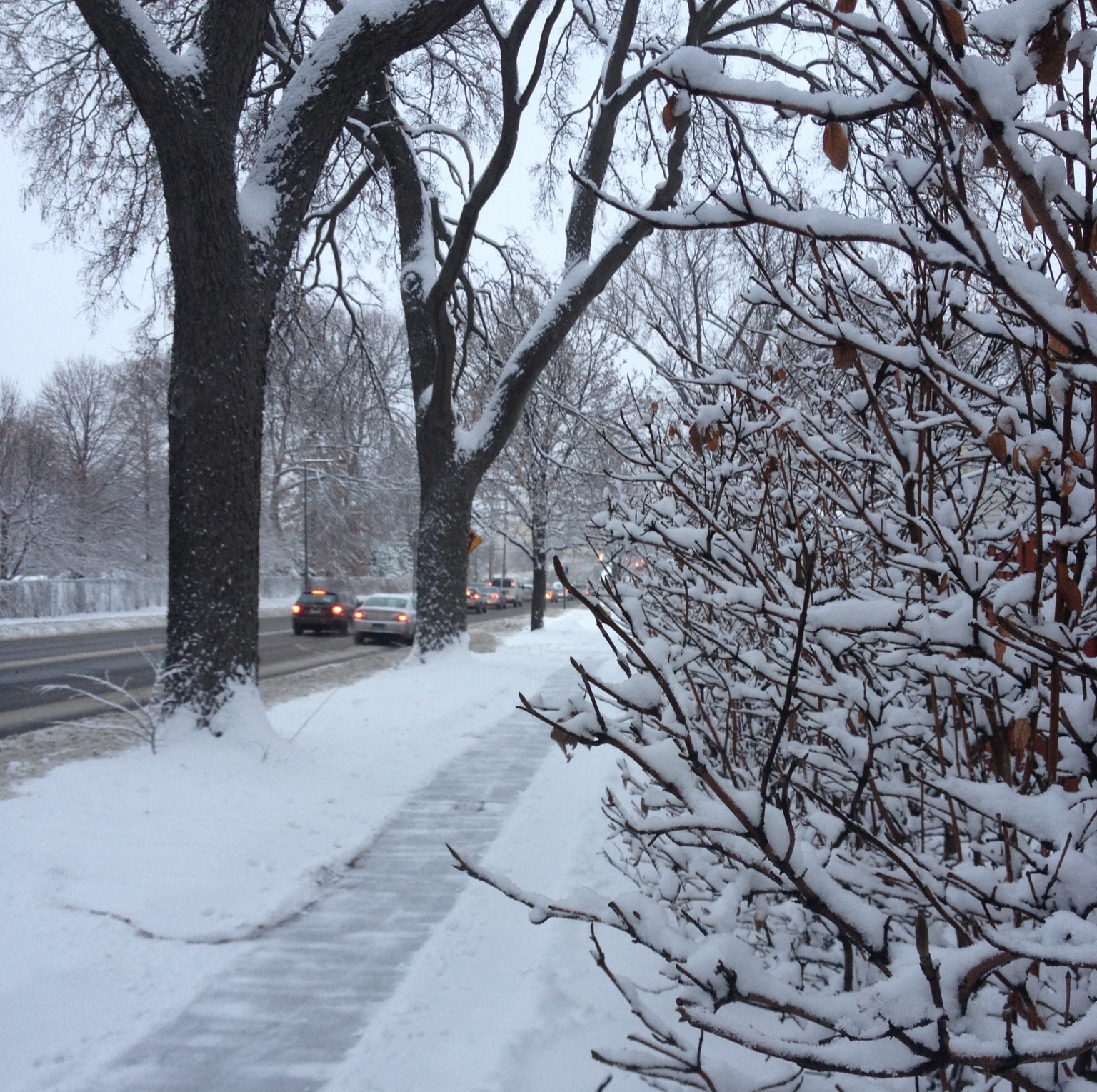
The first big winter storm, when inches and inches of snow falls, often catches you by surprise. Your commute to work takes twice as long; your pantry lacks basic supplies; and your mind, well, where did its patience go? We urge you, and we urge you to urge others, to slow down in every way and take a few critical steps towards preparing for the season. Below are several resources that will help you. Take and adapt them for you and your family. What special needs should be tended to before a snow emergency arrives? This tip sheet will help you prepare for and respond during winter weather. This check list covers both winter storms and severe cold preparedness. And this web page addresses pet safety during snowstorms and has an additional link to getting your pets ready for different disasters. Your emotional response to severe weather and other disasters, and the stress they invite, is worth understanding too. For more resources visit redcross.org.
As the holidays approach, people are getting busy – organizing dinner parties, plotting out Black Friday shopping strategies and planning family get-togethers. Lots of fun stuff awaits, and people want to feel good for the holidays, but not everyone does. Patients in hospitals are still in need of blood products from generous donors in good health.
Donors are especially needed in the weeks leading up to and after the holidays. Blood and platelet donations often decline from Thanksgiving to New Year’s Day when festivities pull people away from their donation appointments. This often causes a drop in the blood available for patients in the winter months.
You can give someone the chance to feel better before the holidays are in full swing. Be part of something meaningful, and give blood or platelets through the American Red Cross to help someone hurt or sick. If you are unable to give blood, you can still help by hosting a Red Cross virtual blood drive, volunteering or making a financial donation.
As Thanksgiving approaches, reflect on your blessings and look for ways to give back to the community or someone less fortunate. Remember that giving an hour of your time and donating blood could give a patient needing blood the most valuable gift of all – the gift of life. Many families have started giving blood together on Thanksgiving Day, or over the Thanksgiving weekend, as a way of giving back and giving thanks.
To help encourage blood donations around the holidays, the American Red Cross has teamed up with celebrity chefs John Besh, Richard Blais, Rocco DiSpirito, Mike Isabella, Ellie Krieger and Ali Larter to bring gourmet recipes to donors’ kitchens. Those who come out to donate blood or platelets November 25-29 will receive a Red Cross mixing spoon and celebrity chef recipes, while supplies last.
Make a blood or platelet donation appointment now by downloading the Blood Donor App, visiting redcrossblood.org or calling 1-800-RED CROSS. Please share the need with others in your social network and use the hashtag #GiveWithMeaning.
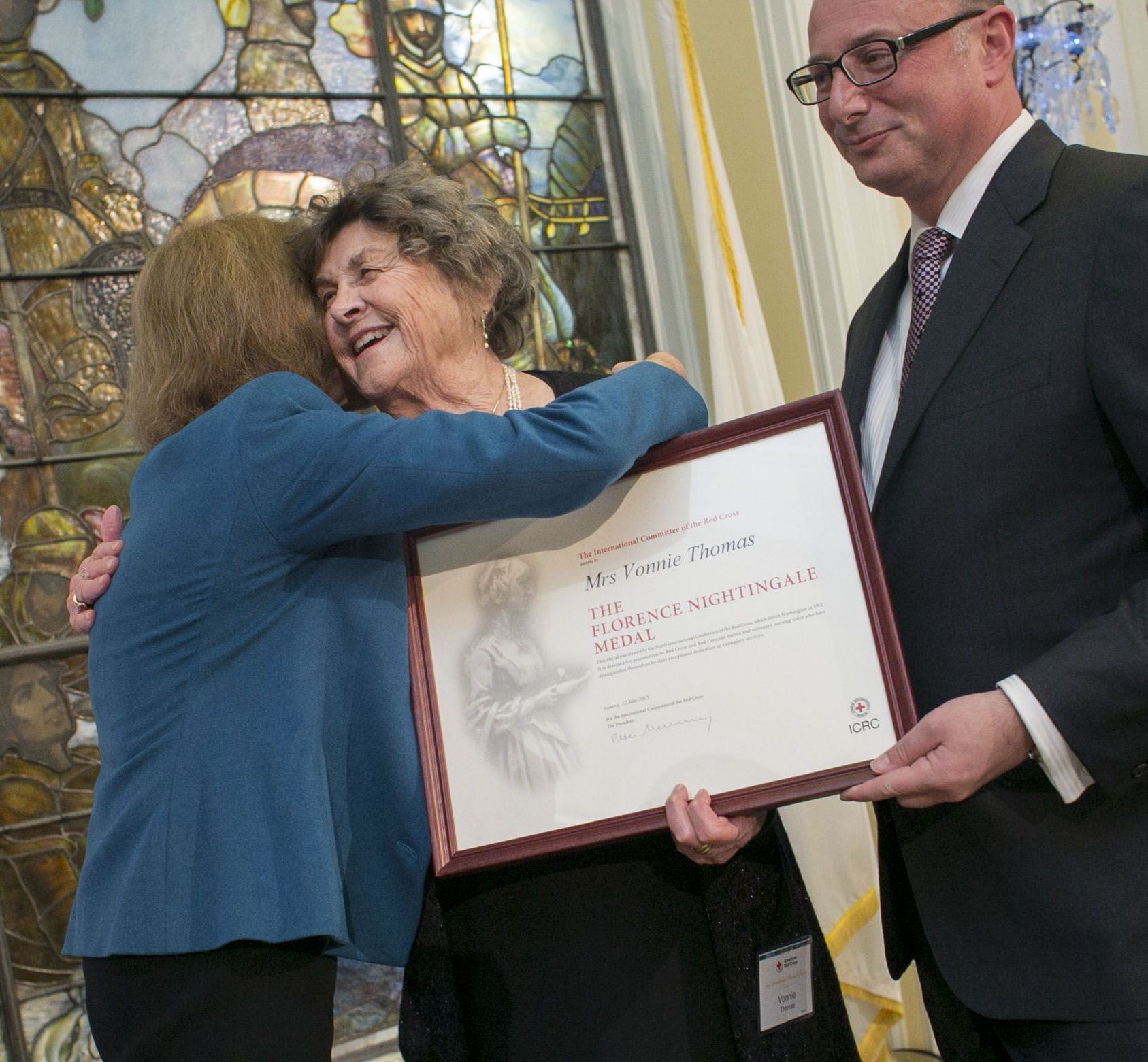
Florence Nightingale Medal winner Vonnie Thomas (center) received her award on October 28, 2015, in Washington, D.C. Photo credit: Dennis Drenner/American Red Cross.
On October 28, at American Red Cross headquarters in Washington, D.C., Vonnie Thomas received a 2015 Florence Nightingale Medal, which is the highest international honor for nursing contributions to the Red Cross and Red Crescent Movement and humanitarian action around the globe. The medal is awarded by the International Committee of the Red Cross (ICRC) every other year. It’s given to nurses or nursing aides who have shown exceptional courage or exemplary service during times of peace or war. In other words, this medal is a big deal. And we’re over the moon that Vonnie Thomas, a Red Cross volunteer for more than 65 years, was among this year’s honorees.
The Florence Nightingale Medal is awarded by the International Committee of the Red Cross.
Vonnie cares for those who have been hurt by disasters as well as the people providing relief. She serves side-by-side with others in the midst of tragedies such as the north Minneapolis tornado, the September 11 terrorist attacks, Hurricane Katrina, and the 35-W bridge collapse on the Mississippi River in Minneapolis. Or to a woman whose husband died when their farm house burned down in Wisconsin. Vonnie is a leader, innovator, health professional, and humanitarian. She has cared for thousands of people during her decades of Red Cross volunteer service. Vonnie is a selfless leader who is dedicated to the Red Cross mission to alleviate human suffering during the toughest of times. She is a coach, mentor and champion for other nurses. She is an example for us all.
Congratulations to you, Vonnie, for receiving this well-deserved recognition. Your humility has a place in the work that you do, but today we ask that you put it aside as we tip our hats in great honor to the amazing woman that you are to many, to us.
“Everything the Red Cross does because of disasters–and we’ve had many this year ranging from Washington wildfires to South Carolina flooding–is done with help from caring people like us. “
I have been a volunteer for the Red Cross since 2003. Based in Minnesota, I first started after I took several classes and became a volunteer to go to local fires and help the families after the incident. We provided those affected some funds depending on the severity of the fire. In our office counselors helped them with a lot of referrals to places like VEAP and Bridging to replace their personal items that were lost. It was always a comfort to them when we were there, especially in the middle of the night.
To date, I have been on about 20 deployments which have ranged from Hurricane Katrina (my first one) on the Gulf Coast to Hurricane Sandy in New York, and most recently the wildfires in Idaho and Montana. A deployment is when you are sent to volunteer at some type of a disaster usually in another state.
When I was deployed to Katrina, another volunteer and I drove the Emergency Response Vehicle better known as the ERV to Montgomery, AL to pick up a load of water and snacks. The ERV is the size of an ambulance and it is a feeding unit to go out in affected areas and feed those who are without electricity and maybe running water. We did 2 meals a day with a Baptist group cooking big kettles of food and there were maybe 20 ERV’s delivering food and water to all parts of the area. We were first assigned to Mobile, AL and drove anywhere up to a 50 miles range to serve lunch. We would serve hot food from a serving window in the truck and when finished or the food was all gone we would head back to our base camp and do it all over for dinner. All the people we served would be so appreciative as they hadn’t had a hot meal for 3-5 days by then.
Another disaster I worked on was the 35-W bridge collapse in Minneapolis. Another volunteer and I were in charge of seeing that there was hot food for the divers, police, federal officials when the first lady and again when the President came. We were only using 2 ERVs to send out food but had many volunteers who came to the Red Cross building to eat which is almost right under the bridge. I was able to go down on the river one evening and take food to the divers. Many days after the incident happened it was still a disturbing event to look up at the bridge and see cars still hanging there.
Hurricane Sandy was another unique disaster because of the size and how long the recovery went on and how large it was. By now I had changed from working with the feeding unit to the staffing unit. That job is to take care of the volunteers that are working on the disaster. They may be doing disaster assessment, mental health work, client casework and feeding those who are without a home, and most likely were staying in one of the many shelters the Red Cross operated across parts of New York, New Jersey and some of New England.
Because the job was so large for Sandy our Staff Services team was divided into several parts. I was the manager of all volunteers coming on the job and leaving the job. Some mornings we would have 50 new volunteers reporting to check in and get their assignments. The Red Cross headquarters where I worked for three weeks was two miles from my hotel. Every morning I walked past some interesting sights like the Good Morning America studio and the jumbotrons on Broadway. I picked up breakfast from a local deli or a street vendor and did the same on the walk back in the evening.
The night before Thanksgiving some of my group decided we would go up to Central Park and look at the parade floats. You cannot imagine the number of people who had decided to do the same thing. There were eight of us in our group and we had to hang on to the coat of the person in front of us or we would have been lost. We decided that we had walked about eight miles that evening, but it was fun. None us would do it again.
My most recent deployment was the Idaho and Montana wildfires. Half of my time there was spent in Kamiah, ID which is way up in the mountains. My workplace was the local American Legion. There was a reception center, called a MARC, that brought many groups into one place where those affected could get different kinds of help. There were 16 families that had totally lost their homes as they burned to the ground in a matter of minutes. Many others had lost part of their homes or all of their out buildings and a lot of cattle.
Everything the Red Cross does because of disasters–and we’ve had many this year ranging from Washington wildfires to South Carolina flooding–is done with help from caring people like us. The Red Cross is always grateful for our help. If any of you have 4-5 hours a week to volunteer, we always need more help. If it would not be your thing to go out to fires or to be deployed, there are simple jobs in the office that can be done, such as addressing birthday cards for volunteers. If you would like to become a Red Cross volunteer, just click here.
Even zombies and vampires need to know how to celebrate safely. Check out the Red Cross tips below and share them with your favorite super hero or princess this Halloween.
COSTUME SAFETY Whether the little one wants to be a ghost, a princess or a superhero, parents can help keep them safe by following some costume advice:
Add reflective tape to costumes and trick-or-treat bags.
Have everyone wear light-colored clothing to be seen.
Use flame-resistant costumes.
Use face makeup instead of masks, which can cover your eyes and make it hard to see.
SAFE TRICK-OR-TREATING To maximize safety, plan the route ahead of time. Make sure adults know where children are going. If the children are young, a parent or responsible adult should accompany them as they make their way around the neighborhood.
Other safety tips to follow include:
Make sure trick-or-treaters have a flashlight to see where they are going and be seen by drivers.
Visit only the homes that have a porch light on. Accept treats at the door—never go inside.
Walk only on the sidewalks, not in the street. If no sidewalk is available, walk at the edge of the roadway, facing traffic.
Look both ways before crossing the street, and cross only at the corner.
Don’t cut across yards or use alleys. Don’t cross between parked cars.
It’s not only vampires and monsters people have to look out for. Be cautious around animals, especially dogs.
WELCOMING THE KIDS If someone is manning the candy giveaway at their house, they can make sure it’s a fun night for all by doing the following:
Make sure the outdoor lights are on.
Sweep leaves from the sidewalks and steps.
Clear the porch or front yard of any obstacles that a child could trip over.
Restrain the pets.
Use a glow stick instead of a candle in the jack-o-lantern to avoid a fire hazard.
Use extra caution if driving. The youngsters are excited and may forget to look both ways before crossing
FIRST AID APP Download the free Red Cross First Aid App. Users receive instant access to expert advice for everyday emergencies whenever and wherever they need it. Use the Emergency App for weather alerts and to let others know you are safe if severe weather occurs. Find these and all of the Red Cross apps in smartphone app stores by searching for the American Red Cross or going to redcross.org/apps.
MONSTER GUARD APP Download the free Monster Guard: Prepare for Emergencies App, a game that helps kids learn how to save lives. Children between the ages of 7 and 11 learn ways to prepare and stay safe in home fires, hurricanes, tornadoes, floods and other disasters by role-playing as different monster characters.

 Since 1997, American Red Cross volunteers in spiritual care have responded to large disasters across the country, providing what is for some people a basic need for disaster relief. Now, the Red Cross will offer spiritual care during disasters small, medium and large. This program expansion comes following a national Red Cross leadership decision to make spiritual care a part of basic comfort and care in local communities across the country.
 Spiritual care volunteers respect the Fundamental Principles of the global Red Cross and Red Crescent Movement. The principles ensure that services are provided with neutrality and impartiality in a way that supports the Red Cross mission to alleviate human suffering. The volunteers provide consistent and reliable services in all regions and to all persons regardless of faith traditions. They are trained to spiritual care during a house fire, the most common disaster the Red Cross responds to, as well as major natural disasters and mass casualty events.







 American Red Cross Minnesota and Dakotas Region