Many people believe they know how to swim. But in reality, the really don’t, especially children and teens. Last year the American Red Cross released survey results revealing something quite shocking: more than 60 percent of youth are unable to perform all five basic water competency skills. To reduce this life-threatening statistic, the Red Cross has launched a national campaign to reduce drownings in half by 50 percent during a three to five year period. In Minnesota, that would mean cutting the number of non-boating accident drownings from an average of 40 per year to 20.
Additional key survey findings include:
Nearly a fifth (18 percent) of adults who are not able to perform all five water safety skills expect to supervise a child near water this summer.
Fear is listed as the top reason for not learning how to swim both as a child and as an adult.
Nearly half of Americans (46 percent) report that they have had an experience where they were afraid they might drown.
Near-drowning experiences are more common among young adults (ages 18-24). And younger Americans are also more likely than those in any other age group to report that they know someone who nearly drowned (36 percent).
To learn more and to test your swim skills before you hit the water, click here.
To find classes for your family, contact your local swim facility or click here.
On June 18, hundreds of people will come together in recognition of ordinary people performing extraordinary acts of courage. The event they’ll attend is the American Red Cross Minnesota Region’s 7th Annual Heroes Breakfast. This breakfast honors people who took an extra step, or two or three, when others needed help. This willingness to help others directly connects to the Red Cross mission to alleviate human suffering. This work is the essence of what the Red Cross and its volunteers do around the globe every day.
During the breakfast we will honor the 2015 Heroes Award recipients, who are:
Youth Good Samaritan Hero A.J. Spaulding of Spring Lake Park a volunteer, who has helped numerous children and teens through their grieving process after losing his own father to suicide;
Good Samaritan Heroes Aaron Briggs of White Bear Lake and Grant Dawson of St. Paul who used CPR to help save the life of a man who collapsed on the ice at Hazelnut Park in Arden Hills;
Give Life Hero Lavonne Kroells of Norwood-Young America, a dedicated blood drive coordinator who over the past 40 years has helped collect more than 160,000 units of lifesaving blood;
First Responder Hero Russ Vandenheuvel of Bertha, who brought ambulance service to his hometown and recruits and trains volunteers to respond to their neighbors in need;
Military Hero Shane Hudella of Hastings, a retired member of the armed forces and founder of Defending the Blue Line, a non-profit that helps ensure children of military members can participate in hockey by providing free equipment, camps and tickets; and
Community Hero Tom Campion of St. Paul, who created “Safe Summer Nights,” which brings together the community and police officers to create lasting bonds of cooperation, improved trust and understanding.
We invite you to join us for this inspiring event, which will be held at the Radisson Blu, Mall of America in Bloomington. Tickets and information about table sponsorship opportunities are available online at redcross.org/mnheroes2015 or by calling (612) 872-3207.
Thank you to our 2015 Heroes Breakfast sponsors including, presenting sponsor Land O’Lakes, US Bancorp, CenterPoint Energy, CHS, Medica, St. Jude Foundation, Anime Twin Cities, UnitedHealth, Minnesota Vikings, Minnesota Twins and GS Productions.
Teaching a CPR class,
Leading or supporting committee work,
Being on-call to assist with small disasters,
Helping in a shelter on larger disaster responses,
Reviewing health forms for the staff and volunteer workforce,
Speaking to nursing students about volunteer opportunities at the Red Cross…
There are many ways for those in the medical field to share their time and talents with American Red Cross Humanitarian Services. One nurse doing just that is Barb Page. Barb is celebrating her five-year anniversary with the Red Cross and is nearing the end of her second year as Disaster Health Services (DHS) Lead for the Twin Cities Area Chapter. For Barb, volunteering as a nurse for the American Red Cross is about compassion and community.
COMPASSION As a DHS volunteer, Barb has enjoyed sharing her gift of compassion with clients when called upon to assist during disaster response.
Asked why nurses have always played such an important role for the Red Cross, Barb replied, “Everybody at the Red Cross has a lot of care and compassion, but I think it’s just innate for nurses, and that comes through in our work and is an important piece of recovery. We are a big part of getting people back on their feet.”
DHS volunteers are able to offer both practical assistance and emotional support to clients in their times of need. “When someone has lost everything or has been hurt because of a disaster, they need help in so many ways. They need help navigating how to get their life back together,” Barb explained. “In almost every disaster response, there is someone with medication or someone with medical needs who needs help.” With DHS volunteers like Barb standing at the ready to share not just her professional skills but also her caring spirit, the Red Cross is able to more completely meet the needs of clients.
COMMUNITY As DHS Lead for the Twin Cities Area Chapter, Barb has enjoyed fostering a sense of community among the DHS volunteer team.
In the beginning of Barb’s tenure, Barb focused on understanding what interested and motivated different volunteers in order to best engage them in ways they would find satisfying. As Barb described, with the variety of activities there is to participate in at the Red Cross, “We need all kinds of people with all kinds of interests.” Barb’s inclusive message is that anyone can find a way to contribute at the Red Cross that will be fulfilling and that will fit his/her unique schedule and strengths.
Barb is now focusing her time as Twin Cities Area DHS Lead on maintaining a mentorship program and four committees centered on sheltering, national deployment, welcoming new volunteers, and external recruitment and education. The mentorship program has helped more than a handful of new volunteer nurses become acquainted and comfortable with responding to local disasters over the past year. Choua Yang, Regional Recovery Program Support Specialist, explained the impact Barb is having locally: “She is a great leader for the DHS group. The mentorship program helps new volunteers navigate the Red Cross and brings them into the DHS community.”
In addition, the more recently established committees are creating new ways for DHS volunteers to get involved and get to know each other, all the while making the Red Cross well positioned and prepared to take action when called upon.
Thinking holistically, as nurses so often do, Barb stated, “You never know if the client you just helped is going to become a volunteer or a donor or help out at the next disaster. It’s a circle.” The Red Cross community is a growing, more encompassing circle because of wonderful volunteers like Barb. Thank you, Barb!
Story by Kelly Clark, Volunteer Services, American Red Cross Minnesota Region. If you or someone you know would be interested in joining this compassionate community of Disaster Health Services volunteers in Minnesota, please contact Volunteer Services.
Red Cross volunteers Jennifer Pluhar and Mark Steffer responding on location to the W. Broadway Fire in North Minneapolis on April 15, 2015. Photo credit: Lynette Nyman/American Red Cross
On Wednesday, April 22, we wrapped up our Red Cross sheltering operation following the devastating fire at West Broadway and Emerson in Minneapolis on April 15. On any evening during the week that that the shelter was open there were between three to six residents in who did not have their own resources to find safe shelter elsewhere. In addition to providing shelter, the Red Cross worked all affected by the fire to assess and meet immediate disaster relief needs and to start them on a path to long-term recovery. This important disaster response work happened both on location moments after the fire or later at the shelter or the temporary resource center established with community partners. To date, the Red Cross has helped 27 people who were displaced by this fire.
West. Broadway Fire victim Cliff Garrett shares his escape story with Red Cross volunteers in North Minneapolis on April 15, 2015. Photo credit: Lynette Nyman/American Red Cross
We are grateful to have organization partners in the West Broadway and North Minneapolis community that have resources for these residents. We’re also thankful for the outstanding response from local businesses that helped us provide food to shelter residents. Working together, our community provided a strong safety net that many fire victims need to rebuild their lives. And most important to say is this: the Red Cross cannot do any of this relief work without the volunteers who shared their time and expertise during this response effort. Red Cross volunteers are the ones step into the gap left by disasters big and small, holding a hand, giving a hug, and doing the deep dive that helps get people going again after disaster strikes. Once again, our Red Cross volunteers were dedicated to helping others in our community during a time of great need and suffering.
To become a volunteer, click here. To give a financial donation, click here.
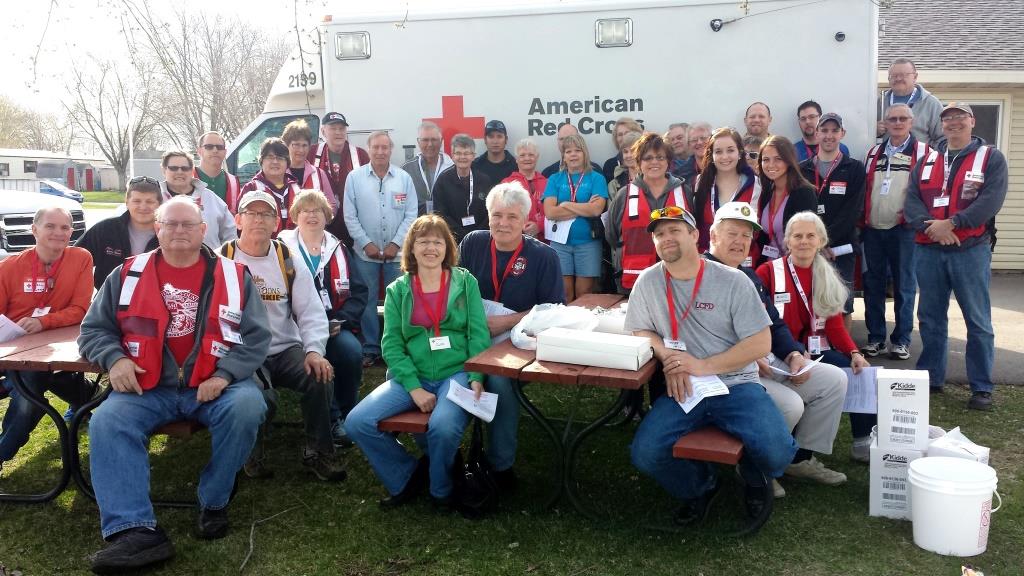
Home Fire Preparedness Campaign volunteers, Lake City, MN, April 18, 2015
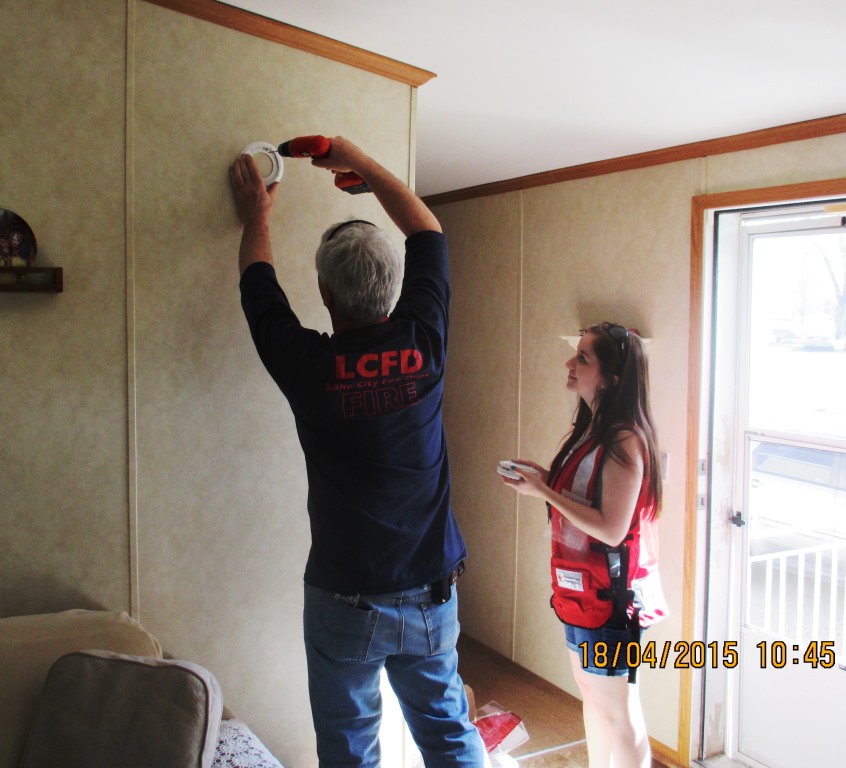
We had an awesome day in Lake City, Minnesota, on Saturday, April 18, installing smoke alarms and talking fire safety. As part of the national American Red Cross Home Fire Preparedness Campaign, a local team of 25 Red Cross volunteers and volunteer partners canvassed 400 homes the previous week and gathered 115 smoke alarm installation requests. Three mobile home parks and a small area on the south side of the town were the designated areas. Then, this past weekend, 40 volunteers returned to homes that had no answer the week before, and to those with scheduled requests and installed smoke alarms. The teams installed a total of 164 alarms!! Volunteers also provided safety information, helped with creating fire escape plans, and handed out a tornado safety checklist. It was a great day and everyone did an amazing job.
Smoke alarm installation during Home Fire Preparedness Campaign, Lake City, MN, April 18, 2015
Volunteers were made up of Red Cross volunteers, firefighters, Kiwanis members, and local community members. We had three Spanish language speakers who used their talent helping interpret for a few families. Everyone met at 8:30 a.m. for coffee, rolls, and training. Lake City’s fire chief Jeff Diepenbrock, and his wife Julie, came out Saturday to help install alarms. Jeff started off the day thanking the volunteers for their dedication and time. He also talked about fire safety and the importance of smoke alarms. Everyone set out about 9 a.m. and finished around noon. When everyone returned, it was great to hear some of the appreciation stories that families told where alarms were installed.
I am soooo thankful for the group of Red Cross volunteers in my areas!! This could not have been attempted, and become such a success, if it were not for the support of those who continue to be there when they can to lend a hand! Our smoke alarm installation event coordinators for the Lake City were Shar Yorde and Ann Nibbe who put in a lot of hours to make this happen. A few of my experienced smoke alarm installation event volunteers from Winona, including Joe Whetstone, Mike Papke and Beth Lindholm from Winona, were instrumental in organizing the Lake City event and keeping things on track. Thank you to everyone who came out for this awesome day!! The Red Cross and our community are lucky to have you 🙂
Post and photos by Dianne Thompson, Disaster Program Specialist, American Red Cross serving Southeast Minnesota. The American Red Cross Home Fire Preparedness Campaign seeks to reduce home fire deaths by 25 percent in five years. To learn more, click here.
The recent tornadoes in Illinois are a sober reminder that disasters happen anytime and anywhere. In the Upper Midwest, we experience heavy storms, flooding, and tornadoes. During Severe Weather Awareness Week, April 13-17, take a moment, or two, and review your preparedness plan; check-in with loved ones, neighbors, and friends about their readiness for emergencies; and update your disaster kit so that you’ll have what you need when you need it most.
To get more Red Cross safety information for specific emergencies, click here. We encourage everyone with mobile device to download the Red Cross Tornado App. This free app features a siren warning, a shelter locator, and instructions on what to do during and after a tornado. Information is available even if there is no mobile connectivity. You can also learn more about tornado safety by viewing this myths and facts slide show.
To help people affected affected by disasters big and small, click here. Your gift enables the American Red Cross to prepare for, respond to and help people recover from disasters. You can donate by visiting redcross.org, calling 1-800-RED CROSS or texting the word REDCROSS to 90999 to make a $10 donation. Your donation helps provide food, shelter and emotional support to those affected by disasters.
Aryn Gill, 8, graduated from rookie to member in two days playing the American Red Cross Monster Guard mobile app that prepares kids for emergencies. Photo credit: Lynette Nyman/American Red Cross
Kids can learn just about anything these days. With help from the American Red Cross Monster Guard mobile app, they can learn about how to prepare for and respond to a variety of real-life emergencies, including tornadoes, floods, and other weather disasters. Take Aryn Gill who’s 8 years old. “I finished it in two days. BOOM!,” she says after demonstrating how to play the game. She learned “how to cope when I’m in a disaster, when I’m scared. I need to feel calm, take a deep breath and blow it out.” She also learned about getting supplies and going to a safe place during a hurricane; screwing shelves to walls before earthquakes happen; and covering her mouth with a damp cloth if she doesn’t have a mask during a volcano. Home fire safety was a big learning moment, too: “I didn’t know I needed to make a primary escape plan.” And checking smoke alarms is really important she says, especially checking batteries: “once every month make sure your smoke alarms work.” Aryn’s not a disaster rookie after finishing all Monster Guard levels and becoming a member. “I tell other kids they should play so they can learn about disasters, too.”
Story and photo by Lynette Nyman/American Red Cross
Throughout March 2015, U. S. Bank is making it easy for its customers to support the important work of the American Red Cross. All month long, customers can make a financial donation to support Red Cross Disaster Relief at more than 5,000 designated U.S. Bank ATMs nationwide.
We are grateful to U.S. Bank for its generous support and partnership that helps ensure that the Red Cross has reliable funding for disaster relief services. It’s support helps us immediately respond to disasters in Minnesota and across the country. The sooner our volunteers get to an emergency site, open shelters, serve hot meals and provide comfort to victims of disaster, the more quickly people and communities can begin to recover.
Our partnership with U.S. Bank extends our reach so that we can help more people before emergencies happen. Richard Davis, Chief Executive Officer of U.S. Bank and a member of the American Red Cross Board of Governors, makes preparedness a priority within U.S. Bank. His effort helps employees to be prepared at work and at home for anything, anytime. By working together, we deliver preparedness information and First Aid, CPR and AED training.
Also, U.S. Bank employees roll up their sleeves and help save lives at Red Cross blood drives. In 2014, U.S. Bank hosted 86 blood drives across the country. In Minnesota, the Red Cross collected an impressive 1,006 units of blood at 26 drives hosted by U.S. Bank and its employees.
Through our combined efforts, U.S. Bank and the Red Cross are strengthening the ability of the communities we serve to prevent, prepare for and respond to emergencies and help rebuild lives after a disaster strikes.
Story and photos by Lynette Nyman/American Red Cross Additional reporting by Lanet Hane/American Red Cross
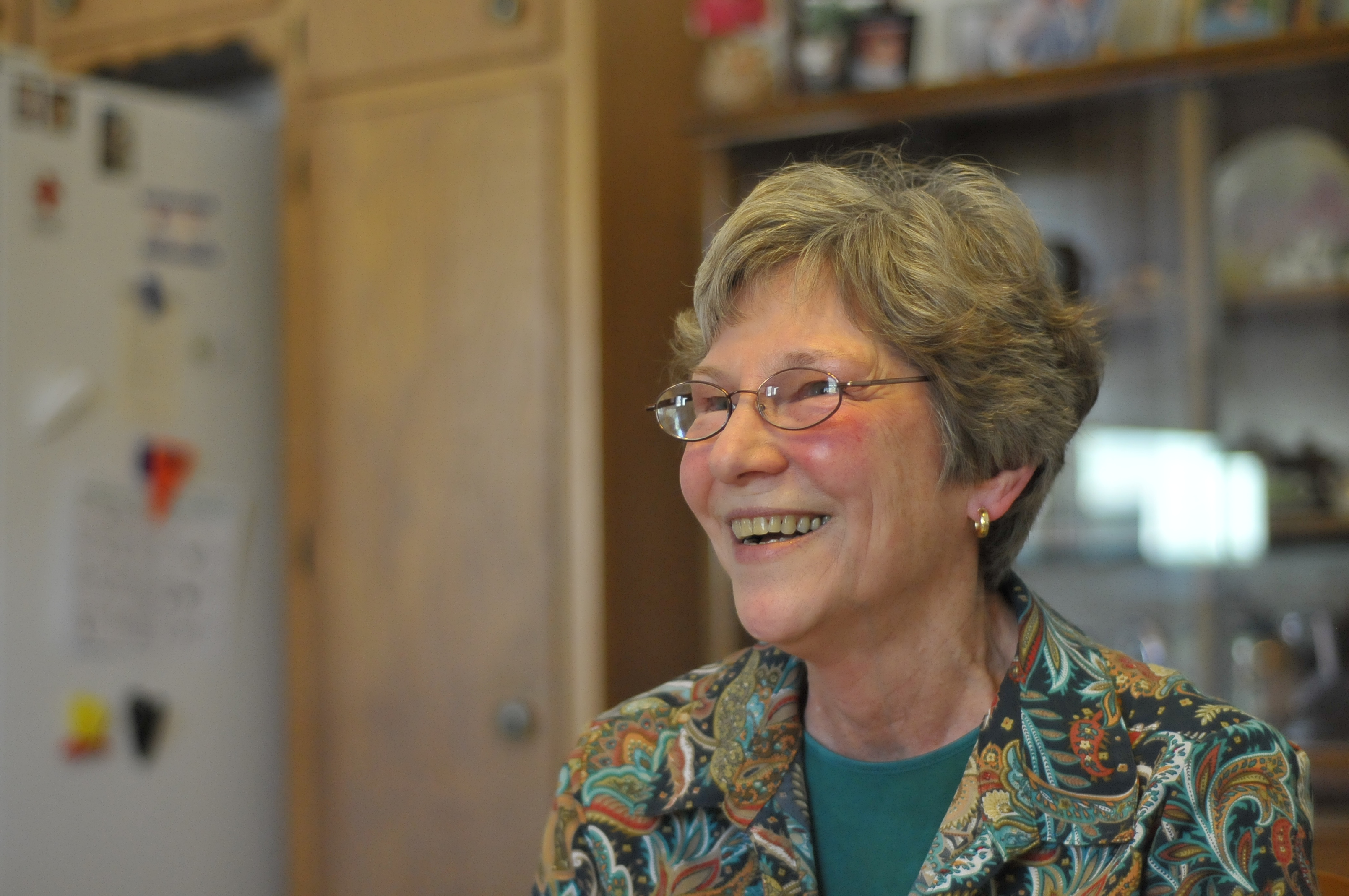
Lois Hamilton served with the American Red Cross Supplemental Recreational Activities Overseas (SRAO) program in Korea after the war in 1965 and during the Vietnam War in 1967 and 1968. Photo credit: Lynette Nyman/American Red Cross
Lois Hamilton was a Red Cross caseworker at the Great Lakes Naval Hospital in 1967 when she decided to go to Vietnam at a hot time during the war. At the hospital, she saw “horrendous injuries,” but she also saw wounded warriors get well. “I loved my work,” she says over coffee and pastries at her home in Rochester, Minnesota. “It was my job to make the whole situation easier for them, to comfort them.”
By that time, and the time of her decision to go to Vietnam, she already had overseas experience. She’d left her hometown of Osseo, Minnesota, to serve with the Red Cross’s Supplemental Recreational Activities Overseas (SRAO) program in Korea in 1965. She was 22 years old. She knew Vietnam would be different, tougher and more serious. Still, her Korea experience was key: “Had I not gone to Korea, I’d never have gone to Vietnam,” she says.
When she told some of the patients at the Great Lakes Naval Hospital about her plans “they thought it was the dumbest thing they’d ever heard.” Yet, they were supportive and gave her some advice: “keep your head down,” they said. And she did, for 12 months of service with the Red Cross SRAO program in Vietnam in 1967 and 1968.
During that time, Lois and the other SRAO women, all recent college graduates with adventurous spirits, carried program bags: duffels stuffed with quizzes, flashcards and other games for boosting morale and combatting boredom among American troops in South Vietnam.
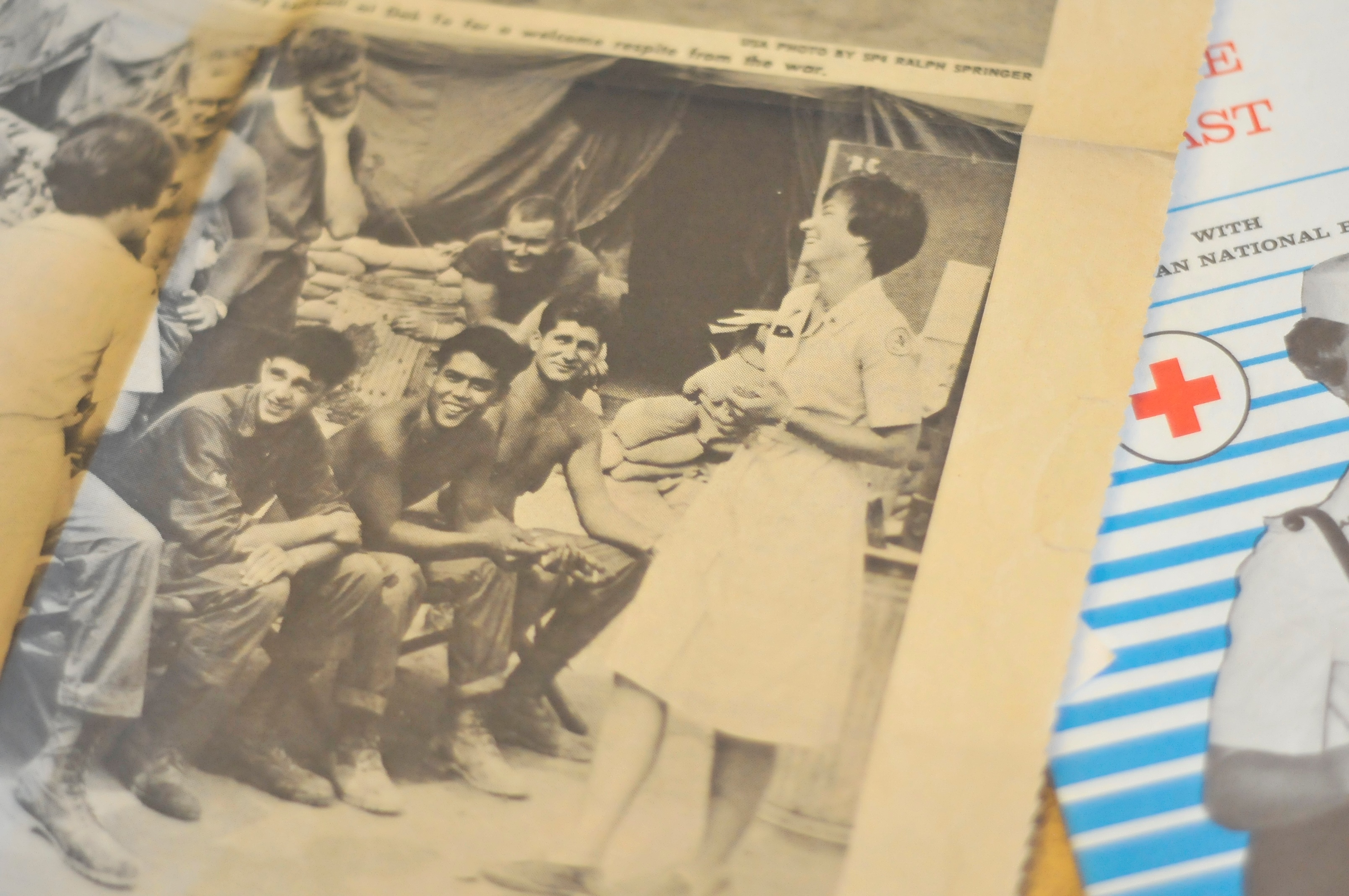
During the Vietnam War, Lois Hamilton (center) was among hundreds of young women who carried Red Cross SRAO program bags stuffed with quizzes, flashcards and other games they used to boost morale and combat boredom among American troops. Photo credit: Lynette Nyman/American Red Cross
From their base in Saigon, the “Red Cross girls” (also nicknamed “Donut Dollies”) traveled to army units around the country. They went by bus or helicopter. A few made small talk with the helicopter pilots. But unlike some of the other girls, Lois did not make friends with the pilots because their risk of being killed was so high. “I think it was a protection sort of thing.”
Lois never doubted she would make it home. Not even in 1968 during the Tet Offensive, a series of communist military attacks on Saigon. Mostly, the time was “scary for my family because mail wasn’t going in or out.” Still, Lois heard gunfire on her street. Even closing shutters was a danger.
Later, Lois and the other SRAO workers were transferred to the U.S. Army’s 4th Infantry Division headquarters at Camp Enari in Pleiku. There, they sought cover in a bunker that was just for the Red Cross girls. “I worried about some of them,” says Lois, who recalls crying only one time when a shower blew up and there was a fire, and then no hot water. It was a little thing, really, but the little things added up.
Sometimes during their service, Lois and the others wore flak jackets. “You girls should not be here,” a soldier said. “But if you are, then you should wear flak jackets.” They also had fatigues, combat boots and, for a short time, a revolver that a captain at Camp Enari gave them for times when they had to jump in the bunker.
A page from the Sayonara (farewell) book the Red Cross girls made for Lois Hamilton before she left Vietnam in 1968. Photo credit: Lynette Nyman/American Red Cross
But they were non-combatants. Most often Lois wore a dress, not a flak jacket. Her job was to bring a smile to a weary soldier’s face. “They had fun and I had fun, too,” she says. “Smiling was good.” For the most part, she felt like one of the guys. “The difference was that I was a civilian.”
In July 1968, her service was up and Lois did not extend. “I’m going home,” she said at the time to the others. “I was just ready to go home,” she says today.
Lois stayed with the Red Cross in various positions and retired decades later. She also became active in the Vietnamese refugee community in Rochester. “I felt I had a kinship because of Vietnam.” She went so far as to welcome three refugee children, with their own stories of survival and escape, into her home and later adopt them.
Reflecting on her Vietnam experience, Lois remembers her decision to go surprising her friends. “Lois would never do that,” some said. But she felt good about going. She would go again. “I’m the one who’s lucky.”
At its peak in 1969, 110 young women with the American Red Cross Supplemental Recreational Activities Overseas (SRAO) program reached an estimated 300,000 military members in Vietnam (source: redcross.org). Today, the Red Cross continues to provide emergency communications and other services to America’s armed forces. To learn more, click here.
Melinda has been a Disaster Services volunteer since 2011, and is part of the Disaster Action Team (DAT). She also has recently taken on a new role with Volunteer Services – she’ll be interviewing prospective volunteers to introduce them to the volunteer opportunities at the Red Cross and help them find a good fit.
As a child, Melinda was introduced to the Red Cross as part of her home-school curriculum, in which her mother made the Red Cross a recurring theme. What Melinda took away from that was that the Red Cross “is a solid entity that is always there to help.”
Fast forward to Melinda’s adult life when she was working at a group home and became very close to an individual who turned into one of her favorite clients. His health declined and he was put on life support, and then eventually taken off. At that moment Melinda decided she wanted to do something good and help people. She went to the Red Cross office in Duluth, Minnesota, to ask a few questions, and was immediately “roped in.” Within minutes she was filling out an application, and the rest is history!
Melinda went on her first home fire call with one of the chapter’s most experienced volunteers. Since then Melinda has responded to over 30 home fires. Melinda says that the most satisfying part of being a disaster volunteer is “helping people who have experienced a devastating loss and seeing how grateful clients always are for the services of the American Red Cross.”
A few months ago Melinda went through the difficult experience of responding to an incident that involved a fatality. Additionally, it turned out that she was familiar with the person who died. Despite the difficulty involved in this response, Melinda took away the feeling that she was there for the family to help them with the “begin-again phase” of their lives.
The Red Cross has made Melinda more confident, and through her interactions and meeting other volunteers she has become interested in pursuing a career in Emergency Management.
Melinda certainly embodies the mission and fundamental principles of both the American Red Cross and Red Cross and Red Crescent Movement around the globe. She’s always ready, willing and able to assist and a great comfort to those who have suffered a loss because of home fires and other disasters.
Story and photo by Nancy Rogers, Volunteer Services Coordinator for the American Red Cross serving Northern Minnesota.
To learn more about becoming a Red Cross volunteer, click here.
 Many people believe they know how to swim. But in reality, the really don’t, especially children and teens. Last year the American Red Cross released survey results revealing something quite shocking: more than 60 percent of youth are unable to perform all five basic water competency skills. To reduce this life-threatening statistic, the Red Cross has launched a national campaign to reduce drownings in half by 50 percent during a three to five year period. In Minnesota, that would mean cutting the number of non-boating accident drownings from an average of 40 per year to 20.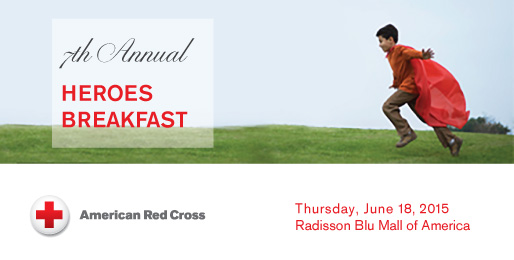







 American Red Cross Minnesota and Dakotas Region