Three Cheers for Paul!

So, the other day, this young man named Paul van Vliet stops by Red Cross offices in Minneapolis and drops off comfort kits for kids. How cool is that? He (Paul) comes up with his own project idea (making comfort kits for kids) and provides them (the kits) to us (Red Cross) so that our disaster relief workers can give the kits to kids affected by disasters (like fires, floods, & tornadoes).

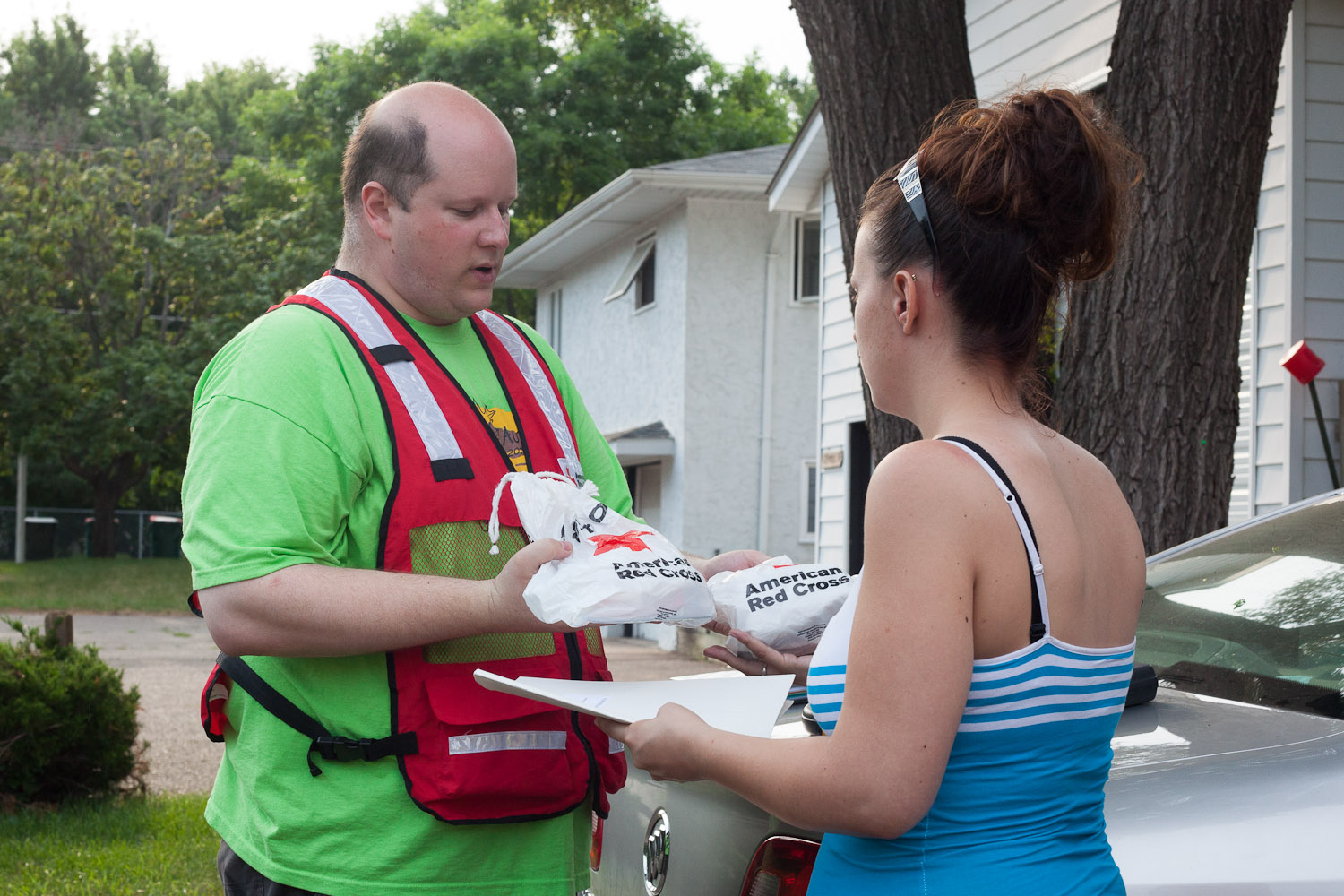
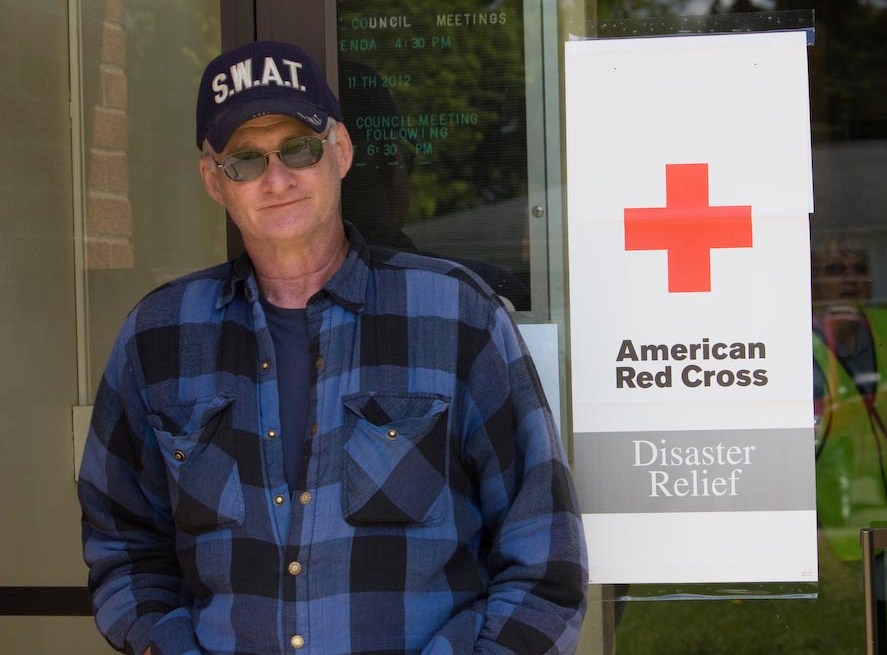
Now, let’s give some credit to us (Red Cross) because we came up with the original comfort kits for adults and children idea, but we rely on motivated and generous peeps like Paul to make this kits and help reduce the suffering of people who escape burning buildings or high waters. Paul’s dad John was on hand for the comfort kits for kids drop off. He took a fine photo of his son Paul (top & bottom) and then sent us a nice note (excerpt below left).

“It was great to meet you at the Twin Cities’ Red Cross office today. Thanks for your interest in my son, Paul’s, Eagle Scout project. It was a wonderful surprise and honor to meet Phil Hansen, an Eagle Scout himself. I know Paul was very impressed and honored by Mr. Hanson’s enthusiastic reaction to his project. And I am sure Paul will remember this day for the rest of his life. Most important, he and I are gratified to know these comfort kits will benefit the littlest and most vulnerable victims of disasters.”

Well, John, we think your son is the bee’s knees. We could not do what we do without him and others like him. We wish Paul many happy days during his next adventure (college) and hope that he will make his way around the world and back to us some time in the future.

Hawkeye Fist Bump

Sarah Farr, Nick Stanley, and Carrie Carlson-Guest share Hawkeye spirit after meeting at a Red Cross shelter in Edina, Minnesota. Photo credit: Lynette Nyman/American Red Cross

No disaster is fun—seriously, we would all prefer doing something other than running or recovering from a flood, tornado, or fire.  But a positive-side of things short list might include “disasters, a chance to meet new people.”

Take Sarah Farr and Nick Stanley. We bumped into them the other day while they rested at a Red Cross shelter after a fire burned their Edina, Minnesota, apartment building. Sarah heard the fire alarm before Nick, “Sarah woke me up. And I said, is everybody else outside? Could this be a false alarm?” Then they saw lots of people standing on the lawn. Once outside, they watched and waited with the others. “It was the first time we talked to many of our neighbors,” says Sarah.

Among the important items grabbed during the escape, Nick Stanley’s computer, showing here a photo he took of the burned apartments. Photo credit: Lynette Nyman/American Red Cross

The fire spared their unit but no utilities meant no re-entry until officials gave the A-Okay sometime later. So, rather than coach surf with friends or family, the two slept in their SUV and eventually made their way to the Red Cross shelter. And yay for that! We got to meet two sweet peeps who turned out to be Hawkeye fans. (Some of us aren’t Hawkeye fans per se but Iowa farm family connections make us supporters in spirit.)

It was nice meeting you, Sarah and Nick, and we wish you the very best. But if we meet again let’s agree that it will under more fun circumstances.

P.S. We’d still like you bunches even if you’d turned out to be Cyclone fans.

We all have a role to play in preventing drownings

By Phil Hansen, CEO, American Red Cross Northern Minnesota Region

The Minnesota Department of Natural Resources recently reported that the number of drownings across the state has nearly hit a 10-year high.  Each loss of life I hear about hits home. Years ago, I was motivated to join the Red Cross after witnessing a terrible tragedy, like the ones we’ve seen this summer.

As a young man I was involved with a team of rescuers in a search for two young boys who were lost in a river near the camp where I worked. As one boy entered the deep and fast-moving water he had lost his footing and reached back for help, pulling the other boy into the water with him. While we searched the dark water, the mother of the boys stood on shore pleading with us to find them–sadly, neither survived.  I was to learn later that neither boy knew how to swim.

These drowning deaths were heartbreaking for all involved. Personally, I was so troubled by the event that I wanted to do something meaningful to help ensure the safety of children in and around the water – I became a water safety and CPR instructor for the Red Cross where I have continued to work ever since.

Summer is a beautiful time in Minnesota and we are fortunate to have access to pools, rivers and, of course, our 10,000+ lakes.  But the spate of recent drowning incidents has prompted many to ask how future downing tragedies can be prevented.  When it comes to water safety we all have a role to play in promoting and supporting water safety basics, such as never swimming alone, always swimming near a lifeguard, and making learning to swim a priority in our families. We know, and we teach, that multiple layers of protection make the difference when preventing water emergencies and responding to them when they happen.

Here are some ways you can make a difference:

  • Maintain constant supervision when watching children around water. Active supervision prevents water emergencies and saves lives.
  • Have children or inexperienced swimmers wear a U.S. Coast Guard-approved life jacket around water, but do not rely on life jackets alone.
  • If someone is missing, check the water first. Seconds count in preventing death or disability.
  • Know how and when to call 9-1-1 or the local emergency number.
  • Enroll in CPR and First Aid courses to learn how to respond. Insist that babysitters, grandparents and others watching children around water know these lifesaving skills.
  • Know before you go—swim where you know it’s safe; walk carefully into open waters; do not dive.
  • Heed the warnings and instructions of lifeguards and other authorities as well as flags and signs.
  • Watch out for the dangerous “too’s”: too tired, too cold, too far from safety, and too much sun.

While the Minnesota summer is short and lovely, and should be enjoyed, there are both joys and hazards associated with recreation in and around water. We ask everyone to take on a role in water safety and to learn to respect the water.  No one is drown-proof, but together we can make our community a safer place to live, play and splash this summer.

Banging on doors, pounding on windows saves lives

Story and photos by Red Cross Volunteer Amy Conger

Nathan Steen (l) receives comfort kits for his children from Red Cross disaster relief volunteer John Trieb, July 5, 2012. Photo credit: Amy Conger/American Red Cross

Hudson, Wisconsin resident Nathan Steen was watching TV around 2:30 in the morning, July 5, 2012, when he started to smell an odd, almost chemical-like, smell in his basement apartment. He opened the door to his unit and was shocked to see thick black smoke in the hallway. Running to the fire alarm pull switch in the hallway, he yanked it several times but did not hear the alarm. Nathan couldn’t see flames or the source of the fire, so he went back to his apartment, woke his wife and two children, and called then called 911. He then ran to the other apartments, banging on doors to alert his neighbors to the fire. He was pounding on windows from outside, yelling “Fire!”, when the police arrived and began to assist getting people out from the other 9 units of the building.

Red Cross disaster relief volunteer Jason Winget (l) assisted resident Jannelle Waara following the Hudson apartment fire, July 5, 2012. Photo credit: Amy Conger/American Red Cross

The other residents report opening their doors to thick black smoke before rushing out of the building. A main concern of all the residents was the failure of the alarms to sound. Nathan Steen was truly a hero to alert everyone to the danger before it spread to other areas of the building. The fire appears to have occurred in a basement storage area, but the incident is under investigation by the Hudson Police Department.

Kevin Williams (c) shares his surprise about Red Cross disaster relief with volunteer Jason Winget, July 5, 2012. Photo credit: Amy Conger/American Red Cross

Red Cross volunteer workers Jason Winget and John Trieb assisted residents of the two lower units with emergency disaster relief. They will be able to return to their homes after the smoke damage is cleared. Everyone assisted by the Red Cross was thankful for the help. Kevin Williams, who was displaced by the fire with his mother, said that the Red Cross helped bring relief and comfort to them. He didn’t know that Red Cross volunteers helped people in situations like this and said that he would consider volunteering himself in the future to help others dealing with disaster from fire.

Visit our website redcrossmn.org to learn more about Red Cross services and opportunities.

Rusty, but safe

Story by Red Cross Volunteer Scott Olson

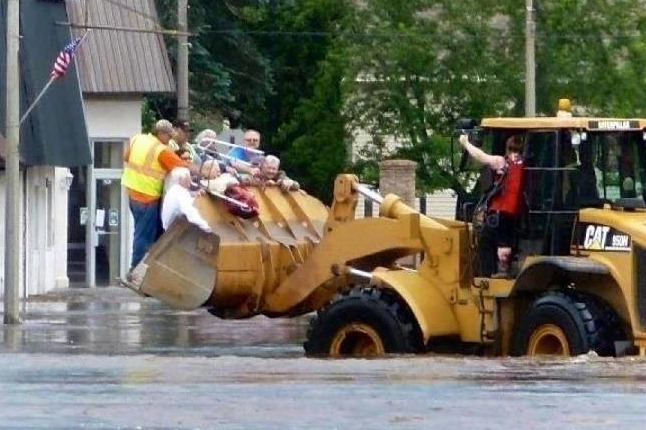
Rescue by front-loader during the Northland flash floods, June 20, 2012. Photo credit: area resident.

With flash flood waters rising fast, apartment building manager Roy Heller–rounded up his building’s residents and moved them to the building’s second floor. The next morning a front-loader made 3 trips to the building, carrying the bewildered residents to safety. Two had oxygen machines. At least one had prescription drug requirements and was concerned about getting refills. One of the ladies said: “my butt got rusty riding in that bucket.”

“My Butt got rusty riding in that bucket.” Rescued seniors tell their story to Red Cross disaster relief worker Carrie Carlson-Guest.

In total, 27 butts were rusted–and saved–on June 20 when an enterprising construction crew-member navigated the sturdy front loader through rushing water of the swollen Moose Horn River and up to the steps of the retirement complex.

At a Red Cross shelter a few days later, Gary Rector’s eyes reddened as he talked about watching the flood water rise over the front stairs of the apartment building, step by step. He wondered out loud about what might come of his tropical fish and pondered the whereabouts of the convertible Chrysler Lebaron that he’d just purchased a week before. Rector, retired musician and professed “hippie” slowly shook his head. Rector, a former a studio musician who worked on occasion with legendary singer and songwriter Del Shannon, only a few days earlier was playing his guitar with a friend in a neighboring park. Now the park was submerged and his home flooded.

Roy Heller, apartment building manager, Scanlon, MN. Photo credit: Scott Olson/American Red Cross

At around 9:10AM Thursday, Heller and Carlton County Sheriff briefed Rector and the other evacuated seniors. The water, they said had finally receded away from the apartment building. The apartment manager stood next to the Sheriff at a long table where the seniors were seated nibbling on snacks and trading stories, and announced that he could now see the entire front yard again. Everyone clapped. The Sheriff said it would be at least a couple days before inspectors could get inside and assess the damage.

Gary Rector, a retired studio musician, stayed at a Red Cross shelter during the flash flooding, Scanlon, Minnesota. Photo credit: Carrie Carlson-Guest/American Red Cross

If you would like to help people affected by the Northland flooding and other disasters here and around the world, you can make a donation to support American Red Cross Disaster Relief by visiting www.redcross.org, calling 1-800-RED-CROSS (1-800-733-2767) or texting the word REDCROSS to 90999 to make a $10 donation. Contributions may also be sent to your local Red Cross chapter or to the American Red Cross P.O. Box 37423, Washington, DC 20013.

Every Donation Counts

Ruby Born, 6, held a lemonade stand and raised money for Red Cross disaster relief. Photo credit: Nancy Rogers/American Red Cross

When Ruby Born, 6, came to the Red Cross office in Duluth, Minnesota, after the flash flooding, she had a sparkly yellow skirt, a beautiful smile, and a plastic bag filled with cash for the American Red Cross disaster relief operation helping affected families. “We sold lemonade,” she told the Red Cross.

Ruby held a two-day lemonade stand in her Superior, Wisconsin, neighborhood (just across a bridge from Duluth), selling an estimated 60 cups of lemonade.  Her parents Jeanne and Hector matched Ruby’s $150 in sales. And Enbridge Energy in Superior matched their combined gift for a total contribution of $600.00.

Red Cross disaster relief workers distribute clean up supplies in flood damaged Willow River, MN. Photo credit: Judy Hanne-Gonzalez/American Red Cross

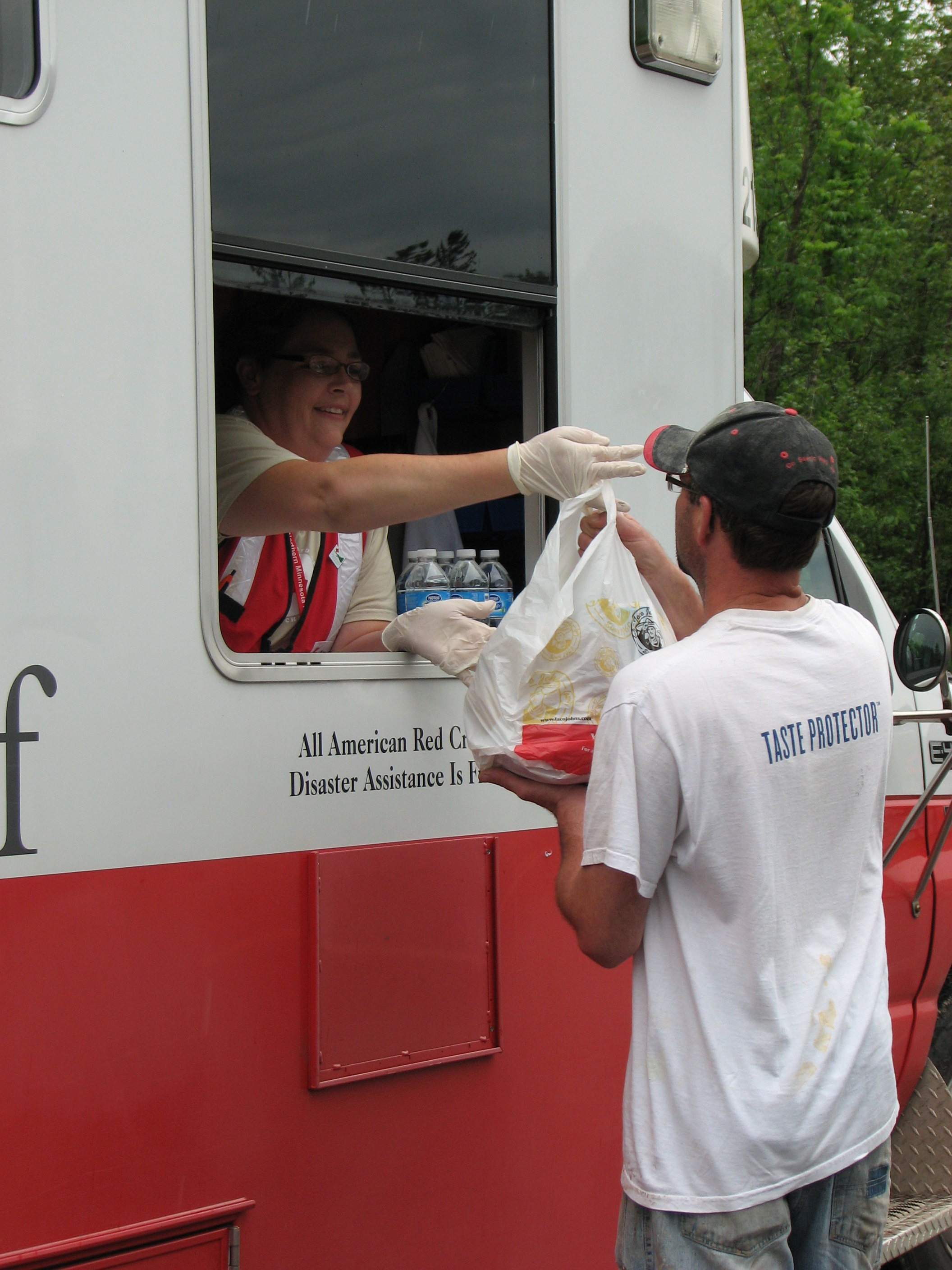
The Red Cross continues to respond to flash flooding that resulted after a storm dumped more than 9 inches of rain across northeastern Minnesota and northwestern Wisconsin, causing widespread damage and displacing hundreds of people. The Red Cross supported around 200 people in shelters.  Red Cross disaster relief workers conducted damage assessment across several counties in Minnesota and Wisconsin. Other Red Cross workers are still on the ground distributing water, food, and cleaning supplies to people in the most impacted areas.

Asked why she raised the money, Ruby’s mom said the family talked together about the flood and discussed ways to help.  Ruby said, “I want to give the money to the Red Cross.”

Red Cross disaster relief workers provide food from mobile trucks, Fond du Lac, Minnesota. Photo credit: Judy Hanne-Gonzalez/American Red Cross.

Thank you Ruby, and to everyone, for supporting the American Red Cross and helping fulfill our mission to reduce human suffering in the face of emergencies.

Every dollar counts, including those made from selling lemonade. If you would like to help people affected by the Northland flooding and other disasters here and around the world, you can make a donation to support American Red Cross Disaster Relief by visiting redcross.org, calling 1-800-RED-CROSS (1-800-733-2767) or texting the word REDCROSS to 90999 to make a $10 donation. Contributions may also be sent to your local Red Cross chapter or to the American Red Cross P.O. Box 37423, Washington, DC 20013.

A couple portraits from the flooding disaster

You’ve heard the news or seen the images of the dramatic and traumatic events that continue to unfold in northeast Minnesota. We want you to know that the Red Cross is going full force–ramping up each moment–to help the people who are affected by this disaster. Last night we supported 185 people in shelters across the region. We offer, here, a couple portraits of people who are affected by this disaster.

Portraits and Photos from Judy Hanne-Gonzalez, Executive Director, American Red Cross Northland and North Star Chapters.

Michael Ray Marchand

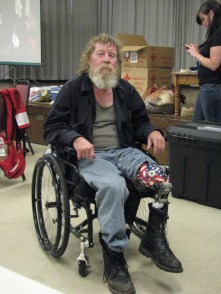
When Michael Ray Marchand looked out his trailer door early morning on June 20, he could not believe his eyes. The twice-homeless veteran, who lost his leg and wears a vibrantly-colored prosthesis in a design based on the American Flag, saw pouring rain, downed power lines, and a home teetering as the soil beneath it washed away. Marchand was evacuated by his landlords and called 911 for help.  He was rescued by a fire truck and taken with sirens blaring to the Red Cross shelter at the First United Methodist Church (aka Coppertop church) in Duluth.  “Red Cross has given me food and a place to stay,” Marchand says. “I can’t believe it. This is the third time I’ve been homeless.”


Charles, Koda, Michelle, and Jayden

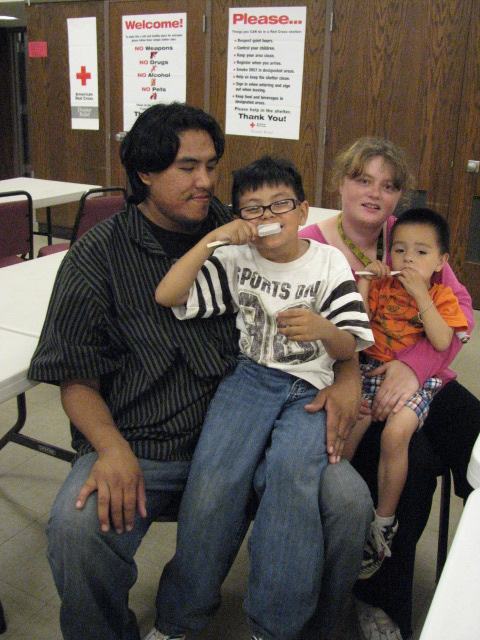
Michelle Henry, Charles Goggleye, and their children Koda Duane, five years old, and Jayden, two years, were staying with a sister in the Fond du Lac neighborhood when they were evacuated mid-morning on Wednesday by police as flood waters quickly rose. They escaped in their car, but it quickly broke down leaving them stranded again. They called Charles’ mother only to find that his brother and five children had also been evacuated and were staying there. So they found transportation to the Copper Top Church, where Red Cross workers were providing food, blankets, and a warm dry place to stay.  Red Cross volunteers entertained the children with movies. “We love the Red Cross,” says Koda. “They’re really nice!” Jayden and Koda loved the Red Cross comfort kits they were given, which included crayons, coloring books and toothbrushes.  The kids rushed to open the new toothbrushes and practiced brushing their teeth.

The Red Cross will soon begin mobile feeding as impacted areas become accessible; damage assessment volunteers are gathering and will deploy within 24 hours. Perhaps you’re already helping in some way, but if you’re wondering about HOW YOU CAN HELP, you can make a donation to support American Red Cross Disaster Relief. This gift enables the Red Cross to prepare for and provide shelter, food, emotional support and other assistance in response to this and other disasters here and abroad. Visit www.redcross.org or call 1-800-RED-CROSS. Contributions may also be sent to local American Red Cross chapters or to the American Red Cross, P.O. Box 37243, Washington, DC 20013.

Hello Summer!

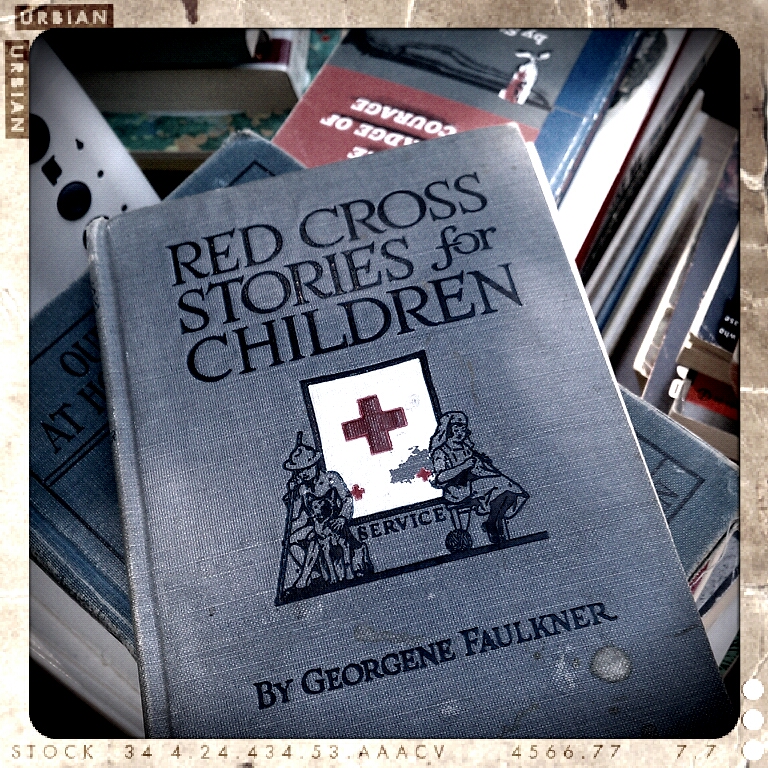
Purchased at a Minneapolis garage sale for 25 cents, “Red Cross Stories for Children” by Georgene Faulkner. (Lynette Nyman/American Red Cross)

Summer is the season of many things: sprinklers and flip-flops, Popsicles and fireworks. And garage sales. Stumbling across one this past weekend in Minneapolis yielded a book called Red Cross Stories for Children that the American National Red Cross (as it was once known) published in 1917. Children’s book author Georgene Faulkner composed these stories about “self-sacrifice and devoted skill” as a means to teach children about Red Cross ideals. The tattered spine and fragile pages have rendered the book obsolete for library use, but the words hold up for summer story-telling on the porch or inside the backyard tent with a flashlight and smores.

Happy Summer Everyone!

Edith Bunker, George Costanza, and Peggy Bundy

Story and photos by Scott Olson

The first casualty. (Scott Olson/American Red Cross)

It’s rare that you get to know exactly when and where a disaster will happen, before it actually happens. And then have time to pack a tidy bag and position yourself in the thick of it as whole thing begins to unfold. But that’s precisely the luxury I had on a blue-sky morning this May when American Red Cross volunteers (among others) participated in the Metropolitan Airports Commission (MAC) Airport Emergency Drill.

As a new member of the Red Cross Public Affairs Team, this was a perfect opportunity for me to get an inside look at the mechanisms that make up a large-scale emergency response. It started in a briefing room, where dozens of volunteer actors were given white envelopes containing their particular injury or ailments, a short bio, and even pseudonyms, like: Edith Bunker, George Costanza, and similar. They were told that they must behave in a manner consistent with their injury, but one trainer added “please don’t be too loud with your moaning and wailing.” Everyone was then ushered to a bus and transported to the disaster scene.

Emergency crews carry a “victim.” (Scott Olson/American Red Cross)

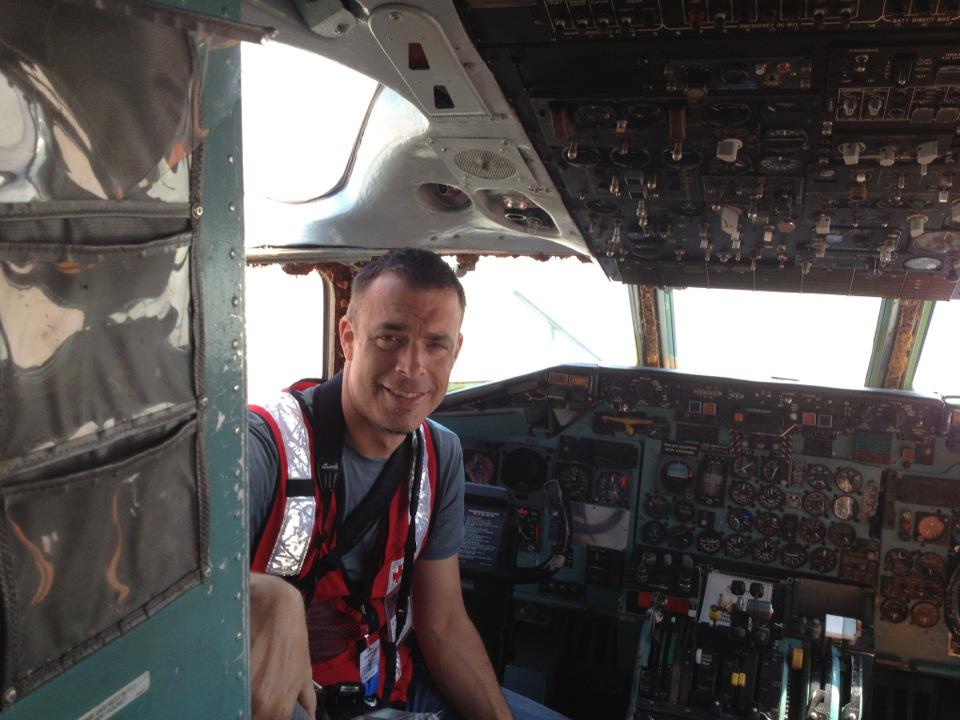
In this exercise a tornado had touched down on the tarmac and a retired DC-9 had been tossed around like ragdoll with all its occupants inside. I followed fire crews as they made ant trails in and out of the plane, carrying grinning victims to the safety of a nearby field. On hand was an impressive array of emergency service personal, MAC authorities and The Salvation Army—who attended to everyone’s dire need of hotdogs and Gatorade. Victims were triaged according to injury. Many of the less fortunate remained prone in the field or taken in ambulance, while others were escorted to a bus bound for the Survivors Center. The whole initial response appeared to be orderly and quite professional. Each emergency worker performed their duty with technical efficiency and a sober face.

Giving comfort. (Scott Olson/American Red Cross)

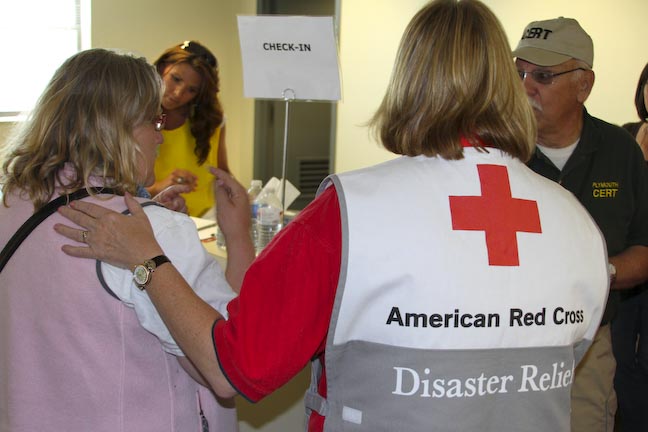
At the Survivor Center victims were checked in with MAC authorities and passed over to volunteers with the Red Cross and Salvation Army, whereupon they were fed more hotdogs and interviewed. Here many of the minor injuries were treated, psychological counseling was administered, and fictitious families were reunited. At moments it was quite crowded, but even if I had ignored the Red Cross emblems, our presence could be readily identified by the concerned faces and caressing hands of our volunteers.

Triage on the grass. (Scott Olson/American Red Cross)

The last stop was The Operations and Joint Public Information Centers. After passing through a security check point, I stuck my nose into the COM room and watched the flurry of officials work the phones, point at maps and look generally busy—and they were very busy. Colored placards were poised on dozens of tables: Safety, Logistics, Communications, Operations, and a conspicuously red sign for The Red Cross. I was reminded of any one of the Hollywood movies and their depictions of just such rooms. The kind of sleeves-rolled-up orderly chaos that makes you thank your lucky stars you don’t have that kind of responsibility.

When the exercise concluded, there had been numerous fatalities and injuries, but everyone (including Jerry Seinfeld and Peggy Bundy) went home entirely unharmed, well-fed and very much alive.

 Scott Olson is an American Red Cross Volunteer in Disaster Relief. Click here to learn more about joining the Red Cross.

Let Our 2012 Heroes Inspire You

The American Red Cross Northern Minnesota Region is pleased to present our 2012 Heroes Awards recipients. This year’s honorees include a teenage boy who performed life-saving CPR on his sister, police officers who rescued people from a burning building, and a soldier who stayed in the line of gun fire so that his teammates could seek safety.

Click on each image to see each hero’s story.

Saint Paul resident Sarah Meggitt rescued a woman from Como Lake. One night last October, Meggitt dove into cold water to rescue a woman who was trying to commit suicide. The woman did not want to be saved, but Meggitt stayed and fought to keep the woman’s head above water until professional responders arrived on-scene. (Photo credit: Andy King)

Cloquet student Kody Denison performed life-saving CPR on his 2-year-old sister, who suffered a seizure and stopped breathing at home. A ninth-grade student and hockey player, Denison learned CPR in health class at Cloquet High, which has a long-time commitment to Red Cross life-saving training. (Photo credit: Andy King)

Frank Mackall saved people from a burning apartment complex. Responding to a call involving a woman threatening to start a fire, Officer Mackall arrived early on-scene, finding a fire spreading rapidly through the apartments. With Officer Weinzierl, Mackall rescued six people including a paraplegic who was barely seen because of smoke. (Photo credit: Andy King)

Todd Weinzierl saved people from a burning apartment complex. Responding to a call involving a woman threatening to start a fire, Officer Weinzierl arrived early, finding a fire spreading rapidly through the apartments. With Officer Mackall, Weinzierl rescued six people, including a paraplegic who was barely seen because of smoke. (Photo credit: Andy King)

Ed White of Amery, Wisconsin, performed life-saving actions when a man collapsed at a fitness center. White is among the most active members of the Amery Fire Department. He’s involved with department fundraisers, prevention education, and social activities. White is a hero and an inspiration to many in the Amery community, including two of his children who have joined the Amery fire explorer program and have plans to follow in their dad’s life-saving footsteps. (Photo credit: Andy King)

Brooklyn Park youth Zachary Pierson used life-saving CPR last year to save Robert Meredith, Pierson’s baseball coach. When Pierson saw that Meredith was not breathing, he immediately started giving chest compressions and continued for about ten minutes until first responders arrived. Pierson then helped the emergency responders to the ambulance when his heart stopped again. Doctors later performed heart surgery on Meredith and told him 95 percent of people like him do not survive because rarely is someone close enough to perform CPR during a heart emergency. (Photo credit: Andy King)

Plymouth resident and charity founder LaDonna Hoy  founded Interfaith Outreach and Community Partners (IOCP), a social services charity that helps families in crisis. Hoy was instrumental in guiding IOCP to raise more than $5.5 million dollars that was used to renovate an old grocery store. The store now houses IOCP’s food shelf, case management, mental health resources, financial assistance, computer lab, re-sale shop, and other services that move families from crisis to stability. (Photo credit: Andy King)

Andrew Strege, United States Army soldier and resident of Wyoming, Minnesota,  performed courageous acts while on patrol in Afghanistan last September. A hostile insurgent force ambushed Strege and his squad. In spite of his injury, Strege returned fire, enabling his squad members to seek cover and coordinate movements for his rescue. As a result, Strege lost half of his right leg, but saved the lives of his squad members. While still undergoing rehabilitation and learning how to live with a leg prosthesis, Strege is sharing his experience with others and looking forward to a career in education and law enforcement. (Photo credit: Tommy Hutlgren)

Ham Lake resident Elizabeth Estepp founded Friend 2 Friend, a mobile clothing charity that continues to assist people affected by the Minneapolis tornado. Immediately after a tornado hit North Minneapolis on May 22, 2011, the Friend 2 Friend mobile unit was on-the-ground providing water, hygiene items, gloves, clothing, and other essential supplies to affected people. This past fall, Estepp delivered school supplies, clothing, and meals to more than 200 children and their families in metro area apartment complexes and mobile home courts. (Photo credit: Andy King)

Dolly Ruark of Saint Paul reached a 100-gallon blood donation milestone. Ruark started donating whole blood in the late 1960s. In 1984, Ruark began donating platelets—a blood clotting component with a five-day shelf life—and has continued to do ever since. Donating blood honors her brother who died from complications of AIDS. (Photo credit: Andy King)

American Red Cross Heroes are honored for demonstrating the Red Cross mission to prevent and alleviate human suffering in the face of emergencies. You can support this mission by becoming a Red Cross volunteer, giving financial contributions, or donating blood. Learn more on redcrossmn.org