Need a summer vacay idea?

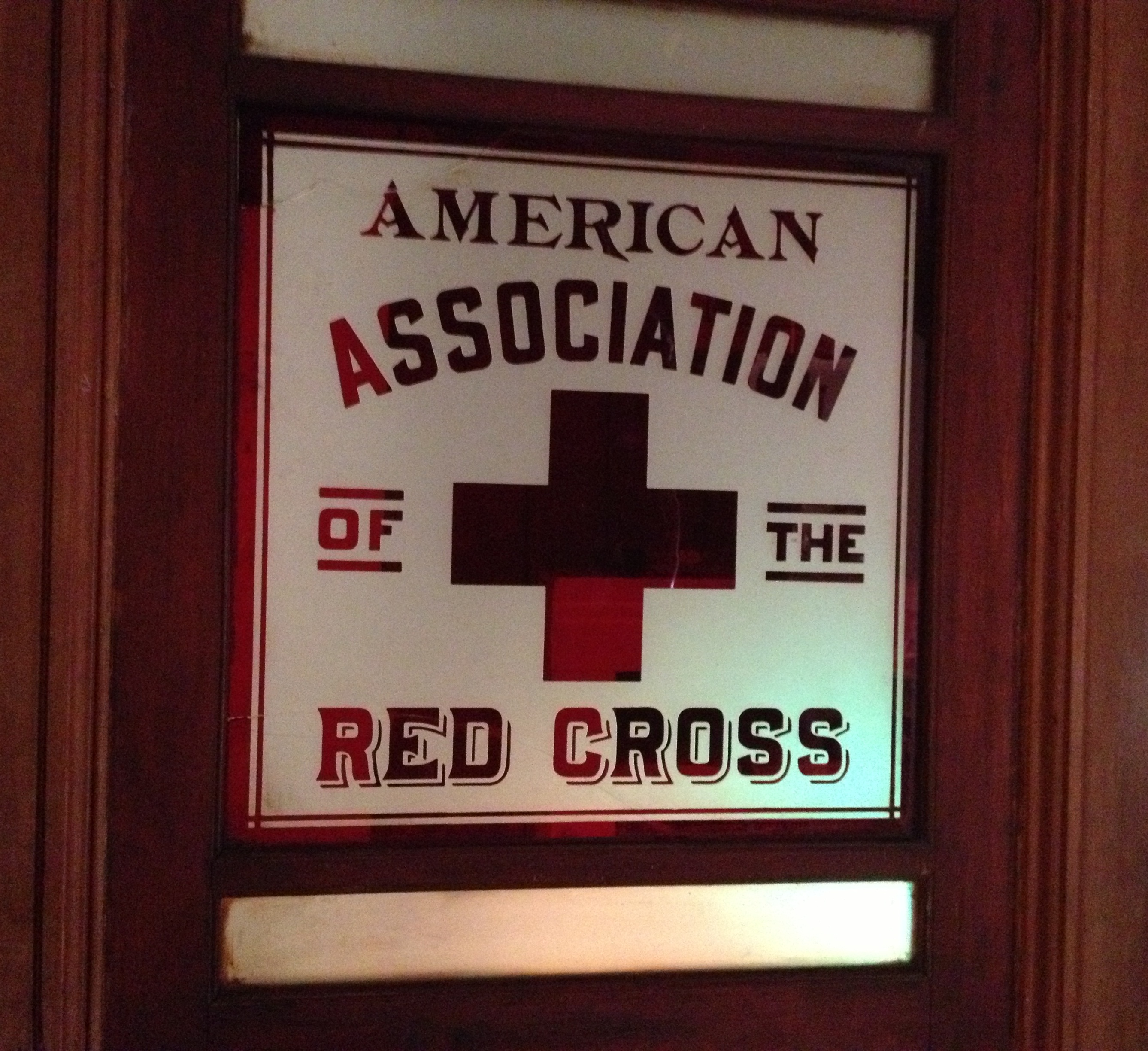
IMG_0298_cropUndecided about your summer vacation destination? Want to get out-of-town and see someplace new? Like tossing in a bit-o-history during summer vacay? Love the American Red Cross? Desire to know more about Clara Barton? If you’ve answered “yes” to any of the above questions, then we’ve got a summer destination idea for you: see the Clara Barton National Historic Site in Glen Echo, Maryland.

A couple of us had the pleasure of visiting the site earlier this spring while taking part in Red Cross training. The National Park Service Rangers were informed, kind and patient while answering dozens of questions about the house, its history and items on display. Here are some samples:

IMG_0308_cropQ: Was that Clara Barton’s cat in the painting?

A: Yes. His name was Tommy. Clara liked cats a lot.

IMG_0301Q: What’s holding up the lamp?

A: Bandages. Not the original bandages, of course, but new ones showing the utilitarian approach to life here.

Q: Did Clara really sleep in that bed?

A: Yes, that was Clara Barton’s bed. Its the same bed where she died on April 12, 1912.

IMG_0316_cropQ: Did Clara live here alone?

A: No, there were guests and others, including Dr. Julian Hubbell, who was the first American Red Cross field agent and also the primary designer of the warehouse.

Q: Were Miss Barton and Dr. Hubbell, um, you know, sweethearts?

A: Not as far as we know. Dr. Hubbell was for a time engaged to marry. His fiance was not fond of Clara Barton, who kept Dr. Hubbell busy with Red Cross work.
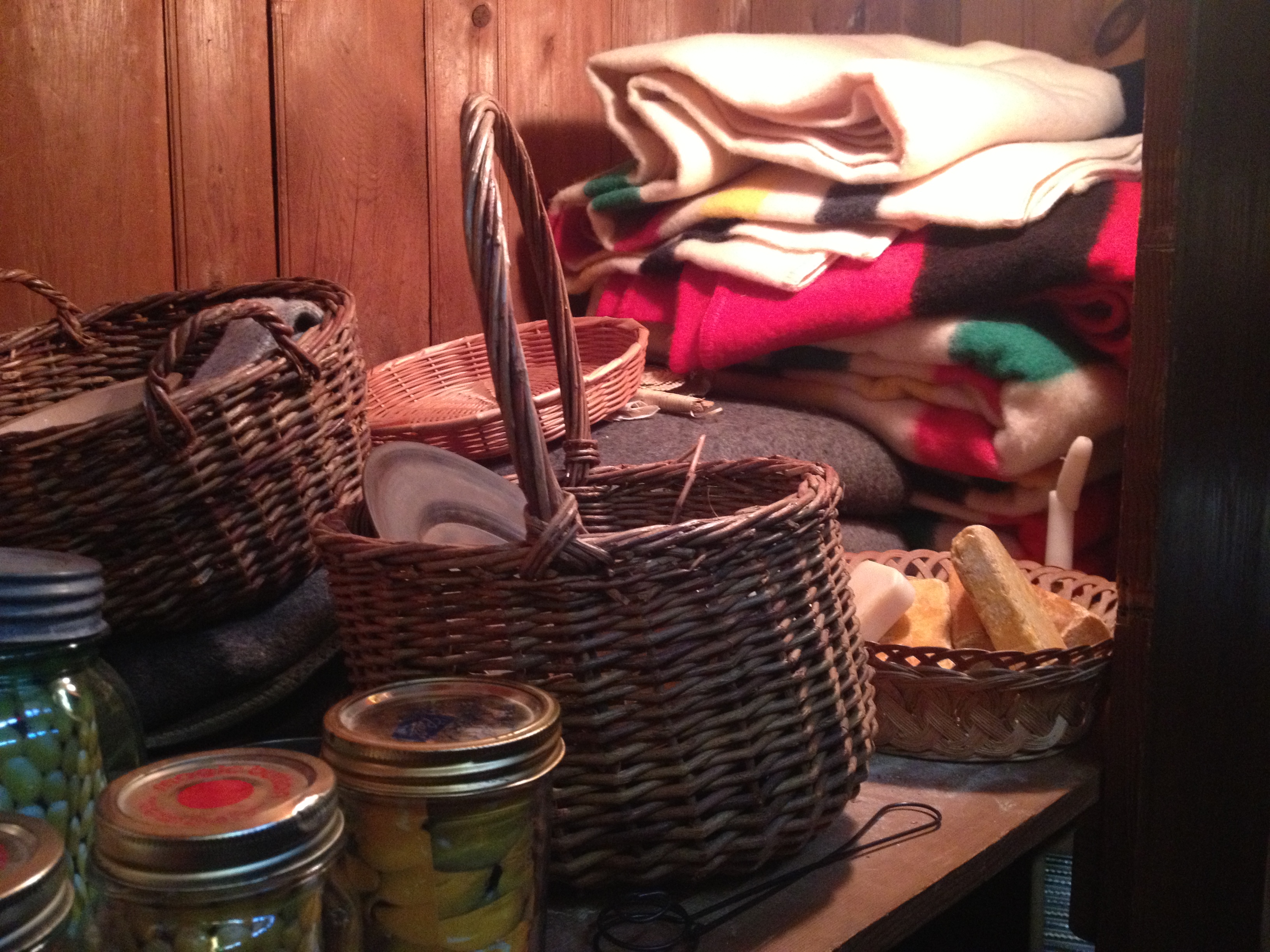
IMG_0300Q: Can we sample the canned pickles?

A: We’re unable to share them with you. They’re on display to show how disaster relief supplies were once stored here.

Q: Did Clara really write with those pens?
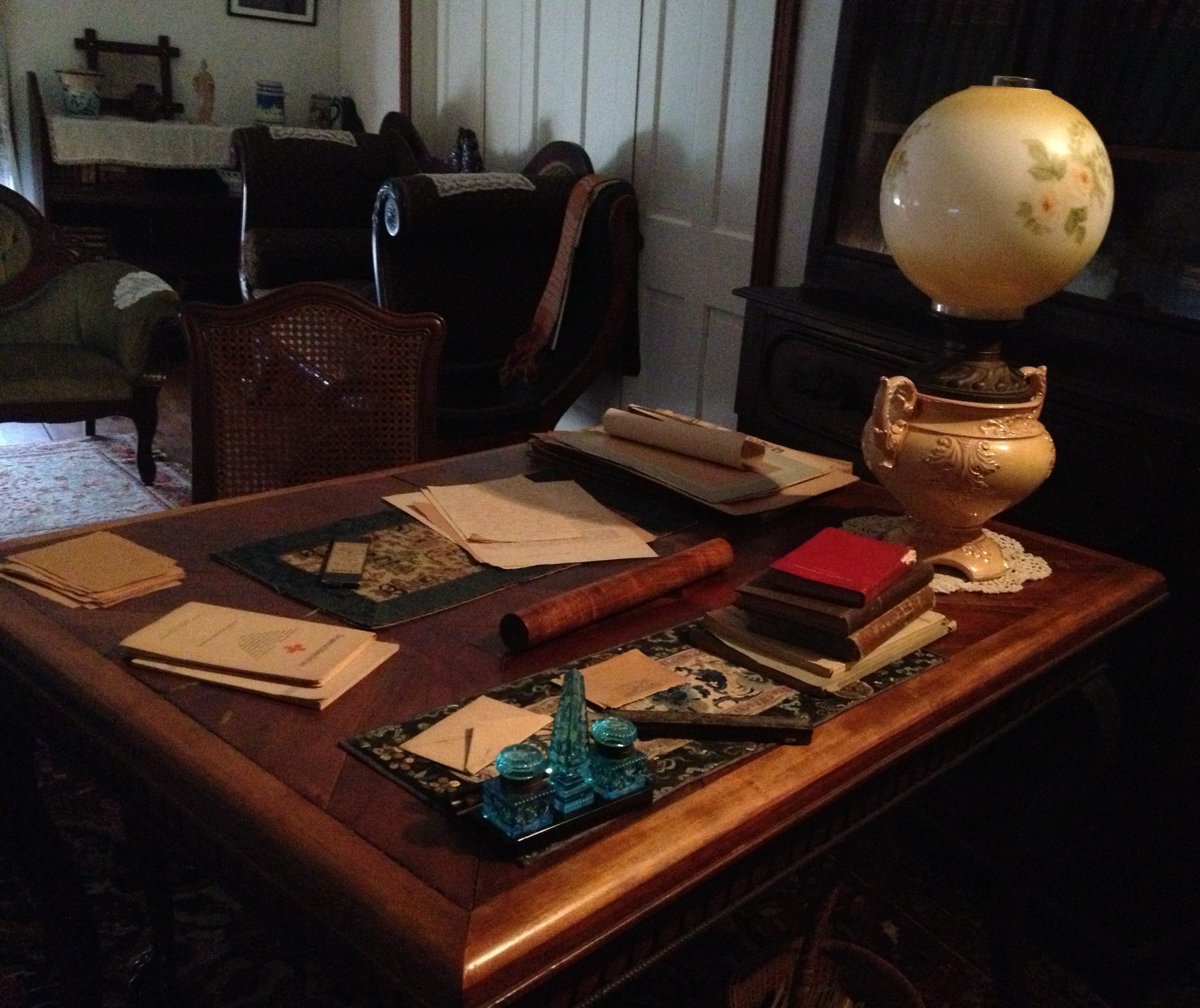
IMG_0314_cropA: One-third of the items on display are actual historical items that, like the bed, Clara Barton used. The others, like the pens, are antique period pieces demonstrating what Clara’s life was at that time.

Q: Can we sit in the attic chair next to stained-glass window and pretend that we’re thinking great thoughts about how we can help people?

A: You’re welcome to look, not touch or sit, and think great thoughts.

IMG_0320

So many more questions. So little time. If you’re unable to visit, then consider taking the online interactive tour of the building or testing your knowledge about Clara Barton and earn a Junior Ranger Badge. There’s no age limit for the badges. And as we say in Minnesota: that’s nice.

Photos and article by the often too curious like a cat Lynette Nyman/American Red Cross

Postcard From Moore, Oklahoma

Dear Red Cross in Minnesota,

DR225-13 Moore OK-3I’m in Oklahoma working with teams on Community Partnerships that connect with local and visiting agencies and organizations responding to the May tornadoes, including the one that hit Moore. We’ve found more than 300 contacts, from major corporations to families, that have “pop-up” sites responding to these disasters.

We’re operating out of a Multiple Agency Resource Center in Moore. It’s similar to FEMA Disaster Response Centers, but being operated by volunteer, non-government organizations.  Here, clients check-in with a Red Cross relief worker and then move from table to table to access recovery service referrals on site. The process works well. If anything, it’s slowed by the high volume of cases. More than 3500 families are impacted.

The Oklahoma Red Cross is well prepared with strong community support and presence. From what I can see, Red Cross disaster relief functions are going strong in all functions.

We’re expecting severe weather the rest of this week and have had to interrupt Red Cross work because of it early Tuesday and probably today. Being aware and prepared starts with each of us!

From,
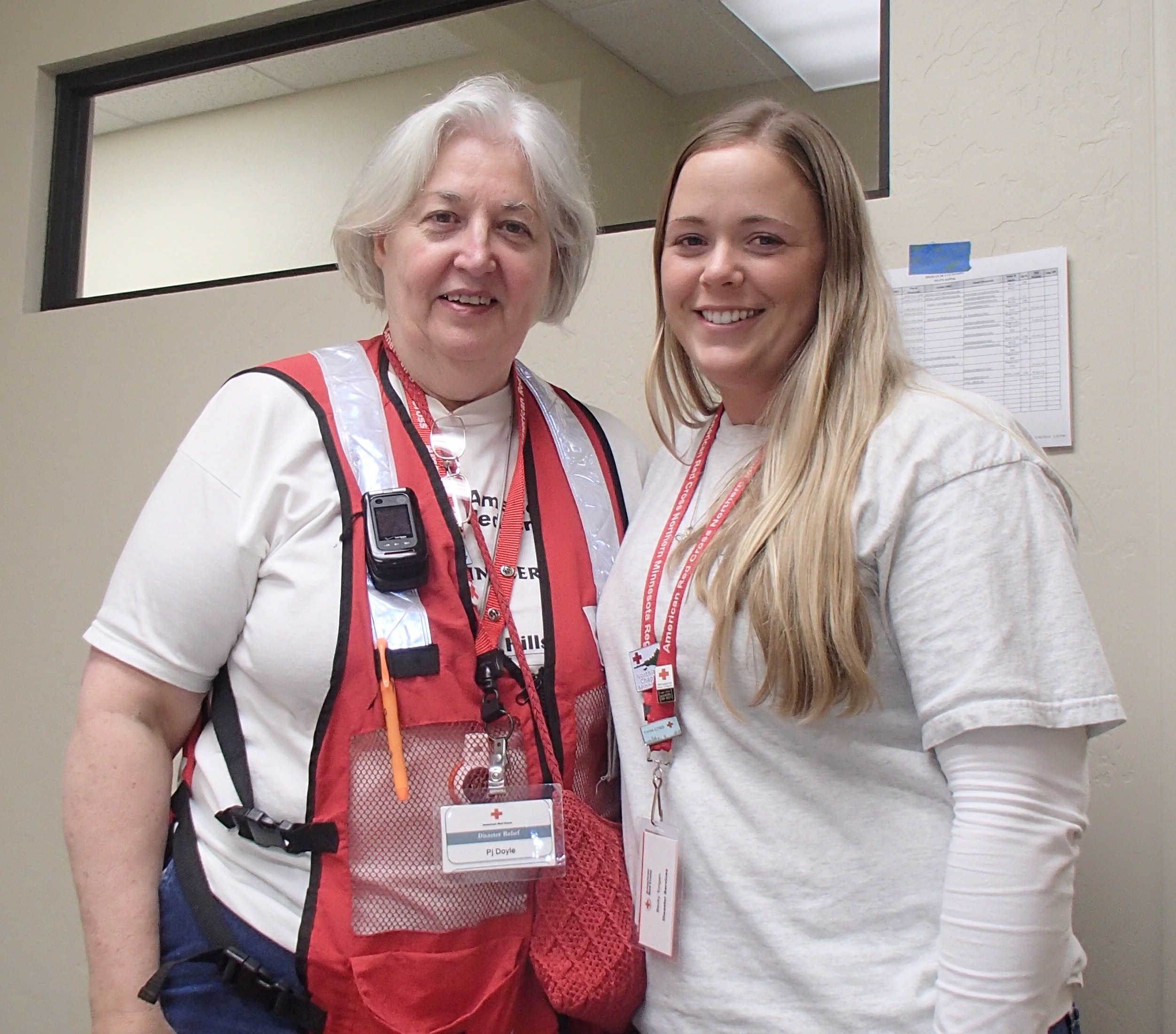
Pj Doyle

P.S. I’m including a photo of the disaster in Moore and a picture of me (left) with Becky Tsongen, who’s also a Red Cross community partners relief volunteer from Minnesota.

Money, Not Stuff?

Dear Everyone Who Wants to Help,

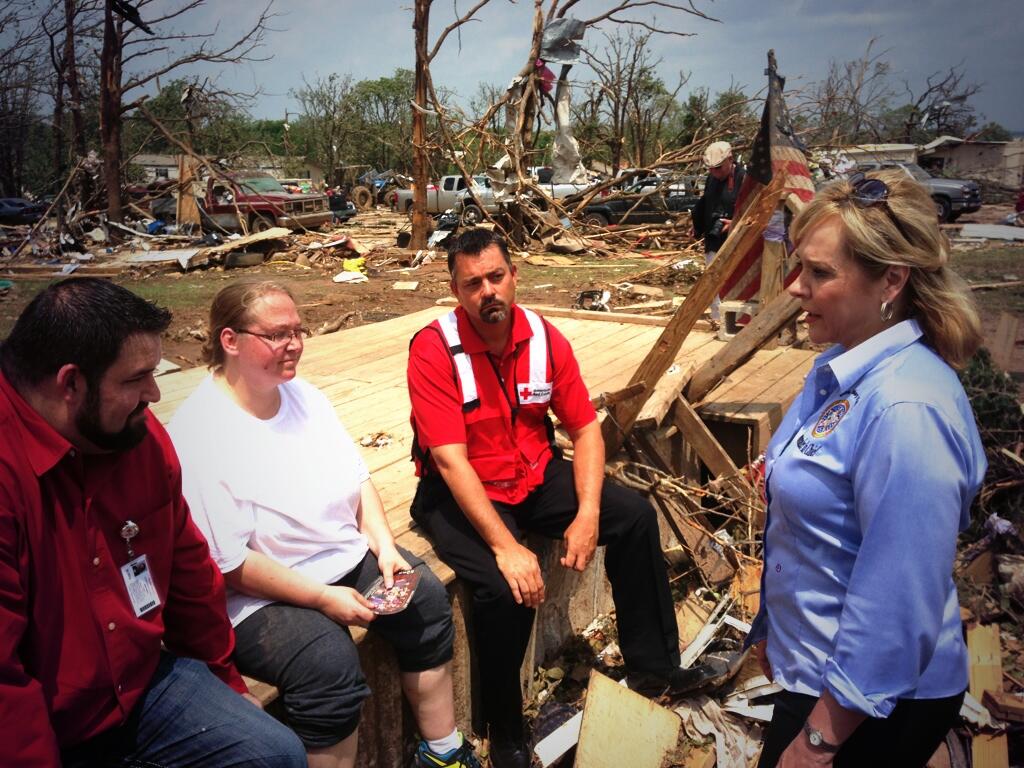
Kimberly Graham lost her home in Moore, Oklahoma. Here, she sits, holding onto a personal picture she found near her home. (Photo courtesy of Red CrossOKC)
Kimberly Graham lost her home in Moore, Oklahoma. Here, she sits, holding onto a personal picture she found near her home on May 20, 2013. (Photo courtesy of Red Cross OKC)

During a Red Cross disaster response, the best way to help a disaster victim is by making a money donation. Here’s why:

1. Financial contributions allow the Red Cross to purchase what’s needed for disaster relief operations. Monetary donations enable the Red Cross to purchase relief supplies close to the disaster site which avoids delays and transportation costs in getting basic necessities to disaster victims.

2. Donating cash allows the people affected by disaster to put money back into their local economy. Because the affected community has generally experienced significant economic loss, purchasing relief supplies in or close to the disaster site also helps to stimulate the weakened local economy.

3. Donating cash allows individuals to buy what they need. Many people affected by the tornado that hit Moore, Oklahoma, for example, were at work during the storm. All they have are work clothes. They need of clothes and shoes to wear during the clean-up.

4. Many times people want to send stuff: small items such as collections of canned food and used clothing and shoes. But these items must be sorted and repackaged, a process that wastes valuable resources of money, time, and people that are needed for other aspects of Red Cross disaster relief operations.

Please consider making a money donation to the American Red Cross. You can text REDCROSS to 90999 to give $10 to American Red Cross Disaster Relief, go online to redcross.org, or call 1-800-REDCROSS.

We, and the disaster survivors we help, are grateful for your support.

Andrea Bredow
American Red Cross Disaster Relief Volunteer

Wildfire Survivor Had No Time to Save Anything

Wildfire survivor Marlene Snyder shares her escape story with Christina Hujanen, a Red Cross disaster relief volunteer, Menagha, MN, May 16, 2013.

Marlene Snyder and her mother-in-law, Mona, stood on their shady back deck, crying.  Marlene gazed helplessly into the shell of her home, trying to identify anything in the charred black mess that had been her living room. 

“That was a table, here was the kitchen,” says Marlene to several Red Cross disaster relief workers who responded to the Green Valley Wildfire disaster within hours after the blaze started on Wednesday, May 15.

At first Marlene and her family weren’t worried about the house. They treated fire spots with sand and water from a hose.  Then they headed with the hose down to a barn, thinking that they could save the barn and their horses when the water stopped.  That was their first clue that their home was in danger.  By the time they returned to the house, fire had gotten into the roof and there was no time to save anything before they fled.  They left with their lives and one photo album.

“I thought I’d come back and there would be things I would recognize, things I could save,” says Marlene.  “I didn’t know I would come back to see something like this.”

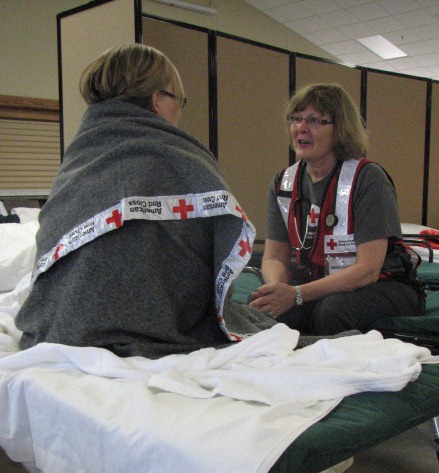
Red Cross disaster relief worker Lori Dehn talks with a shelter resident, Sebeka High School, May 16, 2013.
Red Cross disaster relief worker Lori Dehn talks with a wildfire evacuee at the emergency shelter in Menagha, MN, May 16, 2013.

The fast moving wildfire crossed several county lines in north-central Minnesota. Hundreds were forced to evacuate, including residents from a nursing home in Menagha, the town that suffered most of the fire damage. More than 60 people stayed in a Red Cross shelter, waiting for news about their homes. No one, thankfully, was injured. Twelve homes were destroyed. 

Along with 400 other people, the Snyder family attended a community meeting where they learned about efforts to contain the fire as well as disaster relief services for affected families.  Many, including Marlene, expressed their thanks to the firefighters, emergency responders, and Red Cross workers for their help during the Green Valley Wildfire disaster.

To date, the Red Cross has served more than 1,000 meals and snacks, handed out more than 300 disaster relief items, including comfort and clean-up kits, and mobilized more than 40 disaster relief workers, 90 percent of whom are volunteers.

“We’re so grateful for what you’ve done,” says Marlene. “You’re doing a great job.”

Story and photos by Judy Hanne-Gonzalez/American Red Cross. Click here to learn more about American Red Cross disaster relief and how you can help.

Water, water, everywhere

It almost goes without saying that living in Minnesota means that we’re never far from a body of water. But we’ll say it anyway: there’s water, water, everywhere in our land of lakes, rivers, streams, water parks and swimming pools.

lifeguard_2010_IMG_2351_webLast year, sadly, we had in Minnesota at least 39 drowning-related deaths (not including boating accidents). Do you know that drowning ranks as the second leading cause of unintentional injury or death in children 1-14 years of age?

Because of those tragedies, and the fact that May is National Water Safety Month, we’d like to remind our Minnesota community that everyone should know how to swim and how to respond to water emergencies.

So, do you know how to swim? And does everyone you know and care about know how to swim? If the answer to either of these questions is no, then it’s time for you or that someone you know to enroll in age-appropriate swim courses. There’s no reason to feel ashamed if you can’t swim, but taking action as soon as possible and learning how to swim can go a long way toward preventing accidents in and around water.

????????????????????????????????????????????????????????????????????????????????????????????????????????????????????????????????????????????????????????????????????????????????????????????????????????????????????????????????????????????????????????????????????????????????????????????????????????????????????????????????????????????????????How about knowing CPR and first aid? It may become crucial that you carry out actions required to resuscitate an unconscious swimmer, especially in a scenario where there’s no lifeguard on duty. If you don’t know CPR, then learn now.

Also, following these rules can help prevent water emergencies and make your vacation at the beach or by the pool that much more enjoyable:

  • Never leave a child unsupervised around the water. Even where lifeguards are on duty, keep a watchful eye on younger swimmers.
  • Set/follow water safety rules for family based on swimming abilities.
  • Be conscious of any and all posted signs.
  • When possible, swim in areas lifeguard-supervised areas.
  • Have young children or inexperienced swimmers wear U.S. Coast Guard-approved life jackets around water, but do not rely on life jackets alone.
  • Be aware of factors like deep and shallow areas, and currents.
  • Pay attention to local weather conditions and forecasts.
  • Wear life-jackets when boating.

Story by Hayes Kaufman/American Red Cross. Additional sources include the Minnesota Department of Natural Resources and the Minnesota Department of Health. For more Red Cross water safety tips, please click here.

Do You Speak DR?

Hey there, we recently received this digital postcard from one long-time Red Cross disaster relief volunteer Marian Green, who’s in Illinois responding to spring floodingWe’ve inserted a few translations for the layperson and Red Cross disaster rookie readers.

Dear Red Cross Pals,

Marian and Tejas working together during the 2013 Spring Flooding response in the Midwest.

I met Tejas Patel in Baton Rouge, LA, last summer for Hurricane Isaac. He was the Log Chief [logistics boss]. It was great to run into him here as the Assistant Director [the #2 in charge of this disaster relief response]. As soon as he saw me walk into the room, he pointed to me and said “You are the FSI Lead!” [FSI = all things related to tracking numbers for the relief operation like meals & clean-up kits distributed, etc.] “Umm, OK,” I stammered brilliantly! It is great to be back in the field as a new FSI [actually stands for Financial Statistical Information] Supervisor. It was even better when an FSI Manager, Elizabeth Norcross from Hawaii, showed up yesterday. This is the first time I worked a DRO [Disaster Relief Operation] with three regions, each having its own staff, plus a DRO. Trying to get four sets of numbers compiled without duplications is a real challenge, but it’s been a great learning experience and Elizabeth is a great mentor. I plan on being here until May 4th but could be talked into a few more days if needed.

Thanks,
Marian in Peoria, Illinois

Our reply: Take care Marian, Tejas and the others who are responding to the spring flooding. You’re brilliant and for sure you have hearts bigger than three regions. And to our readers, both rookies and veterans, click here to see more about how the Red Cross is helping in Michigan, Illinois, Iowa, Minnesota and North Dakota during the 2013 Spring Floods disaster response.

Notes of Thanks

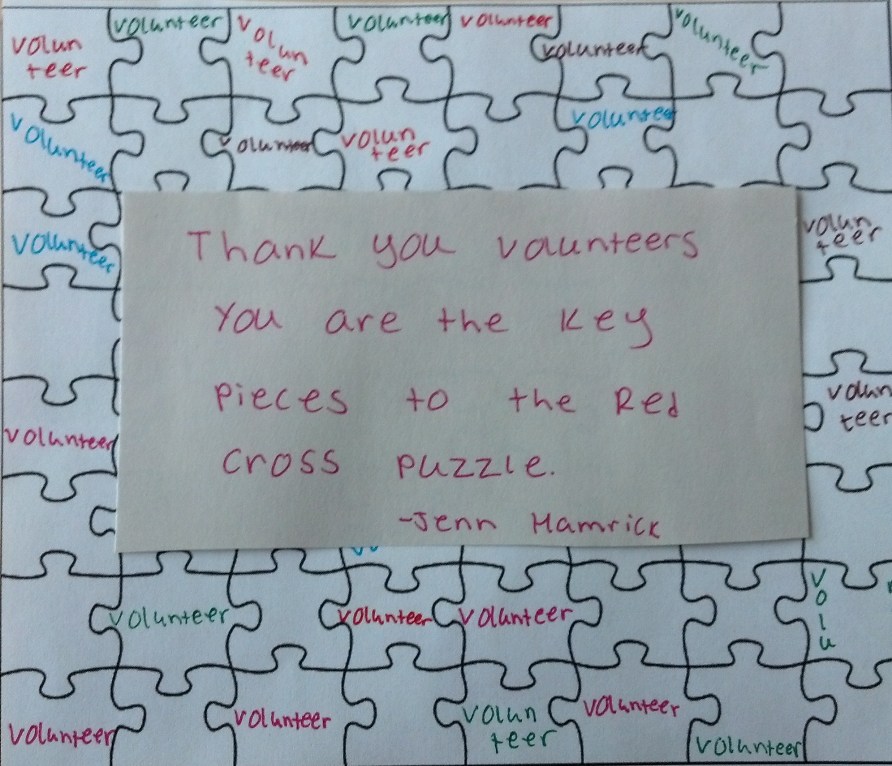
It’s National Volunteer Week, and the staff and board members here in the Northern Minnesota Region have much to be thankful for. This year we decided to write creative thank you notes to volunteers in celebration of their service to the Red Cross. These notes will be compiled into a poster, which we’ll bring to each of the upcoming volunteer appreciation events this spring. But in honor of National Volunteer Week, here’s a preview of how thankful we are for our fabulous Red Cross volunteers.

Megan M note croppedMegan D note croppedBoard note 1 croppedChoua note croppedLisa note croppedNicole note croppedboard note 2 croppedJason note croppedJenn note croppedB Safe note cropped

Disaster Mental Health Supports Red Cross Workers Too

Imagine that you’ve just returned home after being deployed to the American Red Cross Hurricane Sandy disaster relief operation. You worked twelve-hour days for three weeks helping Sandy survivors rebuild their lives. You’re a Red Cross disaster relief worker–most likely you’re a volunteer. You’re exhausted. You’ve seen a lot. Your experiences range from the devastating to the inspiring. You could use a little emotional support, but you’re not sure how or who to ask for it.

sandi_1
Sandi Lindgren was deployed to the American Red Cross tornado disaster relief operation in Joplin, Missouri, May 2011. Photo provided courtesy of Sandi.

The next thing you know, you receive a call from a Red Cross Disaster Mental Health volunteer who’s checking in to see how you’re doing and to assist you in dealing with stress and high impact experiences. The volunteer listens to you, offers support and lets you know that you’re not alone. Sandi Lindgren could be the person who calls.

“Disaster deployments are a special kind of response that I believe calls for increased attention,” Sandi says. “When you return home friends and family usually want to know some of what you’ve experienced, but often they don’t want to know as much as you want to tell.  It’s not because they don’t care – it’s because they don’t understand, and they themselves have had life continue while you were away.  Sometimes it can be helpful to process some of these experiences in a post deployment call, to get support, ideas and sometimes just have someone to listen.”

Sandi–who also deploys to disaster relief operations away from home–most often serves the Red Cross in Minnesota as part of a team of trained and licensed mental health volunteers. Together, the team has made more than one hundred post-deployment calls to Hurricane Sandy relief workers from Minnesota.

sandi_2
Sandi Lindgren gives–and gets–a hug during the tornado disaster relief operation in Joplin, Missouri, May 2011. Photo provided courtesy of Sandi.

Though it’s a service many people aren’t aware of, this kind of outreach can make a world of difference to those it supports. For example, one volunteer says that the the Disaster Mental Health volunteer who contacted her after her return from Hurricane Sandy “went way beyond what I could ever have expected a volunteer to do in the amount of time she devoted to [my post-deployment needs] and the caring for me and the Red Cross.”

Disaster Mental Health responders worry about the negative stigma sometimes associated with mental health and want volunteers to know that talking with someone is a normal and  healthy way to process a deployment experience. Sandi explains that “The Disaster Mental Health Team and its volunteers don’t approach you and talk to you because we secretly think you’re crazy and in need of an intervention! Sometimes, we just want to chat, or meet new people, or find out what’s going on. I like to remind people that we’re the mental HEALTH team…it’s all about how to be your best, so that you can then support others in the most effective manner.”

Thank you to all of the Disaster Mental Health team volunteers for your compassionate support of our regional volunteers. Your work is truly appreciated.

Story by Lisa Joyslin, Volunteer Resources Director, American Red Cross Northern Minnesota Region. Click here to learn more about Red Cross opportunities.

Red Cross Hosts Downtown Council Meeting

councilcropThe Twin Cities Area Chapter was honored to host the April 9 meeting of the Minneapolis Downtown Council. More than 50 local business leaders joined us for lunch and learned more about preparing their families and organizations for disasters, including health and safety training, Ready Rating and AEDs (automatic external defibrillators). Participants also heard from Shane Zahn, with the Minneapolis Downtown Improvement District & Minneapolis Police Department, about personal safety workshops, the SafeZone initiative and more. Even B. Safe Bear got in on the fun with Council President & CEO Mark Stenglein (pictured right with B. Safe Bear, center, and our Northern MN Red Cross Region CEO Phil Hansen, far right). Special thanks to all those who helped make the event a success!

Story and photo by Carrie Carlson-Guest/American Red Cross

Disaster Techies Train Up

Information technology (IT) is essential to modern disaster relief operations. And when the American Red Cross responds, Disaster Services Technology (DST) relief workers are called on to build computer networks often from the ground up. In a recent 3-day training held at the Red Cross in Minneapolis, 24 volunteers from across the Upper Midwest learned how to do just that.

DSC_0907DSTWorking in groups of two, the participants practiced using advanced IT equipment in the most efficient and expedient way possible to establish a computer network during disaster response. Each pair was taught how to set up a computer workstation, most often with one volunteer reading the provided directions, while the other carried out the procedure. “I’ve been deployed a couple times in Minnesota, never nationally. So I don’t often get to ‘play with toys’,” says volunteer Giampaolo Malin.

In a real disaster situation, volunteers like Malin arrive on scene, assess the situation and survey the post that would become a communications hub for reporting, recording, and sharing disaster response information. Then using methods learned about in trainings like this one they contact national Red Cross operations to get technology equipment needed in the field for providing relief to disaster survivors.

As an added training twist, the computers the volunteers used during the training were not Internet capable. Instead, before the training began several active satellite dishes were set up outside the building. The volunteers were trained how to use their computers to sync with those dishes thereby simulating a potential disaster environment where cable access to the Internet would be unavailable.

DSC_0919DSTThe training environment was supportive and helped build rapport between people who would likely work together in serious and intense situations. Here, every volunteer present helped each other learn unfamiliar technology, and of course, the instructors circulated the room offering assistance as needed. For Paul Davidson, the training was worthwhile.

“I come to these trainings because you never know who you’re going to run into out in the field. I also like to see and learn about the equipment we would be using.”

Story and photos by Hayes Kaufman/American Red Cross. To learn more about Red Cross disaster volunteer opportunities click here.