Fires do more than burn

12644776_10153965832388846_9172351190049117918_n
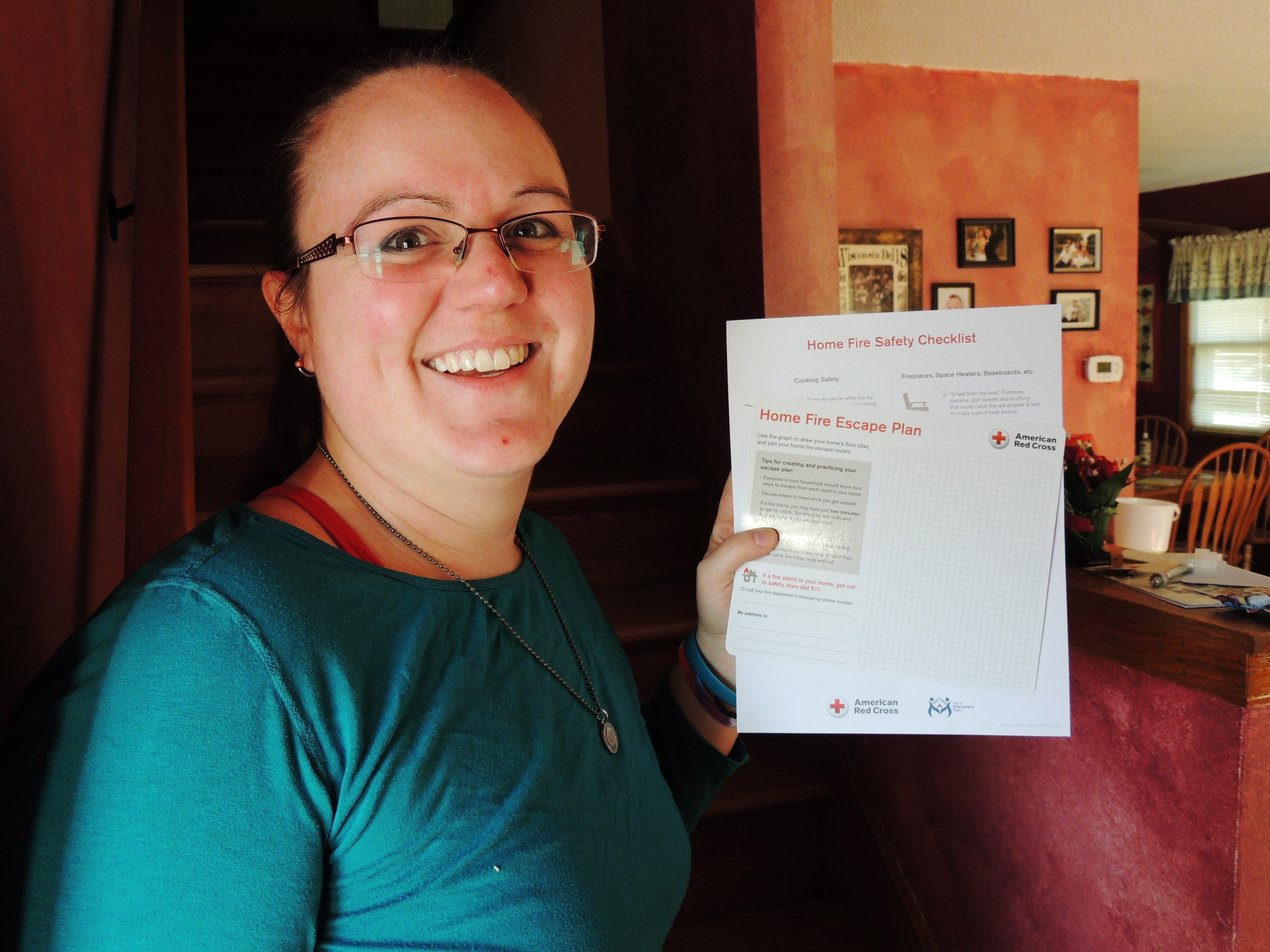
As part of a Red Cross disaster relief team, Rose Ingebrigtsen has responded to several house fires in northern Minnesota, including one in Virginia on January 26, 2016. Photo credit: Nancy Rogers/American Red Cross

By Rose Ingebrigtsen, an American Red Cross intern serving in northern Minnesota

When I saw that the American Red Cross serving Northern Minnesota was looking for a disaster services intern I was immediately interested. Even though I did not have any prior experience with the Red Cross personally, I knew it must be a great place to work. Why else would 330,000 volunteers nationwide serve for free? At this point I am mostly learning about disaster response and capacity building for The Pillowcase Project (a youth disaster preparedness program that the Red Cross is doing in partnership with Disney), which is great because I love doing hands on work and working directly with people.

That changed on Friday, January 22, when I was able to go on my first D.A.T. (Disaster Action Team) response with the Red Cross. I was a little nervous due to the fact I had never done anything like this before, but I was lucky enough to be accompanied by our local disaster program manager and seasoned D.A.T. captain Tony Guerra.

Before meeting with the affected resident, we drove to the address to see first-hand the condition of the burned house. Due to sketchy cell service and an unreliable maps app we couldn’t find the house, but it turned out there wasn’t much of a house left to find. Later, when we met our client, I quickly learned how hard it is to be really prepared for a house fire, and that no one knows exactly what to do after and much of their belongings are damaged or gone. This client was no different: all she had now were the clothes on her back and, luckily, her purse.

11039083_10153208300863846_9044158130483480805_o
In northern Minnesota local community members help the Red Cross provide basic comfort and care to people who have suffered a tremendous loss because of home fire and other disasters. Photo credit: Nancy Rogers/American Red Cross.

After we assessed our client’s needs and determined what steps she needed to take next we brought her a donated quilt, which she appreciated so much. Typically these quilts are made by local church groups, and then they are donated to disaster victims and military veterans through the Red Cross. Giving someone in need a quilt is, I think, fitting. Back in the day, imported fabric was expensive for the average person in America and it was difficult to find sufficient, affordable fabric locally. The solution was to salvage scraps of fabric and to sew together into a quilt. Today, after someone has a house fire family, friends, strangers, and the Red Cross come together like small pieces of fabric to help people rebuild their lives.

Before beginning this internship, I had no idea how many house fires there were in our area and the damage they do besides burning up the contents of your house: think smoke damage or water damage. Since my first response in January, I’ve had the opportunity to respond to two more fire disasters in northern Minnesota. I was struck by the devastation residents feel after losing much to all of their belongings, and how much Red Cross disaster relief is necessary and appreciated. I hope there will be fewer house fires in the area. But if there are more I hope I have the opportunity respond again, because I have enjoyed lending a hand and making a direct positive difference in someone’s life.

Red Cross spiritual care is for disasters of all sizes

Story by Jason Bengtson, Regional Recovery Manager for the American Red Cross Minnesota Region

_DSC2957Since 1997, American Red Cross volunteers in spiritual care have responded to large disasters across the country, providing what is for some people a basic need for disaster relief. Now, the Red Cross will offer spiritual care during disasters small, medium and large. This program expansion comes following a national Red Cross leadership decision to make spiritual care a part of basic comfort and care in local communities across the country.

A major component of the Red Cross Disaster Spiritual Care Program is collaboration with our Integrated Care and Condolence Teams (ICCT). These teams coordinate services to families whose loved ones are injured, missing, or deceased because of disaster. Immediate relief and long-term recovery planning, health services, mental health support, and spiritual care is offered together as a way to decrease intrusion into people’s lives while increasing care, comfort and support, during a time of great need.

Our region is fortunate to have Greg Bodin leading the local spiritual care team. Greg is a Red Cross volunteer who helps lead the national spiritual care program. He’s also head of pastoral care for North Memorial Health Care. He has deep experience providing spiritual care after emergencies.

“This is an exciting opportunity for the Red Cross to expand the basic services it provides to people affected by disasters in Minnesota,” says Greg. “The Red Cross Disaster Spiritual Care program represents excellent community care across faith traditions.”

_DSC2929Spiritual care volunteers respect the Fundamental Principles of the global Red Cross and Red Crescent Movement. The principles ensure that services are provided with neutrality and impartiality in a way that supports the Red Cross mission to alleviate human suffering. The volunteers provide consistent and reliable services in all regions and to all persons regardless of faith traditions. They are trained to spiritual care during a house fire, the most common disaster the Red Cross responds to, as well as major natural disasters and mass casualty events.
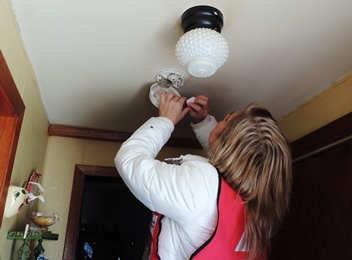
Recruitment and training for this new opportunity will take place during the coming months. To be eligible for a spiritual care volunteer position an individual must be a professional chaplain or an endorsed faith-based provider. Active leaders of local faith-based organizations are encouraged to become Red Cross spiritual care responders.

For additional information about this opportunity, please email Jason at jason.bengtson@redcross.org. Image credits: Lynette Nyman

Every home fire death breaks a heart

HFCv2_763x260This past weekend there were two home fire deaths in Minnesota. One was a woman 25 years old and the other was a girl 5 years old. These sad and tragic deaths bring the number of home fire deaths to 46 this year in Minnesota. And like the people closest to these disasters, we feel our heart break each time we learn of a home fire death, and we especially feel the heart ache when Red Cross volunteers are responding to these disasters, helping the survivors rebuild their lives.

We do not know details about how the most recent home fires started. But we encourage everyone to  practice home fire safety, especially during the busy holiday season. Here are several resources that will get you started:

Icon PreparednessOne thing we’re passionate about is making sure that every household has working smoke alarms. Please check the alarms in your home to see if they’re working. If not, replace the batteries or the alarms. We can help you do this. Our Home Fire Campaign makes it possible for the Red Cross to install free smoke alarms that will help save lives during home fires.

Remember: if a fire starts in your home get out to safety, and then dial 9-1-1 for emergency assistance.

Caring people make the Red Cross go round

Story by Hildred Dungan, Red Cross Volunteer

Hildred_Dungan_Photo
“Everything the Red Cross does because of disasters–and we’ve had many this year ranging from Washington wildfires to South Carolina flooding–is done with help from caring people like us. “

I have been a volunteer for the Red Cross since 2003. Based in Minnesota, I first started after I took several classes and became a volunteer to go to local fires and help the families after the incident. We provided those affected some funds depending on the severity of the fire. In our office counselors helped them with a lot of referrals to places like VEAP and Bridging to replace their personal items that were lost. It was always a comfort to them when we were there, especially in the middle of the night.

To date, I have been on about 20 deployments which have ranged from Hurricane Katrina (my first one) on the Gulf Coast to Hurricane Sandy in New York, and most recently the wildfires in Idaho and Montana. A deployment is when you are sent to volunteer at some type of a disaster usually in another state.

When I was deployed to Katrina, another volunteer and I drove the Emergency Response Vehicle better known as the ERV to Montgomery, AL to pick up a load of water and snacks. The ERV is the size of an ambulance and it is a feeding unit to go out in affected areas and feed those who are without electricity and maybe running water. We did 2 meals a day with a Baptist group cooking big kettles of food and there were maybe 20 ERV’s delivering food and water to all parts of the area. We were first assigned to Mobile, AL and drove anywhere up to a 50 miles range to serve lunch. We would serve hot food from a serving window in the truck and when finished or the food was all gone we would head back to our base camp and do it all over for dinner. All the people we served would be so appreciative as they hadn’t had a hot meal for 3-5 days by then.

Another disaster I worked on was the 35-W bridge collapse in Minneapolis. Another volunteer and I were in charge of seeing that there was hot food for the divers, police, federal officials when the first lady and again when the President came. We were only using 2 ERVs to send out food but had many volunteers who came to the Red Cross building to eat which is almost right under the bridge. I was able to go down on the river one evening and take food to the divers. Many days after the incident happened it was still a disturbing event to look up at the bridge and see cars still hanging there.

Hurricane Sandy was another unique disaster because of the size and how long the recovery went on and how large it was. By now I had changed from working with the feeding unit to the staffing unit. That job is to take care of the volunteers that are working on the disaster. They may be doing disaster assessment, mental health work, client casework and feeding those who are without a home, and most likely were staying in one of the many shelters the Red Cross operated across parts of New York, New Jersey and some of New England.

Because the job was so large for Sandy our Staff Services team was divided into several parts. I was the manager of all volunteers coming on the job and leaving the job. Some mornings we would have 50 new volunteers reporting to check in and get their assignments. The Red Cross headquarters where I worked for three weeks was two miles from my hotel. Every morning I walked past some interesting sights like the Good Morning America studio and the jumbotrons on Broadway. I picked up breakfast from a local deli or a street vendor and did the same on the walk back in the evening.

The night before Thanksgiving some of my group decided we would go up to Central Park and look at the parade floats. You cannot imagine the number of people who had decided to do the same thing. There were eight of us in our group and we had to hang on to the coat of the person in front of us or we would have been lost. We decided that we had walked about eight miles that evening, but it was fun. None us would do it again.

My most recent deployment was the Idaho and Montana wildfires. Half of my time there was spent in Kamiah, ID which is way up in the mountains. My workplace was the local American Legion. There was a reception center, called a MARC, that brought many groups into one place where those affected could get different kinds of help. There were 16 families that had totally lost their homes as they burned to the ground in a matter of minutes. Many others had lost part of their homes or all of their out buildings and a lot of cattle.

Everything the Red Cross does because of disasters–and we’ve had many this year ranging from Washington wildfires to South Carolina flooding–is done with help from caring people like us. The Red Cross is always grateful for our help. If any of you have 4-5 hours a week to volunteer, we always need more help. If it would not be your thing to go out to fires or to be deployed, there are simple jobs in the office that can be done, such as addressing birthday cards for volunteers. If you would like to become a Red Cross volunteer, just click here.

Families safer in Plainview after smoke alarm installation

Story and photos by Richard Underdahl-Peirce, Red Cross Volunteer

The American Red Cross and the Plainview Fire Department in Minnesota worked together to install more than 300 smoke alarms on September 19, 2015. Photo credit: Richard Underdahl-Peirce/American Red Cross.
The American Red Cross and the Plainview Fire Department worked together to install more than 300 smoke alarms on September 19, 2015.

On a crisp and sunny Saturday morning, thirty-eight volunteers spread out across Plainview, Minnesota, to install more than 300 smoke alarms in family homes. On the previous Saturday, volunteers had canvassed around 400 homes in the community to identify where new fire detectors should be added or old ones replaced. Now, on September 19, 2015, firefighters, community and American Red Cross volunteers went in teams of three to five to install the new fire alarms and to give home safety materials concerning home fire prevention and escape planning as part of the national Red Cross Home Fire Campaign.

Jake and Bobbie Sievers, and their son (r), survived a house fire in Plainview, MN, in 2014. Photo credit: Richard Underdahl-Peirce/American Red Cross.
On hand for the Home Fire Campaign, Jake and Bobbie Sievers, and their son (r), survived a house fire in Plainview, MN, in 2014.

As the volunteers gathered at the Plainview Fire Department, the Sievers family was there to greet and thank them for the Red Cross help they received following a home fire disaster. A year ago Bobbie and Jake, and their young son, escaped from a fire that damaged the front of their house and up into the rafters. Red Cross volunteers responded, providing food and clothing for humanitarian relief after the disaster. Finally, last December, they moved back home with much appreciation for the assistance they had received from local American Red Cross volunteers. The Sievers family was a concrete reminder to the volunteers of the importance of what they were doing this day.

Red Cross volunteer Donny Schreibo installs a smoke alarm in Plainview, MN, on September 19, 2015.
Red Cross volunteer Donny Schreibo installs a smoke alarm during the Home Fire Campaign in Plainview, MN, on September 19, 2015.

Volunteers came from Plainview and neighboring communities. Some, like Bev Holzheu, from Zumbrota, also had helped in the pre-canvassing in Lake City, where home safety materials and smoke alarms were given out by Red Cross volunteers. Others, like Michael Burgdorf, were long-time residents of Plainview and fire department volunteers as well.

Residents receiving the smoke alarms ranged from young parents to senior citizens. Sarah Hassig, a mother with young children, had three new smoke alarms installed in the home where they have lived for ten years. James Haley, a twenty year home owner and proud grandparent, also had three new smoke alarms installed. His three dogs delighted in being petted by the visitors – one of the side benefits of being a Red Cross Home Fire Campaign volunteer!

Homeowner Sarah Hassig received Red Cross home fire safety materials and also had 3 smoke alarms installed during the Red Cross Home Fire Campaign outreach in Plainview, MN, on September 19, 2015. Photo credit: Richard Underdahl-Peirce.
Sarah Hassig received home fire safety materials and had 3 smoke alarms installed during the Home Fire Campaign in Plainview, MN, on September 19, 2015.

The morning passed quickly, and the volunteers enjoyed rolls provided by the local Kwik Trip, plus water and pop on their return to the fire department. But most of all they left with the thanks of dozens of residents, and the satisfaction of improving the safety of the homes of so many men, women and children.

Super awesome: an additional 143 smoke alarms were installed on Sunday and during the following week! To learn more about the Red Cross Home Fire Campaign, click hereTo get involved, contact your local Red Cross

In Saipan, every interview was the start of a new day

BobPearce_photo2American Red Cross volunteer Bob Pearce recently returned from deployment to Saipan where he worked directly with more than 400 people affected by Typhoon Soudelor. New to the Red Cross, the typhoon relief operation in Saipan was Bob’s first large-scale response. He’s already responding to his second, serving as a virtual volunteer from his home base in Minnesota for the Red Cross response to the wildfires in California. Below, Bob shares with us his Saipan experience.

Information about Typhoon Soudelor and its damage may be interesting, but it doesn’t tell the real or whole story. Many of the Red Cross volunteers used the term resilient to describe the islanders. Others said they were patient. For me, the people of Saipan are remarkable.

Tin roof & coconut treeSaipan is a 12 by 5.5 mile island in the south Pacific. Guam, Tinian, Rota and Saipan form the Commonwealth of Northern Mariana Islands, a United States Territory. With a small garment manufacturing industry in continuing decline, the 53,883 residents of Saipan have relied on tourism to help their economy. So, when Typhoon Soudelor slammed into the island in the late night and early morning hours of August 2 and 3, 2015, damage was felt in more than one way.

Winds from the Category III Typhoon broke the NWS anemometer on Saipan at 91mph. Whatever their speed, the winds were sufficient to snap off over 300 power poles on the island, far exceeding the 80-some spares stored for an emergency. Rain and wind-driven sea water also damaged generating plants, further hampering infrastructure recovery. Without power, processing and delivery of fresh and waste water were still further casualties of the storm.

Cleanup of splintered and downed trees from roads began immediately. Hotels and a few businesses, including gas stations, fired up emergency generators and began providing needed services during daylight hours.

The U.S. Navy moved three ships from Guam to Saipan to provide fresh water for the island. People drove cautiously through intersections formerly controlled by traffic signals. And neighbors helped neighbors dig out from the remains of their homes. The same winds and water that knocked out electrical power and stopped road traffic, had also destroyed or seriously damaged well over 500 homes, and many hundreds of other residences were also damaged to some extent.

NMI ChapterIn the first hours after the typhoon, the Northern Mariana Islands Chapter of the American Red Cross mobilized ten core volunteers plus a trained group of 14 other local volunteers. Together with chapter staff, this initial response force began providing immediate assistance to many of the more than 2000 people who called for help. Gradually, the chapter response was supplemented by volunteers from “the mainland,” which is the islanders’ term for the continental U.S. Minnesota provided four of those volunteers, who served in Disaster Health Services (DHS), Disaster Services Technology (DST), and client casework.

Local residents began lining up at the chapter office early each morning, well before the generator was started, DST had reset all systems, and the doors were opened. With daily preparations and briefings completed, health services and client casework volunteers began seeing local residents by 9:00 each morning, and continued well into the evening until there were no more lines. Estimates of the number of clients seen ranged from 200 to 500 daily, seven days a week, for the first couple of weeks. Direct Assistance to Saipan Households (DASH), ranged from cans of food, bottles of water, and bags of rice, to financial assistance cards for people to use for disaster-related needs.

BobPearce_photoSaipan definitely has a slower lifestyle than many of us are accustomed to, yet there’s more to the calm and peace that the residents exhibit. Each client greeted us with a warm smile and a firm handshake. Every interview was the start of a new day. One after another, they thanked the Red Cross volunteers for being there. Most of the islanders have little compared to what many of us have. On the other hand, they have so much. They are happy, generous and content. Saipan is unique and its people exceptional in the face of disaster.

To learn more about how to become a Red Cross volunteer, click here. For more about the Red Cross disaster relief response in Saipan, click here.
Photos provided courtesy of Bob Pearce.

What does a Red Cross nurse do during disaster?

Story and photos by Vivi Engen, American Red Cross Intern, Minnesota Region

The Disaster Health Services Nursing kit is condensed into one duffle bag and can serve up to 50 people at a shelter.

During large-scale disasters, Red Cross nurses serve as the initial medical response at a shelter. They assess basic medical needs of clients and address quick and easy fixes, such as a cut or sprain. Anything more severe is treated at a hospital.

To speed nursing response during disaster, the Disaster Health Services team in Minnesota recently introduced a nursing kit that will be used at shelters during responses across the state.

The kit, which is condensed inside a single duffle bag, provides a quick-response supply for up to 50 individuals. Supplies include over-the-counter medication, wound dressings, CPR masks, bandages, protective gear and more.

Kami Buccellato goes through the supplies inside the Nursing Kit.

“The kit provides the nursing staff with the materials needed to serve as a starting point for clients,” says Kami Buccellato, the Twin Cities Deputy Lead for Disaster Health Services and one of the creators of the nursing kit. “It’s still a work in progress, but we have already seen good results.”

Earlier this year, the kit was used for the first time at a shelter after an apartment fire. Disaster Health Services received positive feedback on the condensed bag and was happy to report that the kit contained its critical response supplies.

The idea for a nursing kit surfaced when responders showed up to shelters with duplicated supplies. “Duplicated supplies decreases efficiency,” says Buccellato. “In a disaster setting, everything is already chaotic, so anything that we can do to increase organization helps.”

A look at the contents inside the Nursing Kit.

The American Red Cross is always looking for new nurses who are ready to be put on the disaster scene. “Any nurse looking to gain experience, meet new people, and share knowledge is welcome in Disaster Health Services,” says Buccellato.

Are you a nurse? Have you ever thought about volunteering? If so, the Red Cross wants you. To apply, click here.

About the American Red Cross
The American Red Cross shelters, feeds and counsels victims of disasters; provides nearly half of the nation’s blood supply; teaches lifesaving skills; and supports military members and their families. The Red Cross is a charitable organization — not a government agency — and depends on volunteers and the generosity of the American public to perform its humanitarian mission. The Minnesota Region serves 5.2 million people across Minnesota and part of western Wisconsin with offices in Duluth, Mankato, Minneapolis, Rochester and St. Cloud. For more information, please visit redcross.org/mn.  Like us on Facebook: American Red Cross Minnesota Region. Follow us on Twitter: @mnredcross