Witnessing Resilience and Hope: My Red Cross Deployment to Asheville After Hurricane Helene 

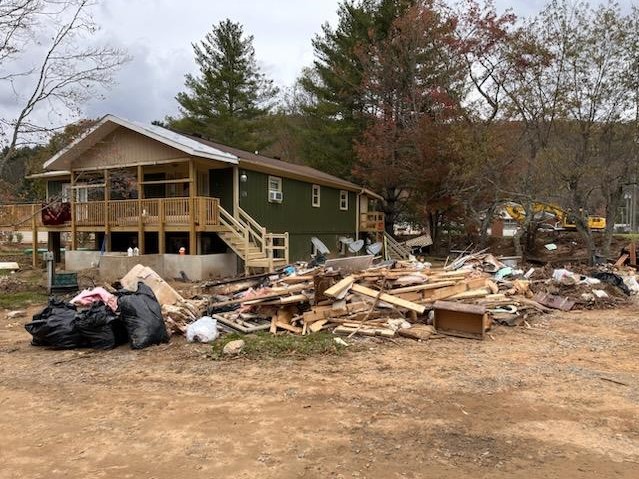
Every deployment with the Red Cross is unique. Each one brings new challenges, new faces, and new lessons. My recent deployment to Asheville, North Carolina, after Hurricane Helene was no different. Walking through the aftermath of the storm, I was struck by the immense power of water and its capacity for destruction. But even more impactful was witnessing the resilience of the people and the power of collective action as volunteers, first responders, and neighbors came together to rebuild.

“Walking through the aftermath of the storm, I was struck by the immense power of water and its capacity for destruction.” – Brice Johnson

Responding to a disaster like this is always humbling. It’s a privilege to see the Red Cross mission in action firsthand, to be part of immediate relief efforts, and to know that our work will support long-term recovery for those impacted. This deployment, in particular, left me with lasting memories of strength, compassion, and the incredible difference we can make when we work together.

Finding Hope in Housing 

One of the most remarkable aspects of this deployment was the success of our shelter resident transition teams. These teams worked tirelessly to help shelter residents move into sustainable, long-term housing solutions. By the end of the deployment, almost every shelter resident had a more stable housing solution.

I’ll never forget a moment that brought this work to life for me. After a long day, I stopped at a fast-food restaurant for dinner. At a table near me, I overheard two men filling out job applications. One turned to the other and said, “The Red Cross got me a place to live, so now I can get a job.”

It was such a simple statement, but it carried so much weight. Having a safe and stable place to live gave this man the chance to rebuild his life. It struck me how transformative our work can be. This wasn’t just about housing; it was about hope and opportunity.

Sylvia’s Backyard Operation 

Another unforgettable moment came when I received a call from Sylvia, a local community member who had been supporting nearly 300 people camping in the woods after the storm. With no formal resources, Sylvia set up a makeshift shower in her backyard and provided food and supplies to help them survive.

Her selflessness and determination were extraordinary. She had been doing everything she could with what little she had, but when she contacted us, we knew we could amplify her efforts. Almost immediately, we dispatched one of our emergency response vehicles to her area, initiating a feeding mission that continued long after my deployment ended. Each night, nearly 300 people were served a hot meal.

Sylvia’s story is a testament to the power of individual action and the strength of community. Her willingness to step up in a moment of crisis inspired everyone involved and reminded me how much one person can accomplish with compassion and determination.

The Long Road Ahead 

Disasters like Hurricane Helene leave a lasting impact, and recovery is never quick or easy. While the immediate relief we provide is critical—sheltering families, serving meals, distributing supplies—it’s just the beginning. The road ahead for Asheville and the surrounding areas will be long, but the Red Cross’s commitment to being there for the entire journey is a source of hope for so many.

This deployment reinforced what I’ve always believed about disaster response: It’s a collective effort. From our volunteers on the ground to local community members and first responders, every person plays a role. Together, we help restore not just homes and livelihoods but also dignity and hope.

“This deployment reinforced what I’ve always believed about disaster response: It’s a collective effort.” – Brice Johnson

The Privilege of Service 

Being deployed to a disaster like Hurricane Helene is a profound experience. It’s a chance to witness resilience in action, to be part of something bigger than yourself, and to see firsthand how compassion and dedication can transform lives.

I carry with me the memories of this deployment—the resilience of the people we served, the commitment of our teams, and the extraordinary kindness of individuals like Sylvia. These moments remind me why the work we do is so important and why I’m so grateful to be part of the Red Cross.

As I reflect on my time in Asheville, I’m reminded that every disaster is different, but what remains constant is the spirit of service and the power of hope. To all who serve, thank you for being the light in someone’s darkest moment. And to the communities impacted by Hurricane Helene, know that the Red Cross will be there for you—not just during the storm, but for as long as it takes to recover.

By Brice Johnson
Regional CEO of the American Red Cross Minnesota and Dakotas Region
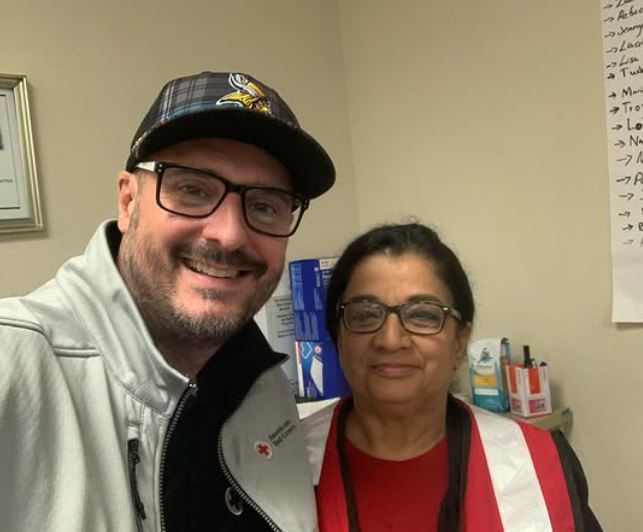
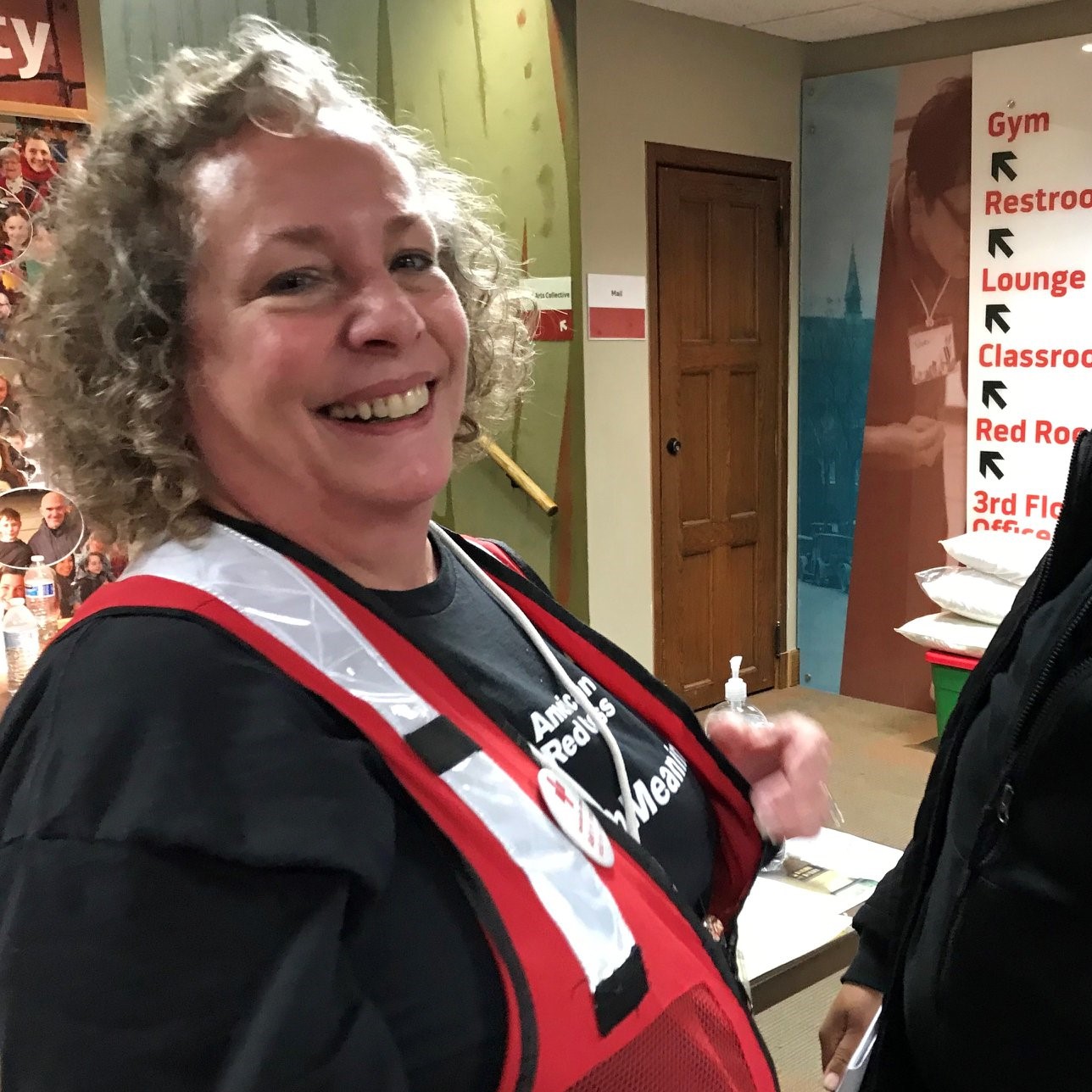
Brice Johnson with regional executive assistant Neela in North Carolina, 2024.

Rutherford family embarks on their first Red Cross disaster response journey

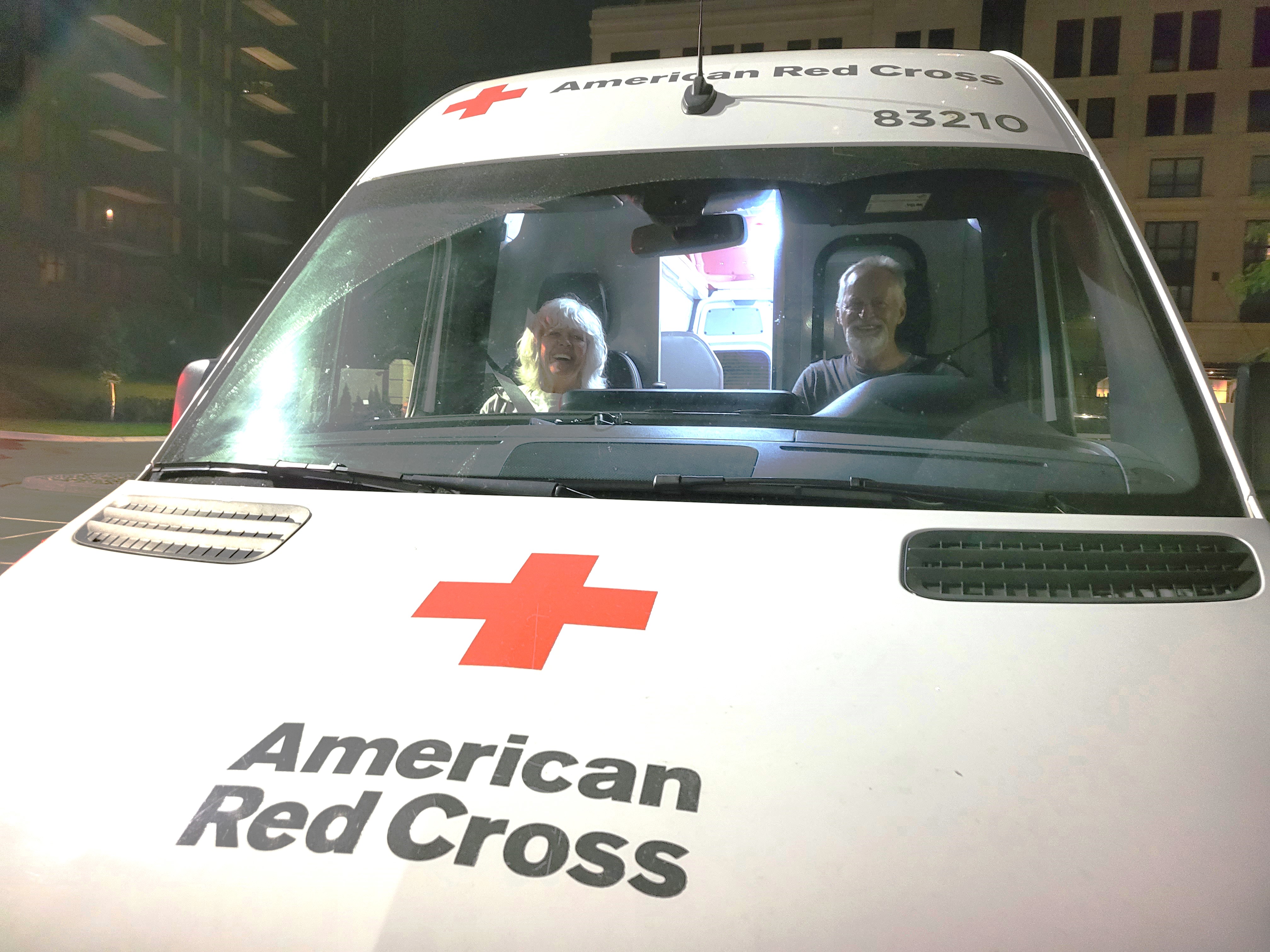
In the early hours of September 28, 2024, Susie and Charles Rutherford from Apple Valley, Minnesota, set out on an important mission. Driving a Red Cross emergency response vehicle, they left the Minneapolis Chapter building bound for Tallahassee, Florida, to support communities affected by Hurricane Helene.

Susie and Charles Rutherford began their journey to support Hurricane Helene relief efforts by driving a Red Cross emergency response vehicle from the Minneapolis Chapter building to Florida – September 28, 2024. (Photo – Carrie Carlson-Guest, American Red Cross)

This marked Susie and Charles’s first national deployment as Red Cross disaster volunteers. For their daughter, Lindsey Heald, a regional philanthropy officer for the Minnesota and Dakotas Region, it felt natural. “I’m so proud of them,” Lindsey shared. “Growing up, they taught me the meaning of compassion. Now, seeing them bring that same spirit to the Red Cross is incredible.”

For Susie and Charles, the chance to serve together was a gift. “What better way to serve others than side by side with my husband?” Susie said. Both felt a mix of excitement and a reassuring sense of readiness. “The Red Cross prepared us so well,” Susie explained. “Even if we didn’t have every answer, there was always a supervisor on call to guide us. Flexibility was key; we had to embrace the ‘Semper Gumby’ (always flexible) spirit because roles change constantly in disaster zones.”

Over 19 days, the Rutherford’s witnessed both devastation and resilience as they navigated towns transformed by the storm. “Thousands of trees were down, and buildings were damaged or destroyed,” Susie recalled, painting a powerful picture of the scene. Amidst the destruction, there was an unbroken rhythm of recovery—state workers clearing roads, power trucks restoring electricity, and community members coming together.

Susie and Charles Rutherford pictured outside the emergency response vehicle they drove to Florida for Hurricane Helene and Milton relief efforts. (Photo submitted.)

Their role was to deliver hundreds of hot meals daily to shelters, community centers, and other gathering spots for those affected. For the Rutherford’s, the appreciation they saw in the people they served was unforgettable. “The heartfelt gratitude in their eyes will always stay with us,” Susie reflected.

Example of damage caused by Hurricane Helene is a neighborhood the Rutherford’s drove through. (Photo submitted.)

The community’s gratitude was evident at every turn. “People would honk and give us a thumbs-up when they saw the Red Cross logo on our vehicle,” Susie smiled. “Even police officers stopped to thank us as we refueled.”

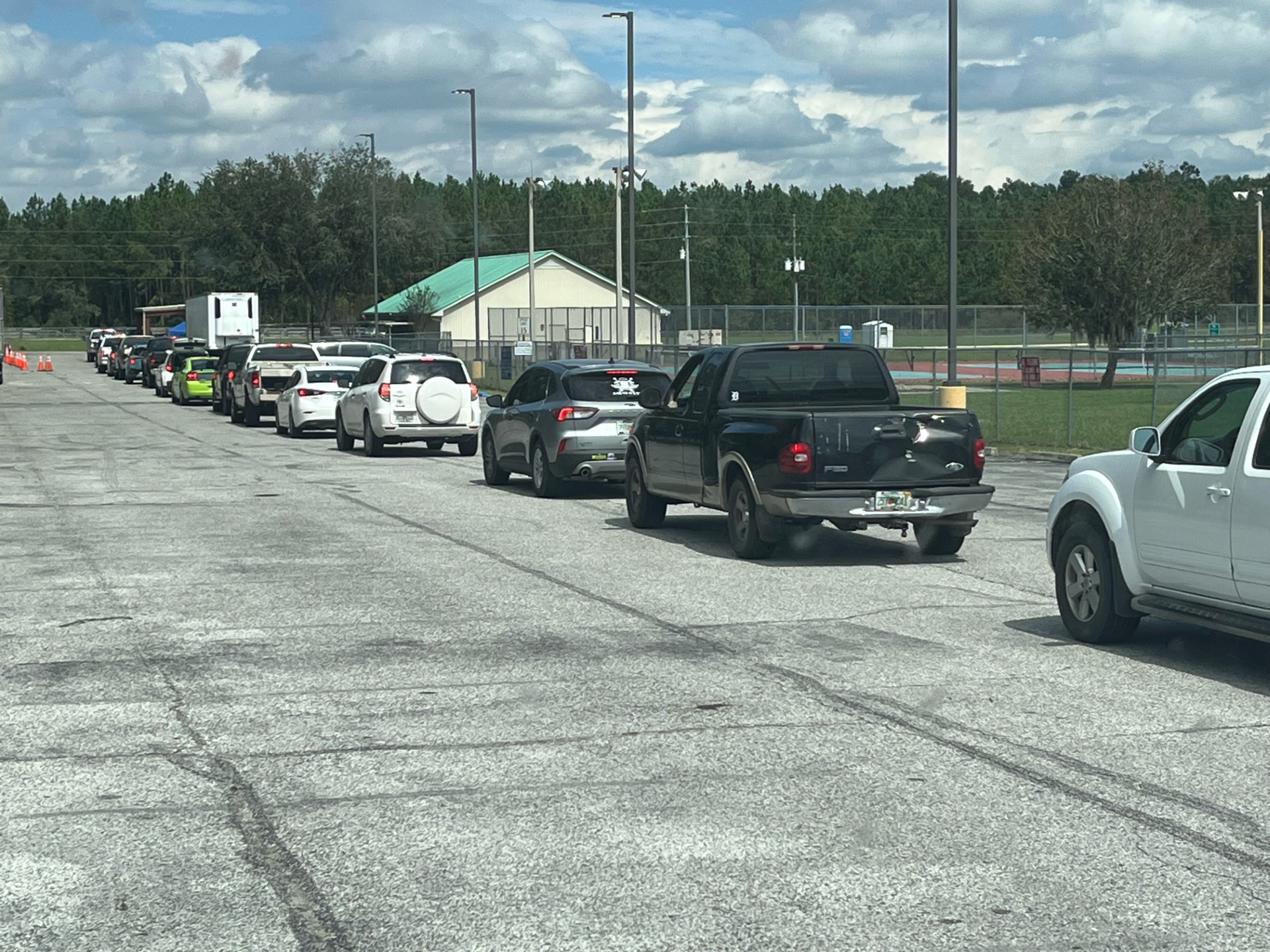
Line up of cars coming to the shelter where the Rutherford’s were serving food near Tallahassee, Florida. (Photo submitted.)

The hurricane response gave Lindsey a meaningful opportunity to contribute. “I was grateful to step up and support my colleagues in Asheville, North Carolina, for my first virtual deployment!” she shared. “This experience has left me with an extra soft spot for my Red Cross friends in the Carolinas.” Lindsey adds, “I’ve chosen to focus my career here at the Red Cross because I love this work. With my parents now volunteering, it has brought our family closer, strengthening our dedication to helping others through the Red Cross mission.”

The Rutherford’s journey left them with a deep sense of pride and fulfillment. “Helping people in their hardest moments is an honor,” Susie said. “If you’re thinking about volunteering, there’s a place for you here.”

Susie and Charles Rutherford pictured with their children at their surprise 50th wedding anniversary celebration, June 2024. (Pictured left to right – Charles, Susie, Lindsey, Briana, and Charlie – photo submitted.)

Join the Red Cross and make a difference. Sign up at redcross.org/givetime or donate at redcross.org or by texting HURRICANES to 90999.

After the Storm: Heartwarming Stories of Reunion  

In the wake of Hurricanes Helene and Milton, countless families were torn apart. Amidst the chaos, the Red Cross reunification teams worked tirelessly to bring hope and connection back to those affected. This vital work continues as the Red Cross remains committed to reuniting loved ones and restoring communication disrupted by these devastating storms. While this service may not receive as much attention as other disaster relief efforts, it has handled over 11,500 inquiries, helping to mend the broken lines of communication.  

Alex Wincell, a dedicated Red Cross volunteer from the Minnesota and Dakotas Region, was virtually deployed to the reunification team. “I knew I couldn’t go in person due to some obligations at home, but I wanted to help,” Alex shared. She was quickly assigned to the task just days after the chaos ensued, when the situation was still highly uncertain. 

Red Cross volunteer Alex Wincell, pictured in 2020, helping with a local fire response in Minneapolis. Photo by Lynette Nyman – American Red Cross.

This was Alex’s first experience with reunification work. “I was able to use my case work background which was extremely useful. If you like puzzles, this would be a good role for you because its creative problem solving. It’s fascinating and very meaningful when all the pieces come together.” 

 Among her many contributions, Alex recalls a particularly touching case where she assisted an 83-year-old woman in locating her long-time friend and colleague, an 86-year-old resident from Asheville, North Carolina. The two had been in contact shortly before the storm, but Alex only had the friend’s phone number, not an address. 

Reuniting friends can be more challenging than family members, as families often have networks to aid in making contact. Despite this, after ten days of diligent effort, Alex was able to reach the woman’s daughter, who confirmed that her mother had weathered the storms and was safe. 

In another case, Alex was tasked with finding an elderly person living in a remote area cut off by blocked roads and out-of-service landlines. Using tools like property records and Google, she managed to contact the woman’s neighbor. They agreed to bring their cell phone to her house so that Alex could speak with her directly. 

In this reunion, there was so much gratification, and I know how much both parties appreciated our efforts,” Alex reported.

“Even through the phone, I could tell it made the person who was found happy to know that someone was looking for her.”

Reflecting on her virtual deployment, Alex noted that while she prefers working in person, “this type of work makes sense to do virtually since it all begins with the seeker who can be from anywhere in the country or the world. It still gave me a lot of client contact and it was a very rewarding experience.” 

This story is just one example of how the Red Cross is committed to alleviating human suffering in the face of emergencies. If you are inspired by Alex’s story and want to make a difference, consider volunteering or donating to the Red Cross today.  To apply to become a Red Cross volunteer visit redcross.org/givetime, to donate visit redcross.org or text the word HURRICANES to 90999.

Making a Difference in Time of Crisis: Unsung Heroes on the Frontline

Red Cross volunteer Mark Capaldini from the Twin Cities Chapter of the Minnesota and Dakotas Region recently returned from a 10-day deployment to North and South Carolina. He helped in food operations, driving an emergency response vehicle (ERV) to deliver meals to the communities affected by the wrath of Hurricane Helene. Mark also helped in the distribution of emergency relief supplies in these communities. This was his third such national deployment.

Mark Capaldini, pictured at the Minneapolis-St. Paul Airport as he starts a 10-day deployment to North and South Carolina for Hurricane Helene disaster relief. (Photo submitted)

For the first six days Mark worked with an ERV driving partner, Jeff Wick from Texas. On one of those days Mark and Jeff travelled into a severely impacted community to distribute food and teamed up with two more Red Cross volunteers to package and distribute hot meals.

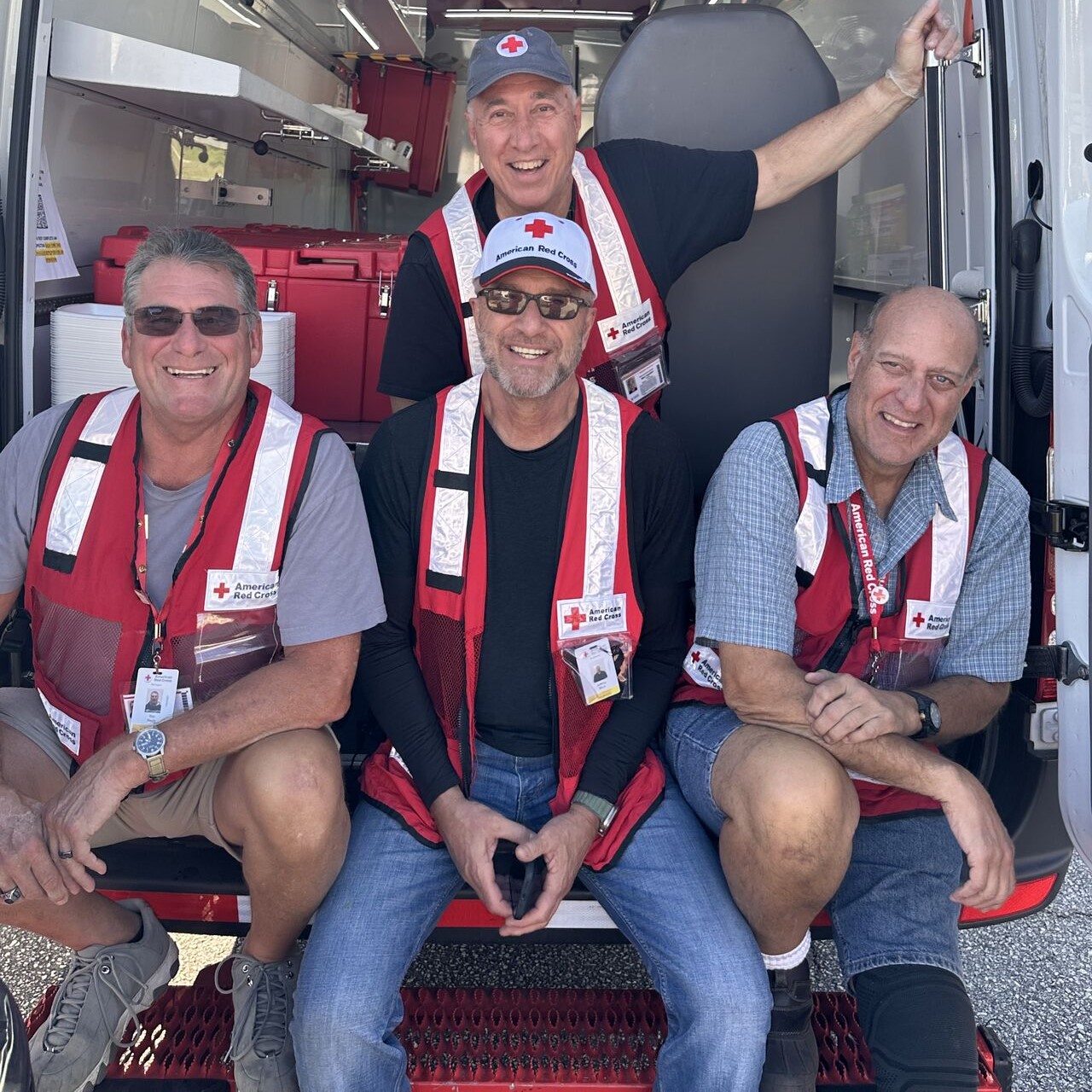
Mark Capaldini pictured helping with meal distribution with fellow Red Cross volunteers Tim Perry, Greg Purkey, and Jeff Wick in a small South Carolina town — Ware Shoals on 10/11/2024.
(Photo submitted)

“We were thanked almost daily for being there and helping out,” Mark humbly expressed. “Frequently, these expressions of gratitude, often paired with a ‘bless you,’ originated from receivers of our food and clean-up kits. We were even thanked by passersby at local gas stations and fast-food locations.”

Mark’s assignment then shifted to delivering emergency relief supplies to some of the communities hardest hit.

Witnessing the aftermath in Boone, North Carolina, a town in the Blue Ridge Mountains that experienced immense damage from rains, flooding, winds, and a tornado, was a glaring reality check. Mark explained that “furniture and supplies were strewn and stacked outside homes, painting a grim picture of the devastation.”

View of a Boone, North Carolina, neighborhood devastated by the aftermath of Hurricane Helene provided a somber illustration of the disaster’s magnitude. (Photo submitted)

He further noted the widespread impact on the landscape. “The water that rushed down from the mountains carved out huge chunks of the countryside and sometimes completely washed the roads out, requiring us to travel on temporary gravel paths. This is an enormous effort that will take years to get the roads and infrastructure repaired.”

View of a Boone, North Carolina, neighborhood devastated by the aftermath of Hurricane Helene. Temporary gravel paths replaced washed out roads. (Photo submitted)

When asked about his chance to get some well-deserved rest following the deployment, Mark agreed, emphasizing the comfort he anticipated upon returning to his own bed.

“It worked out for me to go and help,” Mark said. “My experience reiterated the critical role the Red Cross plays in these relief operations in responding to natural disasters.”

Mark Capaldini is a board member of the American Red Cross Twin Cities Chapter of the Minnesota and Dakotas Region.

Sandy Postcard From Choua

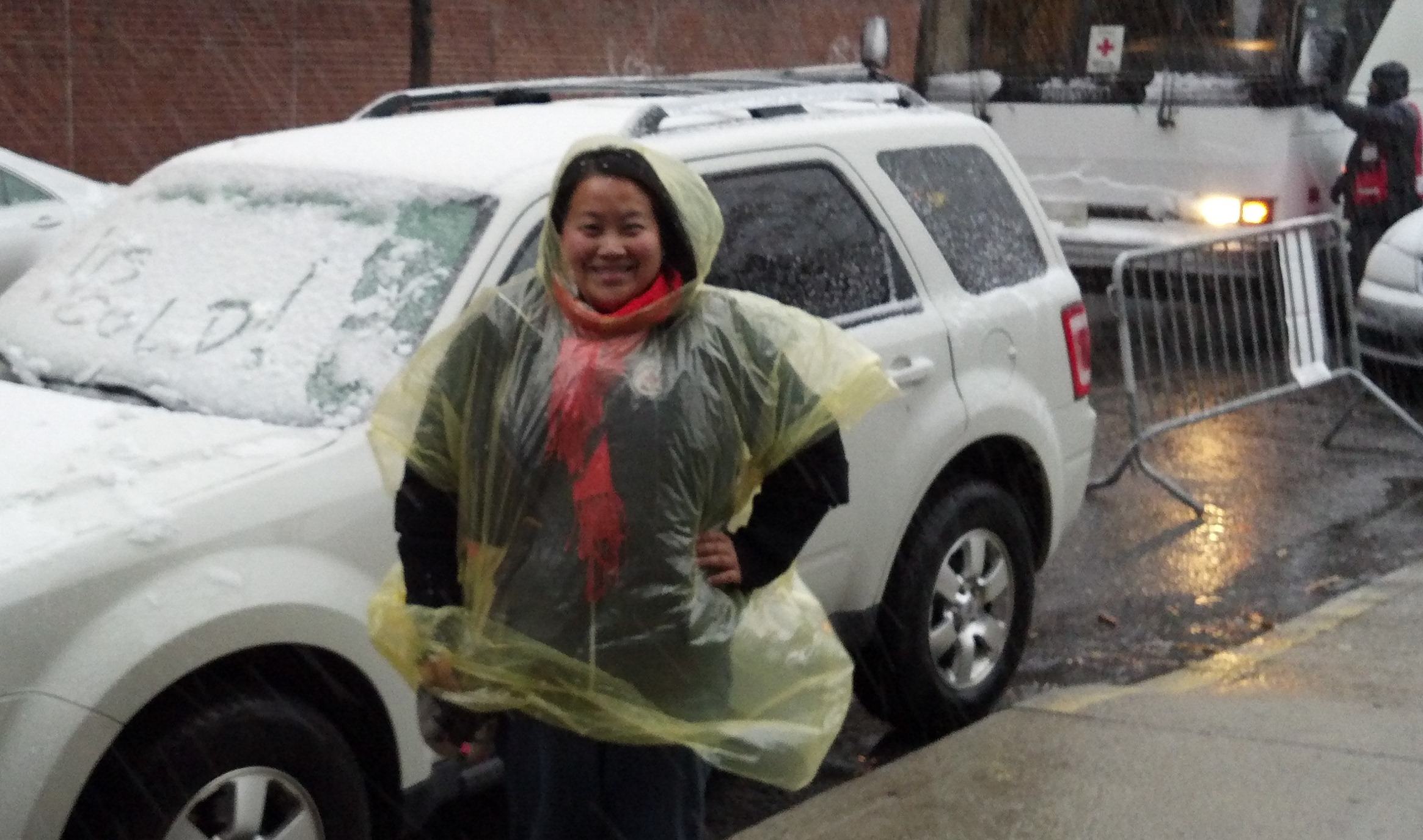
Greetings from Greater New York, Superstorm Sandy Aftermath Followed by Nor’easter, November 7, 2012

Hello from Greater New York,

I’ve been going out doing Disaster Assessment (DA). There are so many homes affected and or destroyed by the storm. DA is on hold right now due to the snow mix with rain. Based on the data that we collected, upper managements are planning to deliver supply of goodies to those affected areas. Yesterday, I went to eat with my team and our server asked where we were from. One of the teammates told her that we are with Red Cross and the server just broke down and cried. She was very grateful and happy that we were there for her community. She thanked us for leaving our families and friends to come help out.  It was such an amazing experience  with this disaster response so far. I am so happy and proud to be Red Crosser!!!

Thanks,
Choua

Choua Yang is one of 5,700 or so Red Cross disaster relief workers responding to Superstorm Sandy. (Around 50 are from Minnesota.) 90 percent of Red Cross responders are volunteers. You can help support Red Cross humanitarian disaster relief.

We agree with Pawpaw: Storms Affect Families

Ed “Pawpaw” Semmes and granddaughter Corrie Lee, in Picayune, Mississippi, after Hurricane Isaac. Photo & story credit: Lynette Nyman/American Red Cross

Disaster responders from our Northern Minnesota Red Cross region are home from Hurricane Isaac. Everyone returned safe, exhausted, and rewarded with the gift of helping people during a time of need.

People like Edward “Pawpaw” Semmes, 62, and his granddaughter Corrie Lee, 5. Ed’s family received food and a clean-up kit from the Red Cross once it was safe to return to his neighborhood in Picayune, Mississippi. With his household contents piled high on the lawn, Semmes recalled that they had about five minutes to escape because the water came from “the north, the south, the east, and the west. It came from all four directions.” Inside the house, his son-in-law pulled up ruined flooring. Ed easily kicked in sodden sheetrock. “We understand what others went through because we went through it.”  Only in recent days did he break down and cry. Before he was too stressed about taking care of his family, something he’s always done with great pride, but he was concerned for them, their lost belongings, and the uncertainty of where they’d live. Thankful for Red Cross assistance, Ed (or Pawpaw), said “storms affect families–that’s what it gets down to.”

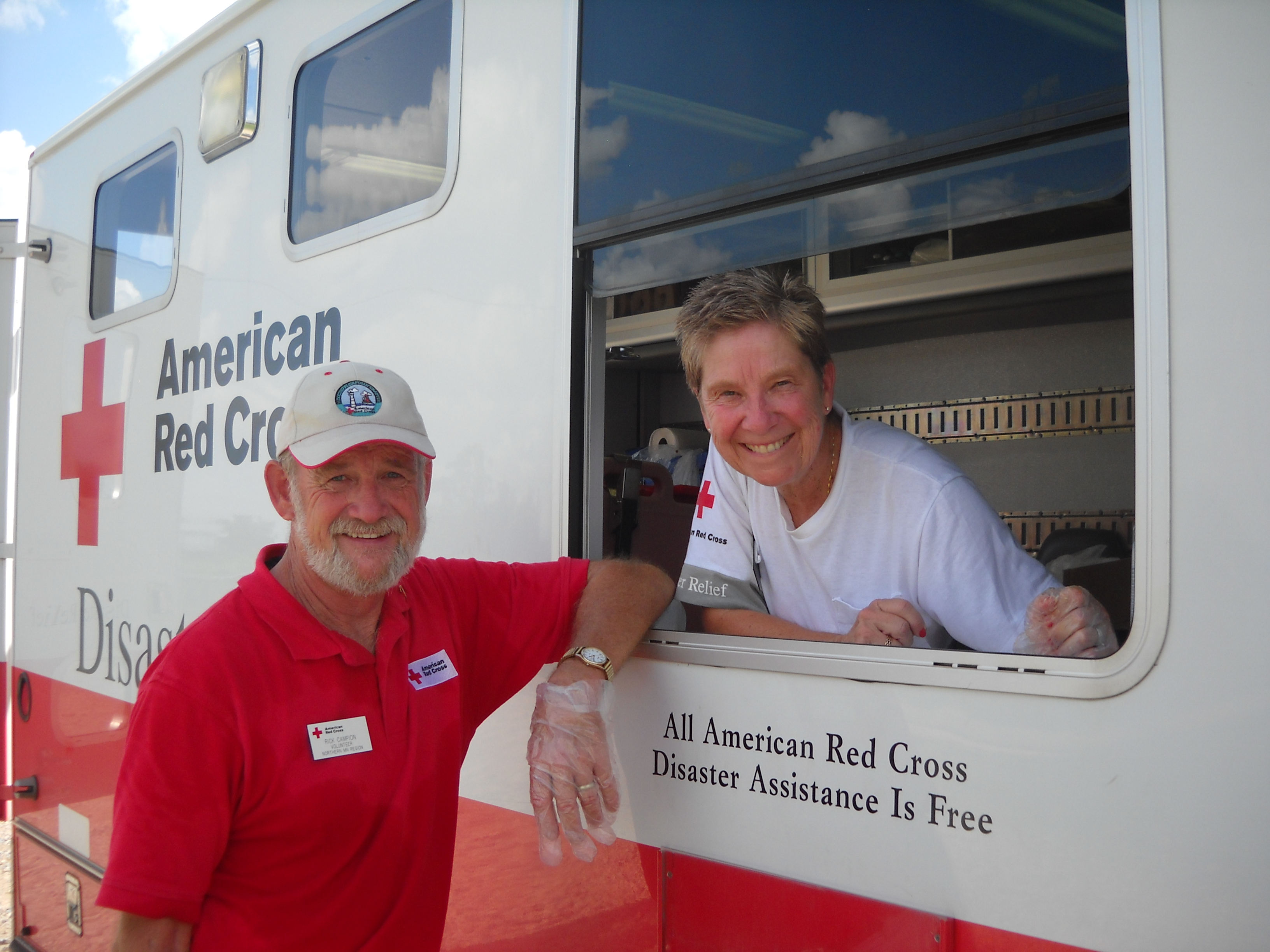
Red Cross Rick and Karen Campion were among the volunteers who responded to Hurricane Isaac. Image provided courtesy of the Campions.

The Red Cross recognizes this truth. We are grateful to everyone within our Northern Minnesota Region who helped–and continue to help–families along the Gulf Coast. A special thanks to local volunteers who worked on this disaster relief response: Mark, Margaret, Marie, Catherine, Mark, Diane, Marty, Dave, Hildred, Judy, Dick, Amanda, Karen, Rick, Harriet, John, Gordie, David, Claudia, Greta, Steve, Richard, Kris, Susan, Debbie, Eric, Brent and Marian.

Click here and learn more about the Red Cross response to Isaac or about how to get involved with the Red Cross.

Story by Lynette Nyman/American Red Cross