Witnessing Resilience and Hope: My Red Cross Deployment to Asheville After Hurricane Helene 

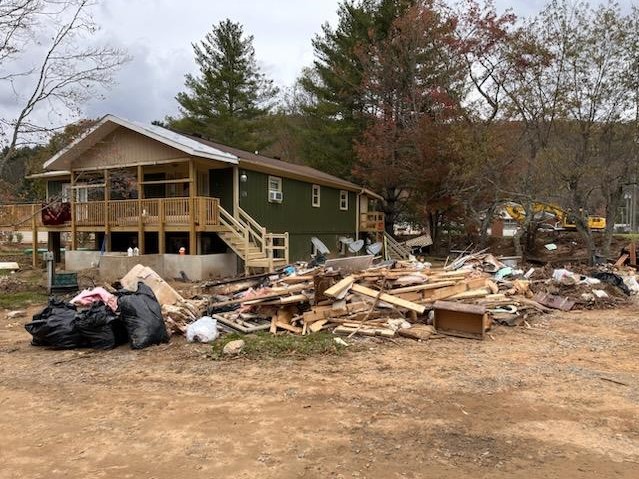
Every deployment with the Red Cross is unique. Each one brings new challenges, new faces, and new lessons. My recent deployment to Asheville, North Carolina, after Hurricane Helene was no different. Walking through the aftermath of the storm, I was struck by the immense power of water and its capacity for destruction. But even more impactful was witnessing the resilience of the people and the power of collective action as volunteers, first responders, and neighbors came together to rebuild.

“Walking through the aftermath of the storm, I was struck by the immense power of water and its capacity for destruction.” – Brice Johnson

Responding to a disaster like this is always humbling. It’s a privilege to see the Red Cross mission in action firsthand, to be part of immediate relief efforts, and to know that our work will support long-term recovery for those impacted. This deployment, in particular, left me with lasting memories of strength, compassion, and the incredible difference we can make when we work together.

Finding Hope in Housing 

One of the most remarkable aspects of this deployment was the success of our shelter resident transition teams. These teams worked tirelessly to help shelter residents move into sustainable, long-term housing solutions. By the end of the deployment, almost every shelter resident had a more stable housing solution.

I’ll never forget a moment that brought this work to life for me. After a long day, I stopped at a fast-food restaurant for dinner. At a table near me, I overheard two men filling out job applications. One turned to the other and said, “The Red Cross got me a place to live, so now I can get a job.”

It was such a simple statement, but it carried so much weight. Having a safe and stable place to live gave this man the chance to rebuild his life. It struck me how transformative our work can be. This wasn’t just about housing; it was about hope and opportunity.

Sylvia’s Backyard Operation 

Another unforgettable moment came when I received a call from Sylvia, a local community member who had been supporting nearly 300 people camping in the woods after the storm. With no formal resources, Sylvia set up a makeshift shower in her backyard and provided food and supplies to help them survive.

Her selflessness and determination were extraordinary. She had been doing everything she could with what little she had, but when she contacted us, we knew we could amplify her efforts. Almost immediately, we dispatched one of our emergency response vehicles to her area, initiating a feeding mission that continued long after my deployment ended. Each night, nearly 300 people were served a hot meal.

Sylvia’s story is a testament to the power of individual action and the strength of community. Her willingness to step up in a moment of crisis inspired everyone involved and reminded me how much one person can accomplish with compassion and determination.

The Long Road Ahead 

Disasters like Hurricane Helene leave a lasting impact, and recovery is never quick or easy. While the immediate relief we provide is critical—sheltering families, serving meals, distributing supplies—it’s just the beginning. The road ahead for Asheville and the surrounding areas will be long, but the Red Cross’s commitment to being there for the entire journey is a source of hope for so many.

This deployment reinforced what I’ve always believed about disaster response: It’s a collective effort. From our volunteers on the ground to local community members and first responders, every person plays a role. Together, we help restore not just homes and livelihoods but also dignity and hope.

“This deployment reinforced what I’ve always believed about disaster response: It’s a collective effort.” – Brice Johnson

The Privilege of Service 

Being deployed to a disaster like Hurricane Helene is a profound experience. It’s a chance to witness resilience in action, to be part of something bigger than yourself, and to see firsthand how compassion and dedication can transform lives.

I carry with me the memories of this deployment—the resilience of the people we served, the commitment of our teams, and the extraordinary kindness of individuals like Sylvia. These moments remind me why the work we do is so important and why I’m so grateful to be part of the Red Cross.

As I reflect on my time in Asheville, I’m reminded that every disaster is different, but what remains constant is the spirit of service and the power of hope. To all who serve, thank you for being the light in someone’s darkest moment. And to the communities impacted by Hurricane Helene, know that the Red Cross will be there for you—not just during the storm, but for as long as it takes to recover.

By Brice Johnson
Regional CEO of the American Red Cross Minnesota and Dakotas Region
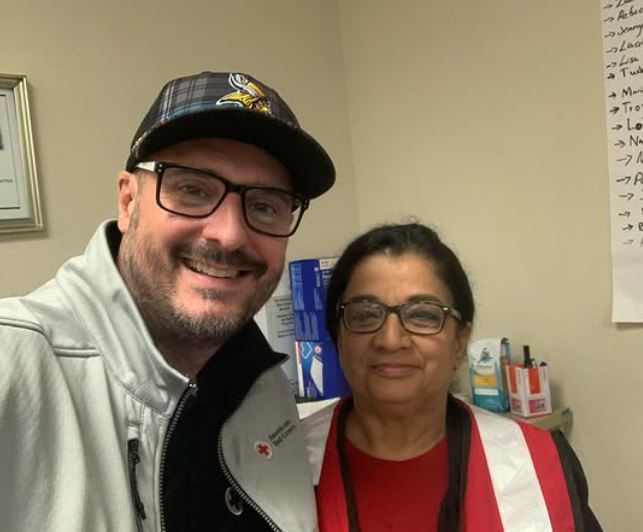
Brice Johnson with regional executive assistant Neela in North Carolina, 2024.

Rutherford family embarks on their first Red Cross disaster response journey

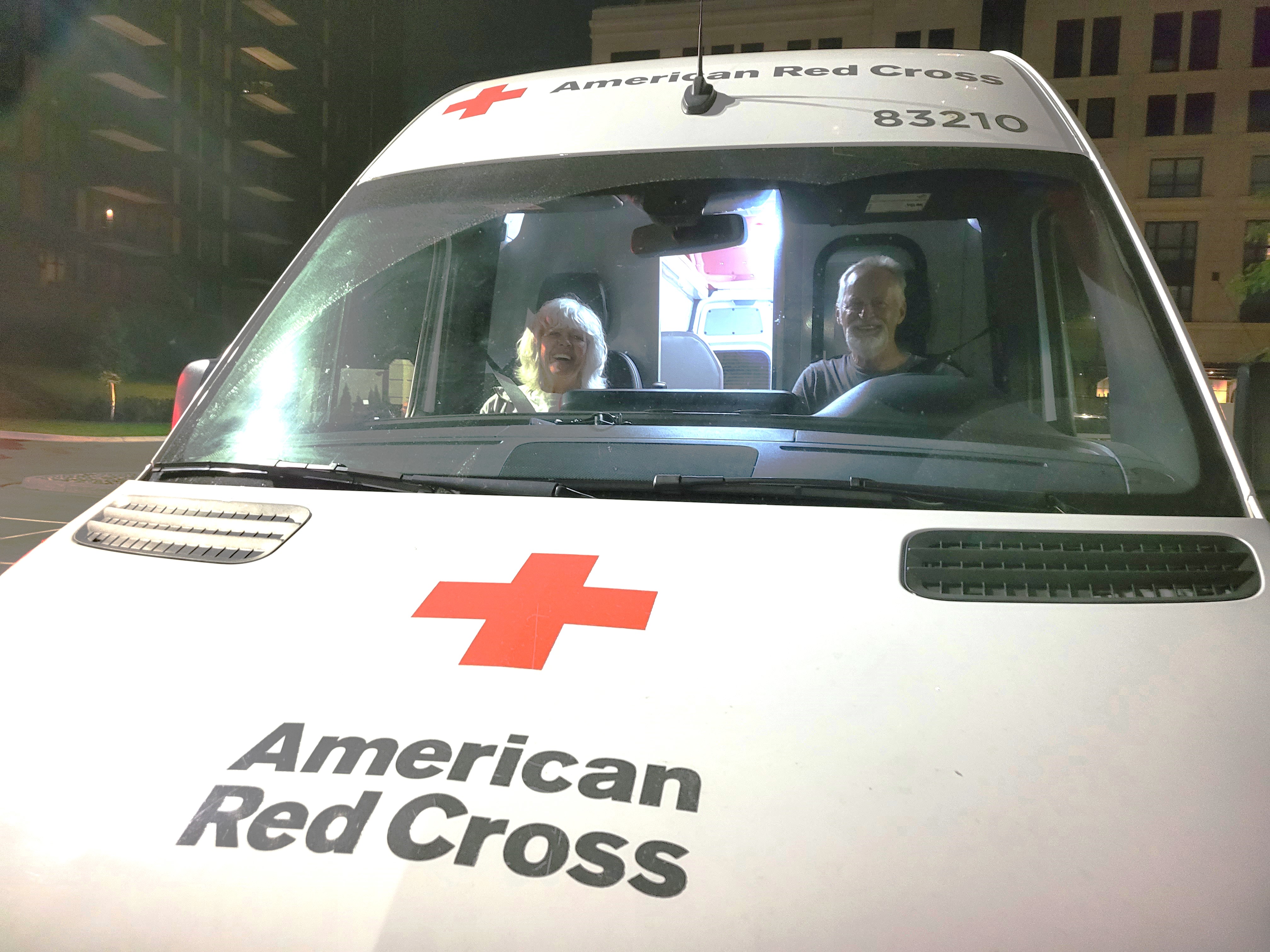
In the early hours of September 28, 2024, Susie and Charles Rutherford from Apple Valley, Minnesota, set out on an important mission. Driving a Red Cross emergency response vehicle, they left the Minneapolis Chapter building bound for Tallahassee, Florida, to support communities affected by Hurricane Helene.

Susie and Charles Rutherford began their journey to support Hurricane Helene relief efforts by driving a Red Cross emergency response vehicle from the Minneapolis Chapter building to Florida – September 28, 2024. (Photo – Carrie Carlson-Guest, American Red Cross)

This marked Susie and Charles’s first national deployment as Red Cross disaster volunteers. For their daughter, Lindsey Heald, a regional philanthropy officer for the Minnesota and Dakotas Region, it felt natural. “I’m so proud of them,” Lindsey shared. “Growing up, they taught me the meaning of compassion. Now, seeing them bring that same spirit to the Red Cross is incredible.”

For Susie and Charles, the chance to serve together was a gift. “What better way to serve others than side by side with my husband?” Susie said. Both felt a mix of excitement and a reassuring sense of readiness. “The Red Cross prepared us so well,” Susie explained. “Even if we didn’t have every answer, there was always a supervisor on call to guide us. Flexibility was key; we had to embrace the ‘Semper Gumby’ (always flexible) spirit because roles change constantly in disaster zones.”

Over 19 days, the Rutherford’s witnessed both devastation and resilience as they navigated towns transformed by the storm. “Thousands of trees were down, and buildings were damaged or destroyed,” Susie recalled, painting a powerful picture of the scene. Amidst the destruction, there was an unbroken rhythm of recovery—state workers clearing roads, power trucks restoring electricity, and community members coming together.

Susie and Charles Rutherford pictured outside the emergency response vehicle they drove to Florida for Hurricane Helene and Milton relief efforts. (Photo submitted.)

Their role was to deliver hundreds of hot meals daily to shelters, community centers, and other gathering spots for those affected. For the Rutherford’s, the appreciation they saw in the people they served was unforgettable. “The heartfelt gratitude in their eyes will always stay with us,” Susie reflected.

Example of damage caused by Hurricane Helene is a neighborhood the Rutherford’s drove through. (Photo submitted.)

The community’s gratitude was evident at every turn. “People would honk and give us a thumbs-up when they saw the Red Cross logo on our vehicle,” Susie smiled. “Even police officers stopped to thank us as we refueled.”

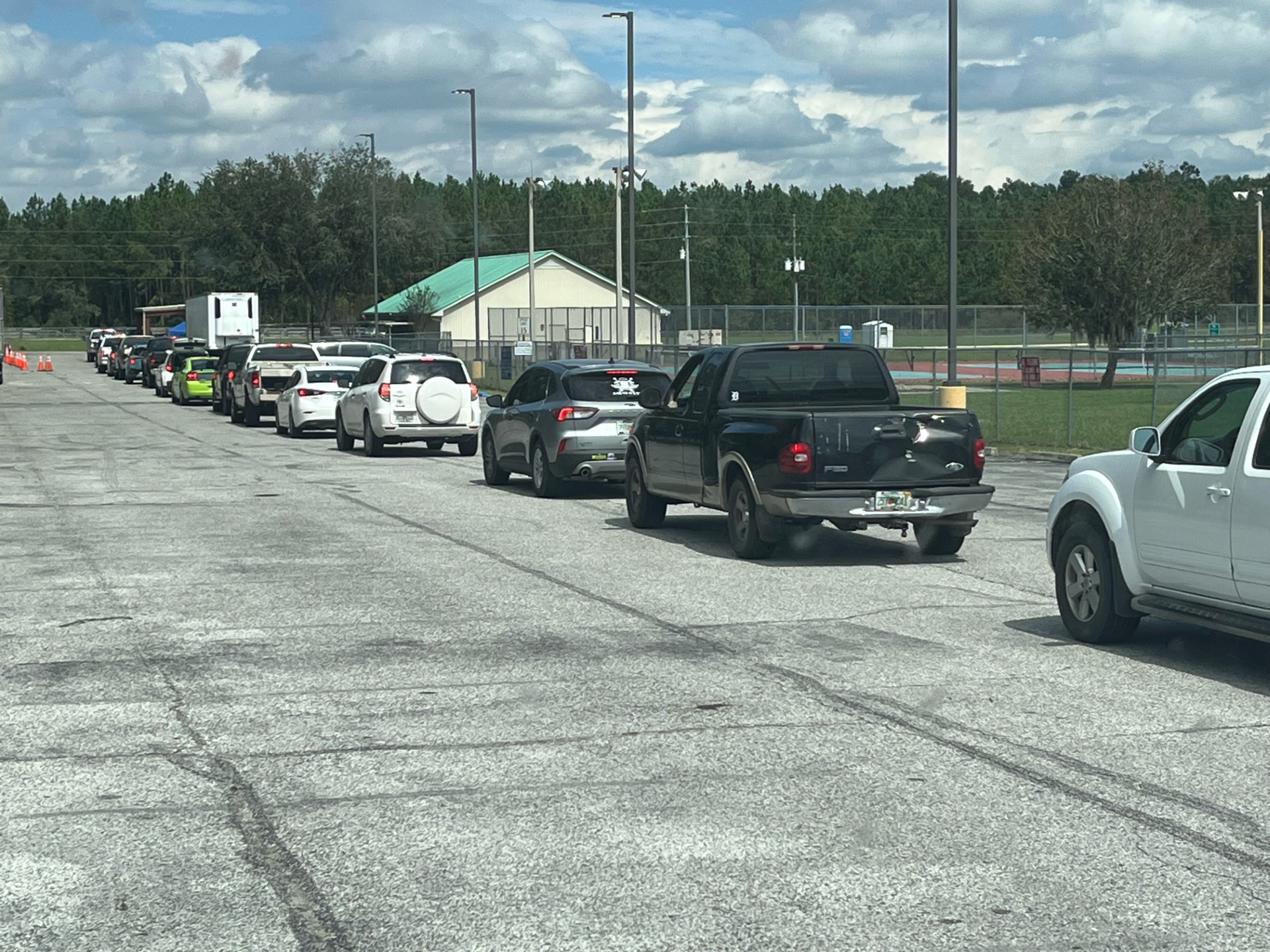
Line up of cars coming to the shelter where the Rutherford’s were serving food near Tallahassee, Florida. (Photo submitted.)

The hurricane response gave Lindsey a meaningful opportunity to contribute. “I was grateful to step up and support my colleagues in Asheville, North Carolina, for my first virtual deployment!” she shared. “This experience has left me with an extra soft spot for my Red Cross friends in the Carolinas.” Lindsey adds, “I’ve chosen to focus my career here at the Red Cross because I love this work. With my parents now volunteering, it has brought our family closer, strengthening our dedication to helping others through the Red Cross mission.”

The Rutherford’s journey left them with a deep sense of pride and fulfillment. “Helping people in their hardest moments is an honor,” Susie said. “If you’re thinking about volunteering, there’s a place for you here.”

Susie and Charles Rutherford pictured with their children at their surprise 50th wedding anniversary celebration, June 2024. (Pictured left to right – Charles, Susie, Lindsey, Briana, and Charlie – photo submitted.)

Join the Red Cross and make a difference. Sign up at redcross.org/givetime or donate at redcross.org or by texting HURRICANES to 90999.

Small but mighty Red Cross societies, working hard and not alone

 By Lynette Nyman/IFRC 

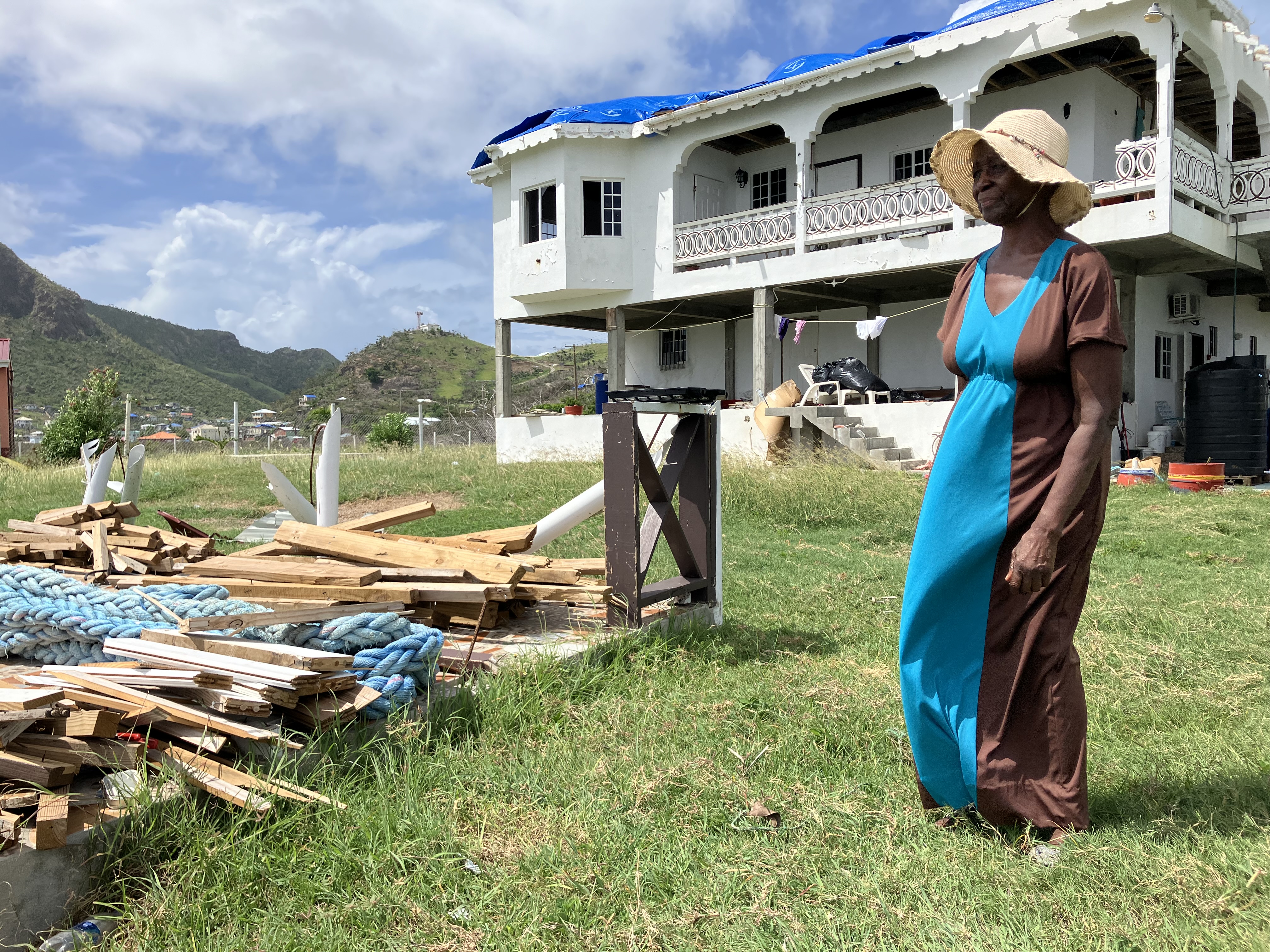
“Everything was good until Beryl came,” says Delta Alexander, a lifelong resident of Union Island in St. Vincent and the Grenadines.

“Everything was good until Beryl came,” says Delta Alexander, who was born and raised on Union Island in St. Vincent and the Grenadines. She is grateful for the care and support that the local Red Cross provided following Hurricane Beryl. Photo: Lynette Nyman/IFRC 


She’s thankful for the care and support the local Red Cross provided after Hurricane.

Beryl. Delta left Union Island in 1969, always planning to return, and in 2015, after retiring from a nursing career in Canada and the U.S., she came back to rebuild her life.

For the next three years, she built a home and continued her humanitarian work in this tight-knit community. The hurricane hasn’t slowed her down.

“The people I’m grieving for are those in shelters. They have no money, nowhere to go. They lost everything, houses, clothing, even underwear,” she says.  

Her house, situated on low land near the shore, was quickly surrounded by high water during the category 5 storm that struck parts of the Caribbean on July 1. The winds, too, were a threat. For four hours, she held back a door, dislocating her shoulder. At 78, her strength and generosity are inspiring.  

“I saw death right there. How am I going to escape?” she recalls asking herself during the storm.   

The trauma connected her with St. Vincent and the Grenadines Red Cross (SVGRC) volunteers who responded to help people on multiple islands and the mainland. 

Early in the emergency, Red Cross volunteers set up relief operations at a church on Union Island, distributing non-food items as well as a space for people to share their experiences – it was much-needed and appreciated emotional support.   

“Red Cross was wonderful. People were very nice. So soothing. Helpful and encouraging,” says Delta.  

Small society, many hazards 

The SVG Red Cross is a young national society that gained its independence from the British Red Cross in 1984. Today, the SVGRC is comprised of a nearly 100 percent volunteer workforce, including key leaders like Shaneika Laidlow who manages their disaster and mental health programs. Their aim, she says, is to help people get back to normalcy.  

“We offer assistance to those who most need it, to the best of our ability,” says Shaneika Laidlow, who manages disaster and mental health programs for the St. Vincent and the Grenadines Red Cross. Photo: Lynette Nyman/IFRC

“During these times people can get very frustrated. Does the Red Cross care for them?” says Shaneika, who is based in the nation’s capital on the mainland, St. Vincent. The answer is yes. 

“There are so many people we would love to make better, but there are some things we’re unable to do at this time because of restraints. We offer assistance to those who most need it to the best of our ability,” she says.  

The scope of the work, and the potential need, is challenging. This small nation and Red Cross society faces multiple hazards, including tropical storms, flooding, hurricanes, and even an active volcano.  

In early October, monitoring showed unusual thermal activity of the La Soufriere volcano – activating the government to issue a low-level warning and close the trail to the summit.  

La Soufriere, shrouded in clouds, is an explosive volcano that most recently erupted in 2021. It’s one of several hazards facing the St. Vincent and the Grenadines Red Cross. Photo: Lynette Nyman/IFRC 

The thermal anomaly stopped, but reminded many of past explosive eruptions like the most recent in 2021 when, on April 9, the dome inside the crater blew and for days spewed devastating volcanic ash across communities. 

“It was like the sun was out, but not there. It was all dark,” remembers Edwin Joe, who lived in the countryside distant from the ‘red zone’. He remembers ash covering everything. “Just white everywhere, like bright snow with no sun. We didn’t know what was going to happen.”  

Edwin Joe evacuated the St. Vincent, the mainland, for two weeks following the eruption of the volcano La Soufriere in 2021 and returned to find houses that had roofs collapsed from the volcanic ash. Photo: Lynette Nyman/IFRC 

Edwin evacuated the mainland for two weeks and returned to find some houses that had roofs collapsed from the volcanic ash. Many people stayed in shelters for several months. 

The Red Cross formed part of the response with the government and other emergency partners, providing water, relief items and temporary housing assistance.  

Help around the corner 

The good news is that during challenging times a small Red Cross society like the SVGRC can turn to other national societies for help, primarily through the International Red Cross and Red Crescent (IFRC).  

Raziel Uranga, a Mexican Red Cross responder with decades of disaster response experience deployed through the IFRC ‘surge’ program to serve as response operations support in St. Vincent and the Grenadines. His predecessor, he says, arrived just a few days after the hurricane, helping the SVGRC manage a large disaster response. 

Photo 4 – Small Red Cross societies “need support from the global Red Cross network in order to grow as fast as they can, especially with the multiple hazards they’re facing,” says Raziel Uranga from the Mexican Red Cross, now deployed to support the SVG Red Cross provide relief for people affected by Hurricane Beryl. Photo: Lynette Nyman/IFRC

“Red Cross is the best humanitarian movement in the world, I am convinced, because no other organization has the workforce that we have,” says Raziel, whose passion lies in reducing risks amid the rising frequency of severe disasters.

Responders and donors from around the world – and in their own communities – have provided relief for people affected by Hurricane Beryl.  

It’s uplifting for many to see this unified effort. And yet, when something big happens, a small national Red Cross society like the SVGRC needs help to do its best now and beyond.  

“They need support from the global Red Cross network in order to grow as fast as they can, especially with the multiple hazards they’re facing,” says Raziel.  

These hazards can destroy homes and livelihoods. Building back both is the focus on Mayreau, an islet just a short boat ride from Union. Wheelbarrow by wheelbarrow, people are removing rubble to restore the island’s sole income, tourism.  

“We have to clean up this island to get tourism back – to get people back from Martinique – to see the turtles,” says Patrick Forde, a water-taxi driver before the storm.  

“We have to clean up this island to get tourism back – to get people back from Martinique – to see the turtles,” says Patrick Forde, a water-taxi driver before the storm devastated Mayreau, an islet in the Grenadines. Photo: Lynette Nyman/IFRC 

Patrick rode out the hurricane in a small cupboard with his two children. “I’m lucky to be alive,” he says when looking back. 

Tiny but mighty, what he loves about his island is the way people unite. “Whenever there’s a disaster, we all show up and work together.” 

Learn more about the work of Red Cross societies around the world, like SVGRC, through the IFRC, click here.

Making a Difference in Time of Crisis: Unsung Heroes on the Frontline

Red Cross volunteer Mark Capaldini from the Twin Cities Chapter of the Minnesota and Dakotas Region recently returned from a 10-day deployment to North and South Carolina. He helped in food operations, driving an emergency response vehicle (ERV) to deliver meals to the communities affected by the wrath of Hurricane Helene. Mark also helped in the distribution of emergency relief supplies in these communities. This was his third such national deployment.

Mark Capaldini, pictured at the Minneapolis-St. Paul Airport as he starts a 10-day deployment to North and South Carolina for Hurricane Helene disaster relief. (Photo submitted)

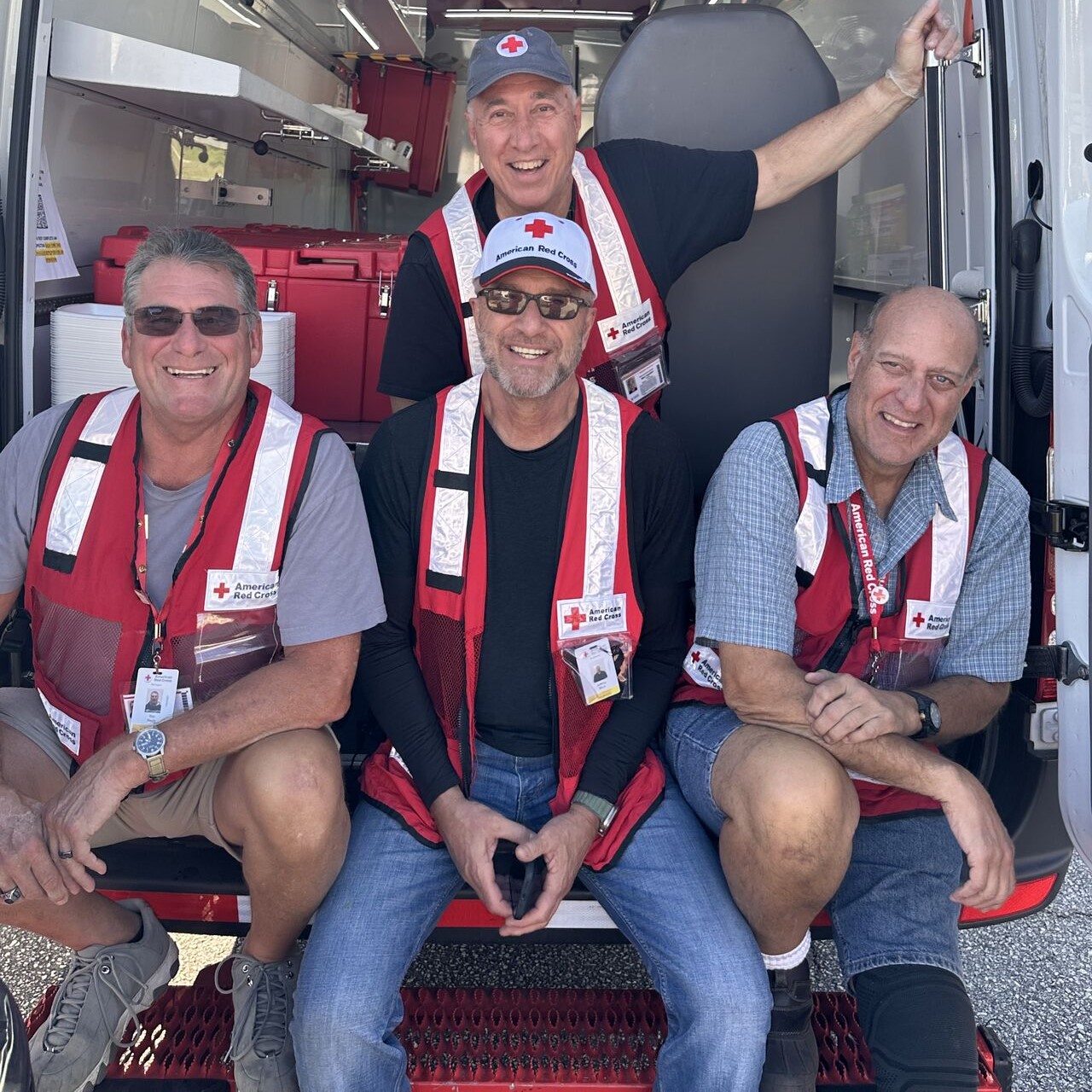
For the first six days Mark worked with an ERV driving partner, Jeff Wick from Texas. On one of those days Mark and Jeff travelled into a severely impacted community to distribute food and teamed up with two more Red Cross volunteers to package and distribute hot meals.

Mark Capaldini pictured helping with meal distribution with fellow Red Cross volunteers Tim Perry, Greg Purkey, and Jeff Wick in a small South Carolina town — Ware Shoals on 10/11/2024.
(Photo submitted)

“We were thanked almost daily for being there and helping out,” Mark humbly expressed. “Frequently, these expressions of gratitude, often paired with a ‘bless you,’ originated from receivers of our food and clean-up kits. We were even thanked by passersby at local gas stations and fast-food locations.”

Mark’s assignment then shifted to delivering emergency relief supplies to some of the communities hardest hit.

Witnessing the aftermath in Boone, North Carolina, a town in the Blue Ridge Mountains that experienced immense damage from rains, flooding, winds, and a tornado, was a glaring reality check. Mark explained that “furniture and supplies were strewn and stacked outside homes, painting a grim picture of the devastation.”

View of a Boone, North Carolina, neighborhood devastated by the aftermath of Hurricane Helene provided a somber illustration of the disaster’s magnitude. (Photo submitted)

He further noted the widespread impact on the landscape. “The water that rushed down from the mountains carved out huge chunks of the countryside and sometimes completely washed the roads out, requiring us to travel on temporary gravel paths. This is an enormous effort that will take years to get the roads and infrastructure repaired.”

View of a Boone, North Carolina, neighborhood devastated by the aftermath of Hurricane Helene. Temporary gravel paths replaced washed out roads. (Photo submitted)

When asked about his chance to get some well-deserved rest following the deployment, Mark agreed, emphasizing the comfort he anticipated upon returning to his own bed.

“It worked out for me to go and help,” Mark said. “My experience reiterated the critical role the Red Cross plays in these relief operations in responding to natural disasters.”

Mark Capaldini is a board member of the American Red Cross Twin Cities Chapter of the Minnesota and Dakotas Region.