The Gift That Returned Her Tomorrow

Who is this person whose blood is making me feel better? What do they like to do? Could I ever meet them to say thank you?

Those questions echoed in Elizabeth’s mind countless times during her fight for survival.

When she first felt sick on an April morning in 2021, Elizabeth, from Fairmont, Minnesota, assumed it was food poisoning—just nausea, fatigue, and stomach pain. But when the symptoms lingered, a coworker gently urged her to take it seriously: “Food poisoning doesn’t last that long.” Still unconvinced, Elizabeth stopped by the school nurse at Fairmont High School, where she works as a special education teacher. She expected a brief check-in and instructions to rest.

Instead, the nurse told her, firmly and without hesitation, to go to the emergency room immediately.

Initial tests and pain medication at the hospital offered some reassurance, but by Monday everything changed. A phone call instructed her to get to Rochester immediately. Within twenty-four hours, she was starting chemotherapy. The diagnosis: acute lymphoblastic leukemia.

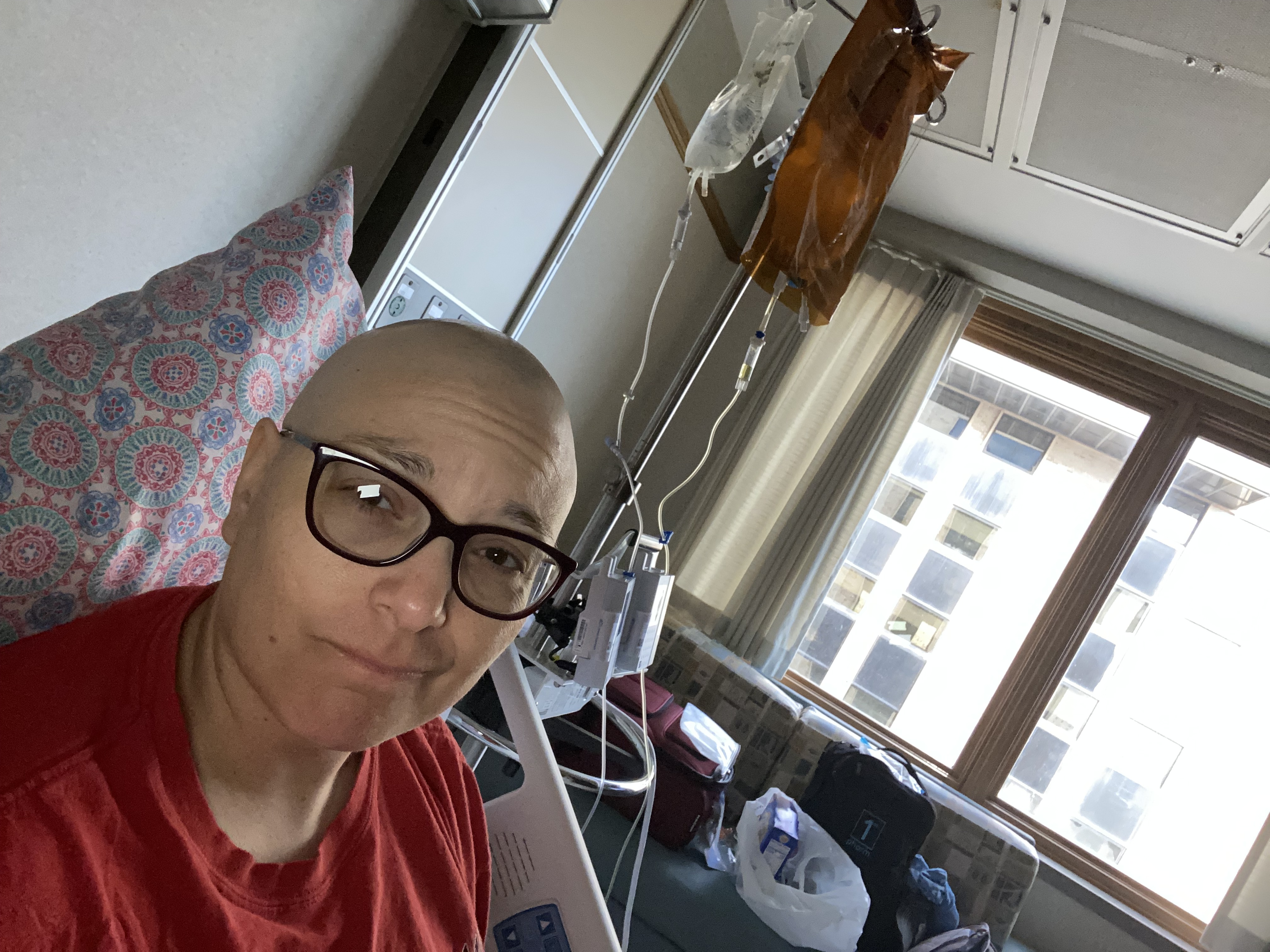
Elizabeth receiving chemotherapy (Photo submitted)

Eight months of treatment began. Her first hospital stay stretched twenty-one days. She walked out on her daughter’s sixteenth birthday—on Mother’s Day—and in remission. The chemo had worked fast, wiping out the cancer cells, but it had also wiped out nearly all of her healthy blood cells.

In that first round alone, Elizabeth needed four to five blood transfusions, plus countless platelet transfusions. As treatment continued, the numbers climbed far beyond anything she ever imagined: more than 120 blood transfusions and nearly 200 platelet transfusions.

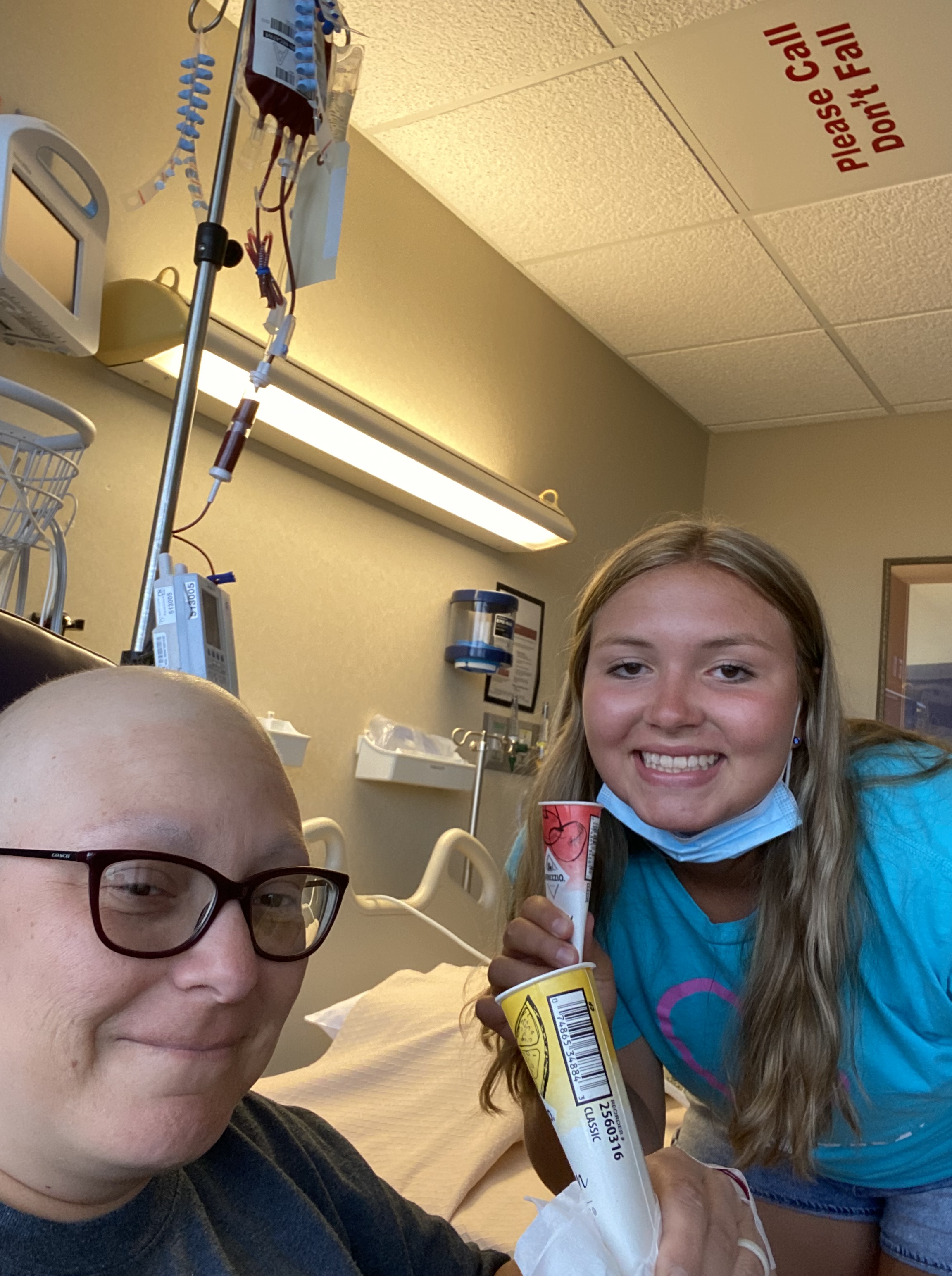
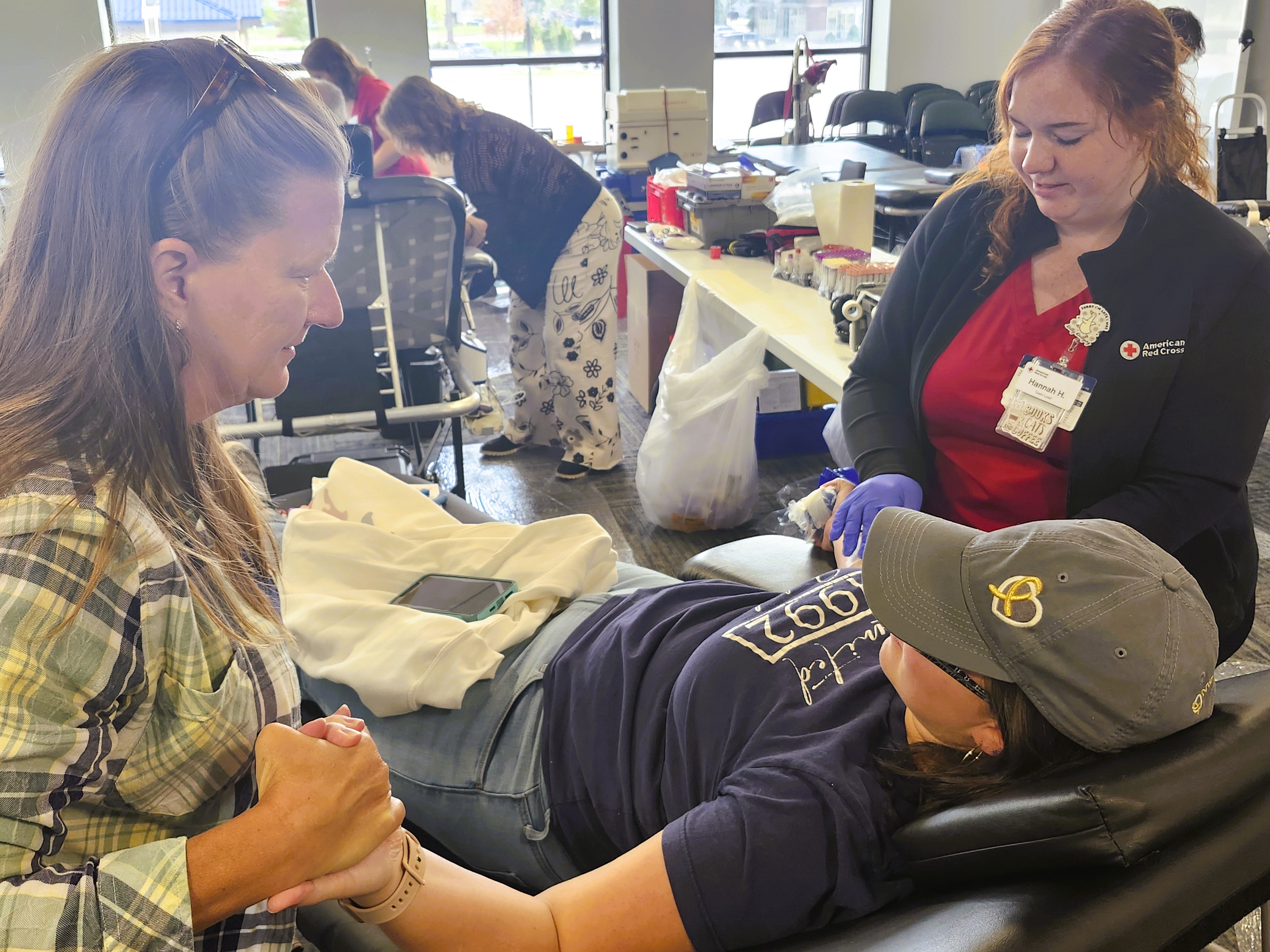
Elizabeth, pictured with her oldest daughter Tiffany, receiving a lifesaving blood transfusion—one of more than 120 blood transfusions and nearly 200 platelet transfusions that gave her the strength she needed to continue her chemotherapy treatments. (Photo submitted)

There were days when her blood counts sank so low she could barely stay awake. She remembers receiving a transfusion and, within thirty minutes, feeling her strength return. She tried to stay upbeat—even playful—asking the nurses, “So… is this one going to give me powers?” Humor became her shield against fear.

Because of her rare Rh-negative blood, she often needed specially typed platelets. She would be admitted for days at a time, waiting and hoping that these gifts from strangers—people she would never meet—would take.

She wondered constantly about them.

Who is this person whose blood is making me feel better? What do they like to do? Could I ever meet them to say thank you?

By December 2021, Elizabeth had completed her final chemo treatment. She stepped into survivorship the same way she had entered treatment—determined. This May marked four years since her first remission, and December marks four years cancer-free.

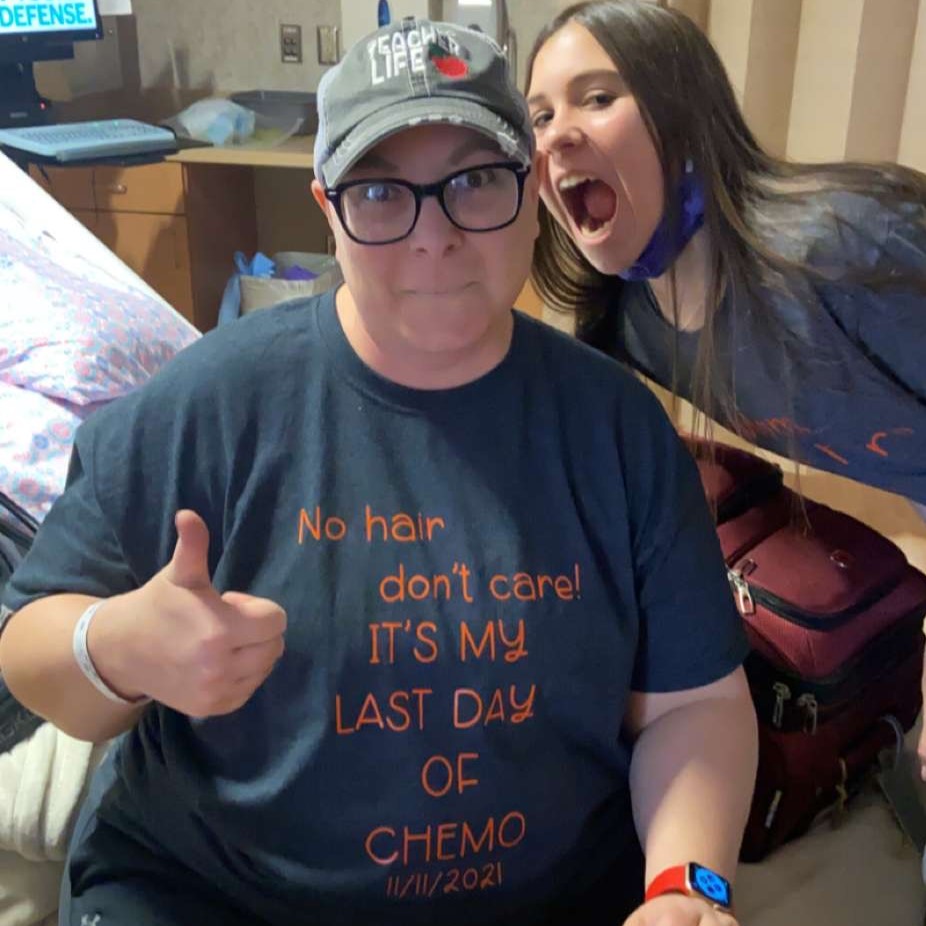
Elizabeth and her daughter Makenzie celebrate her final chemo session, with the same humor that became her shield against fear—proving that laughter really is the best medicine!
(Photo submitted)

Long before she became a patient, Elizabeth had been a donor herself. She started giving blood and plasma at sixteen, encouraged by her mother, who worked in a nursing home and often spoke about ordinary people quietly helping others simply because someone had to. As a high school athlete in the late ’90s, donation felt like just a good thing to do—never something she imagined she would one day depend on for her life.

So when the blood drive coordinator at Fairmont High School retired, Elizabeth didn’t hesitate. She stepped in to lead the program. “These donations saved my life,” she says.

She can’t donate anymore, but she volunteers with the Red Cross because she knows what’s at stake. Somewhere, right now, another parent, another teacher, another human being is lying in a hospital bed waiting for blood—blood that may determine whether they get to see another birthday, another Mother’s Day, another tomorrow.

Her four daughters now donate—or plan to. They watched their mother fight for her life. They saw how every transfusion lifted her back to herself. One of her daughters, an O-negative universal donor, once said, “If someone saved Mom with their blood, the least I can do is give mine to someone else.”

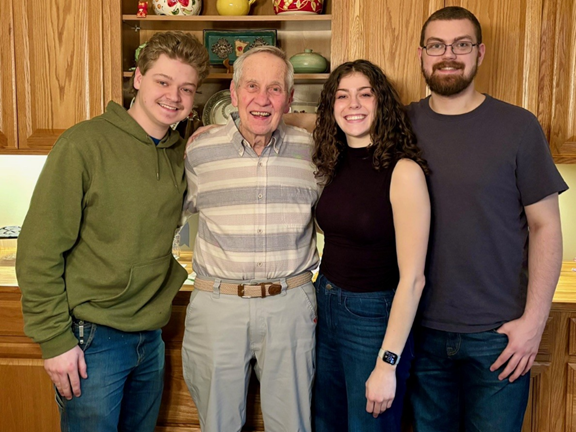
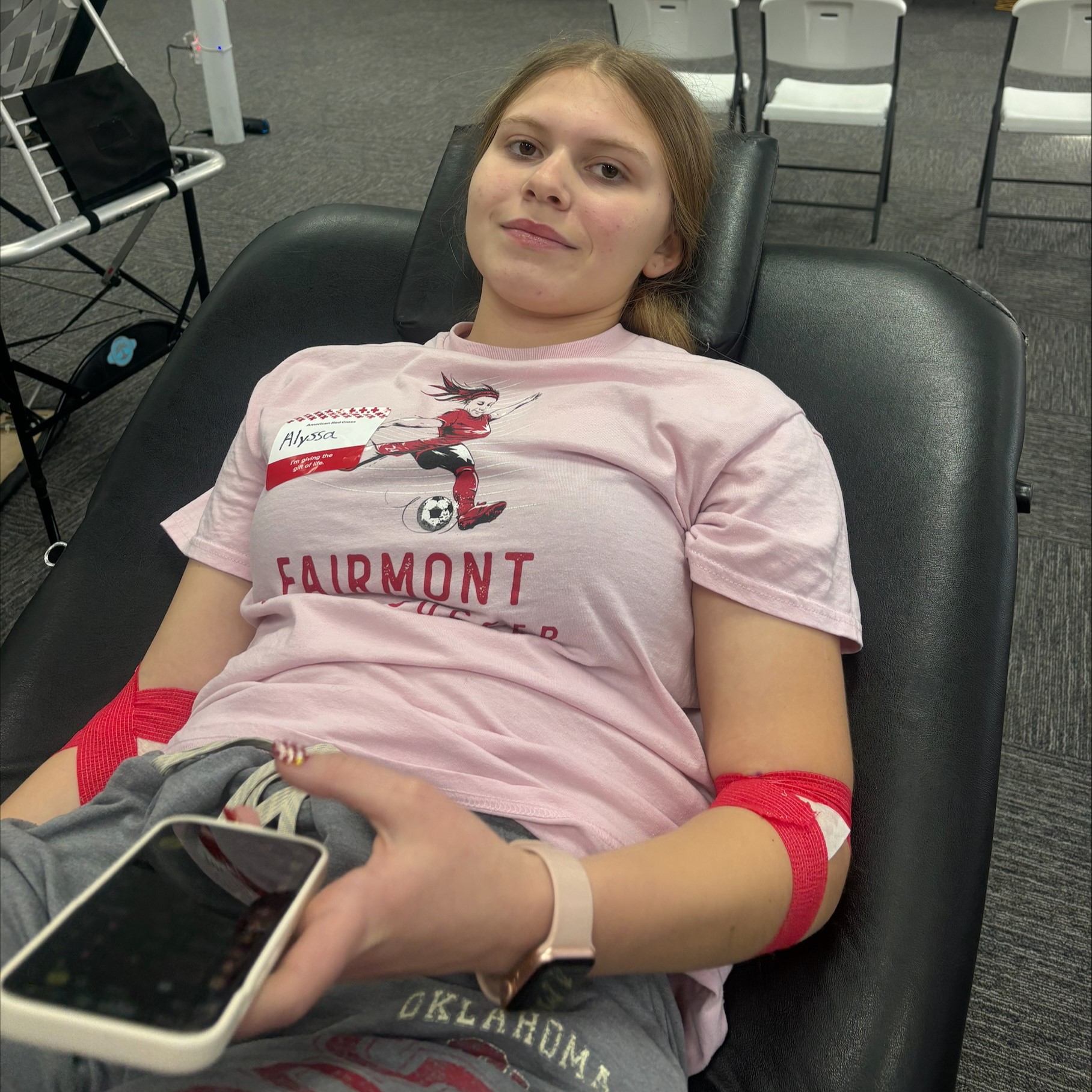
Elizabeth’s daughter Alyssa made her first blood donation in December 2025, keeping it light through the nerves and paying it forward for her mom. “I’m amazing because amazing people donate blood to help save lives. I guess that makes us superheroes!” (Photo submitted)

Elizabeth is proud—not just because her girls donate, but because they understand. “Awareness is learning,” she says. “You can’t expect people to do better if they don’t know.”

So she teaches, just as she does every day in her classroom. When she stands before students at Fairmont High—whether she’s explaining an assignment or sharing her story about blood donation—she knows not everyone will take the message to heart. But some will. And those few may one day help save a life.

She shares her story not to seek sympathy, but to spark action. “If telling my story encourages even one more person to donate, then it’s worth it,” she says.

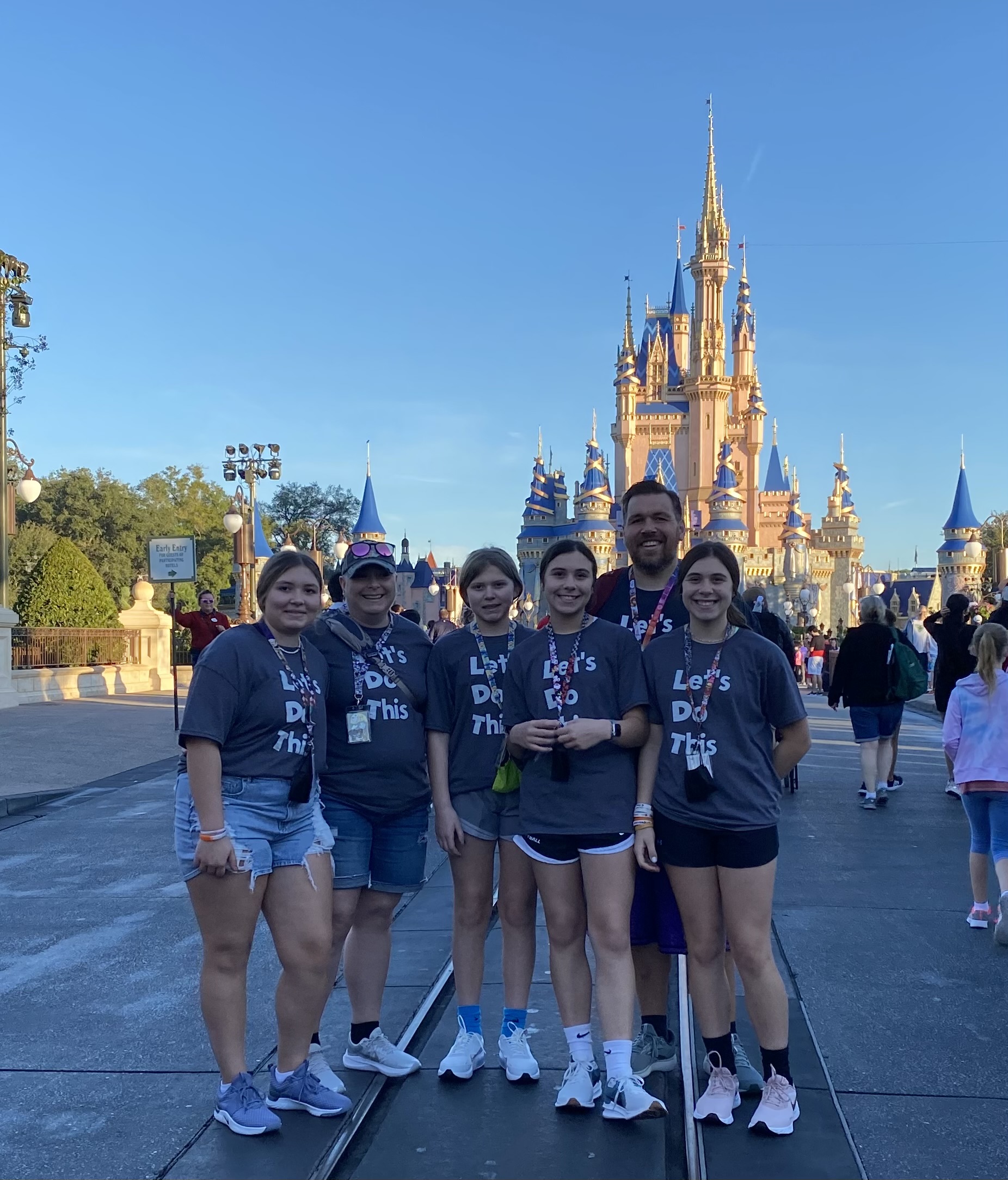
The Lowry family at Disneyland – December 2021. (Photo submitted)

Elizabeth is alive today because someone donated—someone she will never meet, someone who didn’t know they were saving her. She is living proof of the impact a single donor can make. Now she leads student blood drives, raises awareness, and inspires a new generation of donors, determined to honor the strangers who once saved her life by paying that gift forward.

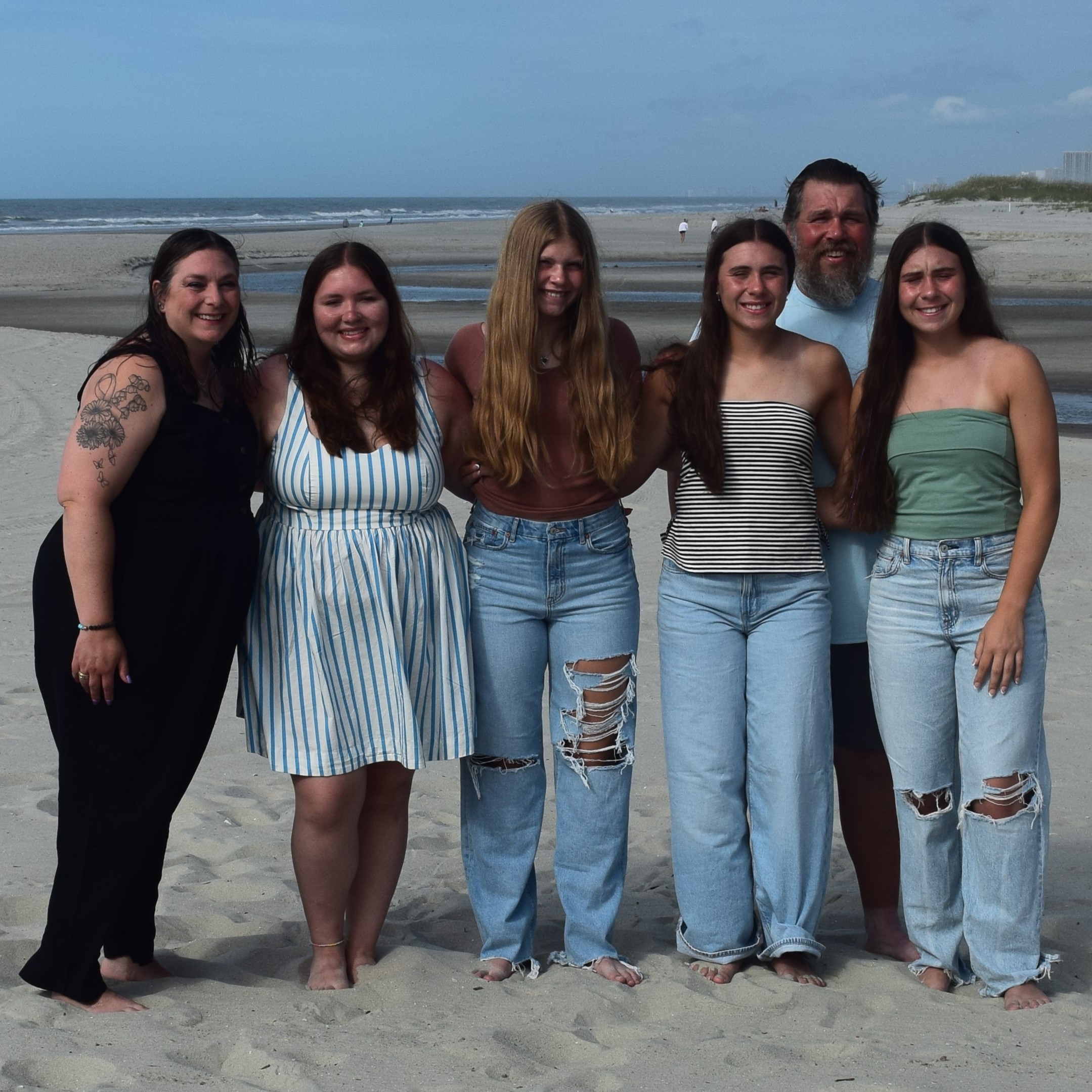
The Lowry family in Myrtle Beach – June 2025. (Photo submitted)

Your donation could mean the difference between life and loss—for a patient, a parent, a teacher, a mother or a friend. It only takes an hour. It can give someone another tomorrow.

The American Red Cross is facing a severe blood shortage as requests from hospitals exceed the available supply of blood. Donors of all blood types, especially those with types O, A negative and B negative blood and those giving platelets, are urged to give now to help people who rely on transfusions for medical care.

Schedule your donation today at RedCrossBlood.org or call 1-800-RED CROSS. Don’t wait. Someone’s life depends on it.

Madelyn’s Mission:   Turning Survival into Service 

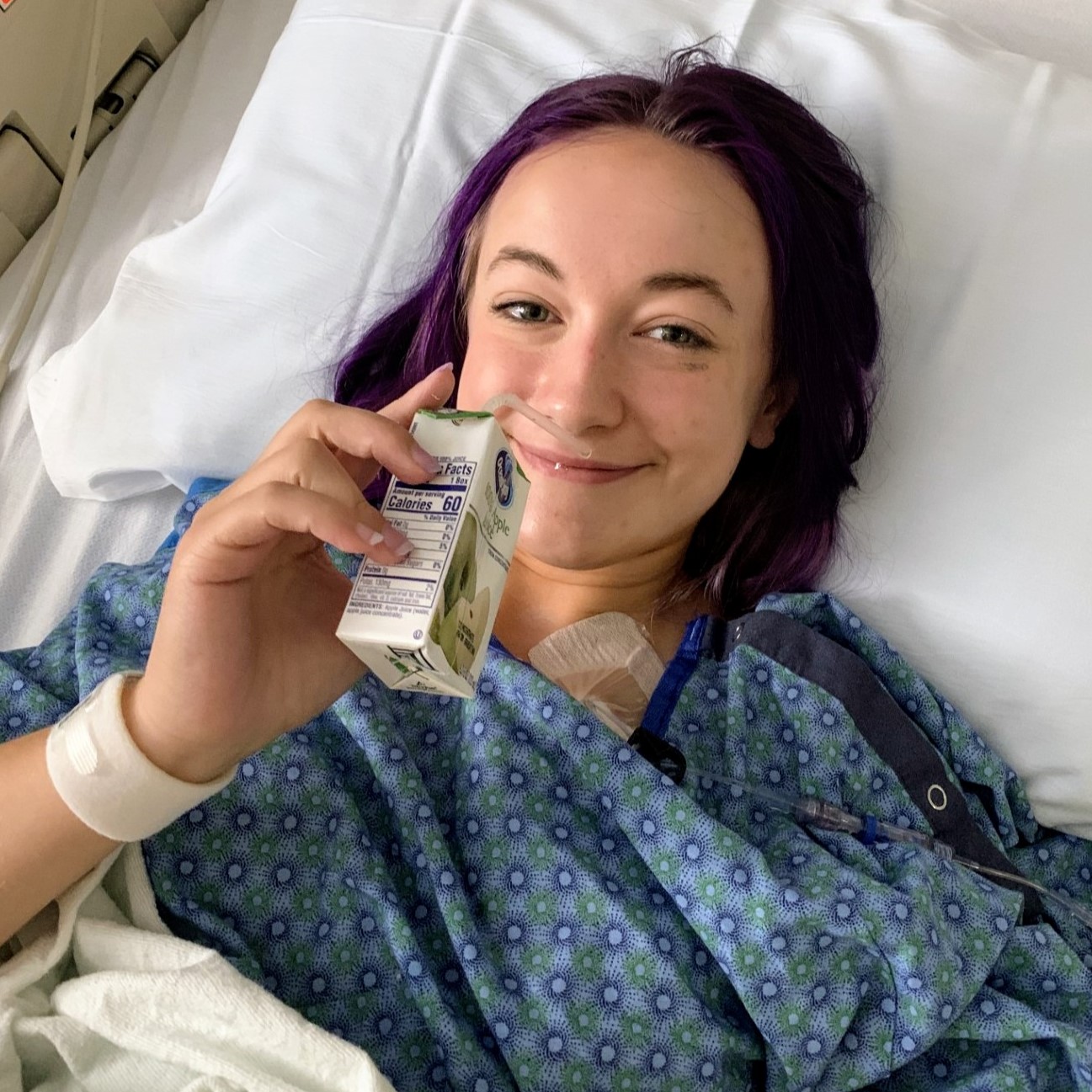
Madelyn recalls dyeing her hair purple a few days before starting treatment. It was a way of taking back control before chemotherapy, a flash of color and courage before everything changed. A few months before beginning her junior year at Watertown-Mayer High School, she was learning words no teenager expects to learn – port, infusion, transfusion.        

Madelyn, in the hospital with her vibrant purple hair — a bold choice before starting chemo, reclaiming a bit of control in a time when so much felt uncertain. (Photo submitted)

Just four days after her 16th birthday, she started treatment. While other teenagers were focusing on getting their driver’s license, she was looking forward to finishing chemotherapy that October. Soon it was homework and hospital visits, all during the COVID-19 pandemic. 

During treatment for Hodgkin’s lymphoma, Madelyn benefitted from donated blood to get through her chemotherapy.  

“Getting transfusions were incredibly beneficial for my treatment. The energy was back, and I could feel more like myself again.” 

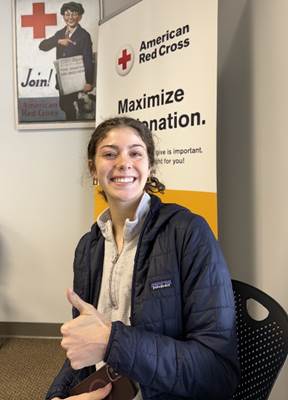
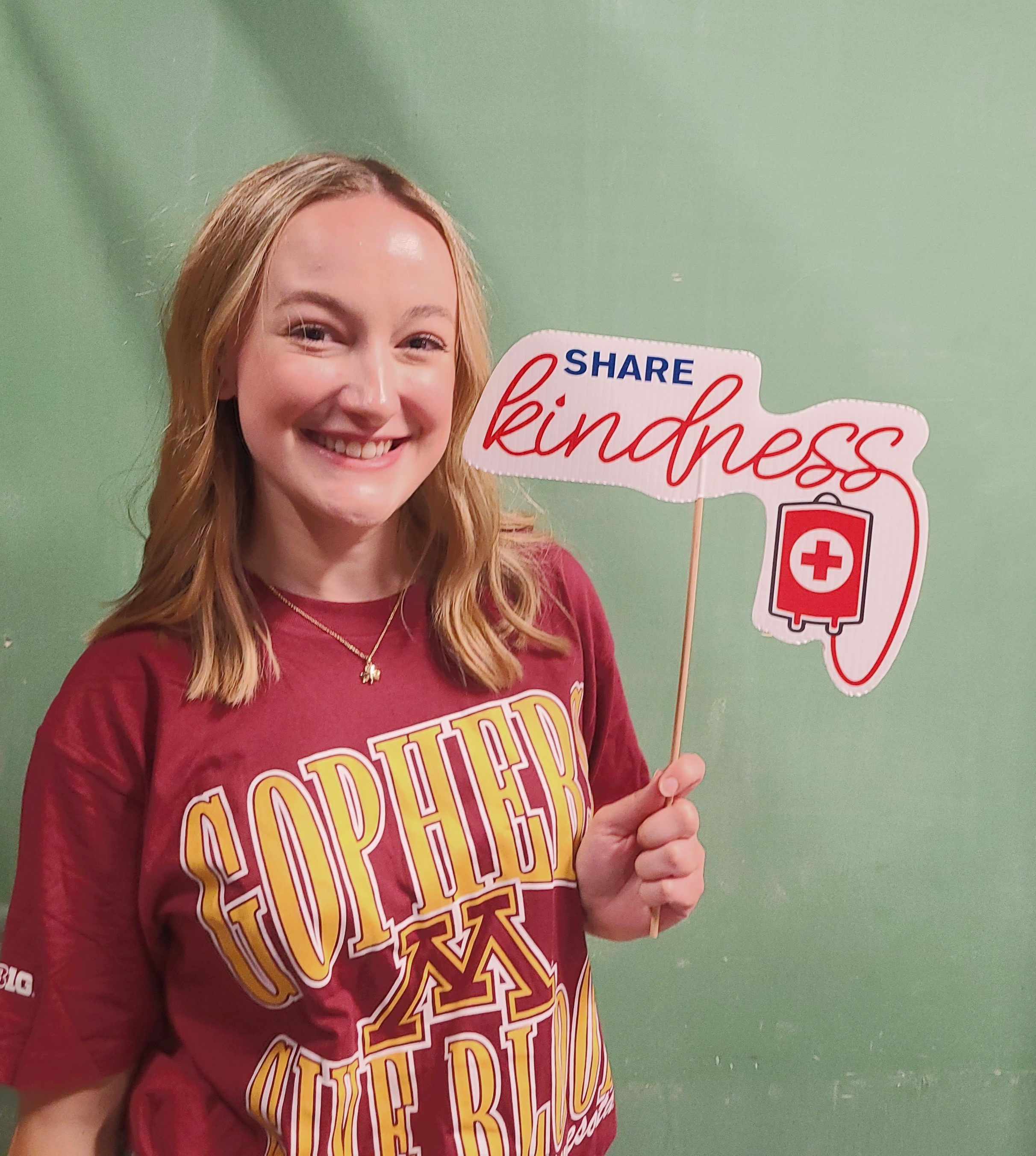
Madelyn beams as she holds a sign celebrating a milestone hard-earned through courage, resilience, and hope. (Photo submitted)

Looking back, she says it feels surreal to realize how far she’s come since then. Recently, she reached a milestone she once only hoped for – five years cancer-free.  

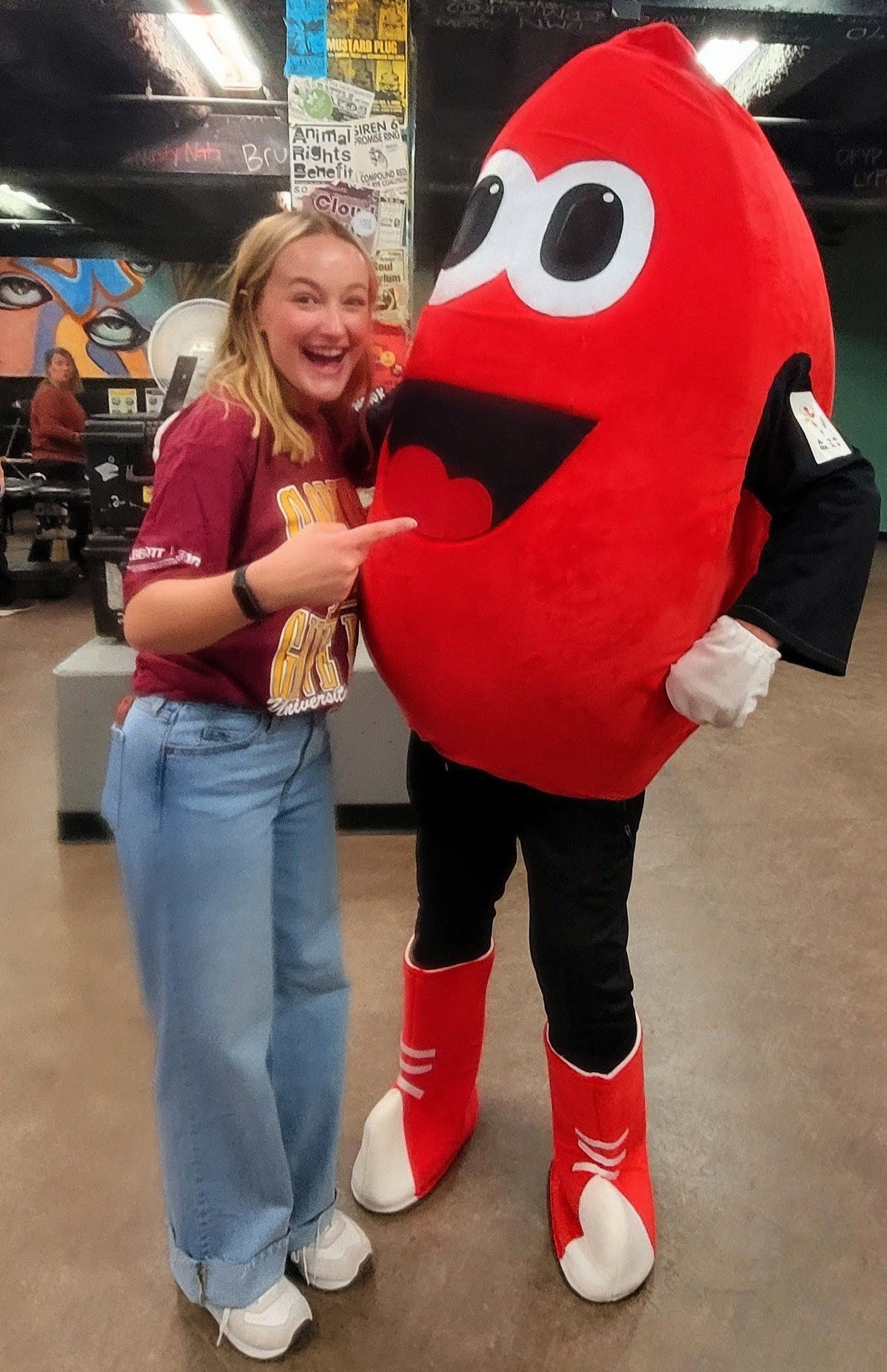
Now a senior theater major at the University of Minnesota, Madelyn carries that experience with quiet strength and a clear sense of purpose. She’s using her story to encourage others through the Abbott and the Big Ten’s “We Give Blood” competition, a friendly way for universities to inspire more students to donate. At the University of Minnesota Red Cross Blood Drive, Madelyn had fun with “Buddy the Blood Drop” and inspired classmates to donate more than 100 units of lifesaving blood.  And this December, right in the middle of finals week, she’s hosting her own blood drive on campus. It’s already almost full. 

Madelyn smiles alongside Buddy the Blood Drop at the University of Minnesota’s 2025 Homecoming Blood Drive — giving back to the community that once helped her through her own journey. (Photo: Carrie Carlson-Guest, American Red Cross)

Madelyn is more than a survivor – she’s an artist, a leader and a voice in the community. Between rehearsals and classes, she still makes time to volunteer and share her story. What drives her is connection, that deep sense of community that helped her heal and keeps her giving back. “For me, that’s a big driving factor in any work I do,” she says. “So many people have been there for me, and community is important, creating community in any way we can is important.”

Madelyn and her friend Rachel smile for a quick photo in their Gopher maroon & gold.
Between classes and campus life, Madelyn still finds time to advocate for blood donation, encouraging others to give the gift that once helped save her life. (Photo: Submitted)

She knows firsthand that every donation matters. “There are probably patients who didn’t get it in time,” she says. “Giving blood is a method of creating community, and I don’t know that it’s always seen as that, but I think it’s a really important way of doing something that helps people.” 

That understanding drives her advocacy for blood donation among her peers. She sees it not as an act of charity, but one of connection, something that takes less than an hour and can change a life. 

Madelyn is determined to create community by raising awareness and closing the gap in blood donation. By sharing her story, she’s inspiring change — one student, one act of generosity at a time. (Photo: Carrie Carlson-Guest, American Red Cross)

Every day, patients across the U.S. rely on blood and platelet donors to survive – yet only about 3 percent of eligible people donate blood each year. Madelyn is determined to change that. By sharing her story, she hopes to close that gap – one student, one act of generosity at a time. 

“Creating community matters,” she says. “And this is a simple way to do it.” 

Roll up a sleeve to donate and help change a life, like Madelyn’s.  

Madelyn shared her inspiring story on WCCO-TV Sunday Morning – view here.
 
Schedule an appointment to donate blood or platelets using the Red Cross Blood Donor App, visiting RedCrossBlood.org or calling 1-800-RED CROSS (1-800-733-2767). 
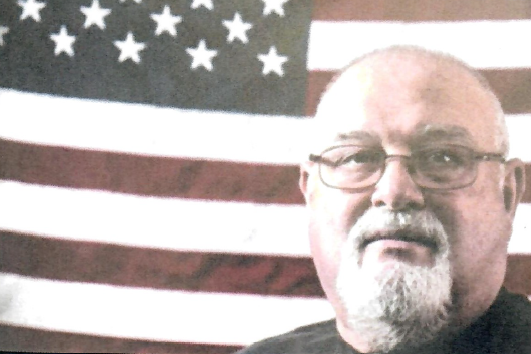
Because of Ryker: A family’s lifesaving commitment

Amy Slater’s journey as a blood donor began two years ago, sparked by a deeply personal experience: her four-year-old nephew, Ryker, was diagnosed with leukemia. Watching him go through treatment, she quickly realized that blood donation isn’t just a kind gesture — it’s a lifeline.

“Ryker needed multiple transfusions throughout his treatment just to have the strength to keep fighting,” Amy recalls. “That changed everything for me. I saw firsthand how critical donated blood was to his recovery.”

Amy stands strong beside her nephew Ryker, who is bravely battling leukemia. Picture submitted.

Since that moment, Amy has become a passionate advocate for blood donation. At Federated Insurance, where she works, she actively supports the company’s blood drives, held three times a year. She never misses a chance to donate — and always encourages her coworkers to join her.

“It only takes a little bit of your time, and it’s absolutely worth it,” she says. “The staff are so kind and professional — they make the whole experience smooth and meaningful.”

Amy proudly donates blood in support of her brave nephew, Ryker, who is currently undergoing treatment for leukemia. Her donation is one small way to help him in his courageous fight.
Photo: Sue Thesenga/American Red Cross

Though Ryker is now cancer-free, his journey left a lasting impact on the entire family. “I had never donated blood before his diagnosis,” Amy shares. “But once I saw the difference it made in someone I love, I knew I had to keep going.”

As a mother of two, Amy feels the importance of donation even more deeply. “I can’t imagine being told one of my own kids had cancer — and then finding out there might not be blood available,” she says. “That’s why I donate. That’s why I keep encouraging others to step up.”

Alissa donates blood for the first time in honor of her son Ryker. Right by her side is her stepmom Kim, offering love, support, and a whole lot of encouragement.
Photo: Sue Thesenga/American Red Cross

At this year’s Rock ‘N Roll Up Your Sleeve Blood Drive in Mankato, Amy’s dedication became a family affair. She was joined by her sister and Ryker’s mother, Alissa, and their father and stepmother, Tim and Kim — all eager to give back. For Alissa, it was her very first-time donating blood.

Alissa donates blood for the first time, inspired by her son Ryker’s leukemia treatment. A little nervous at first, she’s all smiles, proud to give back in such a meaningful way.
Photo: Sue Thesenga/American Red Cross

“I was a little nervous at first,” Alissa admits. “But it was easier than I expected. After seeing Ryker receive blood during his treatment, I knew I could do it and I’m so glad I did — having my family there made it even more meaningful.”

Their motivation runs deep. Ryker is nearing the end of his treatment. On September 18, he’ll receive his final dose of liquid chemotherapy — a powerful milestone for a resilient little boy and a hopeful family.

“I truly believe every blood donor is a blessing. If you can donate, just do it. You could be helping save someone’s life — it made a lifesaving difference for Ryker.”

Amy, Alissa, Tim, and Kim proudly show off their PEANUTS Snoopy T-shirts after donating blood — all Because of Ryker. This family’s lifesaving commitment is a powerful tribute to the brave little boy at the heart of it all. Photo: Sue Thesenga/American Red Cross

Stories like this remind us that donating blood is a testament to the power of family, community, compassion, and the courage it takes to care.

You can help save lives, too. Eligible individuals are encouraged to schedule a blood or platelet donation appointment by using the Red Cross Blood Donor app, visiting RedCrossBlood.org or calling 1-800- RED CROSS (1-800-733-2767).

Nolan the Heart Warrior: A Story of Strength, Survival, and Giving Back

Nolan arrived 2.5 weeks early, a healthy, 8-pound, 10-ounce baby boy. But within hours, the joy of his birth turned to fear. His mother, Sara Jutz, sensed something wasn’t right. Together with her husband, Joe, they pushed for closer observation. Trusting their instincts and speaking up made all the difference, that decision ultimately saved Nolan’s life.

Newborn Nolan made an early entrance, arriving 2.5 weeks ahead of schedule and weighing in at a healthy 8 pounds, 10 ounces. Photo submitted.

Doctors diagnosed Nolan with a serious congenital heart defect: a coarctation of the aorta, a narrowing of one of the heart’s main arteries. Just 10 hours after birth, he was rushed by ambulance to Children’s Hospital in Minneapolis. At only four days old, Nolan underwent his first major surgery. Surgeons accessed his heart through his back and used a Gore-Tex (synthetic) patch to widen the narrowed artery. During that operation, Nolan received his first blood transfusion, one of many he would need. That donated blood played a critical role in saving his life.

Nolan recovered quickly and was able to go home on his ninth day of life. As he grew, his spirited personality and big heart, both literally and figuratively, became his trademarks. At age six, he underwent a second procedure. Since the synthetic patch placed earlier couldn’t grow with him, doctors used a balloon catheter to stretch it and improve blood flow. The minimally invasive procedure was a success, and Nolan bounced back to his usual self within days.

By the time he was 11, Nolan was thriving. Though he saw his cardiologist regularly and understood he’d never “outgrow” his condition, that never held him back. Active, strong, and fiercely determined, Nolan proudly embraced life as a heart warrior. He even led his elementary school in fundraising for the American Heart Association, raising more money than anyone else.

Nolan, Eli, and Katelyn were each born with different heart defects. Only Nolan needed surgery, but their resilience unites them. Photo submitted.

His journey is made even more remarkable by his family’s story. Nolan’s two younger siblings were also born with congenital heart defects, each different, each unique. While Nolan required surgeries, his siblings have not needed medical interventions. Doctors remain unsure why all three children were affected, but what is clear is the strength and resilience of the family.

The Jutz family has long been dedicated to supporting their community, but Nolan’s experiences ignited a deeper sense of purpose: a personal commitment to give back. Watching his mom organize a blood drive, motivated in part by her own father’s need for weekly transfusions, Nolan jumped in to help. He manned the registration table, witnessed firsthand the importance of blood donation, and knew he wanted to do more.

Following the success of last summer’s blood drive, Nolan and Sara set out to organize another, this time at Nolan’s middle school. They transformed his personal journey into a powerful mission to raise awareness and inspire others to make a life-saving difference.

There is a lot that goes into organizing a blood drive, but Nolan’s greatest test came on April 18.

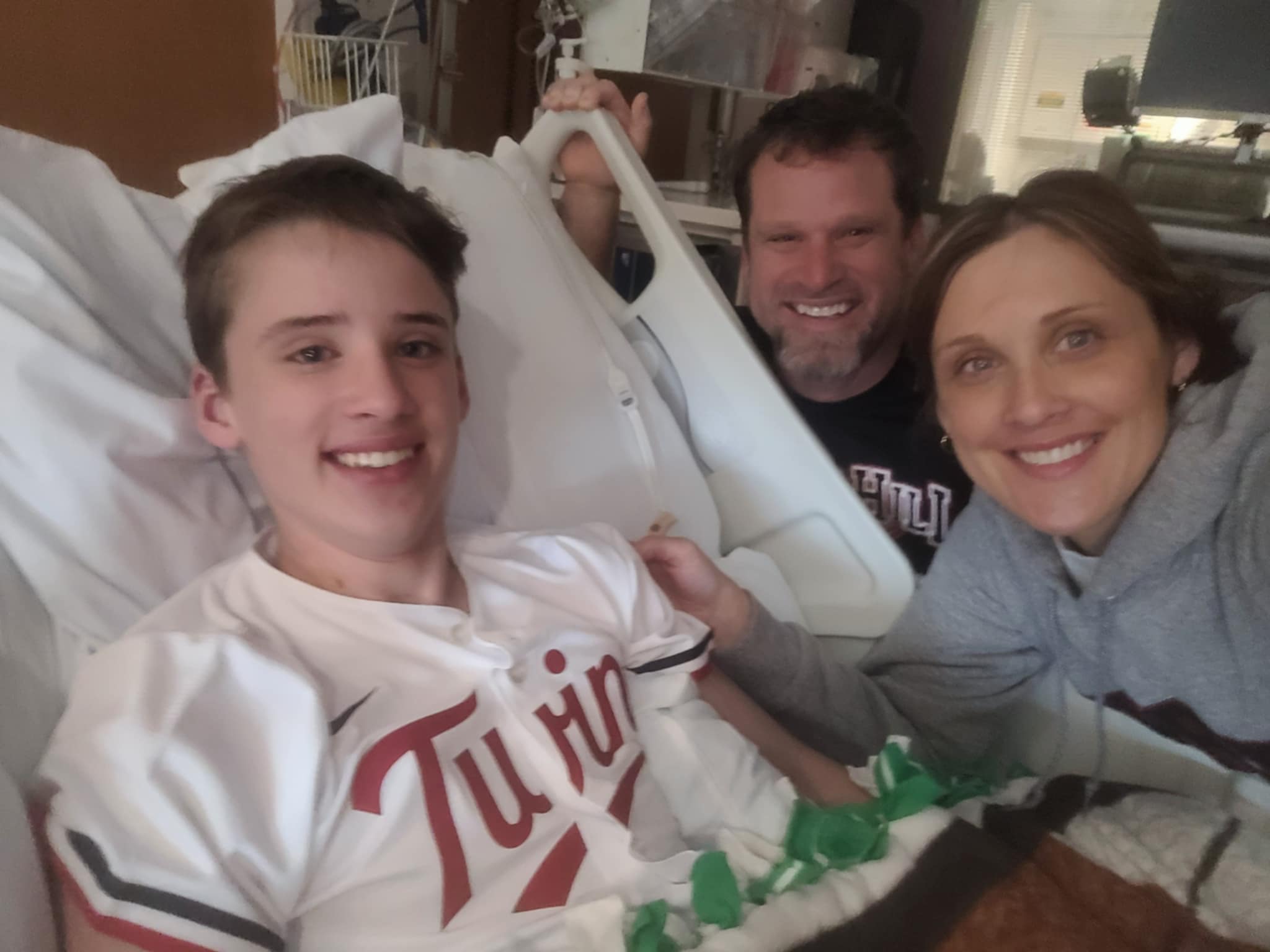
Pictured with his parents, Nolan recovered in the hospital after a lifesaving procedure that required 18 units of blood – April, 2025. Photo submitted.

During what was expected to be a routine stent placement, Nolan’s aortic valve ruptured, triggering cardiac arrest that lasted nearly 20 minutes. As blood rapidly filled his chest cavity, his left lung collapsed. In an urgent fight to save his life, doctors performed emergency surgery, relying on chest compressions to place the seven stents needed to repair the valve. Nolan required 18 units of blood that day, blood made available thanks to the selfless donations of others. That generosity is what saved his life.

Incredibly, just six weeks later, Nolan was back on the baseball field with his friends. His family, still overwhelmed by that day, speaks of how the experience changed them. “When you hear ‘18 units of blood,’ it hits different when it’s your child,” Sara said. “You don’t realize how much one small body can need, or how vital it is that the blood is there.”

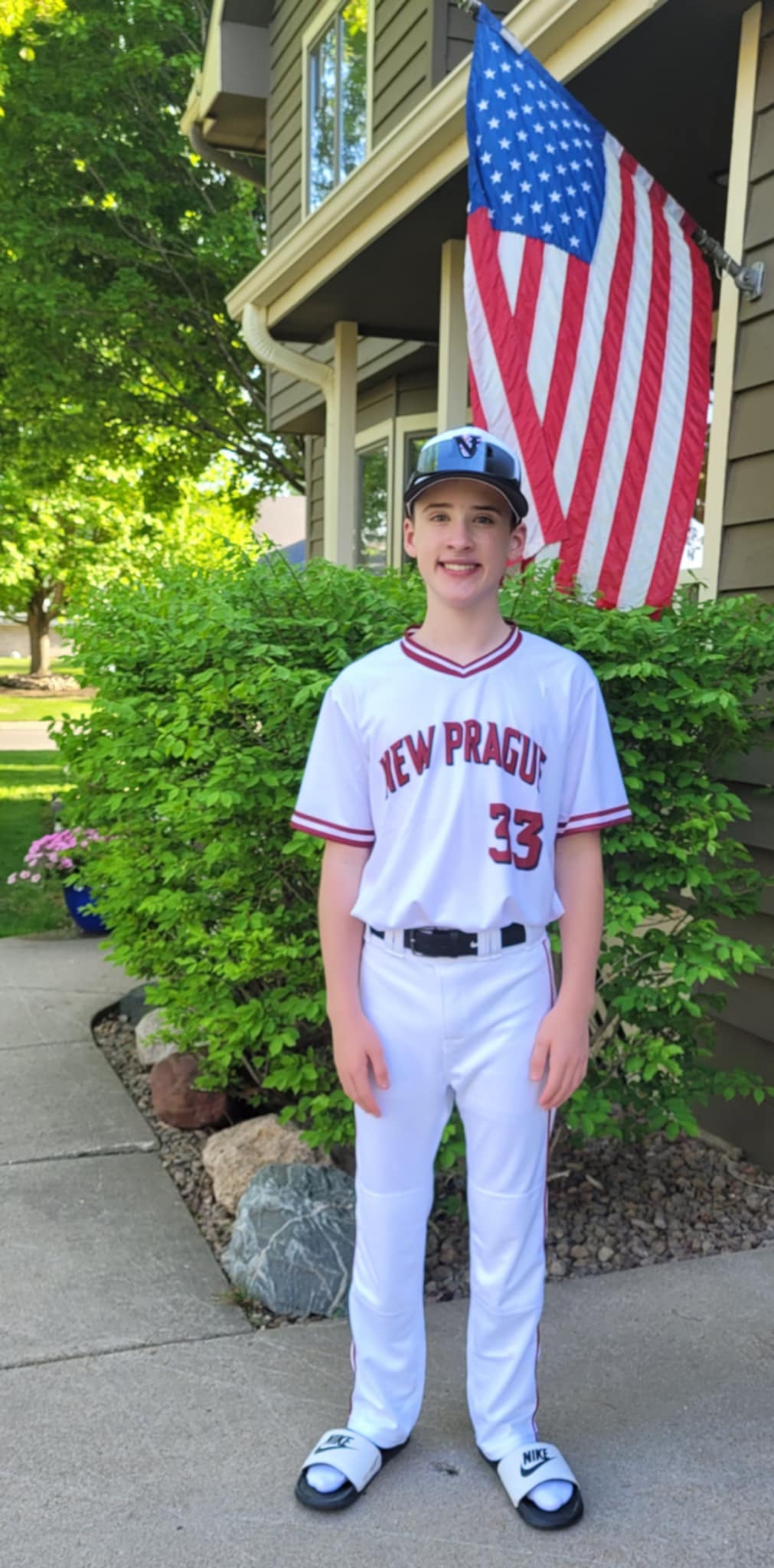
Just six weeks after emergency surgery and 18 units of blood, Nolan is back and ready to hit the baseball field! Photo submitted.

Today, at 14 years old, Nolan is more than a survivor. He’s a fighter, an advocate, and a leader. He’s a student, a friend, an athlete, a big brother, and a boy whose strength has already changed so many lives. And he’s not done yet.

On June 30, family and friends supported a blood drive organized by Nolan and his mother at his middle school. Nolan greeted donors at the registration desk before joining his siblings for a well-earned lunch break. Each donor received a copy of Nolan’s story and was encouraged to share it to help raise awareness about the ongoing need for blood donations.

On June 30th, family and friends came together to donate blood at the drive Nolan and his mother organized at his middle school. Their hope was to collect enough to give back, to pay it forward for the many donations that once helped save Nolan’s life. They collected 41 pints of lifesaving blood – each one a testament to the power of giving and the impact of Nolan’s story.

Nolan continues to raise awareness and encourage others to donate blood, to give the gift of life, because he understands better than most just how vital it truly is.

He is, and always will be, a heart warrior.

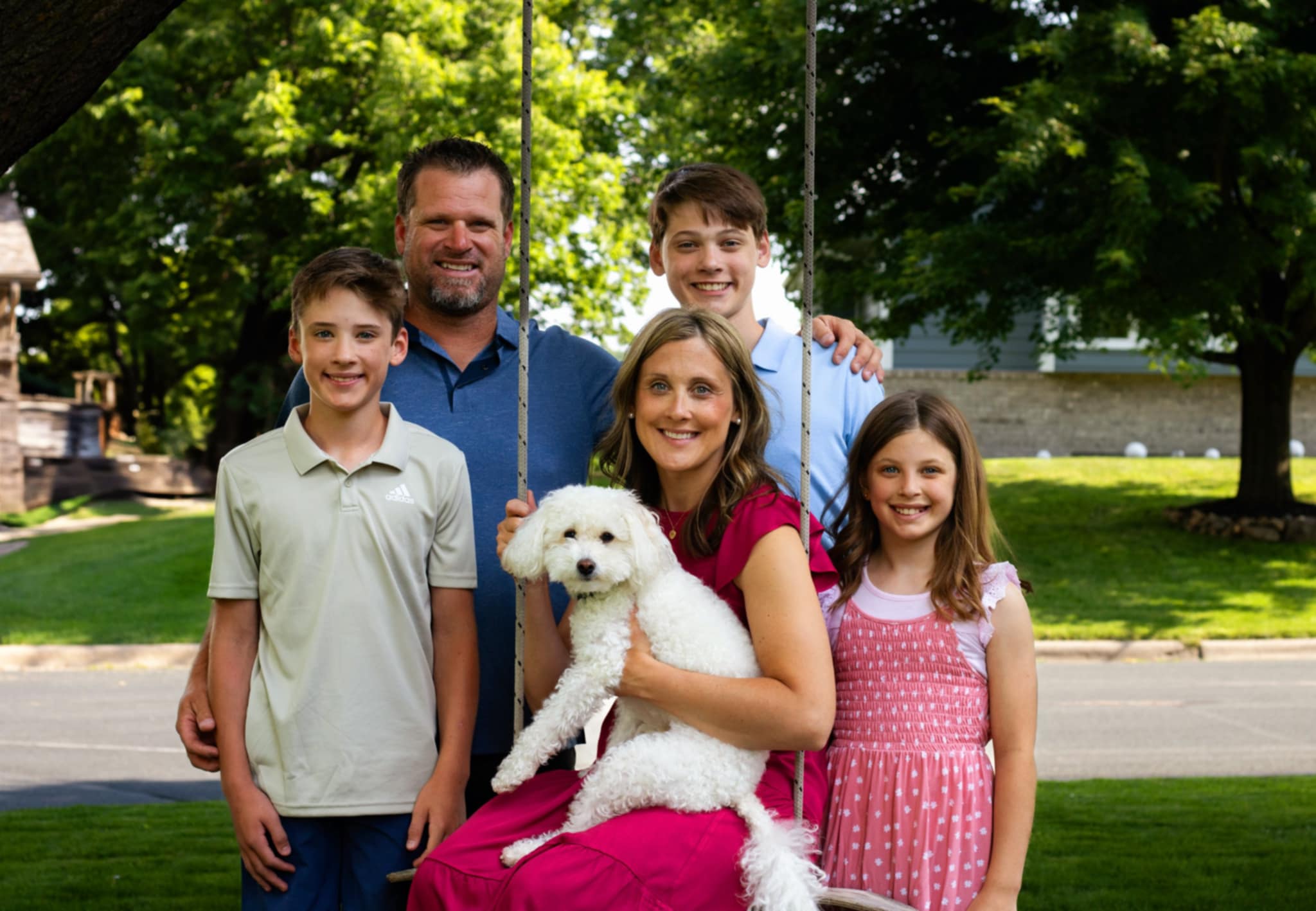
The Jutz family. Photo submitted.

Make an appointment to give blood or platelets now by using the Red Cross Blood Donor App, visiting RedCrossBlood.org or calling 1-800-RED CROSS (1-800-733-2767).
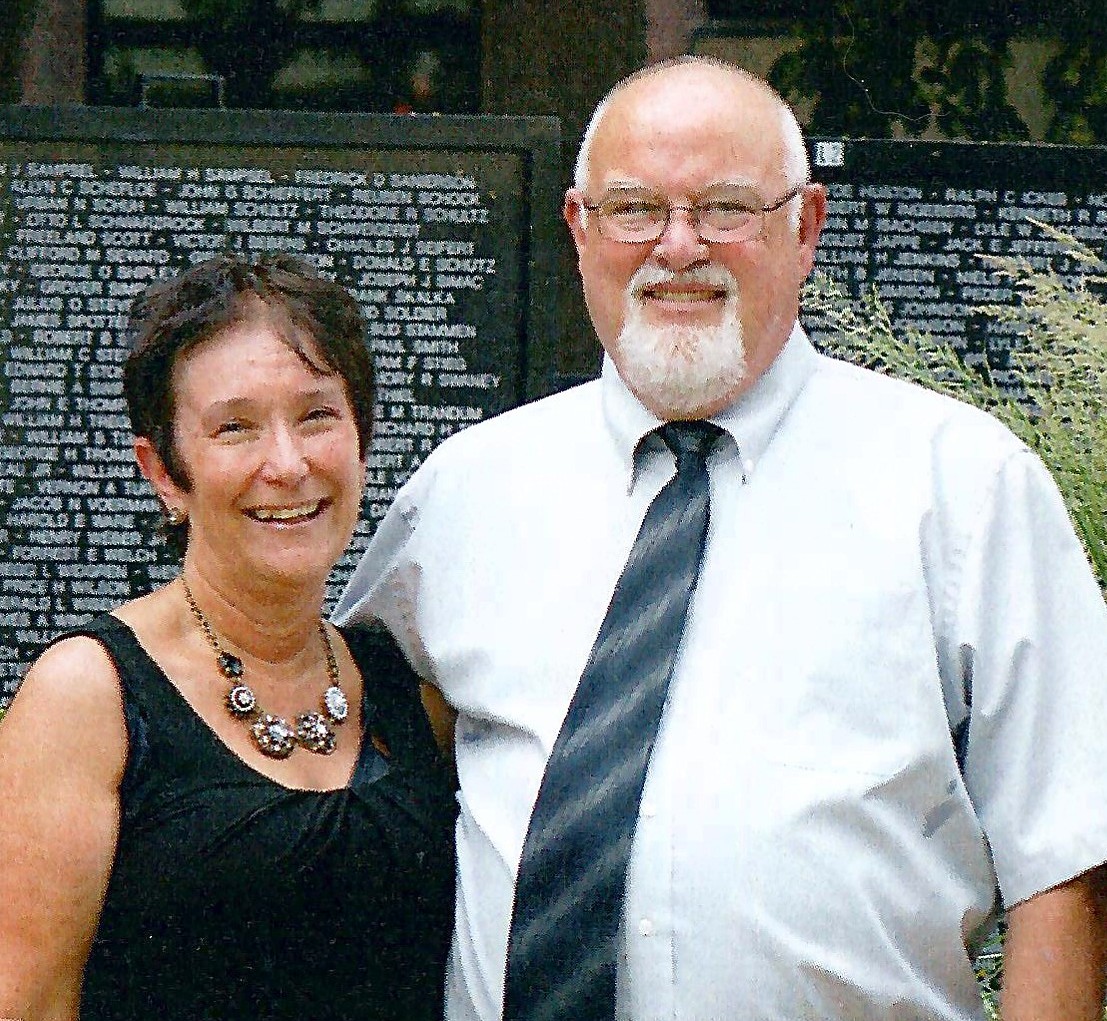
When the Local Pub Becomes a Disaster Relief Hub

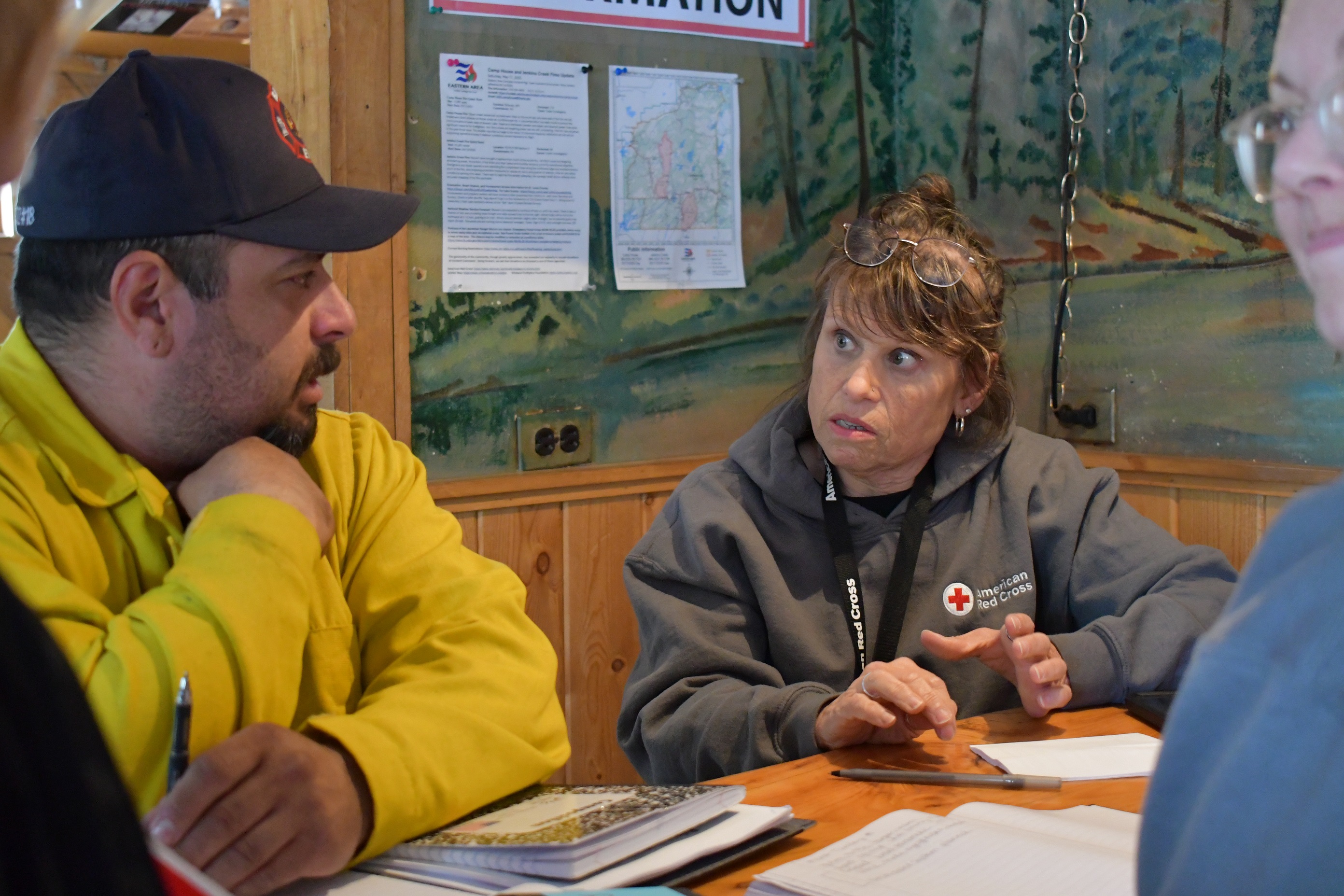
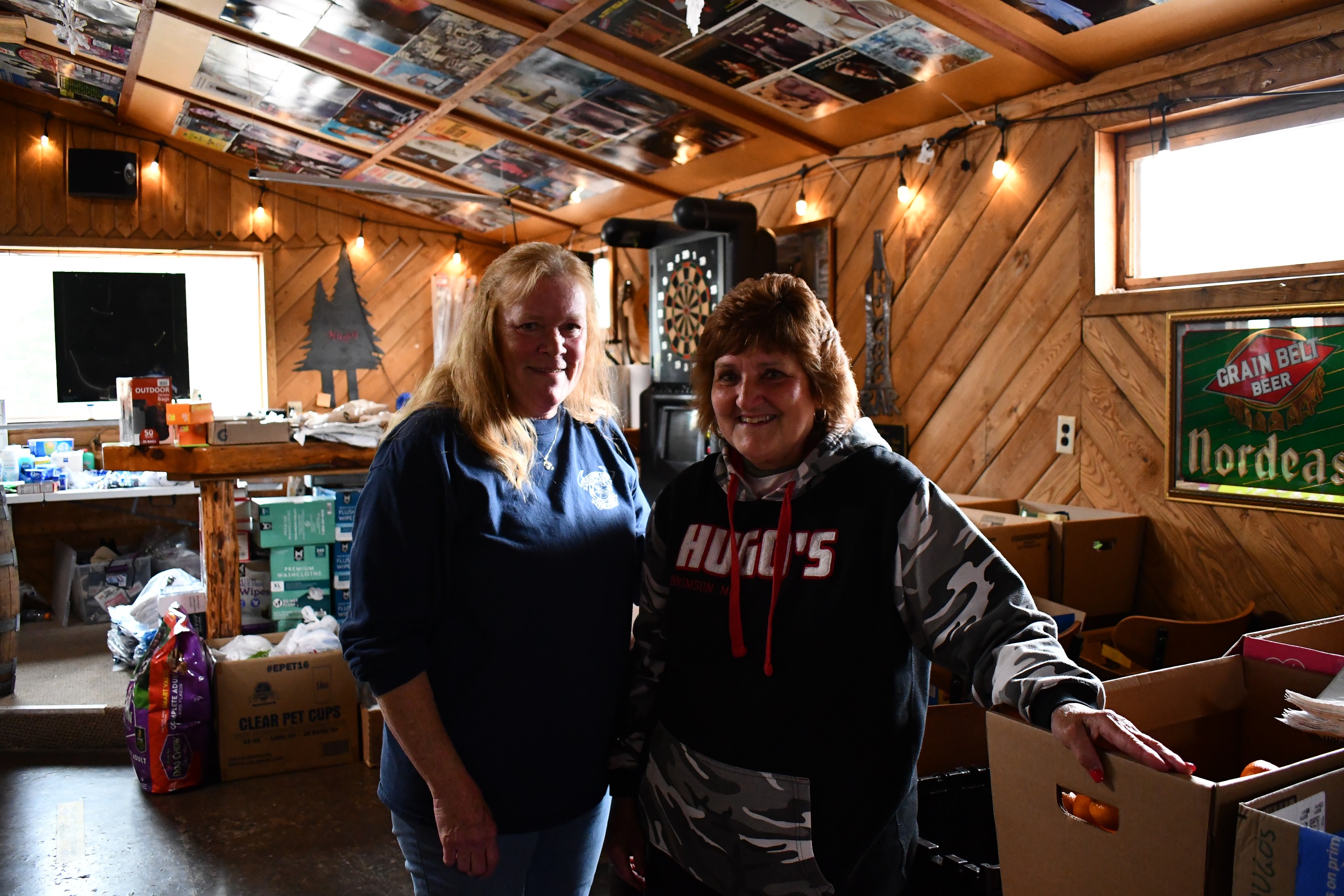
Brimson Volunteer Fire Chief Randy Freyholtz talks to Red Cross disaster relief volunteer Lisa Posch at Hugo’s Bar, May 16 2025. Photo: Nate Russell/American Red Cross

These days, the sustenance at Hugo’s Bar in Brimson, Minnesota isn’t your standard pub fare. The tables where folks normally take classes for building fishing rods are now piled with diapers, tarps, thick gloves, contractor bags, and totes.

A small group huddles around a table. They hug, share a laugh, they cry. They discuss things they’ve lost, and they speak hopefully of rebuilding once the Northland Wildfires abate.

“We lost a lot,” a homeowner shares with Debbie Ecklund, who’s helping  to manage the resource center, “the bar, the furniture, all handmade.”

“Stuff that you made?” She asks.

“No, the house was made in 1906. I wasn’t around to help.”

Debbie and the homeowner share a laugh at that.

Penny Linn and Debbie Ecklund at Hugo’s Bar in Brimson, Minn., May 16, 2025. Photo: Nate Russell/American Red Cross

Since the onset of the Brimson wildfire the owners of Hugo’s Bar, Jesse and Jessica Willemarck, converted their establishment into a 24-hour resource hub, sleeping in four-hour shifts to maintain round-the-clock services for wildfire relief.

“I don’t know what we would have done without Hugo’s here doing this for us – without Jess and Jessica doing this,” says Fire Chief Randy Freyholtz. “This has been amazing. The support, the community outreach has been phenomenal.”

As the crowd grows, Chief Freyholtz can be seen checking in on families and making sure his neighbors have everything they need. After he’s made the rounds and talked to everyone, he sits down at a table with Red Cross volunteers.

“Some of us [firefighters] have been evacuated,” he explains, “but so far none of our structures have been affected, so we’ve been lucky in that aspect. Very lucky. For how fast this fire’s been moving, we’ve been very lucky that we haven’t lost anybody.”

Chief Freyholtz and his small group of volunteer firefighters have been fighting the fire since day one. And he’s been evacuated from his home, sleeping in his truck at the fire station when not committing his waking hours to combatting the flames threatening his community.

“And how are you doing?” a Red Cross volunteer asks Chief Freyholtz.

“I’m doing good. I’m tired,” he says, “I think it’s starting to catch up with me finally. Now that things are starting to slow down and I’m sitting down more.”

Red Cross volunteer Kyle Parkinson compares distance between Hugo’s Bar and the fireline, Brimson, Minn., May 16, 2025. Photo: Nate Russell/American Red Cross

Rain during the weekend brought some respite. And information reports at Hugo’s say they’re full on donated goods and focused on distributing them to the people affected while donating the rest to food pantries and other community organizations to ensure nothing goes to waste.

To help reach people, Red Cross volunteers will be at Hugo’s to assess individual disaster care needs, such as health, mental health, and spiritual care. They’ll also use the site as a hub for working directly to provide support for those who have lost their homes to the fires.

If you or someone you know has been displaced by the Northland Fires, call 1-800-RED-CROSS.

Story and photos by Nate Russell/American Red Cross Volunteer

When Every Second Counts: A Mother’s Instinct and Medical Training Save a Life 

It was the kind of day people in the Midwest wait for all year. Sun overhead, the lake calm, and kids laughing, playing in the water. Jessica Simones was at Gull Lake in Minnesota with her daughter, Jocelyn, and a group of family and friends, soaking in the beauty of summer. 

Jessica Simones and daughter Jocelyn share a moment before Snow Ball 2024.

In a moment, everything changed. 

Jocelyn was pulled from the water by a friend—unresponsive, not breathing, and without a pulse. Cell phone service at the lake was spotty, adding to the urgency and chaos. 

Without waiting for help that might not come in time, Jessica dropped to her knees on the dock. 

Years of medical experience kicked in—but so did something deeper. She began CPR, working to bring her daughter back. She eventually revived Jocelyn and continued to monitor her breathing and care as they transported her to the nearest hospital, keeping her safe, warm, and alive. 

Jessica had participated in code blue events many times in her previous work at Children’s Hospital. But this time, it was profoundly different.  

“Nothing prepares you for doing it on your own child,” she said quietly. “I’ll never get that image out of my head.” Thankfully, Jocelyn has since made a full recovery and is eagerly anticipating her high school graduation. She is also excitedly planning for a future career in medicine at the College of Saint Scholastica in the fall. 

Honoring extraordinary personal action  
 
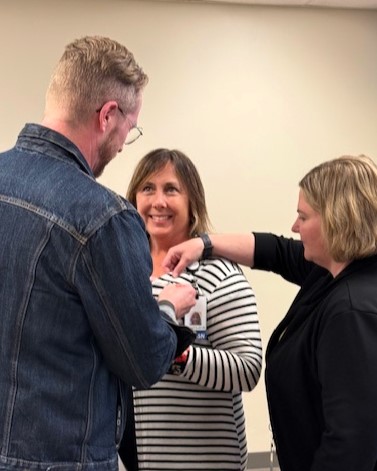
At a recent ceremony held at the Allina Medical Center in Faribault, Minnesota, the American Red Cross honored Jessica with one of its highest awards: the Certificate of Extraordinary Personal Action. 

Coworkers pin the official American Red Cross Lifesaving Award pin on Jessica during her recognition ceremony at Allina Clinic, Faribault, Minnesota, April 2025.

“It’s a recognition reserved for those who, in a moment of crisis, step up during an emergency to save or sustain a life,” said Melanie Tschida, Executive Director for the American Red Cross serving Southern Minnesota. “Whether or not they were trained by the Red Cross, their actions reflect our humanitarian mission to prevent and alleviate human suffering.” 

“Jessica, this award honors your courage—not just as a nurse, but as a mother,” said Carrie Carlson-Guest, regional communications director. “Your quick thinking and selfless actions made all the difference.” 

Why training matters 

At the hospital, healthcare workers later shared that just a one-minute delay could have led to a much different outcome for Jocelyn.  

Allina teammates celebrated Jessica Simones and her incredible actions at the recognition ceremony held at Allina Clinic, Faribault, Minnesota, April 2025.

Those first moments on the dock—the ones Jessica made count—are why CPR training matters. 

The American Red Cross encourages everyone to train for the moments that matter. Visit RedCross.org/MNDAKS to learn more and sign up for a course today. 

See the Need, Meet the Need

The Inspiring Story of June (Ahlfs) Qualy

Growing up, I was always very close to my grandmother, June (Ahlfs) Qualy. She taught me to read by the age of three embroider by the age of seven and the importance of helping those who need the most help by 12, at which time she encouraged me to take my first Red Cross class in babysitting. While most pre-teens spent their time at the mall or playing with makeup, I was busy learning the basics of survival skills and how to properly tie a makeshift sling in case of a broken arm. By 16 I was in Red Cross lifeguarding classes and became First Aid and CPR certified via a college class at 21. June was always a beacon of light in my life, modelling what a responsible, compassionate person in our society looks like.

It wasn’t until I joined the American Red Cross in 2022 that I started learning more about June’s time serving with the Red Cross in World War II. She had just graduated from St. Catherine University in 1945, where she was an active member of the League of Women Voters, and then entered the nursing service of the Red Cross. June was deployed to Hiroshima and Tokyo, Japan, where she witnessed firsthand the devastating aftermath of the war. Her experiences there shaped her perspective on human suffering and the power of compassion to heal.

Red Cosser June (Ahlfs) Qualy, 1946.

June served with the Red Cross until she decided to marry and start a family in 1949. However, her commitment to helping others didn’t end there. She went on to have a wonderfully impactful career at Saint Mary’s in Minneapolis as a chemical dependency counselor at their inpatient rehabilitation facility. June was known to be the toughest counselor on staff, often assigned the patients who were least likely to recover. Her approach was firm but compassionate, believing in the potential for change in even the most challenging cases.

“June always said, ‘see the need, meet the need’ and that keeps me going every day.” – Sarah Qualy, June’s granddaughter

Image of cover of book, "Saint Mary Blue" by Barry H. Longyear

June’s dedication and unique methods led to an alarming success rate despite the odds. Her work was so influential that former patient Barry B. Longyear wrote a book about her in the 1980s called “Saint Mary Blue.” This book not only chronicled June’s methods but also highlighted the lasting impact she had on countless lives.


When I think about June, I think about the tenacity of what it means to be a woman in times of crisis. Much like our Red Cross matriarch, Clara Barton, June embodied the spirit of humanitarianism that requires not only compassion and philanthropy but also courage and defiance. In this spirit, I’m reminded of my favorite Clara Barton quote: “I have an almost complete disregard of precedent, and faith in the possibility of something better. It irritates me to be told how things have always been done. I defy the tyranny of precedent. I go for anything new that might improve the past.”

While my Grandma June is no longer with us, having passed away at almost 90 in 2013, I know that I carry her light within. There’s a fire inside me that I learned from her, to step up for our community in times of tribulation. To not fear the emotions of disaster, but to use them to alchemize into action. June always said, “see the need, meet the need” and that keeps me going every day. Her legacy lives on through the countless lives she touched and through those of us who continue to serve in the spirit of the Red Cross.

By Sarah Qualy, proud Red Crosser, following in her grandmother’s footsteps

As we celebrate March as both Red Cross Month and Women’s History Month, honor June’s legacy by joining the American Red Cross in our mission to alleviate human suffering—whether it’s through volunteering, donating blood, or making a financial contribution, your support can make a difference in your community and beyond. Visit RedCross.org/MNDAKS to get involved.

A Lifesaving Moment Thousands of Miles from Home

More than 4,500 miles from home in Munich, Germany, Deputy Kelly Olson, a school resource officer with the Washington County Sheriff’s Office, found herself in a moment that demanded action. She was off duty, chaperoning a high school group, when she noticed a woman at a nearby table struggling to breathe. The telltale signs of choking were unmistakable.

Washington County Deputy Kelly Olson
(Photo courtesy of Washington County Sheriffs Office) 

Olson acted instantly. Relying on years of training, she stepped forward, calmly positioning herself behind the woman and performing the abdominal thrusts she had practiced so many times before. Within moments, the obstruction cleared, and the woman took a breath—her life saved by the decisive actions of someone who had dedicated her career to helping others.

Pictured is Deputy Kelly Olson (right) and a woman whose life she saved (left) while in Germany. (Photo courtesy of Washington County Sheriff’s Office) 

“I became a law enforcement officer to serve and help others, and on this occasion, I was fortunate to be in the right place at the right time to save a life. I’m grateful for the training I received, which enabled me to respond when someone’s life was at risk.” – Deputy Kelly Olson

Recognizing Courage and Preparedness
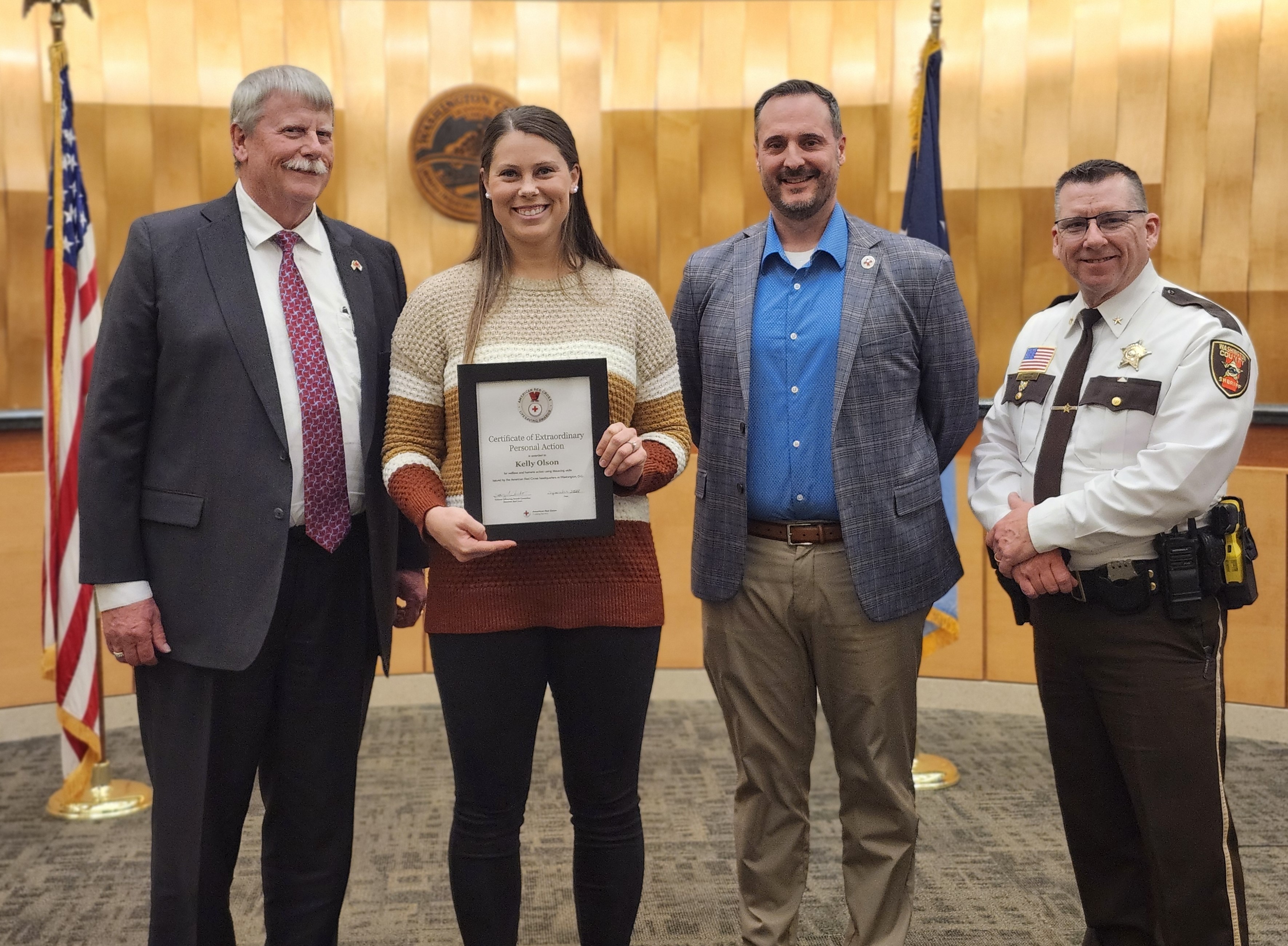
American Red Cross Minnesota and Dakotas Region, in partnership with the Washington County Sheriff’s Office, recently recognized Olson’s quick thinking and bravery with the prestigious Certificate of Extraordinary Personal Action—a national American Red Cross award given to individuals who use lifesaving skills to save or sustain a life.

“The Certificate of Extraordinary Personal Action is given to individuals, like Deputy Olson, who step up in an emergency situation and help save or sustain a life,” said Brice Johnson, Regional CEO for the Red Cross Minnesota and Dakotas Region.

Pictured L to R: Tom Meyer, Red Cross lifetime board member; Deputy Kelly Olson; Brice Johnson, Red Cross Regional CEO for the Minnesota and Dakotas Region, and Sheriff Dan Starry, Washington County Sheriff’s Office.

Olson’s story is a testament to the importance of lifesaving training, a reminder that emergencies don’t wait for the right time or place—they happen anywhere, and those who are ready can make all the difference.

A Moment of Gratitude and Celebration
The award ceremony was more than just an event—it was a celebration of a community built on service and readiness. Olson’s father, a retired Minneapolis Police Lieutenant who served for 30 years, proudly nominated her for this award and stood by as his daughter was recognized for her heroic actions. The moment was made even more meaningful as Olson recently welcomed a child of her own, adding a new layer of significance to her dedication to protecting .

“I’m so proud of her,” said her father who pinned Kelly’s badge on her nearly 10 years ago.”

Deputy Kelly Olson with her parents, husband and daughter following a Washington County Sheriff’s Office Recognition Ceremony on January 30, 2025.

Get Involved
Emergencies don’t wait. They happen in restaurants, on sidewalks, in workplaces, and at home. Being prepared with the right skills can mean the difference between life and death. The Red Cross offers a variety of lifesaving courses, including CPR, AED, and first aid training, ensuring that more people are ready to respond when the unexpected happens.

Get Trained: Sign up for a lifesaving course today at redcross.org/takeaclass.

Nominate a Hero: Know someone who has used their training to save a life? Nominate them for a Red Cross Lifesaving Award at LifesavingAwards.org.

A dynamic mother/daughter duo: Jennie and Jezzalyn Ringler deliver hope as Red Cross ERV team

Among the many roles that volunteers can fill on a Red Cross mission, one of the most rewarding is that of the ERV Driver. These teams, which often consist of two individuals, drive Red Cross Emergency Response Vehicles and deliver food from community feeding partners to points of distribution after a disaster so that displaced families can pick up a hot meal.

Jennie and Jezzalyn Ringler serve up meals from the ERV in Asheville, North Carolina.
(Photo: Nate Russell)

This crucial role helps individuals and families feel a semblance of comfort and normalcy so that they have the energy needed to plan their next steps towards recovering from a disaster.

Often this role is filled by married couples, sometimes by strangers who become friends over the course of their mission, but very rarely do we see a team that consists of a parent and child. Jennie and Jezzalyn Ringler from central Minnesota are one such dynamic duo!

This is Jezzalyn’s first deployment as a Red Cross volunteer, “I don’t think she’s sick of me yet!” remarked her mother Jennie.

Jennie and Jezzalyn starting out their deployment journey at the airport. (Photo submitted)

This is not Jennie’s first deployment, she’s been an ERV driver since about 2011. She loves working on a team “You get a groove going and you can keep it that way.”

Jezzalyn says her favorite part of being on an ERV Team is the people and the stories. “We’ve got regulars, we see them every day. We get to hear about their lives, about their recovery. Many of them are military veterans.”

Mother/daughter duo work hand-in-hand serving meals to those affected by Hurricane Helene in Asheville, North Carolina. (Photo: Nate Russell)

The Ringlers’ ERV is parked at the Buncombe County Sports Park, at one of our Community Care Centers. Here, hurricane impacted individuals and families can do their laundry, take a shower, pick up supplies such as jugs of potable water, and of course pick up a hot meal. “We’ve served close to 100 meals today,” says Jezzalyn.

Visit here to find a Community Care Center and other resources.

Story by American Red Cross volunteer Nate Russell.

Making a Difference in Time of Crisis: Unsung Heroes on the Frontline

Red Cross volunteer Mark Capaldini from the Twin Cities Chapter of the Minnesota and Dakotas Region recently returned from a 10-day deployment to North and South Carolina. He helped in food operations, driving an emergency response vehicle (ERV) to deliver meals to the communities affected by the wrath of Hurricane Helene. Mark also helped in the distribution of emergency relief supplies in these communities. This was his third such national deployment.

Mark Capaldini, pictured at the Minneapolis-St. Paul Airport as he starts a 10-day deployment to North and South Carolina for Hurricane Helene disaster relief. (Photo submitted)

For the first six days Mark worked with an ERV driving partner, Jeff Wick from Texas. On one of those days Mark and Jeff travelled into a severely impacted community to distribute food and teamed up with two more Red Cross volunteers to package and distribute hot meals.

Mark Capaldini pictured helping with meal distribution with fellow Red Cross volunteers Tim Perry, Greg Purkey, and Jeff Wick in a small South Carolina town — Ware Shoals on 10/11/2024.
(Photo submitted)

“We were thanked almost daily for being there and helping out,” Mark humbly expressed. “Frequently, these expressions of gratitude, often paired with a ‘bless you,’ originated from receivers of our food and clean-up kits. We were even thanked by passersby at local gas stations and fast-food locations.”

Mark’s assignment then shifted to delivering emergency relief supplies to some of the communities hardest hit.

Witnessing the aftermath in Boone, North Carolina, a town in the Blue Ridge Mountains that experienced immense damage from rains, flooding, winds, and a tornado, was a glaring reality check. Mark explained that “furniture and supplies were strewn and stacked outside homes, painting a grim picture of the devastation.”

View of a Boone, North Carolina, neighborhood devastated by the aftermath of Hurricane Helene provided a somber illustration of the disaster’s magnitude. (Photo submitted)

He further noted the widespread impact on the landscape. “The water that rushed down from the mountains carved out huge chunks of the countryside and sometimes completely washed the roads out, requiring us to travel on temporary gravel paths. This is an enormous effort that will take years to get the roads and infrastructure repaired.”

View of a Boone, North Carolina, neighborhood devastated by the aftermath of Hurricane Helene. Temporary gravel paths replaced washed out roads. (Photo submitted)

When asked about his chance to get some well-deserved rest following the deployment, Mark agreed, emphasizing the comfort he anticipated upon returning to his own bed.

“It worked out for me to go and help,” Mark said. “My experience reiterated the critical role the Red Cross plays in these relief operations in responding to natural disasters.”

Mark Capaldini is a board member of the American Red Cross Twin Cities Chapter of the Minnesota and Dakotas Region.