“Gray Lady” Uniform Preserves Red Cross History

"If you keep busy and volunteer, you stay alive a little longer," says Terry Dugger, 80, who served as a Red Cross volunteer from 1968 to 1970. Photo credit: Lynette Nyman/American Red Cross

Among the treasures Terry Dugger has kept through the decades is a uniform that she wore as a Red Cross volunteer at the military hospital on Offutt Air Force Base near Omaha, Nebraska.

“We saw the fellas coming in from motorcycle accidents. I went to different rooms and passed out shaving equipment, playing cards, and other things like that. There wasn’t anybody else on the base to do it,” she says.

Dugger’s Red Cross uniform is different from those the Gray Lady Service volunteers used during World Wars I and II. This has blue and white pin stripes. Worn for only two years and in excellent condition, the uniform is now a gift from Dugger as a means to share and preserve Red Cross history.

A "Gray Lady" volunteer uniform circa 1960s preserves Red Cross history. Photo credit: Lynette Nyman/American Red Cross

Dugger, who was an air force wife for twenty years, did volunteer work when her six children were in school, serving in the Red Cross from 1968-70. Now 80 years old, Dugger still shares valuable time doing a variety of volunteer activities.

“I couldn’t wait until I got old and now I’m too old, but rather than sit home I want to get out and help people.”

Being a volunteer has given—and continues to provide—Dugger with a greater sense of purpose. Currently, she’s a volunteer at the Armed Forces Service Center at the Minneapolis-St. Paul airport.

In the late 1960s, Terry Dugger served as a Red Cross volunteer at the military hospital on Offutt Air Force Base near Omaha, Nebraska. Photo credit: Lynette Nyman/American Red Cross

Born in Saint Paul, Minnesota, Dugger attended Saint Mark’s elementary school, located a couple blocks from her residence for thirty years. Growing up, both of her parents worked so she often tended to the “roomers” they had to help pay bills. Dugger says that the experience taught her to be independent, a characteristic she cherishes so much that she would never consider getting herself a boyfriend.

“Are you kidding!?! I had a good husband. I can do what I want. I can eat ice cream for breakfast. I’ve got a lot of things to do,” she says.

Dugger also has no use, she says, for a computer or a cell phone. Instead, she looks forward to getting letters from the postal service everyday.

She advises everyone, including her 40 or so grandchildren, great-grandchildren, and great-great-grandchildren, to stay busy throughout life.

“If you keep busy and volunteer, you stay alive a little longer.”

Story and photos by Lynette Nyman/American Red Cross, Northern Minnesota Region

Out processed and headed home

Our Red Cross chapter mobile feeding on the road in Pennsylvania after the flooding. Photo credit: Rick Campion/American Red Cross

(from Rick and Karen Campion, Red Cross Emergency Services Volunteers based in Minneapolis, Minnesota)

Today is day 16 of our Red Cross deployment to the Pennsylvania flood response and we’re on our way home to Minneapolis.  This morning we cleared the final mobile feeding truck inspection and out-processing without a hitch.

This Red Cross national disaster response was well organized with a full complement of volunteers covering nearly 12,000 sq. miles of flood ravaged territory. Rick and I had a mobile feeding route in some of the hardest hit areas right along the banks of the Susquehanna River. We went from house to house to deliver meals.  Many of the recipients said we were the first disaster relief people they had seen.
It was difficult to not get teary eyed when they expressed their sincere
appreciation.

We have traveled nearly 4000 miles since we left home on 9/11 and today was
a quiet ride allowing us time to reflect on our Pennsylvania experience.  It’s easy to
be grateful for your blessings when you see the huge loss of so many.

We plan to be home this week and will see many of you soon.

Take care,
Karen and Rick

A field report from Pennsylvania following the flood

Greetings,

One destroyed house along the route where Red Cross volunteers are providing meals and snacks following the Pennsylvania flooding. Photo credit: Rick Campion/American Red Cross

It’s now day 11 in our Pennsylvania flood deployment with the Red Cross and we’ve settled into a regular mobile feeding route in the mobile feeding truck (ERV).  We travel about 2 hours to get to our first scheduled stop and then serve between 100-150 meals.  Our route follows the river and some of the homes that were very close to the river bank (see pic).  We recognize our “regulars” and it’s fun to give and get hugs from people who really appreciate the help that the Red Cross provides.  Ah, this our reward.

When people see “Minneapolis, MN” on the side of our truck, they’re always surprised and grateful at how far we’ve traveled to serve them.

The Red Cross disaster relief effort in Pennsylvania has served more than 221,000 meals/snacks and it is now down to 4 open shelters.  We can see that people are slowly getting back on their feet.  Many of the original shelters were opened in schools and it causes some logistical problems with the school’s now regularly scheduled activities.  So after 3 weeks, those affected by the floods are encouraged to find alternate housing arrangements.

We expect to be released from the operation next week and look forward to coming home.

Take care and God bless,
Rick and Karen

Home from Irene

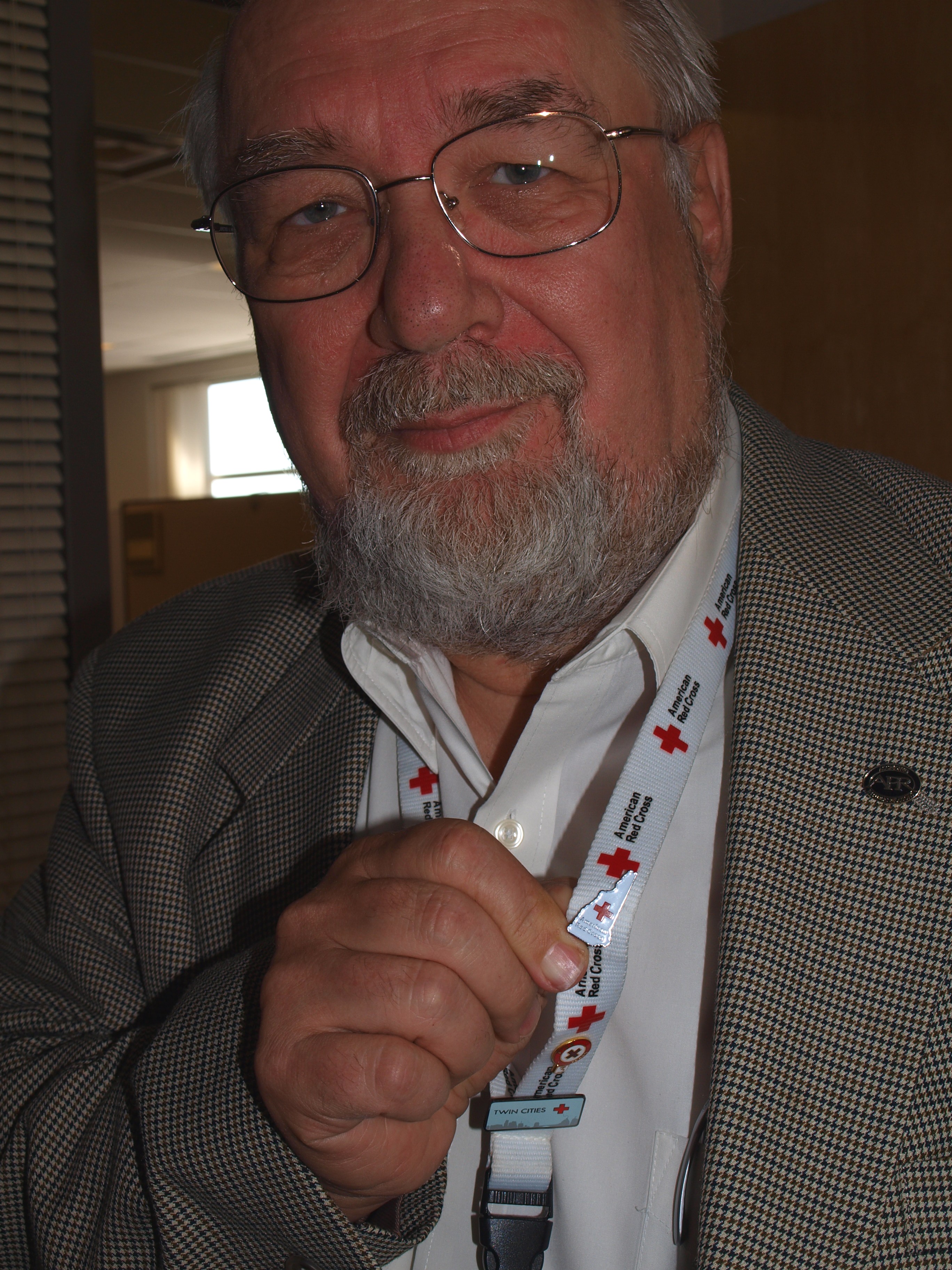
Red Cross volunteer Dave Schoeneck displays his newly earned Red Cross pin from New Hampshire following Hurricane Irene. Photo credit: Lynette Nyman/American Red Cross

Some of our Northern Minnesota Region volunteers are returning home after weeks-long deployments to states all along the east coast. Dave Schoeneck, one of our local volunteer stars, was in New Hampshire where he served on the government relations team. He returns happy to have deployed to help those affected by Hurricane Irene. Among the many take-aways for Dave: making new Red Cross friends, using and refining his response skills and knowledge, and earning a New Hampshire Red Cross pin. Go-Dave-Go!

The Red Cross response to Irene continues with more than 5,000 people relying on Red Cross shelters for a safe place to stay. To support this and other disaster relief efforts, you can make a donation via redcross.org, call 1-800-RED CROSS or text the word REDCROSS to 90999 to make a $10 donation. You can also click here and learn more about becoming a Red Cross disaster relief volunteer.

Red, not orange

Jeff Skoog is a Red Cross volunteer disaster relief work based in Minneapolis. Photo credit: Lynette Nyman/American Red Cross

Red Cross volunteers are amazing for about one billion-gazillion reasons. Take Jeff Skoog, who serves as a volunteer disaster relief worker during both local and national responses.

When Jeff could be out reeling in a sturgeon or walleye on this incredibly lovely summer day in Minnesota, he is instead here at work sprucing up the chapter’s mobile feeding truck.

“The red should be red,” he says.

Simple how-to instructions:

1. Find shiny up stuff

2. Get wet soft cloth

3. Wipe on shiny up stuff

4. Get dry soft cloth

5. Wipe off shiny up stuff


One for the money, two for the show

Three to get ready, now go cat go! His shoes weren’t blue or suede, but we were delighted to have Elvis on hand for the 2011 Run for Blood Quarter Marathon & 5K.

Elvis kicked of this year's Run for Blood, helping support the Red Cross. Photo credit: William Kahn/American Red Cross

More than 460 people raced around Lake Harriet in Minneapolis, helping to raise more than $10K for the Red Cross and its humanitarian mission to help people prevent, prepare for, and respond to emergencies.

Thank you to Mr. Luther Hagen, event founder and all around booster for the Red Cross, and to everyone who helped make this event a great success.

Congratulations!

Many hands made Minneapolis tornado clean-up day possible

Paul Vanderheiden is among more than 340 Red Cross disaster relief workers responding to the May 22 tornado in Minneapolis. Photo credit: Lynette Nyman/American Red Cross

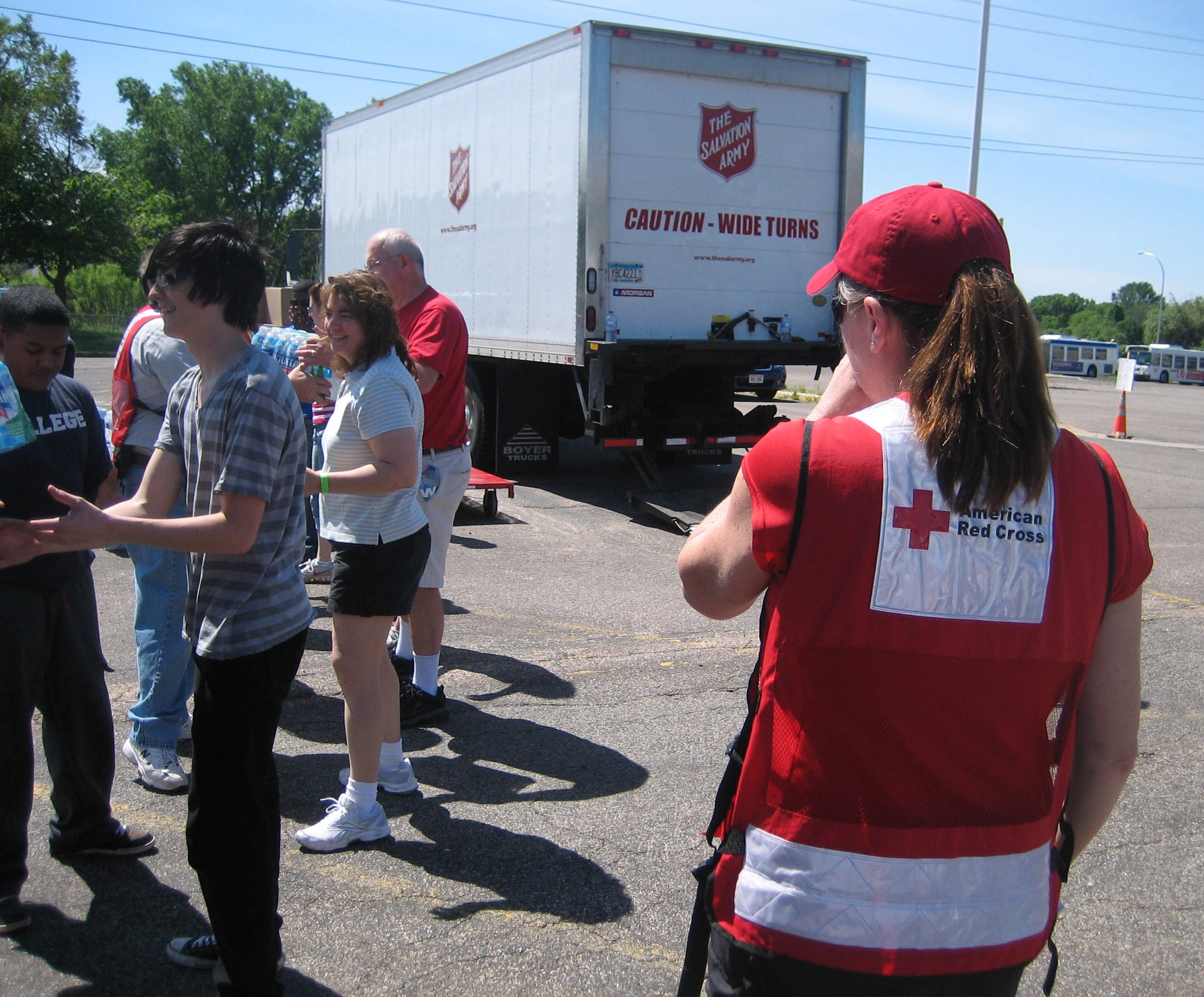
When volunteers arrived for their shifts during the Minneapolis tornado clean-up day on June 4, a Habitat for Humanity volunteer likely received them, a Salvation Army worker probably handed them a meal, and American Red Cross responder gave them bandage packs, gloves, and other useful field supplies such as hand sanitizer and sunscreen.

Once in the disaster area, workers might have made contact with Red Cross mobile feeding trucks supporting the workers on what felt like the first day of summer.

“We’re out here to make sure these folks have enough water and snacks in all this heat,” said Paul Vanderheiden, a Red Cross volunteer from Eau Claire, Wisconsin.

Parking his van near a group of workers, Paul offered them advice. “Make sure you get some salt. Want some chips with that?”

Red Cross disaster relief worker Chris Thomsen surveys the unloading of water during the Minneapolis tornado clean up day on June 4. Photo credit: Bill Fitler/American Red Cross

Paul and fellow volunteer Chris Thomsen had been driving their mobile feeding vehicle around these neighborhoods every day since they had arrived the previous Saturday.

“Back home I’m a surgical nurse,” said Chris. “This is the first time I’ve worked outside the chapter on a disaster. We’ve been out here long enough so I’m starting to know folks, and I’ve been so touched by some of the stories I’ve heard.”

Paul and Chris are among more than 340 Red Cross workers, from as far away as California and Connecticut, helping people affected by the Minneapolis tornado.

To date, Red Cross disaster relief workers have distributed more than 145,000 meals and snacks to affected families and clean-up crews responding to this tornado disaster.

(Reporting by Bill Fitler, Red Cross volunteer)

Personal strength inspires Red Cross disaster responder

Red Cross disaster relief worker Jacob Tolle (l) and Daniel Schultz (r) are meeting one-on-one with families affected by the May 22 tornado in Minneapolis. Photo credit: Jason Viana/American Red Cross

Volunteers have come from many Red Cross chapters across the country to help the north Minneapolis residents recover from the devastating tornado that swept through town on May 22.

Take Jacob Tolle, 20, a caseworker for the Red Cross. Here from Cinncinati, Ohio, he has been trained for Red Cross disaster relief deployment for only five months.

“I want to give my attention to the families in need,” says Jacob.

His inspiration is one of amazing strength. At the age of 16 Jacob decided to take part in a demolition derby. The night before the derby Jacob’s stepfather told him he was nervous and thought participating in the derby was a bad idea. Despite what his father told him, Jacob took the risk.

“Not more than ten minutes into the derby my car started on fire and the whole car shot into flames while I was trapped inside with my seat belt on,” Jacob explains.

He was rescued from the burning car and rushed to Adams County Hospital where he was given multiple numbing medications.  From there he was sent Shriners Hospital Burn Center.

“From day one of treatment, the doctors told me that I would be unable to walk for at least 6 months,” says Jacob.

With perseverance on his side, Jacob walked with a gait belt support within 3 days of his recovery treatment. A week later he walked on his own to check-up at the hospital.

Jacob has used his accident as a way to inspire others to never give up.

“That’s why I volunteer for the Red Cross, because of the devastation of someone telling you that you won’t walk,” say Jacob.

Jacob arrived in Minneapolis on May 27, just a few days after the tornado,and he plans to stay and help until things settle down.

(Reporting by Nicole Baier, Red Cross volunteer)

Red Cross Strata

Red Cross disaster responder, Ann Layton, offers a slice of her homemade "strata," an Italian casserole she made from leftover bread slices at the Red Cross tornado response headquarters in Minneapolis. Photo credit: Lynette Nyman/American Red Cross

Red Cross disaster response volunteers are extraordinary in many ways, but only a few would turn unused slices of bread into something yummy for dozens of fellow responders who’ve been working for days helping hundreds of families rebuild their lives after the May 22 tornado in Minneapolis.

Ann Layton, a Red Cross volunteer, saw the bread on her way out the disaster operation doors last night and brought the bread back this morning all done up as “strata,” an Italian casserole that’s darn comforting.

“The bread was dry and I needed to add more milk,” said Ann, who made three variations of the dish, which you assemble and refrigerate before baking and serving.

We think your strata dish is perfect… and we thank you’re extra great, Ann, for taking time to provide additional comfort for Red Cross disaster responders who are working hard helping others recover from this awful disaster.

Preparedness Has Made the Difference

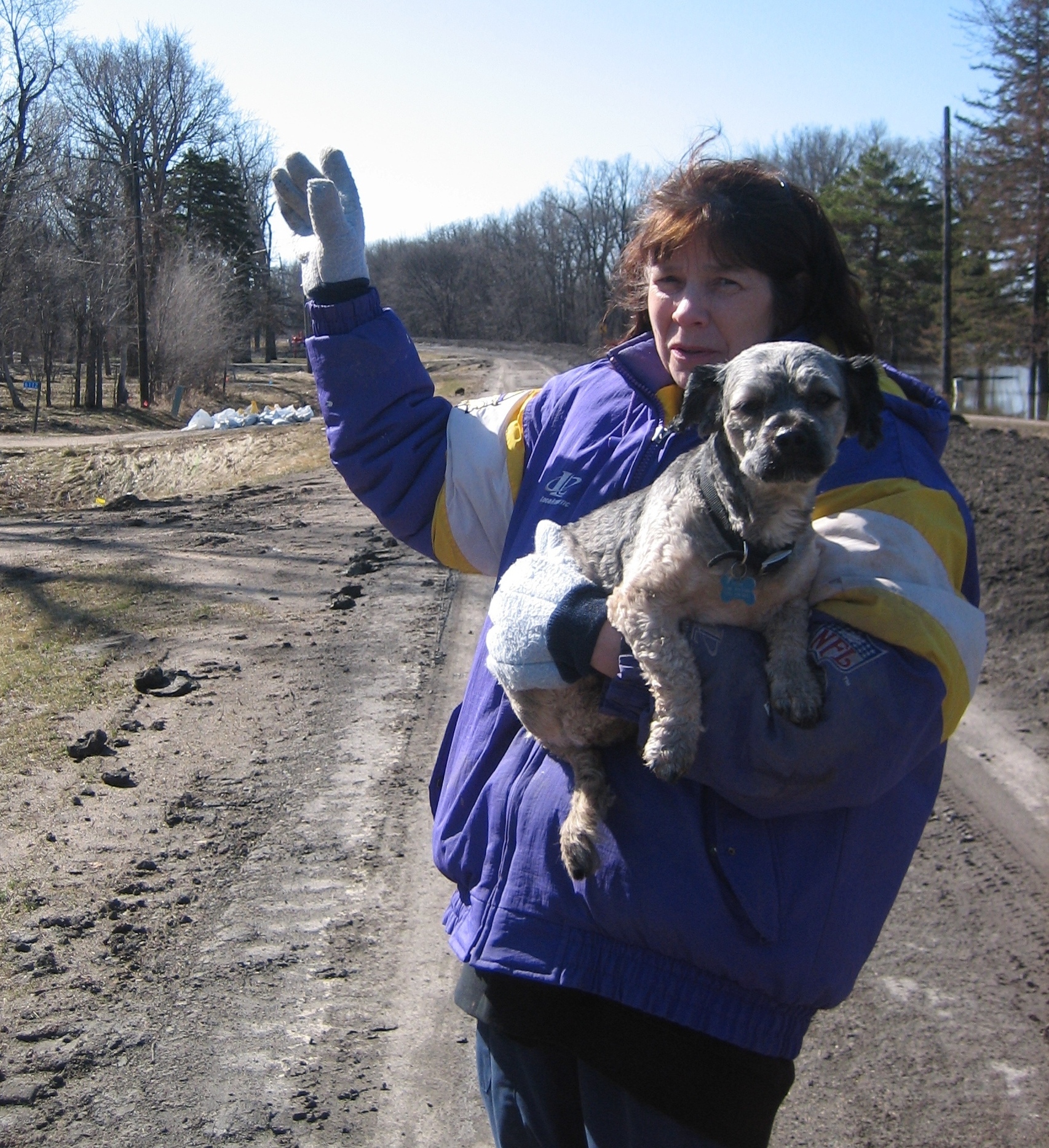
Joan Egge's family is safe from the Red River’s high waters because of preparedness measures, such as temporary clay dikes. Photo credit: Lynette Nyman/American Red Cross

By Lynette Nyman, American Red Cross

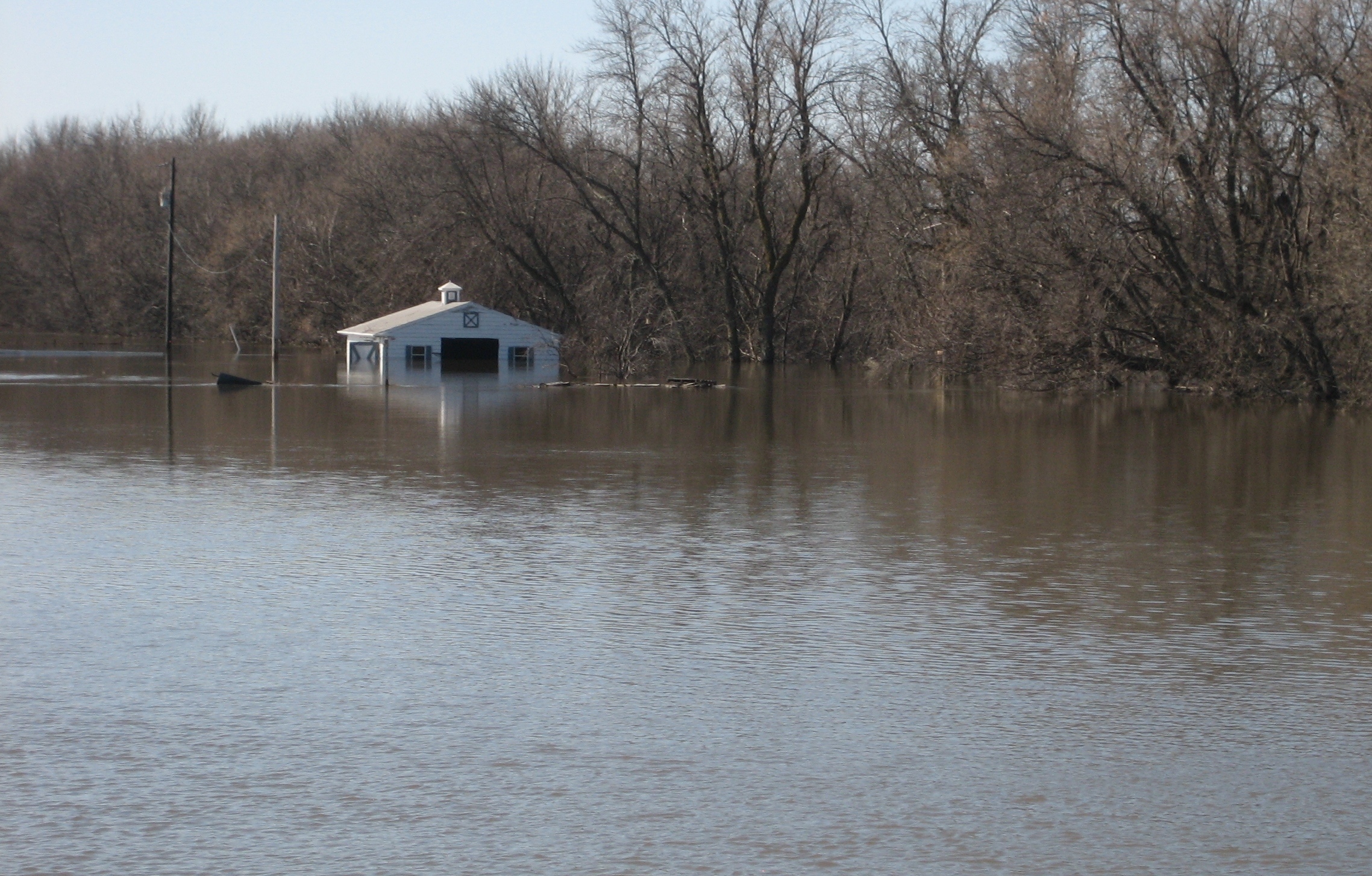
To appreciate the rising of the Red River, you have to see it. Water appears to spread from horizon to horizon across this northern prairie landscape.

With waters reaching nearly 40 feet in some areas, what would have been a major crisis in past years is mostly a threat under control because of preparation.

For example, clay dikes and sump pumps are protecting many homes, including one in Oakport Township north of Moorhead, Minnesota, where Joan Egge has lived for eighteen years.

“Because we’ve been preparing and preparing you’d kind of hate it if didn’t flood,” says Egge.

Red Cross vigilance remains high as the Red River’s high waters continue to move north and threaten rural communities. Photo credit: Lynette Nyman/American Red Cross

Sandbagging started in early February. Since then the Red Cross has providing more than 150,000 beverages and meals to community volunteers and other responders who have worked to hold back the water both day and night.

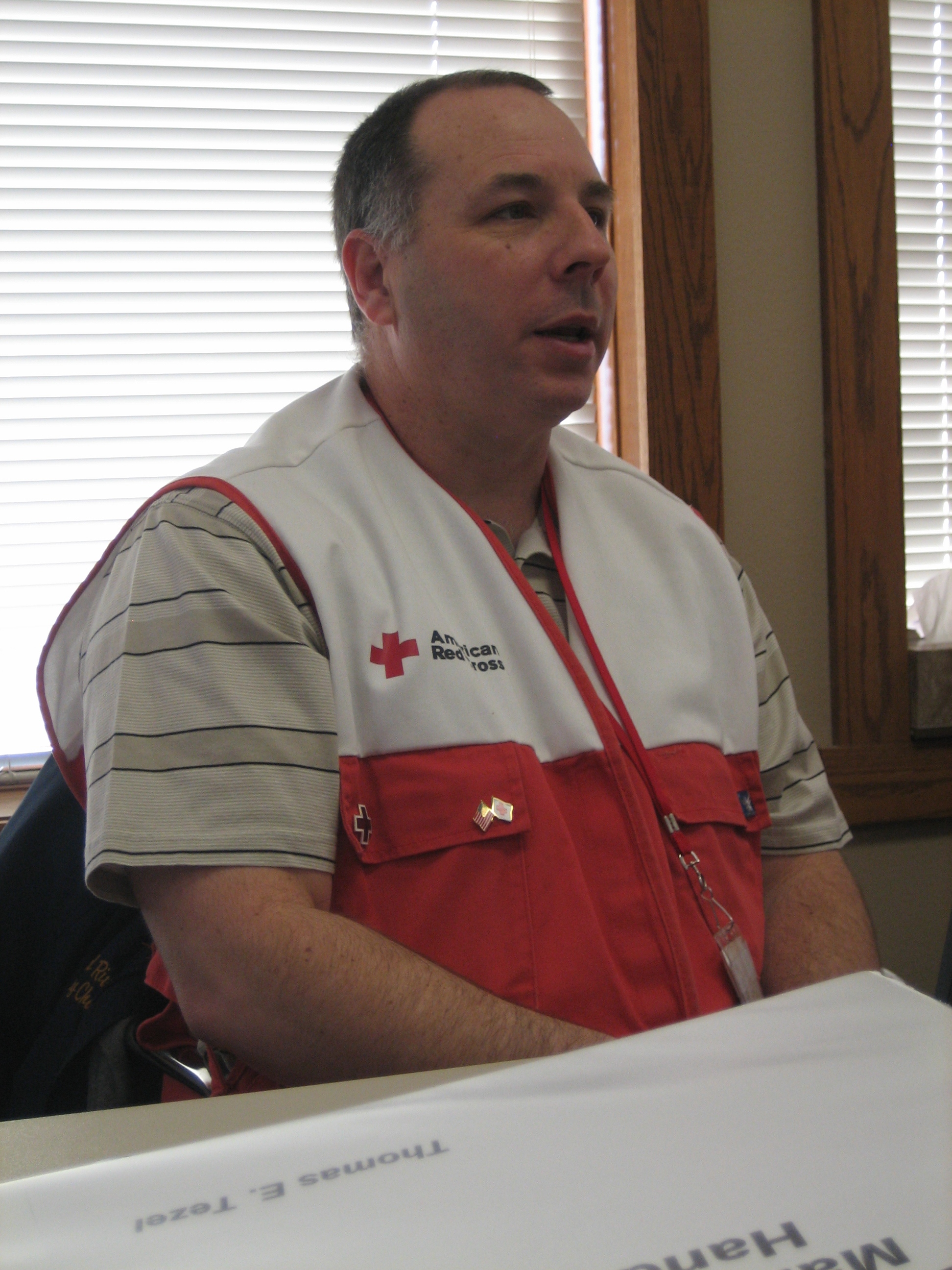
“Preparedness is in many ways the greatest piece of what the Red Cross does,” says Tom Tezel, a Red Cross emergency services director leading the response on the ground.

Every disaster is different, but in general the Red Cross responds when the disaster is done, such as when a tornado has swept through a town or an earthquake has struck.

Since early February, Tom Tezel has been leading the Red Cross disaster response to the 2011 Red River flood. Photo credit: Lynette Nyman/American Red Cross

Here, the Red Cross response started during the preparedness phase before the waters started to rise.

“Our mission includes preparedness,” says Tezel. “We can’t wait for disaster.”

Red Cross disaster responders continue to watch and respond, especially as the high water flows north into largely rural areas, cutting off families from essential resources.

Egge, whose family and dog Henry are safe only yards from the Red River, agrees that preparedness is very important. She’s grateful for the help her community has received.

“I know the Red Cross does a wonderful job,” says Egge. “The people here are true heroes.”