Kate is training for the Run for Blood. Are you?

On July 25, the American Red Cross Minnesota Region will host the 2015 Run for Blood. This family-friendly walk and run event celebrates the people who give lifesaving blood and supports Red Cross blood services. This inspiring story helps tell why we’re doing this event and why you should participate, too. Go Kate Go!

Ross124
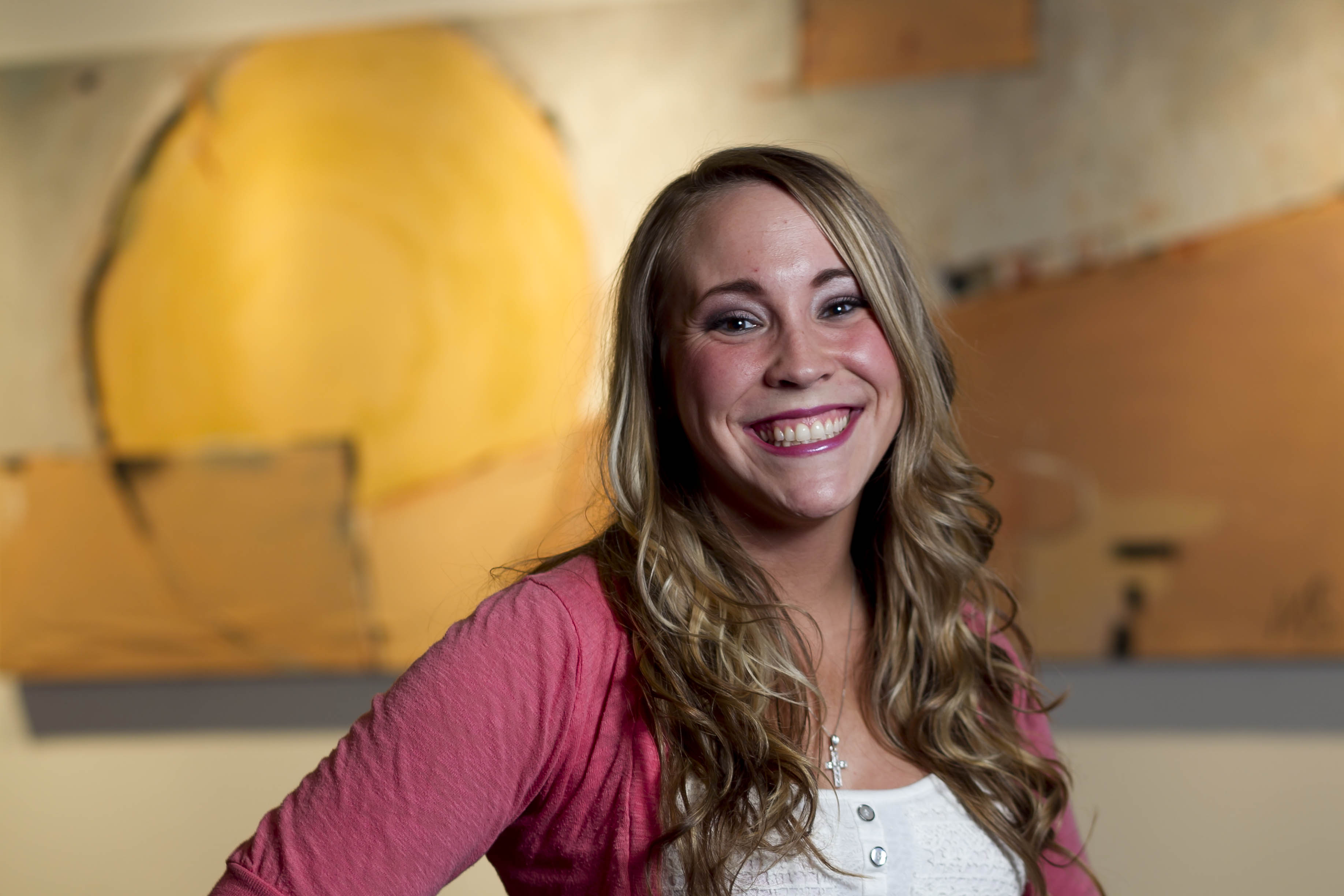
Kate Ross became a donor advocate following a life changing accident that required multiple surgeries and blood donations to save her life. Photo credit: Andy King

When you first meet Kate Ross you are instantly moved by her infectious smile and constant laughter. Her friends describe her as fun, inspiring, outgoing, incredible, full of energy, strong and a positive presence. She describes herself on her blog biography as a “student, animal lover, daughter and sister, spiritual, music-obsessed fitness enthusiast, artistic, friendly, optimistic and a volunteer.”

You would never sense from her upbeat demeanor or the words used to describe her that nearly five years ago her life changed in an instant, and she now proudly wears a fashionable crystal-studded, paisley prosthetic leg. Nowhere in the description of Kate could you tell that she was faced with a tragedy that could have easily left her feeling sorry for herself.

In fact, her story is quite the opposite.

“In December 2009, I was weary from the exhaustion of being a full-time student and working full time. I took my finals at school and on my way home that evening I fell asleep while driving,” said Ross. When she dozed off, she was traveling 60 mph and hit a guardrail, which penetrated her car and went through her right calf and thigh.

“I knew that something was drastically wrong with my leg, although I’m lucky that I didn’t realize there was a guardrail basically through my entire body at that point.”

RunForBlood_2014_079
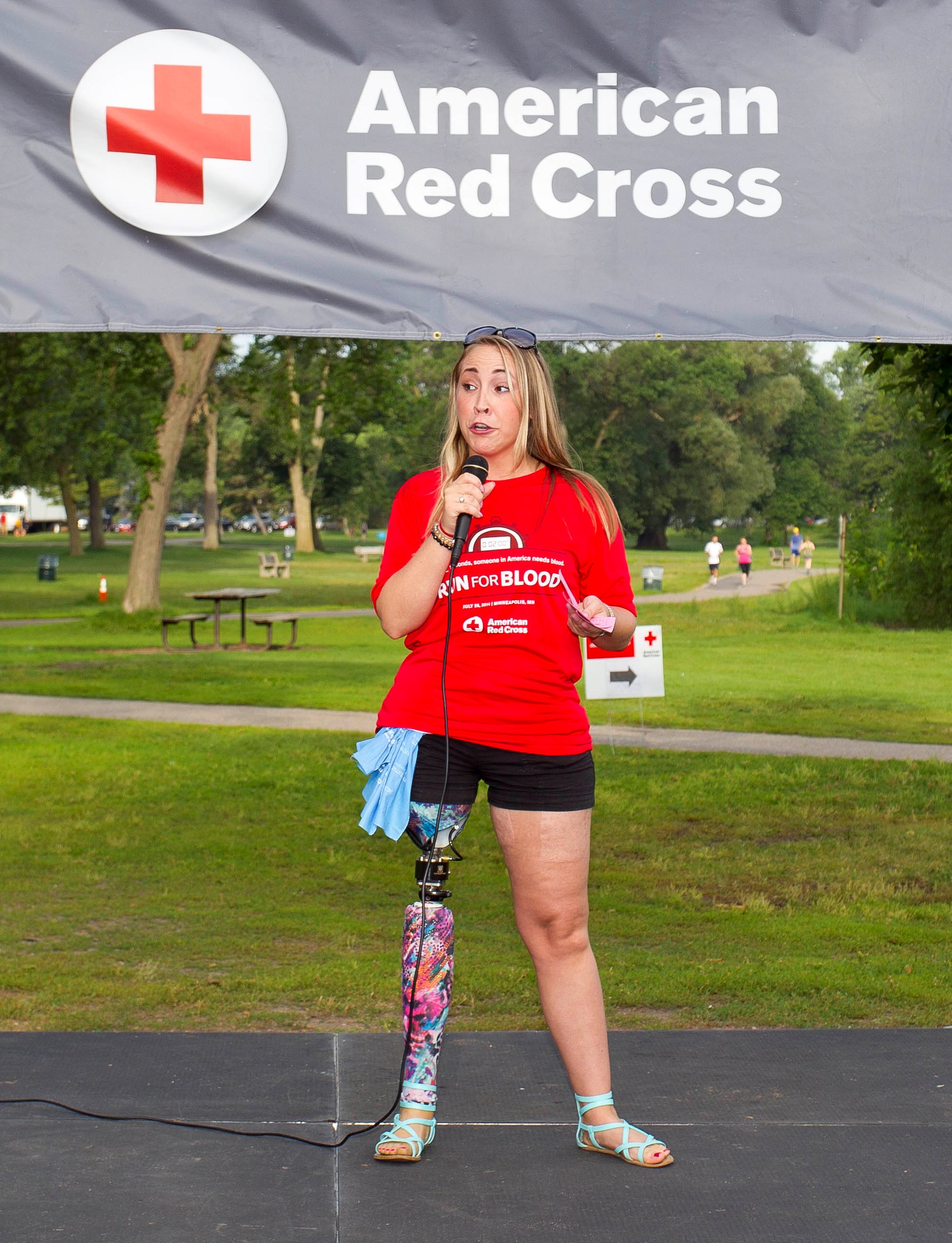
Red Cross advocate Kate Ross participated in the 2014 Run for Blood in Minneapolis. She’s training for the 2015 event and is planning to use a new prosthetic leg made especially for running. Photo credit: Andy King

Ross was taken by ambulance to the hospital, and after several surgeries, doctors put her in a medically induced coma. Seven days later, on Christmas Day, doctors made the grave decision to amputate her leg above the knee.

Ross underwent more nearly two years of occupational and physical therapy before her life returned to a “new normal.” Through 19 surgeries, she needed more than 25 pints of lifesaving blood products.

“I was very thankful for the blood being available when I needed it, but I never thought about being a blood donor myself because I’m terrified of needles.” But when her best friend and co-worker asked her to participate in a blood drive, she realized that, despite her fear, she should give blood, too.

“She reminded me it was donated blood that helped save my life after my accident. It was like a big, needed slap in the face that reminded me that I wouldn’t be here to tell my story if it hadn’t been for the generosity of blood donors.”

With a new found gratitude and outlook on life, Ross became a blood donor last year and strives to “be the good you wish to see in the world.” Once a blood recipient, now she is paying it forward.

BO0I8925
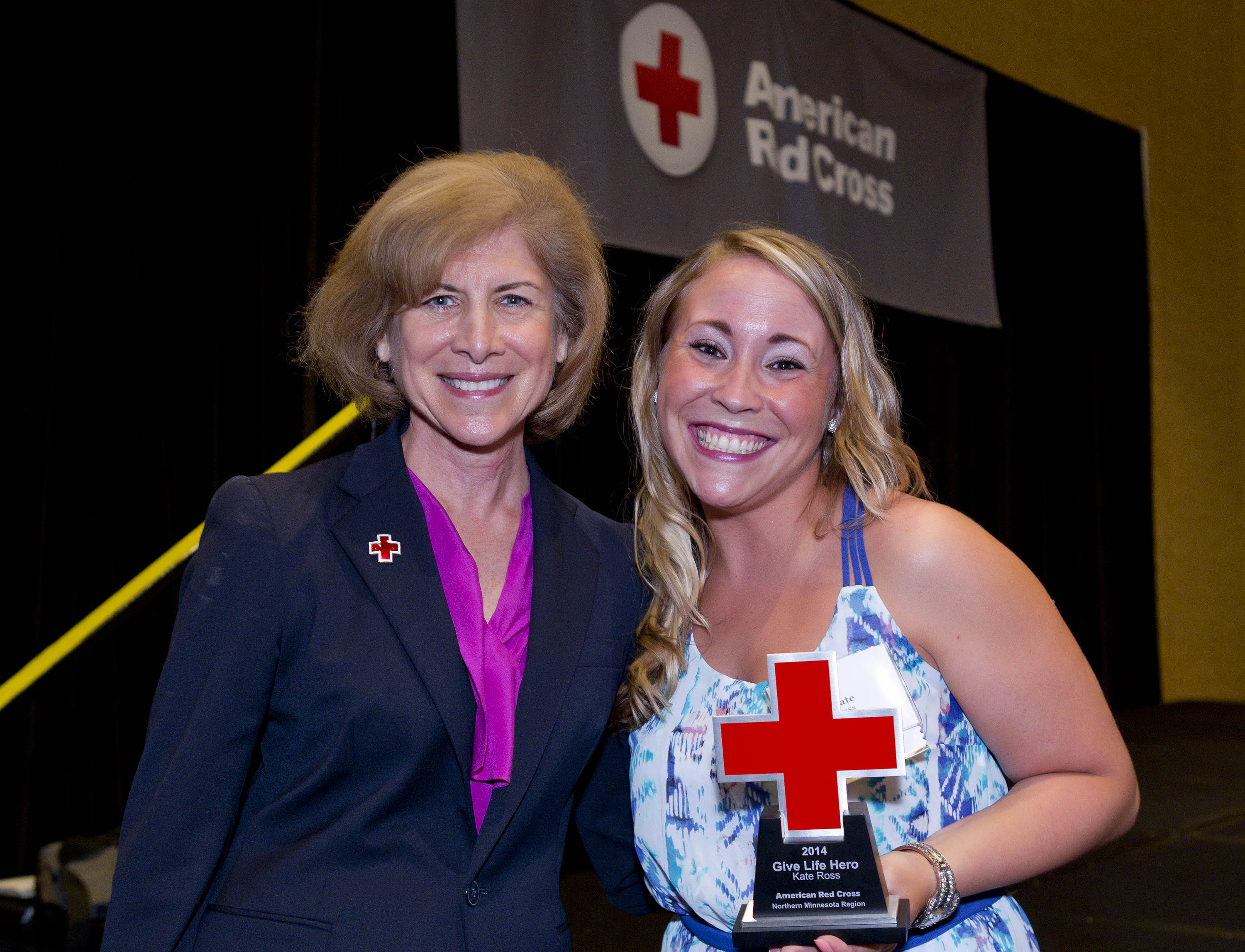
Kate Ross (l), a Red Cross Hero, is shown here with American Red Cross President and CEO Gail McGovern during the 2014 Heroes Breakfast in Minneapolis. Photo credit: Andy King

“I am very excited to say that I have become a blood donor myself because I know how important it is to give something that means something – the gift of life. You never know when you or a loved one will be the one that needs blood.”

Ross is thankful for the heroes who helped save her life and has become an advocate for the Red Cross and a true hero herself. In 2014, she received an American Red Cross Minnesota Region Heroes Award that honors those who have made the simple, yet powerful decision to put their personal needs aside in order to help others.

Ross underwent another surgery last fall on her leg. She was fit for a new prosthetic that improves her mobility and allows her to run. She’s currently training for the 2015 Run for Blood walk and run event at Lake Calhoun in Minneapolis on July 25.

Register today for the run and walk for blood!

Story by Sue Thesenga, Biomedical External Communications Manager, American Red Cross North Central Blood Services

Awesome home fire preparedness day in Lake City, Minnesota

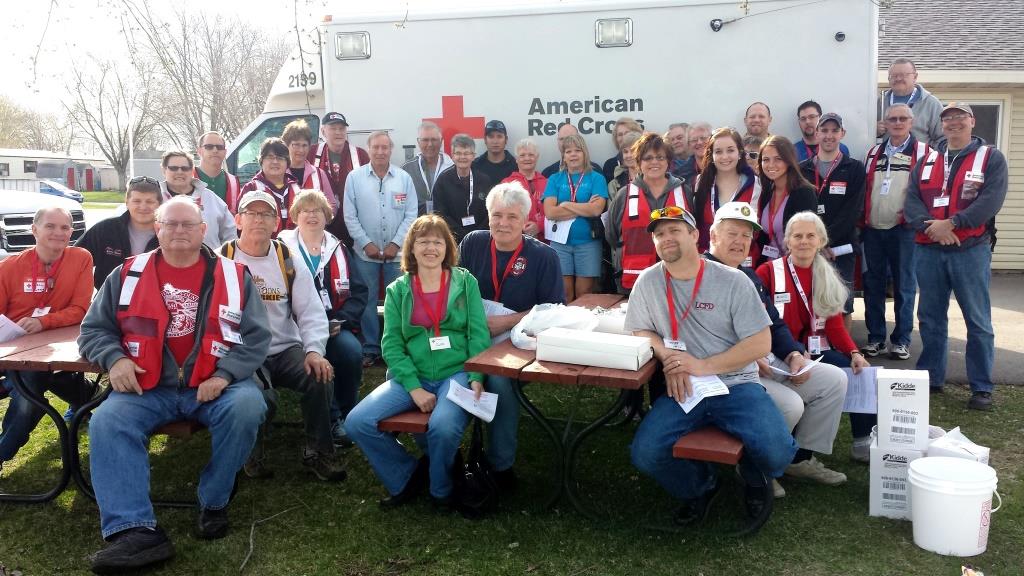
Home Fire Preparedness Campaign volunteers, Lake City, MN, April 18, 2015

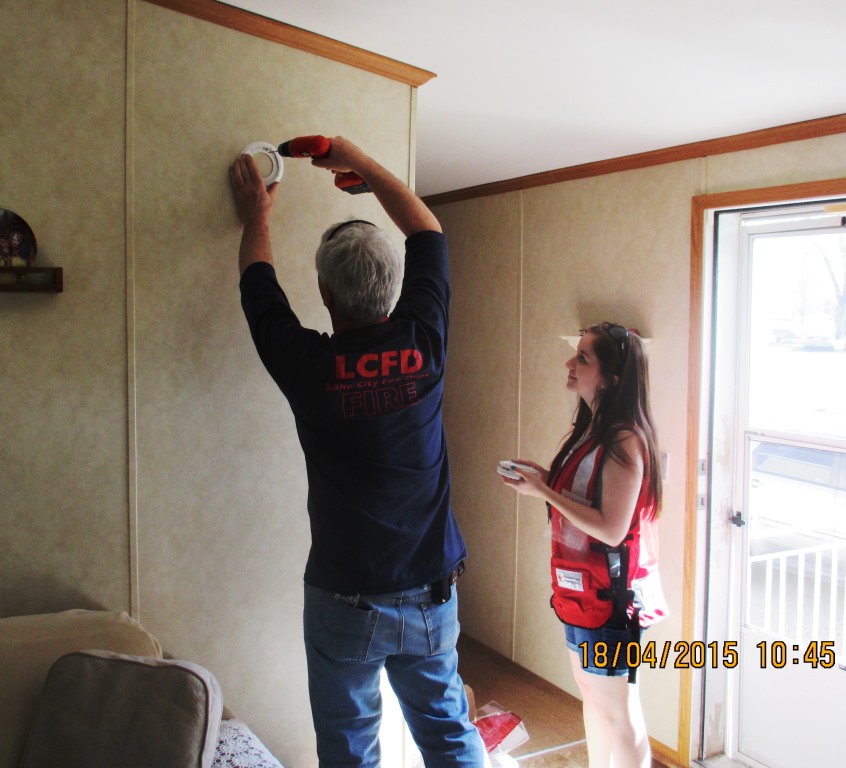
We had an awesome day in Lake City, Minnesota, on Saturday, April 18, installing smoke alarms and talking fire safety.  As part of the national American Red Cross Home Fire Preparedness Campaign, a local team of 25 Red Cross volunteers and volunteer partners canvassed 400 homes the previous week and gathered 115 smoke alarm installation requests. Three mobile home parks and a small area on the south side of the town were the designated areas. Then, this past weekend, 40 volunteers returned to homes that had no answer the week before, and to those with scheduled requests and installed smoke alarms. The teams installed a total of 164 alarms!! Volunteers also provided safety information, helped with creating fire escape plans, and handed out a tornado safety checklist. It was a great day and everyone did an amazing job.

Smoke alarm installation during Home Fire Preparedness Campaign, Lake City, MN, April 18, 2015

Volunteers were made up of Red Cross volunteers, firefighters, Kiwanis members, and local community members. We had three Spanish language speakers who used their talent helping interpret for a few families. Everyone met at 8:30 a.m. for coffee, rolls, and training. Lake City’s fire chief Jeff Diepenbrock, and his wife Julie, came out Saturday to help install alarms. Jeff started off the day thanking the volunteers for their dedication and time. He also talked about fire safety and the importance of smoke alarms. Everyone set out about 9 a.m. and finished around noon. When everyone returned, it was great to hear some of the appreciation stories that families told where alarms were installed.

I am soooo thankful for the group of Red Cross volunteers in my areas!! This could not have been attempted, and become such a success, if it were not for the support of those who continue to be there when they can to lend a hand! Our smoke alarm installation event coordinators for the Lake City were Shar Yorde and Ann Nibbe who put in a lot of hours to make this happen.  A few of my experienced smoke alarm installation event volunteers from Winona, including Joe Whetstone, Mike Papke and Beth Lindholm from Winona, were instrumental in organizing the Lake City event and keeping things on track. Thank you to everyone who came out for this awesome day!! The Red Cross and our community are lucky to have you 🙂

Post and photos by Dianne Thompson, Disaster Program Specialist, American Red Cross serving Southeast Minnesota. The American Red Cross Home Fire Preparedness Campaign seeks to reduce home fire deaths by 25 percent in five years. To learn more, click here.

In the New Year…Volunteer!

The New Year is a great time to evaluate your priorities and begin new adventures. If you’re looking to improve your health, expand your social circle, and build new skills, volunteering with the Red Cross may be the perfect new experience to dive into in 2015. And if you’re already among our amazing cohort of volunteers, this may be just the time to explore a new opportunity.

Icon Disaster ServicesWhy Volunteer?

Volunteering has many benefits – it allows you to expand your skill set, meet new people, have fun, and make a difference in your community. But did you know it also has positive health benefits? A Corporation for National and Community Service report found that volunteering leads to better health, including lower mortality rates and lower instances of heart disease. So, if your New Year’s list includes hitting the gym and eating more veggies, consider volunteering as another (and more fun) way to improve your health.

Why the Red Cross?

Volunteers are so important to the Red Cross that they’re right in our mission statement:

The American Red Cross prevents and alleviates human suffering in the face of emergencies by mobilizing the power of volunteers and the generosity of donors.

Red Cross volunteers are both generous and committed. In the past 6 months, volunteers from the Minnesota Region have devoted over 57,000 hours to the Red Cross mission – a value of over $1.3 million to the organization and our community.*

What Can I Do?

The Red Cross has a wide variety of volunteer opportunities – from teaching CPR/First Aid courses and to responding to local disasters, to assisting with fix-it projects around our buildings. You can check out the opportunities listed below, and find a more complete overview of opportunities on our website. If you’re ready to get started, you can apply here.

If you already volunteer with the Red Cross but would like to get more involved (or try something different), we have some great new opportunities available:

Volunteer Champion – The Volunteer Services Department is seeking  Volunteer Champions to support and implement ways to recognize, retain, and increase satisfaction of volunteers.

Disaster Action Team (DAT) Administrator – The Disaster Services Department is seeking a DAT Administrator volunteer to manage the DAT calendars, communicate schedules with after-hours answering service, monitor DAT schedules to ensure ongoing on-call coverage, and enter response data after an event.

Donor Appreciation Volunteer – The Financial Development Department is seeking volunteers to thank donors for giving generously to the American Red Cross.

Latino Outreach Volunteer – The Preparedness Department is seeking  volunteers to go to a variety of events in the Latino community and have conversations with individuals and families about the importance of being prepared. Must be fluent in Spanish.

Current volunteers can view full job descriptions and express interest in any of these opportunities on Volunteer Connection or by emailing Kelly.Clark2@redcross.org.

Cheers to all Red Cross volunteers – both new and veteran – in 2015!

Lisa Joyslin,
American Red Cross Minnesota Region Volunteer Director

*According to the Independent Sector’s estimated value of volunteer time of $22.55 per hour.

Convert Clunkers into Compassion and Care

VDP Web Banner 514x260The American Red Cross recently launched a vehicle donation program that converts unneeded vehicles into Red Cross donations to help those in need.

“People may think their old vehicle is worthless but the donation could be priceless to someone in need of Red Cross services,” says Phil Hansen, CEO of the American Red Cross Minnesota Region. “Your vehicle has value. Turn it into compassion and care.”

The Vehicle Donation Program offers an easy donation process with convenient, free pick-up and towing, and a tax-deductible way to dispose of unwanted vehicles.

Our partners at Insurance Auto Auctions (IAA) will pick up your vehicle at a time that’s convenient for you, and at no cost to you. IAA will provide a tax receipt on behalf of the Red Cross and sell the vehicle, sending the proceeds to the Red Cross.

When you donate a vehicle it has the same impact as donating cash—it can help rebuild lives. For example, a car worth $1,000 at auction provides food and shelter to five families for one day in a shelter, including everything they need to be safe and secure after losing everything in an apartment fire.

In Minnesota, financial donations help the Red Cross shelter, feed and provide emotional support to victims of more than 600 disasters each year; supply more than 70 percent of local blood need; teach lifesaving skills to thousands; fund international humanitarian aid; and support American military members and their families during emergencies.

The vehicle donation program accepts cars, trucks, motorcycles, RVs, boats, snowmobiles, jet skis, tractors, farm equipment and other types of vehicles, in almost any condition—even salvaged. And, the process is quick with an average turnaround time of less than 30 days.

To donate a vehicle, visit the Red Cross online at redcross.org/cardonation or call 1-855-927-2227 to make arrangements. Contact your tax professional for details about tax deductions for vehicle donations.

Heroes Breakfast Highlights

Thank you to everyone who supported our 2014 Heroes Breakfast! More than 450 guests shared a wonderful, inspiring morning while meeting this year’s Heroes and learning more about their extraordinary acts of courage, resiliency and generosity. Below, we share photo highlights of the event. Click here to see the Heroes videos. 

Give Life Hero Kate Ross (l) with Red Cross board member Tom Meyer. Photo credit: Andy King
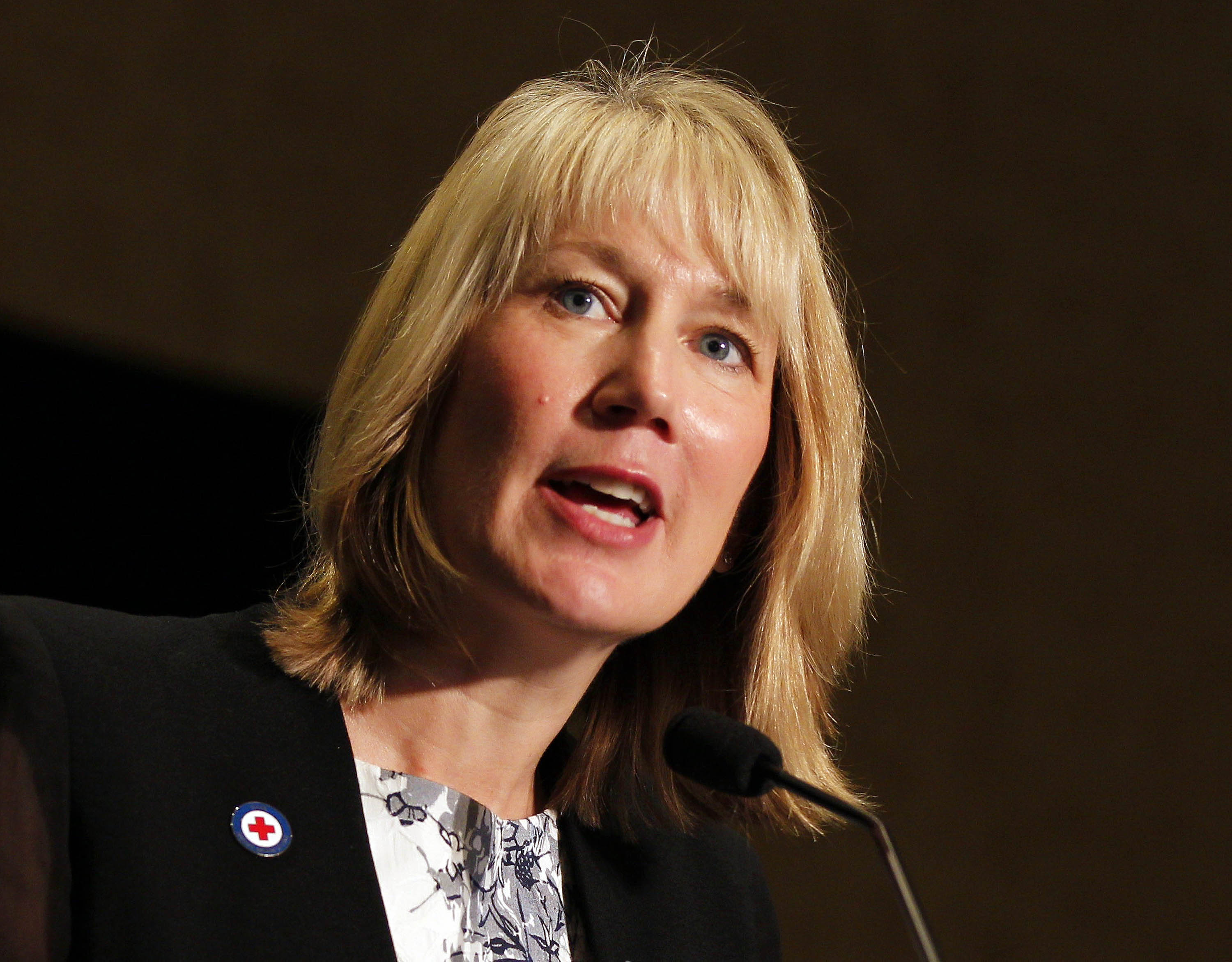
Red Cross President and CEO Gail McGovern. Photo credit: Andy King
National American Red Cross President and CEO Gail McGovern. Photo credit: Andy King
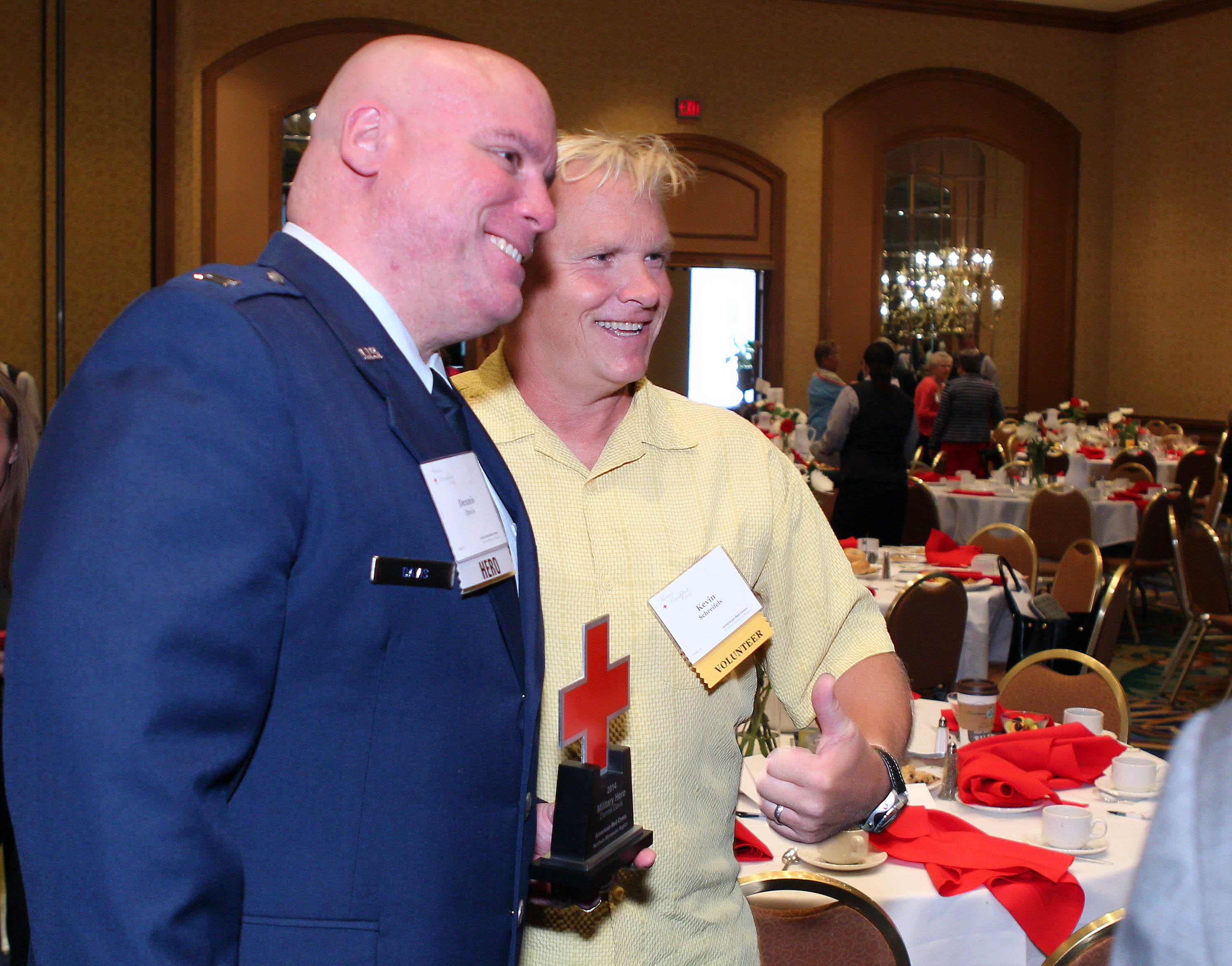
Military Hero Dennis Davis (l) and Red Cross Social Advocate Kevin Schreifels. Photo credit: Andy King
Local Red Cross CEOs Geoff Kaufmann and Phil Hansen. Photo credit: Andy King
USBank CEO Richard Davis. Photo credit: Andy King
Around 450 people attended our 2014 Heroes Breakfast in Minneapolis. Photo credit: Andy King
The 2014 Heroes (l-r): Zoran Pedisic, Shane Linehan, Kate Ross, Sydney Book, Dennis Davis and Pat Harris. Photo credit: Andy King
Local Red Cross board co-chair Lori McDougal. Photo credit: Andy King
Local Red Cross board vice-chair Lori McDougal. Photo credit: Andy King
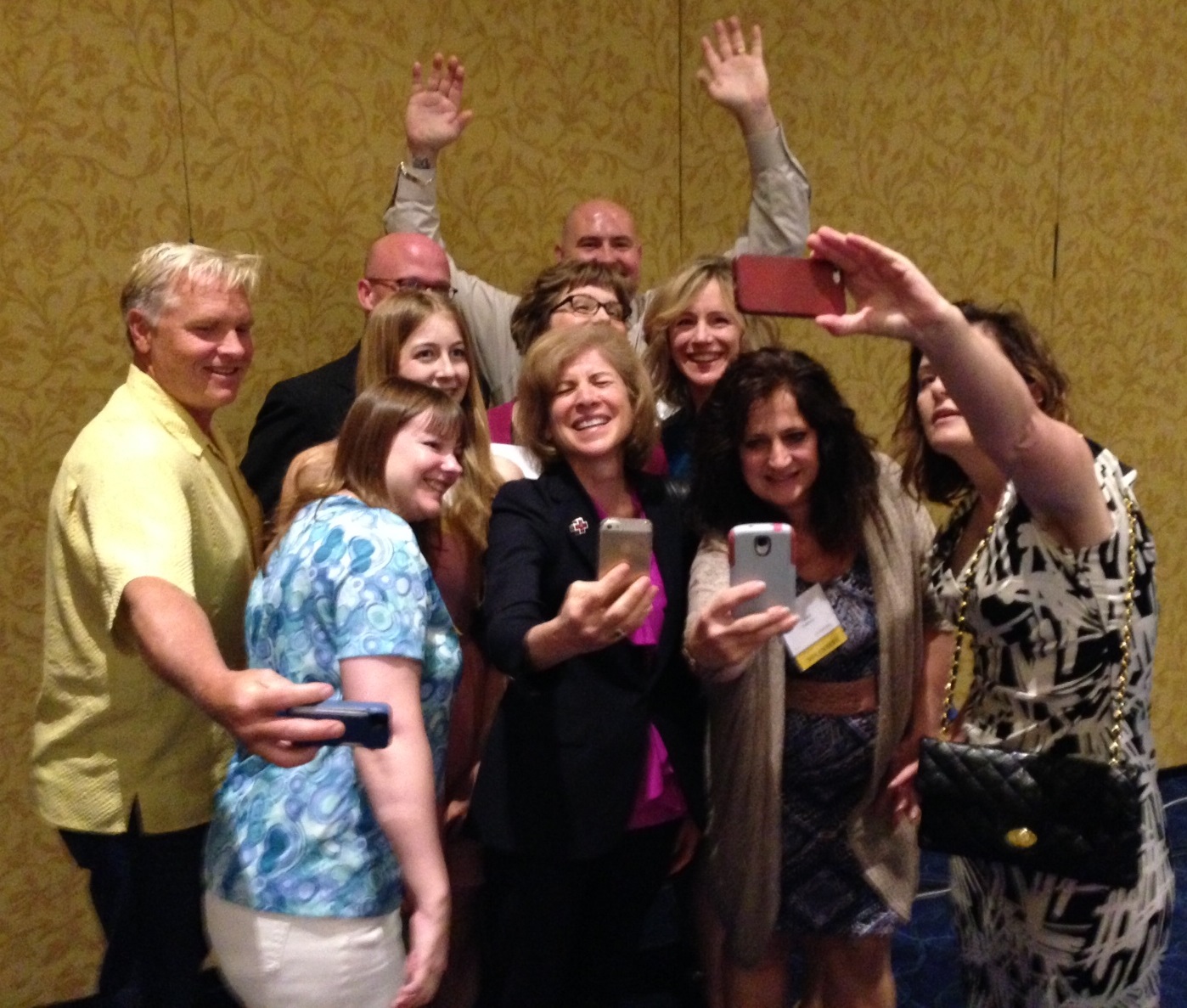
Red Cross President & CEO Gail McGovern takes a group "selfie" with the Social Advocates. Photo credit: Carrie Carlson-Guest
Red Cross President & CEO Gail McGovern takes a group “selfie” with the Social Advocates. Photo credit: Carrie Carlson-Guest

Our 2014 Heroes Breakfast Honorees

During our annual Heroes Breakfast, we honor people who have demonstrated the American Red Cross mission to alleviate human suffering. This year we recognize six individuals, from across our region, who have performed acts of courage and kindness to help others. Below, we share their remarkable stories with you.

Community Hero: Pat Harris, St. Paul

The Community Award is sponsored by the Carlson Rezidor Hotel Group and presented to an individual who displayed leadership and commitment to his or her community by making a positive and significant impact.

Pat HarrisIn 2004, Pat Harris and friends sat around a table at Mancini’s in Saint Paul to enjoy steaks and cold beverages when inspiration struck the former St. Paul City Council Member. He would find a way to bring deployed Minnesota troops and their loved ones at home the same simple pleasure of sharing a meal with friends and family.

Soon after, Pat and his fellow community and business leaders founded Serving Our Troops, an organization whose goals are to provide a delicious meal to soldiers and families, to send a message of support from communities, and to promote awareness of Minnesota’s unprecedented military service.

The idea is simple: Pat and team bring delicious steaks around the world to the Minnesota National Guard. Simultaneously the troops’ families enjoy the same meal right here in Minnesota. Smiles and tears are shared at the two feasts, which are connected via live video feed.

Ten years later, Pat and the team continue to orchestrate Serving Our Troops events. To date, over 75,000 steaks have been served around the world, including in Kosovo, Kuwait and Iraq. Pat’s work has gained the attention of First Lady Michelle Obama, who publicly thanked Serving Our Troops in 2012. Pat insists that the true heroes are not himself and his dedicated volunteers, but rather the men and women who serve our country and their families back home in Minnesota.

Youth Good Samaritan Hero: Sydney Book, Red Wing

The Youth Good Samaritan Award is sponsored by the Medica Foundation and presented to a young person who displayed courage and caring upon encountering an unusual, significant, or unexpected incident.

Sydney BookDriving home with her mother from a volleyball game, 15-year-old Red Wing star-athlete Sydney Book was focused on reviewing her athletic performance. When they saw a motorcyclist collide with a vehicle, Sydney’s mother instructed the sophomore to call 911 and to stay in the car.

Though typically obedient, Sydney considered the situation, putting herself in the shoes of the victim’s family. She knew she would want bystanders to help her family as much as possible. Sydney previously trained in emergency care at the Red Cross, so she knew time was of the essence. She jumped out of the car and immediately began helping her mother address the injured motorcyclist’s severed leg, keeping him calm until first responders arrived.

Dakota County Deputy Sheriff Timothy Fletcher nominated Sydney for the Youth Good Samaritan Award for displaying maturity and poise beyond her years by calmly distracting the conscious man as first responders worked on his life-threatening injuries. Deputy Fletcher credited Sydney with delaying the effects of shock, likely saving the man’s life.

Sydney is proud that she contributed to saving someone. The experience has given her a perspective on the fragility of life and inspired her to study to be a paramedic in college.

Military Hero: Dennis Davis, Anoka

The Military Award is sponsored by UnitedHealthcare Military & Veterans and presented to an active, reserve or retired member of the Armed Forces or ROTC who acted above and beyond the call of duty.

Dennis DavisSympathizing with the challenges of veterans transitioning to a civilian world, Air Force Reserve Captain Dennis Davis is dedicated to improving the lives and careers of those who serve our country.

A survivor of PTSD (post-traumatic stress disorder) from his service at the military’s only mortuary facility, the still active captain was faced with unfair stereotypes that affect many of our service members as they transition to life beyond the military. Determined to eliminate negative associations of veterans in the work place, Dennis began consulting with veterans and employers. He helps connect veterans to jobs by translating the values they bring to prospective employers- integrity, honor, excellence, adaptability, and team orientation.

Dennis has written two books about employment matters and PTSD, Not Your Average Joe: Profiles of Military Core Values and Why They Matter in the Private Sector, and An Epidemic of Distortions- Veteran PTSD (forthcoming fall 2014). He has proposed legislation to improve hiring practices for veterans, and worked tirelessly to make certain military members are adequately represented in the construction of the new Vikings stadium. This small-business owner and father of three is a great example of using negative experiences to improve the lives of many in a positive way.

 Good Samaritan Hero: Zoran Pedisic, Duluth

The Good Samaritan Award is sponsored by CenterPoint Energy and presented to an individual who displayed courage and caring upon encountering an unusual, significant, or unexpected incident.
Zoran PedisicOn November 1, 2013, Lake Superior Warehousing Foreman Zoran Pedisic noticed an elderly man approaching a nearby pier. Zoran was unsure why the man was at the site, until he saw him staring down at the 45 degree water. More than an arm’s length away when 90-year-old Bill Schowalter jumped, Zoran yelled for his co-workers to call 911.

Originally from an island in Croatia, Zoran, a seasoned swimmer, knew the muscle-freezing dangers of the frigid water. Still, without hesitation or concern for his own safety, Zoran leapt into the lake and grabbed hold of Schowalter, keeping him afloat until other members of the workforce pulled them both to safety.

Lake Superior Warehousing President, Jonathan Lamb, was not surprised that Zoran, who he describes as a natural leader of incredible character, was the staff member who saved the day. Although Zoran was given the day off to recover from his heroic actions, he did not want to let down his teammates. He returned to work after taking a hot shower at home.

First Responder Hero: Shane Linehan, Cottage Grove

The First Responder Award is sponsored by St. Jude Medical Foundation and presented to an individual or group of the public service community who went above and beyond the call of duty.

Shane LinehanWhile skiing with his family at Afton Alps, Shane Linehan saw a young snowboarder fall to the ground after completing a run. Because of his emergency training, this former Washington County Sheriff’s Deputy was aware of the signs of cardiac arrest and acted quickly. After administrating CPR, Shane used an AED device provided by Afton Alps and was able to resuscitate the 17-year-old pastor’s son from Wilson, Wisconsin.

In February, Shane assisted the young victim’s family further, by helping them move after a house fire took their home. The family is grateful for their son’s extra lease on life and is thankful to have a friend in Shane.

After the incident, Shane admitted that he recently retired from his position as a deputy sheriff due to issues associated with post-traumatic stress disorder. Conquering his fears in a crisis situation has helped Shane to work towards self-healing.

Give Life Hero: Kate Ross, St. Paul

The Give Life Award is sponsored by the American Red Cross North Central Blood Services Region and presented to an individual whose commitment to blood and platelet donation plays a significant role in ensuring the health of patients in our local communities and throughout the country.
Kate RossExhausted from being a full-time student and working full-time, Kate Ross fell asleep at the wheel going 60 mph in December of 2009. A guardrail severed her leg, and she was trapped in her car for an hour waiting for someone to discover her. Despite the trauma of the accident and the loss of her leg on Christmas Day, Kate is a positive, energetic young woman who is determined to give back the resource that helped her through 19 surgeries — life-saving blood.

When lifelong friend and co-worker asked Kate if she wanted to give blood, she was at first hesitant because of a fear of needles. After some gentle coaxing, Kate decided that she had to become a blood donor.

“I’m so grateful for the people who donated blood. If they hadn’t, I might not be alive today,” says Ross. “Four years after my accident, I am very excited to say that I have become a blood donor myself because I know how important it is to give something that means something – the gift of life.”

Kate has since become a regular donor and participated in the American Red Cross’ 12 Hours of Giving Holiday Blood Drive. She is a champion for amputee rights and a force for inspiring others to donate blood to the American Red Cross.

Join us June 5 at 7:30 a.m. at the Hilton in downtown Minneapolis for our 2014 Heroes Breakfast and help us honor our incredible heroes. To purchase tickets click here. For sponsorship details or for more information, please send an email to EventsNorthernMN@redcross.org or call 612-252-1047.
Eden Prairie Students Lift Military Heroes Hearts

(R to L) Students Shea Brennan, Jenny Leestma, and Bella Wheeler, with regional executive Phil Hansen (far left).
(R to L) Students Shea Brennan, Jenny Leestma, and Bella Wheeler, with Red Cross northern Minnesota regional executive Phil Hansen (far left).

Last fall, two Eden Prairie High School business clubs engaged their entire school in a massive Holiday Mail for Heroes card-signing event for the American Red Cross.

The group, led by seniors Jenny Leestma, Bella Wheeler and Shea Brennan, worked with their principal to distribute blank cards to each homeroom, hang posters and banners throughout the school building, and even created a program where students could sign multiple cards in exchange for required volunteer hours. In the end, the students collected over 1,500 cards for deployed soldiers and veterans and estimated that 1,000 students participated in the project.

After the event, students read through the signed cards to ensure all messages were appropriate. “We saw that [the project] touched the students when we began to read through the cards and saw the amazing thought and effort put into so many of them,” says Jenny Leestma, one of the student leaders of the project. “It was truly a blessing to contribute to such an amazing program!”

Holiday Mail for Heroes is an annual event coordinated by the Red Cross Service to the Armed Forces Department, which supports members of the U.S. Military, its veterans and their families. This past year, people from across the country sent a record number of 2.1 million cards, including the cards from the Eden Prairie High School students.

The American Red Cross also has additional way for groups of youth to get involved with our programs. For more information please visit our website.

Thank you to the students at Eden Prairie High School for enthusiastically participating in Holiday Mail for Heroes, and extra thanks to the DECA/BPA students who worked so hard to make this year’s event a huge success!

Story by Lisa Joyslin, Volunteer Resources Director, American Red Cross Northern Minnesota Region. Photo credit: Lynette Nyman/American Red Cross

For a while, they called me Firestarter

Story by Grace Littlefield (pictured left), an American Red Cross volunteer based in Bemidji, Minnesota

As we enter the busy season for house fires, I can’t help but think of when I accidentally started one myself as a teenager. It happened so much faster than I ever imagined it could, and the terrifying experience has made fire safety and preparedness an extremely important part of my home life (and now as a volunteer with the American Red Cross).

Unlike the more common cause of house fires in our area (improper heating sources), though, the one I was involved in started because of…fried ice cream.

My older brother, Sam, went to Purdue in West Lafayette, IN for civil engineering. He and his girlfriend lived in an apartment complex not far from campus, which housed around 30-40 people. My parents, little brother and I went to visit him regularly.

Still in high school, I made it a point every time we visited to impress him somehow with new knowledge I’d gained over the months since I’d last seen him. I did not want him thinking that just because he was in college that I couldn’t whip out a few culturally interesting tidbits that would wow him and his girlfriend. During one visit, I insisted that I make fried ice cream for dessert. So culturally interesting, right? (I’d been making it constantly since the previous semester of Spanish class because I couldn’t cook much else for a particular assignment and come on, fried ice cream is good.)

For those not familiar with the process of making fried ice cream: yes, actual frying is involved. You have to heat your oil and plop a little ball of ice cream — coated in flour or cereal or whatever — in it, and then quickly take it out of the oil and put it on a plate. A few sprinkles, chocolate syrup, caramel, whipped cream, etc., and BOOM. Delicious fried ice cream.

You have to watch the oil, though. That was the first thing I’d learned when going over the recipe; if the oil gets too hot, it could start on fire and oil fires are not easily put out.

HA! How could anyone be so stupid as to not watch the oil? Even before learning how to make this, it was a no-brainer that unattended, burning-hot oil was a recipe for disaster. After dinner, I put the oil on the stove and talked and talked and talked with Sam and his girlfriend, trying to be cool and seem like I knew things about politics and literature. There was suddenly a smell that wafted in from the kitchen, which I thought was burning hair but was not.

After a few seconds, I felt like an idiot. And then I panicked. With all the hubbub of the evening, I had completely forgotten that approximately 30 minutes before, I had put two cups of oil into a pot and turned the heat on their electric stove all the way up (we’d finished dinner and I started late, so I was in a hurry to get it going). I ran into the kitchen, where the pot had caught entirely on fire and sparks were leaping from the pot to the walls, quickly turning the wallpaper brown then black. My parents and little brother ran around trying to find a fire extinguisher, which was not immediately found. Sam was trying to smother the flames with towels, which only caught fire themselves. The kitchen became too hot to stand in.

As I was turning to run out of the kitchen, I laughed out loud. There was a pan hanging on the opposite wall! I could just put the pan on the top of the oily pot and this whole stupid mess will be over!

It was a somewhat smart move, and it did work—for a moment. However, the walls were still burning and the oil on the stove was smoking so much that I knew I needed to get out of there anyway.

Someone had finally called the fire department and people in the other apartment units were spilling out onto the sidewalk because of the dense smoke.

My dad, however, was nowhere to be seen. We were freaking out, trying to figure out whether he was still inside or not. Within moments, we were given an answer: he ran out of the apartment building and threw the burning hot pot outside. (I was standing right there and was hit by some of the oil, which sucked, but he was later forgiven.) He had grabbed flour-coated washcloths WITH HIS BARE HANDS, scooped up the pot and sprinted outside to save the building and whoever was still inside. The pot continued to burn, and he fell to the ground as his hands bubbled up from the red-hot metal.

My nickname was “Firestarter” for a while after that.

There were a few things that could have gone better in this scenario, a few of which you have probably already thought of:

  1. DO NOT LEAVE OIL BURNING UNATTENDED. Stand in the kitchen. Have your dialogue partners join you, if you really need the company.
  2. Know where the fire extinguisher(s) is/are in your environment (even if you’re just visiting). Get a Class K fire extinguisher for your kitchen, too — a lot of people only have Class A/B/C fire extinguishers, which are useless for grease fires.  (We found this out the hard way after someone actually found the fire extinguisher and tried to use it.)
  3. Don’t run back into a burning building/don’t be a hero. My dad, despite throwing the burning pot outside and probably saving the building from completely burning down, did not need to run back inside. Not only did he severely burn his hands (he couldn’t work for two months because they melted, more or less), but the hot oil hit me, too. We also later found out that most of the apartment building’s tenants, hearing their fire alarms going off and smelling smoke, had already evacuated the apartment building, as per the emergency evacuation plan given to them on move-in day. The building, as is required by law, was covered by insurance and so was I; it would have been devastating for people who lost their homes, but at least he wouldn’t have put his life at risk.
  4. Keep a ton of baking soda in your kitchen, just in case. Baking soda neutralizes oil fires better than flour or other commonly-used baking ingredients.
  5. Have an emergency evacuation plan for your dwelling. Sam, bless his heart, was trying to put out the fire instead of directing people where they should go. Again, don’t be a hero — just stick to the plan and keep people’s safety at the forefront of your mind.

During the past six weeks or so, the American Red Cross Northern Minnesota Region has helped more than 10o families affected by fires at home. Most house fires start in the kitchen. To get more house fire safety tips click here

Thanks Grace for sharing your story. We like the name Grace a lot more than Firestarter.

Gardens and Art Bring Color and Life to Veterans

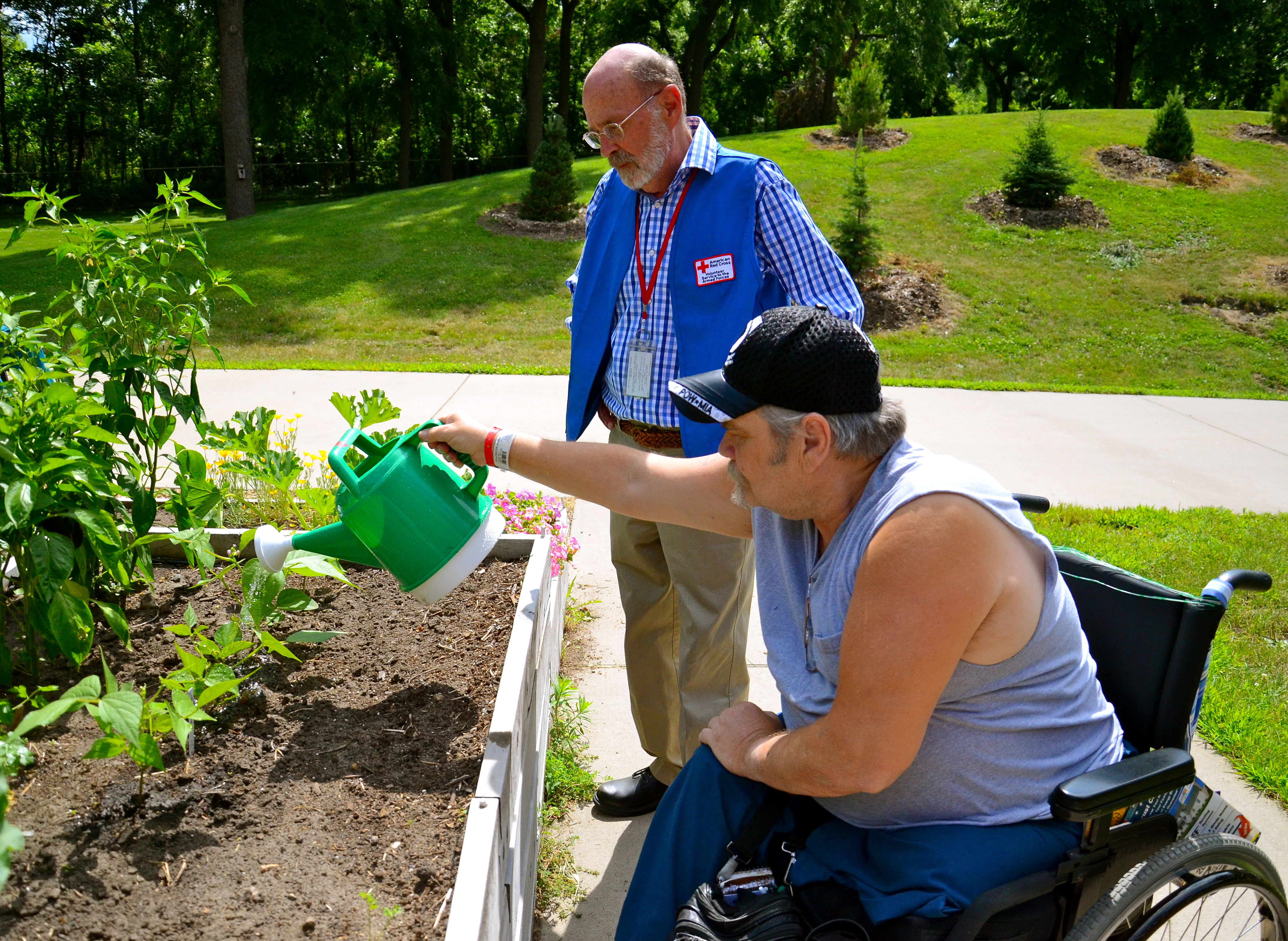
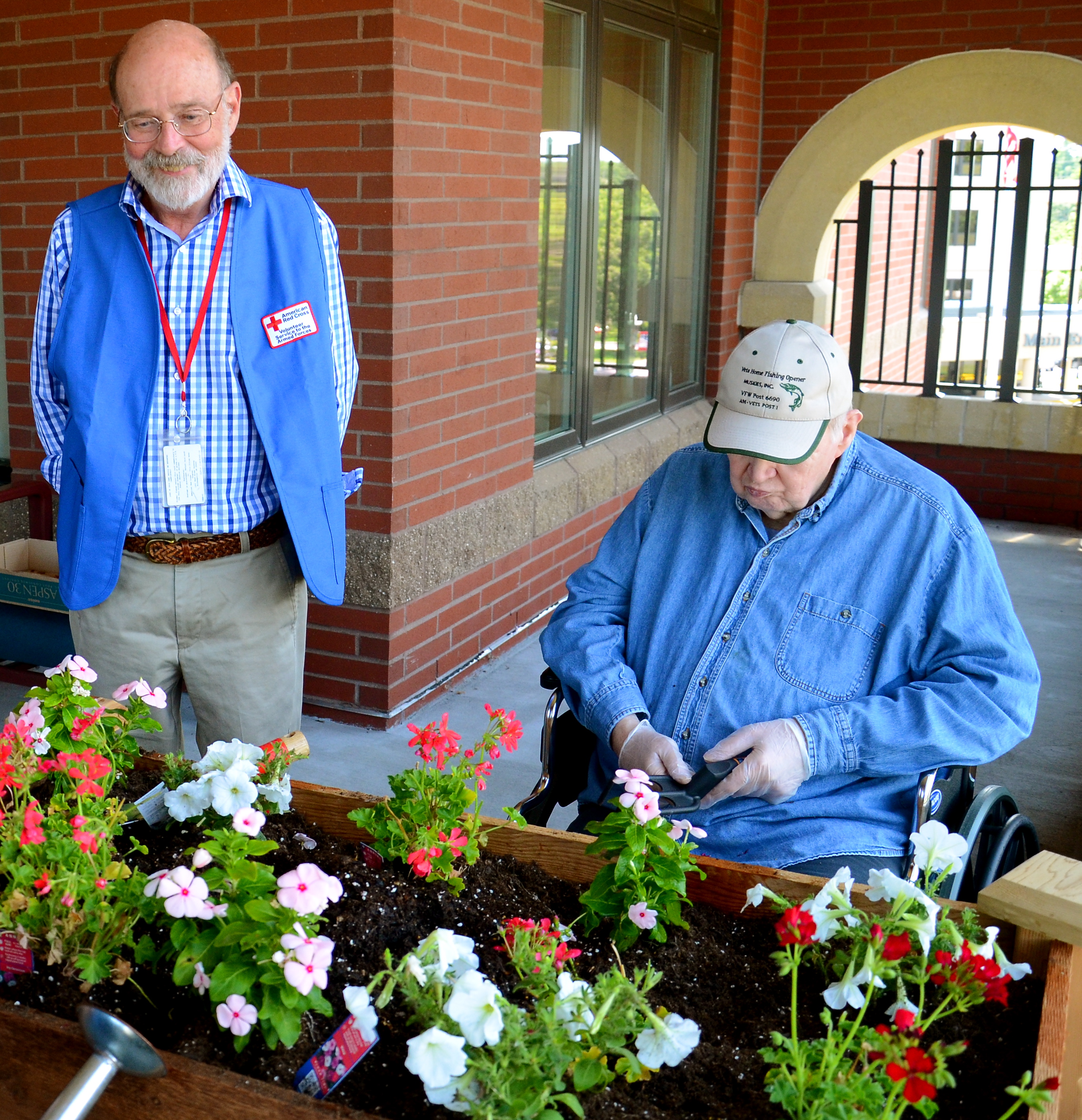
Veteran Bob Hilleshiem and Red Cross worker Mike Booth tend to a garden at the VA Hospital in Minneapolis, July 24, 2013.

On a beautiful summer day, Bob Hilleshiem basks in the sun as he waters flowers and tomatoes in the garden at the VA Hospital in Minneapolis. 

“Growing up on a farm, my mother had three gardens that I tended to,” says Hilleshiem, a current patient at the VA hospital.  “I like keeping an eye on the progress the plants make each day.”

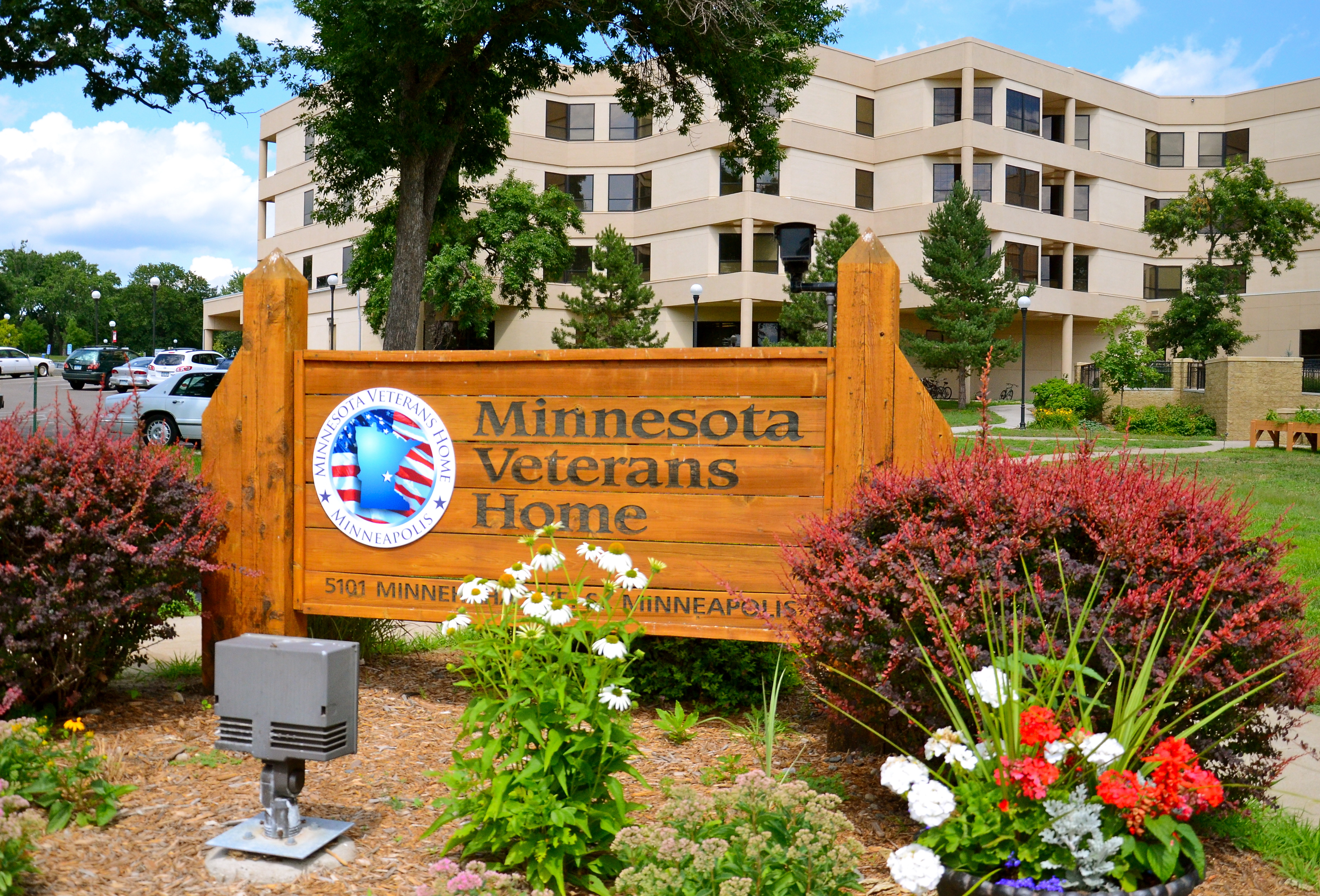
Hillsheim is one of many veterans who are able to enjoy the outdoors by cultivating flowers and vegetables in the gardens at the VA Hospital and the Minnesota Veterans Home, also in Minneapolis.

The Veterans Home in Minneapolis received garden supplies from the Red Cross via a Department of Defense grant for direct patient support, July 24, 2013.

“The veterans and their families appreciate the gardens as a place to get out and enjoy nature,” says Shirlee Peterson, Director of Recreation Therapy at the Veterans Home.  “It’s therapeutic for them to get fresh air, dig in the dirt and feel the sun on a nice day.”

The American Red Cross Service to the Armed Forces (SAF) program donated the gardening supplies to the veterans hospital and home. Funding for the donation came from a U.S. Federal Government grant of $4,500 for direct patient support for veterans.

Red Cross worker Mike Booth visits with veteran Harold Palm at the Minnesota Veterans Home garden in Minneapolis, July 24, 2013.

The VA Hospital and Veterans Home were given planters of flowers, peas, tomatoes, peppers, beans, herbs, strawberries, mint, and rhubarb.  In addition, the Red Cross provided special ergonomic tools and plentiful amounts of soil. 

The Red Cross also used the grant money to buy art supplies for the VA Hospital in Minneapolis and the Veterans Home in Silver Bay, MN. The art supplies– such as oven-baked clay, painting materials, and model cars– will be used in art therapy programs for the veterans.

“These types of therapy give veterans a chance to use both motor skills and creativity,” says Angie Erickson, an art therapist at the VA Hospital. “All of the supplies are being put to great use and are very generous.”

Click here to learn more about Red Cross services for military members and their families. Story and photos by Shannon Lewis, Communications Intern, American Red Cross Northern Minnesota Region. 

Regional Volunteer Award Winners Go Above and Beyond (Part 2)

Here’s part 2 in our 3 part series on our region’s 2013 volunteer award winners. This year’s winners are dedicated and inspiring supporting of the American Red Cross. Please join us in congratulating and thanking these wonderful people for their service. 

patbovee

Pat Bovee – Volunteer of the Year: Behind the Scenes

Pat goes very quietly about making a difference every day in our community through her Red Cross work. She has been a valued member of the St. Croix Valley Chapter Board of Directors for the past 6 years and has championed the chapter’s fundraising efforts as Chair of the Philanthropy Committee and Chair of the Evening In Red Special event. This past year the Evening in Red raised nearly $70,000 for the Red Cross!

Terry Sluss

Terry Sluss – Volunteer of the Year: Disaster

Terry is a volunteer who continually goes above and beyond to serve the Red Cross and his community. He has worked hard to build a strong cohort of volunteers in the North Star Chapter, even hosting Disaster Action Team meetings in his home and skillfully mentoring new volunteers. In the past year, Terry responded to both the Duluth Floods and Superstorm Sandy, representing the Red Cross as a government liaison. He is a great spokesperson for the Red Cross and often assists with both volunteer recruitment and fundraising. Most recently, Terry was selected as the Deputy Chair for the Regional Disaster Leadership team, a role in which he can spread his expertise and leadership throughout the Northern Minnesota Region.

Charles Anderson

Charles Anderson – Volunteer of the Year: Health and Safety

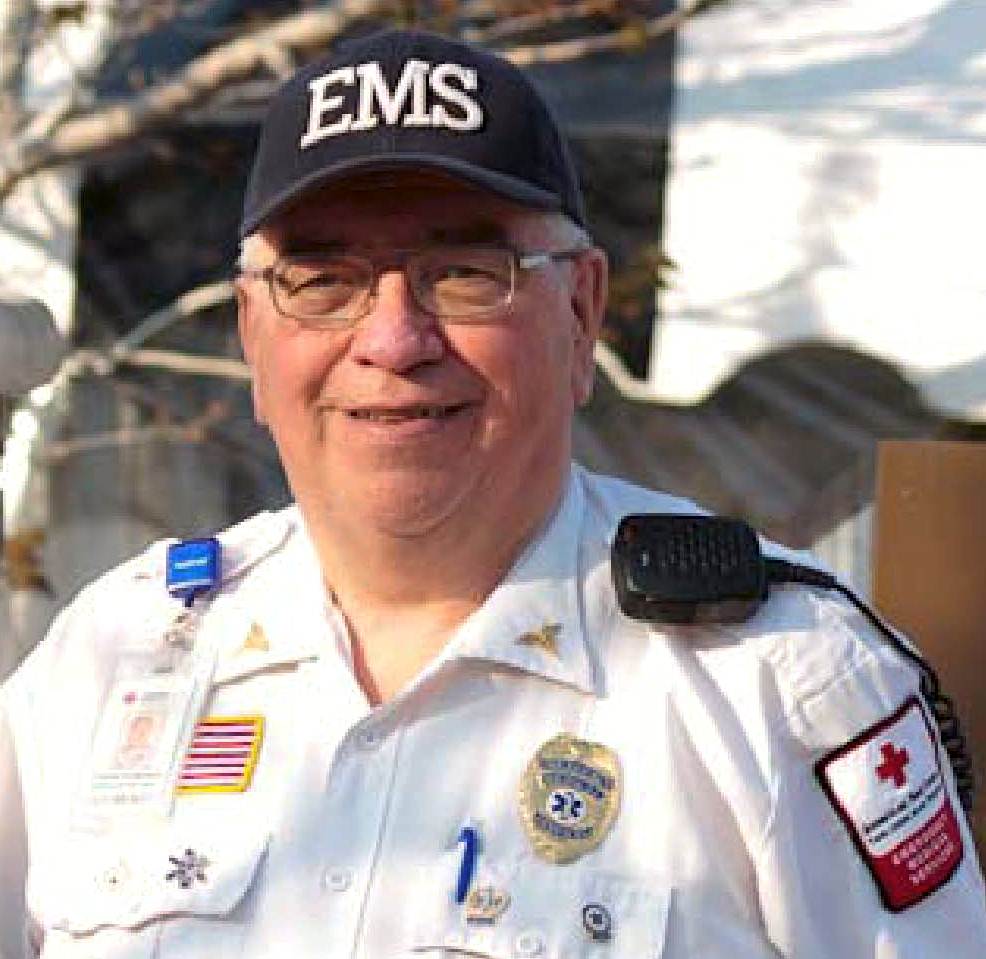
Charles has been volunteering with the Emergency Medical Services (EMS) team since its inception over 40 years ago. He continues to be a vital resource to team members and staff, and was particularly helpful during the staffing transition this past year. On countless occasions he has come into the office to assist with cleaning equipment, new member interviews, and a variety of other tasks. Charles is a strong advocate for team members and is always looking for ways to get others involved in new events or in new ways. He is a strong mentor for team members who are new to the field and to the Red Cross.

Interested in becoming a Red Cross volunteer? Now, there’s an app for that. Check our our new Team Red Cross app and get started today.