“That was good stick, kid,” said Larry Peterson with a laugh to phlebotomist Andrea Mason as she poked his arm. Larry came into the Wilmar Community Center to donate his 25th gallon of blood on Tuesday, January 28. The previous week, he had attempted to donate, but his blood pressure was too high – a sign of his excitement for the special occasion.
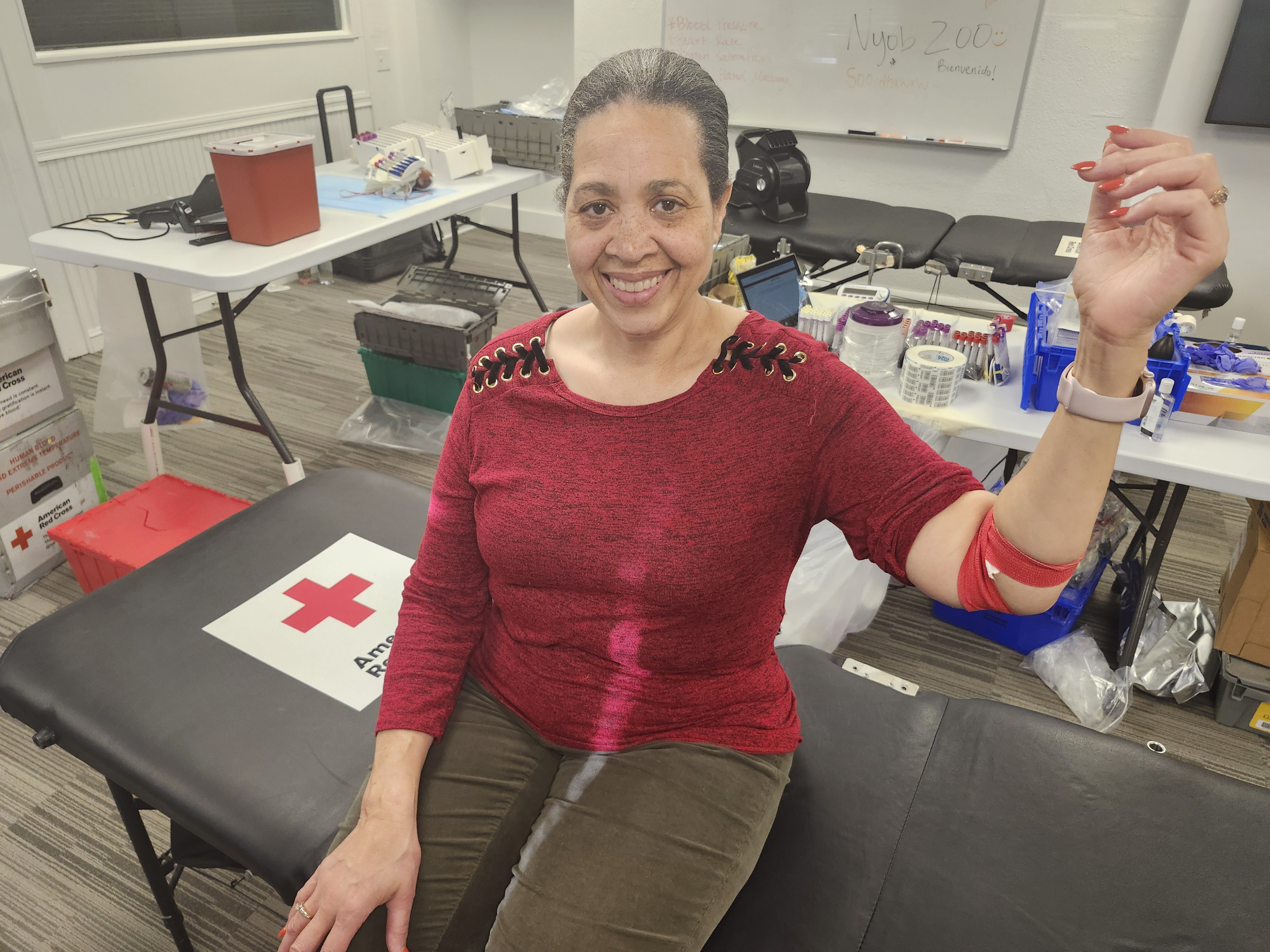
Dedicated blood donor Larry Peterson reaches his 25-gallon blood donation milestone on January 28, 2025, at the Willmar Community Center blood drive!
On December 7, 1960, Larry, who was 19 years old at the time, came to a Red Cross blood drive in his hometown of Montevideo, Minnesota, with his father to donate blood together. It was his father’s 10th gallon that day, and Larry decided to donate his first pint on the next bed over from his dad. Larry didn’t know it at the time, but this was the beginning of a lifelong adventure. Over the course of his lifetime, Larry has donated well over 200 pints of blood, with many of his donations being Power Red donations. Larry’s gifts of life have potentially helped save hundreds of lives.
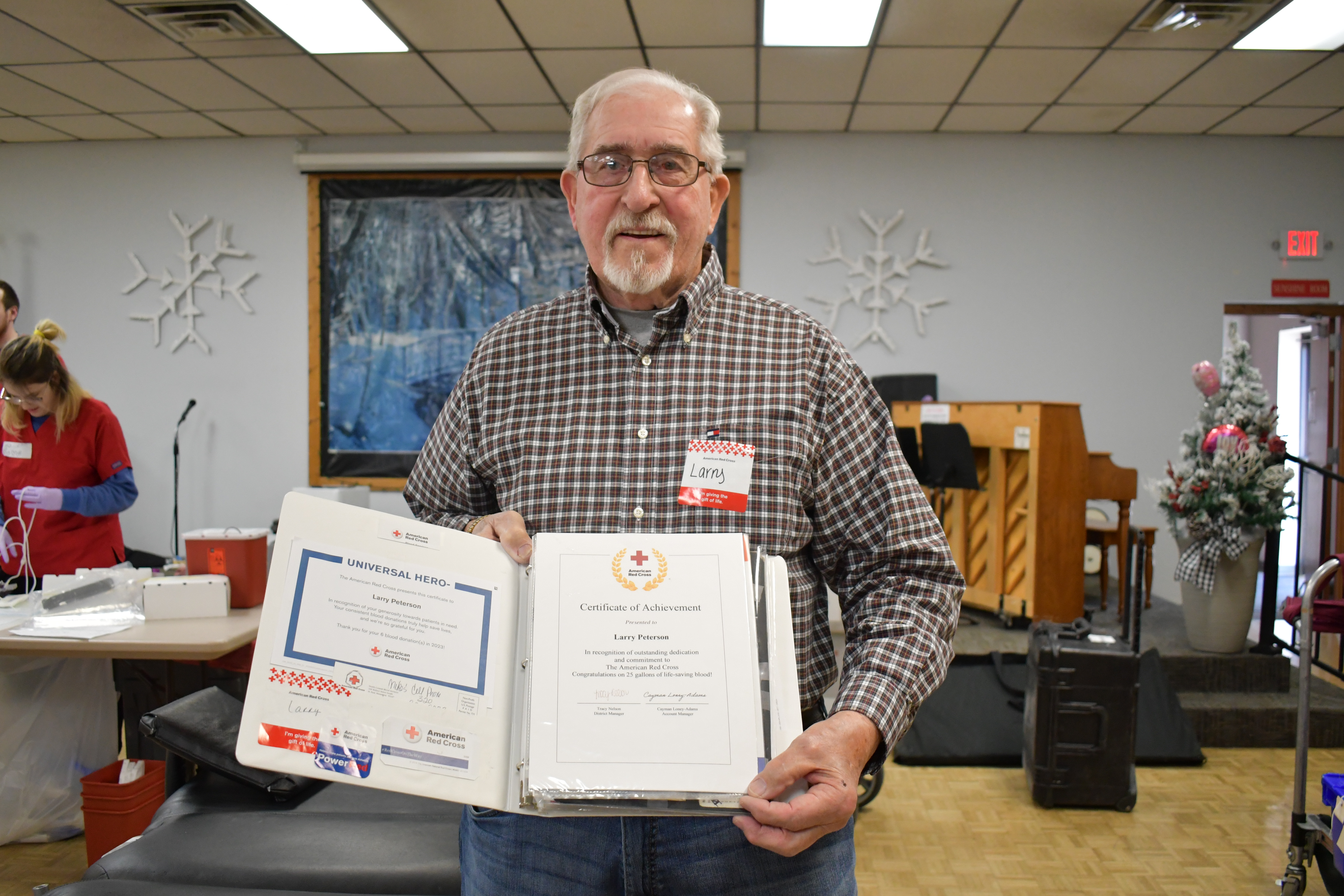
Larry’s binder documents a lifetime of giving. From his first donation in 1960 to his 25th gallon milestone — each article, letter, and card tells the story of a life dedicated to saving others. (Photo by Red Cross volunteer Nate Russell.)
He carries a binder with him that contains newspaper articles detailing his blood donation, letters of notification for when his blood was used to save a life, and his blood donor cards dating back to the very first one in 1960. Now it has a new front page, which is his certificate congratulating him on reaching his 25th gallon milestone.
Larry Peterson proudly marks his 25-gallon blood donation milestone with his Certificate of Appreciation now gracing the first page of his remarkable journey. (Photo by Red Cross volunteer Nate Russell.)
Larry’s blood type is O negative, which is the most universal blood type – which can be transfused to anyone. It is often used in emergencies, trauma and surgery when a patient’s blood type is unknown.
Larry plans to continue donating lifesaving blood for many more years and many more gallons to come. And as it happens, his son is also O negative, so the family tradition of saving lives can continue.
Larry Peterson celebrates his 25th gallon of blood donated at the Wilmar Community Center on Tuesday, January 28 — honoring a lifetime of giving and saving lives. (Photo by Red Cross volunteer Nate Russell.)
To learn more about donating Type O blood, click here.
Story by American Red Cross volunteer Nate Russell.
Originallypublished on the American Red Cross Northern California Coastal Region blog January 17, 2025 – by Michelle Limpe (American Red Cross communications volunteer).
As the largest non-profit humanitarian international organization, the American Red Cross unites volunteers globally in a common mission of service to others — a mission that blood donor Frank Riley strongly believes in. From his time serving in the U.S. Navy Chaplain Corps to serving his communities as a pastor, Frank has made it a priority to live out the Red Cross mission in every aspect of his life.
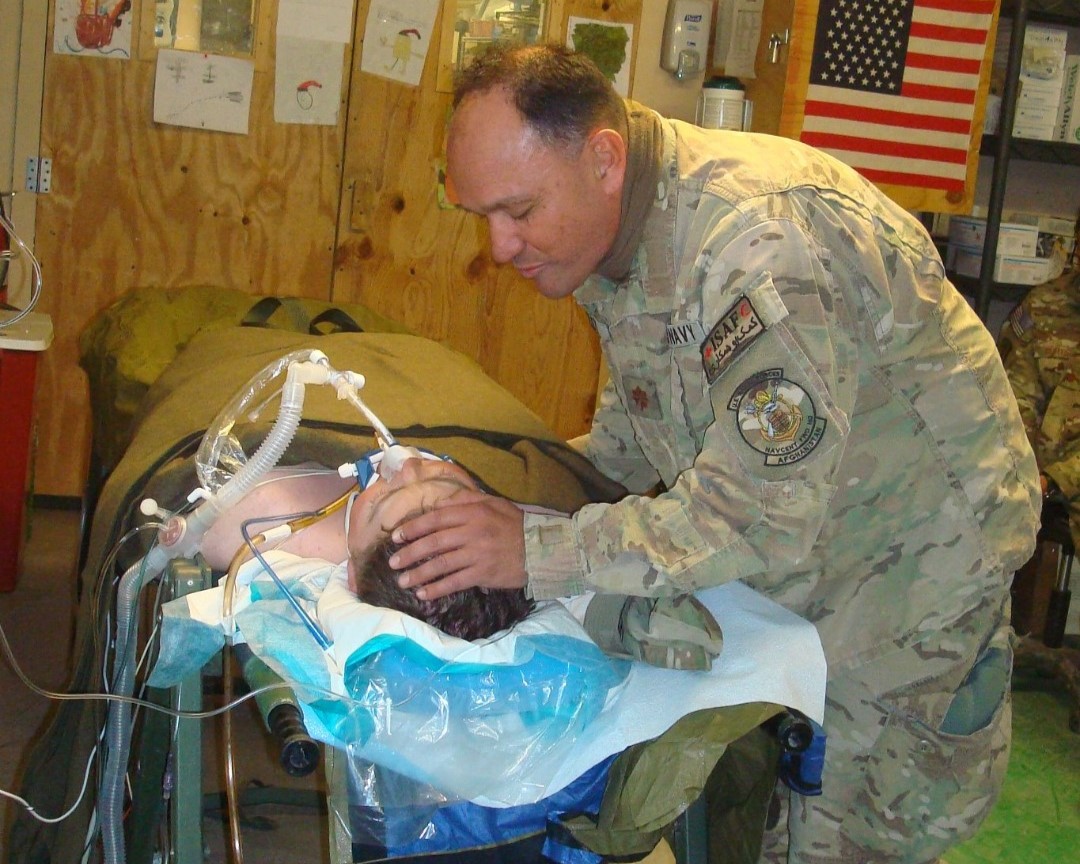
Pastor Riley praying over a wounded service member in Afghanistan. Photo courtesy of Frank Riley
Frank has been a consistent blood donor since 2008 after learning that he has cytomegalovirus (CMV) negative blood, a rare blood type needed by premature babies and children with weakened immune systems. He was informed of his rare blood type during his first donation at a drive hosted by the Children’s Hospital of Orange County.
“I didn’t know about my blood type before,” he said. “When I got my donation card back, they said you’re CMV negative and that means my blood can help premature babies and kids who are fighting cancer. I realized that while my A+ blood was common, having CMV negative blood made me a part of less than 15% of the population.”
CMV is a very contagious, flu-like virus that can be deadly for babies and those who are immunocompromised. For babies with serious cases of CMV, some of the symptoms include premature birth, low birthweight and developmental conditions. While most adults who are infected with CMV have mild to no symptoms, they end up with CMV positive blood after their bodies develop the antibodies against the virus.
Those who have never caught CMV, like Frank, are considered to have CMV negative blood. Babies who need blood transfusions should only receive CMV negative blood, since their immune systems are not strong enough to fight the virus.
“I donated for the first time because I heard of a blood shortage at the children’s hospital,” Frank said. “Of course, I was kicking myself afterwards that I hadn’t started much earlier in my life, especially having CMV negative blood, but hey we start where we are.”
Since then, Frank has continued to donate blood wherever his life has taken him. While he was serving as a pastor of Grace Hill Church in Morgan Hill, Frank would donate blood regularly through Red Cross blood drives.
Recently, he moved to Minnesota and became the new pastor of Excelsior Covenant Church. In his new community, it is even easier for Frank to donate since the Red Cross has been running their blood drives at his church.
“As I give blood, I realize that I’m giving blood to people that I love in my community and people I haven’t met yet. It could be that today my blood is needed for somebody that I desperately care about,” Frank said. “As a Christian, which I am, there’s a reminder for me that centuries ago someone gave His blood for me. Keeping with my own Christian faith, I too have the ability to give blood for others. It doesn’t have the same impact, yet it is lifesaving.”
During his 18 years serving in the U.S. Navy Chaplain Corps, Frank experienced firsthand the lifesaving potential of blood donations. He has been deployed a few times internationally serving marines and sailors.
Upon reflecting on his deployment, he recalled a particular memory in Ghanzi, Afghanistan that impacted his perception of donating blood.
“A terribly wounded service member was coming in and there was a need for blood. Throughout the operating base, the call went out over loudspeakers and everywhere for people with a certain type of blood. I watched as people ran from different parts of the base to get there ahead of the helicopter evacuation. It was desperate. It was urgent. It was in the moment. That was somebody that was coming in now,” Frank said. “I realized that while I might be more distant from it in my donations here, it is no less imminent for the family and loved ones that are hoping. The urgency is always there.”
“There are these emotional ties. Part of that impact was coming back and continuing that partnership. In some ways, I was even carrying the symbol of the Red Cross with me wherever I went, even on my uniform, as I struggled to serve the country,” he said.
As a proud representative of the Red Cross, Frank continues to advocate to his family, friends and congregation on the importance of donating blood.
Frank affirmed his dedication to partnering with the Red Cross to continue providing blood drives at his church. He also shares images of himself donating on his social media pages as a way of encouraging others.
“It’s important, and I don’t hesitate to talk to people about it. My encouragement would be to understand this: You’re potentially about to save a life. You’re about to make a difference in ways that most people never do,” he said. “My encouragement to you is to overcome fear, to overcome anxiety, take a deep breath and try and give at least once. A lot of times, it’s that first barrier that keeps us from giving.”
According to Frank, everyone who plays a role in the blood donation process is joined by their belief and commitment to the Red Cross mission. He calls on more people to join the mission and share their gifts with those in need. “As you come to a drive, the volunteers andthe phlebotomists are there taking your blood and welcoming you warmly. You are in a room where every person is dedicated to saving other lives. How many rooms do you enter where all of you are part of that?” he said. “You might be a stranger giving blood across from me, but we’re in mission together. You might be the one checking me in and taking my blood, but we’re in mission together. Even if you’re the person offering cookies, we’re in mission together. Every person is dedicated to saving lives, and that’s a rare thing.”
Learn more about the importance and need for CMV negative blood here and make your appointment to donate blood like Frank here: redcrossblood.org.
On January 7, 2025, we were thrilled to honor Amber Lawrence with the prestigious Lifesaving Award for Professional Responders, one of the highest accolades from the American Red Cross. This award recognizes individuals who save or sustain lives using skills gained through Red Cross Training Services.
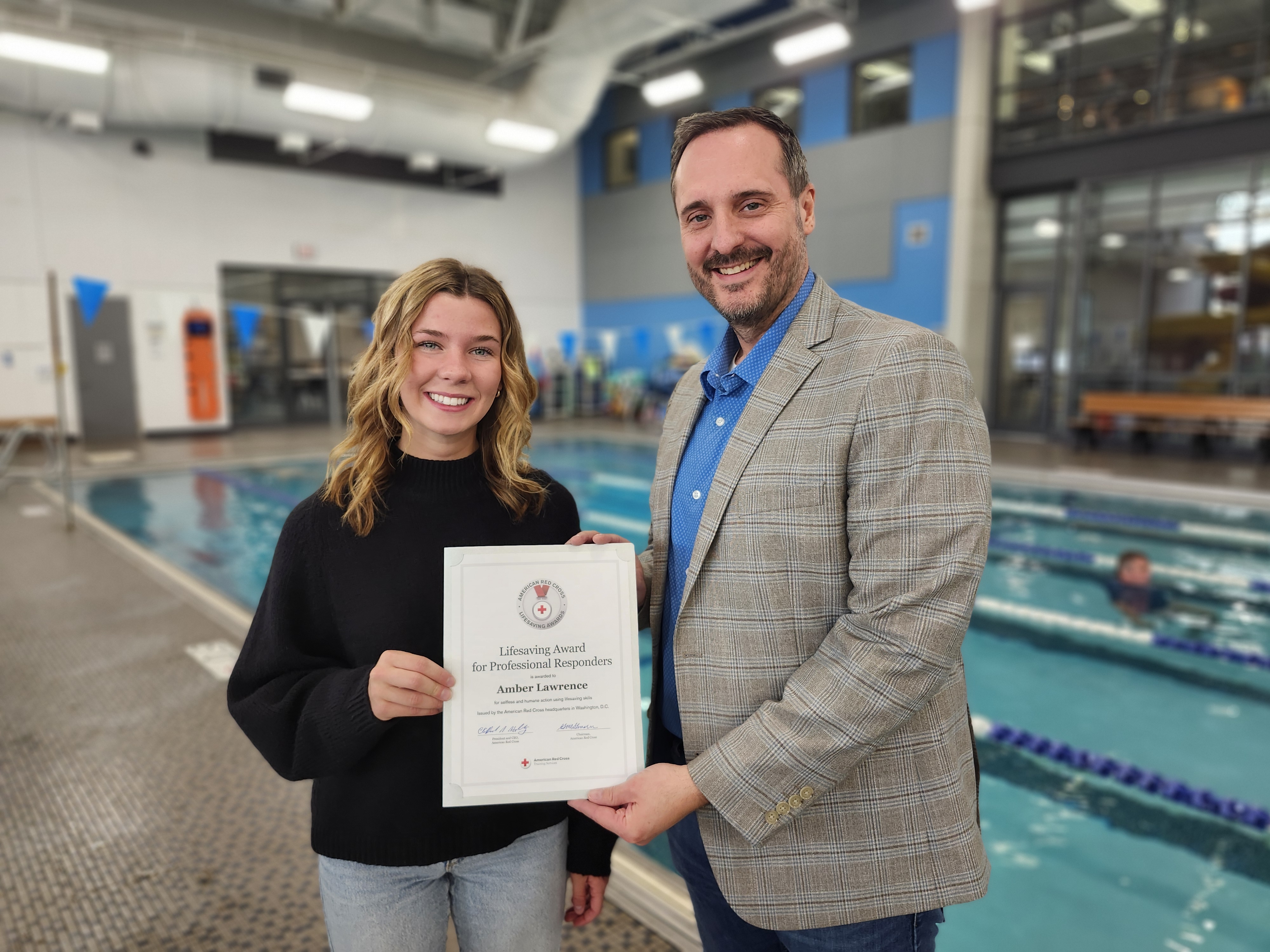
Brice Johnson, Regional CEO of the Red Cross Minnesota and Dakotas Region, proudly presents Amber Lawrence with the Lifesaving Award, recognizing her heroic actions in saving a life through her Red Cross training. Photo: America Red Cross/Sue Thesenga
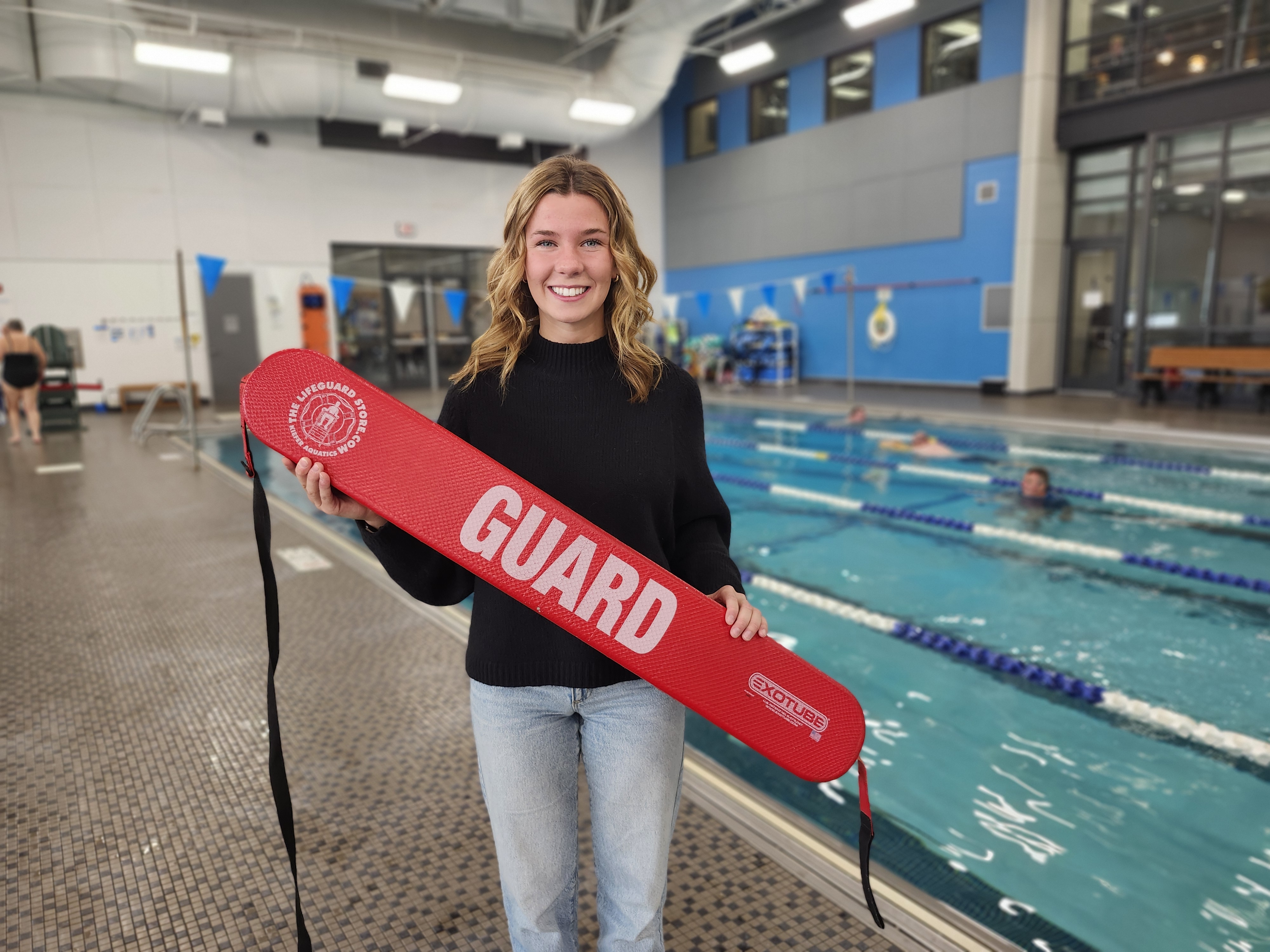
On August 8, 2024, at the Andover YMCA, Amber’s Red Cross training in Lifeguarding, CPR/AED, and First Aid was put to the ultimate test. While on duty, Amber witnessed a stroller with an infant strapped inside accidentally roll into the deep end of the lap pool. Without hesitation, Amber dove into action, jumping into the water and lifting the stroller just high enough for the baby’s head to break the surface. The infant cried out, and with the help of bystanders, both the child and stroller were safely pulled from the water.
Brice Johnson, regional CEO for the Red Cross Minnesota and Dakotas Region, praised Amber’s heroic actions, stating, “We are immensely proud to present the Lifesaving Award for Professional Responders to Amber. Her actions embody our commitment to enabling people to prevent, prepare for, and respond to emergencies.”
Amber Lawrence, honored with the Red Cross Lifesaving Award, stands by the pool where her quick thinking and Red Cross training saved an infant’s life. Her heroic actions exemplify the power of preparedness and courage in emergency situations.
Amber, a freshman at the University of Wisconsin River Falls studying Psychology, has been passionate about swimming since she was three years old. She earned her lifeguard certification in 2021 and now works as a lifeguard at the YMCA in Hudson, Wisconsin, balancing her duties with her academic commitments.
YMCA of the North’s aquatics team congratulate Amber Lawrence on her prestigious award. Photo: American/Red Cross/Sue Thesenga
Reflecting on the event, Amber shared, “It was scary. I am grateful for my Red Cross training, which gave me the confidence to handle the situation. My heart was relieved, and I was happy as soon as the child was safe.”
Amber Lawrence, receiving a big congratulatory hug from her grandfather at the Lifesaving Award presentation on January 7, 2025. Photo: American Red Cross/Sue Thesenga
Let’s all take a moment to recognize Amber for this heroic accomplishment! 👏
Inspired by Amber’s story? Empower yourself with lifesaving skills by enrolling in a Red Cross training course today! Find a class near you: Red Cross Training ▶️
Know someone who deserves recognition? Nominate them for a Lifesaving Award and help us honor their courage. Learn more about the awards: Red Cross Lifesaving Awards ▶️
At Sabathani Community Center, three remarkable women – Rebekah, Sharon, and Tracy – recently stepped up to give the gift of life, each with a personal story and a shared mission: to make a difference in the lives of those in need of blood donations.
Rebekah: Leading by Example
As the Community Health Navigator at Sabathani, Rebekah is no stranger to encouraging others to take action for their health and well-being. When the call went out for blood donations, she knew she couldn’t ask others to do something she wasn’t willing to do herself.
Leading by example, Rebekah rolls up a sleeve for the first time at Sabathani Community Center’s first blood drive.
“I believe in leading by example,” she said, reflecting on her decision to donate. Despite some initial nerves, Rebekah’s jitters were quickly put to rest by the phlebotomist, who guided her through the process with care and ease.
What made her donation even more meaningful was her understanding of the critical role blood transfusions play for patients, particularly those with sickle cell disease. While sickle cell hadn’t personally impacted her family, Rebekah felt deeply passionate about the cause, especially when considering the importance of matching ethnicities in blood donations for those affected by the disease.
Sharon: Returning to a Lifesaving Tradition
Sharon, a former Red Crosser, hadn’t donated blood in several years, but when her niece Rebekah called on her to help with the drive, she knew it was time to get back into the fold. Sharon’s return to the blood donation chair wasn’t just a personal milestone, it was a heartfelt way to support her community.
Former Red Crosser and blood donor, Sharon, returned to donating blood at the Sabathani Community Center’s blood drive, November 11, 2024.
“I knew it was time,” Sharon shared. “When Rebekah reached out, I couldn’t say no. It feels good to be able to help others in such a simple yet profound way.”
Her decision to donate wasn’t just about family – it was about making a difference in her community and giving back to a cause that had always been close to her heart.
Tracy: From Volunteer to First-Time Donor
Tracy’s story is one of transformation and inspiration. She began as a volunteer at Sabathani’s blood drive, helping organize and assist others who came to donate. But today, she took the next step: she became a first-time blood donor herself.
Tracy donates blood for the first time and encourages others to roll up a sleeve.
Tracy’s mantra that is etched on her arm, “Each day is a gift,” is a reminder to live life with gratitude and purpose – and today, she was able to share that gift of life by donating blood.
“I want to encourage others to donate too,” Tracy said with a smile. “It doesn’t take long, and you’re helping save lives. If more people knew how easy it is, we’d have more donors for sure!”
A Community Coming Together
These three incredible women – Rebekah, Sharon, and Tracy – show us the power of compassion and the difference one person can make in the lives of others. Their stories are a testament to the power of community, the importance of blood donation, and the lives that can be saved with a simple act of kindness.
A heartfelt thanks goes to Sabathani Community Center for organizing their very first blood drive and for continuing to raise awareness about the critical need for blood donations. Together, we can ensure that patients with sickle cell disease and others in need of transfusions have access to this life-saving resource.
Here’s to many more inspiring stories and to the continued partnership with Sabathani, as we work together to make a lasting impact on the health and well-being of our community.
Visit here to learn more about the importance of a diverse blood supply here.
Among the many roles that volunteers can fill on a Red Cross mission, one of the most rewarding is that of the ERV Driver. These teams, which often consist of two individuals, drive Red Cross Emergency Response Vehicles and deliver food from community feeding partners to points of distribution after a disaster so that displaced families can pick up a hot meal.
Jennie and Jezzalyn Ringler serve up meals from the ERV in Asheville, North Carolina. (Photo: Nate Russell)
This crucial role helps individuals and families feel a semblance of comfort and normalcy so that they have the energy needed to plan their next steps towards recovering from a disaster.
Often this role is filled by married couples, sometimes by strangers who become friends over the course of their mission, but very rarely do we see a team that consists of a parent and child. Jennie and Jezzalyn Ringler from central Minnesota are one such dynamic duo!
This is Jezzalyn’s first deployment as a Red Cross volunteer, “I don’t think she’s sick of me yet!” remarked her mother Jennie.
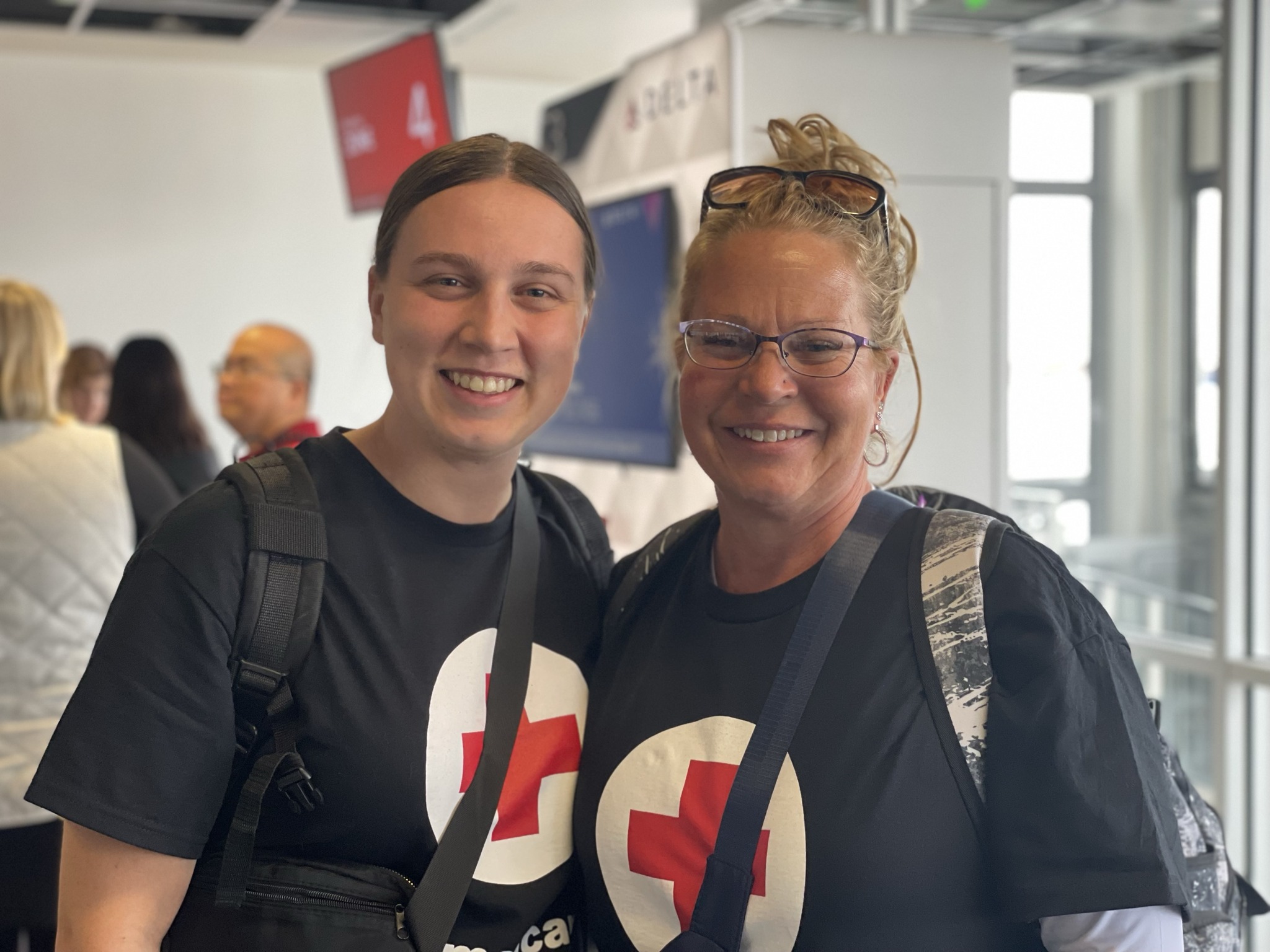
Jennie and Jezzalyn starting out their deployment journey at the airport. (Photo submitted)
This is not Jennie’s first deployment, she’s been an ERV driver since about 2011. She loves working on a team “You get a groove going and you can keep it that way.”
Jezzalyn says her favorite part of being on an ERV Team is the people and the stories. “We’ve got regulars, we see them every day. We get to hear about their lives, about their recovery. Many of them are military veterans.”
Mother/daughter duo work hand-in-hand serving meals to those affected by Hurricane Helene in Asheville, North Carolina. (Photo: Nate Russell)
The Ringlers’ ERV is parked at the Buncombe County Sports Park, at one of our Community Care Centers. Here, hurricane impacted individuals and families can do their laundry, take a shower, pick up supplies such as jugs of potable water, and of course pick up a hot meal. “We’ve served close to 100 meals today,” says Jezzalyn.
Visit here to find a Community Care Center and other resources.
Story by American Red Cross volunteer Nate Russell.
In the early hours of September 28, 2024, Susie and Charles Rutherford from Apple Valley, Minnesota, set out on an important mission. Driving a Red Cross emergency response vehicle, they left the Minneapolis Chapter building bound for Tallahassee, Florida, to support communities affected by Hurricane Helene.
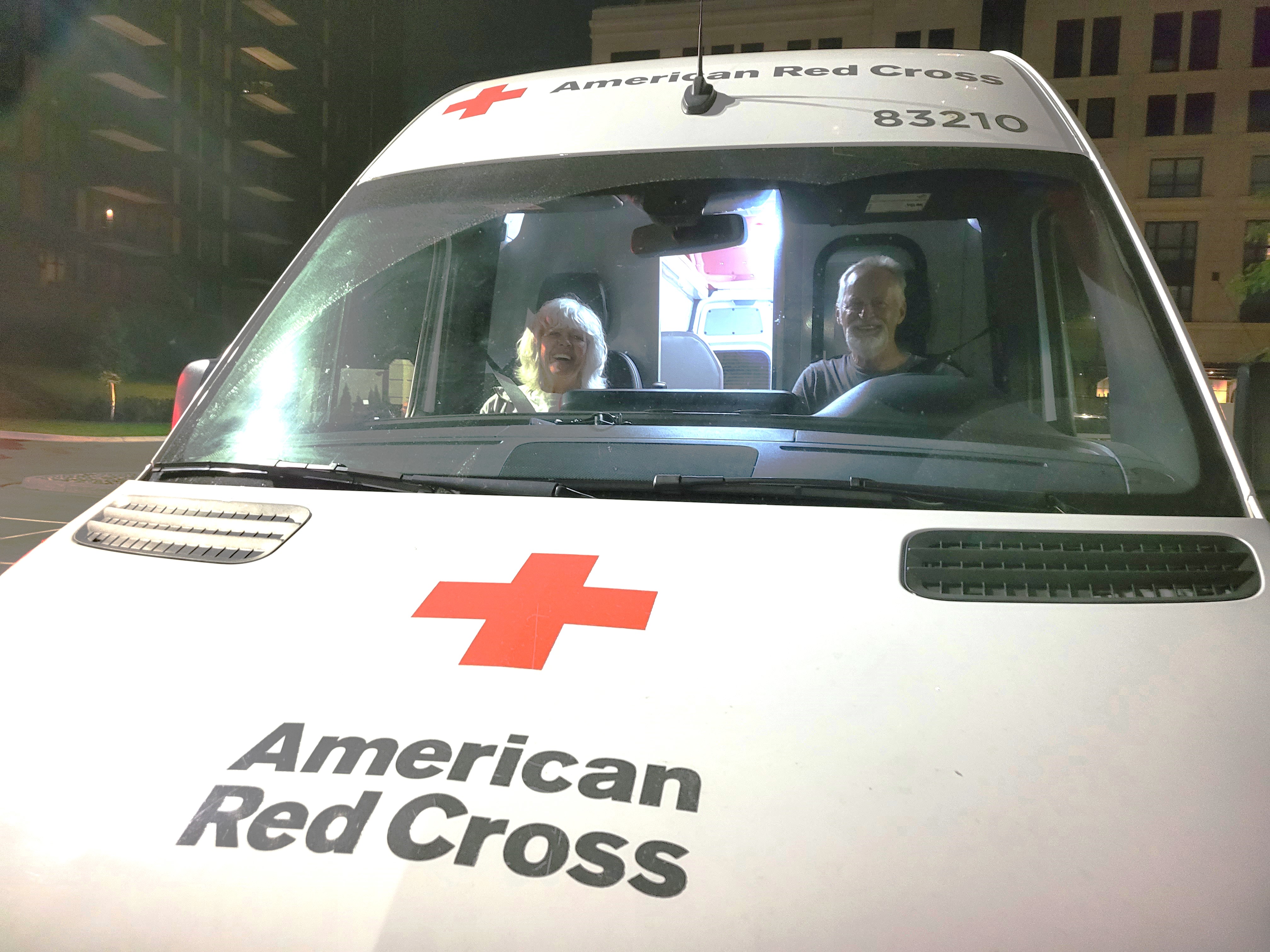
Susie and Charles Rutherford began their journey to support Hurricane Helene relief efforts by driving a Red Cross emergency response vehicle from the Minneapolis Chapter building to Florida – September 28, 2024. (Photo – Carrie Carlson-Guest, American Red Cross)
This marked Susie and Charles’s first national deployment as Red Cross disaster volunteers. For their daughter, Lindsey Heald, a regional philanthropy officer for the Minnesota and Dakotas Region, it felt natural. “I’m so proud of them,” Lindsey shared. “Growing up, they taught me the meaning of compassion. Now, seeing them bring that same spirit to the Red Cross is incredible.”
For Susie and Charles, the chance to serve together was a gift. “What better way to serve others than side by side with my husband?” Susie said. Both felt a mix of excitement and a reassuring sense of readiness. “The Red Cross prepared us so well,” Susie explained. “Even if we didn’t have every answer, there was always a supervisor on call to guide us. Flexibility was key; we had to embrace the ‘Semper Gumby’ (always flexible) spirit because roles change constantly in disaster zones.”
Over 19 days, the Rutherford’s witnessed both devastation and resilience as they navigated towns transformed by the storm. “Thousands of trees were down, and buildings were damaged or destroyed,” Susie recalled, painting a powerful picture of the scene. Amidst the destruction, there was an unbroken rhythm of recovery—state workers clearing roads, power trucks restoring electricity, and community members coming together.
Susie and Charles Rutherford pictured outside the emergency response vehicle they drove to Florida for Hurricane Helene and Milton relief efforts. (Photo submitted.)
Their role was to deliver hundreds of hot meals daily to shelters, community centers, and other gathering spots for those affected. For the Rutherford’s, the appreciation they saw in the people they served was unforgettable. “The heartfelt gratitude in their eyes will always stay with us,” Susie reflected.
Example of damage caused by Hurricane Helene is a neighborhood the Rutherford’s drove through. (Photo submitted.)
The community’s gratitude was evident at every turn. “People would honk and give us a thumbs-up when they saw the Red Cross logo on our vehicle,” Susie smiled. “Even police officers stopped to thank us as we refueled.”
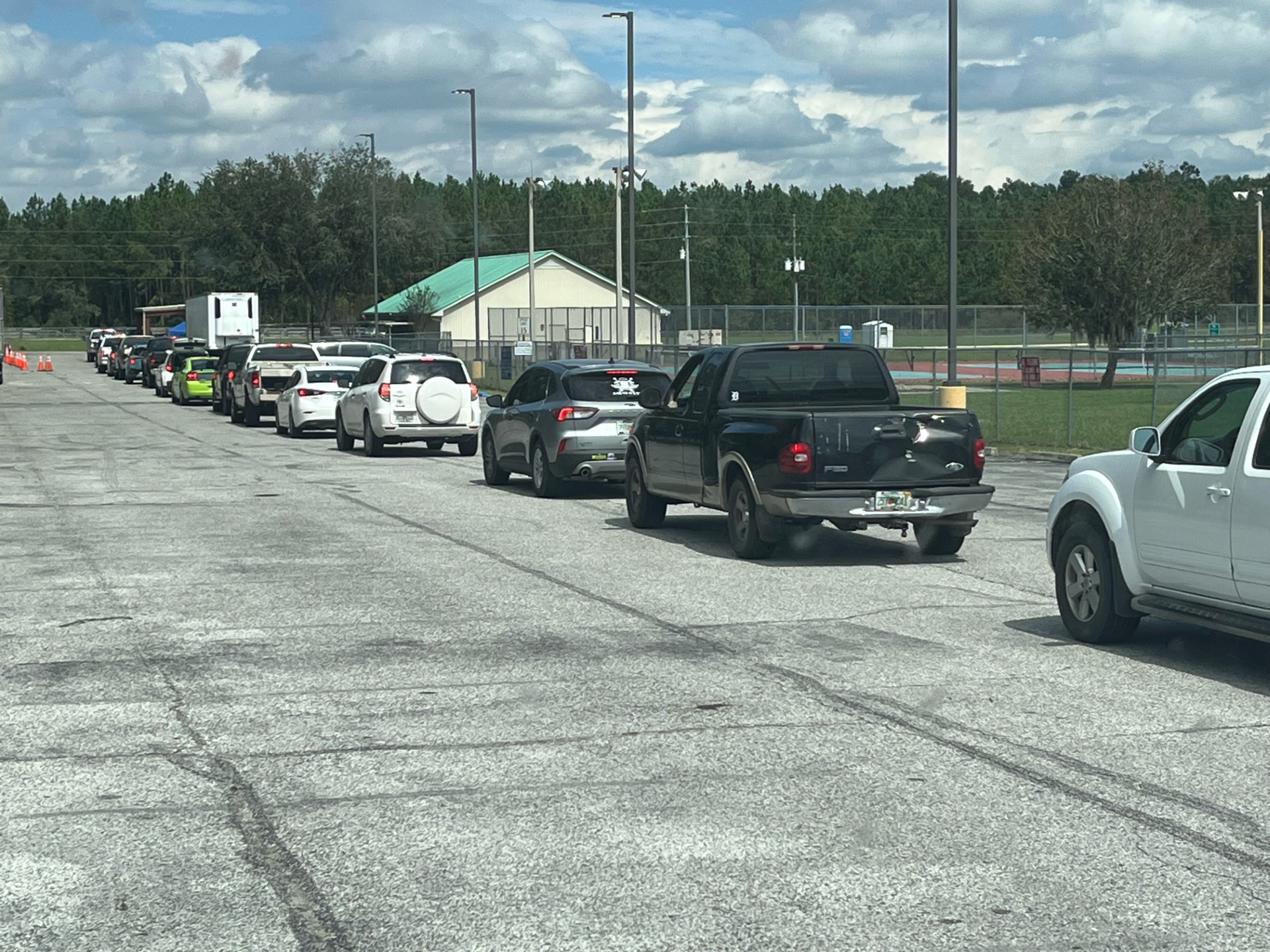
Line up of cars coming to the shelter where the Rutherford’s were serving food near Tallahassee, Florida. (Photo submitted.)
The hurricane response gave Lindsey a meaningful opportunity to contribute. “I was grateful to step up and support my colleagues in Asheville, North Carolina, for my first virtual deployment!” she shared. “This experience has left me with an extra soft spot for my Red Cross friends in the Carolinas.” Lindsey adds, “I’ve chosen to focus my career here at the Red Cross because I love this work. With my parents now volunteering, it has brought our family closer, strengthening our dedication to helping others through the Red Cross mission.”
The Rutherford’s journey left them with a deep sense of pride and fulfillment. “Helping people in their hardest moments is an honor,” Susie said. “If you’re thinking about volunteering, there’s a place for you here.”
Susie and Charles Rutherford pictured with their children at their surprise 50th wedding anniversary celebration, June 2024. (Pictured left to right – Charles, Susie, Lindsey, Briana, and Charlie – photo submitted.)
Join the Red Cross and make a difference. Sign up at redcross.org/givetime or donate at redcross.org or by texting HURRICANES to 90999.
“Because I feel passionate about mission of the Red Cross, I took two weeks’ vacation from my regular full-time job to deploy to Macon, Georgia, to help with hurricane relief efforts, and I would do it again in a heartbeat,”said Red Cross volunteer Cara from Yankton, South Dakota.
Cara recently returned home from Georgia and quickly chose to extend her service for another week virtually. She said during this assignment her primary responsibility involved working in the office, but she did have the chance to work in the field for a day doing damage assessment.
Cara (pictured left) with Red Crossers Cortney and Jamar. Cara and Cortney had worked together on other disaster relief operations, but only virtually. This was the first time they had the opportunity to work together in person. (Photo submitted)
“Although most of my time was behind the scenes, I was doing a job that I love,” explained Cara. “The people you meet and bonds you make through these shared experiences are the things that make it so easy to say ‘yes’ when I get a call, especially when work and family commitments fall in line and I was able to get away for two weeks.”
At the end of each workday, her team reviewed daily achievements and the forthcoming day’s priorities. “I was energized and amazed by the stories from the field,” Cara said. “The impact of the Red Cross’s work – whether it was the number of meals served or people sheltered was astonishing. Fellow volunteers shared about being recognized with their Red Cross vests on – and how it gave people hope that we were there to help.”
Cara (pictured left) pictured with fellow volunteer Dee Dee Larson from our Minnesota and Dakotas Region. (Photo submitted)
A heartbreaking memory of her deployment was the day she conducted damage assessment in the field. Witnessing the aftermath of the hurricane was an emotional reminder of the importance and relevance of the work the Red Cross does.
One of the unforgettable encounters Cara had was with a man whose home was severely damaged – living without electricity and a fallen tree in his living area. When the storm hit, he woke up from sleeping and went outside to get his dog, but found the dog had passed away after a tree had fallen on his doghouse. “If he had made it outside in time to get his dog, they both would have been sleeping in the room where the tree fell through the house,” Cara sadly recalls. “I will never forget that experience.”
Cara’s biggest takeaway from this experience was the understanding that every role, whether front-line or behind the scenes, contributes toward a unified goal. “There are lots of moving pieces in a disaster relief operation, pieces that frequently change but all have a way of coming together. And that, to me, is the meaning of One Red Cross!”
In the wake of Hurricanes Helene and Milton, countless families were torn apart. Amidst the chaos, the Red Cross reunification teams worked tirelessly to bring hope and connection back to those affected. This vital work continues as the Red Cross remains committed to reuniting loved ones and restoring communication disrupted by these devastating storms. While this service may not receive as much attention as other disaster relief efforts, it has handled over 11,500 inquiries, helping to mend the broken lines of communication.
Alex Wincell, a dedicated Red Cross volunteer from the Minnesota and Dakotas Region, was virtually deployed to the reunification team. “I knew I couldn’t go in person due to some obligations at home, but I wanted to help,” Alex shared. She was quickly assigned to the task just days after the chaos ensued, when the situation was still highly uncertain.
Red Cross volunteer Alex Wincell, pictured in 2020, helping with a local fire response in Minneapolis. Photo by Lynette Nyman – American Red Cross.
This was Alex’s first experience with reunification work. “I was able to use my case work background which was extremely useful. If you like puzzles, this would be a good role for you because its creative problem solving. It’s fascinating and very meaningful when all the pieces come together.”
Among her many contributions, Alex recalls a particularly touching case where she assisted an 83-year-old woman in locating her long-time friend and colleague, an 86-year-old resident from Asheville, North Carolina. The two had been in contact shortly before the storm, but Alex only had the friend’s phone number, not an address.
Reuniting friends can be more challenging than family members, as families often have networks to aid in making contact. Despite this, after ten days of diligent effort, Alex was able to reach the woman’s daughter, who confirmed that her mother had weathered the storms and was safe.
In another case, Alex was tasked with finding an elderly person living in a remote area cut off by blocked roads and out-of-service landlines. Using tools like property records and Google, she managed to contact the woman’s neighbor. They agreed to bring their cell phone to her house so that Alex could speak with her directly.
In this reunion, there was so much gratification, and I know how much both parties appreciated our efforts,” Alex reported.
“Even through the phone, I could tell it made the person who was found happy to know that someone was looking for her.”
Reflecting on her virtual deployment, Alex noted that while she prefers working in person, “this type of work makes sense to do virtually since it all begins with the seeker who can be from anywhere in the country or the world. It still gave me a lot of client contact and it was a very rewarding experience.”
This story is just one example of how the Red Cross is committed to alleviating human suffering in the face of emergencies. If you are inspired by Alex’s story and want to make a difference, consider volunteering or donating to the Red Cross today. To apply to become a Red Cross volunteer visit redcross.org/givetime, to donate visit redcross.org or text the word HURRICANES to 90999.
“Everything was good until Beryl came,” says Delta Alexander, a lifelong resident of Union Island in St. Vincent and the Grenadines.
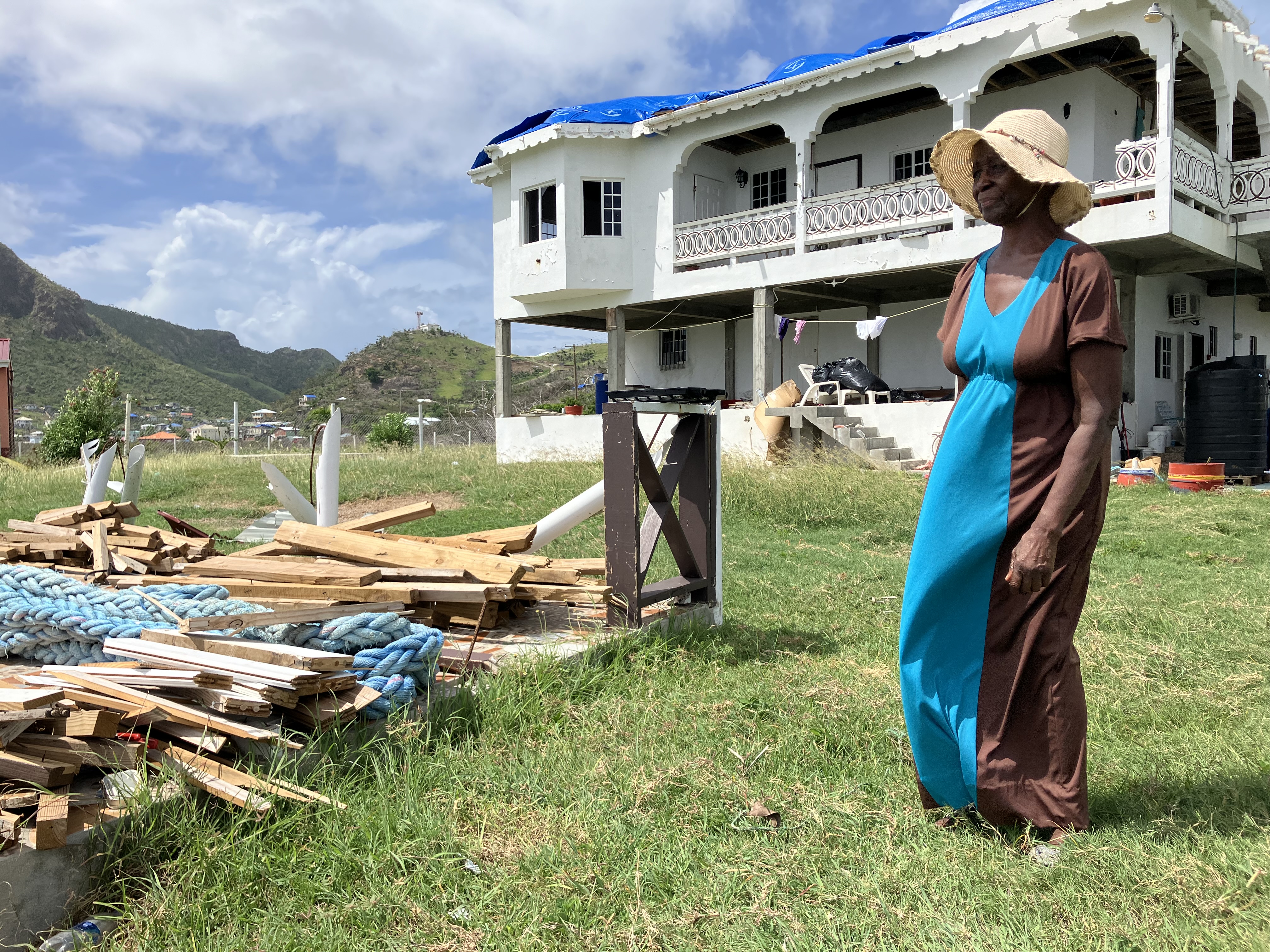
“Everything was good until Beryl came,” says Delta Alexander, who was born and raised on Union Island in St. Vincent and the Grenadines. She is grateful for the care and support that the local Red Cross provided following Hurricane Beryl. Photo: Lynette Nyman/IFRC
She’s thankful for the care and support the local Red Cross provided after Hurricane.
Beryl. Delta left Union Island in 1969, always planning to return, and in 2015, after retiring from a nursing career in Canada and the U.S., she came back to rebuild her life.
For the next three years, she built a home and continued her humanitarian work in this tight-knit community. The hurricane hasn’t slowed her down.
“The people I’m grieving for are those in shelters. They have no money, nowhere to go. They lost everything, houses, clothing, even underwear,” she says.
Her house, situated on low land near the shore, was quickly surrounded by high water during the category 5 storm that struck parts of the Caribbean on July 1. The winds, too, were a threat. For four hours, she held back a door, dislocating her shoulder. At 78, her strength and generosity are inspiring.
“I saw death right there. How am I going to escape?” she recalls asking herself during the storm.
The trauma connected her with St. Vincent and the Grenadines Red Cross (SVGRC) volunteers who responded to help people on multiple islands and the mainland.
Early in the emergency, Red Cross volunteers set up relief operations at a church on Union Island, distributing non-food items as well as a space for people to share their experiences – it was much-needed and appreciated emotional support.
“Red Cross was wonderful. People were very nice. So soothing. Helpful and encouraging,” says Delta.
Small society, many hazards
The SVG Red Cross is a young national society that gained its independence from the British Red Cross in 1984. Today, the SVGRC is comprised of a nearly 100 percent volunteer workforce, including key leaders like Shaneika Laidlow who manages their disaster and mental health programs. Their aim, she says, is to help people get back to normalcy.
“We offer assistance to those who most need it, to the best of our ability,” says Shaneika Laidlow, who manages disaster and mental health programs for the St. Vincent and the Grenadines Red Cross. Photo: Lynette Nyman/IFRC
“During these times people can get very frustrated. Does the Red Cross care for them?” says Shaneika, who is based in the nation’s capital on the mainland, St. Vincent. The answer is yes.
“There are so many people we would love to make better, but there are some things we’re unable to do at this time because of restraints. We offer assistance to those who most need it to the best of our ability,” she says.
The scope of the work, and the potential need, is challenging. This small nation and Red Cross society faces multiple hazards, including tropical storms, flooding, hurricanes, and even an active volcano.
In early October, monitoring showed unusual thermal activity of the La Soufriere volcano – activating the government to issue a low-level warning and close the trail to the summit.
La Soufriere, shrouded in clouds, is an explosive volcano that most recently erupted in 2021. It’s one of several hazards facing the St. Vincent and the Grenadines Red Cross. Photo: Lynette Nyman/IFRC
The thermal anomaly stopped, but reminded many of past explosive eruptions like the most recent in 2021 when, on April 9, the dome inside the crater blew and for days spewed devastating volcanic ash across communities.
“It was like the sun was out, but not there. It was all dark,” remembers Edwin Joe, who lived in the countryside distant from the ‘red zone’. He remembers ash covering everything. “Just white everywhere, like bright snow with no sun. We didn’t know what was going to happen.”
Edwin Joe evacuated the St. Vincent, the mainland, for two weeks following the eruption of the volcano La Soufriere in 2021 and returned to find houses that had roofs collapsed from the volcanic ash. Photo: Lynette Nyman/IFRC
Edwin evacuated the mainland for two weeks and returned to find some houses that had roofs collapsed from the volcanic ash. Many people stayed in shelters for several months.
The Red Cross formed part of the response with the government and other emergency partners, providing water, relief items and temporary housing assistance.
Help around the corner
The good news is that during challenging times a small Red Cross society like the SVGRC can turn to other national societies for help, primarily through the International Red Cross and Red Crescent (IFRC).
Raziel Uranga, a Mexican Red Cross responder with decades of disaster response experience deployed through the IFRC ‘surge’ program to serve as response operations support in St. Vincent and the Grenadines. His predecessor, he says, arrived just a few days after the hurricane, helping the SVGRC manage a large disaster response.
Photo 4 – Small Red Cross societies “need support from the global Red Cross network in order to grow as fast as they can, especially with the multiple hazards they’re facing,” says Raziel Uranga from the Mexican Red Cross, now deployed to support the SVG Red Cross provide relief for people affected by Hurricane Beryl. Photo: Lynette Nyman/IFRC
“Red Cross is the best humanitarian movement in the world, I am convinced, because no other organization has the workforce that we have,” says Raziel, whose passion lies in reducing risks amid the rising frequency of severe disasters.
Responders and donors from around the world – and in their own communities – have provided relief for people affected by Hurricane Beryl.
It’s uplifting for many to see this unified effort. And yet, when something big happens, a small national Red Cross society like the SVGRC needs help to do its best now and beyond.
“They need support from the global Red Cross network in order to grow as fast as they can, especially with the multiple hazards they’re facing,” says Raziel.
These hazards can destroy homes and livelihoods. Building back both is the focus on Mayreau, an islet just a short boat ride from Union. Wheelbarrow by wheelbarrow, people are removing rubble to restore the island’s sole income, tourism.
“We have to clean up this island to get tourism back – to get people back from Martinique – to see the turtles,” says Patrick Forde, a water-taxi driver before the storm.
“We have to clean up this island to get tourism back – to get people back from Martinique – to see the turtles,” says Patrick Forde, a water-taxi driver before the storm devastated Mayreau, an islet in the Grenadines. Photo: Lynette Nyman/IFRC
Patrick rode out the hurricane in a small cupboard with his two children. “I’m lucky to be alive,” he says when looking back.
Tiny but mighty, what he loves about his island is the way people unite. “Whenever there’s a disaster, we all show up and work together.”
Learn more about the work of Red Cross societies around the world, like SVGRC, through the IFRC, click here.
Red Cross volunteer Mark Capaldini from the Twin Cities Chapter of the Minnesota and Dakotas Region recently returned from a 10-day deployment to North and South Carolina. He helped in food operations, driving an emergency response vehicle (ERV) to deliver meals to the communities affected by the wrath of Hurricane Helene. Mark also helped in the distribution of emergency relief supplies in these communities. This was his third such national deployment.
Mark Capaldini, pictured at the Minneapolis-St. Paul Airport as he starts a 10-day deployment to North and South Carolina for Hurricane Helene disaster relief. (Photo submitted)
For the first six days Mark worked with an ERV driving partner, Jeff Wick from Texas. On one of those days Mark and Jeff travelled into a severely impacted community to distribute food and teamed up with two more Red Cross volunteers to package and distribute hot meals.
Mark Capaldini pictured helping with meal distribution with fellow Red Cross volunteers Tim Perry, Greg Purkey, and Jeff Wick in a small South Carolina town — Ware Shoals on 10/11/2024. (Photo submitted)
“We were thanked almost daily for being there and helping out,” Mark humbly expressed. “Frequently, these expressions of gratitude, often paired with a ‘bless you,’ originated from receivers of our food and clean-up kits. We were even thanked by passersby at local gas stations and fast-food locations.”
Mark’s assignment then shifted to delivering emergency relief supplies to some of the communities hardest hit.
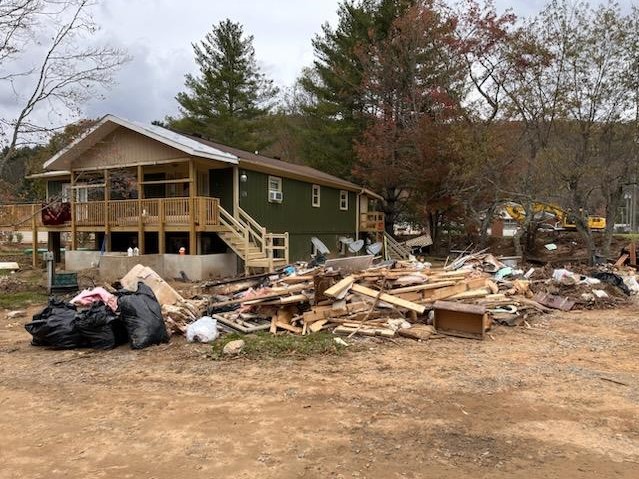
Witnessing the aftermath in Boone, North Carolina, a town in the Blue Ridge Mountains that experienced immense damage from rains, flooding, winds, and a tornado, was a glaring reality check. Mark explained that “furniture and supplies were strewn and stacked outside homes, painting a grim picture of the devastation.”
View of a Boone, North Carolina, neighborhood devastated by the aftermath of Hurricane Heleneprovided a somber illustration of the disaster’s magnitude. (Photo submitted)
He further noted the widespread impact on the landscape. “The water that rushed down from the mountains carved out huge chunks of the countryside and sometimes completely washed the roads out, requiring us to travel on temporary gravel paths. This is an enormous effort that will take years to get the roads and infrastructure repaired.”
View of a Boone, North Carolina, neighborhood devastated by the aftermath of Hurricane Helene. Temporary gravel paths replaced washed out roads. (Photo submitted)
When asked about his chance to get some well-deserved rest following the deployment, Mark agreed, emphasizing the comfort he anticipated upon returning to his own bed.
“It worked out for me to go and help,” Mark said. “My experience reiterated the critical role the Red Cross plays in these relief operations in responding to natural disasters.”
Mark Capaldini is a board member of the American Red Cross Twin Cities Chapter of the Minnesota and Dakotas Region.
















 American Red Cross Minnesota and Dakotas Region