Red Cross volunteer Mark Capaldini from the Twin Cities Chapter of the Minnesota and Dakotas Region recently returned from a 10-day deployment to North and South Carolina. He helped in food operations, driving an emergency response vehicle (ERV) to deliver meals to the communities affected by the wrath of Hurricane Helene. Mark also helped in the distribution of emergency relief supplies in these communities. This was his third such national deployment.
Mark Capaldini, pictured at the Minneapolis-St. Paul Airport as he starts a 10-day deployment to North and South Carolina for Hurricane Helene disaster relief. (Photo submitted)
For the first six days Mark worked with an ERV driving partner, Jeff Wick from Texas. On one of those days Mark and Jeff travelled into a severely impacted community to distribute food and teamed up with two more Red Cross volunteers to package and distribute hot meals.
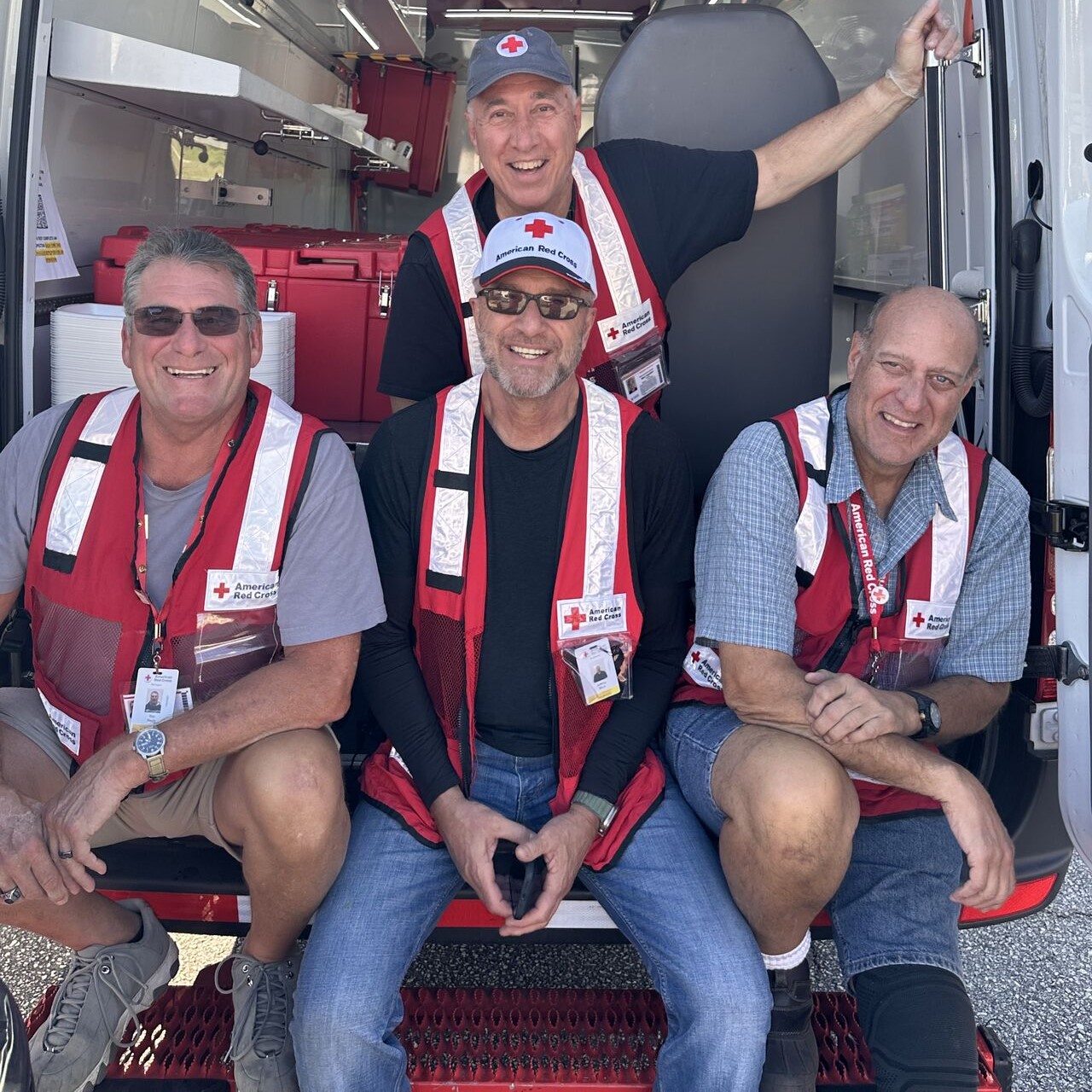
Mark Capaldini pictured helping with meal distribution with fellow Red Cross volunteers Tim Perry, Greg Purkey, and Jeff Wick in a small South Carolina town — Ware Shoals on 10/11/2024. (Photo submitted)
“We were thanked almost daily for being there and helping out,” Mark humbly expressed. “Frequently, these expressions of gratitude, often paired with a ‘bless you,’ originated from receivers of our food and clean-up kits. We were even thanked by passersby at local gas stations and fast-food locations.”
Mark’s assignment then shifted to delivering emergency relief supplies to some of the communities hardest hit.
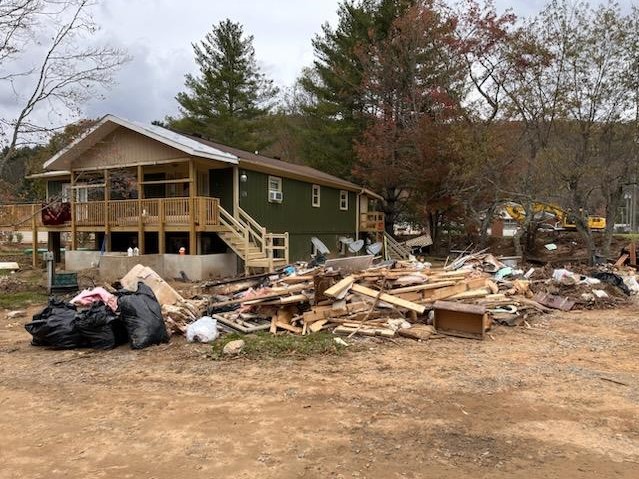
Witnessing the aftermath in Boone, North Carolina, a town in the Blue Ridge Mountains that experienced immense damage from rains, flooding, winds, and a tornado, was a glaring reality check. Mark explained that “furniture and supplies were strewn and stacked outside homes, painting a grim picture of the devastation.”
View of a Boone, North Carolina, neighborhood devastated by the aftermath of Hurricane Heleneprovided a somber illustration of the disaster’s magnitude. (Photo submitted)
He further noted the widespread impact on the landscape. “The water that rushed down from the mountains carved out huge chunks of the countryside and sometimes completely washed the roads out, requiring us to travel on temporary gravel paths. This is an enormous effort that will take years to get the roads and infrastructure repaired.”
View of a Boone, North Carolina, neighborhood devastated by the aftermath of Hurricane Helene. Temporary gravel paths replaced washed out roads. (Photo submitted)
When asked about his chance to get some well-deserved rest following the deployment, Mark agreed, emphasizing the comfort he anticipated upon returning to his own bed.
“It worked out for me to go and help,” Mark said. “My experience reiterated the critical role the Red Cross plays in these relief operations in responding to natural disasters.”
Mark Capaldini is a board member of the American Red Cross Twin Cities Chapter of the Minnesota and Dakotas Region.
Red Cross Disaster Mental Health volunteer, Mary Parker, shares her experience
Disasters are traumatic events. And while many Red Cross volunteers are trained in myriad roles, such as staffing shelters, handing out cleanup kits, driving box trucks and the like, there are also volunteers trained specifically to support the emotional health of individuals and families affected.
Mary Parker is one such volunteer, “We’re all trained in the mental health field, either currently working or done working. This is just our passion, it’s part of our DNA— to help people.”
Red Cross Disaster Mental Health Volunteer Mary Parker from Side Lake, MN at a disaster training conference. Volunteers participate in free training specific to their position.
A Red Cross volunteer for six years, Mary is currently helping people impacted by flooding in Minnesota and South Dakota. Her role is to manage Disaster Mental Health (DMH) services for the response. To reach more people, she says they’ve embedded with other service teams.
“Mental Health has been accompanying crews as they deliver emergency supplies and cleanup kits, talking to clients, providing as much emotional support as we can…We also went out with the damage assessors. As they were going out to assess damage, we did some ride-alongs to talk to people in real time.”
Mary monitors the pulse of the Red Cross relief effort, keen to tap any opportunity that will ensure a Disaster Mental Health presence, “Basically, any activity that’s going on, if I have a mental health provider available, they go. That way there’s more good face-to-face interaction. It’s a good way to determine if we need to do a follow-up call with them.”
Mary continued, “The DMH role really is to be able to listen to their story and have someone to hear their hardships and struggles. We validate their hardships, give them a hug if they need one, remind them that they are resilient, and offer compassion and empathy. We’ve been at fixed sites, we’ve been on the [emergency response] vehicles, we’ve also had DMH at the shelters and alongside caseworkers at resource centers.”
Mary Parker sharing her experiences with fellow Red Cross volunteers at a recent volunteer event.
The Red Cross hosted several resource centers for individuals displaced by recent flooding in Minnesota and South Dakota where trained Red Cross volunteers can open recovery casework for those whose homes sustained major damage or were destroyed. “We’re coordinating health services, mental health and spiritual care, so at least one if not more have been represented at each site.”
In addition to standard Red Cross disaster assistance, individuals and families may of course request to speak with a disaster health, spiritual health, or mental health volunteer about their needs.
“It’s what we do!”
Resources Every eight minutes, the Red Cross responds to a disaster somewhere in the United States. Often it’s a single family home fire. Sometimes it’s a larger disaster like a flood or a tornado. Homes, which are supposed to be places of comfort and stability, can be destroyed, and with them that sense of comfort and stability can be turned on its head at a moment’s notice.
As the physical and emotional impacts of this disaster come into sharper focus for those affected, Red Cross caseworkers and mental health volunteers are on the front lines, providing one-on-one support to individuals and families. Their unwavering commitment helps address the evolving needs of residents during this challenging time.
The Red Cross encourages people to remember to take care themselves, their loved ones, and neighbors:
Support Each Other: In difficult times, it’s crucial for people to lean on one another. Reach out to friends, family, and neighbors—your collective strength makes a difference.
Be Patient: Floods can evoke a range of emotions and reactions. It’s okay to feel worried or drained. Give yourself the grace to process these feelings.
Children’s Needs: Traumatic events impact children differently than adults. Sometimes, their worries manifest in behavior rather than words. Be attuned to their needs and emotions.
If you or someone you know requires assistance, don’t hesitate to contact the free 24/7 multilingual Disaster Distress Helpline at 1-800-985-5990. They’re there to provide support and guidance during challenging times.
Volunteers Needed Do you have a background as a current or former licensed mental health practitioner? Looking for a unique and much needed way to help your community in times of disaster? Consider joining the Disaster Health Services team! Learn more here.
Story by American Red Cross Volunteer Nate Russell.
“We make a good team after 45 years of marriage,” chuckled Jackie, a Red Cross volunteer who recently journeyed to Sioux Falls with her husband Rick to distribute essential disaster relief items to people affected by flooding. “It’s a great way to spend time together – Rick’s the driver, and I’m the navigator.”
Rick and Jackie Fredricksen loading disaster relief supplies unto a truck at the Red Cross building Minneapolis for transport to the Sioux Falls area June 27, 2024. Photo: Lynette Nyman/American Red Cross
The husband and wife duo, from Long Lake, MN, joined the Red Cross family last August after they both bid farewell to working life. A former volunteer firefighter, Rick, was eager to keep serving the community so helping with Sound the Alarm events seemed a fantastic place to start. “We once made an alarm installation at a deaf person’s house,” shared Rick. “With the help of another volunteer’s sign language skills, we were able to ensure her home was safer. We were so thrilled about it; we exchanged high-fives! It was truly special.”
This past December, Rick happily helped train fellow disaster team members in Houston, TX and even spent a couple of weeks there in May assisting those impacted by flooding and tornadoes. In the meantime, Jackie was finalizing her own training. “As volunteers, we’re truly embraced by the Red Cross family,” said Rick. “You develop friendships with fellow volunteers – I still get friendly check-in messages from time to time – recently a photo from two volunteers that I deployed with that wanted to say hello.”
Last week, was their first Red Cross deployment together.
Jackie and Rick Fredricksen ready to distribute disaster relief supplies including clean up kits in South Dakota. Photo: Turner County South Dakota Emergency Management.
“Hearing people’s heartfelt stories while they were picking up supplies was so touching,” said Jackie. “Just knowing that we could help them a little while they’re going through so much – they were so appreciative of the Red Cross being there.”
Ricks adds, “People are so resilient. We met a young woman who lived on a farm – they thought they were going to have a bumper crop this year but now have lost everything, but she still had a positive outlook. Or another woman who had skin cancer and was going through treatment – but remained hopeful that things would get better.”
Their Sioux Falls deployment wrapped up on Sunday when the last person came to pick up supplies. “We all signed the top of the clean-up kit!”
When asked about retirement and volunteering with the Red Cross, they both agreed, “We recommend it! It’s so rewarding to meet different people and other Red Cross team members.”
Red Cross volunteer team, including Jackie and Rick Fredricksen, meet Mark, a local hero who stepped up to assist not just himself, but also a neighbor impacted by the recent floods. Photo submitted.
“It gives you another level of energy and positive feelings that you can help,” said Jackie. “There’re so many different ways to be involved with the Red Cross – there’s something for everybody!
Rick added, “It’s a great opportunity to meet new people and make new friends. I feel blessed that Jackie and I get to share this journey together. We return home inspired, exchanging stories, and praying for brighter days for those we’ve met.”
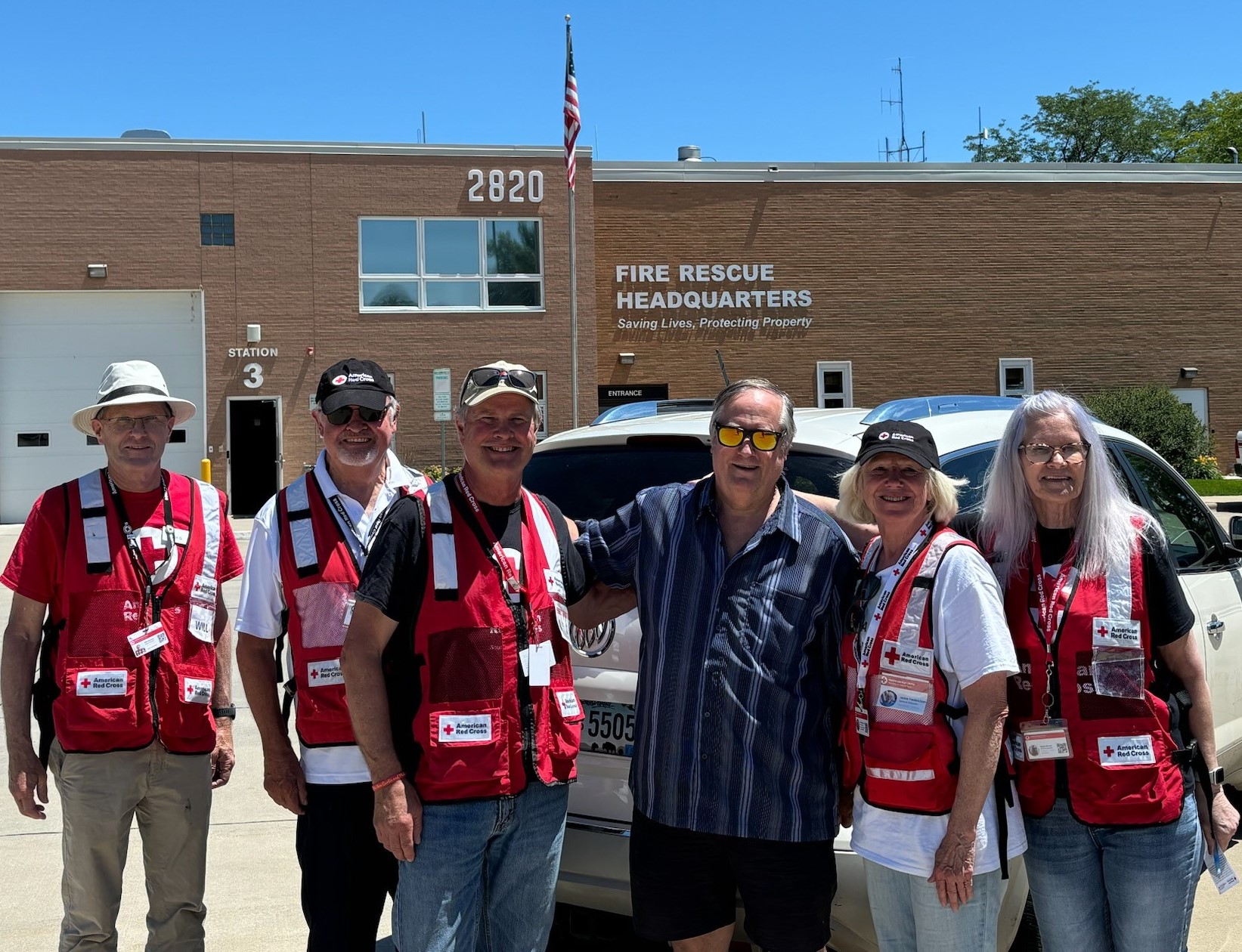
Jackie and Rick Fredrickson with fellow Red Cross disaster volunteer Willis Gravning.
Our work is possible because of trained volunteers like Rick and Jackie. Join our volunteer team – to find a role that works for you, visit RedCross.org/GiveTime.
On another rainy day in Waterville, Minnesota, Nona Ose stood in her family room and pointed to her flooded garden, planted more than 20 years ago in memory of her husband and son. “It makes me happy and other people too.”
Nona Ose points to flood waters still lingering in her backyard garden, Waterville, Minnesota, June 27, 2024. Photo: Lynette Nyman/American Red Cross
Proud of her gardens – Nona was once a florist, among other things – her heart ached to see her work threatened because of devastating flooding. “The water kept creeping up until there was water surrounding my house,” Nona explained. “There were even carp swimming around in my backyard and garden. I’m happy everything has gone down little by little.”
Nona, now 88 years old, grew up on a farm near Waterville and has lived in the same home for more than 60 years. She has navigated through adversity with grace. But this, she said, is scary.
Red Cross responder Sue Thesenga listens to Nona reflect on the flooding in Waterville, Minnesota. Photo: Lynette Nyman/American Red Cross
“It’s never flooded this bad.” When she compared the flooding that happened in 1965 to this flooding, she said, “it was nothing like this.” And, in 2018, she remembers a tornado that uprooted trees, several falling on her house.
Nona is sad about some of her belongings, like a Christmas tree now floating in her water-filled garage. But she’s happy her Christmas village was spared as this year she never put it in storage.
The street near Nona’s home in Waterville remains covered with flood water, June 27, 2024. Photo credit: Lynette Nyman/American Red Cross
Older adults like Nona often are the most vulnerable when disasters strike. Mobility, isolation, and other physical and mental can present different challenges for seniors when people need to move fast and reach safety during a disaster and even after when the long road of recovery begins.
In Nona’s case, her next door neighbors rose to the occasion, proving the power of community support. “They’ve been wonderful! They’ve helped me with things like getting groceries.” They helped with sandbagging and even remembered to pick up a Red Cross cleanup kit for her.
On June 27, outside Waterville’s city hall, Red Cross volunteers distributed relief supplies for people from Waterville, a town of around 1,700. People drove to the site and stopped to pick up rakes, shovels, gloves, garbage bags, and other flood relief supplies, including the kits.
Nona Ose shares a hug with Red Cross responder Sue Thesenga, Waterville, Minnesota, June 27, 2024. Photo: Lynette Nyman/American Red Cross
Nona displays strength and resiliency that is truly inspiring. While describing the rising waters that was surrounding her home, she musters a smile. “I guess I’m tough.” She’ll use the cleanup kit in the basement where she winters flowers from her beloved garden.
“I feel wonderful that the Red Cross helps,” said Nona.
After nearly six decades of volunteering for the American Red Cross, Cindy Anderson from Northfield, Minnesota, is passing the baton. When asked why now, Cindy, 90, said, “It’s time for a change. My mind is good, but my body is feeling its age – that pretty much sums it up!”
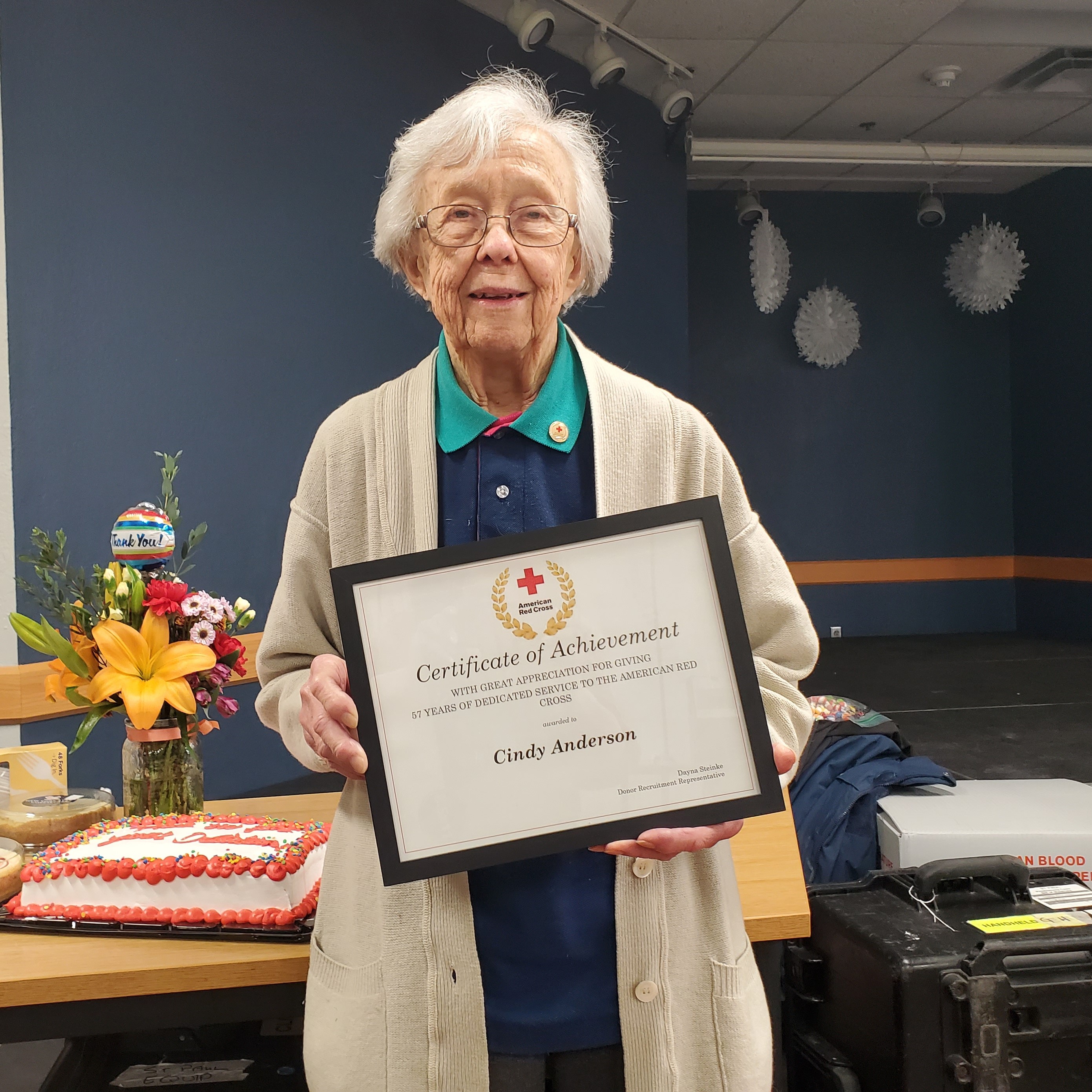
Cindy Anderson celebrates 57 years of volunteering with the Red Cross!
Not many people can say they’ve been with an organization for nearly 60 years, but Cindy can.
Recruited as a Red Cross volunteer in 1967 when she first moved to Northfield, she has since helped organize blood drives and recruit volunteers. With a background in pediatric nursing, she found a fit as a nurse volunteer at Red Cross blood drives, taking donors’ vital statistics like blood pressure and temperature. She continued to recruit other nurse volunteers until the Red Cross transitioned this role to a staff position.
Cindy’s role within the Red Cross evolved over the years, but one constant remained – the need for blood and volunteers. “Blood is always needed,” Cindy emphasizes. What began as two blood drives a year turned into 16 blood drives at multiple Northfield locations, including Culver’s, the Northfield Ballroom, various churches, and FiftyNorth Senior Center. “My husband has been encouraging me to step back for a couple of years,” Cindy shares with a giggle. “It’s finally time.”
The blood drives Cindy has helped organize have undoubtedly been responsible for thousands of blood donations helping countless patients in need of lifesaving blood products. One of her most memorable experiences was meeting a local blood donor whose wife and daughter both relied on monthly infusions that provided antibodies from the blood of healthy donors. “It’s so important. Someone right in our community relies heavily on blood donation every month,” she says.
When asked about the number of blood drives she’s helped organize and the number of volunteers she’s recruited, she chuckled and said, “I don’t want to take the time to figure that out!”
Cindy with fellow volunteers Sandy and Merilyn (Pictured left to right: Sandy Pieri, Cindy Anderson, and Merilyn Calcutt)
Merilyn Calcutt, who has served as a greeter for blood drives at FortyNorth and worked alongside Cindy for the past 12 years since her own retirement, is now taking over as the blood program leader for that location. “It literally took three people to replace Cindy,” she exclaimed.
Sandy Pieri, another Red Cross disaster and blood drive volunteer, seconds that. “Cindy will be missed – it took three of us to cover what she did.”
But Cindy humbly replies, “It really doesn’t seem like much.”
Cindy’s third replacement, Barb Garbowski, will take over the drives at Culver’s. “Culver’s is a great partner and helps maintain a strong donor base in Northfield because were able to hold blood drives there every month,” Cindy adds. “And the ‘pint for a pint’ coupon is such a sweet way to thank the blood donors.”
Cindy pictured with blood donor and long-time friend, Barbara Swartwoudt.
Barbara Swartwoudt, a blood donor, and long-time friend of Cindy’s, agrees. “We will miss Cindy at the blood drives – she was always pleasant and welcoming.”
Cindy and her husband recently sold their home and moved to an assisted living facility in Northfield. Cindy looks forward to doing crossword puzzles and reading more now that she’ll have some extra time on her hands. She also hopes to spend more time with her four children, four grandchildren, and five great-grandsons.
“I will miss the people,” says Cindy.
“We’re so grateful for Cindy’s 57 years of service with the Red Cross,” says Dayna Steinke, donor recruitment account manager, Red Cross Minnesota and Dakotas Region. “Cindy is an exceptionally generous person. Without dedicated volunteers like Cindy, we would not be able to fulfill our lifesaving mission.”
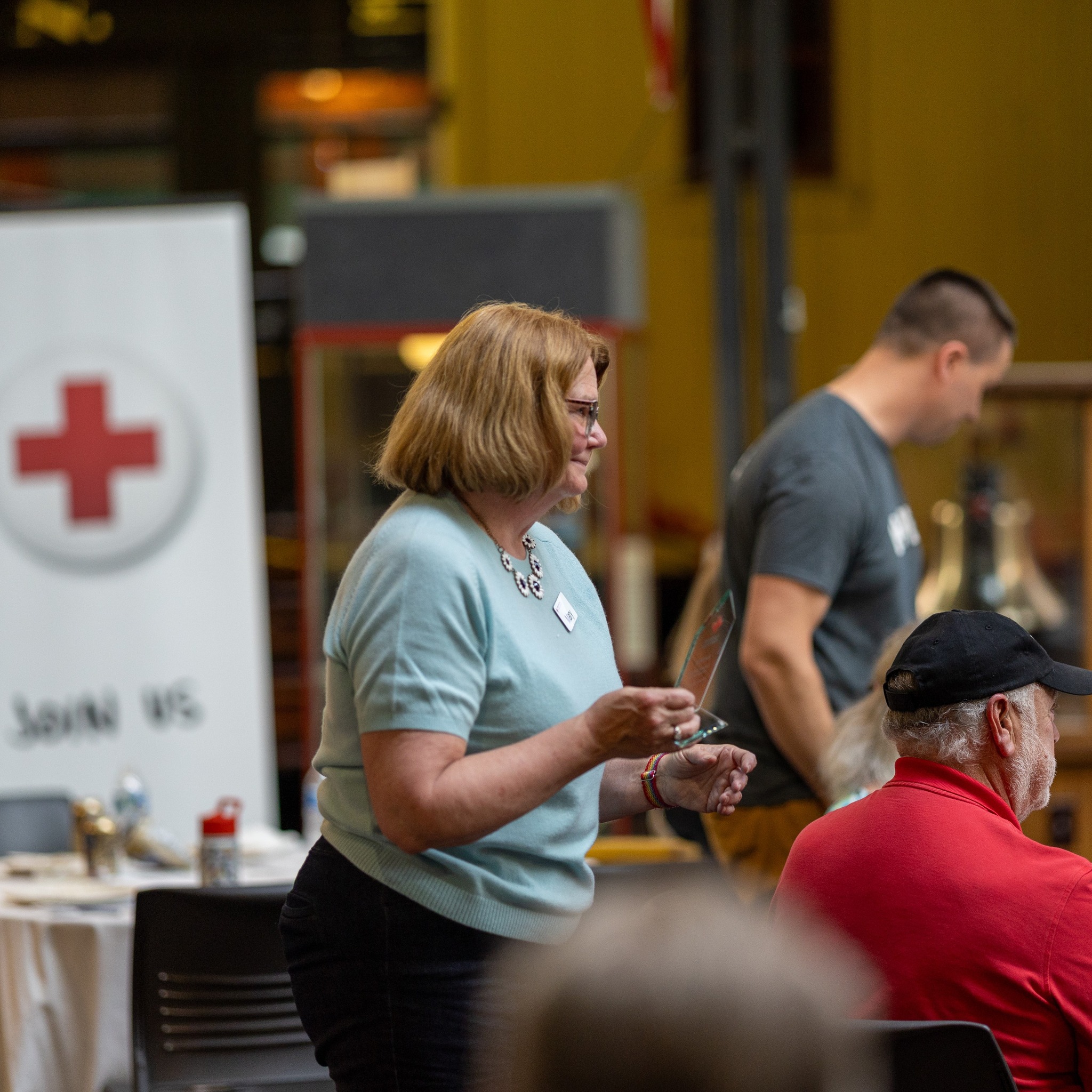
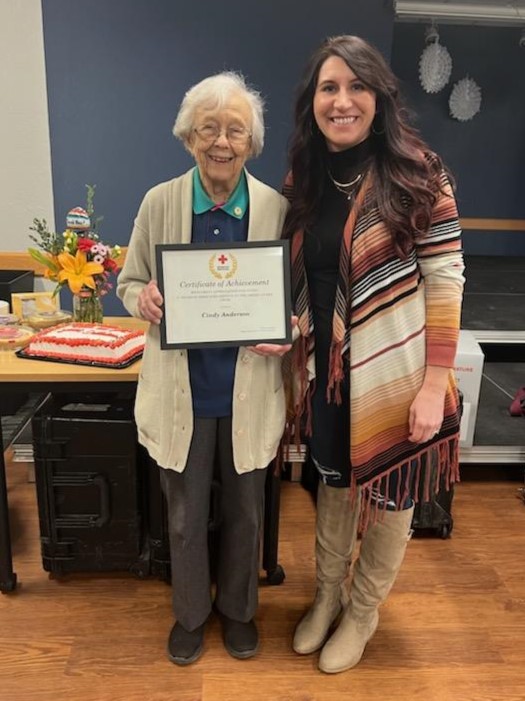
Cindy is thanked for her years of service by Dayna Steinke, donor recruitment account manager, at the blood drive held at FiftyNorth Senior Center on Feb. 21, 2024.
Join us in sending Cindy off with warm wishes and immense gratitude for her dedicated years of service!
Be like Cindy! You can support the lifesaving mission of the Red Cross by becoming a blood drive volunteer. Blood donor ambassadors help greet, check-in, and thank blood donors to ensure they have a positive donation experience. Visit RedCross.org/GiveTime to sign up today!
Make an appointment to give blood or platelets now by using the Red Cross Blood Donor App, visiting RedCrossBlood.org, or calling 1-800-RED CROSS (1-800-733-2767).
Story by Sue Thesenga, Communications Manager, Minnesota and Dakotas Region.
As we step into a new year, many of us are looking for ways to make a positive impact in our lives and the lives of others. The American Red Cross offers a variety of quick and meaningful ways to make a difference. Here are five resolutions you can accomplish in one hour or less, not only benefiting those in need but also enhancing your own well-being.
Cassie and Ben, parents of 3-year-old Oliver who is battling kidney cancer, recently rolled up a sleeve at a blood drive held in their son’s honor. Oliver has needed multiple blood transfusions during his treatment so they are helping pay it forward. Every donation helps patients like Oliver.
Donate Blood One of the most significant contributions you can make is donating blood – and it’s simple. In just about one hour, you can make a real difference in the lives of patients requiring life-saving transfusions. It may be the only resolution that includescookies. Schedule on our free appand follow your blood donation’s journey every step of the way as it makes its way to a hospital to help patients in need.
Learn Hands-Only CPR Learning hands-only CPR is a quick, vital skill that could save a life. The Red Cross offers online resources and local classes that can teach you this life-saving technique in under 30 minutes. By knowing how to perform hands-only CPR, you can help keep a person alive until professional help arrives. Bonus: have fun practicing the rhythm by checking out these “Next Gen Life Beats” friends at the Australian Red Cross. And yes, it includes a Taylor Swift song.
Check Smoke Alarms and Practice an Escape Plan Ensuring your home is prepared for emergencies is crucial. Take a few minutes to test your smoke alarms and replace any batteries if needed. Then, spend some time with those you live with drafting and practicing a home escape plan. Knowing what to do in the event of a fire can significantly increase your chances of safely escaping. And you probably haven’t checked your smoke alarms since last time you burnt pizza. Check out how-to videos and other resources at SoundTheAlarm.org/MNDAKS.
Find your Fit, Take the Volunteer Quiz The American Red Cross depends on volunteers to carry out its humanitarian work. In less than an hour, you can explore various opportunities online and sign up for something that resonates with your skills and interests. Whether it’s assisting at a local blood drive, helping with disaster response, or supporting military families, your time and effort can make a huge impact. Punch in your zip, take a our quick quiz and we’ll match you up with cool opportunities near you.
Make a Gift in Someone’s Honor Making a charitable donation in honor of a loved one is a meaningful way to recognize special occasions. It’s a simple process that takes just a few minutes online. Your gift can support various Red Cross initiatives, from disaster relief to supporting military families, and it’s a beautiful way to spread kindness and compassion. Bonus, warm and fuzzy feelings for you and them. Visit RedCross.org/MNDAKS to make a gift.
As you consider your resolutions for the year, remember that even the smallest acts can have a significant impact. By dedicating an hour or less to any of these Red Cross activities, you’re not only helping others but also fostering your own health and happiness*.
Here’s to a year filled with kindness, compassion, and community support!
*From the Mayo Clinic Health System, “Kindness has been shown to. increase self-esteem, empathy and compassion, and improve mood. It can decrease blood pressure and cortisol, a hormone directly correlated with stress levels. People who give of themselves in a balanced way also tend to be healthier and live longer.”
“I’ve loved every minute of it,” exclaims Nancy McKenney who has been a Red Cross volunteer for 30 years.
McKenney, from Onida, South Dakota, became a volunteer in 1992 when a friend of hers from Pierre encouraged her to look into it. She joined because she “wanted to help people.”
Since then, McKenney has volunteered on more than 100 local and national disasters – including home fires, floods, wildfires, tornadoes and hurricanes – continuing her quest to help others.
Nancy McKenney – pictured
“We’re so grateful for Nancy’s 30 years of service with the Red Cross,” says Nick Cluppert, Senior Disaster Program Manager, Red Cross Minnesota and Dakotas Region. “Without dedicated volunteers like Nancy, we would not be able to fulfill our mission. She gives so much of her time and is truly a gift to our organization and the people she helps!”
Nick Cluppert, Senior Disaster Program Manager and Nancy McKenney pictured at a volunteer recognition event held in honor of Nancy’s 30 years of volunteer service, Nov. 14, 2022, in Pierre, South Dakota.
One of McKenney’s most memorable experiences was right after the 9/11 attacks when she was volunteering at a satellite office of the Pentagon. A woman who had lost her mother in the attacks approached her and asked if she had time to talk. “She’d talk and I’d listen – I think she had survivor’s remorse and she was a basket case,” McKenney recalls. “I really think I made a difference and I hope that she was able to get through it.”
Being deployed to Canada in August 2017 to help disaster relief efforts following a wildfire in was McKenney’s favorite deployment with the Red Cross. “I had my passport, so I said sure I’d go.” She helped at the front desk of the Red Cross shelter where she directed people, so they received the services they needed. “The countryside was so beautiful and the people where so gracious and glad to have us there,” she recalls. “It was a wonderful experience – you can’t imagine the smiles and gratefulness of all the of the people we helped.”
Nancy McKenney receiving an appreciation plaque for 30 years of volunteer service from Richard Smith, Executive Director, Red Cross serving central and western South Dakota.
“I’ve gone out about four or five times a year,” says McKenney. Last year alone she was in Texas, New Mexico and New Orleans for weeks at a time. “This year it hasn’t worked out because of some health issues and I’m staying closer to home.”
McKenney continues to make her mark. Although for now she’s no longer going across the country to help, she’s putting her energy and compassion to good use right in South Dakota. She’s meeting with Emergency Managers across the state to keep relationships strong and establish locations for Red Cross shelters if needed in the future. And she’s working with local fire departments to make sure they have working smoke alarms to install in homes without them.
“I enjoy staying busy and talking to everyone – if I had to stay cooped up behind four walls I’d go out of my mind,” McKenney adamantly declares. “I need to do something to help people. I can just imagine all my belongings on the sidewalk after a home fire and not have anyone to turn to. I know I need to help them a little bit.”
She always finds ways to talk about the Red Cross including recruiting others to join her. “If you’re a people person the Red Cross offers lots of volunteer opportunities. I’ve made a lot of friends through the Red Cross – we’re one big family!”
Nancy McKenney celebrating 30 years of volunteering with the American Red Cross.
“I love what I do! Some of us are getting old. We need some young blood – it would make my day if I inspired someone to join the Red Cross!”
Whether you’re a people person like Nancy or prefer to work behind the scenes, the Red Cross has volunteer opportunities for you. Visit redcross.org/givetime to find your fit.
“Well, I’m doing ok, now. At least the water isn’t in the trailer,” said Darlene Tomczak, referring to the Rainy Lake Basin flooding that started in May. “But the skirting, insulation and ductwork are all ruined.”
Originally from Canada, Darlene moved to the United States in ’64, for – you guessed it – love. She and her late husband survived their share of hardships over the years, including other floods, but “this one is by far the worst – just devastating – worse than 2014,” she added.
“This time the water came up fast. I told the kids, we gotta get you out now or we won’t get you out,” Darlene said referring to her daughters and granddaughters who were visiting her at the time.
View of Darlene Tomczak’s home, Rainy Lake, MN. She and her family had to be rescued from rising flood waters via boat. May 2022. Submitted photo.
Her daughter and sons rescued Darlene from Rainy Lake via boat. “We were lucky,” she said. In the following weeks, she stayed with her daughter and extended family, waiting on mother nature.
Flood waters receded slowly, revealing not only mud and sand, but mementos of drier days. Water pumps drone on keeping additional damage at bay as people watch their electric bills rise like flood waters.
Bill Parker, from Side Lake, MN, is one of the many Red Cross volunteers who helped with those so deeply affected by this disaster. Assessing their immediate needs, including safe shelter, help with food and health services, cleanup supplies, and emotional support, he determines what services Red Cross can provide and what our community partners can do.
Darlene shares a smile outside her home. Submitted photo.
“My jaw dropped open and I almost lost my teeth!” chuckled Darlene, referring to the support from the Red Cross. “But they probably would’ve helped me with that too.”
Part of the Red Cross recovery process includes getting money into the hands of disaster victims as soon as possible to support their specific needs. In Darlene’s case, the funds came at the perfect time – helping her pay the electric bill for her water pumps running 24 hours a day. “My jaw dropped open and I almost lost my teeth!” chuckled Darlene, referring to support from the Red Cross. “But they probably would’ve helped me with that too.”
Darlene is just one of the hundreds of people Red Cross disaster responders continue to help as they wait for the flood waters to finally go down.
Since the Rainy Lake Basin waters began to rise in May, more than 70 Red Cross disaster responders (+90% volunteers) have supported sandbaggers, community members and people directly impacted by the floods, including:
32,527 snacks and beverages
1,120 physical and emotional health services
150 residents impacted by flooding received direct financial assistance
1,403 meals delivered from partners at the Salvation Army
1,220 cleanup kits comfort kits and emergency supplies
“Red Cross volunteers were grateful to help people like Darlene affected by these historic floods,” said Dan Williams, Executive Director for the American Red Cross Northern Minnesota Chapter. “We always need more people like all of the volunteers who helped with this response to raise their hand to help our neighbors in need,” he added.
“The support from local Government, business community and response partners was incredible. Huge thanks to the International Falls Coca-Cola distributor, the Virginia Walmart store, Cub Foods and the United Way of Northeastern Minnesota (among many others) for their amazing nimbleness and generosity.”
Military veterans have a critical role in their local communities, often times continuing to serve in both small and large ways.
Take the example of David Schoeneck who uses skills he learned early in his career to continue serving through the American Red Cross. In September 1964, while a freshman in college, he began working as a reporter and photographer for his hometown newspaper – the New Ulm Daily Journal in southern Minnesota. Four and a half years later, after graduating from Minnesota State University in Mankato, he was drafted into the U.S. Army.
He served a tour of duty with the 4th Infantry Division in the Central Highlands of South Vietnam, first as a combat correspondent and later as editor of the Division’s weekly newspaper, The Ivy Leaf. He returned to the U.S. and was discharged in July 1970.
Veteran David (Dave) Schoeneck served a tour of duty with the 4th Infantry Division in the Central Highlands of South Vietnam. Submitted photo.
Back in civilian life, Schoeneck worked in public relations and communications as a manager and director for a number of Minnesota-based corporations. Upon retirement in 2002, he was approached by a long-time friend, David Therkelsen, who was serving as executive director of the Red Cross St. Paul Chapter.
“David explained to me that the Red Cross had very important public affairs activity during disasters, as well as on-going public affairs needs,” Schoeneck said. “I had been actively involved in community affairs as part of my work, and working with the Red Cross very much appealed to me.”
Since joining the Red Cross 20 years ago, Schoeneck has been involved in local public affairs responses, supporting countless home and apartment fires, floods in various parts of Minnesota, four tornado responses in the state and six national deployments. He has worked as a Red Cross public affairs service associate, supervisor or manager for Hurricanes Irene, Sandy, Mathew, Harvey and Florence, as well as during the eastern Washington state wildfires.
Since joining the Red Cross 20 years ago, David Schoeneck has been involved in countless national and local public affairs responses during disasters. Submitted photo.
In 2015, Schoeneck was invited to join the Red Cross National Advanced Public Affairs Team (APAT). More recently, he was selected to join the Red Cross North Central Division’s Disaster Resource Management Team (DRMT), which provides qualified and experienced management teams to supplement local resources when larger scale disasters occur.
“The fundamental principles of the Red Cross – humanity, impartiality, neutrality, independence, voluntary service, unity and universality – appealed to me,” Schoeneck said. “It fit very well with my belief that everyone needs to give back to the community and serve others. Working with the Red Cross also allows me to use the skills I have developed over many years in a very positive way.”
“The Red Cross is an amazing organization. It aids victims of home fires and other smaller disasters on a local level, but also comes together when needed to answer the call for large scale disasters such as Hurricanes Florence and Michael,” Schoeneck noted. “In addition to disaster services, the Red Cross has a long-standing role in providing service to our Armed Forces.”
David Schoeneck – Red Cross volunteer for 20 years. Submitted photo.
“I have met and been privileged to work with wonderful people from all over the United States, Puerto Rico, Mexico, and Canada who, as part of the Red Cross, respond to disasters. Their spirit of service and dedication is very inspiring. Many of the Red Cross volunteers I have met are also veterans who continue to serve their country and community, long after their active military duty ended.”
A version of this story originally was published on the Red Cross Chat. To learn more about Red Cross volunteer opportunities, click here.












 American Red Cross Minnesota and Dakotas Region