Partnership in pictures: Women in manufacturing

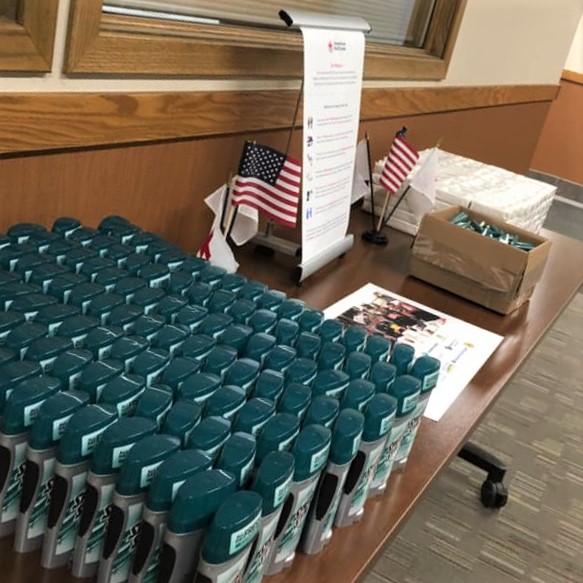
On July 23, 2019, at the Women in Manufacturing conference in Cloquet, women made hygiene kits that American Red Cross volunteers will distribute to people in need of humanitarian aid. Photo by Jamie Lund with Pine Journal and published with permission.

USG Corporation hosted more than 50 women during the conference, which was held July 23 and 24. Part of the program included a day of service activity, which focused on supporting the Red Cross mission to prevent and alleviate human suffering in the face of emergencies.

To support service day, USG donated the kit supplies, including pillowcases, that turned into 250 comfort and hygiene kits. The kits will help at-risk military veterans and families affected by disasters, mostly home fires in northern Minnesota and northwest Wisconsin.

The service day event showed great leadership, teamwork and camaraderie. Special thanks go to local Red Cross volunteers Kyra, Penny, Mattie, Diane and Sophia, as well as Northern Minnesota Red Cross executive director Dan Williams.

For more about the conference, read this Pine Journal article by Jamie Lund. Click here to help the Red Cross provide shelter, food, and other relief during disasters. To learn more about Red Cross support for military families and veterans, click here.

Unless otherwise noted, all photos are provided by Dan Williams with the American Red Cross Minnesota Region. Thanks Dan!

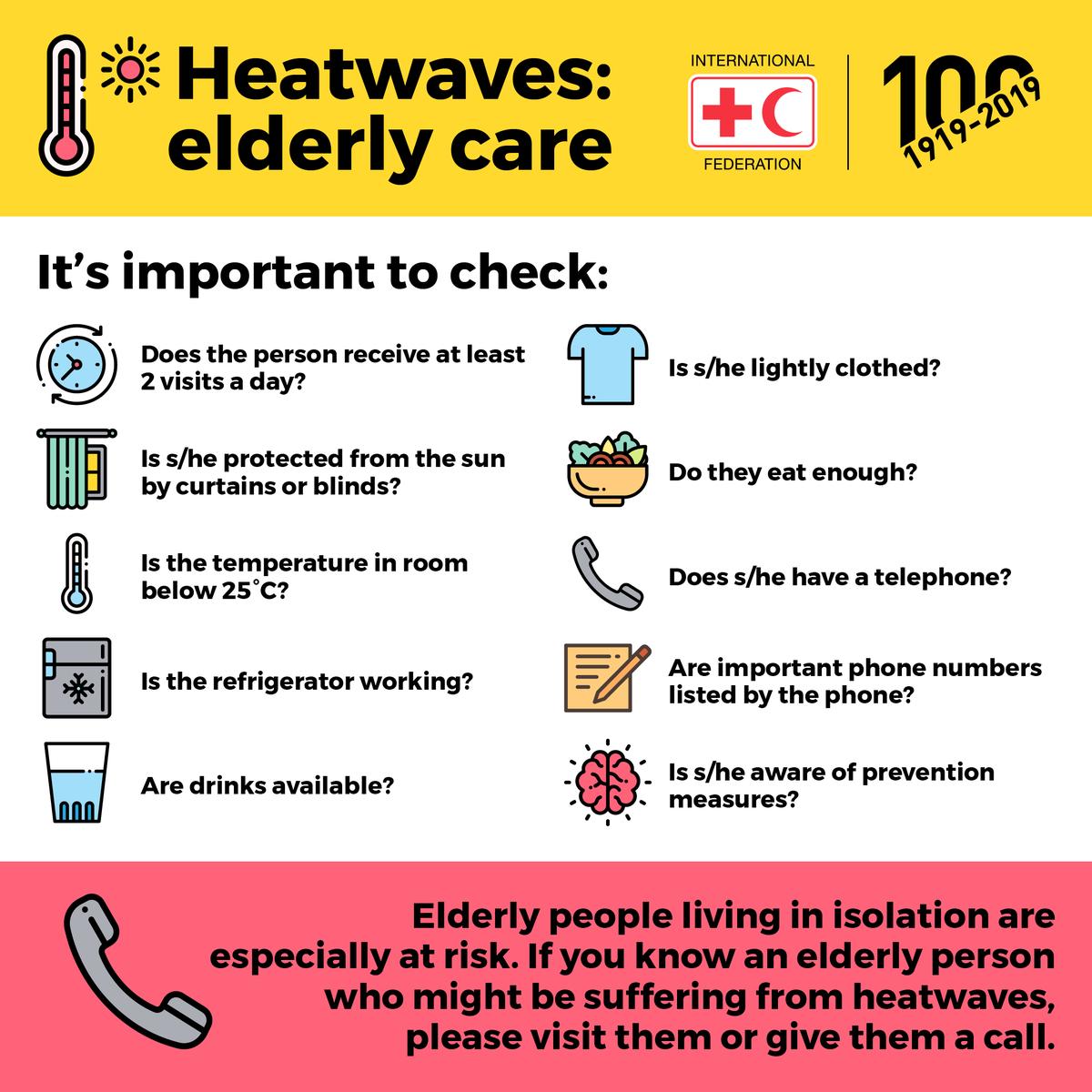
Infographics to share : Heatwave

Hot weather safety tips for you, and for your to share with others, especially your elderly friends, neighbors and family members.

Many thanks to the International Federation of Red Cross and Red Crescent Societies (IFRC) for the helpful tips and easy-to-share infographics.

Stay cool!

Responding to disasters: “Flexible is the word”

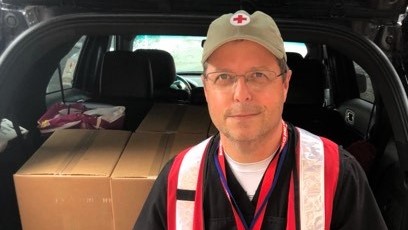
Rick’s got to get on a plane soon. So, let’s get right to this. Rick Emanuel (in the video below) is going south to support people affected by the powerful storm approaching the Gulf Coast.

This will be Rick’s third deployment to a major disaster response in just over a year. His first, last fall, was Hurricane Florence, where he worked at a shelter in Havelock, North Carolina. “Feeding, setting up cots, making sure everybody has what they need,” he says were the main things he did in his volunteer role supporting shelter operations for the American Red Cross. “And getting people to the right resources when they’re in crisis.”

Rick Emanuel

In North Carolina, the water rose so fast in some areas that first responders, national guard soldiers and community helpers were bringing in people, especially the elderly, in massive dump trucks because those vehicles could reach them through the flood waters. “They were bringing in people as fast as they could,” he says. Supplies arrived anytime and needed to be off-loaded as fast as possible. Sometimes this was in the middle of the night when volunteers like him might get some sleep. “That was the biggest part of the deal, finding down time.”

With this deployment to Louisiana he’s even more ready to help others because he knows that “flexible is the word” when it comes to providing disaster relief.

If you would like to support disasters big and small, including training and deploying volunteers like Rick, visit redcross.org/mn.

Story by Lynette Nyman/American Red Cross

Help replenish the blood supply

American Red Cross staff member Deshayla Tran finishes collecting a whole blood donation from Terry Smith, who has been regularly donating blood for the last five to 10 years. Amanda Romney/American Red Cross

Donors of all blood types, especially type O, are needed to help replenish the blood supply as the Red Cross faces an emergency need right now. Blood from generous volunteer donors helps families like the Jolliffes.

In February 2018, Meghan Jolliffe suffered an amniotic fluid embolism. During childbirth her heart stopped beating for 14 minutes resulting in the need for an emergency cesarean section. Her organs began to shut down, and her blood would not clot.

Meghan received nearly 100 units of blood within a seven-hour period during her procedures. The doctors were able to stop the bleeding and stabilize Meghan’s condition. Over the next several days, Meghan underwent five surgeries, dialysis and more to repair the damage to her body.

Type O negative red blood cells are kept in a Red Cross storage refrigerator before being distributed to a hospital. Type O negative is the universal blood type and what emergency room personnel reach for when there is no time to determine the blood type of patients in the most serious situations. Amanda Romney/American Red Cross

After her son Sullivan was delivered, he went without oxygen for seven minutes. Doctors performed a process called therapeutic hypothermia, or whole-body cooling, to preserve his neuro function, and he also received several units of blood.

In all, Meghan and Sullivan received 109 units of blood.

Meghan and Sully

“My family and I are forever grateful for the generosity of Red Cross volunteer blood donors,” says Meghan. “Donating blood is so important. You or a loved one may never need these lifesaving products, but I can assure you that someone, somewhere will.”

Please don’t wait to donate.  You can make an appointment now to give blood or platelets by downloading our free Blood Donor App, visiting RedCrossBlood.org or calling 1-800-RED CROSS (1-800-733-2767).

Thank you!

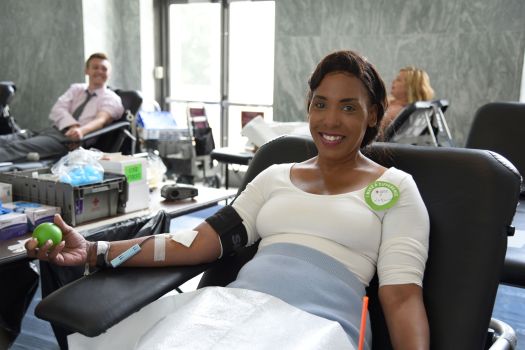
LaDeodra Drummond donates blood. Jeanette Ortiz-Osorio/American Red Cross

3 Things To Do Before Fourth of July Weekend

We’re thinking ahead, and we hope you will, too, because we have three things for you to do before the Fourth of July weekend arrives. So, let’s get started…

One: Download the Red Cross First Aid App 

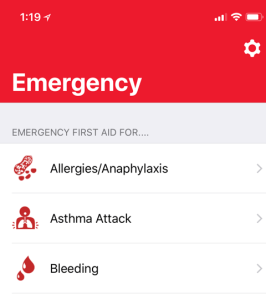
This free and helpful app for your smartphone gives you instant access to the most common first aid emergencies like cuts, burns, and eye injuries. The app is free. Download it now from the Apple App Store or Google Play. Or text GETFIRST to 90999.

Two: Brush Up On Fireworks Safety

Photo: Tony Webster, Portland, OR / Wikimedia Commons

The best way to enjoy fireworks is to attend a public fireworks show presented by professionals. Here are five safety steps for people setting fireworks off at home:

  1. Never give fireworks to small children, and always follow the instructions on the packaging.
  2. Keep a supply of water close by as a precaution.
  3. Make sure the person lighting fireworks always wears eye protection.
  4. Light only one firework at a time and never attempt to relight “a dud.”
  5. Never throw or point a firework toward people, animals, vehicles, structures or flammable materials.

Three: Prepare for Grilling Safely

Every year people are injured while using charcoal or gas grills. Here are several steps to safely cook up treats for the backyard barbecue:

  1. Always supervise a barbecue grill when in use.
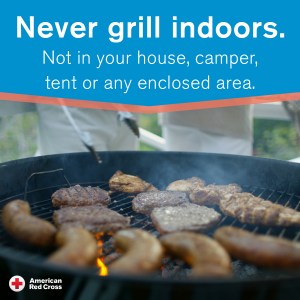
  2. Never grill indoors – not in the house, camper, tent, or any enclosed area.
  3. Make sure everyone, including the pets, stays away from the grill.
  4. Keep the grill out in the open, away from the house, the deck, tree branches, or anything that could catch fire.
  5. Use the long-handled tools especially made for cooking on the grill to keep the chef safe.

Have a fun and safe Fourth of July Weekend! 

Photo: Marko Kokic / American Red Cross


Responding to disasters: Opioid overdose has no boundary

September 13, 2018. Strong winds and rain from the outer bands of Hurricane Florence begin impacting the Cape Fear River and Wilmington, NC. Photo by Daniel Cima for the American Red Cross.

During Hurricane Florence, John Decker was not at the shelter in North Carolina the night a woman died from an opioid overdose in September of 2018.

But he heard about the death almost as soon as it happened because for one month, at the onset of the response, Decker was in North Carolina serving as Disaster Health Services chief for the Red Cross relief effort. The young woman who died was her mother’s care-taker, he recalls.

Decker is a Red Cross volunteer who responds to major disasters across the United States. When home in Minnesota, he’s a registered nurse. Now, after ten years with the Red Cross, he’s often at the front lines of providing disaster relief in shelters.

September 15, 2018. Red Cross shelter relief supplies at Farmville Middle School, NC. Photo by Adam Jennings for the American Red Cross.

That night in North Carolina their first concern, Decker says, was to support the young woman’s mother. Their second was to prevent more deaths. Decker connected with national Red Cross disaster leadership that was supporting field activities. Together, they set two immediate priorities: find naloxone and train shelter workers.

The CDC reports that around 130 people die from opioid overdose every day in the United States. During 2017, 47,600 people died from overdoses involving opioids. Those deaths were 68% of drug-related overdoses.

John Decker

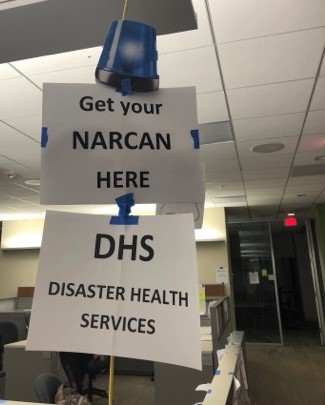
Decker found a local source for Narcan, one type of naloxone medicine that reverses overdose.  There were only a couple boxes. Not enough, he figured. Plus, they were expensive. Then, his phone rang.  On the line was a woman who worked with a relief partner. She had 2,500 – 3,000 doses. With help, Decker picked them up and got them distributed to more than 400 shelters.

The Red Cross and its partners supported more than 129,700 overnight stays for people displaced because of Hurricane Florence across North Carolina, South Carolina and Virginia. During Fiscal Year 2018, the Red Cross and its partners provided more than 1 million overnight shelter stays for people affected by disasters.

A sign at the Red Cross relief headquarters in North Carolina. Courtesy of John Decker.

Next up was teaching shelter workers the signs of opioid overdose and the steps to respond. Initially, some people resisted. They were comfortable delivering relief supplies, not giving someone a medicine requiring injection.  The training transformed their feelings and their skills. At first it’s scary, and then we learn, and then it’s nothing, Decker says. “It’s good to get rid of the mystery. It’s no more complicated than a kid’s Legos.”

September 17, 2018. The Red Cross shelter at the University of North Carolina Friday Center in Chapel Hill. Photo by Daniel Cima for the American Red Cross.

Since then, the Red Cross released an online class that helps people respond to opioid overdose emergencies. I took the course and learned a lot. It removed my anxiety and strengthened my confidence about helping someone during an opioid overdose emergency. Check out and take the class here. For a quick understanding of opioid overdose, watch this new video.

Story by Lynette Nyman for the American Red Cross Minnesota Region.

Six things to know before blood donation

Do you know that only 3 out of 100 Americans donate blood each year, but every two seconds someone in the U.S. needs blood? Here’s another surprise: blood donation can be super easy. Once you’re seated comfortably, the actual donation time takes only 8 to 10 minutes.  To help bring more ease for new and continuing donors, below are six things we’d like you to know before donating blood. 

  1. You do not need to know your blood type. A national survey conducted earlier this year for the Red Cross revealed that 54% of people believe they need to know their blood type to donate blood. Find more eye-popping results here.
  2. You should be well-hydrated. Blood has a lot of water. To promote a good flow during donation and to prevent dizziness during or after, we recommend drinking an extra 16 oz. of liquid before donating. Hydrate after, too. Check out our fave water bottle that will help keep you hydrated on the go. 
  3. You should eat a healthy meal rich in iron and vitamin C while avoiding high-fat foods just prior to donation.  Your body needs iron to make new blood cells, replacing the ones lost through blood donations. Vitamin C promotes iron absorption. Find a list of iron rich foods here. Yum! 
  4. You should wear cozy clothes. Whatever’s on top should be loose and comfortable with short sleeves or sleeves that can be easily rolled up above the elbow during your donation. Find our classic T-shirt here in many colors. 
  5. You can speed up your appointment time. Complete a RapidPass® on the day of your donation, prior to arriving, and you’ll save time completing your health history that’s required before your donation can begin. Click here for more.
  6. You should remember to bring a picture ID.  Your ID can be one primary ID, such your Red Cross blood donor card or state driver’s license; or two other forms of secondary ID. Click here to check for acceptable forms of ID.

Now that you’re feeling more confident about blood donation, click here to schedule an appointment near you.  Need more tips? Watch this video of some pro blood donors. They make it look easy, because it is. Thanks!

Post by Lynette Nyman for the American Red Cross Minnesota Region
Sources include American Red Cross  and Red Cross Chat 

Remembering the greatest sacrifice

“We cherish too, the Poppy red
Which grows on fields where valor led;
It seems to signal to the skies
That blood of heroes never dies.”
– Moina Michael

Around this time of year, you may see American Legion members distributing handmade red flowers, but may not know why. These are remembrance poppies, created and shared for Memorial Day to remind us of those who have fallen in war.

Memorial Day, celebrated on the last Monday in May, was created as a day to remember the approximately 620,000 troops who lost their lives during the Civil War. In 1971 it was declared a national holiday and was expanded to honor those who have died in all American armed conflicts, which has now totaled to over 1.1 million lives. It is for those 1.1 million lives that we pause to remember their sacrifice.
The American Red Cross pays tribute to those who have given their lives and works to aid the service members, veterans, and their family members within our communities. Our Service to the Armed Forces volunteers and staff work hard to provide services starting at the day of enlistment, on through their life journey.

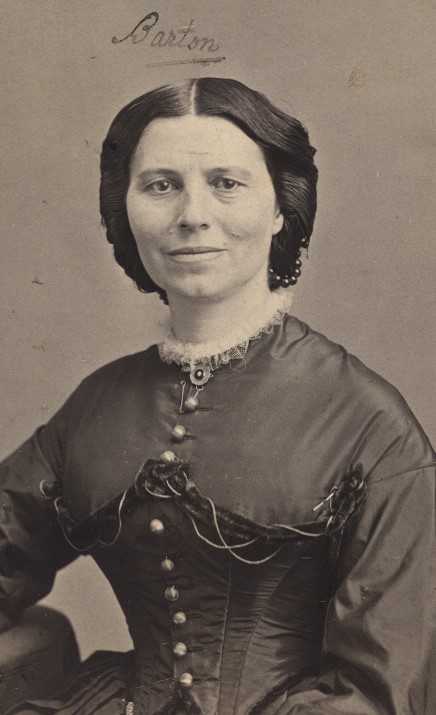
After her humanitarian work during the Civil War, Clara Barton returned home to found the American Red Cross in 1881.

The Red Cross was founded as a response to the damages of war, standing firm to protect the rights and dignities of those who were casualties. This drive of humanity has remained at the core of the Red Cross through time as we never forgot those who fought and sacrificed. From this need to prevent and alleviate human suffering, the organization has grown to further serve the needs of our communities.

Today, the American Red Cross provides multiple assistances to our service members, veterans, and their families. We provide 24/7 global emergency communication services for military families, home comforts and community services, and community outreach to name a few. Our resiliency training workshops, taught by licensed and experienced instructors, are designed to help prepare for, cope with, and respond to the challenges of military service.

We would like to thank not only those who have volunteered their time to serve those who have served our country, but to all those who volunteer with the Red Cross; because of you we can combine our efforts to help those who need us. Most of all, we want to thank and honor those who gave the greatest sacrifice.

Post by Alex Smith, Services to the Armed Forces Director for the American Red Cross Minnesota Region. Photo of Clara Barton by Matthew Brady, c. 1865; now in the Collection of the National Portrait Gallery, Smithsonian Institution; acquired through the generosity of Elizabeth A. Hylton. 

Our 2019 Heroes Awards Recipients

Congratulations to our 2019 Heroes Awards recipients. They’ve made the world a better place and we’re thankful for that. Check out their stories. 

Good Samaritan Hero

Melissa Goble  and Kimberly Hartung did not know each another when they encountered a man in cardiac arrest along the path of 10K race in Nisswa in April 2018, but they both stepped up and put their training as nurses into action. Click here to watch Melissa’s and Kimberly’s story. Our 2019 Good Samaritan Hero Award is presented by CenterPoint Energy.

First Responder Hero

Paul VanVoorhis and Steve Kritzeck found an injured man in the Boundary Waters Canoe Area Wilderness and traveled about a mile with him to get to safety. They provided him with crucial lifesaving first aid until emergency help arrived. To watch Paul’s and Steve’s story click here. Our 2019 First Responder Hero Award is presented by Abbott.

Give Life Hero

Kirk Albright has donated platelets every other week for nearly thirty years. He doesn’t do it for recognition or for awards, but simply because he knows there is a great need. To watch Kirk’s story click here. Our 2019 Give Life Hero Award is presented by Deluxe Corporation.

Community Hero

Cassandra Holmes is a vital part of the Little Earth United Tribes and East Philips neighborhoods in Minneapolis, serving in many roles that illustrate her commitment to the Native-American communities. Click here to watch Cassandra’s story. Our 2019 Community Hero Award is presented by Eide Bailly LLP.

Youth Hero

Thirteen-year-old Ella and fourteen-year-old Collin Hintze-Belland were watching their six-year-old sister at their home in Stillwater in August 2018 when a fast-moving fire swept through their house. Watch Ella’s and Collin’s story here. Our 2019 Youth Hero Award is presented by Medica Foundation.

Military Hero

Dan Couture, 20-year veteran of the Minnesota Army National Guard. Couture puts his military experience to work everyday fighting tirelessly to reduce veteran homelessness in St. Louis County, Minnesota. Click here to watch Dan’s story. Our 2019 Military Hero Award is presented by APi Group, Inc.

The 2019 Heroes Awards were given at our 2019 Heroes Breakfast, which was presented by Land O’Lakes, Inc., and held at Radisson Blu, Mall of America, on May 3. Many thanks to Slumberland Furniture for sponsoring and producing this year’s Heroes videos.  Click here for the complete playlist. Thank you to Marathon for supporting our Heroes VIP Reception. All photos are by Lara Leimbach for the American Red Cross Minnesota Region. 

Red Cross: One of my favorite experiences

Guest post by Christina Li

Leah, Christina and Caitlyn

Volunteering has always been a big part of my life, and volunteering with the Red Cross has definitely been one of my favorite experiences. Two years ago, I joined the Woodbury High School Red Cross Club. Of course, me being me, I had to drag a couple of friends along: first Leah, and then Caitlyn. We started off with basic projects like holiday cards for veterans and blood drives, but pretty soon us three (Caitlyn, Leah, and me) started looking for extra opportunities. We worked together on the Pillowcase Project and helped raise money for hurricane victims (which hopefully we’ll be running next year, fingers crossed). When we were presented with the opportunity to participate in the International Humanitarian Law Youth Action Campaign, we were so excited. All of the projects we had done so far had been planned step by step for us, so this was the perfect chance to take control and leave an impact on those around us.

On the day of the training, we all got up super early and drove to the Red Cross office in Minneapolis. To be honest, we had no idea what to expect, and for me at least, I had no idea what International Humanitarian Law was. A little nervous, we walked into the classroom and… no one was there. Well, no students at least. At first, it was a little awkward being only 3 students in a room with 4 adults but, looking back, it was amazing to have that one-on-one type of learning environment. We were able to ask questions at anytime and launch into full scale debates about whatever we wanted. We talked about what International Humanitarian Law (IHL) was, what the Health Care in Danger (HCID) initiative was for, and, most importantly, what we could do about it. Being best friends with Leah and Caitlyn, the moment we 3 girls were set free to start designing our own campaign we all blurted the exact same idea. The hard part was in the details. Dr. Haji Dokhanchi, our instructor and a Red Cross volunteer, was incredibly helpful and we were able to pick his brain on what he thought would be most successful. We walked out of class practically talking over each other and bursting at the seams with different ideas.

Although we’re only sophomores, all of our schedules are filled with school and extracurricular activities, which made it really hard for us to work on our presentation all at the same time. We resorted to working on chunks at a time, and with the help of Dr. Nour Sinada, our club adviser, we finished our script and were ready to present. After countless emails, March 18th finally came, day one of our week of presentations. Teaching wasn’t a new experience for any of us, but teaching a class of 30 squirmy freshmen definitely was. We had become very passionate about the topic, and we tried to convey that in the way that we presented.

A week later, we had taught around 270 students in classrooms and reached out to over 1,000 students over social media. During and after the campaign, we were met with so many supportive students and faculty. We even had 46 students contact us about either joining the club or volunteering for the Red Cross. We couldn’t be more thankful for this opportunity to raise awareness for the Health Care in Danger campaign and for all of the people who have helped us accomplish our goal. We’d like to specifically thank the teachers who lent us their classrooms along with Dan Williams and Dr. Haji Dokhanchi, both of the Red Cross. This has been one of the most vigorous projects we have ever taken on, but it also became an extremely positive experience for our team and club, as well as for also our school and community.

Thank you all for this wonderful experience!