Because of Ryker: A family’s lifesaving commitment

Amy Slater’s journey as a blood donor began two years ago, sparked by a deeply personal experience: her four-year-old nephew, Ryker, was diagnosed with leukemia. Watching him go through treatment, she quickly realized that blood donation isn’t just a kind gesture — it’s a lifeline.

“Ryker needed multiple transfusions throughout his treatment just to have the strength to keep fighting,” Amy recalls. “That changed everything for me. I saw firsthand how critical donated blood was to his recovery.”

Amy stands strong beside her nephew Ryker, who is bravely battling leukemia. Picture submitted.

Since that moment, Amy has become a passionate advocate for blood donation. At Federated Insurance, where she works, she actively supports the company’s blood drives, held three times a year. She never misses a chance to donate — and always encourages her coworkers to join her.

“It only takes a little bit of your time, and it’s absolutely worth it,” she says. “The staff are so kind and professional — they make the whole experience smooth and meaningful.”

Amy proudly donates blood in support of her brave nephew, Ryker, who is currently undergoing treatment for leukemia. Her donation is one small way to help him in his courageous fight.
Photo: Sue Thesenga/American Red Cross

Though Ryker is now cancer-free, his journey left a lasting impact on the entire family. “I had never donated blood before his diagnosis,” Amy shares. “But once I saw the difference it made in someone I love, I knew I had to keep going.”

As a mother of two, Amy feels the importance of donation even more deeply. “I can’t imagine being told one of my own kids had cancer — and then finding out there might not be blood available,” she says. “That’s why I donate. That’s why I keep encouraging others to step up.”

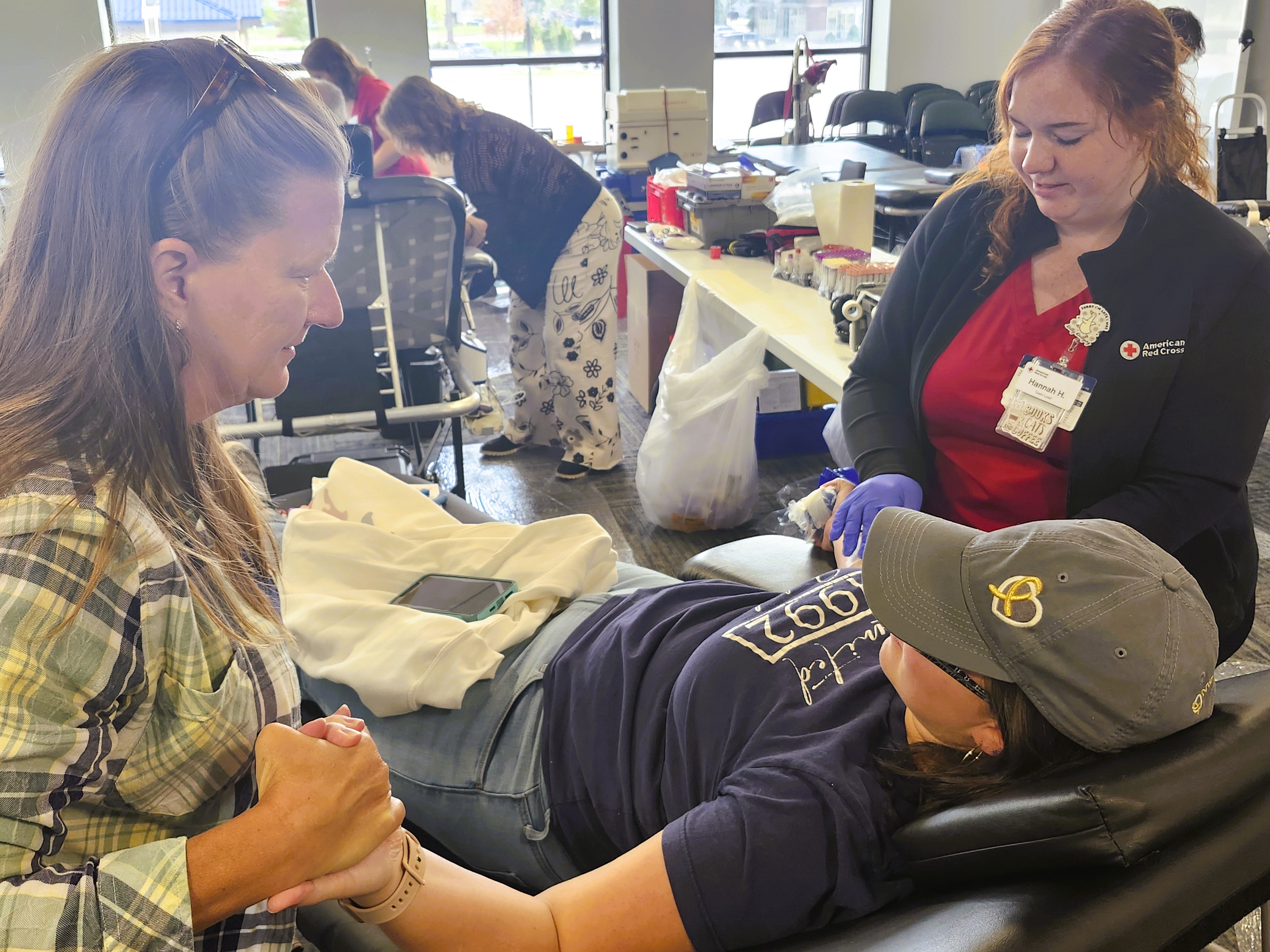
Alissa donates blood for the first time in honor of her son Ryker. Right by her side is her stepmom Kim, offering love, support, and a whole lot of encouragement.
Photo: Sue Thesenga/American Red Cross

At this year’s Rock ‘N Roll Up Your Sleeve Blood Drive in Mankato, Amy’s dedication became a family affair. She was joined by her sister and Ryker’s mother, Alissa, and their father and stepmother, Tim and Kim — all eager to give back. For Alissa, it was her very first-time donating blood.

Alissa donates blood for the first time, inspired by her son Ryker’s leukemia treatment. A little nervous at first, she’s all smiles, proud to give back in such a meaningful way.
Photo: Sue Thesenga/American Red Cross

“I was a little nervous at first,” Alissa admits. “But it was easier than I expected. After seeing Ryker receive blood during his treatment, I knew I could do it and I’m so glad I did — having my family there made it even more meaningful.”

Their motivation runs deep. Ryker is nearing the end of his treatment. On September 18, he’ll receive his final dose of liquid chemotherapy — a powerful milestone for a resilient little boy and a hopeful family.

“I truly believe every blood donor is a blessing. If you can donate, just do it. You could be helping save someone’s life — it made a lifesaving difference for Ryker.”

Amy, Alissa, Tim, and Kim proudly show off their PEANUTS Snoopy T-shirts after donating blood — all Because of Ryker. This family’s lifesaving commitment is a powerful tribute to the brave little boy at the heart of it all. Photo: Sue Thesenga/American Red Cross

Stories like this remind us that donating blood is a testament to the power of family, community, compassion, and the courage it takes to care.

You can help save lives, too. Eligible individuals are encouraged to schedule a blood or platelet donation appointment by using the Red Cross Blood Donor app, visiting RedCrossBlood.org or calling 1-800- RED CROSS (1-800-733-2767).

Peg Schaefer: A National Treasure – Celebrating 60 Years of Red Cross Service

We are deeply saddened to share that Peg passed away on Saturday, September 20, 2025. Her unwavering dedication and years of service to the Red Cross left an indelible mark on our organization and all who had the privilege of working alongside her. As we remember Peg, we honor the incredible legacy she leaves behind – a legacy built on compassion, commitment, and a true passion for helping others.

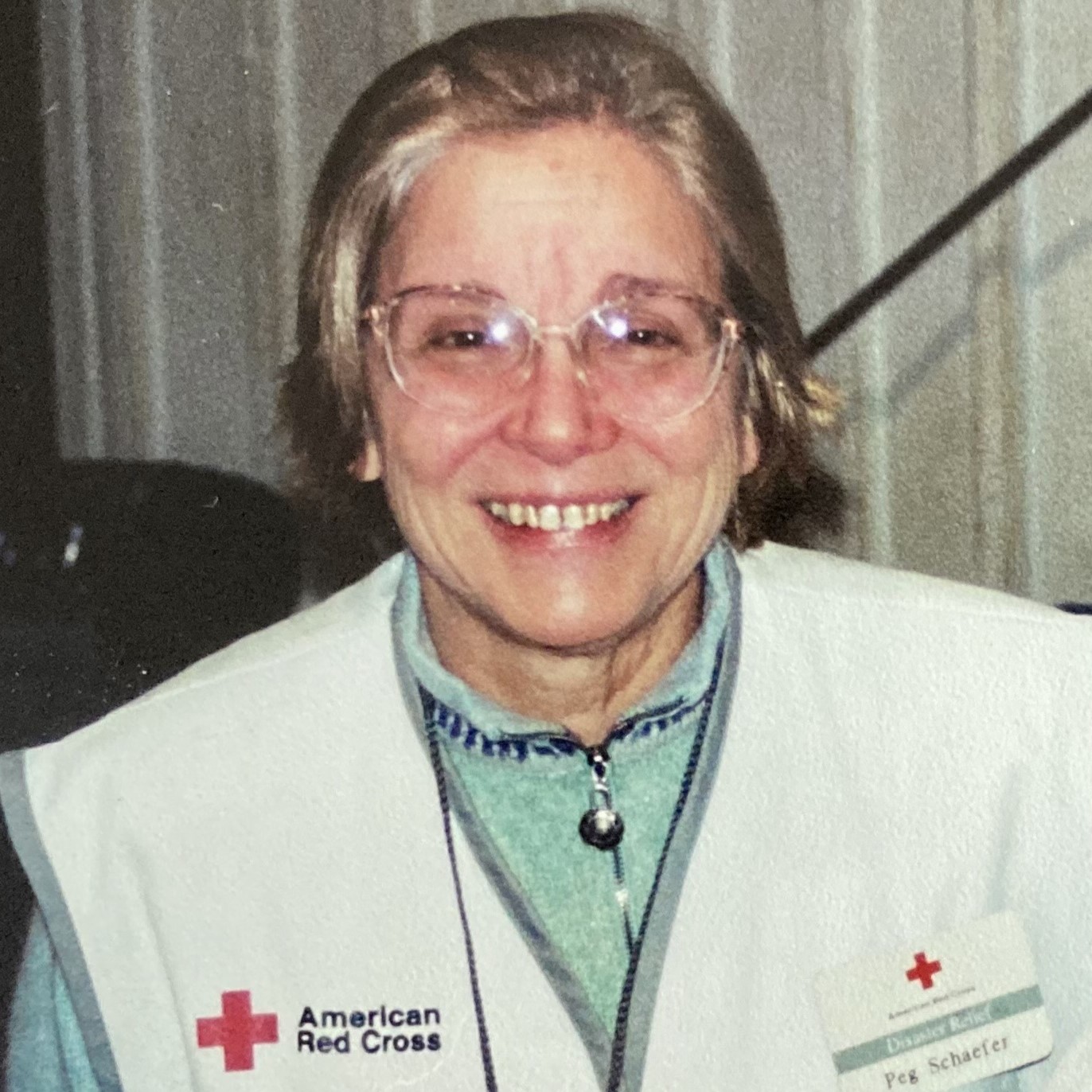
For six decades, Peg Schaefer from Rochester, Minnesota, has embodied the spirit of the American Red Cross. Her remarkable journey of service has taken her across the globe, working at blood drives, responding to disasters, providing comfort and making a lasting impact on communities in need.

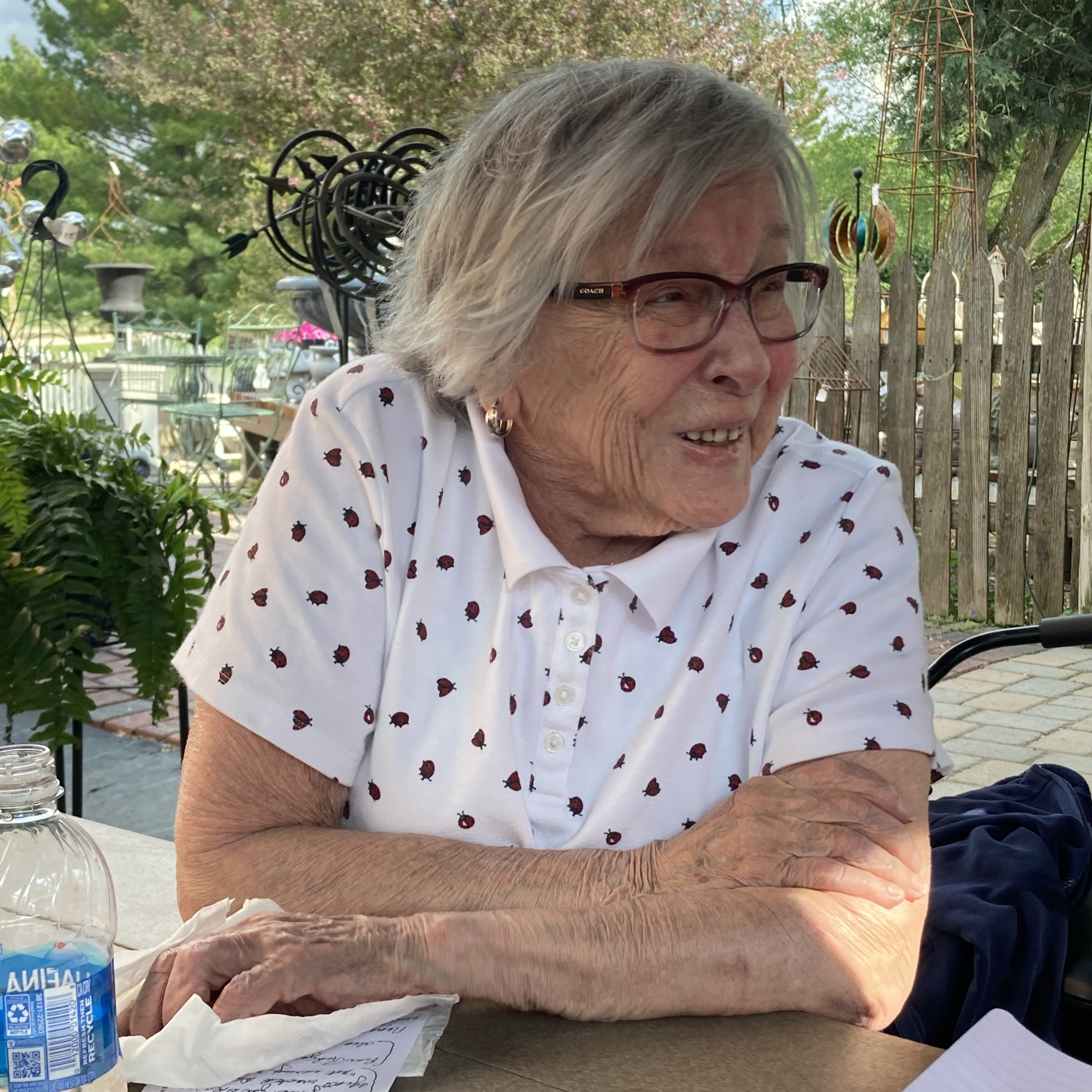
Peg, photographed in Byron, Minnesota (May 2025), ahead of an Employee Recognition Event, reflecting on her 60 years of service with the Red Cross. Photo submitted.

Beginning as a volunteer, Peg transitioned into staff roles, only to return to volunteering, demonstrating her unwavering commitment to the Red Cross mission. From earthquakes to tornados, typhoons to hurricanes, forest fires to floods, Peg has been there – comforting, supporting, and serving. Her dedication has taken her from Saipan to Alaska, from Hawaii to Puerto Rico, and across the mainland U.S., with every stop adding a chapter to her extraordinary story.

In February, Peg celebrated her 90th birthday. In addition to this milestone, there was a beautiful reason to celebrate: almost 60 years of Red Cross service. Officially, she will reach the 60-year milestone in January 2026, but as Peg jokes, “They don’t have a pin for 59 and a half years, so we just rounded it up and had a 60th celebration.”

Peg and Melanie Tschida, executive director of the Red Cross of Southern Minnesota, share a joyful moment celebrating Peggy’s 90th birthday and 60 years of service to the American Red Cross – a beautiful day filled with stories, laughter, and lasting friendships. Photo submitted.

Peg’s journey with the Red Cross began in 1966 while living in Alaska, where her husband was stationed with the military. At the time, the Red Cross was one of the “approved” ways for military wives to give back and it quickly became a perfect fit. Encouraged by an officer’s wife to get involved, Peg began volunteering at Bassett Army Hospital in Fort Wainwright.

Just a year later, in August 1967, a devastating flood hit Fairbanks, and hospital volunteers like Peg were asked to step in. “Would you be willing to do casework?” someone asked. “Sure!” Peg responded with enthusiasm. She vividly recalls the whirlwind of activity: “It was a zoo! Back then, we used adding machines,” she says with a laugh. “I’d take a long slip of itemized expenses to my supervisor so they could issue a check for the essentials people needed.”

Over the following years, Peg became the go-to person for anything Red Cross-related in her community. “That’s how it is in a small town,” she explained. “The Red Cross wasn’t in the phone book, so people who saw me at blood drives or knew me as a military wife would just call me directly. We always found a way to make it work.”

In 1984, Peg went on her first disaster assignment outside of her home chapter to help respond to flooding in Kentucky. That was just the beginning of many more to come.

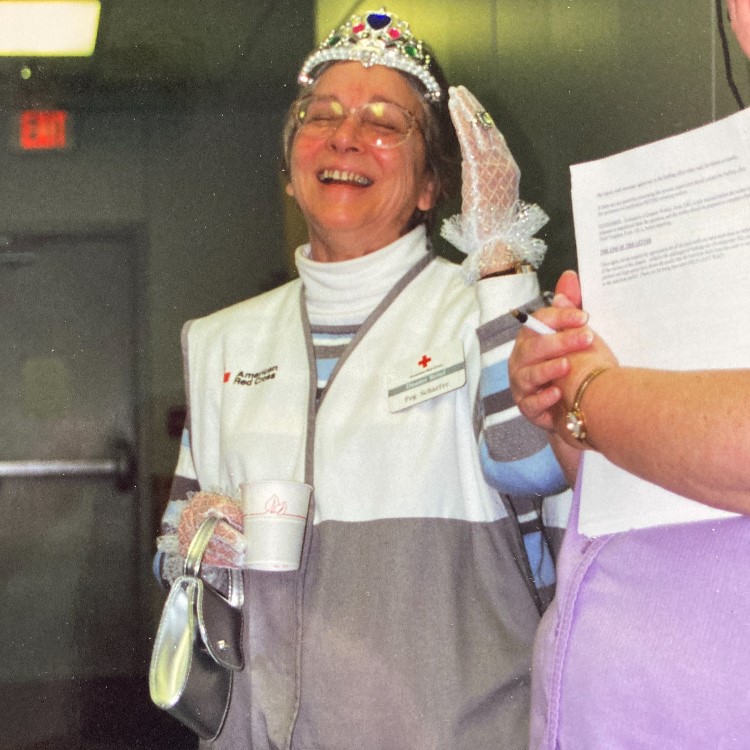
Peg captured during a lighthearted moment while responding to floods in the Quad Cities — her experience along the Mississippi earned her the title “Queen of the Mississippi,” complete with crown and royal regalia! Photo submitted.

The Red Cross became a second family to Peg. “Even though she was away from us,” her daughter Sherri Demos shared, “we knew she was with her other family.” Peg echoed that sentiment: “I was never with strangers. There were always familiar faces – people I’d worked with before. We’d just pick up right where we left off, like no time had passed.”

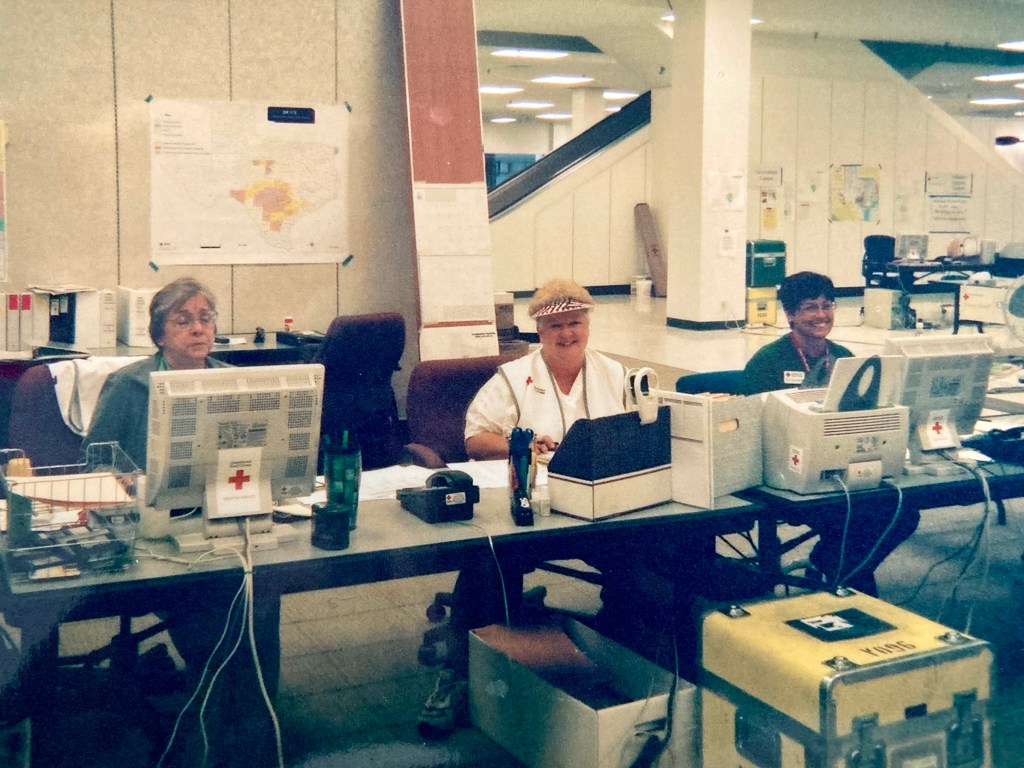
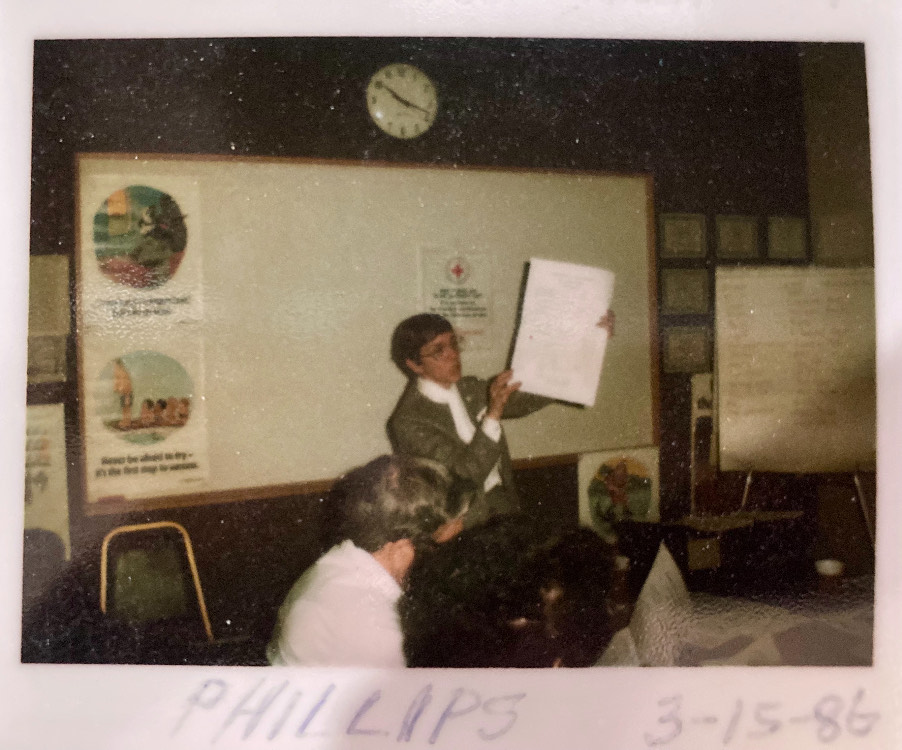
After transitioning from volunteer to employee in 1989, her day-to-day work focused on visiting chapters across the Midwest, teaching classes, and evaluating disaster preparedness plans to help them get ready for emergencies they hoped would never come.

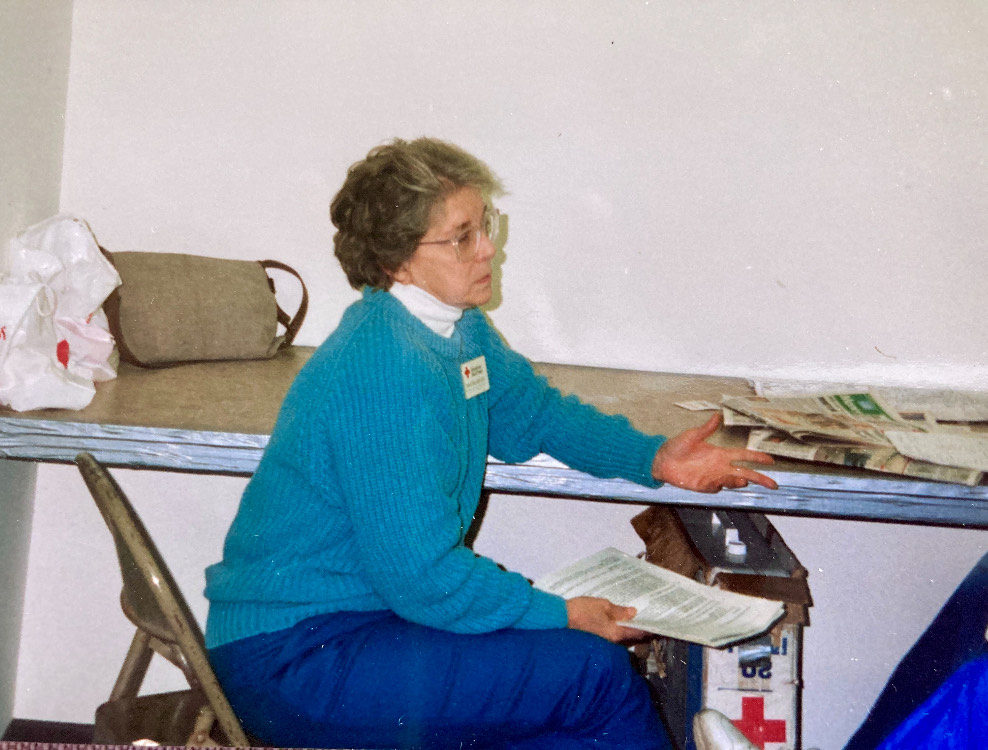
Peg working in her office at the Red Cross Dane County Chapter, Madison, Wisconsin. Photo submitted.

Peg quickly earned a reputation for her no-nonsense approach – she didn’t accept excuses and firmly believed that all members of the community must be included in the planning process, “because everyone deserves a helping hand.” More than once, Red Cross staff thanked her for pushing them to do the hard work upfront – “those detailed plans proved invaluable when disaster did strike their communities,” she says.

Peg credits her social work degree with helping her navigate disasters and support people during their most difficult moments. “Sometimes it’s tough to take,” she reflects, “but I think of the families and their needs.”

Peg deployed to Tuscaloosa, Alabama to support tornado response efforts in December 2000. Photo submitted.

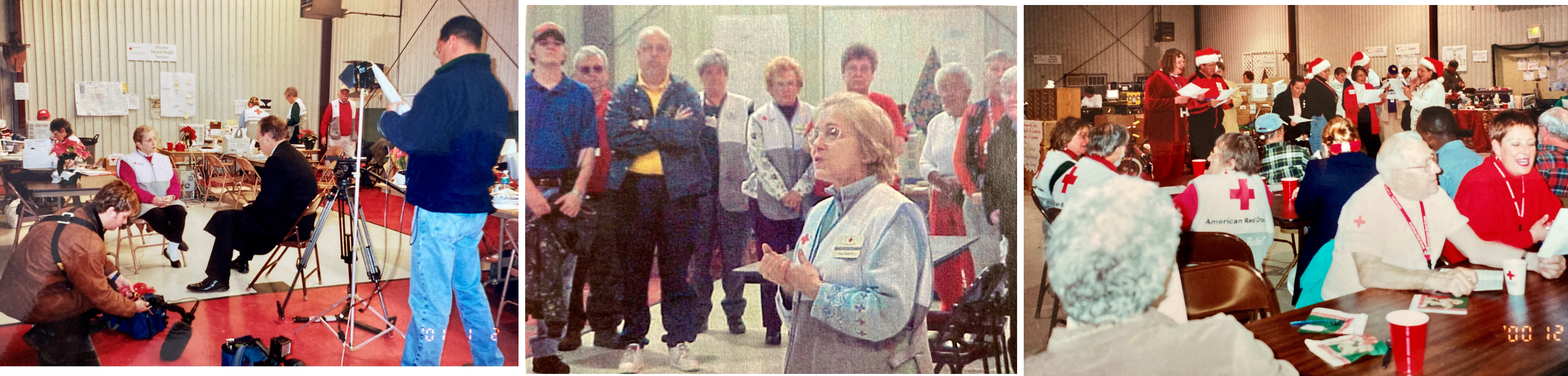
One of her most meaningful memories was being deployed during the holidays in Alabama. Wanting to create some holiday cheer, she and other volunteers went to Walmart and bought the last Christmas tree available — a humble “Charlie Brown” tree – and a few ornaments. Back at their headquarters, she and her fellow volunteers decorated with whatever they had to make it festive for all who were away from home.

During the December tornado response in Tuscaloosa, Alabama, Peg was interviewed by CNN, offering insight from the front lines of disaster relief. On Christmas Day, she led an interfaith moment of reflection, inviting everyone to “silently ask for blessings in your own traditions,” as Red Cross staff paused to celebrate with food, music, and community in the midst of their tireless efforts. Photos submitted.

Since restaurants were set to be closed on Christmas Day, Peg asked the Mass Care team to find one that could prepare a holiday meal in advance. They located a restaurant willing to provide a traditional Christmas dinner – complete with three kinds of pie – for just $5 per person. The only requirement was that the meals be picked up early in the afternoon on Christmas Eve.

On Christmas Day, she and her team – Red Cross volunteers, FEMA staff, and volunteers from partner organizations – warmed each meal one by one in the microwave. “It was the most moving holiday I’ve ever had,” she recalls. “And also one of the funniest,” she adds with a smile. “Some of the volunteers rewrote ‘The 12 Days of Christmas’ with things every volunteer wishes for on deployment – like their own rental car. We couldn’t stop laughing.”

Over the years, Peg has witnessed countless changes in how the Red Cross operates, but her commitment has never wavered – even after retiring in 2011. “It’s in my blood,” she says. And true to her word, she continues to volunteer whenever she can: welcoming blood donors, teaching families about fire safety, and helping to recruit the next generation of volunteers. Though Peg admits, “I still have the urge to pack my suitcase,” she concedes that she no longer has the physical stamina for deployments. Still, her heart remains with the mission.

Her daughter Sherri adds, “Don’t underestimate my mom – she may be little, but she’s mighty. She’s a national treasure.”

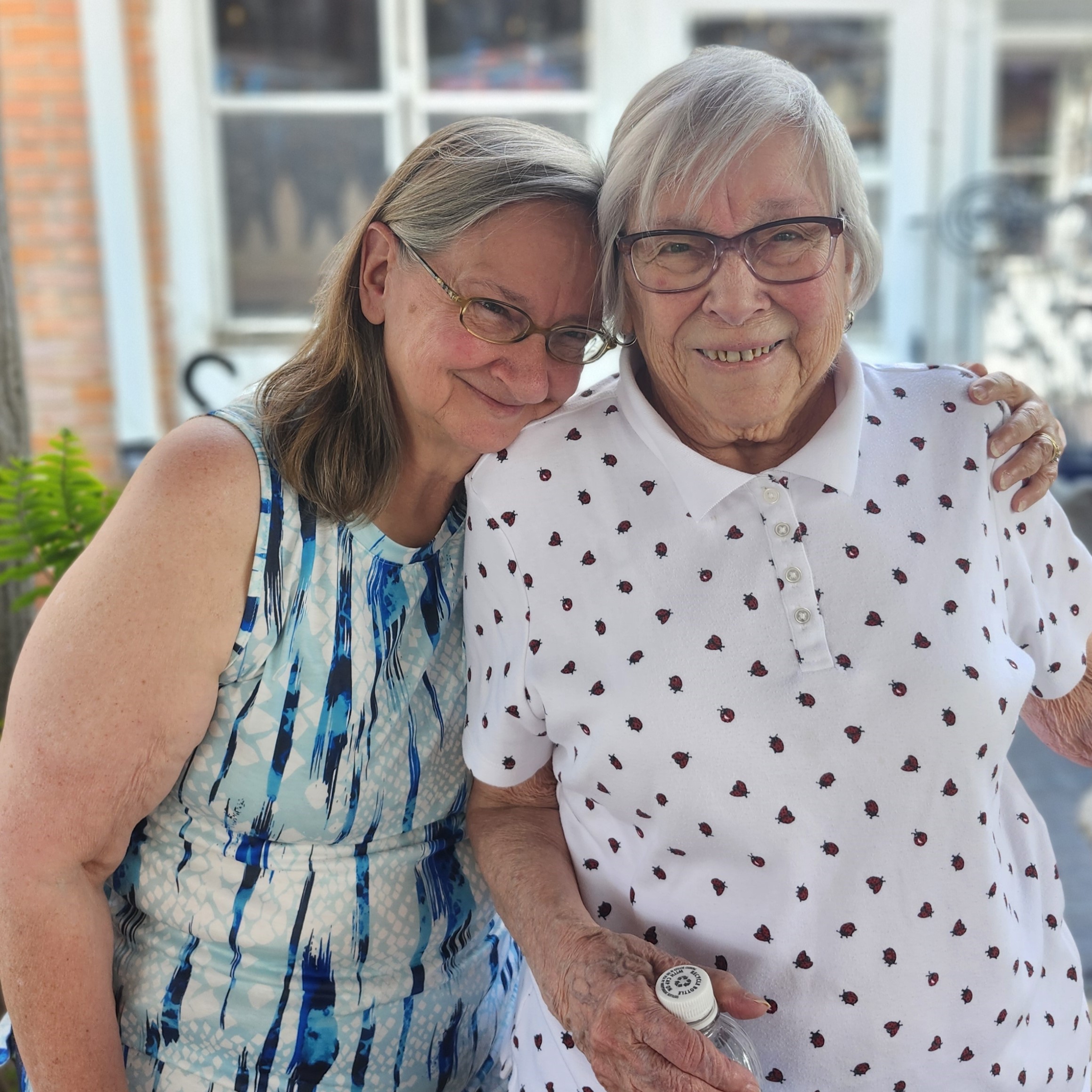
Sherri shares an embrace with her mother Peg. “Don’t underestimate my mom,” Sherri says. “She may be small, but she’s mighty — a true national treasure.” Photo: Sue Thesenga/American Red Cross.

As Peg reflects on her 60 years of service, she effortlessly fills the conversation with stories of the people she’s met and the lifelong friendships she’s formed along the way. Her memories are rich and vivid, but what shines through the most is her conviction that it was never about her. For Peg, it was always a team effort – people coming together, each doing their part to make a difference.

What began in 1966, when a general’s wife encouraged her to volunteer with the Red Cross, blossomed into a lifetime of service. “It’s what I believe in – the mission and principles,” Peg says simply.

Thank you, Peg Schaefer, for your deep and enduring commitment to the American Red Cross. Your service has left a lasting legacy of compassion, resilience, and hope. You truly are a national treasure.

Slideshow of additional photos of Peg through the years:

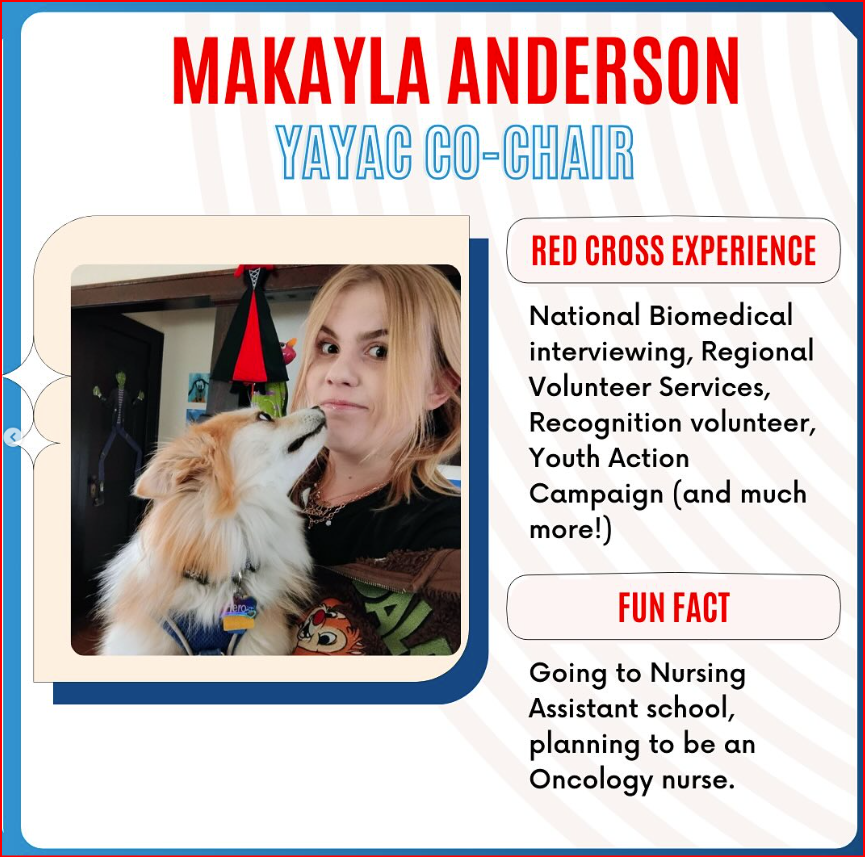
Leading with Purpose: Meet Makayla Anderson, Red Cross Youth Powerhouse 

When Makayla Anderson first applied to volunteer with the Red Cross, she was 14 years old, shy, and just starting high school. A phone call with a Volunteer Services screener turned into a life-shaping conversation—one that set her on a path she never expected. “I wasn’t sure I could help because of my age and little experience,” Makayla recalls. “But he said, ‘I believe in you and you will go far.’ That moment meant everything.” 

And go far, she has. 

Over the last four years, Makayla has become a driving force in youth engagement with the Red Cross—founding a club at her virtual high school, starting the region’s Youth and Young Adult Council (YAYAC), and stepping into national roles including her current position as a Youth Action Campaign (YAC) Intern with the International Humanitarian Law (IHL) team. Along the way, she’s brought creativity, courage, and compassion into everything she does. 

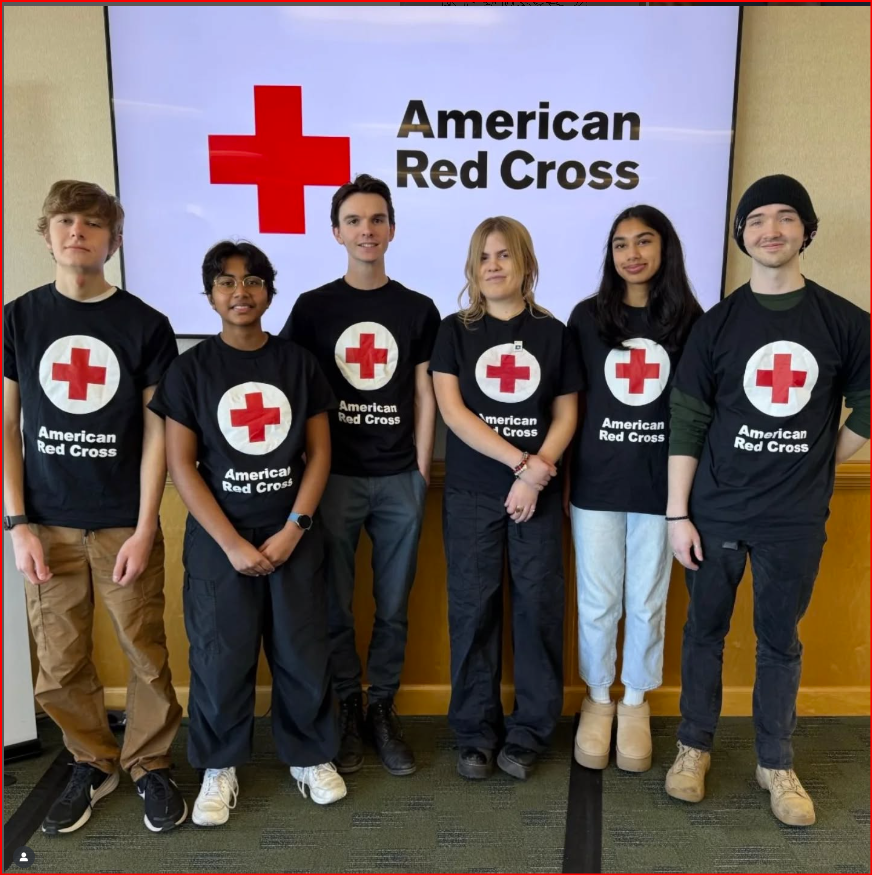
Makayla pictured with fellow members of the Red Cross Minnesota and Dakota’s Youth and Young Adult Council (YAYAC). Pictured left to right: Erik, Jay, Joel, Makayla, Shaivi and Alan (not pictured Nuna and Dawson). Photo submitted.

Finding Her Voice Through Service

Makayla’s journey began with behind-the-scenes support in Volunteer Services—working in Volunteer Connection and helping screen new volunteers. She gradually took on more responsibility, eventually creating her own Red Cross club at school and joining the IHL Youth Action Campaign. That’s when things clicked. 

“I never thought I was really interested in law,” she says. “But hearing from speakers at the national YAC Summit and working 1-on-1 with Red Cross staff opened my eyes to a new way of leadership.” 

It was also where she learned how to blend purpose and creativity—skills that came to life in her standout YAC project: a virtual art show on the theme of nuclear conflict. As a lifelong artist, Makayla leaned into her passions and invited others to explore difficult topics through visual expression. The show reached across the globe—from Minnesota to Dubai—and included an educational presentation on IHL and the role of art in activism. 

Makayla’s engagement on social media plays a key role in promoting the activities and programs of the region’s Youth and Young Adult Council (YAYAC).


Creating Change, One Youth at a Time 

After seeing the difference youth leaders were making in other regions, Makayla realized her own region was missing a critical piece: a strong network for youth engagement. Rather than waiting for someone else to fill that gap, she helped build the Minnesota and Dakotas Youth and Young Adult Council (YAYAC) from the ground up.  

“I don’t think it has too much to do with how confident you are with yourself,” she reflects. “It’s about your ability to take action and how well you understand the steps it takes. If you care enough about something, you just start eating it a bite at a time.” 

She’s now leading the council with big goals: to grow awareness, host engaging events, and make sure the youth voice is part of Red Cross decisions across departments. 

Wisdom Beyond Her Years

Makayla has also faced her share of challenges—especially working in adult-dominated spaces. “The biggest thing to remember is to listen and learn,” she says. “You don’t need to be the loudest in the room to make an impact.” 

She’s found guidance in mentors like Mark Giammona, Ashley Sheehy, and Tracy Elder, and credits them with shaping both her leadership style and her vision for the future. “I’m a Nursing Assistant now,” she says, “but I have high hopes of getting a job with the Red Cross in IHL one day. This work brings me a sense of fulfillment I haven’t found anywhere else.” 

Makayla pictured with one of her mentors Mark Giammona, Volunteer Engagement for the Minnesota and Dakotas Region, whose guidance has helped shape her leadership style and inspired her vision for the future

Fueling Her Fire

While much of her free time goes toward volunteering, Makayla still makes time for creative pursuits. She’s a published poet and an avid dog walker, often spotted strolling around town with her pups. “This is my fun!” she laughs. 

And when it comes to advice for other youth thinking about getting involved, her message is clear:  

“Find your passion, run toward it, and don’t take no for an answer. There will be slammed doors and setbacks but remember who you are and why you started.”

Learn more about youth like Makayla making a difference at Red Cross IHL Youth Action Campaign

Want to learn more about International Humanitarian Law through the lens of pop culture? Check out our IHL YouTube channel and explore the rules of war through Andor, Star Wars, Saving Private Ryan, Ghostbusters, House of the Dragon, and Godzilla

Nolan the Heart Warrior: A Story of Strength, Survival, and Giving Back

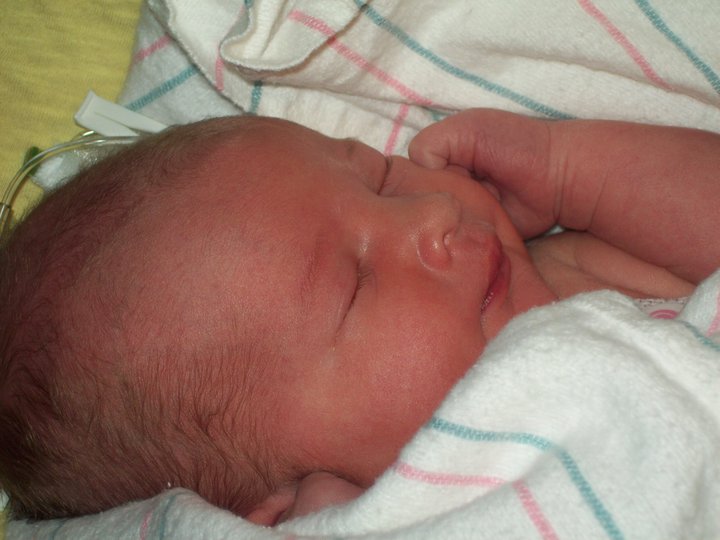
Nolan arrived 2.5 weeks early, a healthy, 8-pound, 10-ounce baby boy. But within hours, the joy of his birth turned to fear. His mother, Sara Jutz, sensed something wasn’t right. Together with her husband, Joe, they pushed for closer observation. Trusting their instincts and speaking up made all the difference, that decision ultimately saved Nolan’s life.

Newborn Nolan made an early entrance, arriving 2.5 weeks ahead of schedule and weighing in at a healthy 8 pounds, 10 ounces. Photo submitted.

Doctors diagnosed Nolan with a serious congenital heart defect: a coarctation of the aorta, a narrowing of one of the heart’s main arteries. Just 10 hours after birth, he was rushed by ambulance to Children’s Hospital in Minneapolis. At only four days old, Nolan underwent his first major surgery. Surgeons accessed his heart through his back and used a Gore-Tex (synthetic) patch to widen the narrowed artery. During that operation, Nolan received his first blood transfusion, one of many he would need. That donated blood played a critical role in saving his life.

Nolan recovered quickly and was able to go home on his ninth day of life. As he grew, his spirited personality and big heart, both literally and figuratively, became his trademarks. At age six, he underwent a second procedure. Since the synthetic patch placed earlier couldn’t grow with him, doctors used a balloon catheter to stretch it and improve blood flow. The minimally invasive procedure was a success, and Nolan bounced back to his usual self within days.

By the time he was 11, Nolan was thriving. Though he saw his cardiologist regularly and understood he’d never “outgrow” his condition, that never held him back. Active, strong, and fiercely determined, Nolan proudly embraced life as a heart warrior. He even led his elementary school in fundraising for the American Heart Association, raising more money than anyone else.

Nolan, Eli, and Katelyn were each born with different heart defects. Only Nolan needed surgery, but their resilience unites them. Photo submitted.

His journey is made even more remarkable by his family’s story. Nolan’s two younger siblings were also born with congenital heart defects, each different, each unique. While Nolan required surgeries, his siblings have not needed medical interventions. Doctors remain unsure why all three children were affected, but what is clear is the strength and resilience of the family.

The Jutz family has long been dedicated to supporting their community, but Nolan’s experiences ignited a deeper sense of purpose: a personal commitment to give back. Watching his mom organize a blood drive, motivated in part by her own father’s need for weekly transfusions, Nolan jumped in to help. He manned the registration table, witnessed firsthand the importance of blood donation, and knew he wanted to do more.

Following the success of last summer’s blood drive, Nolan and Sara set out to organize another, this time at Nolan’s middle school. They transformed his personal journey into a powerful mission to raise awareness and inspire others to make a life-saving difference.

There is a lot that goes into organizing a blood drive, but Nolan’s greatest test came on April 18.

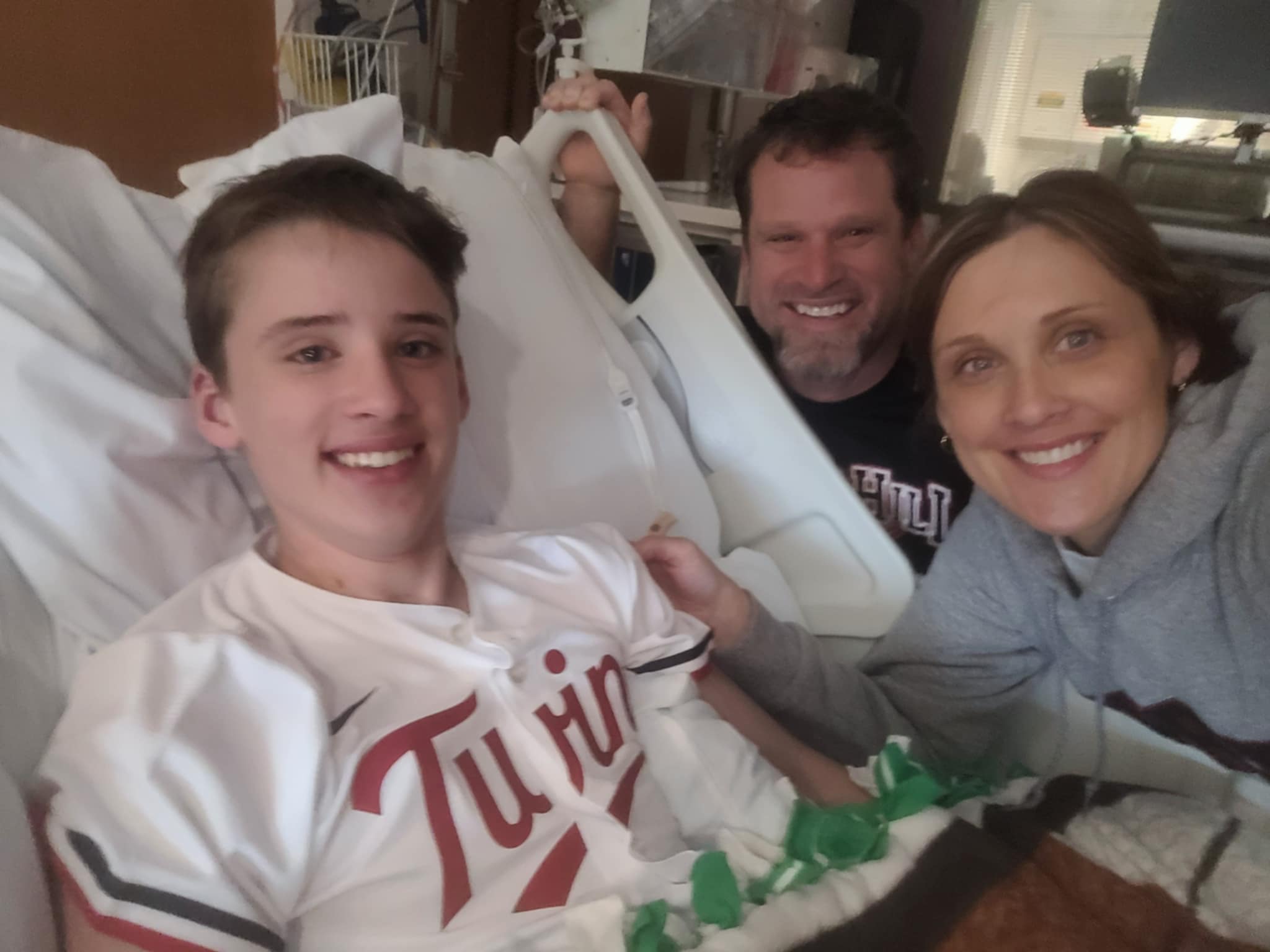
Pictured with his parents, Nolan recovered in the hospital after a lifesaving procedure that required 18 units of blood – April, 2025. Photo submitted.

During what was expected to be a routine stent placement, Nolan’s aortic valve ruptured, triggering cardiac arrest that lasted nearly 20 minutes. As blood rapidly filled his chest cavity, his left lung collapsed. In an urgent fight to save his life, doctors performed emergency surgery, relying on chest compressions to place the seven stents needed to repair the valve. Nolan required 18 units of blood that day, blood made available thanks to the selfless donations of others. That generosity is what saved his life.

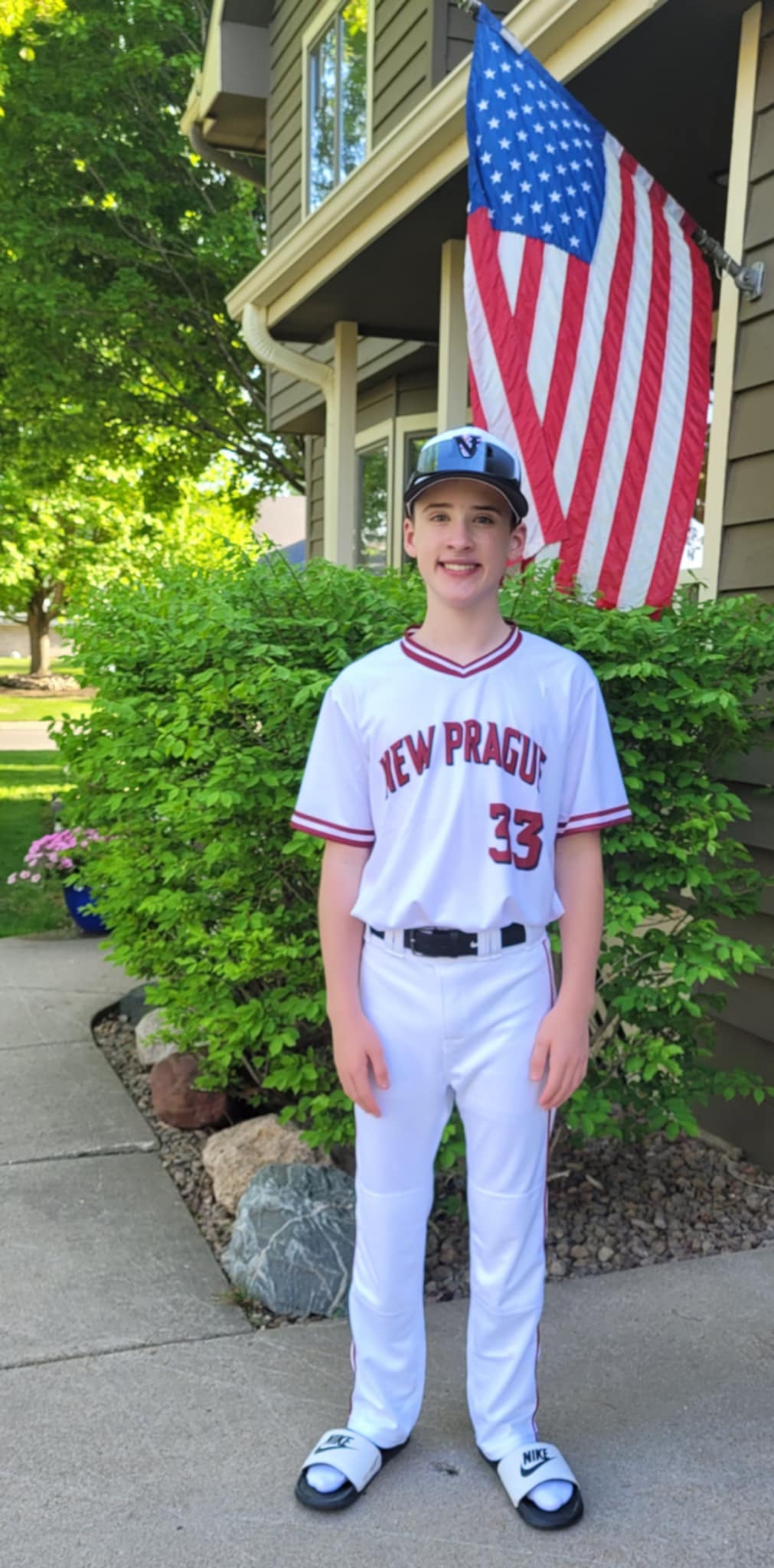
Incredibly, just six weeks later, Nolan was back on the baseball field with his friends. His family, still overwhelmed by that day, speaks of how the experience changed them. “When you hear ‘18 units of blood,’ it hits different when it’s your child,” Sara said. “You don’t realize how much one small body can need, or how vital it is that the blood is there.”

Just six weeks after emergency surgery and 18 units of blood, Nolan is back and ready to hit the baseball field! Photo submitted.

Today, at 14 years old, Nolan is more than a survivor. He’s a fighter, an advocate, and a leader. He’s a student, a friend, an athlete, a big brother, and a boy whose strength has already changed so many lives. And he’s not done yet.

On June 30, family and friends supported a blood drive organized by Nolan and his mother at his middle school. Nolan greeted donors at the registration desk before joining his siblings for a well-earned lunch break. Each donor received a copy of Nolan’s story and was encouraged to share it to help raise awareness about the ongoing need for blood donations.

On June 30th, family and friends came together to donate blood at the drive Nolan and his mother organized at his middle school. Their hope was to collect enough to give back, to pay it forward for the many donations that once helped save Nolan’s life. They collected 41 pints of lifesaving blood – each one a testament to the power of giving and the impact of Nolan’s story.

Nolan continues to raise awareness and encourage others to donate blood, to give the gift of life, because he understands better than most just how vital it truly is.

He is, and always will be, a heart warrior.

The Jutz family. Photo submitted.

Make an appointment to give blood or platelets now by using the Red Cross Blood Donor App, visiting RedCrossBlood.org or calling 1-800-RED CROSS (1-800-733-2767).

What Wasn’t Lost: Lexi, Hunter, and the Power of Community 

When the wind finally stopped and the trees had settled into splintered piles across their yard in Erie, North Dakota, Lexi stood next to Hunter and took a deep breath. 

Lexi and Hunter smile with relief, thrilled their wedding plans are still intact — the storm devastated much of the town but spared both their ceremony and reception venues.
Photo: Carrie Carlson-Guest/American Red Cross.

“This wasn’t how we imagined the summer before our wedding,” she said. 

Just days earlier, the young couple had been finalizing details for their ceremony in September. Now, instead of focusing on a celebration, they were cleaning up.  

Then on June 20, storms with hurricane force winds ripped through towns big and small in eastern North Dakota, leaving the tiny village of Erie—population barely 30—reeling. 

The storm took their shade trees, littered the road with branches, and left everyone asking the same question: Where do we even begin? 

That answer came quickly. First, neighbors and family came to help. Then, church groups and people from across the region who drove for hours turned up. And then, the American Red Cross arrived. 

“It went from warm water and silence to trucks, volunteers, and kindness pouring in from every direction,” Lexi said. 

In the nearby town of Page, the fire station turned into a hub of comfort. Red Cross volunteers helped serve meals while neighbors gathered around folding tables to share food, stories, and sighs of relief. 

In Page, the fire station became a refuge as Red Cross volunteers served meals and neighbors shared food and comfort. Photo: Carrie Carlson-Guest/American Red Cross.

“It wasn’t just about feeding people,” Lexi said. “It was about creating a space where we could breathe. Where we could sit with people who understood.”

Lexi’s dad used a company volunteer day to come and help cleanup in Erie. “He could’ve spent the day anywhere,” she said. “But he chose here. Not just for me—but for our community.” 

Hunter spent those days helping others before even touching their own yard. “That’s who he is,” Lexi said quietly. “And that’s why I love him.”  

Though many buildings were damaged, two small miracles stood out. The church where Lexi and Hunter plan to marry and the community hall where they’ll hold their reception — were untouched by the storm. “Out of all the places that could’ve been hit,” she said, “ours were spared. That has to mean something.” 

The City of Page, ND’s fire station opened its doors as a community gathering place. Knox, who celebrated his his 3rd birthday in the Fire Hall, and his sister Kora, age 5.
simply enjoyed being kids, blowing bubbles and zooming trucks.
Photo: Carrie Carlson-Guest/American Red Cross

Their wedding is still on. But now, the meaning behind their vows has strengthened.  

“We’ve seen what it looks like when people show up for each other,” Lexi said. “People we’ve never met before—just neighbors we hadn’t met yet.” 

Red Cross Volunteer serving food to boy in a black t-shirt.
On his first deployment, Red Cross Health Services volunteer Daniel Odubura of Grand Forks, N.D., pitches in with a smile to serve hot meals to storm survivors in Page, N.D. Photo: Carrie Carlson-Guest/American Red Cross

In a part of the world where towns are small and pride runs deep, asking for help doesn’t come easy. But what Lexi and Hunter discovered is that sometimes, you don’t have to ask—people just come. 

And when they do, they bring more than food or rakes or tarps. They bring hope. 

The Heart Behind the Help: Diane’s Story

Disaster response volunteer honored with regional Lifetime Achievement Award

In the small, scenic city of Redwood Falls, Minnesota – a place rooted in community – lives a woman whose quiet strength and unwavering compassion have rippled far beyond city limits. Her name is Diane – a Red Cross volunteer.

For 20 years, Diane Radel has been a steadfast presence in moments of crisis. From the wreckage of Hurricane Harvey to the fierce winds of Hurricane Ian, from catastrophic flooding in Louisiana, she has deployed to 18 national disasters. Closer to home, she’s responded to apartment fires and local disasters, always showing up when her community needs her most.

Diane on the ground during one of her many disaster deployments over the past 20 years — a testament to her decades of service and resilience.
Photo submitted.

Her roles have varied – driving Emergency Response Vehicles (ERVs) to deliver warm meals, comforting survivors in emergency shelters, and distributing supplies to families facing unimaginable loss. But no matter the task, Diane brought more than resources – she brought hope, dignity, and a calming presence in moments of chaos.

A Calling Found in Crisis

Diane’s journey with the Red Cross began with a single image – a newspaper photo of volunteers in iconic red vests responding to a tornado in Buffalo Lake, Minnesota, in 2003. She didn’t know it then, but the image planted a seed.

In 2005, when Diane’s father passed away, she found her daily routine unraveled. “I was a lost pup,” she remembers. “I didn’t know what to do.”

Then came the call for volunteers after Hurricane Katrina. “They said it was a three-week deployment, all expenses paid,” Diane recalls. “I had the time. Although I had seven kids, three in college – it just lit a fire in me.”

Diane, wearing her Red Cross vest, stands with clean-up kits ready for distribution during a disaster deployment — one of many in her years of dedicated service. Photo submitted.

After speaking with fellow Red Cross volunteer Barb Billmeier, Diane took the leap. “It was the first time I’d ever been away from home that long,” she says. But her husband and children encouraged her, saying, “Go…they need you more than we do.”

With compassion as her guide, Diane stepped into the role of caring for people finding refuge in a Red Cross shelter helping those who had lost everything. That first deployment marked the beginning of a journey that has spanned two decades.

Service Across the Nation

Diane’s volunteer work took her to disaster zones across the U.S., including a Thanksgiving spent helping in the aftermath of Superstorm Sandy in New York. “I thought I should be home with my family, but I just felt I needed to go and help,” she remembers, “but once again, they said, Go…they need you more than we do.’”

One unforgettable memory from that deployment was delivering meals in the ERV to a high-rise in Chinatown that had lost power. “We didn’t serve the meals directly – we dropped them off. While waiting to pick up the food containers, Diane and fellow volunteers took a walking tour near Ground Zero, witnessing the rebuilding of the World Trade Center. “It was humbling,” she said. “A moment of grace in a difficult time.”

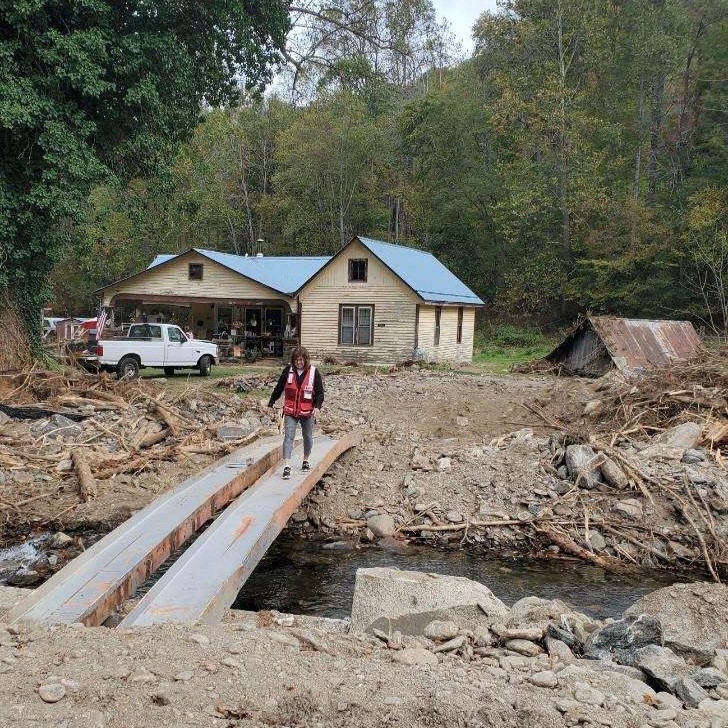
Diane also mentions her deployment to help those affected by Hurricane Helene last fall. She remembers the mountainous terrain and survivors still waiting for word on missing neighbors. “Someone said we needed to be strong for them – but no, we cried with them,” she recalls.

Diane, photographed near Asheville, North Carolina, during Hurricane Helene relief efforts in October 2024. Photo submitted.

A Life of Service

When asked what she’d say to someone considering volunteering with the Red Cross, Diane doesn’t hesitate. “Do it! It’s rewarding. Your heart has to be in it but give it a try. You’ll get way more back than you ever give.”

She speaks honestly about the challenges – long days, sleeping on cots, working with all kinds of people – but insists the rewards are worth it. “Any time you volunteer, it’s a blessing.”

Strength In the Face of Her Own Storm

In 2018, Diane faced a new battle: breast cancer. After a double mastectomy, chemo, radiation, and five years of treatment, she was declared cancer-free – until last year.

In November, scans revealed cancer had returned, spreading to her spine and lymph nodes.

“There’s no timeframe,” she says softly. “It wasn’t supposed to happen.”

Though her body has slowed, and she can no longer donate blood – once a treasured part of her Red Cross work – her spirit remains unshaken. “My heart is still in it, even if my body isn’t.”

A Lifetime of Meaning

Diane was recently honored with a Lifetime Achievement Award from the Red Cross. She recalls, “As they were reading the award, I thought, wow, that sounds really good and then I realized, they were talking about me!”

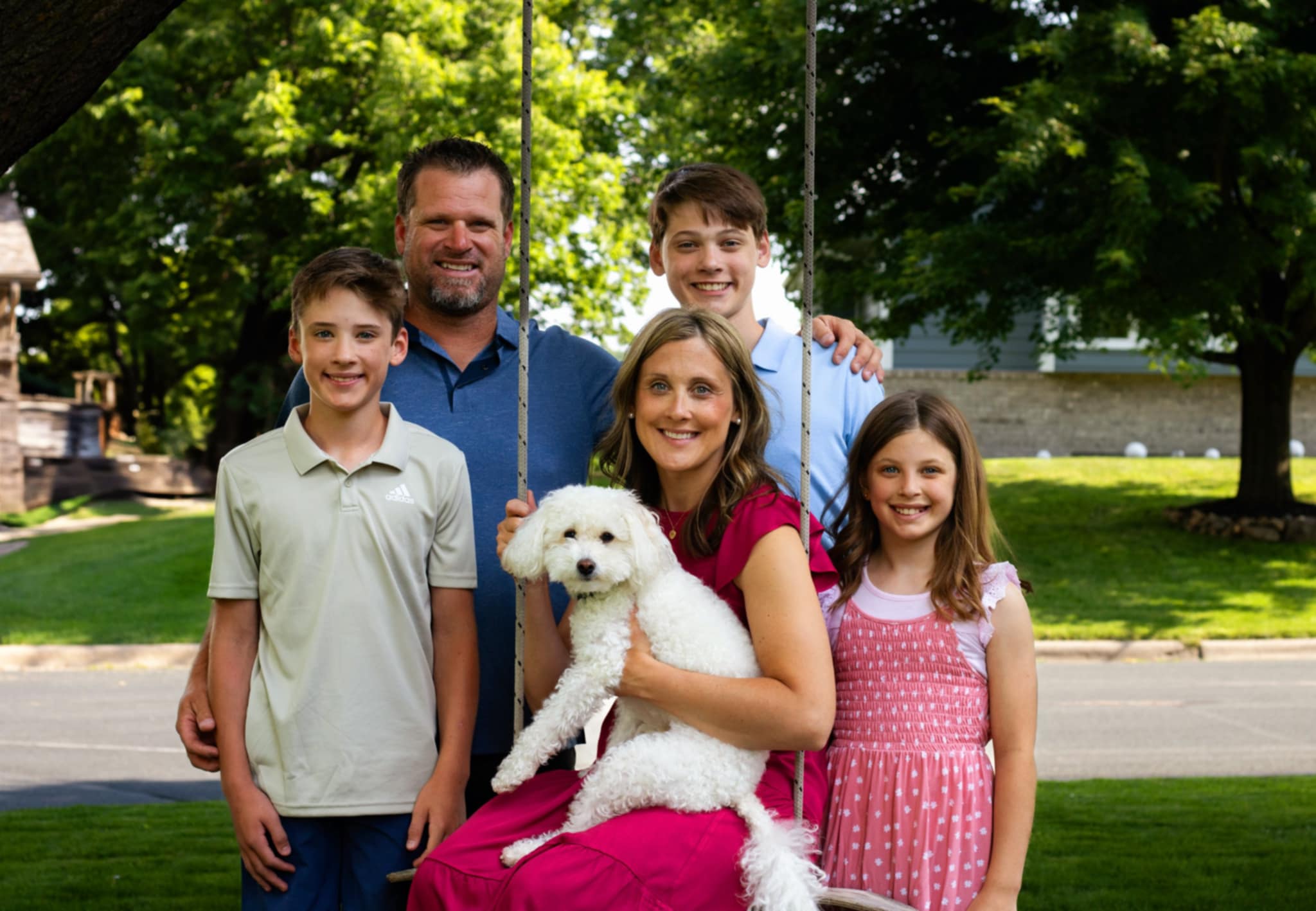
Diane receives a Lifetime Achievement Award from the Red Cross, presented by Sean Farley-Cowdin, Senior Community Disaster Program Manager, at the Volunteer Recognition Event in Mankato, MN on May 20, 2025. A proud moment honoring years of dedicated service and compassion.

Sean Farley-Cowdin, Senior Community Disaster Program Manager for the Red Cross Minnesota and Dakotas Region presented Diane with the award. “When the need is most, Diane doesn’t hesitate – she simply shows up. From the very beginning, with more than enough on her plate she had every reason to say, ‘not now,’ but she didn’t – she leaned in. She said yes. Yes, to her community. Yes, to the mission. Yes, to strangers facing the hardest day of their lives. Because for Diane, helping isn’t a duty – it’s who she is.”
Looking back, she says, “The years just flew by.” Each deployment forged lifelong friendship. “It all felt so natural – it’s my passion and what I was always meant to do.”

To serve with such compassion for 20 years requires an extraordinary heart. Diane’s legacy lives on in every life she’s touched – not through fanfare, but through quiet heroism, deep empathy and human connection.

Her story reminds us that true service comes from love – and a heart that never stops giving.

“The forecast is predicting a severe hurricane season this year,” she says, “I wish I could be there to help – it’s in my heart.”

For all who know her, one thing is certain: the world is better because Diane chose to help – again and again – with love, conviction, and a full heart.

If you have a heart to help like Diane, learn about Red Cross volunteer opportunities near you visit redcross.org/givetime.

“Everything Comes Full Circle”: Deb Perkins, Army Veteran and Red Cross Volunteer

One day in Buffalo, Minnesota, early in 1973, a girl named Deb Butman came home from high school with an announcement. “Hey dad, I’m going to join the army.”  

Deb Perkins, ca. 1973. Submitted photo.

Her dad, an U.S. Army Air Corps staff sergeant who served in the UK and Africa during World War II, laughed because he knew his daughter ‘did not like being told what to do’ says Deb, when reflecting on her impulse to enlist. And yet, Kenneth Butman stood by his daughter and was proud she chose to carry on the family’s legacy of military service.  

Deb hoped to attend the army’s language school with a focus on Russian. Being unable to get the right security clearance, the found herself presented with other recommendations like becoming a cook. “No thanks,” she said.

Even so, that summer at the tail end of the Vietnam War, she found herself in the thick humidity surrounding Fort Anniston in Alabama. There she stood, barely 18, among a group of female soldiers of different ages and backgrounds attending bootcamp.

Julie (l), Jonetra (c) , and Deb (r), taking a break during bootcamp, ca. 1973. Submitted photo.

She made friends with Julie, another soldier. A friendship grew and soon they were chosen to call out drills, earning the nicknames ‘Putt and Butt,’ which referred to their last names. Deep bonds developed with soldiers and leaders. “You respect those people training you,” she says. “You build a kind of family, whether you mean to or not.” 
Despite the challenges for women, Deb proved herself and established credibility. She went from Alabama to Texas where she trained to become a medical corpsman. “You’re smiling,” said one instructor. “I’m a happy person,” she said. “You won’t be after you spend a few days with me,” the instructor said.

One day, tragic news arrived from her first lieutenant, who approached Deb while she was standing at attention. “I don’t know how to tell you this. Your dad died,” she said simply and, with what Deb recalls, little empathy. It turned out that Deb’s dad did not survive a heart attack.

Kenneth Butman, ca. 1940s. Submitted photo.

Thankfully, and within moments of receiving the life-changing news, Deb’s first sergeant wrapped an arm around her. “We’ll get you home,” he promised and brought her to the American Red Cross office on base where a flight was arranged. She was back home the same day to be with her family in Minnesota.

Deb Perkins, circa 1973. Submited photo.

The next year, “we were in the middle of nowhere” Deb says about being at Fort Dix in New Jersey. She when to work, administering shots to deploying soldiers and tending to children in the pediatrics unit. Her patients included a young man with severe burns from a stove explosion. “You have a nice touch,” she remembers him saying through bandages and pain. “I’m glad I can help you feel better,” she replied, meaning every word.

Deb’s military service lasted three years, which was the length of commitment at the time. She received her honorable discharge under President Nixon, one of the last before he resigned.  

“Things will be as they’re meant to be.”

After the army, Deb used the G.I. Bill to pay her way through school and eventually found herself back where her heart had always been – working with kids. First as a teacher and then, after earning her master’s degree, as a licensed mental health therapist. 

She married Clark Perkins, also a licensed therapist. Together, they opened a small practice in Brookings, South Dakota. The work was meaningful and rewarding. And yet she found room in her life for more. She was, in fact, called to Red Cross service, especially because it was “instrumental when I was a struggling soldier.”  So, in 1997, Deb took up another uniform – that of the Red Cross volunteer.

“Play is our language,” says Deb Perkins, who was in Fargo this past April to lead an ’emotional grit’ workshop for military families. Photo: Mutz Media

At first, she was a general volunteer, but her long-time connection to working with children and families led her to disaster mental health. Then, someone suggested that she would be a great fit for supporting military families and veterans through Service to the Armed Forces (SAF), a program going back to the beginning of the Red Cross.

That fit has turned out to be true and an echo of her dad’s often shared sentiment that “things will be as they’re meant to be.”

For nearly 14 years, Deb and Clark have traveled across the country, helping military families through deployments, separations, and loss. “This work is near and dear to my heart,” confesses Deb. Together, they’ve been to Michigan, Alabama, New Hampshire, Texas, Minnesota, Iowa and the Dakotas. They’ve also provided virtual support and training to service members and families in Hawaii and Japan.

Deb Perkins leading an ’emotional grit’ workshop in Fargo, ND, April 14, 2025. Photo: Mutz Media

She recalls one time at a military camp for kids. “Of course, the first day it rained, so we handed out garbage bags to keep the boys dry.” But one boy stood apart, telling everyone that he didn’t have a daddy, that he’d killed himself after Iraq. “It was profound. And it was amazing how the rest of the kids came together to support him,” she remembers.

Over the years, they’ve seen some kids multiple times – before and after deployments. “When they know us, they feel more comfortable and more willing to share,” says Deb. One boy told them, “Hey, I remember you guys!”

That familiarity matters when supporting kids and families through grief, laughter, and healing. Serving in partnership with her husband Clark helps, too. “We’ve learned to bounce off each other and it works. Play is our language,” she says. “And really, we should all play more.” 


U.S. Army veteran and Red Cross volunteer Deb Perkins supports resiliency and other ’emotional grit’ workshops. Photo: Mutz Media

Today, Deb credits her military service for shaping her, helping her grow up. “I’m glad I did it,” she says. Her goal is to grow old with grace while continuing with the Red Cross. “Volunteer work helps you stay involved, connected, and giving back.”  

To learn about current opportunities, pleasle visit RedCross.org/GiveTime.

When the Local Pub Becomes a Disaster Relief Hub

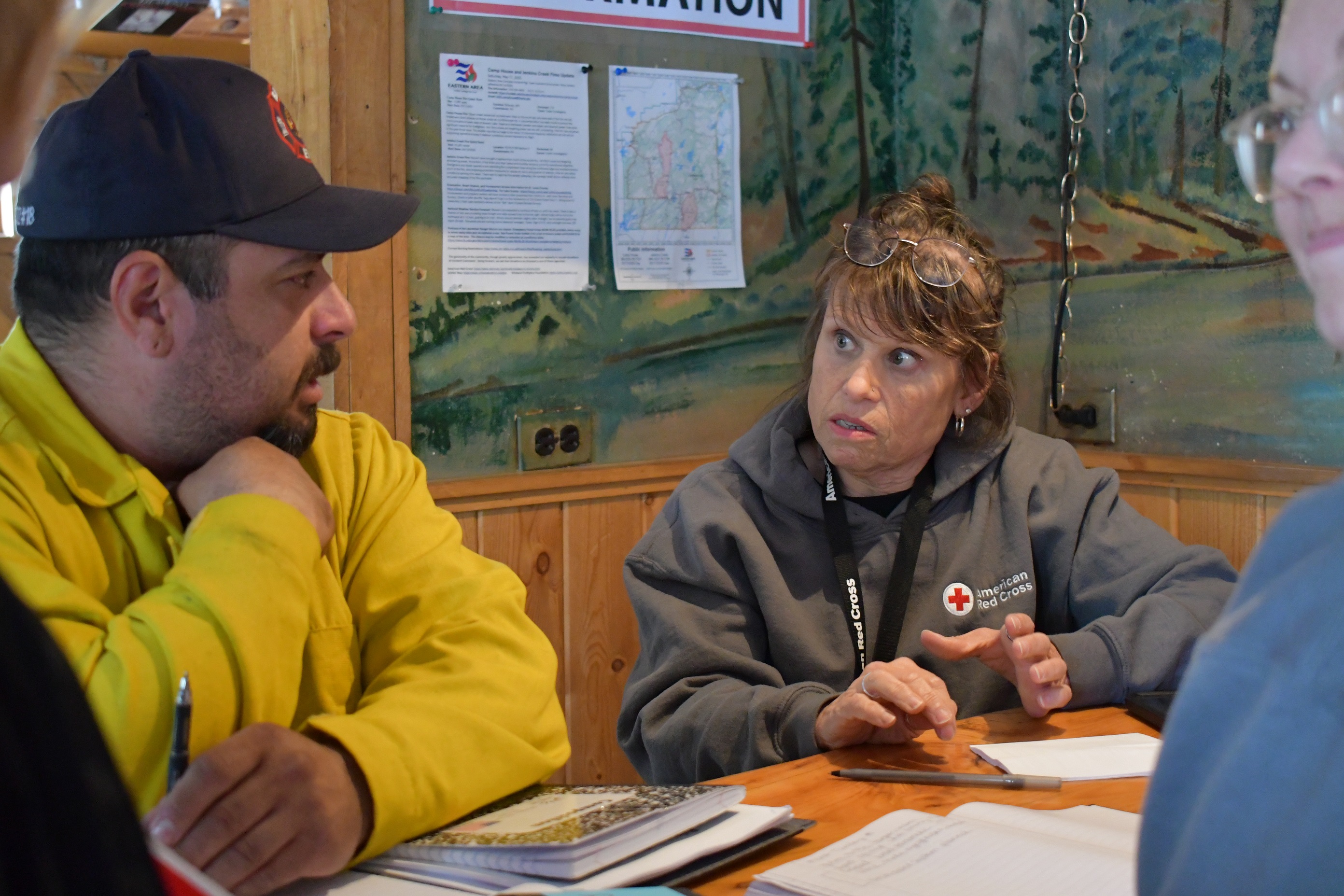
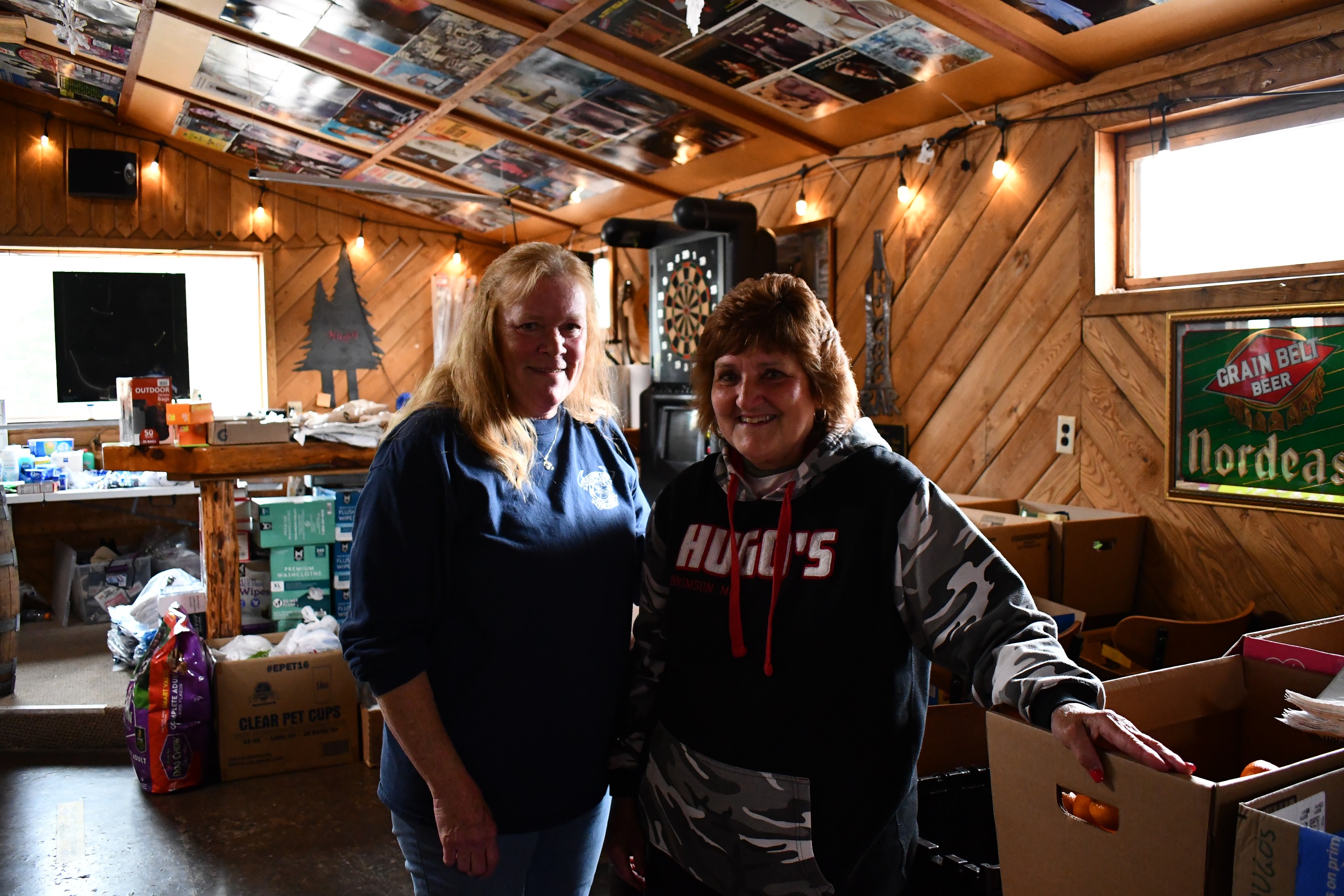
Brimson Volunteer Fire Chief Randy Freyholtz talks to Red Cross disaster relief volunteer Lisa Posch at Hugo’s Bar, May 16 2025. Photo: Nate Russell/American Red Cross

These days, the sustenance at Hugo’s Bar in Brimson, Minnesota isn’t your standard pub fare. The tables where folks normally take classes for building fishing rods are now piled with diapers, tarps, thick gloves, contractor bags, and totes.

A small group huddles around a table. They hug, share a laugh, they cry. They discuss things they’ve lost, and they speak hopefully of rebuilding once the Northland Wildfires abate.

“We lost a lot,” a homeowner shares with Debbie Ecklund, who’s helping  to manage the resource center, “the bar, the furniture, all handmade.”

“Stuff that you made?” She asks.

“No, the house was made in 1906. I wasn’t around to help.”

Debbie and the homeowner share a laugh at that.

Penny Linn and Debbie Ecklund at Hugo’s Bar in Brimson, Minn., May 16, 2025. Photo: Nate Russell/American Red Cross

Since the onset of the Brimson wildfire the owners of Hugo’s Bar, Jesse and Jessica Willemarck, converted their establishment into a 24-hour resource hub, sleeping in four-hour shifts to maintain round-the-clock services for wildfire relief.

“I don’t know what we would have done without Hugo’s here doing this for us – without Jess and Jessica doing this,” says Fire Chief Randy Freyholtz. “This has been amazing. The support, the community outreach has been phenomenal.”

As the crowd grows, Chief Freyholtz can be seen checking in on families and making sure his neighbors have everything they need. After he’s made the rounds and talked to everyone, he sits down at a table with Red Cross volunteers.

“Some of us [firefighters] have been evacuated,” he explains, “but so far none of our structures have been affected, so we’ve been lucky in that aspect. Very lucky. For how fast this fire’s been moving, we’ve been very lucky that we haven’t lost anybody.”

Chief Freyholtz and his small group of volunteer firefighters have been fighting the fire since day one. And he’s been evacuated from his home, sleeping in his truck at the fire station when not committing his waking hours to combatting the flames threatening his community.

“And how are you doing?” a Red Cross volunteer asks Chief Freyholtz.

“I’m doing good. I’m tired,” he says, “I think it’s starting to catch up with me finally. Now that things are starting to slow down and I’m sitting down more.”

Red Cross volunteer Kyle Parkinson compares distance between Hugo’s Bar and the fireline, Brimson, Minn., May 16, 2025. Photo: Nate Russell/American Red Cross

Rain during the weekend brought some respite. And information reports at Hugo’s say they’re full on donated goods and focused on distributing them to the people affected while donating the rest to food pantries and other community organizations to ensure nothing goes to waste.

To help reach people, Red Cross volunteers will be at Hugo’s to assess individual disaster care needs, such as health, mental health, and spiritual care. They’ll also use the site as a hub for working directly to provide support for those who have lost their homes to the fires.

If you or someone you know has been displaced by the Northland Fires, call 1-800-RED-CROSS.

Story and photos by Nate Russell/American Red Cross Volunteer

Learning Through Service: South Dakota Students Support Red Cross Wildfire Response

In late January, Patty Brooks, Executive Director of the Eastern South Dakota Chapter of the Red Cross, got a touching voicemail from two students at First Presbyterian Church in Sioux Falls. They were reaching out to invite someone from the Red Cross to come to talk to their youth group about how the organization was helping with wildfire relief efforts in California.

Not long after that, Patty received an email from Kathie Douma, the church’s Director of Children’s Ministry. Kathie shared that her first through fifth-grade students were working on a service-learning project, where they were asked to identify a need in their community and come up with ways they could help out. After thoughtful discussion, the children chose to focus on the California wildfire relief efforts and the role of the American Red Cross in providing support.

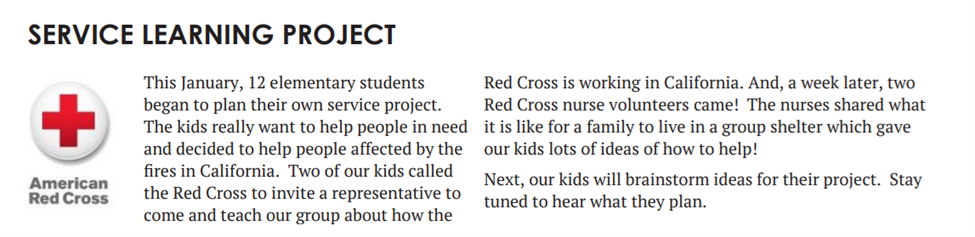
Project announcement from the First Presbyterian Church newsletter.

Red Cross volunteers Patti Vaska and Katie Gilmore, both retired nurses, met with the students to explain how the Red Cross responds to disasters like the LA wildfires. They helped the children imagine what it would be like to evacuate their homes and stay in a group shelter, offering insight into the experience from a young person’s perspective.

“It was a really fun evening,” said Katie Gilmore. “We were honored to speak with the students – it was unlike anything we’d done before. It was a meaningful way to involve youth in community service and explain how the Red Cross supports people during disasters.”

Inspired by the discussion, the students decided to take action in two ways: by creating handmade greeting cards for wildfire shelter residents and by raising funds to support the Red Cross relief response.

The students took the lead on the project. They requested permission to use church supplies to make the cards and to collect donations throughout the month of March.

Handmade greeting cards created by the youth of First Presbyterian Church in Sioux Falls, South Dakota, for LA wildfire shelter residents. Photo submitted.

“Each Sunday in March, the kids took turns speaking to the congregation about the Red Cross’s recovery efforts in Los Angeles,” said Douma. “They didn’t just want to raise money – they also wrote prayers and led the congregation in prayer each week for the people of LA and those involved in the recovery.”

By the end of the month, the students had raised $1,500 – meeting their fundraising goal! They also created more than 125 handmade cards and invited parishioners to add personal messages of encouragement after services.

Youth from First Presbyterian Church in Sioux Falls, South Dakota hard at work creating hand-made personal greeting cards. Photo submitted.

“These students are amazingly industrious and generous, and we really appreciate their hard work for the children and families that survived the LA wildfires,” said Patti Vaska. “We thank First Presbyterian and their parents for mentoring our next generation to roll up their sleeves and open their hearts at a young age – it’s so beautiful!”

In May, these cards were distributed to wildfire survivors at several Multi-Agency Resource Centers (MARCs), where families could come in for additional resources, support and assistance.  

Group photo of the students at the final meeting to reflect on their accomplishments and celebrate the meaningful impact of their service-learning project. Photo submitted.

“I was so moved by the children’s efforts,” said Erica Fausto-Aguado, Red Cross Regional Disaster Officer for Los Angeles. “I’m so impressed and grateful for the generosity of these young people. How compassionate of them to let these survivors know that they are being thought about and haven’t been forgotten.”

After the donations were made and the cards distributed, the students gathered for a final meeting to reflect on their accomplishments and celebrate the project’s impact.

“It was so heartwarming to see our youth learn about people in need and discover ways they could make a difference,” Douma expressed. “I was incredibly impressed by how the entire project came together.”

This marked the fourth year of doing a service-learning project, and it was the first time the students chose to address a disaster in another state. In previous years, their efforts focused on local needs — such as providing food for those facing hunger in their community, creating activity packs for children in the hospital, and assembling “birthday in a bag” kits for children in the foster care system.

“As part of the project, the students discussed the meaning of community and collectively agreed that people across the country, even if geographically distant, are still part of their broader community,” Douma explained. “Motivated by that belief, they were eager to help.”

You can help by giving to Red Cross Disaster Relief. Your gift enables the Red Cross to prepare for, respond to and help people recover from disasters, big and small. Visit RedCross.org/mndaks, call 1-800-RED CROSS (1-800-733-2767), or text REDCROSS to 90999 to make a donation.

When Every Second Counts: A Mother’s Instinct and Medical Training Save a Life 

It was the kind of day people in the Midwest wait for all year. Sun overhead, the lake calm, and kids laughing, playing in the water. Jessica Simones was at Gull Lake in Minnesota with her daughter, Jocelyn, and a group of family and friends, soaking in the beauty of summer. 

Jessica Simones and daughter Jocelyn share a moment before Snow Ball 2024.

In a moment, everything changed. 

Jocelyn was pulled from the water by a friend—unresponsive, not breathing, and without a pulse. Cell phone service at the lake was spotty, adding to the urgency and chaos. 

Without waiting for help that might not come in time, Jessica dropped to her knees on the dock. 

Years of medical experience kicked in—but so did something deeper. She began CPR, working to bring her daughter back. She eventually revived Jocelyn and continued to monitor her breathing and care as they transported her to the nearest hospital, keeping her safe, warm, and alive. 

Jessica had participated in code blue events many times in her previous work at Children’s Hospital. But this time, it was profoundly different.  

“Nothing prepares you for doing it on your own child,” she said quietly. “I’ll never get that image out of my head.” Thankfully, Jocelyn has since made a full recovery and is eagerly anticipating her high school graduation. She is also excitedly planning for a future career in medicine at the College of Saint Scholastica in the fall. 

Honoring extraordinary personal action  
 
At a recent ceremony held at the Allina Medical Center in Faribault, Minnesota, the American Red Cross honored Jessica with one of its highest awards: the Certificate of Extraordinary Personal Action. 

Coworkers pin the official American Red Cross Lifesaving Award pin on Jessica during her recognition ceremony at Allina Clinic, Faribault, Minnesota, April 2025.

“It’s a recognition reserved for those who, in a moment of crisis, step up during an emergency to save or sustain a life,” said Melanie Tschida, Executive Director for the American Red Cross serving Southern Minnesota. “Whether or not they were trained by the Red Cross, their actions reflect our humanitarian mission to prevent and alleviate human suffering.” 

“Jessica, this award honors your courage—not just as a nurse, but as a mother,” said Carrie Carlson-Guest, regional communications director. “Your quick thinking and selfless actions made all the difference.” 

Why training matters 

At the hospital, healthcare workers later shared that just a one-minute delay could have led to a much different outcome for Jocelyn.  

Allina teammates celebrated Jessica Simones and her incredible actions at the recognition ceremony held at Allina Clinic, Faribault, Minnesota, April 2025.

Those first moments on the dock—the ones Jessica made count—are why CPR training matters. 

The American Red Cross encourages everyone to train for the moments that matter. Visit RedCross.org/MNDAKS to learn more and sign up for a course today.