What’s it like to be a refugee?

This September 9-11, the Red Cross will be taking part in a humanitarian crisis simulation put on by the University of Minnesota. The goal of the weekend event is for participants to gain an understanding of the realities and difficulties facing humanitarian aid professionals and the people they serve. Volunteers, role-playing as refugees, doctors, United Nations Peacekeepers, and others, will transform a boy-scout camp in Cannon Falls, Minnesota into the scene of an international humanitarian crisis. Participants will encounter displaced refugees, outbreaks of disease, roving militias, and many multidisciplinary problems typical of humanitarian catastrophes.
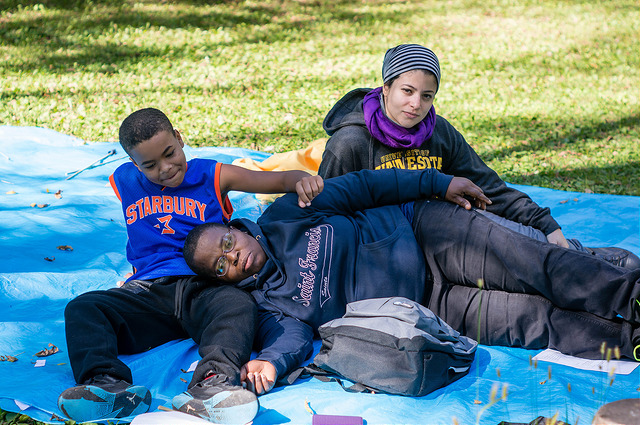
University of Minnesota humanitarian crisis simulation course (Photo credit: UMN)

Pj Doyle, a longtime Red Cross volunteer for the Minnesota Region, explains how the Red Cross’s involvement in the simulation helps the larger community: “As stewards of the Geneva Conventions, each national society is charged with disseminating information on International Humanitarian Law to citizens. This humanitarian simulation provides hands-on means for our chapter of the American Red Cross to fulfill this role.” Volunteers from the Minnesota Red Cross region will be role-playing as delegates from the International Committee of the Red Cross. During the simulation they will work on registering refugee role-players.

The simulation started in 2011 as a collaborative project co led by faculty in the Schools of Medicine and Public Affairs. Since then it has expanded to include the involvement of several different schools at the University of Minnesota and various NGOs, as well as the Minnesota National Guard. During the simulation, participants first attend didactic sessions that cover issues common to humanitarian catastrophes. Participants are then placed in multidisciplinary groups and act as emergency response teams. Throughout the weekend, these teams will assess various “camps” and “villages” as they assess problems such as malnutrition, security, and human rights violations. After their assessment, each team will develop a proposal for an intervention and present their solution to a board.
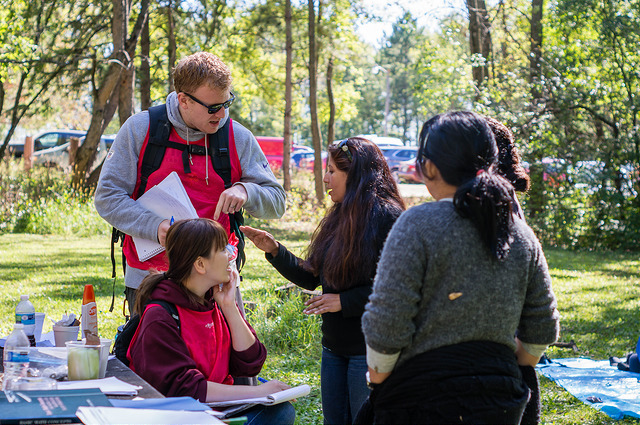
University of Minnesota humanitarian crisis simulation, 2015 (Photo credit: UMN)

The course is a valuable learning experience for anyone who is interested in or currently pursuing a career in humanitarian aid work, as well as professionals currently working with former refugees. It is offered for a fee to adult participants from the community, and as a one credit graduate elective at the University of Minnesota. While the course places an emphasis on the public health aspects of humanitarian relief, the simulation provides an opportunity for anyone to develop and shape skills necessary for success in all areas of humanitarian work.
Photo credit: UMN
Photo credit: UMN

Both participants and volunteers are still needed and welcome for the simulation. Those interested in participating as a student or volunteering can learn more by emailing umnsim@umn.edu. To see more photos from the 2015 humanitarian simulation, click here.

Story by Adam Holte, American Red Cross Minnesota Region, International Services Intern

Grateful for volunteers, proud of response

Disaster relief supplies for summer storm clean-up, Mora, Minnesota, July 2016. Photo: Red Cross

We are so proud of, and grateful for, all of the Red Cross disaster workers who have responded to tornadoes and flooding relief efforts in Minnesota.

Below are some stats about the Red Cross relief provided as of July 18. To see feature news coverage from July 14, click here.

  • 11 counties reached
  • 65 volunteers and staff responded
  • 3,900 snacks and bottles of water supplied
  • 60 clean-up kits provided
  • 300 bulk items such as gloves, bug spray, sunscreen given at two fixed sites

In addition, Red Cross volunteers conducted damage assessment, which helped the Red Cross and its partners plan relief operations.

When needed, volunteers also met directly with individuals impacted by the tornadoes and flooding to assess relief needs and provide assistance.

Thank you to all who responded to this relief effort!

Steps to help you cope after tragedy

After a devastating and tragic event like the mass shooting in Orlando, people may experience many different emotions, such as fear, anger, confusion, shock, disbelief, sadness and grief.

rco_blog_img_psychfirstaidAll of these feelings are normal.

People’s reactions appear in different ways, not only in the way someone feels, but in the way they think and what they think about; their sleeping habits, how they go about daily living; and the way they interact and get along with others.

All of these reactions are normal.

Here are a few steps to help you and others cope:

  • Stay informed, but limit exposure to media coverage of the events.
  • Take care of yourself. Eat healthy, drink plenty of water and get enough rest.
  • Be patient with yourself and others. It’s common to have any number of temporary stress reactions such as anger, frustration and anxiety.
  • Stay connected with your family and other support systems. Reach out and accept help from others.
  • Encourage children to express their feelings and thoughts. Reassure them about their safety.
  • Reach out for free 24/7 counseling or support via the Disaster Distress Helpline at 1-800-985-5990 or text “TalkWithUs’ to 66746.

This content originally appeared on redcross.org. To see more, click here

Top reason to get involved in Red Cross Home Fire Campaign

rco_blog_img_Phil_and_Bea
Phil Hansen with Bea, 90, at her home in St. Cloud, Minnesota.

Story and photo by Kaylee Beevers/American Red Cross Intern

On April 23, Phil Hansen, the senior executive for the American Red Cross Minnesota Region, had the opportunity to participate in Home Fire Campaign activities in St. Cloud. His experience was mostly what he expected: teams made up of Red Cross volunteers and St. Cloud firefighters installed smoke alarms. But this was his first time actually doing installation outreach in homes. “I was really surprised by the number of homes that had inadequate smoke alarms or didn’t have any at all. It was great for us to come in and help make these installations for people who needed it most.” The reason why Phil made the trip to St. Cloud is because he truly believes in what these installations are doing: saving lives. As of April 2016, Red Cross installed smoke alarms have saved more than 90 lives across the country. For Phil, the best part about making home visits was meeting gracious people and seeing their faces shine with thankfulness after sharing with them a lifesaving gift. “For the future, we plan to see this program grow throughout the country due to the number of lives saved.” One challenge, he says, is the number of volunteers and partners currently participating. “We have great groups going out to serve their communities, but we need more.” And the top reason to get involved: “It’s a great reward knowing you’ve impacted and changed lives within your community.”

Learn more about the American Red Cross Home Fire Campaign.

Red Cross workers: Tirelessly delivering disaster relief services

"I am so thankful to this community, my neighbors, and the Red Cross," says Monica Smith lost nearly everything when her home in floods in Deweyville, Texas. Photo Credit: Danuta Otfinowski/American Red Cross
“I am so thankful to this community, my neighbors, and the Red Cross,” says Monica Smith lost nearly everything when her home in floods in Deweyville, Texas. Photo Credit: Danuta Otfinowski/American Red Cross

As much of the country looks forward to Easter weekend, thousands of people in Louisiana, Texas and Mississippi are still dealing with the impacts of severe and widespread flooding.

For more than two weeks, communities across the South and Gulf Coast have endured intense rainfall and record-breaking flooding. The Sabine River flooding on the Texas and Louisiana border has broken records held since the 1880s and the Red River in Louisiana hit its highest level in more than 70 years. And this week, portions of the southern U.S. will face the return of severe thunderstorms and flooding, raising additional flooding concerns for already drenched terrain throughout the lower Mississippi Valley.

The American Red Cross is there on the ground, working around the clock to support individuals and families in need. On Tuesday, March 22, more than 270 people spent the evening in 16 Red Cross and community shelters in Texas, Louisiana and Mississippi.

Since severe storms and flooding began earlier this month, more than 1,500 Red Cross disaster relief workers, both staff and volunteers have:

  • Opened 60 shelters which have provided more than 4,000 overnight stays;
  • Distributed more than 70,000 relief items; and
  • Served more than 170,000 meals and snacks for impacted residents.

As people return to their neighborhoods, many are finding their homes inundated with muddy brown water and sewage, and their property strewn with heavy piles of debris. Even if their homes don not appear destroyed from the outside, some people have mobile homes that were immersed in several inches or a foot of water and inaccessible for over a week—many of those homes are a total loss because of the duration they spent with water inside.

Monica and Robert Smith lost nearly everything when their Deweyville, Texas home filled with five feet of water last week. “Everything that we own is now in the yard. We only had a few hours to evacuate, so we left it all behind,” says Monica who has lived with her family in Deweyville her entire life and has never seen a flood of this magnitude. In the photo above, Monica shows a Red Cross volunteer just how high the water was. “I am so thankful to this community, my neighbors, and the Red Cross,” says Monica. “I am not sure how I would have handled this situation without help.”

DanutaOtfinowski_2
“Everyone here is so friendly and kind,” says Maybel Bordelon who received Red Cross relief supplies in Orange, Texas. Photo Credit: Danuta Otfinowski/American Red Cross

In addition to sheltering, the Red Cross is also helping to operate Multi-Agency Resource Centers (MARC) throughout impacted areas. At these resource centers people can sit down a with Red Cross caseworker, as well as with government and community partner organizations that are offering assistance. Recovering from a disaster can be a confusing and trying process; resource centers help streamline relief information and aid so people can more easily find the help they need.

Impacted residents visit MARCs for cleanup supplies, hot meals, emotional counseling and health services, including 75-year-old Maybel Bordelon (pictured above) from Orange, Texas. “Everyone here is so friendly and kind. Everyone is town is talking about the help that Red Cross is providing. We are so thankful you are here.”

You can help
We need your continued support now to help people affected by disasters big and small. Those who would like to help people affected by disasters like flooding and countless other crises can make a donation to Red Cross Disaster Relief. People can donate by visiting redcross.org, calling 1-800-RED CROSS or texting the word REDCROSS to 90999 to make a $10 donation. These donations enable the Red Cross to prepare for, respond to and help people recover from disasters big and small.

Thank you!

In pictures : Red Cross responds to flooding in Louisiana

Hundreds of Red Cross workers are operating shelters and providing meals, relief supplies and health and mental health services in four southern states where thousands of people have been forced from their homes by floodwaters, many leaving with little but the clothes on their backs. More than 380 people spent Sunday, March 13, in 30 Red Cross and community shelters in Louisiana, Mississippi, Arkansas, and Texas.

Volunteers like Ethel Payne of Monroe, Louisiana, help provide comfort for families staying at Red Cross shelters. Volunteers often come prepared with toys and activities for children at shelters, which helps make them feel safe during difficult times. Flooding_LouisianaCima1


When Terina Smith, Michael Stevenson and their three small children were rescued from floodwaters in Monroe, Louisiana, they found safety at a Red Cross shelter. Volunteer Ethel Payne has helped provide comfort and lifted their spirits during their time at the shelter. Flooding_LouisianaCima2


Clifton Winsor has lived by himself in his Rayville, Louisiana, home since his wife’s passing in 2013. At 87, he’s lived through a lot, but this is the first time his home has flooded. Now, he looks toward the future. “At my age, it’s hard enough to think about what happens next after something like this,” he says with tears in his eyes, “but facing it alone without my wife makes it even harder.”Flooding_LouisianaCima5


The American Red Cross delivered water and snacks to neighborhoods affected by flooding in Rayville, Louisiana. For many residents, it was the first day they were able to get back into their homes to assess damage.
Flooding_LouisianaCima6


When Carroll Taylor saw the water rising in the backyard of her West Monroe, Louisiana, home, she knew she had to leave. When she came back the next night, she found about 6 inches of water had entered her living room. When the Red Cross came through her neighborhood, she had spent two days pulling carpeting out of her home, bleaching her walls and cleaning the concrete floor below. “I was mad that this happened to me at first, but then I realized I was lucky,” she says. “I didn’t get it as bad as others – and I won’t need as much as others – but I’m so grateful that the Red Cross is here to help those who will need it.”Flooding_LouisianaCima7


You can help people affected by disasters, such as the current flooding and countless other crises, by making a donation to Red Cross Disaster Relief. You can donate by visiting redcross.org, calling 1-800-RED CROSS or texting the word REDCROSS to 90999 to make a $10 donation. These donations enable the Red Cross to prepare for, respond to and help people recover from disasters big and small. To learn more about the Red Cross relief effort across flood-affected areas, click here.

Photos by Daniel Cima. Captions by April Phillips.

These internet stars can do it in two minutes – can you?

What’s Trending has teamed up with the American Red Cross and your favorite social media celebs to help save lives.

By Christine Linnell, What’s Trending

Shira Lazar and Bart Baker can totally do it in two minutes. Destorm Power couldn’t do it back in high school, but by college he was doing it like a pro. GloZell? Under two minutes.

It’s not what it sounds like, but we’re glad we’ve got your attention.

The American Red Cross is reaching out to the online community and partnering with What’s Trending, iHeart Media, the Charity Network and the Reveal Project to launch #2Steps2Minutes, a campaign to promote home fire safety and help reduce deaths and injuries associated with home fires by 25%.

The two steps are simple: 1) practice your home fire drill until you can get out the door in less than two minutes, and 2) check your smoke alarms each month to see if the batteries need replacing.

It’s common sense stuff, but it could be the difference between life or death. On average, 7 people die every day and 36 are injured from a home fire. Having a working fire alarm alone can reduce your chances of death or injury by 50%

Here to remind you to stay prepared are some of your favorite social media stars and friends of What’s Trending. Directed by the Brothers Riedell, this PSA features Glozell Green, Frankie Grande, Bart Baker, Shira Lazar, Brodie Smith, Brittany Furlan, Destorm Power, Twan Kuyper, comedy duo Gaby Dunn and Alison Raskin, Teni Panosian, Amanda Cerny, 80fitz, Trisha Hershberger and Nick Riedell.

And there’s a lot more to come – throughout the campaign, celebrities and influencers will be supporting the Red Cross through your favorite social media platforms, special merch, exclusive auction items and one-of-a-kind experiences, all benefitting the non-profit.

It culminates with the fourth annual What’s Trending Tube-A-Thon fundraising event, taking place in April at the iHeart Theater in Burbank. Stay tuned for updates – you won’t want to miss it!

For more information about the campaign, visit RedCross.org/2steps2minutes.

Also, check out our exclusive behind-the-scenes video featuring bloopers and off-camera moments from your favorite stars!

This story is posted with permission. The original post was published on What's Trending

What’s a Red Cross dispatcher?

By Kaylee Beevers, American Red Cross intern

Across the United States, the American Red Cross has people who volunteer their time as dispatchers during Red Cross disaster responses. These volunteers help fulfill the Red Cross mission to reduce human suffering during emergencies. Red Cross dispatchers coordinate response teams that provide basic comfort and care to families after home fires and other disasters. These dispatchers serve their communities with care. This volunteer role is one of the most worthwhile ways to get active in the Red Cross. Below are brief portraits of five volunteers who serve as disaster response dispatchers for the Minnesota Red Cross region.

OLYMPUS DIGITAL CAMERA

Mike and Deb Hofmann, St. Cloud 
Based in central Minnesota, Mike and Deb Hofmann proudly serve together as Red Cross volunteer dispatchers. The couple met in high school and they currently living in Cold Spring. Mike has served the American Red Cross for 40 years through multiple volunteer positions and Deb has been with the organization as a dispatcher for 10 months. Some of the most rewarding parts of the job for the couple is knowing you can help people during their time of need and offer services. Deb says, “When they’re looking for a way to go, we give them a direction.” Their advice? If you want to get involved, connect with your local Red Cross chapter.

Dunder 1Diane Dunder, Duluth
After retiring as a health and physical education teacher, Diane Dunder decided to take on the volunteer role as a Red Cross disaster relief dispatcher. Dunder says she was graced with “the best instructors who knew what they were doing and were very well informed about the job.” Some of the role’s challenges in her area,  she says, are not having enough field responders as well as other dispatchers. “We all have other things going on in our lives and yet more help would be appreciated.” One of Dunder’s greatest rewards while serving as a dispatcher was helping an elderly woman after a house fire. The victim had health issues and Dunder spent several days following up and working with healthcare and mental healthcare professionals to make sure that the woman was safe. “Being a dispatcher is a great way to volunteer and keeps you educated,” says Dunder.

Joe ReinemannJoe Reinemann, Mankato
Stationed in the southwest Red Cross chapter in Mankato, Joe Reinemann has been a volunteering dispatcher for more than a year. Reinemann usually works as a dispatcher during night shifts that start from 4:30 to midnight or from midnight to 8 am. Reinemann, who helped create the most recent dispatcher training materials, says “we’re upgrading our dispatcher manual. It’s extremely hands-on. It’s also one-on-one.” Reinemann felt nervous when he received his first dispatch call for Red Cross disaster response. He wanted to make sure that everything went well, but he says “the help and training are so great that sometimes you don’t even need any assistance from other dispatchers.” Reinemann’s advice to future volunteers is to “DO IT! It may be imitating to sign up, but it’s not complicated at all.”

Jan Reyers, Mpls-St.Paul Metro
Jan Reyers has served as a volunteer with the Red Cross for more than 35 years. Most currently, he’s disaster response dispatcher based in the Minneapolis-St. Paul metro area. Originally from White Bear Lake, Jan is proud to serve with the Red Cross alongside his wife Bonnie, who is also a dispatcher. “It’s always nice to have your wife as a dispatcher to help coach you along.” Being a dispatcher has taught Jan how to prioritize what he’s doing and to get it done correctly. Jan says the skills you need in order to become a dispatcher are communication, organization of information and people, and demonstration of empathy. Having served as a disaster responder in the field helps. “Get involved, sign up and be available to serve,” is Reyers’ advice to all anyone who wants to participate with Red Cross disaster relief teams.

Learn more
The need for Red Cross volunteer dispatchers is great. Last year the Red Cross supported more than 2,500 people affected by local disasters, which were mostly home fires. It’s a great way to serve and to meet new people. The current Red Cross dispatchers need to you step up and to get involved! More importantly, your neighbors, friends, family and thousands of others across this region need you. You never know when hard times will strike and you could lend a hand to someone who needs it the most. You could be the person who gives someone hope during a time of despair and a way to look toward a brighter tomorrow. To learn more, click here.

Fires do more than burn

12644776_10153965832388846_9172351190049117918_n
As part of a Red Cross disaster relief team, Rose Ingebrigtsen has responded to several house fires in northern Minnesota, including one in Virginia on January 26, 2016. Photo credit: Nancy Rogers/American Red Cross

By Rose Ingebrigtsen, an American Red Cross intern serving in northern Minnesota

When I saw that the American Red Cross serving Northern Minnesota was looking for a disaster services intern I was immediately interested. Even though I did not have any prior experience with the Red Cross personally, I knew it must be a great place to work. Why else would 330,000 volunteers nationwide serve for free? At this point I am mostly learning about disaster response and capacity building for The Pillowcase Project (a youth disaster preparedness program that the Red Cross is doing in partnership with Disney), which is great because I love doing hands on work and working directly with people.

That changed on Friday, January 22, when I was able to go on my first D.A.T. (Disaster Action Team) response with the Red Cross. I was a little nervous due to the fact I had never done anything like this before, but I was lucky enough to be accompanied by our local disaster program manager and seasoned D.A.T. captain Tony Guerra.

Before meeting with the affected resident, we drove to the address to see first-hand the condition of the burned house. Due to sketchy cell service and an unreliable maps app we couldn’t find the house, but it turned out there wasn’t much of a house left to find. Later, when we met our client, I quickly learned how hard it is to be really prepared for a house fire, and that no one knows exactly what to do after and much of their belongings are damaged or gone. This client was no different: all she had now were the clothes on her back and, luckily, her purse.

11039083_10153208300863846_9044158130483480805_o
In northern Minnesota local community members help the Red Cross provide basic comfort and care to people who have suffered a tremendous loss because of home fire and other disasters. Photo credit: Nancy Rogers/American Red Cross.

After we assessed our client’s needs and determined what steps she needed to take next we brought her a donated quilt, which she appreciated so much. Typically these quilts are made by local church groups, and then they are donated to disaster victims and military veterans through the Red Cross. Giving someone in need a quilt is, I think, fitting. Back in the day, imported fabric was expensive for the average person in America and it was difficult to find sufficient, affordable fabric locally. The solution was to salvage scraps of fabric and to sew together into a quilt. Today, after someone has a house fire family, friends, strangers, and the Red Cross come together like small pieces of fabric to help people rebuild their lives.

Before beginning this internship, I had no idea how many house fires there were in our area and the damage they do besides burning up the contents of your house: think smoke damage or water damage. Since my first response in January, I’ve had the opportunity to respond to two more fire disasters in northern Minnesota. I was struck by the devastation residents feel after losing much to all of their belongings, and how much Red Cross disaster relief is necessary and appreciated. I hope there will be fewer house fires in the area. But if there are more I hope I have the opportunity respond again, because I have enjoyed lending a hand and making a direct positive difference in someone’s life.

Red Cross spiritual care is for disasters of all sizes

Story by Jason Bengtson, Regional Recovery Manager for the American Red Cross Minnesota Region

_DSC2957Since 1997, American Red Cross volunteers in spiritual care have responded to large disasters across the country, providing what is for some people a basic need for disaster relief. Now, the Red Cross will offer spiritual care during disasters small, medium and large. This program expansion comes following a national Red Cross leadership decision to make spiritual care a part of basic comfort and care in local communities across the country.

A major component of the Red Cross Disaster Spiritual Care Program is collaboration with our Integrated Care and Condolence Teams (ICCT). These teams coordinate services to families whose loved ones are injured, missing, or deceased because of disaster. Immediate relief and long-term recovery planning, health services, mental health support, and spiritual care is offered together as a way to decrease intrusion into people’s lives while increasing care, comfort and support, during a time of great need.

Our region is fortunate to have Greg Bodin leading the local spiritual care team. Greg is a Red Cross volunteer who helps lead the national spiritual care program. He’s also head of pastoral care for North Memorial Health Care. He has deep experience providing spiritual care after emergencies.

“This is an exciting opportunity for the Red Cross to expand the basic services it provides to people affected by disasters in Minnesota,” says Greg. “The Red Cross Disaster Spiritual Care program represents excellent community care across faith traditions.”

_DSC2929Spiritual care volunteers respect the Fundamental Principles of the global Red Cross and Red Crescent Movement. The principles ensure that services are provided with neutrality and impartiality in a way that supports the Red Cross mission to alleviate human suffering. The volunteers provide consistent and reliable services in all regions and to all persons regardless of faith traditions. They are trained to spiritual care during a house fire, the most common disaster the Red Cross responds to, as well as major natural disasters and mass casualty events.

Recruitment and training for this new opportunity will take place during the coming months. To be eligible for a spiritual care volunteer position an individual must be a professional chaplain or an endorsed faith-based provider. Active leaders of local faith-based organizations are encouraged to become Red Cross spiritual care responders.

For additional information about this opportunity, please email Jason at jason.bengtson@redcross.org. Image credits: Lynette Nyman