Leading with Purpose: Meet Makayla Anderson, Red Cross Youth Powerhouse 

When Makayla Anderson first applied to volunteer with the Red Cross, she was 14 years old, shy, and just starting high school. A phone call with a Volunteer Services screener turned into a life-shaping conversation—one that set her on a path she never expected. “I wasn’t sure I could help because of my age and little experience,” Makayla recalls. “But he said, ‘I believe in you and you will go far.’ That moment meant everything.” 

And go far, she has. 

Over the last four years, Makayla has become a driving force in youth engagement with the Red Cross—founding a club at her virtual high school, starting the region’s Youth and Young Adult Council (YAYAC), and stepping into national roles including her current position as a Youth Action Campaign (YAC) Intern with the International Humanitarian Law (IHL) team. Along the way, she’s brought creativity, courage, and compassion into everything she does. 
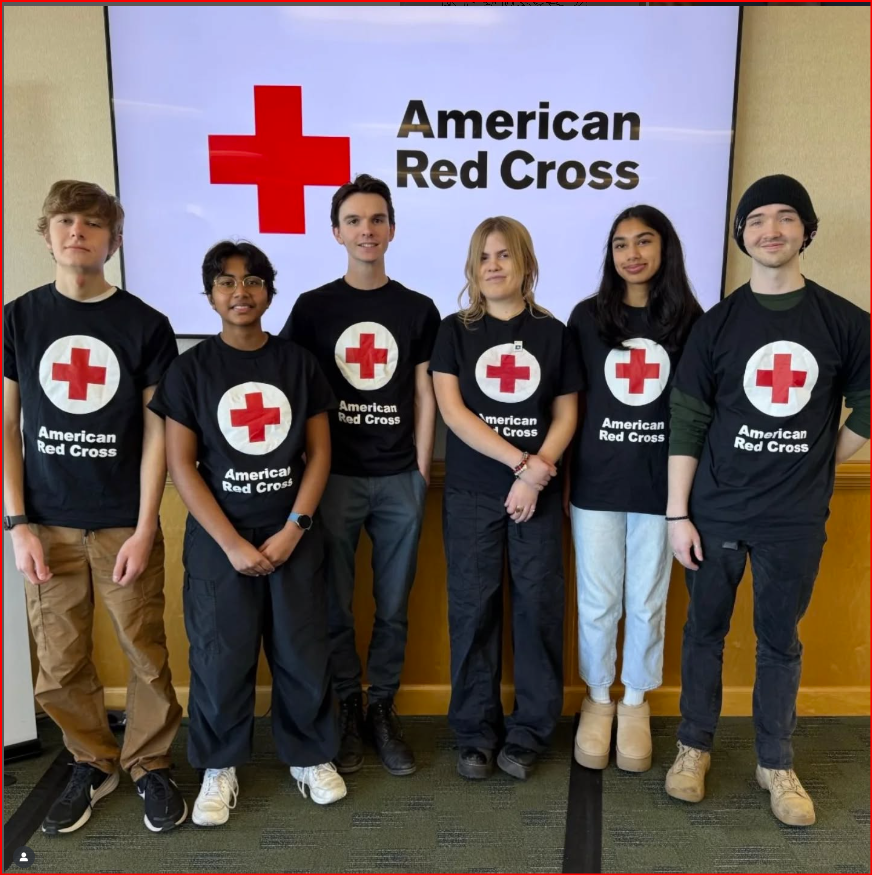
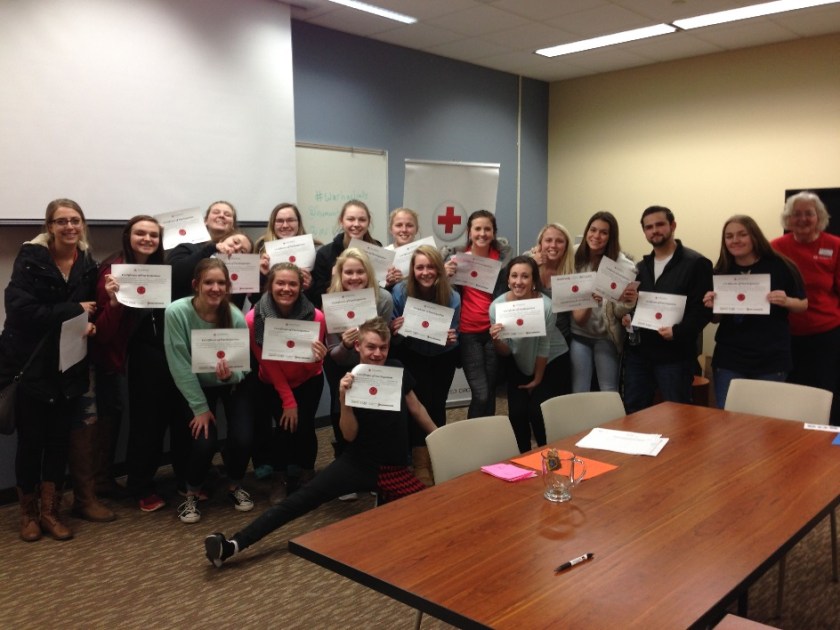
Makayla pictured with fellow members of the Red Cross Minnesota and Dakota’s Youth and Young Adult Council (YAYAC). Pictured left to right: Erik, Jay, Joel, Makayla, Shaivi and Alan (not pictured Nuna and Dawson). Photo submitted.

Finding Her Voice Through Service

Makayla’s journey began with behind-the-scenes support in Volunteer Services—working in Volunteer Connection and helping screen new volunteers. She gradually took on more responsibility, eventually creating her own Red Cross club at school and joining the IHL Youth Action Campaign. That’s when things clicked. 

“I never thought I was really interested in law,” she says. “But hearing from speakers at the national YAC Summit and working 1-on-1 with Red Cross staff opened my eyes to a new way of leadership.” 

It was also where she learned how to blend purpose and creativity—skills that came to life in her standout YAC project: a virtual art show on the theme of nuclear conflict. As a lifelong artist, Makayla leaned into her passions and invited others to explore difficult topics through visual expression. The show reached across the globe—from Minnesota to Dubai—and included an educational presentation on IHL and the role of art in activism. 
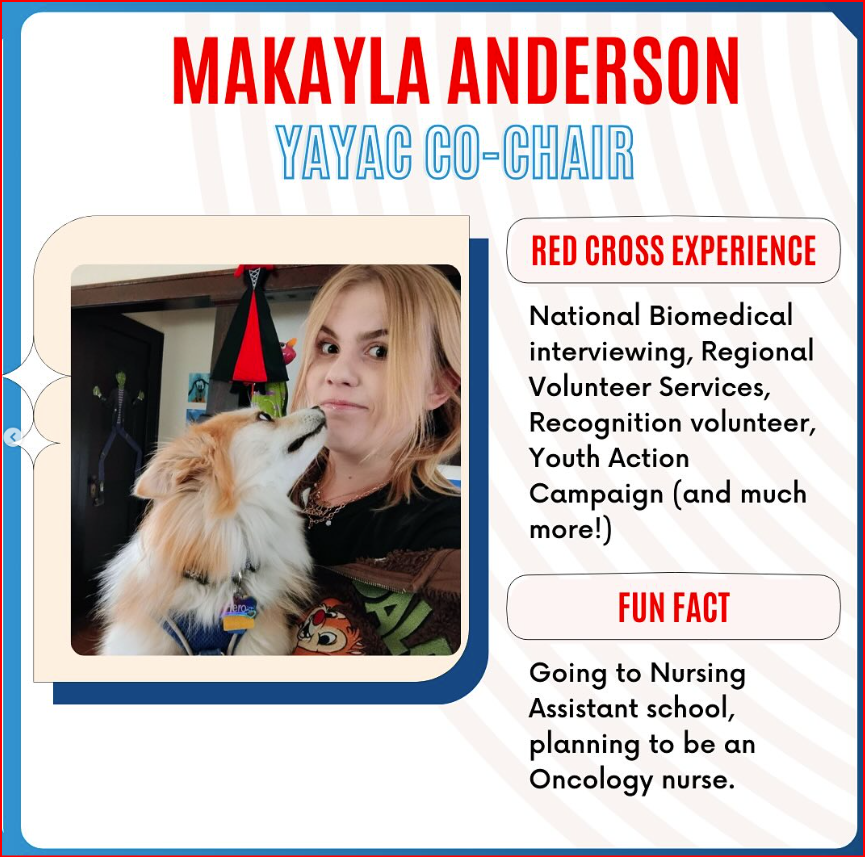
Makayla’s engagement on social media plays a key role in promoting the activities and programs of the region’s Youth and Young Adult Council (YAYAC).


Creating Change, One Youth at a Time 

After seeing the difference youth leaders were making in other regions, Makayla realized her own region was missing a critical piece: a strong network for youth engagement. Rather than waiting for someone else to fill that gap, she helped build the Minnesota and Dakotas Youth and Young Adult Council (YAYAC) from the ground up.  

“I don’t think it has too much to do with how confident you are with yourself,” she reflects. “It’s about your ability to take action and how well you understand the steps it takes. If you care enough about something, you just start eating it a bite at a time.” 

She’s now leading the council with big goals: to grow awareness, host engaging events, and make sure the youth voice is part of Red Cross decisions across departments. 

Wisdom Beyond Her Years

Makayla has also faced her share of challenges—especially working in adult-dominated spaces. “The biggest thing to remember is to listen and learn,” she says. “You don’t need to be the loudest in the room to make an impact.” 

She’s found guidance in mentors like Mark Giammona, Ashley Sheehy, and Tracy Elder, and credits them with shaping both her leadership style and her vision for the future. “I’m a Nursing Assistant now,” she says, “but I have high hopes of getting a job with the Red Cross in IHL one day. This work brings me a sense of fulfillment I haven’t found anywhere else.” 

Makayla pictured with one of her mentors Mark Giammona, Volunteer Engagement for the Minnesota and Dakotas Region, whose guidance has helped shape her leadership style and inspired her vision for the future

Fueling Her Fire

While much of her free time goes toward volunteering, Makayla still makes time for creative pursuits. She’s a published poet and an avid dog walker, often spotted strolling around town with her pups. “This is my fun!” she laughs. 

And when it comes to advice for other youth thinking about getting involved, her message is clear:  

“Find your passion, run toward it, and don’t take no for an answer. There will be slammed doors and setbacks but remember who you are and why you started.”

Learn more about youth like Makayla making a difference at Red Cross IHL Youth Action Campaign

Want to learn more about International Humanitarian Law through the lens of pop culture? Check out our IHL YouTube channel and explore the rules of war through Andor, Star Wars, Saving Private Ryan, Ghostbusters, House of the Dragon, and Godzilla

Small but mighty Red Cross societies, working hard and not alone

 By Lynette Nyman/IFRC 

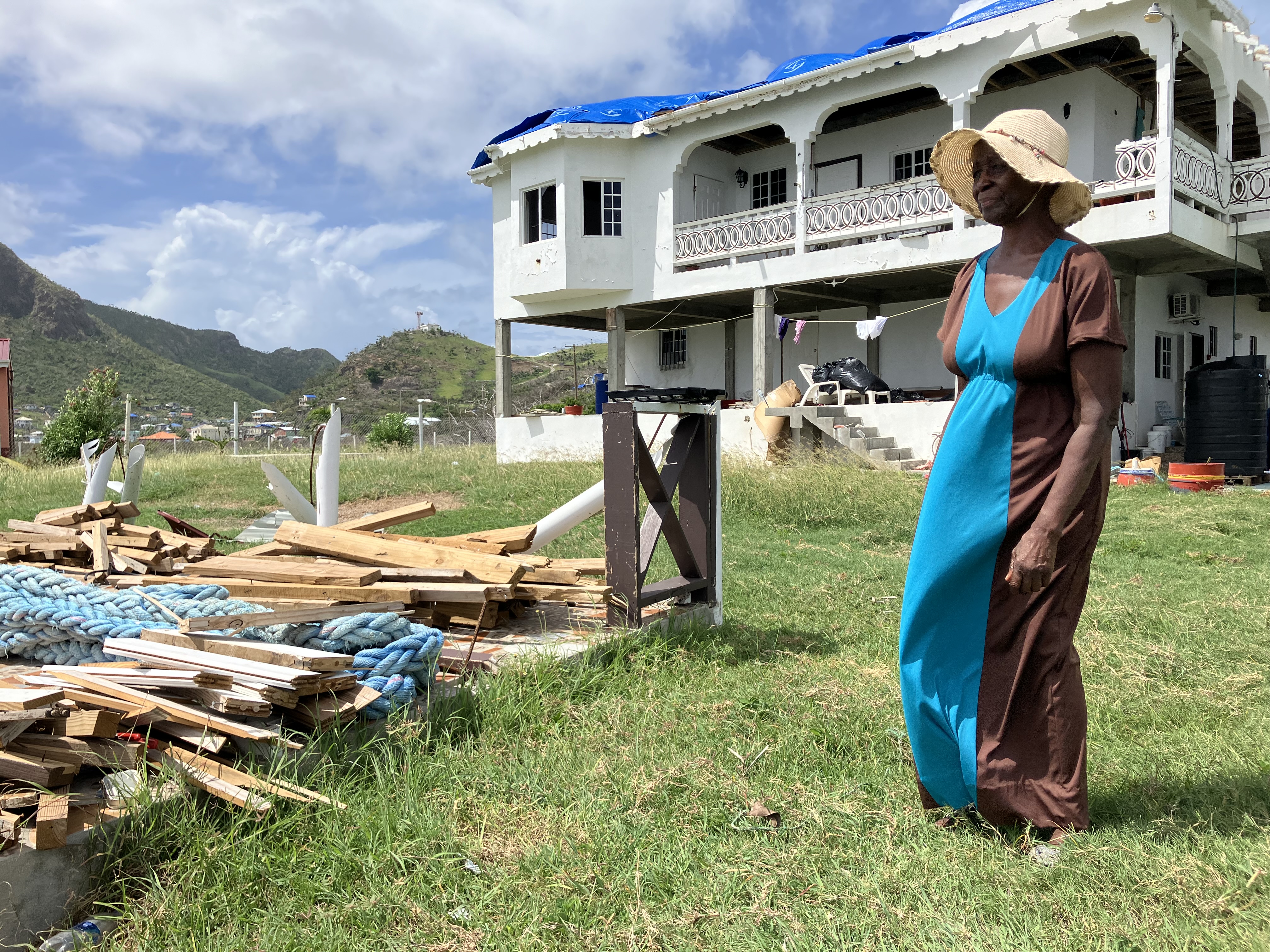
“Everything was good until Beryl came,” says Delta Alexander, a lifelong resident of Union Island in St. Vincent and the Grenadines.

“Everything was good until Beryl came,” says Delta Alexander, who was born and raised on Union Island in St. Vincent and the Grenadines. She is grateful for the care and support that the local Red Cross provided following Hurricane Beryl. Photo: Lynette Nyman/IFRC 


She’s thankful for the care and support the local Red Cross provided after Hurricane.

Beryl. Delta left Union Island in 1969, always planning to return, and in 2015, after retiring from a nursing career in Canada and the U.S., she came back to rebuild her life.

For the next three years, she built a home and continued her humanitarian work in this tight-knit community. The hurricane hasn’t slowed her down.

“The people I’m grieving for are those in shelters. They have no money, nowhere to go. They lost everything, houses, clothing, even underwear,” she says.  

Her house, situated on low land near the shore, was quickly surrounded by high water during the category 5 storm that struck parts of the Caribbean on July 1. The winds, too, were a threat. For four hours, she held back a door, dislocating her shoulder. At 78, her strength and generosity are inspiring.  

“I saw death right there. How am I going to escape?” she recalls asking herself during the storm.   

The trauma connected her with St. Vincent and the Grenadines Red Cross (SVGRC) volunteers who responded to help people on multiple islands and the mainland. 

Early in the emergency, Red Cross volunteers set up relief operations at a church on Union Island, distributing non-food items as well as a space for people to share their experiences – it was much-needed and appreciated emotional support.   

“Red Cross was wonderful. People were very nice. So soothing. Helpful and encouraging,” says Delta.  

Small society, many hazards 

The SVG Red Cross is a young national society that gained its independence from the British Red Cross in 1984. Today, the SVGRC is comprised of a nearly 100 percent volunteer workforce, including key leaders like Shaneika Laidlow who manages their disaster and mental health programs. Their aim, she says, is to help people get back to normalcy.  

“We offer assistance to those who most need it, to the best of our ability,” says Shaneika Laidlow, who manages disaster and mental health programs for the St. Vincent and the Grenadines Red Cross. Photo: Lynette Nyman/IFRC

“During these times people can get very frustrated. Does the Red Cross care for them?” says Shaneika, who is based in the nation’s capital on the mainland, St. Vincent. The answer is yes. 

“There are so many people we would love to make better, but there are some things we’re unable to do at this time because of restraints. We offer assistance to those who most need it to the best of our ability,” she says.  

The scope of the work, and the potential need, is challenging. This small nation and Red Cross society faces multiple hazards, including tropical storms, flooding, hurricanes, and even an active volcano.  

In early October, monitoring showed unusual thermal activity of the La Soufriere volcano – activating the government to issue a low-level warning and close the trail to the summit.  

La Soufriere, shrouded in clouds, is an explosive volcano that most recently erupted in 2021. It’s one of several hazards facing the St. Vincent and the Grenadines Red Cross. Photo: Lynette Nyman/IFRC 

The thermal anomaly stopped, but reminded many of past explosive eruptions like the most recent in 2021 when, on April 9, the dome inside the crater blew and for days spewed devastating volcanic ash across communities. 

“It was like the sun was out, but not there. It was all dark,” remembers Edwin Joe, who lived in the countryside distant from the ‘red zone’. He remembers ash covering everything. “Just white everywhere, like bright snow with no sun. We didn’t know what was going to happen.”  

Edwin Joe evacuated the St. Vincent, the mainland, for two weeks following the eruption of the volcano La Soufriere in 2021 and returned to find houses that had roofs collapsed from the volcanic ash. Photo: Lynette Nyman/IFRC 

Edwin evacuated the mainland for two weeks and returned to find some houses that had roofs collapsed from the volcanic ash. Many people stayed in shelters for several months. 

The Red Cross formed part of the response with the government and other emergency partners, providing water, relief items and temporary housing assistance.  

Help around the corner 

The good news is that during challenging times a small Red Cross society like the SVGRC can turn to other national societies for help, primarily through the International Red Cross and Red Crescent (IFRC).  

Raziel Uranga, a Mexican Red Cross responder with decades of disaster response experience deployed through the IFRC ‘surge’ program to serve as response operations support in St. Vincent and the Grenadines. His predecessor, he says, arrived just a few days after the hurricane, helping the SVGRC manage a large disaster response. 

Photo 4 – Small Red Cross societies “need support from the global Red Cross network in order to grow as fast as they can, especially with the multiple hazards they’re facing,” says Raziel Uranga from the Mexican Red Cross, now deployed to support the SVG Red Cross provide relief for people affected by Hurricane Beryl. Photo: Lynette Nyman/IFRC

“Red Cross is the best humanitarian movement in the world, I am convinced, because no other organization has the workforce that we have,” says Raziel, whose passion lies in reducing risks amid the rising frequency of severe disasters.

Responders and donors from around the world – and in their own communities – have provided relief for people affected by Hurricane Beryl.  

It’s uplifting for many to see this unified effort. And yet, when something big happens, a small national Red Cross society like the SVGRC needs help to do its best now and beyond.  

“They need support from the global Red Cross network in order to grow as fast as they can, especially with the multiple hazards they’re facing,” says Raziel.  

These hazards can destroy homes and livelihoods. Building back both is the focus on Mayreau, an islet just a short boat ride from Union. Wheelbarrow by wheelbarrow, people are removing rubble to restore the island’s sole income, tourism.  

“We have to clean up this island to get tourism back – to get people back from Martinique – to see the turtles,” says Patrick Forde, a water-taxi driver before the storm.  

“We have to clean up this island to get tourism back – to get people back from Martinique – to see the turtles,” says Patrick Forde, a water-taxi driver before the storm devastated Mayreau, an islet in the Grenadines. Photo: Lynette Nyman/IFRC 

Patrick rode out the hurricane in a small cupboard with his two children. “I’m lucky to be alive,” he says when looking back. 

Tiny but mighty, what he loves about his island is the way people unite. “Whenever there’s a disaster, we all show up and work together.” 

Learn more about the work of Red Cross societies around the world, like SVGRC, through the IFRC, click here.

Red Cross: One of my favorite experiences

Guest post by Christina Li

Leah, Christina and Caitlyn

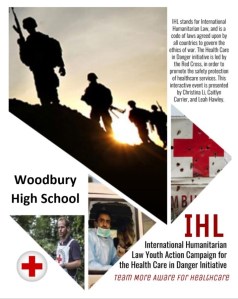
Volunteering has always been a big part of my life, and volunteering with the Red Cross has definitely been one of my favorite experiences. Two years ago, I joined the Woodbury High School Red Cross Club. Of course, me being me, I had to drag a couple of friends along: first Leah, and then Caitlyn. We started off with basic projects like holiday cards for veterans and blood drives, but pretty soon us three (Caitlyn, Leah, and me) started looking for extra opportunities. We worked together on the Pillowcase Project and helped raise money for hurricane victims (which hopefully we’ll be running next year, fingers crossed). When we were presented with the opportunity to participate in the International Humanitarian Law Youth Action Campaign, we were so excited. All of the projects we had done so far had been planned step by step for us, so this was the perfect chance to take control and leave an impact on those around us.

On the day of the training, we all got up super early and drove to the Red Cross office in Minneapolis. To be honest, we had no idea what to expect, and for me at least, I had no idea what International Humanitarian Law was. A little nervous, we walked into the classroom and… no one was there. Well, no students at least. At first, it was a little awkward being only 3 students in a room with 4 adults but, looking back, it was amazing to have that one-on-one type of learning environment. We were able to ask questions at anytime and launch into full scale debates about whatever we wanted. We talked about what International Humanitarian Law (IHL) was, what the Health Care in Danger (HCID) initiative was for, and, most importantly, what we could do about it. Being best friends with Leah and Caitlyn, the moment we 3 girls were set free to start designing our own campaign we all blurted the exact same idea. The hard part was in the details. Dr. Haji Dokhanchi, our instructor and a Red Cross volunteer, was incredibly helpful and we were able to pick his brain on what he thought would be most successful. We walked out of class practically talking over each other and bursting at the seams with different ideas.

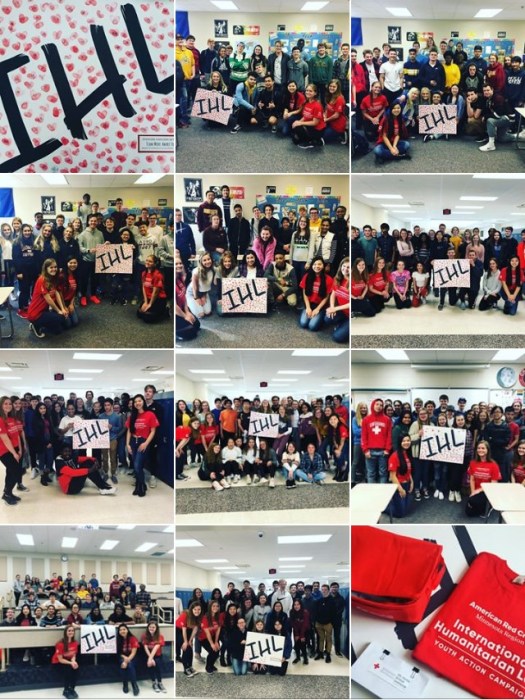
Although we’re only sophomores, all of our schedules are filled with school and extracurricular activities, which made it really hard for us to work on our presentation all at the same time. We resorted to working on chunks at a time, and with the help of Dr. Nour Sinada, our club adviser, we finished our script and were ready to present. After countless emails, March 18th finally came, day one of our week of presentations. Teaching wasn’t a new experience for any of us, but teaching a class of 30 squirmy freshmen definitely was. We had become very passionate about the topic, and we tried to convey that in the way that we presented.

A week later, we had taught around 270 students in classrooms and reached out to over 1,000 students over social media. During and after the campaign, we were met with so many supportive students and faculty. We even had 46 students contact us about either joining the club or volunteering for the Red Cross. We couldn’t be more thankful for this opportunity to raise awareness for the Health Care in Danger campaign and for all of the people who have helped us accomplish our goal. We’d like to specifically thank the teachers who lent us their classrooms along with Dan Williams and Dr. Haji Dokhanchi, both of the Red Cross. This has been one of the most vigorous projects we have ever taken on, but it also became an extremely positive experience for our team and club, as well as for also our school and community.

Thank you all for this wonderful experience!

Measles: Vaccination is the best protection

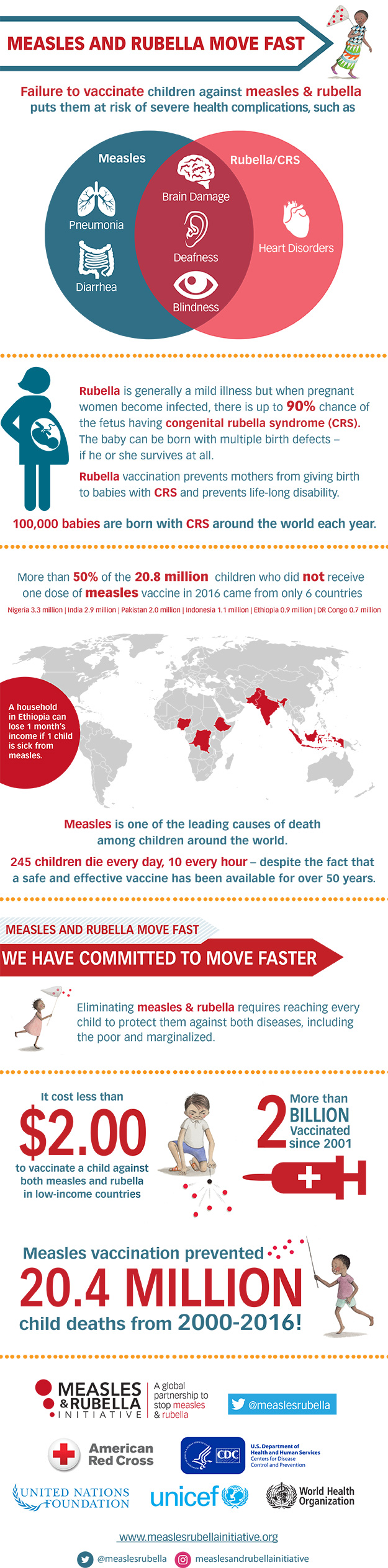
The measles outbreak in Washington reminded us of the 2017 outbreak in Minnesota as well as successful global efforts to reduce the spread of measles. The American Red Cross and partners have made remarkable strides vaccinating children against measles part of the international Measles and Rubella Initiative. An infographic below highlights disease impacts as well as program achievements.  Despite these and other efforts, hundreds of children die from measles every day. So, we must keep on. Why? Vaccination is the best protection. We encourage everyone to work together because a shared effort makes a difference and saves lives. An easy lift right now could be texting the word PREVENT to 90999 to donate $10 to American Red Cross International Services.


Post by Lynette Nyman/American Red Cross
For additional Minnesota measles resources click here.

The more things change …

…. the more they stay the same.

That’s a spot-on adage when we consider fulfilling our Red Cross mission to alleviate human suffering in the face of emergencies.

For example, one hundred years ago Junior Red Cross volunteers in Duluth made care packages for World War I veterans overseas.

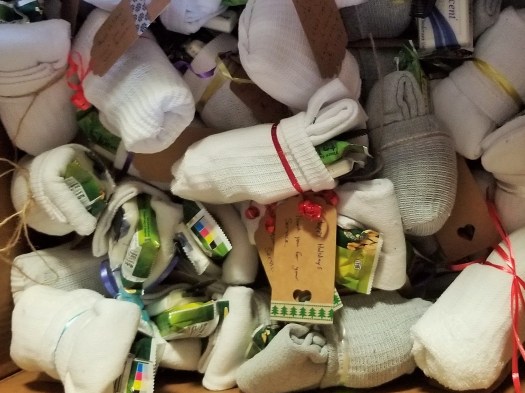
This year our Service to the Armed Forces volunteers will distribute donated socks to veterans who are homeless or at risk of becoming homeless.

Donated socks ready for distribution to military veterans in nursing homes. Photo by Jennifer Landeros

There are more examples and yet, whatever the year of the new year, the basics of life remain the same.

People need shelter, food and clothing. People need blood and blood products. People need to reach loved ones during emergencies.

The Red Cross helps meet these and other basic needs within the context of being impartial and neutral, of empowering volunteer service, and keeping an eye on preserving and promoting human dignity in all of our work.

With those thoughts in mind, this year we encourage you to look to the stars while keeping your feet on the ground. Make a regular commitment to:

  • supporting people affected by disasters
  • providing safe lifesaving blood and blood products
  • helping military members of our armed forces and their families
  • being trained in life-saving skills for emergency response
  • giving resources that help neighbors around the world

This quiz will help you choose which action is best for you.

Story by Lynette Nyman — pictured above last year with women living in Bangladesh in camps for people who have fled violence in Myanmar.  

Red Cross helps reunite two brothers after 30 years

Story by Jonna Meidal, American Red Cross volunteer

Albert Fulton with two of his grandchildren. Photo courtesy of Mr. Fulton.

If a picture is worth a thousand words, then a conversation with Albert Fulton is worth a million. He has lived a cinematic kind of life—a story so incredible it’s hard to believe it’s true. And yet, Albert is the epitome of humility. His enthusiasm for sharing his life, especially the part about how the Red Cross helped him find his long-lost brother, is contagious.

Albert and Charles Fulton were born in Tennessee and raised in a family of eight children. They shared the same bed as kids, were only a grade apart in school, and did everything together. Everything, that is, except play the piano.

“Every single person in my family went in to music, except me,” Albert states defiantly. “There was no way I was gonna sit down at no piano. I was rough and tough and loved sports,” he adds in his charming southern drawl. Despite his mother’s innate musical talents, she was never able to pass on her gifts to Albert. It’s a good thing too, because instead, Albert poured himself into science and made huge advancements for his field.

Albert studied chemical engineering in college and would later go on to advancing the mammogram machine at Xerox, teaching Nuclear Physics at Yale, and becoming the Lead Engineer for NASA and the Department of Defense. For most people, even just one of these contributions would be commendable, but for Albert, he feels the proudest about the family he created. Today, Albert lives in Austin, Minnesota. He has seven children and 42 grandbabies, all of whom he talks with “almost every single day.” This value on family started when he was young and was cemented by the bond he had with his brother Charles.

Charles ended up doing many amazing things in his life as well. He studied music at the University of Munich and started his own opera company. He toured all over Europe and Africa blessing the world with his musical talent. Albert says it was during this time that they started to lose touch, however.

They were able to reconnect in 1967 at their mother’s funeral. But then afterward, Charles went back to Amsterdam and was never heard from again. Most of the Fulton family figured the worst had happened to Charles. They figured he had either “died or was in a mental institution.” But Albert knew Charles was just “off doing his own thing,” which is why he tirelessly started looking for him.

This was no easy feat, given the fact that email wasn’t widely used at that time, so after over thirty years of searching, he finally turned to the American Red Cross Minnesota Region for help. Through the international Restoring Family Links program, in a matter of two months the Red Cross had found his brother Charles.

Albert remembers the day Charles called him like it was yesterday. He immediately started asking Charles, “What’s your mama’s name?” and “What are the names of all of your brothers and sisters?,” hoping that the caller really was who he said he was. It wasn’t long before both brothers were crying and catching up, joking around and telling stories about their childhood. They talked for three hours that day and have stayed in touch ever since.

When asked if there were any hard feelings about Charles’s disappearance, Albert states emphatically, “Absolutely not! There’s no bad blood between us. No bad blood at all! He’s my brother.” And that is that.

Albert is undeniably grateful to the Red Cross for finding his brother Charles. He becomes teary-eyed and emotional just discussing it. “I love you all for it!” he keeps saying over and over again. He mentions as well that the timing couldn’t have been more perfect, as both brothers are fighting similar diagnoses of cancer. “We can now fight it together,” he states. “Thank you Red Cross. You have changed my life forever!”

Click here to learn more about Restoring Family Links.

What’s it like to be a refugee?

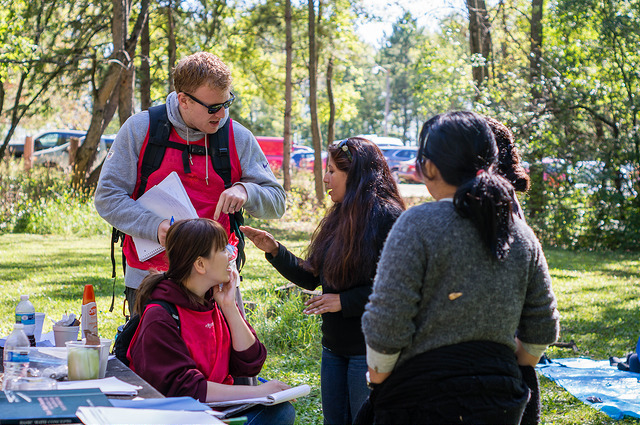
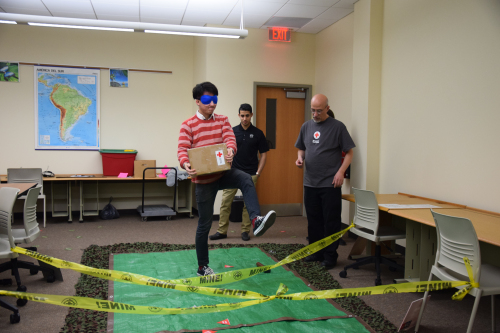
This September 9-11, the Red Cross will be taking part in a humanitarian crisis simulation put on by the University of Minnesota. The goal of the weekend event is for participants to gain an understanding of the realities and difficulties facing humanitarian aid professionals and the people they serve. Volunteers, role-playing as refugees, doctors, United Nations Peacekeepers, and others, will transform a boy-scout camp in Cannon Falls, Minnesota into the scene of an international humanitarian crisis. Participants will encounter displaced refugees, outbreaks of disease, roving militias, and many multidisciplinary problems typical of humanitarian catastrophes.

University of Minnesota humanitarian crisis simulation course (Photo credit: UMN)

Pj Doyle, a longtime Red Cross volunteer for the Minnesota Region, explains how the Red Cross’s involvement in the simulation helps the larger community: “As stewards of the Geneva Conventions, each national society is charged with disseminating information on International Humanitarian Law to citizens. This humanitarian simulation provides hands-on means for our chapter of the American Red Cross to fulfill this role.” Volunteers from the Minnesota Red Cross region will be role-playing as delegates from the International Committee of the Red Cross. During the simulation they will work on registering refugee role-players.

The simulation started in 2011 as a collaborative project co led by faculty in the Schools of Medicine and Public Affairs. Since then it has expanded to include the involvement of several different schools at the University of Minnesota and various NGOs, as well as the Minnesota National Guard. During the simulation, participants first attend didactic sessions that cover issues common to humanitarian catastrophes. Participants are then placed in multidisciplinary groups and act as emergency response teams. Throughout the weekend, these teams will assess various “camps” and “villages” as they assess problems such as malnutrition, security, and human rights violations. After their assessment, each team will develop a proposal for an intervention and present their solution to a board.

University of Minnesota humanitarian crisis simulation, 2015 (Photo credit: UMN)

The course is a valuable learning experience for anyone who is interested in or currently pursuing a career in humanitarian aid work, as well as professionals currently working with former refugees. It is offered for a fee to adult participants from the community, and as a one credit graduate elective at the University of Minnesota. While the course places an emphasis on the public health aspects of humanitarian relief, the simulation provides an opportunity for anyone to develop and shape skills necessary for success in all areas of humanitarian work.

Photo credit: UMN
Photo credit: UMN

Both participants and volunteers are still needed and welcome for the simulation. Those interested in participating as a student or volunteering can learn more by emailing umnsim@umn.edu. To see more photos from the 2015 humanitarian simulation, click here.

Story by Adam Holte, American Red Cross Minnesota Region, International Services Intern

Bringing international humanitarian law to northern Minnesota

By Vanessa Smith, UW-Superior student and Red Cross Intern

It’s hard to believe that one year ago I was on a trip in Washington, D.C. as a member of the Political Science Association at the University of Wisconsin-Superior, and we had the opportunity to visit the national headquarters of the American Red Cross. I was amazed by the fact that Red Cross does far more than what most people assume that it does. Personally, I had always thought that it mostly dealt with blood services, but after visiting national headquarters I learned that the Red Cross also deals with international humanitarian law (IHL) along with several other areas of service.

rco_blog_img_uws-team
UWS students visiting the American Red Cross in Washington, D.C. Photo credit: Haji Dokhanchi.

Personally, I was highly interested in Red Cross’s dedication to educating and increasing awareness in regards to IHL. In fact, the American Red Cross has adopted a campaign from the Belgian and French Red Cross’s that have developed a simulation training program called “Raid Cross.” This program explores and addresses the humanitarian issues involved in armed conflict situations, the basic rules of IHL that apply, and the importance of these rules in conflict situations, such as preventing harm to civilians.

I was eager to know if and how I could become involved with the American Red Cross and IHL. So, while I was visiting D.C., I asked my professor if he knew of any internship opportunities in the Twin Ports area with American Red Cross. In fact, he pulled his email up on his smart phone and sent an email to Dan Williams with the Minnesota Red Cross chapter in Duluth, right there on the street in front of the Red Cross national headquarters! By the time I returned from the east coast, I had an interview set up with Dan and was well on my way to starting my journey with American Red Cross.

UWS students participating in Raid Cross training.
UWS students participating in Raid Cross training. Photo credit: Kota Yanagidani.

Since then, I’ve been working to educate the local community about IHL. We recently held an event at the Allworth Institute for International Studies at the University of Minnesota in Duluth. This was a lecture by Red Cross volunteer Pj Doyle regarding refugees and immigrants to the United States. At this event, we reached out to more of an older generation in attendance from the area community. The next day we held an actual Raid Cross simulation at the University of Wisconsin – Superior. At the simulation we had almost 50 people in attendance, which included local high school and college students. We did both of these events all in one week! I really enjoyed knowing that we had reached more people in the community regarding IHL and refugee and immigration processes. When speaking to students after the events, I learned that many really enjoyed the experience. Also, I think that the community members were quite pleased, and maybe even surprised by, how beneficial the Raid Cross simulation training was.

High school students during a Raid Cross training at UWS
High school students after a Raid Cross training at UWS. Photo credit: Haji Dokhanchi.

When I started my internship with the Red Cross, I knew this was the kind of work that I wanted experience doing. My major is Political Science and my minor is Global Studies so I’m very interested in various topics, such as law, policy making, international relations, and humanitarian aid. Through my Red Cross internship I continue to learn more and more information that relays back to helping me with my major and it makes me feel especially good because I know that through my internship I’m educating the community on issues that are a passion of my own.

To learn more about IHL for young people, click here. A version of this post was recently published on the Humanity in War blog.  To learn more about Red Cross internships and other opportunities to get involved in Minnesota, click here.

Every story has a flip side: Haiti five years on

haitimap_3
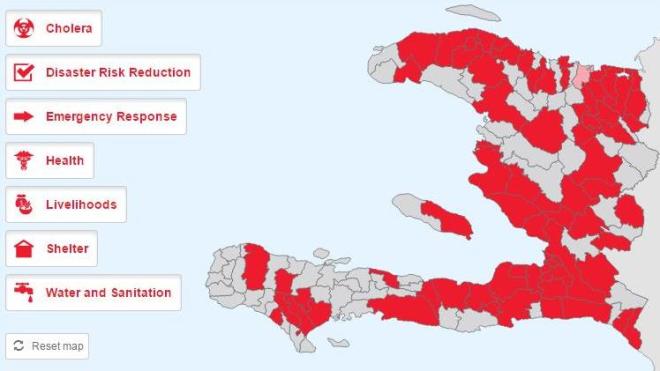
American Red Cross Haiti Assistance Program screen grab from website.

Recently, several media reports have called into question the American Red Cross response during the past five years to the 2010 Haiti earthquake disaster. We stand-by our response to the earthquake disaster. And, we are disappointed to see how our work has been misrepresented in some media.

With generous support of the American people, the Red Cross has helped millions of Haitians who desperately needed humanitarian assistance. Donations enabled the Red Cross to help build and operate eight hospitals and clinics, stem a cholera outbreak, supply clean water and sanitation, provide job training, and move more than 100,000 people out of make-shift shelters, comprised mainly of tarpaulins and tents, into safer and improved housing. We also helped build and repair infrastructure, such as schools, roadways and water distribution points, all vital to neighborhood recovery. Despite challenging conditions in a developing nation, including changes in government leadership, lack of land for permanent housing, and civil unrest, our hardworking staff—90 percent of whom are Haitians—continue to work to meet the long-term needs of the Haitian people. While the pace of progress is never as fast as we would like, Haiti is better off today than it was five years ago.

#RedCrossProud_HaitiTeam
American Red Cross team in Haiti, June 2015. Photo provided courtesy of Vanessa Deering, Haiti Assistance Program Coordinator.

To learn the facts about our Haiti Recovery Program and to hear from those we have helped and continue to help, please visit The Red Cross in Haiti: Five Years of Response and Recovery. See also The Real Story of the 6 Homes in Haiti and 13 Facts about the Red Cross Response in Haiti, which directly address the numerous inaccuracies in recent media reports. To read “Haiti on My Mind,” a recent personal account from a relief worker who responded early to the disaster, click here.

The American Red Cross has been there to help people in need for 134 years. It will be there for the next disaster or emergency to help people across the country and in other areas around the world. Thank you for your support of the American Red Cross.

Measles anywhere is measles everywhere

Story and photo by Niki McMillian, Senior Associate in International Communications with the American Red Cross

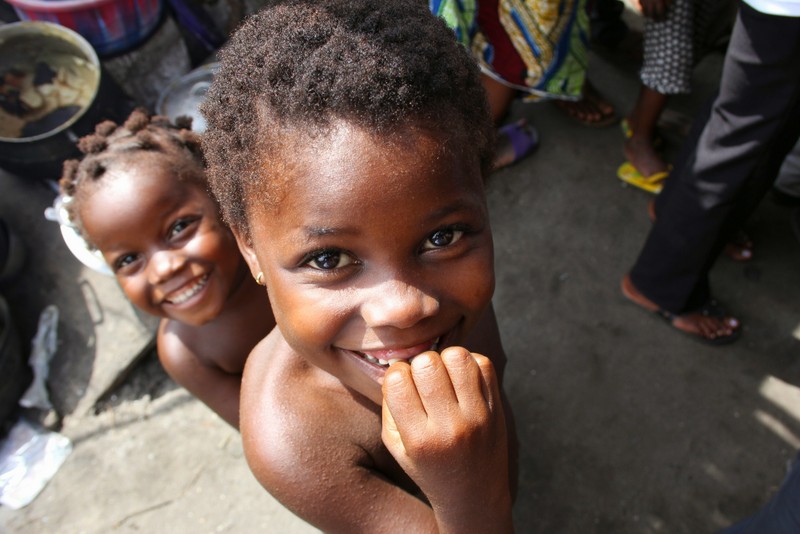
Children visited by Red Cross volunteers during a social mobilization effort for measles in Benin. Photo: American Red Cross/Niki Clark
Children visited by Red Cross volunteers during a social mobilization effort for measles in Benin. Photo: American Red Cross/Niki McMillian

It’s almost become a cliché in the headlines. But in many ways, it’s true. It is a small world. While news of the measles outbreak at California’s Disneyland and information about vaccinations are making headlines this week, the American Red Cross has been focused on the virus—and its elimination—for nearly a decade and a half. Because measles anywhere means measles everywhere.

Even though measles was eliminated from the United States in 2000, outbreaks can occur when unvaccinated travelers pick up the measles abroad, importing the virus as an unwelcome, and often unknown, souvenir. Last year’s outbreaks in Ohio, Washington state, New York, San Diego and Nebraska have all been linked back to unvaccinated Americans that had recently visited measles hotspots abroad.

Those hotspots are exactly the type of places where the Measles & Rubella Initiative (M&RI) is working the hardest. Since 2001, the Red Cross, as a partner in the M&RI, has vaccinated 1.1 billion children in some 80 countries, helping to raise measles vaccination coverage to 84% globally, and reduced measles deaths by 71%. This means there are fewer chances of measles being imported into countries that have already eliminated the virus. And while health advances have been impressive, outbreaks like the one in California—now confirmed at 51 cases—have clearly demonstrated that the work of M&RI is far from over.

The Red Cross serves a unique role in measles and rubella campaigns. In a world where one in every 500 people on the planet is a Red Cross volunteer, our reach is unsurpassed. And that reach enables us to go door to door in communities where campaigns are happening, both before, during and after, spreading the word to mothers and families. In order for a campaign to be considered successful, a 95% coverage rate is needed. Red Cross volunteers, neighbors living in the communities in which they work, can help this happen.

Measles is a highly contagious virus, spread by contact with an infected person through coughing and sneezing. When one person has measles, 90% of people they come into close contact with will become infected, if they are not already immune through vaccination or previous contraction.

Before the formation of M&RI, more than 562,000 children died worldwide from measles complications each year, some 1,539 every day, mostly children under five years of age. While there have been great improvements, today an estimated 122,000 children—approximately 330 per day—still die from measles-related complications every year. This number is even more tragic when considering that is only costs $1 to vaccinate a child, making it one of the most cost effective global health interventions.

It is a small world. Outbreaks in Africa, Asia and Europe later show up as outbreaks on our own front doors. But together, we can eliminate measles once and for all.

For more information or to donate, visit measlesrubellainitiative.org. To see how Red Cross volunteers help spread the word during measles campaigns, watch Door to Door: A Measles Campaign in Benin.

This story originally appeared on the American Red Cross blog