A Few Words From Hattiesburg, Mississippi

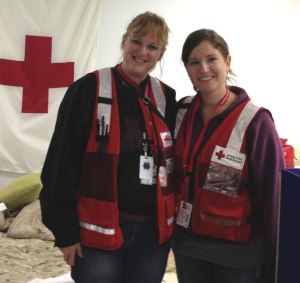
Just in, a digital Postcard from Red Cross Volunteer PJ Doyle:

Photo credit: PJ Doyle/American Red Cross

The 2013 Hattiesburg, Mississippi tornado was a large and violent EF4 multiple-vortex wedge tornado that devastated portions of Hattiesburg, as well as smaller communities and rural areas in the same area, during the late afternoon and early evening of Sunday, February 10, 2013.

The tornado moved into the northern part of downtown Hattiesburg, where it caused significant damage to the American Red Cross, roughly 300 homes and other buildings, as well as to the University of Southern Mississippi campus.

Thankfully, there was no loss of life.

Despite the devastation to their own facility, the American Red Cross Mississippi Region staff and volunteers were immediately active in responding to the community.  Within hours, the National ARC also activated teams to support the response.

I have been deployed as a Client Services Casework Supervisor and arrived in Hattiesburg on February 14 and began immediate services to the residents of the area shelters.  Susanne Jacobs, also from Minneapolis, joined the Client Services team on February 19.  Red Cross caseworkers help individuals with immediate, disaster-related needs by meeting them one-on-one to provide guidance and support during their recovery process.

Photo credit: PJ Doyle/American Red Cross

Over the course of the last 10 days, the Red Cross has served more than 20,000 meals, 85,000 snacks and more than 20,000 bulk items such as blankets, clean up kits and other supplies. Nearly 30 individuals remain in shelters in Forrest and Lamar counties in the affected area.

The relief operation is moving now from the response into the recovery stage and client casework is shifting as well. For client services, this means transitioning the work in shelters, outreach and Disaster Recovery Centers into long term individual family casework. Each caseworker will be assigned up to 3 client families to work with as they determine how to return to some semblance of normalcy in their lives.

Additionally, as I send this note (and some photos from the scene) we are hunkered down as the area is under another tornado watch. Mother Nature is active with wind and rain and there is likely to be flooding to further complicate the lives here is Mississippi.

More than 200 Red Cross volunteers are on the job in Hattiesburg from all across the country and in all disaster response disciplines. Each of us are saddened by the destruction to lives and community, but we feel grateful to have the training to be able to respond in a meaningful way.

(Thank you PJ and all of the Red Cross disaster relief workers responding to this disaster. We’re grateful that you’re there helping people.)

Will You Be Our Valentines?

Dear Red Cross Volunteers,

Red Cross volunteer Rick Campion hands food to Janice Lewis during the Hurricane Isaac disaster response, September 1, 2012. (Photo credit: Daniel Cima/American Red Cross)
Red Cross volunteer Rick Campion hands food to Janice Lewis after Hurricane Isaac on September 1, 2012. (Photo credit: Daniel Cima/American Red Cross)

We think that you’re fabulous. We appreciate your positive attitude, your willingness to help out in anyway that you can, and your desire to learn and share your expertise. We love your commitment, your sense of humor and your compassion. Our hearts pound with joy when we think of how smart and dedicated you are, and how you share time, talent and grace under tremendous pressure. We see how wonderful you are and we know that what you give to the Red Cross and the people we serve means more than we could ever write on a card.

Thank you for everything that you do, for everything that you are, and for your friendship and support. So, will you be our valentines?

With much love from,
The Staff at American Red Cross Northern Minnesota Region

A Recipe for Disaster Preparedness

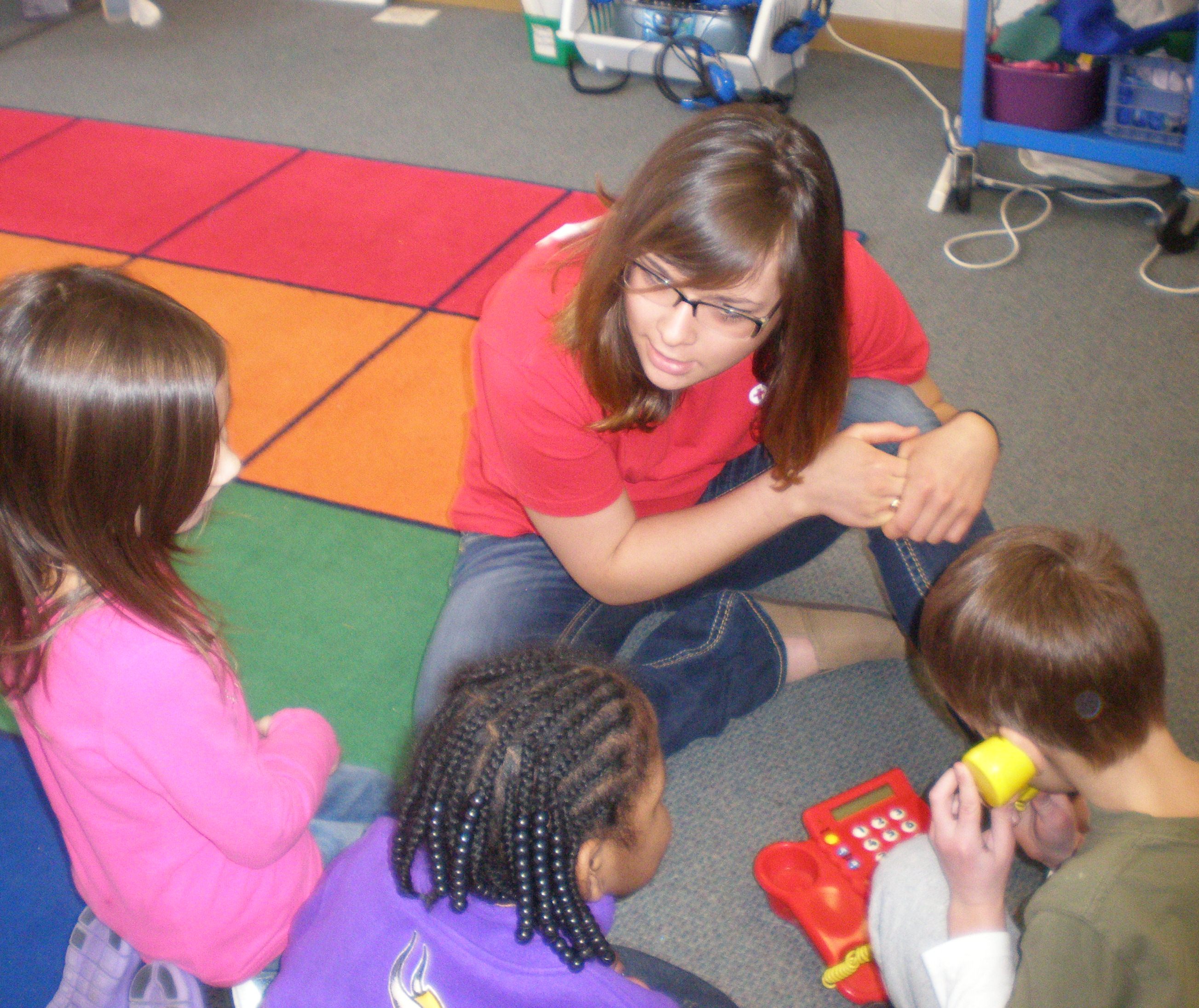
Marie Nordahl, Red Cross Youth Engagement Intern, helps kids practice calling 9-1-1. (Photo credit: Lisa Joyslin/American Red Cross)

What happens when you put 12 high school students in charge of 50 five- and six-year-olds? You might think it’s a recipe for disaster. But on Thursday, January 31, at Chelsea Heights Elementary School in St. Paul, Minnesota, this match-up was a great recipe for disaster preparedness.

The high school students, who are part of the Future Educators Club at Como Park High School in St. Paul, worked with the Red Cross to plan an Elementary Prepare Fair – an opportunity for young kids to learn about calling 9-1-1, preventing basic injuries, tornado safety and other important topics.

High school students Dominic and Stephen talked to kindergarteners about fire safety, explaining that fire is very hot and that only adults should handle it. Dominic then taught the kids how to stop, drop, and roll, demonstrating what to do and leading the kids through a practice run. The kids giggled as they watched Dominic roll across the carpet and under a table decorated with red paper flames, then tried it themselves.

Dominic, a Como Park High School student, demonstrates how to stop, drop and roll. (Photo credit: Lisa Joyslin/American Red Cross)

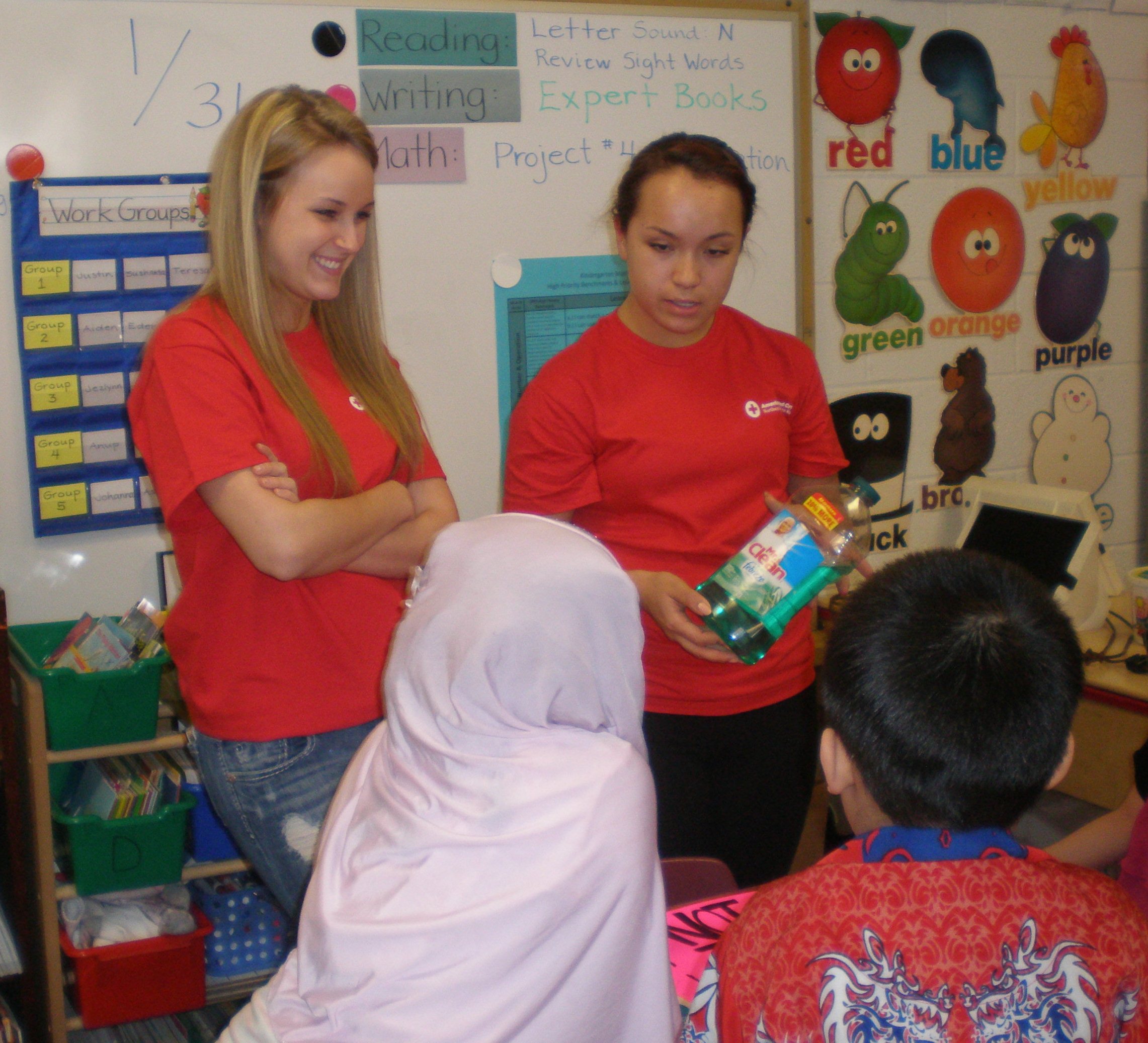
Katie and Nicole taught students about poison safety using a bright poster and props. They showed students that some poisons – like cleaning products or adult medicines – look very similar to safe products, and explained to always ask an adult before eating or drinking something that may be unsafe.

At a nearby table, kids had the opportunity to practice calling 9-1-1 on bright red play phones. “9-1-1, what is your emergency?” the phone prompted. “There’s a fire in my house!” a kindergartener responded. The high school students then asked him his name and address, coaching him on what to tell the 9-1-1 operator. “Great job! High five!” they praised when the pretend call was complete.

Katie and Nicole from the Como Park Future Educators Club talk with kids about safe substances versus poisons in the home. (Photo credit: Lisa Joyslin/American Red Cross)
Katie and Nicole from the Como Park Future Educators Club talk with kids about safe versus poison substances. (Photo credit: Lisa Joyslin/American Red Cross)

At the end of the fair, the elementary students received colorful achievement certificates, which were prepared and signed by the Future Educators.

The Elementary Prepare Fair is one of several new youth engagement projects for high school students who want to volunteer with the Red Cross, Northern Minnesota Region. Interested groups can contact Volunteer Resources at (612) 871-7676 or arctc.vsvolunteer@redcross.org to learn more and get involved.

Thank you to the fantastic Como Park Future Educators for their hard work and enthusiasm. Because of you, fifty young kids are better prepared for disasters and emergencies!

Story and photos by Lisa Joyslin, Volunteer Resources Director, American Red Cross Northern Minnesota Region

In my what kit?

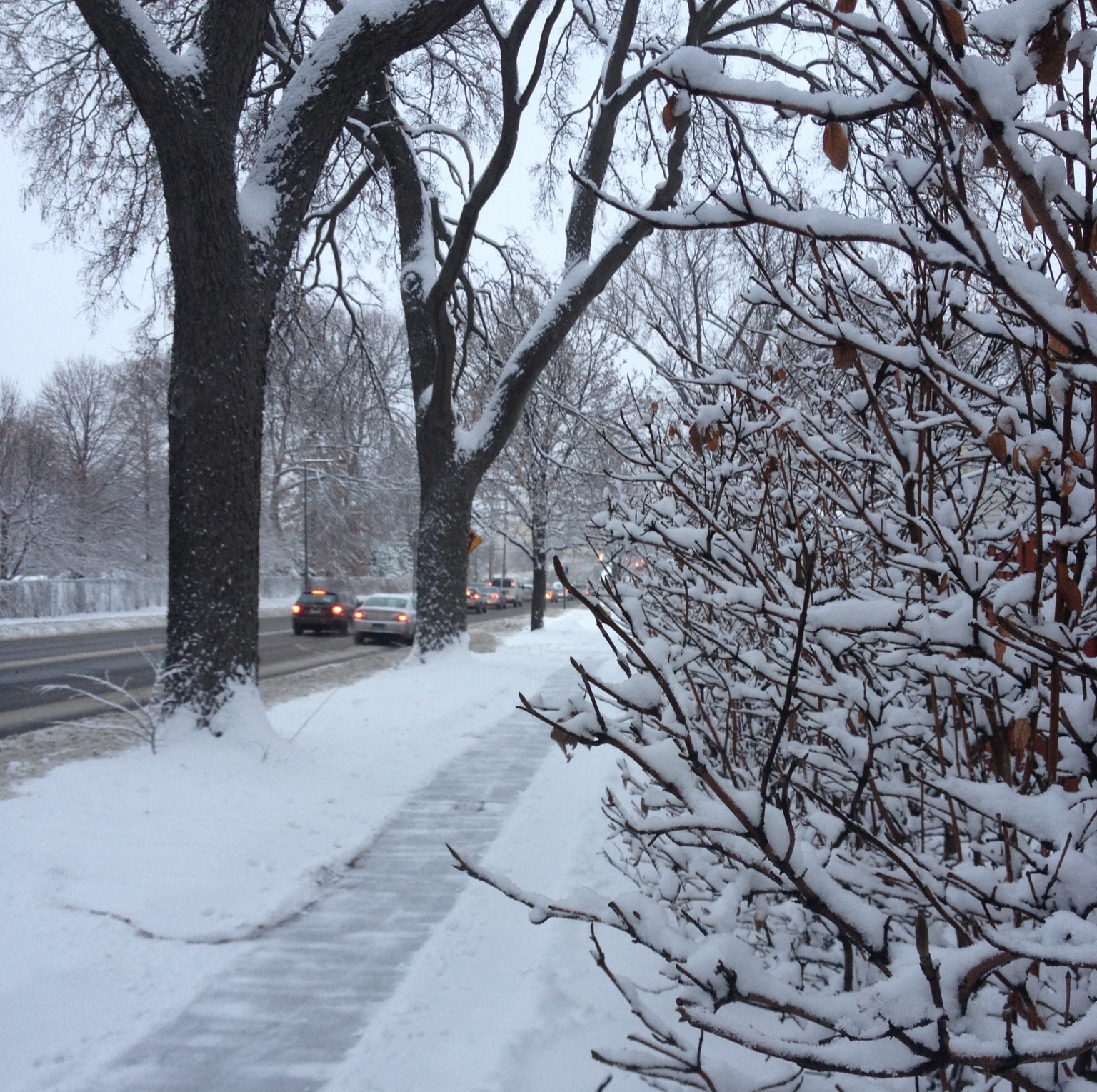
Yeah, it’s a winter Monday morning. (Photo credit: Lynette Nyman/American Red Cross)

A typical winter morning conversation at the Northern Minnesota Red Cross region HQ after a day-long snow fall and more winter weather expected:

Hey, what’s in your winter car preparedness kit? In my “what” kit? Your car emergency kit, you know, the kit with extra stuff you keep in your car during winter for emergencies? Oh, right, yeah. Boots, gloves, blanket, jumper cables. I mostly think about it in terms of keeping warm. Yeah, me too, but I think my kit needs work.

truck_snow
Does anyone want to brush off the snow? (Photo credit: Lynette Nyman/American Red Cross)

Sure, you can call us geeks (we don’t mind), but we’d rather be prepared, especially on a day like today and the days to follow, than frozen and worried. So, if you’re planning to be out and about via automobile, in addition to having supplies (e.g., scarves, gloves, & blankets) to keep warm, check your car:

  • gas tank: full (half = empty)
  • tires: inflated
  • windshield washer reservoir: full
  • driving: go slow
  • poor visibility: stay home

Of course, we offer the suggestions above knowing that you’ll keep in mind your location–the Twin Cities Banana Belt (term provided courtesy of Thief River Falls native) versus the Minnesota Frozen Tundra (term provided courtesy of Southern California native). Plus, our Red Cross water cooler conversationalists agree that urban versus rural travel shapes your kit.

For more ideas click here,

XO from the Red Cross Water Cooler!

Ready For The Deep Freeze?

THE COLD IS COMING! THE COLD IS COMING! THE COLD IS COMING! By now perhaps you’ve heard: we’re soon to have the coldest weather that we’ve had in Minnesota during the past FOUR years. Rather than FREAKING OUT (as some of us are doing), we asked Minnesota winter adventurer Linda Newman to provide us with tips for staying warm outside when it’s -512 degrees. (Okay, FREAK OUT person is exaggerating. How about BELOW ZERO? It probably feels the same.)

Linda Newman and Arrow, one of her sled dogs. Photo courtesy of Linda (and Arrow).

Cold weather tips from someone who knows (and is smart because she has fluffy warm dogs, too):

  1. Dress in warm layers. Be prepared. You can’t put on what you don’t have but you can take off a layer. Put a water and windproof outer layer over all under layers that is breathable.
  2. NO cotton. Cotton absorbs moisture and holds it close to your skin, keeping you damp and cold.
  3. Keep moving. Even boots rated for 100 below temperatures won’t keep your feet warm if you’re standing still for too long.
  4. No alcohol. Alcohol actually dehydrates you, making you cold.
  5. Stay hydrated. Keep a thermos handy filled with your favorite warm, non alcoholic beverage.
  6. Chemical foot warmers and hand warmers are your friends!
  7. Cold feet and hands. If you want to get warmth to your extremities, you must get the blood flowing to them. Clap your hands together. Make the motion of throwing a ball, rotating your arm from your shoulder, getting the blood directly to your hands. Stomp your feet.
  8. Having a hood with a ruff of some type does help keep your face warmer from wind.
  9. Windproof is the word. Fleece gloves without this feature are cold, cold, cold! A windproof neck gaiter is also so nice!
  10. Don’t suffer in silence. If you’re cold, go get warm. Frostbite is no fun.

Thank  you, Linda (and Arrow), for sharing your winter weather wisdom with us. We hope that you’re toasty warm during the coming days. Meanwhile, everyone can download the American Red Cross free mobile First Aid app and learn what to do in case of frostbite, hypothermia and other emergencies. (Now, back now to FREAKING OUT!)

Changing Diapers Is Fun!

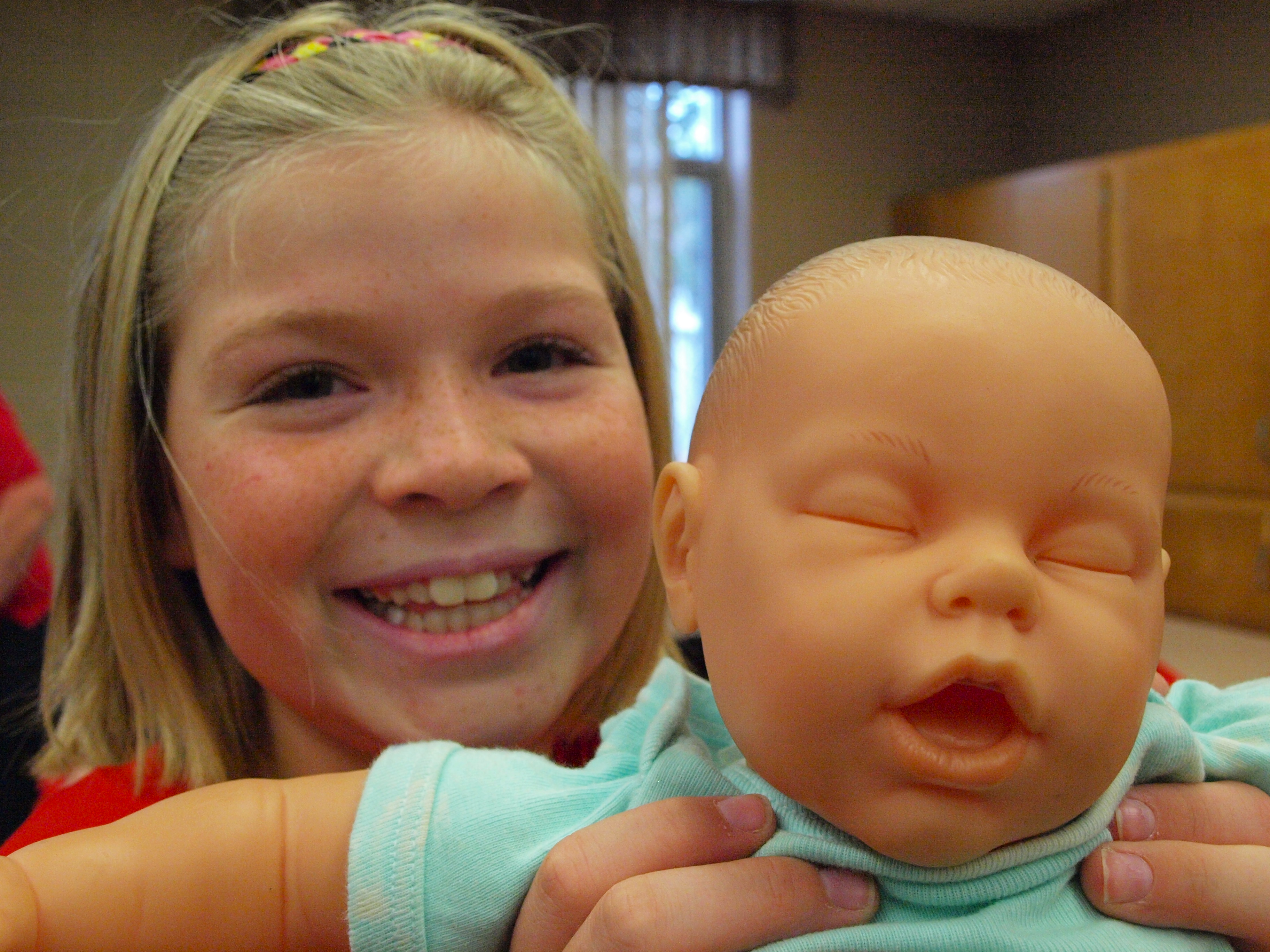
Brianna Kompelien holds up her Red Cross baby. Photo credit: Lynette Nyman/American Red Cross

Oops! Brianna’s baby’s head popped off! Not the head of a real baby. No! No! No ! It’s Brianna’s babysitter’s training doll’s head! Phew. That’s a relief, which is kind of the whole point of the Red Cross Babysitter’s Training Class: to teach young people how to care for children (including how to hold them) and to be outstanding babysitters.

Recently, around 10 kids from Willmar, a small town west of the Twin Cities metro, took a Red Cross babysitter’s training class that a generous donor helped fund (thank you!) making the class nearly free ($10). Liz Sheehy, the Red Cross instructor teaching the class, says that the grant funding is terrific because “it gives kids who normally couldn’t afford the class to chance to take the class.”

Tammy Rudningen says the grant funded classes were a "screamin' deal." Photo credit: Lynette Nyman/American Red Cross
Tammy Rudningen says the grant funded classes were a “screamin’ deal” for Willmar kids. Photo credit: Lynette Nyman/American Red Cross

The Red Cross worked with Tammy Rudningen at Willmar Community Education & Recreation to arrange the classes. Rudningen, who also teaches at Willmar Public Schools, says that more than “50 percent of her students qualify for reduced fee or free lunches. That’s reflective of the economy of our community.” And costing $85 normally, $10 she says, is “a screamin’ deal.”

As usual, the Red Cross is over the moon to have had a hand in making important emergency training available for young people, and especially future babysitters of Willmar. We hope you are, too. Click here to learn more about Red Cross health and safety classes in your area.

Story and photos by Lynette Nyman/American Red Cross

Know a hero?

Two of our 2012 Heroes, Zachary Pierson (l) and Elizabeth Estepp, on the Target Field Jumbotron during a game day recognition event last spring. Photo credit: Gene Sung/American Red Cross.

We’re now accepting nominations for our Northern Minnesota Red Cross region’s 2013 Heroes Awards. Last year’s award recipients were outstanding people. They shared their amazing stories of saving lives, caring for their community and human kindness during our annual Heroes Breakfast held last year at Target Field in Minneapolis.  In addition to the breakfast, the Heroes were invited onto the baseball field for special recognition from the Twins and their fans. This year’s breakfast–our 5th annual–will also be at Target Field. And again, we expect to hear life-changing and inspiring tales that will likely make us cry (we bring extra tissue just in case). Without a doubt there are people among you who helped others, saved lives and elevated what it means to be human. We ask that you help us find them by nominating them for the 2013 Heroes Awards.  Click here to learn more and to nominate your hero today.

Fire Chases Away Christmas Joy

by Anne Florenzano/American Red Cross

A tired Yvonne Johnson sat at a table in her apartment complex community room. “I am still in disbelief,” she said. “You hear of people in the news who have fires like this, but I never thought it would be ME in this situation. It still seems so unreal!” she said.

Red Cross volunteer Sheila Miller (l) helps Yvonne Johnson (r) with emergency disaster relief after an early morning blaze burned her home on December 26, 2012. (Photo credit: Anne Florenzano/American Red Cross)

Yvonne, her teen daughter and nephew had enjoyed Christmas together in their apartment in Plymouth when their building fire alarm went off at about 12:30 a.m. They were still up, and dressed, and they grabbed their new gifts and put on their boots and coats and went outside. A half-hour later they were given the okay to go back into their apartment. At approximately 3:30 a.m. Yvonne was woken out of her sleep by the smell of smoke and her daughter saw sparks and flame out of the balcony window coming down from above. Yvonne and the two teens raced out of the apartment, this time dressed only in pajamas and unable to save anything but a clutch with her phone and keys.

The three of them took refuge in their car to stay warm. Eventually Yvonne was able to send her kids to warmth and sleep with her sister while she made arrangements for help from the Red Cross for temporary lodging, clothes and food. The firemen have told her that her apartment is uninhabitable because of water damage. Fortunately her landlord has some empty units where Yvonne can begin rebuilding her home, but she won’t know until she can get back into her apartment if any of the kids’ Christmas gifts or the furniture she recently inherited from her Mom can be salvaged. Yvonne is a middle school English teacher at the Woodson Institute for Student Excellence, and she said, “I’ve never had any help or assistance before – never in my life – but I need this help today.”

Disasters are hard any time of year, but can be especially hard around the holidays. Since Friday, December 22, the Northern Minnesota Red Cross has helped more than 8 families, including 20 adults and 15 children. Our volunteers respond to more than a disaster a day here in our region.  In addition, more than 100 volunteers from our area have deployed east to help those affected by Superstorm Sandy–several are on their second deployment, missing holidays with their families because they want to help those in need. Everyone can help those affected by local and national disasters: please consider making a year-end gift to the Red Cross at redcross.org.

Gift of A Lifetime

During the holiday season there is much to be thankful for as we gather with loved ones, participate in traditions and winter festivities, and search for the perfect gifts to give to family and friends. However, there are some gifts that are less tangible than others. Tacy Fleener from Alexandria, Minnesota, describes her recent deployment to the Red Cross disaster relief response to Superstorm Sandy in New York City, and the special “gift of a lifetime” she received.

TacyFleener_v2
Red Cross disaster relief volunteer worker Tacy Fleener. (File photo: American Red Cross)

Tacy has been with the Red Cross for 30 years as the first national responder out of Douglas County. She started at 16 years old, teaching swimming lessons and CPR training. Later on, with the help of her husband, she got the local Red Cross chapter in Alexandria up and running with different classes and opportunities of involvement for local community members. Her heart is most passionate about disaster relief and being of use during times of great need.

During past deployments, Tacy  specialized in mass care shelter management and hands-on experience. However, this deployment was a different involvement; one that was also very intense but rewarding. Tacy’s job was behind the scenes to guide volunteers through the deployment process. She would enter these volunteers into data bases and designate hotel rooms to keep track of individuals during their deployment.

Tacy expertly handled stress the minute she arrived on site, “Things were chaotic when I got there, my job was to try to keep the peace with the hotels we had under contract. I played detective to try to spend Red Cross’ money the right way, while making sure that volunteers were where they needed to be, with places to stay.”

“Just to see the need I had been hearing about with individual faces and stories kept me motivated throughout my deployment. It was easy to see that the distribution process was very difficult. People on the distribution team were bringing supplies to outskirt areas, such as Stanton Island where 12,000 people are still without power.” She remembers that distribution volunteers are overwhelmed with the need. One story that impacted her life was one gentleman leading a distribution team. She recalls, “He had just got back from Staten Island where he had been sleeping on pallets for two weeks. He looked like death warmed over and I thought to myself, oh wow, we need to find a hotel for this guy so he can rest and get cleaned up.”

Josh Holper card
A “thank you” from Josh Holper and his friends to the Red Cross. (Photo credit: Sue Gonsior/American Red Cross)

Though rooms were in a shortage in Stanton Island during this time, various New York hotels were gracious and gave American Red Cross a block of discounted rooms. This is an example of a reoccurring theme of camaraderie and teamwork throughout the east coast disaster relief. Even with support and understanding, every day was mentally and emotionally stressful. “We spent 12-14 hours a day keeping track of hotels to try to save the Red Cross as much money as possible,” says Tacy. “Every volunteer constantly gave it their all and was very supportive. Thanksgiving was especially a wonderful time to be volunteering; we had the opportunity to make sure that people had a Thanksgiving dinner. Citizens were very appreciative and it was neat to spend Thanksgiving by giving back to this community. To hear someone say ‘thank you’ was wonderfully rewarding.”

Volunteering during this disaster is a constant 24/7 job, without many breaks, yet Tacy says she would do it again in a heartbeat. “I love the Red Cross, the volunteers, the people I meet. Everyone that is there wants to make a difference. Even when you had been working 12-14 hours a day, you just go and give a big hug to each other and say thank you.”

Helping others & making friends: Red Cross volunteers (l-r) Lizzie Kampf , Ed Newman (c) and Sue Buelow, in New York City for Superstorm Sandy.
Helping others & making friends: Red Cross volunteers (l-r) Lizzie Kampf, Ed Newman and Sue Buelow in New York City for Superstorm Sandy.

Thank you’s and appreciation can go a long way. The American Red Cross Northern Minnesota would like to extend its gratitude to Tacy and more than 100 relief workers who have donated, volunteered or been involved with the Red Cross mission to reduce human suffering during the Sandy disaster response on the east coast.

Tacy hopes her experience encourages others to volunteer. “Just to meet one person who says thank you brightens my whole day. It really helps me when I come back home to Minnesota; to appreciate what I have; to appreciate helping others in a time of need. It fills my heart to be able to give back by doing something truly important. I know my whole heart is into it when I’m there. I know the other volunteers feel the same way, young and old. I recommend that anyone become a Red Cross volunteer–it’s an experience of a lifetime. Make the time, take some classes and experience the opportunity to give back to others, because you never know when you will need it yourself. Some of the friends you meet will touch your heart for a lifetime.”

Click here to find out more about how you can help with Superstorm Sandy relief this holiday season and give the gift of a lifetime.

Story by Megan Barnes/American Red Cross

Remembering Sandy: “Minnesota, I got your back”

Red Cross responder Sue Buelow is back from New Jersey where she helped with Superstorm Sandy disaster relief efforts. Below, Sue looks back.

The very beginning was a lot of trying to figure out the response system and getting used to hurry up and wait. But soon after arriving I was assigned to supervising special field teams doing “seek and serve” emotional support and traveling to Moonachie, Newark, Jersey City, Toms River and nearby damaged communities.

Sue Buelow (l) and Lizzie Kampf (r) while responding to Superstorm Sandy disaster relief in New Jersey.

I learned a few things along the way: 1) speed limit signs are a suggestion, 2) many cities are not on a map, 3) there are few places that allow left turns, 4) be thankful for clean clothes; and 5) they love Minnesotan accents there!

The work was hard emotionally and physically. My first partner had to return home to California for health reasons. Then, for the next 12 days I had the pleasure of partnering with Lizzie Kampf, a new “just-in-time”  disaster mental health responder who was also from the Twin Cities. It felt like we’d known each other a lifetime. I was sad to see Lizzie leave before I finished my final week there. I didn’t know what I’d do without her driving the truck — she took on the persona of a New York cab driver quite naturally.

Lizzie and I went to New Jersey’s upper Barrier Island as the residents returned to see their homes, or absence of, for the first time. The devastation to the townships there was beyond words. The water and sand was 4-5 feet deep and the waves were up to 12 feet high.  The stories of the emergency medical services (EMS) workers and residents who rode out the storm there were frightening. We bonded with these communities and it was not unusual to hear “Hey,  Minnesota….” My last contact with one of the EMS workers that had been struggling was “Minnesota, I got your back.”

Being there when the residents saw their condemned or empty lot of debris was indescribable as they collapsed into my arms, sobbing and needing a “Minnesota hug.” We helped look for mementos in the debris, from small things to stones of a child’s hand and foot prints. We were there for those in shock who couldn’t think to pack up some clothes. Listening to them tell their stories and showing us their homes or pictures was moving.

I certainly have received a great gift from the same people: I believe I have helped them. I am blessed to have had a small part of their lives and in their recovery from this disaster. I will always remember my time spent there.

Sue returned home a few days ago. She is among more than 100 Red Cross disaster relief workers (mostly volunteers) from Minnesota who have responded to Sandy.