Regional Volunteer Award Winners Go Above and Beyond (Part 1)

Part 1 of 3

Red Cross volunteers are truly amazing. In order to give special recognition to those who continually go above and beyond, each year we undertake a thorough nomination process to select an elite group of volunteers to receive our Regional Volunteer Awards. This year’s winners are all dedicated, inspiring supporters of the Red Cross, and we’d like to introduce you to them through a series of three blog posts. Please join us in congratulating and thanking these wonderful volunteers!

Red Cross Distinguished Volunteer of the Year Karen Campion on deployment.
Red Cross Distinguished Volunteer Leader of the Year, Karen Campion, on deployment.

Karen Campion
Distinguished Volunteer Leader

Karen is a kind and compassionate leader who brings a wealth of skills to both the Twin Cities Area Chapter and the Northern Minnesota Region. In the past year she led Disaster Assessment teams during the Duluth flooding response, served as a Human Resources consultant and Staff Relations Lead within Emergency Services, and worked with the Regional Advisory Team to develop and implement the new disaster leadership structure. She is an instructor and also regularly deploys both locally and nationally; in the past year she and husband Rick served for two weeks as Emergency Response Vehicle drivers after Hurricane Isaac, and also assisted after the Northern Minnesota Wildfires.

Disaster Mental Health Team
Outstanding Volunteer Group
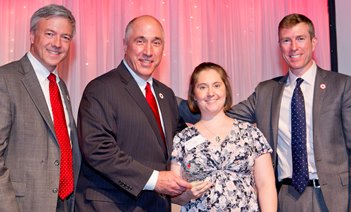
Red Cross Disaster Mental Health volunteer Leslie Hong accepts award on behalf of the regional team. From left to right - Phil Hansen, Regional CEO; Mark Capaldini, Board Chair; Leslie Hong and Josh Lockwood, Red Cross Regional CEO for Greater New York Area.
Red Cross Disaster Mental Health volunteer Leslie Hong accepts award on behalf of the regional team. From left to right – Phil Hansen, Regional CEO;  Mark Capaldini, Board Chair; Leslie Hong and    Josh Lockwood, Red Cross Regional CEO for    Greater New York Area.

The Disaster Mental Health (DMH) group is a quiet pillar of support among disaster clients, volunteers, and staff across the region. Anytime there is a situation that requires emotional support – whether that is a fire, loss of a pet, loss of life, stress, or a need for comfort and resources – the DMH team is ready to serve at all hours of the day and night. Volunteers from this team are called out on every major national disaster. Within the region, the DMH team calls each volunteer when they return from deployment – which included over 130 calls during the Superstorm Sandy response. This group often goes unnoticed because their work is confidential, but for those who are served, they are truly invaluable.

Ellie Deans, Ian Deans, Hannah Holstein, Natalie St. Martin
St. Croix Valley Chapter Board Members – Youth Volunteer Leadership
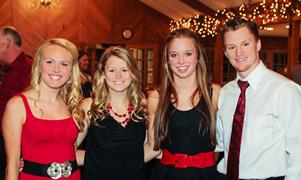
St. Croix Valley Chapter Board Members and Youth Volunteer Leaders (from left to right) - Natalie St. Martin, Ellie Deans, Hannah Holsten, and Ian Deans.
St. Croix Valley Chapter Board Members and Youth Volunteer Leaders (from left to right) – Natalie St. Martin, Ellie Deans, Hannah Holsten, and Ian Deans.

Natalie, Ellie, Hannah and Ian serve on St. Croix Valley Chapter Board of Directors. They also support other service and program activities in our community as Red Cross volunteers. Their volunteer activities have included Holiday Mail for Heroes, driving the Emergency Response Vehicle, and assisting with fundraising events like the Evening in Red and FORE the Red Golf Tournament. These four young people are a wonderful example of youth involvement with the American Red Cross.

Interested in becoming a Red Cross volunteer? Now, there’s an app for that. Check our our new Team Red Cross app and get started today.

 

Wildfire Survivor Had No Time to Save Anything

Wildfire survivor Marlene Snyder shares her escape story with Christina Hujanen, a Red Cross disaster relief volunteer, Menagha, MN, May 16, 2013.

Marlene Snyder and her mother-in-law, Mona, stood on their shady back deck, crying.  Marlene gazed helplessly into the shell of her home, trying to identify anything in the charred black mess that had been her living room. 

“That was a table, here was the kitchen,” says Marlene to several Red Cross disaster relief workers who responded to the Green Valley Wildfire disaster within hours after the blaze started on Wednesday, May 15.

At first Marlene and her family weren’t worried about the house. They treated fire spots with sand and water from a hose.  Then they headed with the hose down to a barn, thinking that they could save the barn and their horses when the water stopped.  That was their first clue that their home was in danger.  By the time they returned to the house, fire had gotten into the roof and there was no time to save anything before they fled.  They left with their lives and one photo album.

“I thought I’d come back and there would be things I would recognize, things I could save,” says Marlene.  “I didn’t know I would come back to see something like this.”

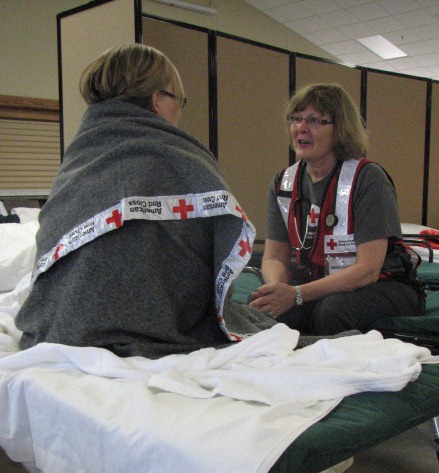
Red Cross disaster relief worker Lori Dehn talks with a shelter resident, Sebeka High School, May 16, 2013.
Red Cross disaster relief worker Lori Dehn talks with a wildfire evacuee at the emergency shelter in Menagha, MN, May 16, 2013.

The fast moving wildfire crossed several county lines in north-central Minnesota. Hundreds were forced to evacuate, including residents from a nursing home in Menagha, the town that suffered most of the fire damage. More than 60 people stayed in a Red Cross shelter, waiting for news about their homes. No one, thankfully, was injured. Twelve homes were destroyed. 

Along with 400 other people, the Snyder family attended a community meeting where they learned about efforts to contain the fire as well as disaster relief services for affected families.  Many, including Marlene, expressed their thanks to the firefighters, emergency responders, and Red Cross workers for their help during the Green Valley Wildfire disaster.

To date, the Red Cross has served more than 1,000 meals and snacks, handed out more than 300 disaster relief items, including comfort and clean-up kits, and mobilized more than 40 disaster relief workers, 90 percent of whom are volunteers.

“We’re so grateful for what you’ve done,” says Marlene. “You’re doing a great job.”

Story and photos by Judy Hanne-Gonzalez/American Red Cross. Click here to learn more about American Red Cross disaster relief and how you can help.

Notes of Thanks

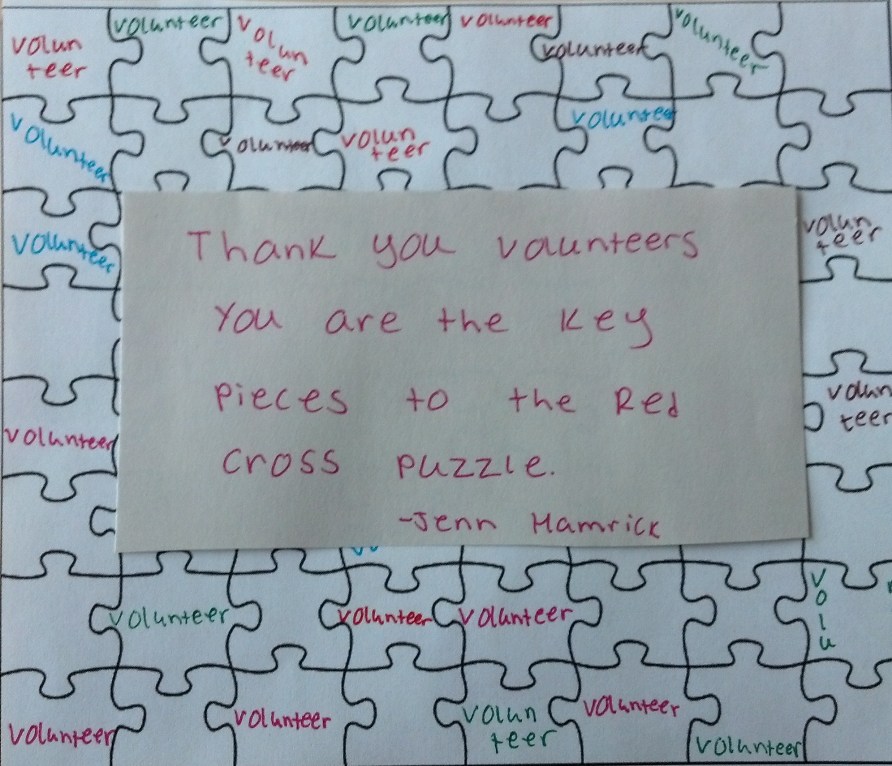
It’s National Volunteer Week, and the staff and board members here in the Northern Minnesota Region have much to be thankful for. This year we decided to write creative thank you notes to volunteers in celebration of their service to the Red Cross. These notes will be compiled into a poster, which we’ll bring to each of the upcoming volunteer appreciation events this spring. But in honor of National Volunteer Week, here’s a preview of how thankful we are for our fabulous Red Cross volunteers.

Megan M note croppedMegan D note croppedBoard note 1 croppedChoua note croppedLisa note croppedNicole note croppedboard note 2 croppedJason note croppedJenn note croppedB Safe note cropped

Low drama, big comfort

DSC_0975_web
Jean Fisher (l) meets with Jenn Hamrick (r) in Prior Lake, Minnesota.

Sometimes fires are small, but big. Sometimes flames die quickly, but people have to wait for the all clear from local officials. Sometimes dramatic pictures are few, but American Red Cross disaster responders help anyway because that’s what they do. And that was the case on Friday, April 5, when the Prior Lake Fire Department called for Red Cross help when dozens of people and their pets safely evacuated their homes. Sometimes we like to report on these low drama, big comfort fires because most fire are those not reported on major or local media.

DSC_0999_web
Newbie Jenn Hamrick learns about Red Cross forms from veteran Jeff Skoog in Prior Lake, Minnesota.

Most fires are the small flame, quickly extinguished type that happen around the block, across the street or next door all the time, every day. And while the building in Friday’s fire did not burn to the ground (phew!) and people recovered most of their personal belongings (yay!), Red Cross responders checked in with those who waited to return home, provided food during the hours passed for word of safe re-entry, and listened to people’s fire stories. Most of the time for the Red Cross the every day is just that, the every day.

Story & photos by Lynette Nyman/American Red Cross.

Taking Sandy As His First Assignment

Jim Mehle became an American Red Cross volunteer this past February. Now, only a few months into his volunteer service, Jim is on-the-ground in New York City helping with the ongoing disaster relief response following Hurricane Sandy.

“I had no idea that my first assignment would be responding to one of the biggest storms to hit the United States in recent months,” says Jim.

Red Cross disaster response volunteer Jim Mehle. (File photo)
Red Cross disaster response volunteer Jim Mehle.

After retiring in 2012 from his job as a psychiatric social worker in a minimum-security prison, Jim heard about volunteering with the American Red Cross through word of mouth and decided he’d give it a shot.

Since arriving in New York City, Jim’s been busy. Mostly he’s worked with one of several American Red Cross call centers serving as hubs for communication. Call centers gather damage information in specific geographic areas, record the number of calls centers receive each day and manage casework data entry for individual Red Cross clients. The call center provides Jim with his daily client list. Each day he works with 4 clients who’ve reached out to the Red Cross call center for help. Jim meets them in their neighborhoods where he sees the damage first hand.

“I’ve been on the road a lot. I’ve seen the damage. Some homes and businesses are beyond repair. The worst are closest to the coast.”

Among those Jim visited was a 61-year old man whose home of 40 years was destroyed on Staten Island. Currently, he’s staying with his son. He hopes to rebuild his home, but starting over after 40 years will likely be a difficult task.

“Your heart just goes out to these people,” says Jim.

Story by Hayes Kaufman/American Red Cross. Click here for more about Red Cross helping Sandy survivors.

Thankful in the wee hours

Dear Red Cross,

Sue & Jeff's home in Parker's Prairie, MN, after the fire on December 21, 2012. Photo credit: Larry Zirbes/American Red Cross
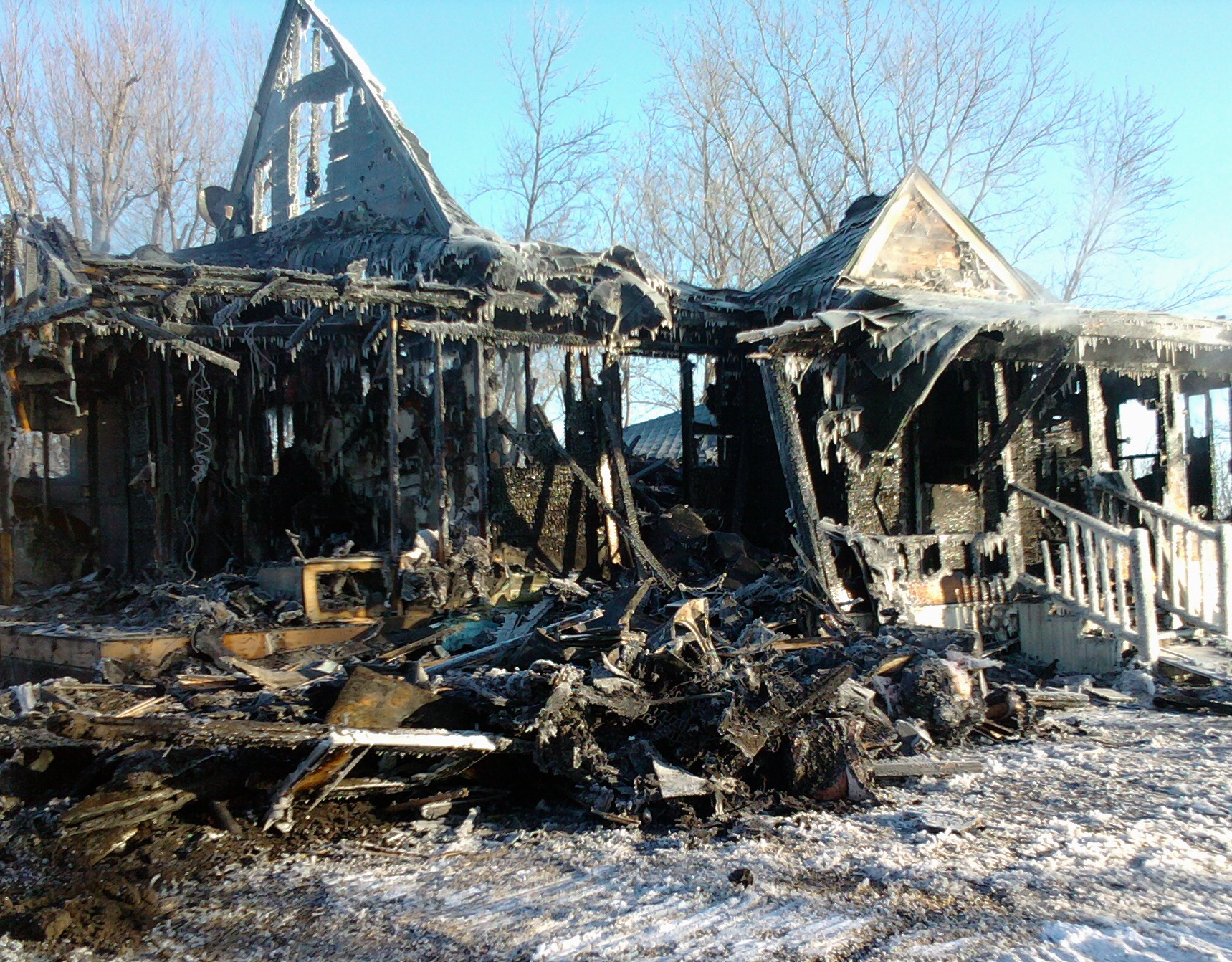
The remains of Sue and Jeff’s home in Parkers Prairie, MN, after the fire on December 21, 2012. Photo credit: Larry Zirbes/American Red Cross

In the wee hours of December 21, we had a house fire and lost everything, including many of our beloved pets.

I want to thank you with all my heart for being there to help us get through those difficult first days. Please also thank those who made the quilts we were given. I found it very comforting to wrap myself up in one when things got overwhelming.

We have been occasional contributors in the past, but from now on we will be regular contributors so we can help pay forward the wonderful work that you do.

Again, all our thanks–

Sue & Jeff

Happy Red Cross Month

From the archives: Phil Hansen in 1990 working for the Red Cross, Rochester, MN.
From the archives: Phil Hansen in 1990 working for the American Red Cross in Rochester, Minnesota.

They say that what you send out in life comes back to you multiplied.  I believe this is so and I have witnessed many examples over the years.

In my own experience, a donor supplemented the cost of a swimming program in which a Red Cross instructor taught me to swim. I got so excited about the program that I joined the Red Cross and helped teach thousands of others– mostly kids–to swim. My ability to swim has saved my life on at least two harrowing occasions. And one time I used my ability to swim to save a friend. I suspect that many of those I trained have saved lives as well.

My experience is one small example of the multiplying effect of a donor’s gift.  I bet the Red Cross has already touched you or a family member in some way.  If not, maybe someday it will–you may need swimming skills to save a loved one’s life–or have a heart attack and need CPR–or need blood after an accident–or need a place to stay after your home burns down–and the Red Cross will be there for you–always.

During March–Red Cross Month–I want to share my sincere thanks with our board members, volunteers and paid staff members, donors, supporters, partners, and friends for the many ways you have helped the American Red Cross serve the needs of Minnesotans.

Wishing you a very happy Red Cross Month,
Phil Hansen, CEO, American Red Cross, Northern Minnesota Region

P.S. Click here to learn more about ways to be involved with the Red Cross.

Chicks, Goslings and A Quilt for Red Cross

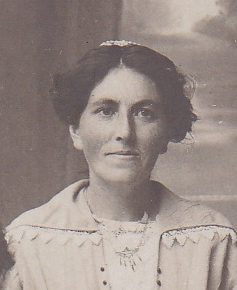
Olufine Kristofa Olsdotter Fjeld, 1914. (Photo provided courtesy of great-granddaughter Melanie Moser)
Olufine Kristofa Olsdotter Fjeld, near Adrian, Minnesota, 1914. (Photo provided courtesy of great-granddaughter Melanie Moser)

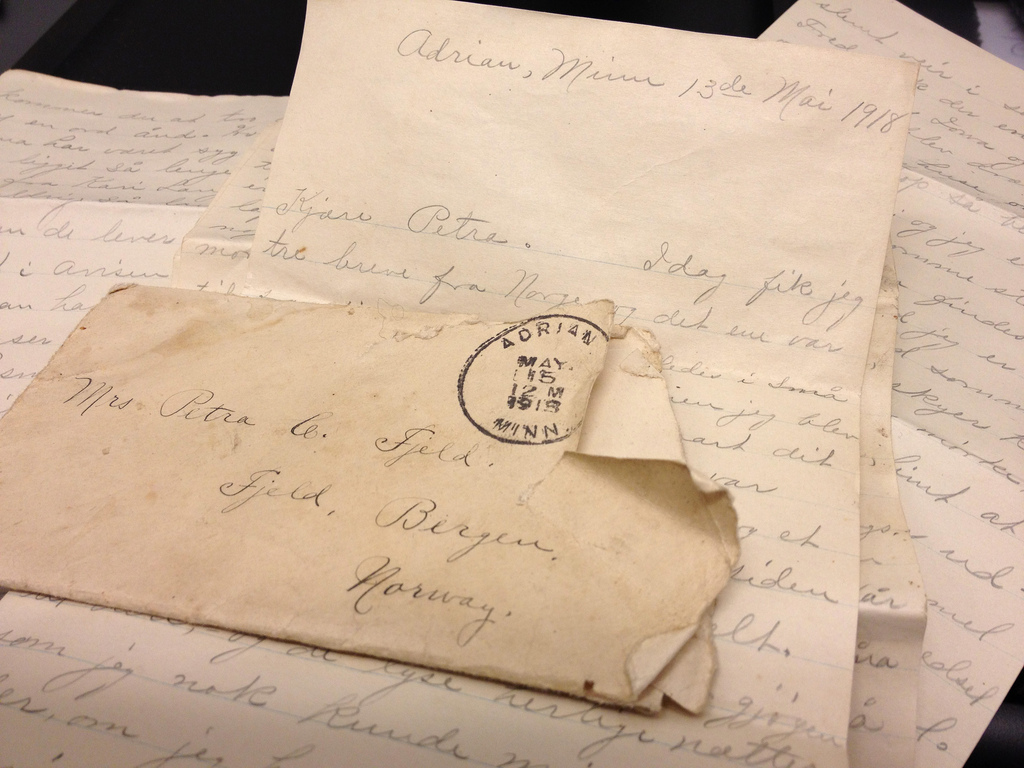
Olufine Fjeld was a busy farm wife when she wrote a letter to her family in Norway in 1918. There were chicks, goslings and children to tend to. There were crops to sow. There was weather to mind. Dangerous storms had recently swept across nearby areas, killing 18 people and injuring 150.  And there was patchwork to do for a quilt that would help raise money for the American Red Cross and its work during the Great War (WWI).

“I made a quilt with red, white and blue, which I gave to the Red Cross; I made a cloth for the middle square in the quilt, and sewed 48 small pieces which should resemble stars; then I sent the quilt to the Red Cross headquarters in St. Paul, Minnesota, and now one day I received a letter full of thanks and praise.”

Olufine felt the need to support the war effort. Her husband and oldest son both had registered for the military and waited for their call to service. She recognized the bounty in her life while others were forced to do with less or without.

The quilt made by Olufine Fjeld for the American Red Cross. (Photo provided courtesy of great-granddaughter Melanie Moser)

“And now I hear that you have to use ration cards for foods; such things we have not seen here, yet it is only sugar and wheat flour we cannot buy in as large quantities as we have been used to; except for this, one can buy as much as one wants of everything else.”

Olufine was motivated to make a quilt made by hand–stitch by stitch for humanitarian relief. And winter was the time for her to finish the patchwork, sewing together cloth patches before sowing beans, cucumbers and pumpkins. For the patches she used silk patches purchased through a magazine.

“The ones I got this winter are smaller, the reason is, I guess, that everything is more expensive, and these large clothing magazines use the fabric in a better way; these patches are quite beautiful; some of them are all silk, some half silk.”

Like so many others during her time, Olufine stepped up to help others in need. She turned a personal passion into a means for easing the suffering of others. We can only hope that her quilt made its way to a home, bringing warmth and comfort. And that she continued for many more years writing home to her loveliest Norway.

“Now it is late, almost ten thirty, I have to go out and look after the small goslings before I go to bed…the best of greetings from Fina, and write soon.

Olufine Fjeld's 1918 letter to her family in Norway. (Photo provided courtesy of Halvor Skurtveit)
Olufine Fjeld’s 1918 letter to her family in Norway. (Photo provided courtesy of Halvor Skurtveit)

Thank you, to Melanie Moser, for bringing her great-grandmother’s story to our attention. Thank you to historian Halvor Skurtviet for providing Olufine’s letter and translation from Norwegian. And thanks also to American Red Cross archivist Susan Watson for sending  along information about Red Cross quilts during the Great War.

Click here to learn more about the American Red Cross, its history and how you can get involved.

Story written by Lynette Nyman/American Red Cross.

A Few Words From Hattiesburg, Mississippi

Just in, a digital Postcard from Red Cross Volunteer PJ Doyle:

Photo credit: PJ Doyle/American Red Cross

The 2013 Hattiesburg, Mississippi tornado was a large and violent EF4 multiple-vortex wedge tornado that devastated portions of Hattiesburg, as well as smaller communities and rural areas in the same area, during the late afternoon and early evening of Sunday, February 10, 2013.

The tornado moved into the northern part of downtown Hattiesburg, where it caused significant damage to the American Red Cross, roughly 300 homes and other buildings, as well as to the University of Southern Mississippi campus.

Thankfully, there was no loss of life.

Despite the devastation to their own facility, the American Red Cross Mississippi Region staff and volunteers were immediately active in responding to the community.  Within hours, the National ARC also activated teams to support the response.

I have been deployed as a Client Services Casework Supervisor and arrived in Hattiesburg on February 14 and began immediate services to the residents of the area shelters.  Susanne Jacobs, also from Minneapolis, joined the Client Services team on February 19.  Red Cross caseworkers help individuals with immediate, disaster-related needs by meeting them one-on-one to provide guidance and support during their recovery process.

Photo credit: PJ Doyle/American Red Cross

Over the course of the last 10 days, the Red Cross has served more than 20,000 meals, 85,000 snacks and more than 20,000 bulk items such as blankets, clean up kits and other supplies. Nearly 30 individuals remain in shelters in Forrest and Lamar counties in the affected area.

The relief operation is moving now from the response into the recovery stage and client casework is shifting as well. For client services, this means transitioning the work in shelters, outreach and Disaster Recovery Centers into long term individual family casework. Each caseworker will be assigned up to 3 client families to work with as they determine how to return to some semblance of normalcy in their lives.

Additionally, as I send this note (and some photos from the scene) we are hunkered down as the area is under another tornado watch. Mother Nature is active with wind and rain and there is likely to be flooding to further complicate the lives here is Mississippi.

More than 200 Red Cross volunteers are on the job in Hattiesburg from all across the country and in all disaster response disciplines. Each of us are saddened by the destruction to lives and community, but we feel grateful to have the training to be able to respond in a meaningful way.

(Thank you PJ and all of the Red Cross disaster relief workers responding to this disaster. We’re grateful that you’re there helping people.)

Will You Be Our Valentines?

Dear Red Cross Volunteers,

Red Cross volunteer Rick Campion hands food to Janice Lewis during the Hurricane Isaac disaster response, September 1, 2012. (Photo credit: Daniel Cima/American Red Cross)
Red Cross volunteer Rick Campion hands food to Janice Lewis after Hurricane Isaac on September 1, 2012. (Photo credit: Daniel Cima/American Red Cross)

We think that you’re fabulous. We appreciate your positive attitude, your willingness to help out in anyway that you can, and your desire to learn and share your expertise. We love your commitment, your sense of humor and your compassion. Our hearts pound with joy when we think of how smart and dedicated you are, and how you share time, talent and grace under tremendous pressure. We see how wonderful you are and we know that what you give to the Red Cross and the people we serve means more than we could ever write on a card.

Thank you for everything that you do, for everything that you are, and for your friendship and support. So, will you be our valentines?

With much love from,
The Staff at American Red Cross Northern Minnesota Region