On May 6, the American Red Cross in Minnesota presented six awards that honored ten people for their heroic efforts helping others during great times of need. Below we share with you their inspiring stories.
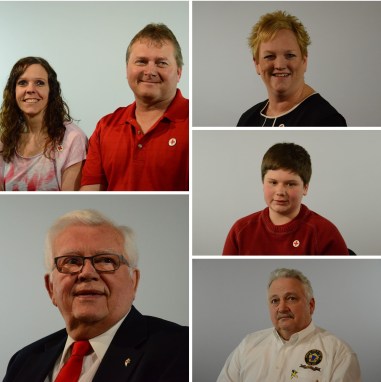
Six of ten heroes honored at the 2016 American Red Cross Minnesota Region’s Heroes Breakfast. They include (clockwise) Shawn Hansen, Bryden Bronikowski, Mike Clark, Jerry Nelson, Jenny Braith and Russ Braith. Photo credit: Lynette Nyman/American Red Cross
Duluth teen Bryden Bronikowski was honored with the Youth Good Samaritan Hero Awardfor helping to save the life of his young cousin. “Panic is your worst enemy,” says Bryden. “Fearing anything can go wrong.” Watch Bryden’s story.
Nisswa Chamber of Commerce president Shawn Hansen received the Community Hero Award for being a vital part of daily coordination and communications during the windstorm disaster relief efforts in Nisswa in July 2015. “As human beings we have to focus on making the world better,” says Shawn. Watch Shawn’s story.
Mike Clark of Eagan received the Military Hero Award for supporting the needs of people in the armed forces. “It gives me an opportunity to connect with people that are just really down to earth,” says Mike. “And they’re really thankful for knowing there’s somebody out there who cares about them.” Watch Mike’s story.
Shoreview resident Jerry Nelson was honored with the Give Life Hero Award for his continuous blood donations and support of organ transplant families. “I’m not a hero for giving blood,” says Jerry. “Transplant patients and the people who get the blood are the heroes.” Watch Jerry’s story.
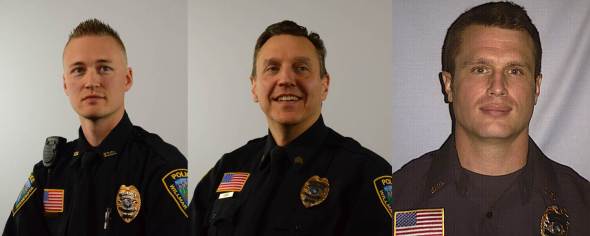
Three Willmar police officers received Red Cross Heroes awards on May 6, 2016.
Willmar police officers Mike Jahnke, Joshua Helgeson, and Jeff Liebl were honored with the First Responder Hero Award for putting their lives on the line to resolve a potentially tragic situation. “He’s a human being,” says Josh. “It’s our job to help him, and that’s what we did.” Watch Mike, Josh, and Jeff’s story.
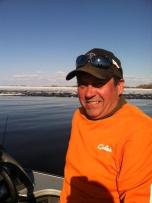
On May 6, 2016, Greg Pint received a Red Cross Hero Award.
Montgomery residents Russ and Jenny Braith, and Lonsdale resident Greg Pint, were honored with the Good Samaritan Hero Award for putting their own lives at risk to save a man from a car going underwater. “I heard him hitting the buttons, the door locking, but no windows coming down,” says Russ. Watch Russ, Jenny and Greg’s story.
Click here to nominate someone for the 2017 Heroes Awards. Post by Lynette Nyman/American Red Cross.
By Vanessa Smith, UW-Superior student and Red Cross Intern
It’s hard to believe that one year ago I was on a trip in Washington, D.C. as a member of the Political Science Association at the University of Wisconsin-Superior, and we had the opportunity to visit the national headquarters of the American Red Cross. I was amazed by the fact that Red Cross does far more than what most people assume that it does. Personally, I had always thought that it mostly dealt with blood services, but after visiting national headquarters I learned that the Red Cross also deals with international humanitarian law (IHL) along with several other areas of service.
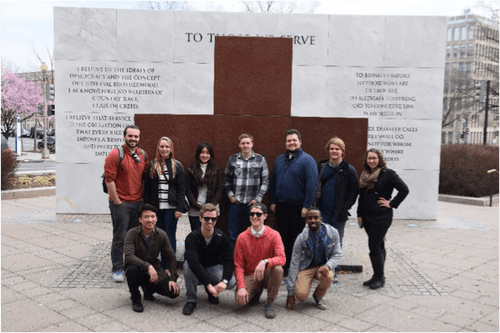
UWS students visiting the American Red Cross in Washington, D.C. Photo credit: Haji Dokhanchi.
Personally, I was highly interested in Red Cross’s dedication to educating and increasing awareness in regards to IHL. In fact, the American Red Cross has adopted a campaign from the Belgian and French Red Cross’s that have developed a simulation training program called “Raid Cross.” This program explores and addresses the humanitarian issues involved in armed conflict situations, the basic rules of IHL that apply, and the importance of these rules in conflict situations, such as preventing harm to civilians.
I was eager to know if and how I could become involved with the American Red Cross and IHL. So, while I was visiting D.C., I asked my professor if he knew of any internship opportunities in the Twin Ports area with American Red Cross. In fact, he pulled his email up on his smart phone and sent an email to Dan Williams with the Minnesota Red Cross chapter in Duluth, right there on the street in front of the Red Cross national headquarters! By the time I returned from the east coast, I had an interview set up with Dan and was well on my way to starting my journey with American Red Cross.
UWS students participating in Raid Cross training. Photo credit: Kota Yanagidani.
Since then, I’ve been working to educate the local community about IHL. We recently held an event at the Allworth Institute for International Studies at the University of Minnesota in Duluth. This was a lecture by Red Cross volunteer Pj Doyle regarding refugees and immigrants to the United States. At this event, we reached out to more of an older generation in attendance from the area community. The next day we held an actual Raid Cross simulation at the University of Wisconsin – Superior. At the simulation we had almost 50 people in attendance, which included local high school and college students. We did both of these events all in one week! I really enjoyed knowing that we had reached more people in the community regarding IHL and refugee and immigration processes. When speaking to students after the events, I learned that many really enjoyed the experience. Also, I think that the community members were quite pleased, and maybe even surprised by, how beneficial the Raid Cross simulation training was.
High school students after a Raid Cross training at UWS. Photo credit: Haji Dokhanchi.
When I started my internship with the Red Cross, I knew this was the kind of work that I wanted experience doing. My major is Political Science and my minor is Global Studies so I’m very interested in various topics, such as law, policy making, international relations, and humanitarian aid. Through my Red Cross internship I continue to learn more and more information that relays back to helping me with my major and it makes me feel especially good because I know that through my internship I’m educating the community on issues that are a passion of my own.
To learn more about IHL for young people, click here. A version of this post was recently published on the Humanity in War blog. To learn more about Red Cross internships and other opportunities to get involved in Minnesota, click here.
Nearly every eight minutes, the American Red Cross extends a helping hand to a family in need that has lost everything – the roof over their heads, their clothes, and their most cherished possessions – to a home fire. Across Minnesota and parts of western Wisconsin, the Minnesota Region of the American Red Cross has been busy helping neighbors. But your help is needed on one special day to continue to provide the emergency services that our neighbors depend on every day.
Red Cross Giving Day
On April 21, you have a chance to help families in need whenever and wherever they need it by participating in the national American Red Cross Giving Day to #help1family. A donation of $88.50 can provide a family with a day’s worth of food, plus blankets and other essentials. We’re proud of the disaster relief our region provided last year. This included supporting more than 2,300 people affected by local disasters, which were mostly home fires, and installing more than 1,000 smoke alarms to improve home fire safety.
Become a social ambassador
You can help spread the word about Giving Day – the more people who support Giving Day means we can help more families. Use your social media channels to reach out to friends and family and ask them to donate to #help1family. Here are four ways donations will #help1family:
1. Supporting a family in urgent need: provide funding to give a family a day’s worth of food, blankets, and other essentials.
2. Supplying warm meals: help provide hearty, comforting meals to people impacted by disasters.
3. Providing clean-up kits after a disaster strikes: make clean-up kits available for families in need that include vital items like a mop, bucket, and disinfectant.
4. Deploying an emergency response vehicle for a day: Red Cross workers travel to impacted neighborhoods in fully stocked Emergency Response vehicles to provide food, water and critical relief.
Imagine the impact that we could have on our community if everyone wanted to #help1family.
Support the teams Do you want to start supporting a Dancing with the Mankato Stars team? Check out the new Crowdrise page where you can donate to your favorite dance team and help them win the upcoming competition while supporting American Red Cross programs and services in southwest Minnesota.
Attend the event Join us on the event day, February, 13, to watch the dancing teams. The teams are local celebrities who are paired with professional dance partners from Dance Express and colleagues of Dance Express. They will each compete for trophies, awards and the top spot. This event will raise money for the American Red Cross serving Southwest Minnesota.
Learn about Red Cross As part of the global Red Cross network, the American Red Cross works to reduce human suffering in the face of emergencies. Primary lines of humanitarian services include disaster relief, recovery and preparedness, emergency communications and financial assistance for military members and their families, health and safety training, blood and platelet donation collection, processing and distribution, reconnection search and messaging for people separated by international conflict and disasters, and immunizations in vulnerable communities around the globe.
The Red Cross in southwest Minnesota serves more than 369,000 people in communities across Blue Earth, Brown, Cottonwood, Faribault, Jackson, Lincoln, Lyon, McLeod, Martin, Murray, Nicollet, Nobles, Pipestone, Redwood, Renville, Rock, Sibley, Watonwan and Yellow Medicine counties. In southwest Minnesota last year, the Red Cross supported 62 families affected by disasters, collected more than 30,000 units of blood, trained 13,126 people in lifesaving and caregiving skills, provided 153 emergency communications services to military families, and installed 214 smoke alarms for home fire safety.
Red Cross volunteer Robin Chattopadhyay is helping to build The Pillowcase Project across Minnesota. Photo credit: Lynette Nyman/American Red Cross.
Robin Chattopadhyay can trace his Red Cross connection to early childhood when, like many of you, he had Red Cross swimming lessons. But there was an additional connection. Red Cross tracing services helped his family confirm that his uncle and his family were safe and well following the Union Carbide factory gas leak disaster in Bhopal, India, in 1984. The gas leak killed thousands and injured tens of thousands more.
Today, Robin is on special paid leave from his employer Wells Fargo. The leave allows Robin to dedicate ten weeks towards developing the national Pillowcase Project across Minnesota. The Pillowcase Project aims to increase disaster preparedness among kids in third through fifth grades. First up, he says, will be presenting the project to his own kids at an elementary school in the Minneapolis-St. Paul metro area. “I think that it will be great to present in front of my
A sample pillowcase from The Pillowcase Project, which is sponsored by Disney. Photo credit: Robin Chattopadhyay/American Red Cross.
kids’ classmates.” The overall goal during his special assignment is to increase awareness of the project among teachers and parents, and to encourage others to become presenters. “First I’m starting with the home crowd,” says Robin, whose easy-going manner will likely inspire kids to tell parents about their Pillowcase Project experience.
After this stint, Robin will continue his Red Cross volunteer service both in emergency preparedness, and in disaster response as a Disaster Action Team member. If you’re interested in learning more, becoming a presenter or having a presentation at your school or organization, feel welcome to contact Robin via email (robin.chattopadhyay@redcross.org).
“Everything the Red Cross does because of disasters–and we’ve had many this year ranging from Washington wildfires to South Carolina flooding–is done with help from caring people like us. “
I have been a volunteer for the Red Cross since 2003. Based in Minnesota, I first started after I took several classes and became a volunteer to go to local fires and help the families after the incident. We provided those affected some funds depending on the severity of the fire. In our office counselors helped them with a lot of referrals to places like VEAP and Bridging to replace their personal items that were lost. It was always a comfort to them when we were there, especially in the middle of the night.
To date, I have been on about 20 deployments which have ranged from Hurricane Katrina (my first one) on the Gulf Coast to Hurricane Sandy in New York, and most recently the wildfires in Idaho and Montana. A deployment is when you are sent to volunteer at some type of a disaster usually in another state.
When I was deployed to Katrina, another volunteer and I drove the Emergency Response Vehicle better known as the ERV to Montgomery, AL to pick up a load of water and snacks. The ERV is the size of an ambulance and it is a feeding unit to go out in affected areas and feed those who are without electricity and maybe running water. We did 2 meals a day with a Baptist group cooking big kettles of food and there were maybe 20 ERV’s delivering food and water to all parts of the area. We were first assigned to Mobile, AL and drove anywhere up to a 50 miles range to serve lunch. We would serve hot food from a serving window in the truck and when finished or the food was all gone we would head back to our base camp and do it all over for dinner. All the people we served would be so appreciative as they hadn’t had a hot meal for 3-5 days by then.
Another disaster I worked on was the 35-W bridge collapse in Minneapolis. Another volunteer and I were in charge of seeing that there was hot food for the divers, police, federal officials when the first lady and again when the President came. We were only using 2 ERVs to send out food but had many volunteers who came to the Red Cross building to eat which is almost right under the bridge. I was able to go down on the river one evening and take food to the divers. Many days after the incident happened it was still a disturbing event to look up at the bridge and see cars still hanging there.
Hurricane Sandy was another unique disaster because of the size and how long the recovery went on and how large it was. By now I had changed from working with the feeding unit to the staffing unit. That job is to take care of the volunteers that are working on the disaster. They may be doing disaster assessment, mental health work, client casework and feeding those who are without a home, and most likely were staying in one of the many shelters the Red Cross operated across parts of New York, New Jersey and some of New England.
Because the job was so large for Sandy our Staff Services team was divided into several parts. I was the manager of all volunteers coming on the job and leaving the job. Some mornings we would have 50 new volunteers reporting to check in and get their assignments. The Red Cross headquarters where I worked for three weeks was two miles from my hotel. Every morning I walked past some interesting sights like the Good Morning America studio and the jumbotrons on Broadway. I picked up breakfast from a local deli or a street vendor and did the same on the walk back in the evening.
The night before Thanksgiving some of my group decided we would go up to Central Park and look at the parade floats. You cannot imagine the number of people who had decided to do the same thing. There were eight of us in our group and we had to hang on to the coat of the person in front of us or we would have been lost. We decided that we had walked about eight miles that evening, but it was fun. None us would do it again.
My most recent deployment was the Idaho and Montana wildfires. Half of my time there was spent in Kamiah, ID which is way up in the mountains. My workplace was the local American Legion. There was a reception center, called a MARC, that brought many groups into one place where those affected could get different kinds of help. There were 16 families that had totally lost their homes as they burned to the ground in a matter of minutes. Many others had lost part of their homes or all of their out buildings and a lot of cattle.
Everything the Red Cross does because of disasters–and we’ve had many this year ranging from Washington wildfires to South Carolina flooding–is done with help from caring people like us. The Red Cross is always grateful for our help. If any of you have 4-5 hours a week to volunteer, we always need more help. If it would not be your thing to go out to fires or to be deployed, there are simple jobs in the office that can be done, such as addressing birthday cards for volunteers. If you would like to become a Red Cross volunteer, just click here.
Story and photos by Richard Underdahl-Peirce, Red Cross Volunteer
The American Red Cross and the Plainview Fire Department worked together to install more than 300 smoke alarms on September 19, 2015.
On a crisp and sunny Saturday morning, thirty-eight volunteers spread out across Plainview, Minnesota, to install more than 300 smoke alarms in family homes. On the previous Saturday, volunteers had canvassed around 400 homes in the community to identify where new fire detectors should be added or old ones replaced. Now, on September 19, 2015, firefighters, community and American Red Cross volunteers went in teams of three to five to install the new fire alarms and to give home safety materials concerning home fire prevention and escape planning as part of the national Red Cross Home Fire Campaign.
On hand for the Home Fire Campaign, Jake and Bobbie Sievers, and their son (r), survived a house fire in Plainview, MN, in 2014.
As the volunteers gathered at the Plainview Fire Department, the Sievers family was there to greet and thank them for the Red Cross help they received following a home fire disaster. A year ago Bobbie and Jake, and their young son, escaped from a fire that damaged the front of their house and up into the rafters. Red Cross volunteers responded, providing food and clothing for humanitarian relief after the disaster. Finally, last December, they moved back home with much appreciation for the assistance they had received from local American Red Cross volunteers. The Sievers family was a concrete reminder to the volunteers of the importance of what they were doing this day.
Red Cross volunteer Donny Schreibo installs a smoke alarm during the Home Fire Campaign in Plainview, MN, on September 19, 2015.
Volunteers came from Plainview and neighboring communities. Some, like Bev Holzheu, from Zumbrota, also had helped in the pre-canvassing in Lake City, where home safety materials and smoke alarms were given out by Red Cross volunteers. Others, like Michael Burgdorf, were long-time residents of Plainview and fire department volunteers as well.
Residents receiving the smoke alarms ranged from young parents to senior citizens. Sarah Hassig, a mother with young children, had three new smoke alarms installed in the home where they have lived for ten years. James Haley, a twenty year home owner and proud grandparent, also had three new smoke alarms installed. His three dogs delighted in being petted by the visitors – one of the side benefits of being a Red Cross Home Fire Campaign volunteer!
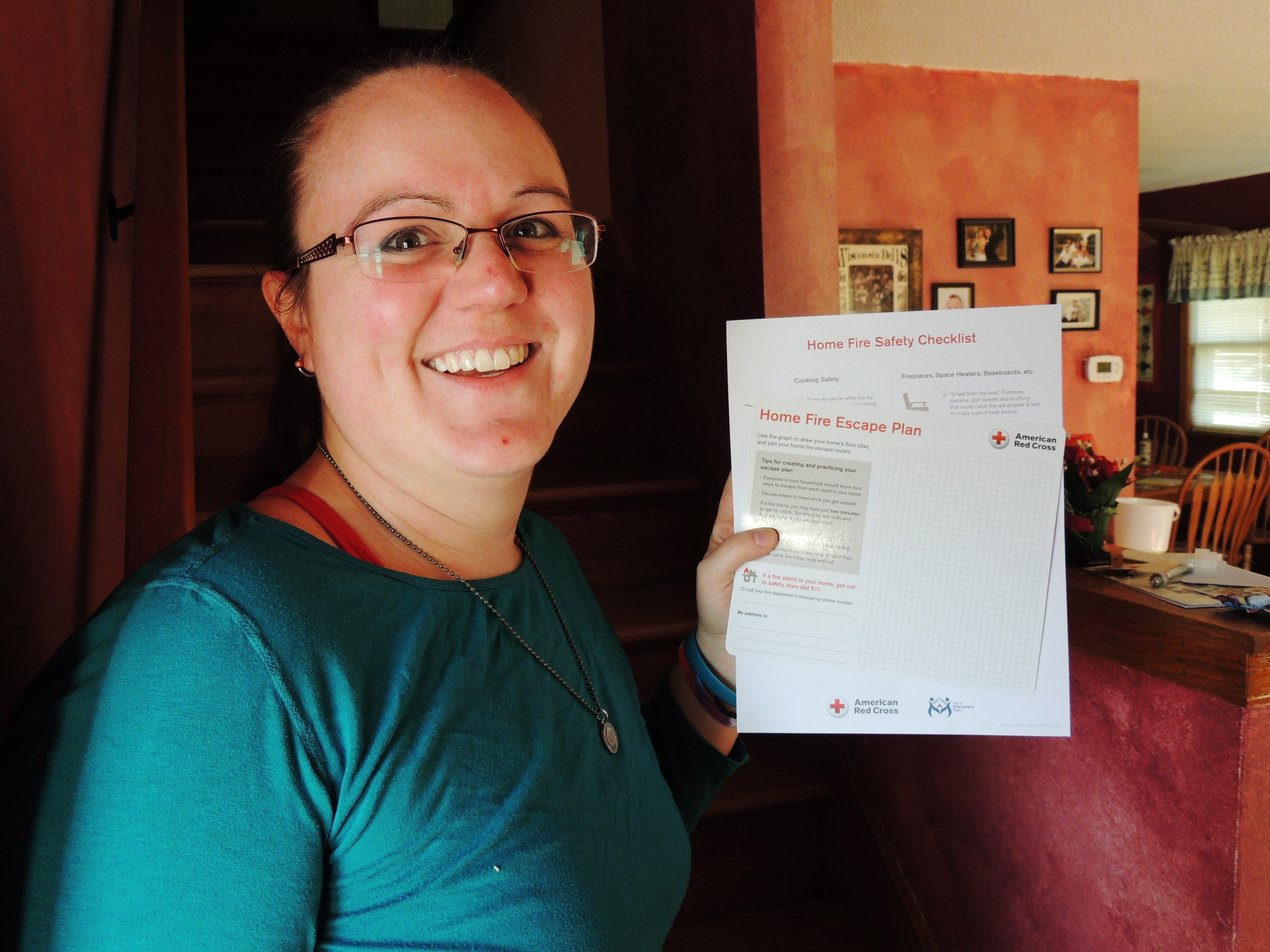
Sarah Hassig received home fire safety materials and had 3 smoke alarms installed during the Home Fire Campaign in Plainview, MN, on September 19, 2015.
The morning passed quickly, and the volunteers enjoyed rolls provided by the local Kwik Trip, plus water and pop on their return to the fire department. But most of all they left with the thanks of dozens of residents, and the satisfaction of improving the safety of the homes of so many men, women and children.
Super awesome: an additional 143 smoke alarms were installed on Sunday and during the following week! To learn more about the Red Cross Home Fire Campaign, click here. To get involved, contact your local Red Cross.
American Red Cross volunteer Bob Pearce recently returned from deployment to Saipan where he worked directly with more than 400 people affected by Typhoon Soudelor. New to the Red Cross, the typhoon relief operation in Saipan was Bob’s first large-scale response. He’s already responding to his second, serving as a virtual volunteer from his home base in Minnesota for the Red Cross response to the wildfires in California. Below, Bob shares with us his Saipan experience.
Information about Typhoon Soudelor and its damage may be interesting, but it doesn’t tell the real or whole story. Many of the Red Cross volunteers used the term resilient to describe the islanders. Others said they were patient. For me, the people of Saipan are remarkable.
Saipan is a 12 by 5.5 mile island in the south Pacific. Guam, Tinian, Rota and Saipan form the Commonwealth of Northern Mariana Islands, a United States Territory. With a small garment manufacturing industry in continuing decline, the 53,883 residents of Saipan have relied on tourism to help their economy. So, when Typhoon Soudelor slammed into the island in the late night and early morning hours of August 2 and 3, 2015, damage was felt in more than one way.
Winds from the Category III Typhoon broke the NWS anemometer on Saipan at 91mph. Whatever their speed, the winds were sufficient to snap off over 300 power poles on the island, far exceeding the 80-some spares stored for an emergency. Rain and wind-driven sea water also damaged generating plants, further hampering infrastructure recovery. Without power, processing and delivery of fresh and waste water were still further casualties of the storm.
Cleanup of splintered and downed trees from roads began immediately. Hotels and a few businesses, including gas stations, fired up emergency generators and began providing needed services during daylight hours.
The U.S. Navy moved three ships from Guam to Saipan to provide fresh water for the island. People drove cautiously through intersections formerly controlled by traffic signals. And neighbors helped neighbors dig out from the remains of their homes. The same winds and water that knocked out electrical power and stopped road traffic, had also destroyed or seriously damaged well over 500 homes, and many hundreds of other residences were also damaged to some extent.
In the first hours after the typhoon, the Northern Mariana Islands Chapter of the American Red Cross mobilized ten core volunteers plus a trained group of 14 other local volunteers. Together with chapter staff, this initial response force began providing immediate assistance to many of the more than 2000 people who called for help. Gradually, the chapter response was supplemented by volunteers from “the mainland,” which is the islanders’ term for the continental U.S. Minnesota provided four of those volunteers, who served in Disaster Health Services (DHS), Disaster Services Technology (DST), and client casework.
Local residents began lining up at the chapter office early each morning, well before the generator was started, DST had reset all systems, and the doors were opened. With daily preparations and briefings completed, health services and client casework volunteers began seeing local residents by 9:00 each morning, and continued well into the evening until there were no more lines. Estimates of the number of clients seen ranged from 200 to 500 daily, seven days a week, for the first couple of weeks. Direct Assistance to Saipan Households (DASH), ranged from cans of food, bottles of water, and bags of rice, to financial assistance cards for people to use for disaster-related needs.
Saipan definitely has a slower lifestyle than many of us are accustomed to, yet there’s more to the calm and peace that the residents exhibit. Each client greeted us with a warm smile and a firm handshake. Every interview was the start of a new day. One after another, they thanked the Red Cross volunteers for being there. Most of the islanders have little compared to what many of us have. On the other hand, they have so much. They are happy, generous and content. Saipan is unique and its people exceptional in the face of disaster.
To learn more about how to become a Red Cross volunteer, click here. For more about the Red Cross disaster relief response in Saipan, click here.
Photos provided courtesy of Bob Pearce.
Story by Vivi Engen, American Red Cross Intern, Minneapolis, Minnesota
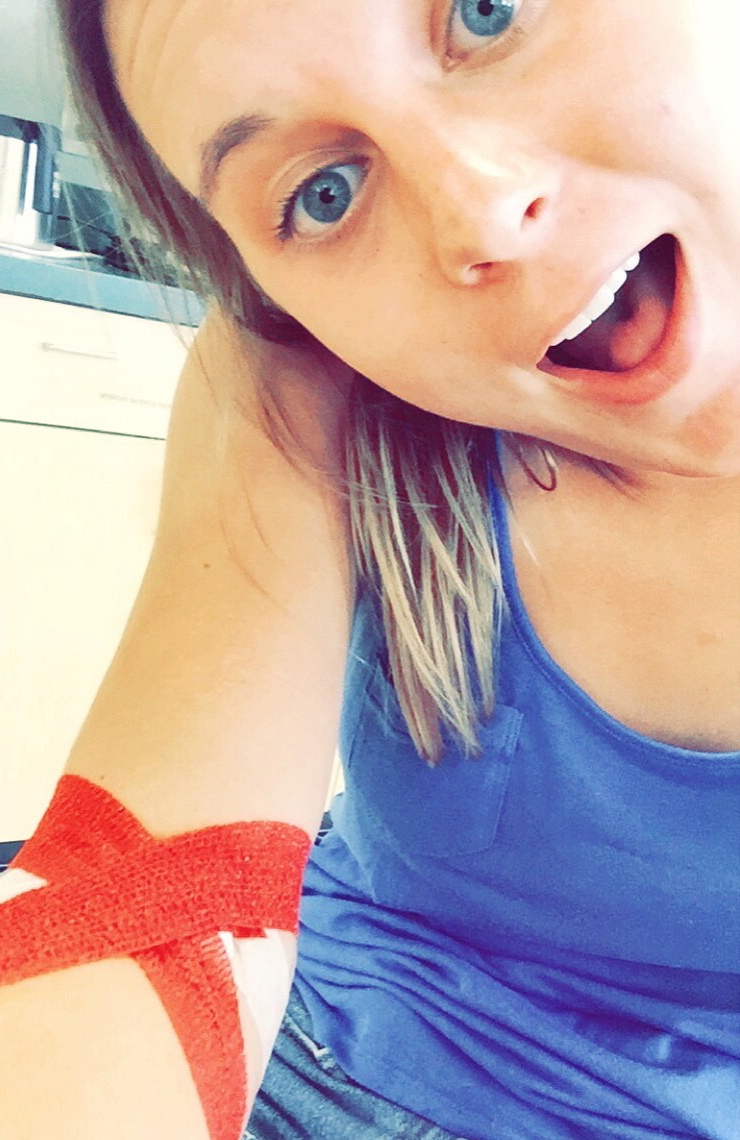
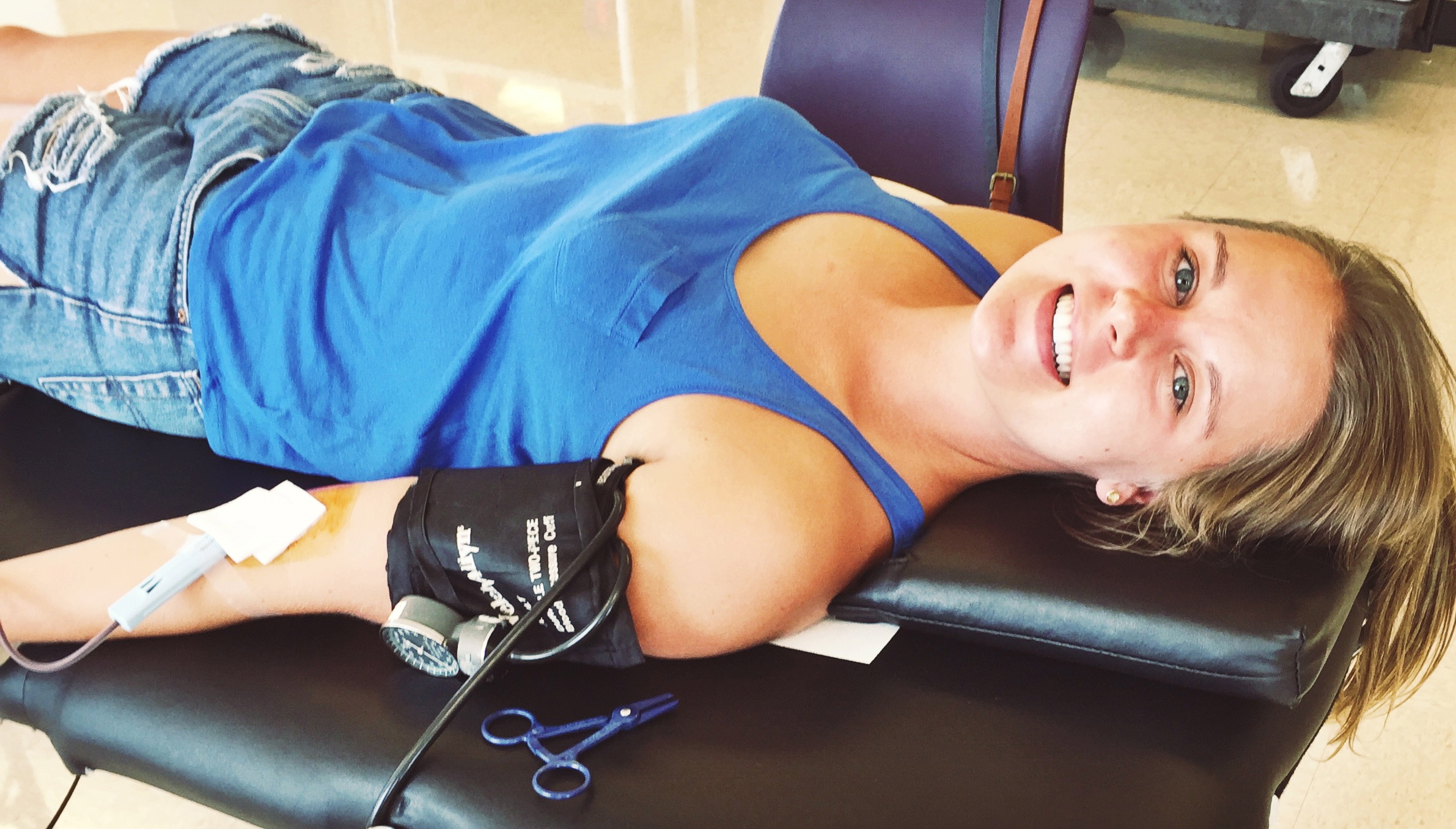
Spoiler alert: I survive the blood donation. This is a picture of me and my Red Cross bandage after I finished giving blood.
This is the story about my first time giving blood. I will not spare you the bloody details, because if I did, I would have nothing to write about.
Remember that five-year-old who went in to get her flu shot and needed five nurses (all wearing ear plugs to mute the screaming) to hold her down? Well, that was me. Over time, I have learned to brave getting shots but never fully outgrew the anxiety that comes at the sight of blood and needles. I studiously avoided offering my arm for 20 years, even though I’ve witnessed firsthand how important donating blood can be. I had to swallow hard to overcome that fear, and the good news is, it wasn’t nearly as bad as I thought it would be.
Monday, July 13, 2:15 p.m. rolled around much too quickly. A week after I had booked my appointment through the Blood Donor App, I found myself in the Red Cross blood donation center on the third floor at 1201 West River Parkway in Minneapolis. It was the ideal day to give blood. Outside was a blazing 89-degrees topped by an 83% humidity index, so even without giving blood, I felt sweaty and faint just from walking outside.
As I sat in the waiting room (which was comfortably air-conditioned), I sipped on my fifth Nalgene of the day. I realized that I had to use the restroom, again, and decided that I might have taken the recommendation to show up hydrated a little too seriously. My mom, who had agreed to give blood with me, was uncharacteristically late. (She later claimed that she took a wrong turn, but I know that she delayed her arrival because she was just as nervous as I was.)
The poster that trumped my fear of needles.
With time to spare, I scanned the waiting room until my eye caught a poster that asked, “Why do you give?” My mind initially jumped to ‘because my boss suggested it would be a good idea’, but then I realized I had many reasons to give blood—reasons that trumped my fear of needles.
Blood donations help millions of patients in need. In fact, in the past few years, blood donations have helped some of the most important people in my life. My dad, handy man that he is, cut his foot open with a chainsaw a few years ago and he needed blood. This past ski season one of my best friends crashed into a tree and she needed blood. Even more recently, my grandfather died of leukemia. And while he was alive, he received blood transfusions that made him feel much better.
Finally, my mom arrived and both of us were invited back. After a short health history exam and another trip to the bathroom, the nurses began prepping me. But one thing was missing, my partner in crime (a.k.a. mom). A few minutes later, she came in to deliver some tragic news. She would not be able to donate blood today because she had traveled to the Dominican Republic earlier this spring. (The Red Cross has a list of eligibility requirements that blood donors must clear before they can donate, one of those criteria include not having traveled to the Dominican Republic in the past year. For a list of the Red Cross blood donation eligibility criteria click here.)
The room where patients sit to complete their donation at the Red Cross blood donation center in Minneapolis.
So I embarked on my blood donation solo. The nurse laid me down on my back in the middle of an open room that offered a great view of downtown Minneapolis. She explained that first-time donors must lie down as a safety precaution. I glanced around the room and noticed that everyone else was sitting up. Perfect, I was instantly labeled as the newbie.
I get chatty when I’m nervous, and the nurse happily obliged, making small talk while she prepared my arm. At one point I asked how many donors they usually receive at this location. She guessed that an average of 15 people a day show up. There were at least 15, if not more, donors in the room at this moment. Word must have spread that I made an appointment and people came to witness the tears and screaming.
Me in the midst of my donation! All smiles, no pain.
Then came the moment I’d been dreading. The nurse told me not to look and slid the needle into my inner-left-elbow-crevasse (I don’t know how else to explain that spot on my arm). She did not stab or jab or pinch, she slid it into my arm. The needle entering was effortless, like it was meant to be there. OK that was an exaggeration, but it was manageable.
12 minutes and 43 seconds later I was done, and to my surprise feeling good! I looked at the pint of blood that had just come out of my body. The nurse saw me eyeing the bag and told me that my donation could help save up to three lives. Three lives? I asked if I had heard her correctly. She nodded and I sat, recovering from what probably counts as the most heroic, if somewhat anti-climactic, 15 minutes of my life.
The snack bowl was wayyyyyyy less full after I left the blood donation center.
After the nurses were convinced that I still knew my name and could stand on my own, they told me to slowly make my way to the snack table. I had been obedient for the last hour, but I admit, this time I broke the rules and hurried over to the food. First I enjoyed an M&M cookie, then I grabbed granola bar. Resisting a third snack might have been the most painful thing I did all day.
As I sat indulging myself, I scanned the donation room. There were business people on their way home from work, seniors reading newspapers, even a few students like me. Everyone was sitting up, which meant that they were all experienced donors coming back to save more lives. I knew that I too would be back, next time sitting up like the veterans surrounding me, to participate in one small deed that can make a world of difference.
So trust me: If I can give blood, so can you. And you’ll get a cookie.
Help prevent a seasonal blood supply shortage: A seasonal blood donation decline is common during the summer. Currently, the Red Cross has an urgent need for type AB blood to help replenish the plasma supply. Blood donors with types O negative, B negative and A negative and platelet donors are also especially needed to maintain sufficient supplies. For information about blood donation, or to schedule an appointment, download the Blood Donor App, visit redcrossblood.org or call 1-800-RED CROSS (1-800-733-2767).
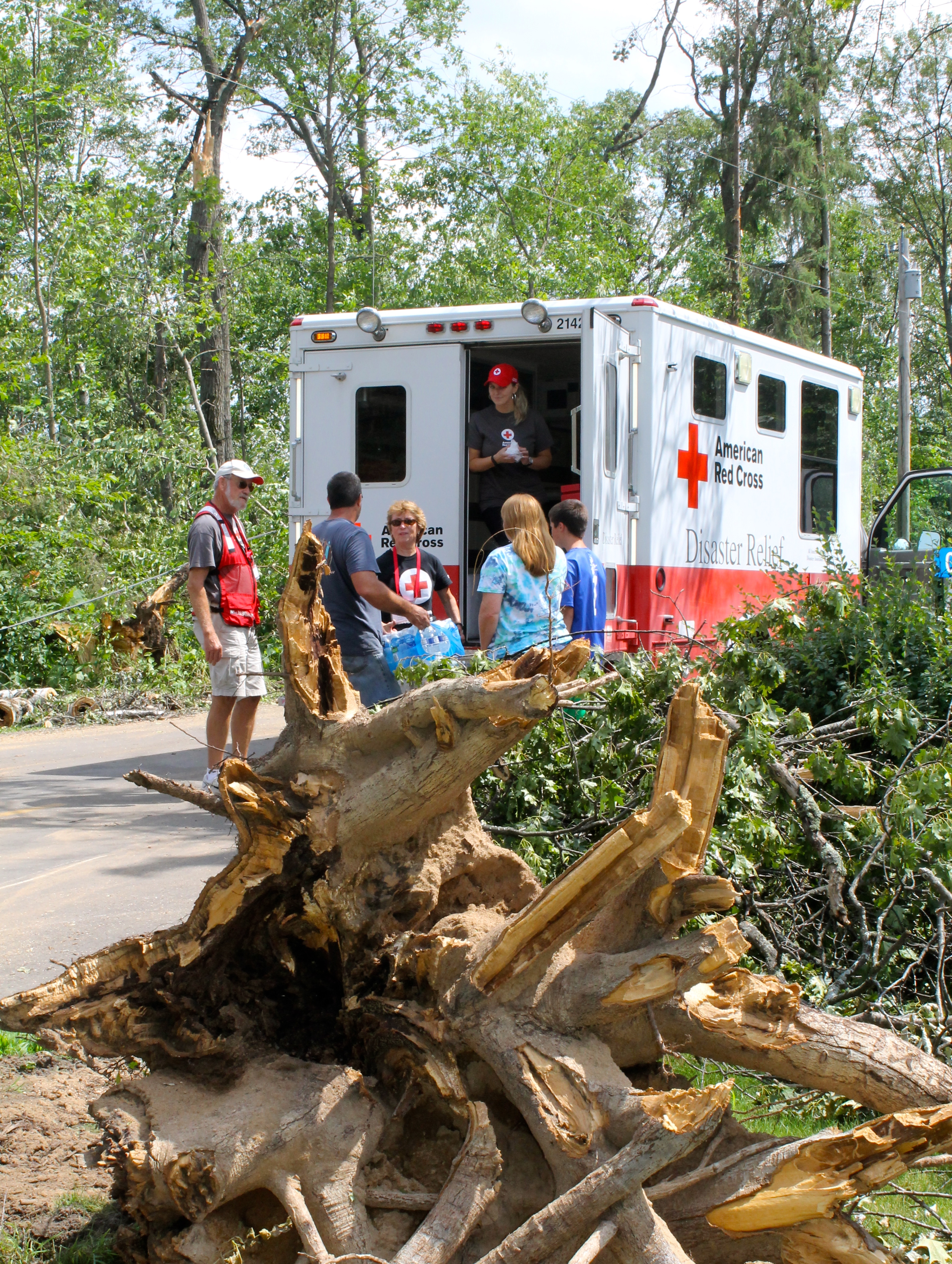
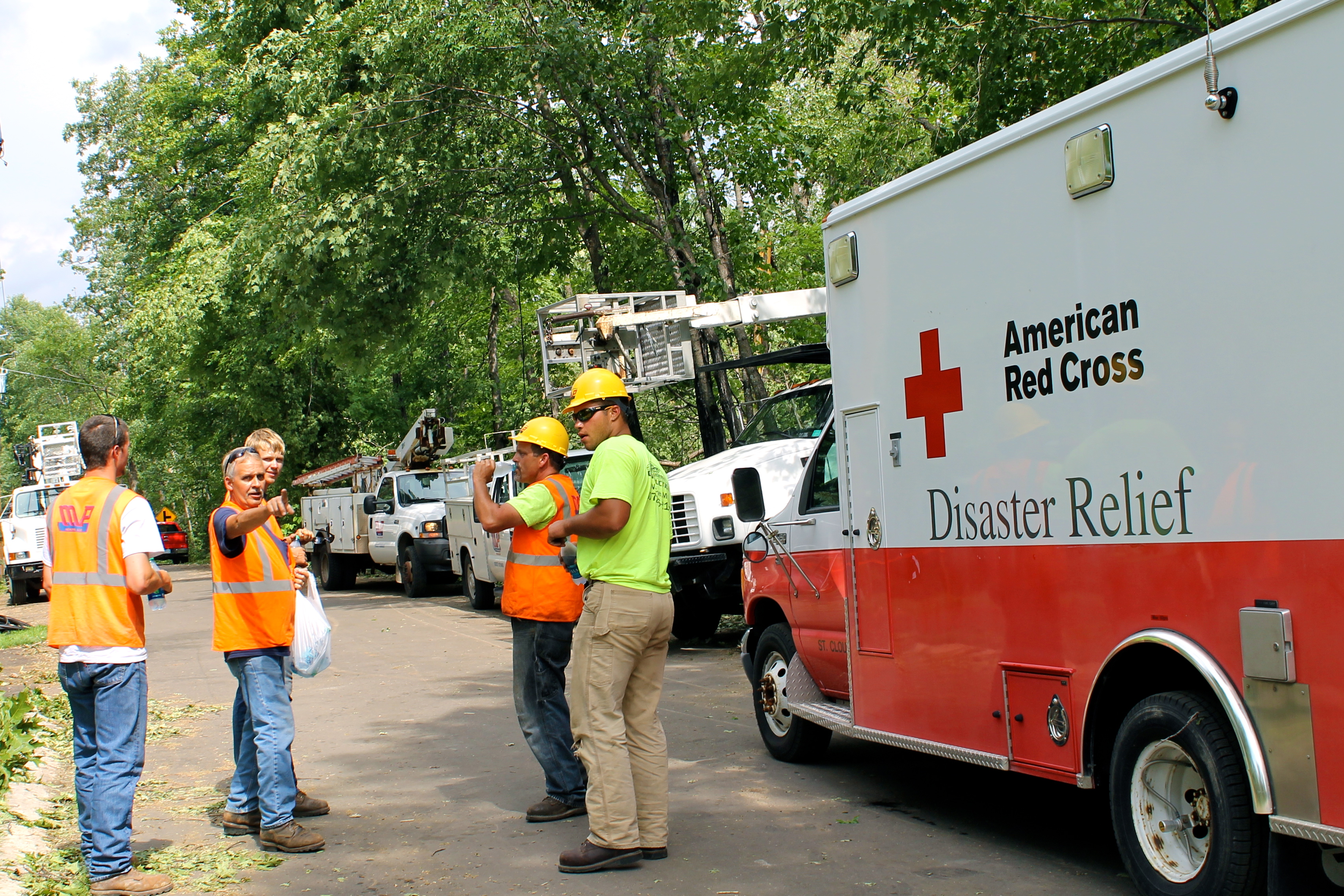
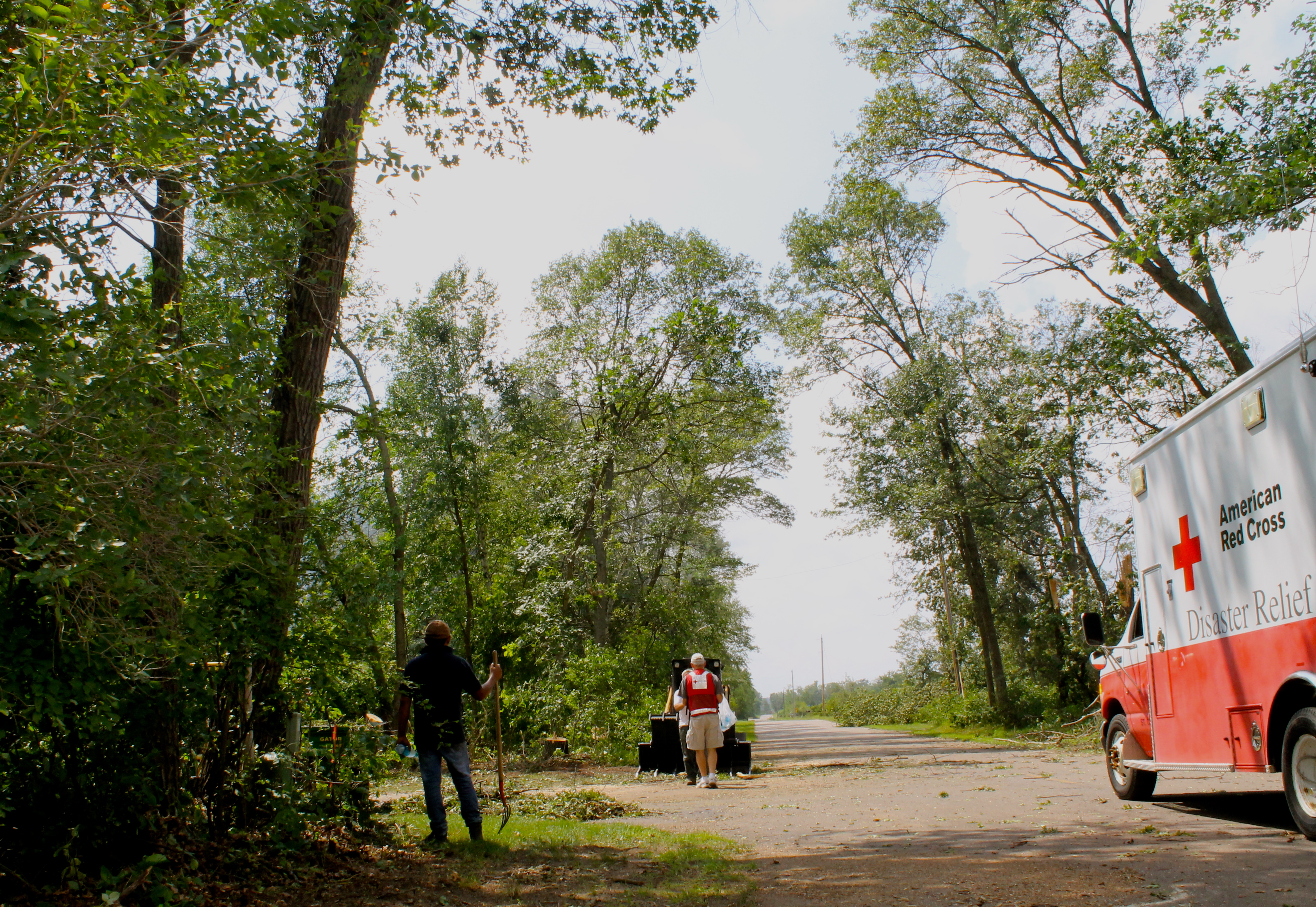
Red Cross disaster relief workers have been on-the-ground in the Brainerd Lakes, Minnesota, area since a severe windstorm struck on July 12, 2015. Red Cross support currently includes providing water, ice and relief supplies to families and clean-up crews, and assessing damage of neighborhoods. The Red Cross continues to coordinate its relief efforts with local and regional partners that are responding to the disaster.
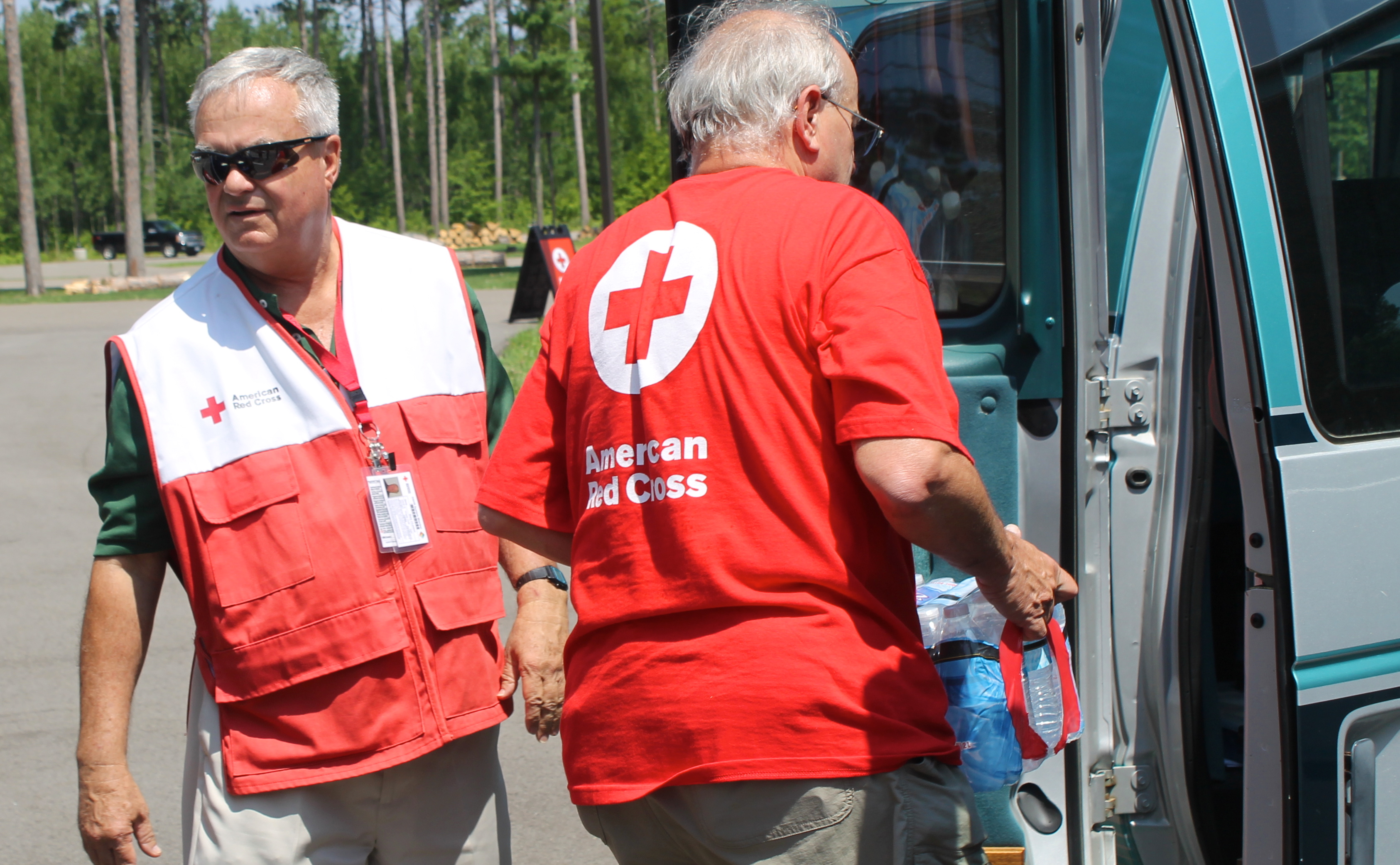
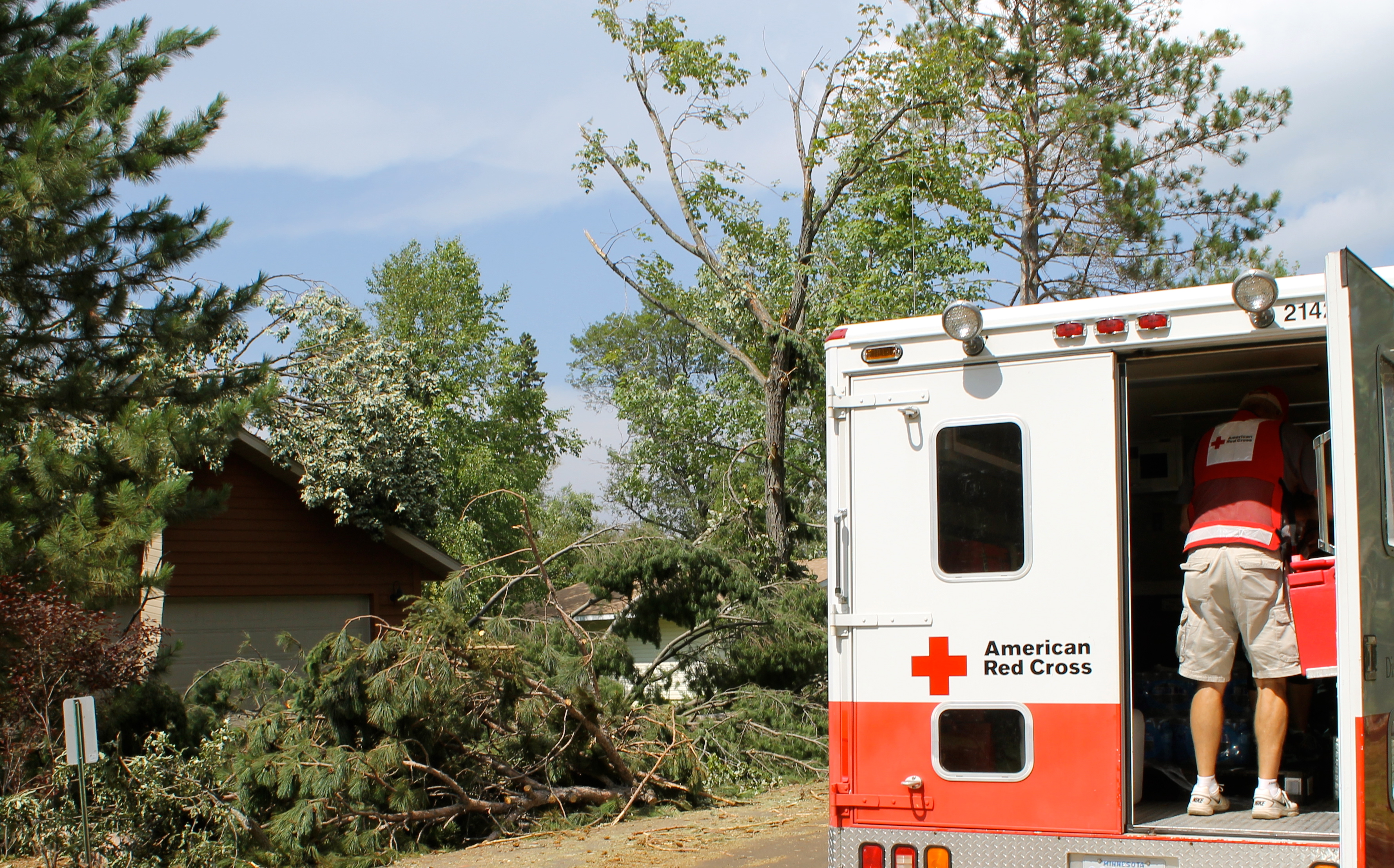
The American Red Cross, along with the Salvation Army and the local sheriff department, distributed water, ice, and other relief supplies from a shared field station at Timberwood Church, south of Nisswa, Minn., July 15, 2015. Photo credit: Vivian Engen/American Red Cross.Red Cross volunteers Gary Larson (l) and Ken Vertin (r) spent the day in Nisswa, Minn., loading cases of water into local residents’ vehicles on, July 15, 2015. Photo credit: Vivian Engen/American Red Cross.Red Cross volunteer Connie Barsness carried bottled water to the car of a local resident who has been without running water since the storm on Sunday. The power is expected to return to the area in the next few days, but until then, local residents will continue to rely on alternative water sources, July 15, 2015. Photo credit: Vivian Engen/American Red Cross.Two Red Cross Emergency Response Vehicles (ERVs) are canvassing the hardest hit areas and bringing aid to those without power and cut-off from other resources by downed lines and trees, Gull Lake Dam Road, July 15, 2015. Photo credit: Vivian Engen/American Red Cross.The storm that ravaged the Brainerd Lakes area on Sunday, July 12, 2015, is being compared to a stage one hurricane by local officials. Debris littered the street, at times making it difficult for the Red Cross Emergency Response Vehicle (ERV) to get through to affected areas, Gull Lake area, July 15, 2015. Photo credit: Vivian Engen/American Red Cross.Red Cross volunteer Rick Campion (l) distributed cold water to local residents Ronald Hines (c) and Lloyd Baakkonen (r) from a Red Cross Emergency Response Vehicle (ERV). “We heard your horn and came running,” said Baakkonen, who, despite having a tree through his roof, had a huge smile on his face. “There’s nothing better than cold water.” July 15, 2015. Photo credit: Lanet Hane/American Red Cross.Red Cross volunteers Rick Campion (l) and Vivian Engen (c) spoke with Ronald Hines (r), who was cleaning up following the windstorm. “I had a generator in the basement that I’d never used before, but figured it would come in handy if something bad were to happen,” Hines said. “I was right.” July 15, 2015. Photo credit: Lanet Hane/American Red Cross.Many homes in the Brainerd Lakes area were hit hard by the storm on July 12, 2015. Amidst uprooted trees and debris, one family told Red Cross volunteers that a tree went through their roof. Their entire home will be torn down because the damage was so extensive. July 15, 2015. Photo credit: Vivian Engen/American Red Cross.To date, the Red Cross has distributed thousands of bottles of water and hundreds of pounds of ice to Brainerd Lakes area residents and work crews cleaning up in hot and humid conditions following the windstorm. July 15, 2015. Photo credit: Vivian Engen/American Red Cross.Red Cross volunteer Rick Campion walked through an storm affected neighborhood in the Brainerd Lakes area on July 15, 2015. Photo credit: Vivian Engen/American Red Cross.
What You Can Do: Download today the Red Cross Emergency App for real time access to weather alerts, preparedness information, safety tips and shelter locations.The Emergency App provides expert advice on what to do during and after, tornadoes, wildfires and other disasters. The app provides lifesaving information on emergency first aid for various situations such as what to do for heart attacks, heat-related emergencies and includes water safety tips. Pre-loaded content ensures that guidance from Red Cross experts is available anytime, anywhere – even without mobile connectivity.












 American Red Cross Minnesota and Dakotas Region