This year, are you thinking of becoming a Red Cross volunteer? Right now in Minnesota, we’re recruiting for three opportunities supporting disaster relief. Each position ensures disaster workers can deliver humanitarian aid at home and around the corner.
Support daily operations for disaster relief services
The American Red Cross serving Twin Cities Area seeks a volunteer to support instructor-led training by scheduling in-person classes and performing other administrative tasks, as needed. This is a flexible-schedule position that can be performed remotely during daytime hours. If interested, please contact Angela Antony (angela.antony@redcross.org).
Prepare new volunteers for Red Cross disaster relief service
The American Red Cross serving Twin Cities Area seeks volunteers to assist Workforce Engagement with bringing on-board new disaster volunteers. This role guides new volunteers through the first steps of joining the Red Cross, from turning in the right paperwork and signing up for training, to helping them feel prepared for their roles. On-boarding volunteers enjoy working with people, being flexible, and serving on a team. If interested, please contact Hannah Linsk (hannah.linsk@redcross.org).
Help volunteers get out the door to disaster relief responses
The Minnesota Region needs volunteers to help deploy volunteers to both regional and national disasters. Deployment team members will assign volunteers to Disaster Relief Operations (DROs), give the proper information regarding deployment procedures, distribute mission cards, and perform other duties as necessary. The best candidates will be comfortable working with online platforms and on the telephone. Help us volunteers get out the door! If interested, please contact Susan Waananen (susan.waananen@redcross.org).
It’s a great year to join us! Click here to learn more about our Century of Service, year-long celebration during 2017. #mnredcross100
Post by Lynette Nyman/American Red Cross Minnesota Region
1917-18 Comfort Kit Shop. Courtesy of the Minnesota Historical Society
In 1917, as the United States entered World War I, the American Red Cross quickly emerged as the largest social welfare agency throughout Minnesota and across the nation. The community quickly embraced the Red Cross mission to prevent and alleviate human suffering in the face of emergencies by mobilizing the power of volunteers and the generosity of donors and by the end of the war, 20 percent of all Minnesotans had joined the organization.
This year, as we celebrate a century of service, the American Red Cross Minnesota Region invites individuals and organizations to join us as we prepare for whatever may come in the next 100 years. Click here to learn more about our Centennial Year.
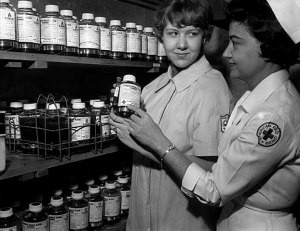
1960 Red Cross nurses with blood. Courtesy of the Minnesota Historical Society
During the past century, we have served millions of people. Through disaster services, we have provided immediate, emergency housing, food, clothing, medical supplies, and essential household items to victims of the more than 600 disasters that occur in the Minnesota Region annually. From preparedness education and health and safety programs to ensuring the daily demand for blood is met, we have worked vigilantly to prepare our communities with the tools and resources that save lives before urgent situations happen. We have supported our military heroes and their families before, during and after deployment and have reconnected families separated by conflict around the globe.
Today, 100 years since our inception, the American Red Cross Minnesota Region stands ready 24 hours a day, 365 days a year with volunteers and staff on standby to bring comfort, care and relief to victims of disasters or critical emergencies, work as health and safety trainers, and meet demand for area blood supplies.
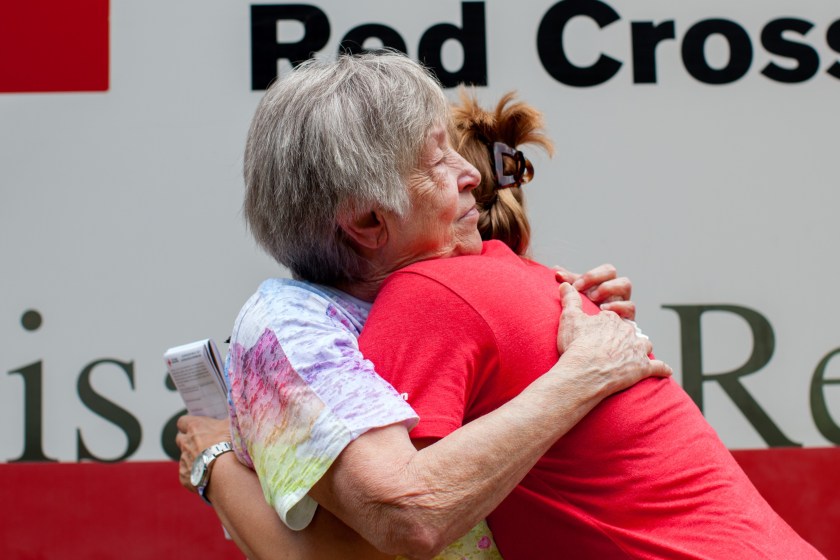
Some people are Natural Born Huggers. Take Jane. During a recent party, Jane came up to me. “You probably don’t remember me,” she said. I sort of did, but not really. It didn’t matter. She opened her arms wide and wrapped them around me. “Hug me like you know me,” she said.
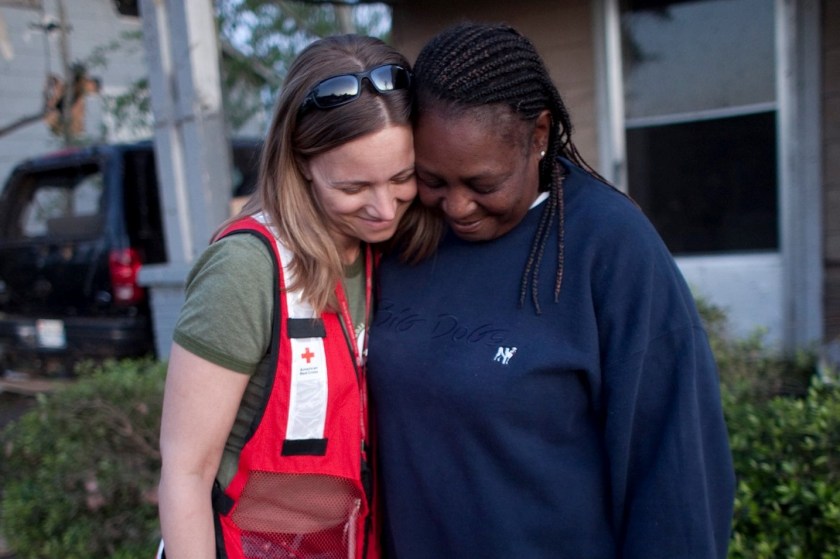
“I want a hug,” said Fonda Buckley, a resident just beginning to recover from the historic flooding in southern Louisiana, who stopped to talk with Red Cross relief worker Lynette Nyman in Denham Springs, Louisiana, August 18, 2016. Photo credit: Marko Kokic/American Red Cross
After nearly eight years of responding to Red Cross disaster relief operations where I’ve hugged people of all types, and mostly strangers, Jane’s instruction registered deep in the reptilian part of my brain. My rigid self melted. My heart warmed. Conversation lifted. We became immediate friends. I left the party a different person. The cold winter air felt frosty only on the outside. Inside, I was delighted because people like Jane, people willing to risk closeness with the largely unfamiliar, exist.
In 2011, following a devastating tornado in Tuscaloosa, Alabama, Georgette Evans, who walked miles to find medical services and safe shelter following the devastating tornado, visits with to Lynette Nyman in Alberta City neighborhood. Photo credit: Dennis Drenner/American Red Cross
So, this year I’m taking on one New Year’s resolution: to hug you like I know you. I encourage you to do the same. And if, like me, you need practice, serving with the Red Cross is a great way to get it.
In November, Red Cross volunteer Mimi Bielinski met with Milton Vallejos after a multi-unit apartment fire in Burnsville, Minnesota.
2016 was a busy year for Red Cross disaster services in Minnesota. Our relief workers did a great job making sure people near and far received Red Cross support during times of need and helping them rebuild their lives after disaster.
For example, in November, Red Cross volunteer Mimi Bielinski met with Milton Vallejos following a multi-unit apartment fire in Burnsville, a city just south of Minneapolis. Mimi worked with Milton to assess and support his family’s immediate disaster relief needs and to direct him to additional resources for long-term recovery. With Red Cross help said Milton, “All of our problems went away. We had a place to stay, money for food and clothes.” The Red Cross assisted more than 80 people affected by the fire. After four years into serving as a Red Cross volunteer Mimi said, “I feel good when people are being helped. And, I can tell when they’re being helped just by my interactions with them.”
During 2016, the Minnesota Region of the American Red Cross:
Responded to 470 disasters in the Minnesota Region, which includes part of western Wisconsin
Helped 1,011 families affected by local disasters, mostly single family home fires
Installed 3,720 smoke alarms in residences, making them safer from and more prepared for home fires as part of our Home Fire Campaign
Reached 5,245 youth with emergency preparedness education through The Pillowcase Project
In addition to helping at home, more than 150 Red Cross disaster relief workers from Minnesota responded (some not once, but multiple times) to national Red Cross relief efforts across the country, including flooding in Missouri, Texas, and Louisiana; water crisis in Flint, Michigan; wildfires in California; and hurricane relief across multiple states along the eastern seaboard. Their service provided shelter, food, and medical and emotional support to thousands of people experiencing some of their darkest moments.
Thank you to everyone for the great work done this past year, providing assistance to neighbors near and far.
Story and photo by Lynette Nyman, American Red Cross. Click here to learn more about the Red Cross in Minnesota.
This winter’s first blizzard is expected to blow across western Minnesota, bringing snow, wind, and rain to much of the state. Today is the day to prepare. We encourage everyone to follow the safety tips below to stay safe during the storm.
COLD SAFETY TIPS People are urged to stay inside during this storm. To stay safe during this dangerous weather, follow these steps:
Wear layers of lightweight clothing to stay warm.
Be extremely careful if you have to shovel snow. Take frequent breaks and stay hydrated.
Watch for hypothermia and frostbite. Hypothermia symptoms include confusion, dizziness, exhaustion and severe shivering. Frostbite symptoms include numbness, flushed gray, white, blue or yellow skin discoloration, numbness, or waxy feeling skin.
Remember your pets – bring them indoors. If they can’t come inside, make sure they have enough shelter to keep them warm and that they can get to unfrozen water.
Download the American Red Cross First Aid App for quick, expert advice on what to do in case of an emergency. This free app is available in your app store. See all Red Cross apps at redcross.org/mobileapps.
POWER OUTAGE If someone is going to use a generator, they should never use it indoors, even in a garage, carport, basement or crawlspace. Fumes from the generator can be deadly.
Use flashlights for light, not candles.
Keep the refrigerator and freezer doors closed as much as possible. Check refrigerated food for spoilage and if in doubt, throw it out. Your refrigerator will keep cold for about 4 hours. If the freezer is full, it will keep its temperature for about 48 hours.
Have coolers on hand and surround your food with ice in the cooler or refrigerator to keep food cold for a longer period of time.
Turn off and unplug all unnecessary electrical equipment and any appliances, equipment or electronics to avoid damaging them when the power is restored.
Leave one light turned on so you’ll know when the power comes back on.
Watch animals and keep them under your direct control.
Eliminate unnecessary travel, especially by car. Traffic lights will be out and roads will be congested.
Click here for more winter storm preparedness tips, checklists and other resources in our disaster and safety online library.
During this time of year, Red Cross volunteers in Northern Minnesota are particularly busy supporting Minnesota Assistance Council for Veterans (MAC-V) ‘Stand Down’ events, collecting and distributing Holiday Mail for Heroes cards for local military members and veterans, and participating in Veterans Day events. These activities help fulfill our Service to the Armed Forces, which is a core service that the American Red Cross delivers. And, is always an honor to provide.
“It felt like a scoop of ice cream”
At the Veteran Stand Down event in August in Virginia, MN, one of our newest volunteers, Wendy Frederickson, and an experienced disaster relief volunteer, Lisa Kvas, participated in the event as their first time delivering Red Cross services to military members and veterans. Wendy shared that the best part of participating in Red Cross work with veterans was the privilege to meet a Vietnam War veteran named Richard Krisean, who had never attended a veteran-focused event since returning from Vietnam.
Richard Krsiean
Richard was a Radar Intercept Officer with the Marines in Vietnam and flew in 192 combat missions. Wendy shared that Richard’s experience in returning from Vietnam was not positive at all and that Richard was shocked at the depth and breadth of the services that were made available at the event for veterans.
Richard and Wendy at the Stand Down
Richard shared his point of view: “What I took from going to the Veteran’s Stand Down in Virginia was the openness of all of the organizations, but the Red Cross particularly was so open and helped Veterans break down the barriers of sharing their experiences – in my case in Vietnam. The Red Cross volunteers Wendy and Lisa were just so open and wanted to know your story, and there were no walls and no barriers, they were just there to help the veterans. That made me a little emotional, which I usually don’t get in front of other people.”
When Richard was asked about his experience with the Red Cross while he was serving in Vietnam, Richard said: “When I was on a medivac flight back from Vietnam, it was so nice to see people like that. They really cared about me when they were giving me coffee or donuts, and after being shot at in Vietnam and everything else that was going on – it felt like a big scoop of ice cream, that is how I felt.”
Richard and Wendy talking at the Stand Down
Wendy said that when she was sitting down with Richard for lunch that she told him that “Something is telling my heart that you are the reason I am here today.” Richard said that he felt the same way. Lisa Kvas added, “Meeting Richard really struck home to me as to how proud that we really are of all of them. Showing that, and sharing that, was really much more important than the blanket that we handed them. That is what has the impact.” When Lisa was asked about what it might take for a volunteer to be able to make a difference with our Service to the Armed Forces, she shared that it is very similar to the qualities that make a good disaster volunteer – compassion and hope.
This year, we had the added resource of new blankets to give out to the veterans attending the Stand Down events in Virginia, Duluth, Grand Rapids, and Bemidji though a partnership with the Duluth Fire Department. Through a national charity, we were able to give out 1,000 blankets to both veterans at these events, as well as to victims of disaster across our Northern Minnesota Chapter area.
80% of success is ‘showing up’
Our take is that that 80% of success is ‘showing up.’ This means two of the most important pieces of the work we do with our military service members and veterans at the Northern Minnesota Chapter are 1) showing up; and 2) not waiting for our military heroes to raise a hand for help. By making a commitment to being at events that support our military units and veterans, it gives us the opportunity to make a difference when it is needed.
Though programs like Holiday Mail for Heroes, we distribute bundles of holiday cards written by local community members to all of the members of the units we support locally; as well as to all of the veterans living in nursing homes that we supply cards to. The reason is that on any given day it is impossible to identify exactly who would benefit from getting the bundle of cards thanking them for their service and wishing them a great holiday season. By giving the cards to everyone, we are letting our local communities share their appreciation of the commitment our veterans have made. This year we expect to distribute over 16,000 cards.
UMD Greek Life Club, September 2016
On Veterans Day, we will participate in four events happening in the Duluth area. We will support the Veterans Day parade in downtown Duluth by providing donuts, coffee and hot chocolate for our veterans who will be marching in the parade. We also have card-signing events going on at Bent Paddle Brewing and the College of St. Scholastica hockey game. Lastly, at the University of Minnesota Duluth (UMD) hockey game, the UMD Greek Life Club will be supporting a card-signing table, and the UMD Athletic Department will recognize our Northern Minnesota Chapter Board Chair (and retired Colonel from the MN Air National Guard) Penny Dieryck, as well as Richard Krsiean, the veteran we met in Virginia, for their service to our nation.
If you are a veteran, please accept our sincerest thanks for your service to our country. If you would like to get involved with the work of Red Cross Service to Armed Forces, reach out to your local Red Cross chapter to find out how you can help.
From Florida to the Carolinas, American Red Cross workers from Minnesota have supported Hurricane Matthew relief efforts. Assignments have ranged from working in a shelter and serving meals to coordinating with response partners and providing medical and mental health services. Others gathered stories and helped raise money for the response. Big picture number as of October 27: more than 50 Red Cross workers from Minnesota have deployed to areas impacted by the storm across the southeastern United States. Take a look.
Carole Madland visited people in shelters and neighborhoods in North Carolina. Sometimes she hitched a ride to reach isolated communities. Overall, the Red Cross mobilized 2,200 workers, 13 kitchens with partners, and 111 response vehicles for the state. Big picture number as of October 25: the Red Cross has mobilized more than 5,800 disaster workers since Hurricane Matthew first threatened communities in the southeast.
Rachel Olmanson took meals to people in affected communities. Above is the view from Rachel’s truck while her team was next in line for food pick-up at a field kitchen in North Carolina. Big picture number as of October 25: the Red Cross and its partners have served more than 1.3 million meals and snacks in affected communities in Florida, Georgia, North Carolina and South Carolina.
In Florida, Dave Schoeneck (upper left) assisted with relief effort coordination. The Red Cross has worked closely with government officials and non-government organizations (NGOs), such as Southern Baptist Disaster Relief, AmeriCorps National Civilian Community Corps and others. Big picture number: around 13,000 homes are affected in Florida, Georgia, North Carolina and South Carolina.
In South Carolina, Dave Snetsinger (second on right) was a shelter worker. Overall, the Red Cross has had nearly 1,200 workers, 5 kitchens with partners, and 53 response vehicles for relief efforts in the state. Big picture number as of October 25: the Red Cross has helped provide nearly 100,000 overnight shelter stays in Florida, Georgia, North Carolina and South Carolina.
Mark and Gail Noren (right and center) are doing search and care, which means finding neighborhoods and people in need of meals and feeding them in North Carolina. Big picture number as of October 25: Red Cross and its partners have served 697,000 meals and snacks across hurricane affected areas in the state.
In Georgia, Judy Hanne Gonzalez helped gather and share stories about the Red Cross and its Hurricane Matthew relief efforts. Judy also assisted with fundraising in Florida. Big picture number: as of October 25, the Red Cross has raised $8.1 million in designated donations and pledges for a relief response that’s estimated to cost $24-$28 million.
Thank you to everyone who has responded to the Hurricane Matthew relief efforts!
We’re excited, and you might be too, that Halloween is just around the corner. To ensure Halloween is filled with fun for the trick-or-treaters in your life, review and share the safety tips below. And, download the American Red Cross First Aid App. It’s free and it gives you instant access to information about handling common first aid emergencies.
1. Use only flame-resistant costumes.
2. Plan the trick-or-treat route – make sure adults know where children are going.
3. Have a parent or responsible adult accompany young children as they make their way around the neighborhood.
4. Make sure trick-or-treaters can see and be seen. Give them a flashlight to light their way. Add reflective tape to costumes and trick-or-treat bags. Have everyone wear light-colored clothing to help be seen.
5. Instead of masks which can cover the eyes and make it hard to see, use face paint instead.
6. Be cautious around animals.
7. Only visit homes that have a porch light on. Accept treats at the door – never go inside.
8. Walk only on the sidewalks, not in the street. If no sidewalk is available, walk at the edge of the roadway, facing traffic. Look both ways before crossing the street, and cross only at the corner. Don’t cut across yards or use alleys. Don’t cross between parked cars.
9. Make sure a grown-up checks the goodies before eating. Remove loose candy, open packages and choking hazards. Discard any items with brand names that you are not familiar with.
10. Drivers – use extra caution. The youngsters are excited and may forget to look both ways before crossing.
The storm arrived in the early morning, just after midnight, says Stephanie Hughes on the porch of her home while speaking with a Red Cross relief worker in Pembroke, Georgia. They were especially scared, she says, when trees started to come down and water started rising around the house, which has been in her family for generations. October, 8, 2016. Photo credit: Daniel Cima/American Red Cross
Hurricane Matthew. Thousands of people in shelters. Thousands of relief workers responding. Too many lives lost. This disaster is a big one, for all of us, requiring many hands, heads, and hearts pulling together to help others in dire need. Shelter, food, and relief supplies are Red Cross priorities. And blood and platelet donations are needed from people in unaffected areas to make up for canceled drives. Check out the stories below. They’ll show you how the Red Cross is helping.
You Just Gotta Be Strong: a video from the American Red Cross features Terry, a shelter resident who was forced to evacuate his home in Tarboro, North Carolina, because of Hurricane Matthew
Haiti Needs Help from All of Us: an opinion piece from American Red Cross CEO Gail McGovern published in Huffington Post addresses rumors, issues, and concerns about disaster relief responses in Haiti
Hurricane Matthew: An Inside Look: a blog post featuring photos and stories about people in the aftermath of Hurricane Matthew in Georgia and South Carolina
Suffering Continues After Hurricane Matthew: a news release from the American Red Cross with details about how the Red Cross is responding to the disaster in the U.S. and in Haiti
From Minnesota, there are 24 Red Cross relief workers deployed to help in the affected areas. More will likely be on their way in the days to come.
Karen and Rick Campion are taking a Red Cross mobile feeding truck from Minnesota to North Carolina where they will distribute meals and relief supplies. October 11, 2016. Photo credit: Lynette Nyman/American Red Cross
Please support this relief effort. Click here to donate money to Red Cross disaster relief. Click here to make a blood or platelet donation appointment.
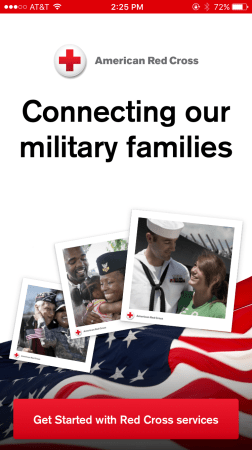
The American Red Cross has a new mobile app for military families and veterans. The Hero Care App provides instant access to vital Red Cross services anywhere in the world. Whether you’re a military member, the parent of a child in the military, a military spouse, or a veteran, this free mobile application guides you to valuable resources and services that can help alleviate stress and provide important information at your fingertips.
With the Hero Care App you can...
Request Red Cross emergency services including an emergency message or assistance with emergency travel or emergency financial aid.
Securely and easily access information about their service member in the case of an emergency, including updated information as they move or change duty assignments.
Access non-emergency Red Cross behavioral health assistance including financial assistance and free local workshops for military kids and spouses.
Find local resources and information provided by trusted community partners like Tragedy Assistance Program for Survivors (TAPS), Blue Star Families, Military Child Education Coalition, United Way, Goodwill, Easter Seals, and others.
Locate information on key government resources such as MilitaryOneSource, VA Benefits and Services, Department of Labor VETS, the VA Caregiver Support Program, and SAMSHA Community Health Support Services.
In addition, with the Hero Care App you can connect with other Red Cross apps, such as the Emergency, First Aid and Blood apps.
To download to the Hero Care App to your smart phone or tablet, search for ‘American Red Cross’ in your app store, text GETHEROCARE to 90999 to receive a download link, or go to redcross.org/apps. The Hero Care App is available in English and Spanish.
 This year, are you thinking of becoming a Red Cross volunteer? Right now in Minnesota, we’re recruiting for three opportunities supporting disaster relief. Each position ensures disaster workers can deliver humanitarian aid at home and around the corner.
  Support daily operations for disaster relief services
 Prepare new volunteers for Red Cross disaster relief service
 Help volunteers get out the door to disaster relief responses
 It’s a great year to join us! Click here to learn more about our Century of Service, year-long celebration during 2017. #mnredcross100


 This winter’s first blizzard is expected to blow across western Minnesota, bringing snow, wind, and rain to much of the state. Today is the day to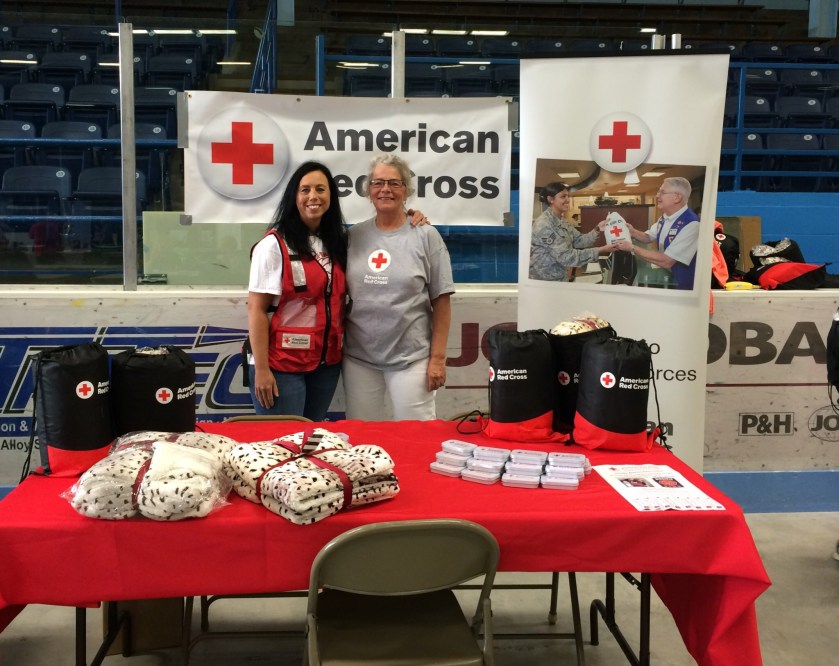



 Carole Madland visited people in shelters and neighborhoods in North Carolina. Sometimes she hitched a ride to reach isolated communities. Overall, the Red Cross mobilized 2,200 workers, 13 kitchens with partners, and 111 response vehicles for the state. Big picture number as of October 25: the Red Cross has mobilized more than 5,800 disaster workers since Hurricane Matthew first threatened communities in the southeast.

 In Florida, Dave Schoeneck (upper left) assisted with relief effort coordination. The Red Cross has worked closely with government officials and non-government organizations (NGOs), such as Southern Baptist Disaster Relief, AmeriCorps National Civilian Community Corps and others. Big picture number: around 13,000 homes are affected in Florida, Georgia, North Carolina and South Carolina.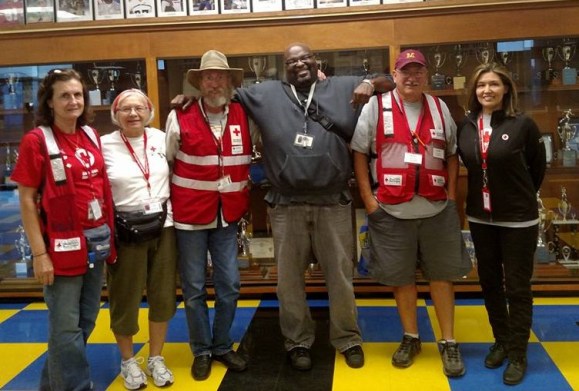
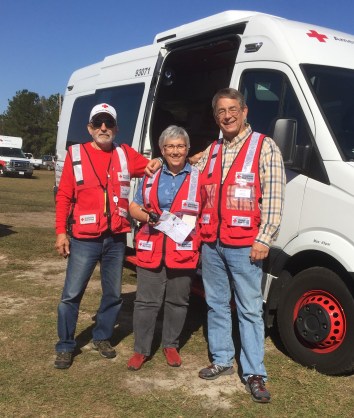
 In Georgia, Judy Hanne Gonzalez helped gather and share stories about the Red Cross and its Hurricane Matthew relief efforts. Judy also assisted with fundraising in Florida. Big picture number: as of October 25, the Red Cross has raised $8.1 million in designated donations and pledges for a relief response that’s estimated to cost $24-$28 million.
 We’re excited, and you might be too, that Halloween is just around the corner. To ensure Halloween is filled with fun for the trick-or-treaters in your life, review and share the safety tips below. And, download the American Red Cross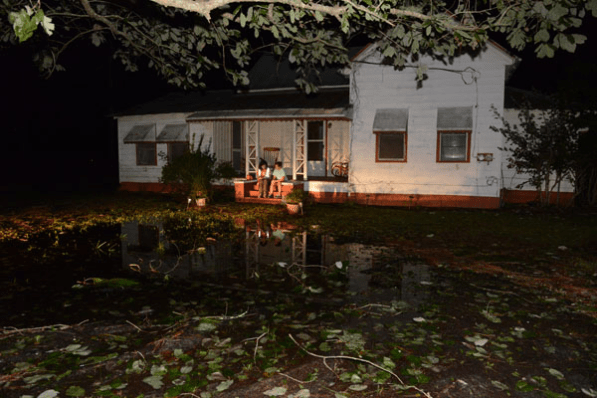


 American Red Cross Minnesota and Dakotas Region