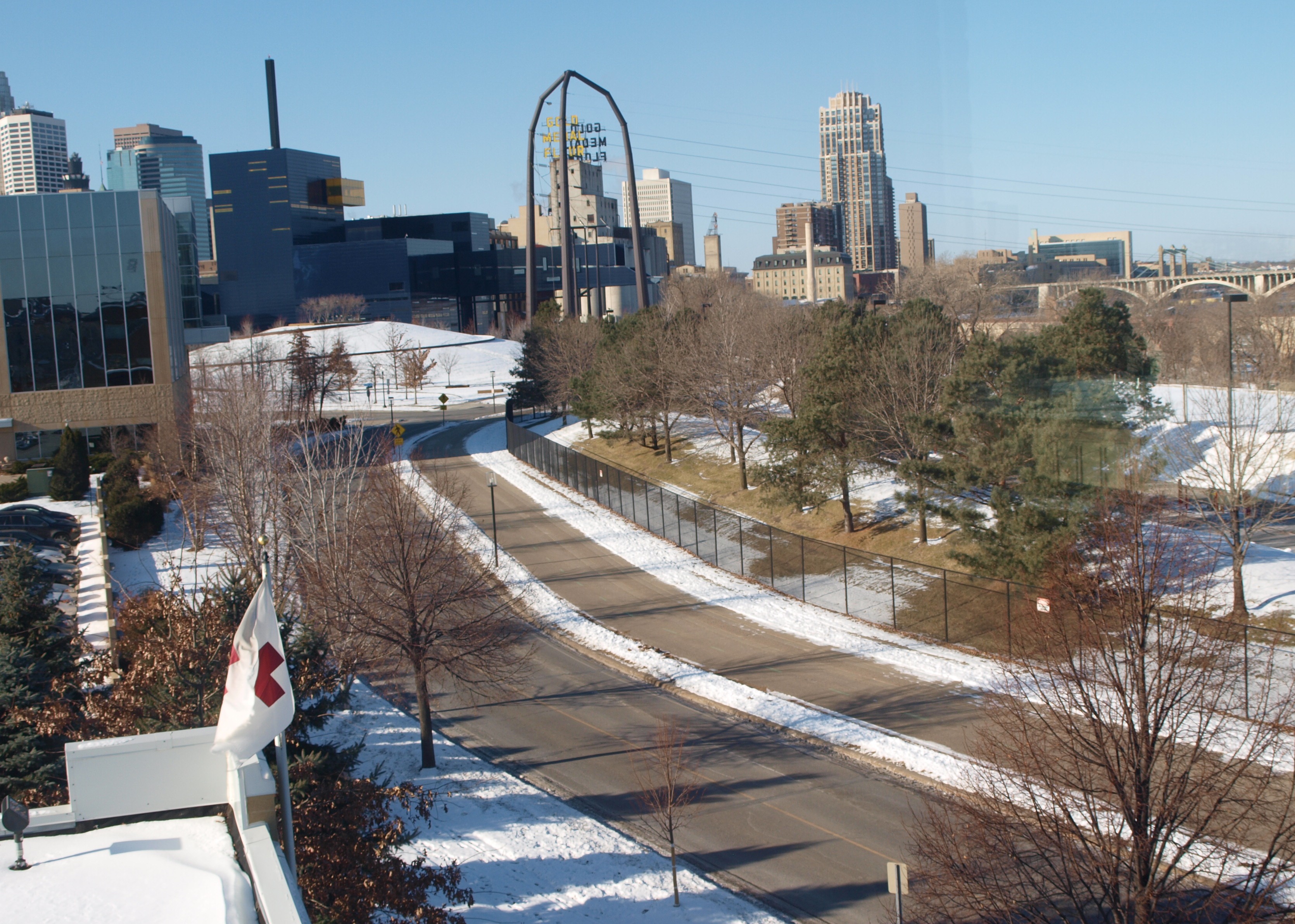
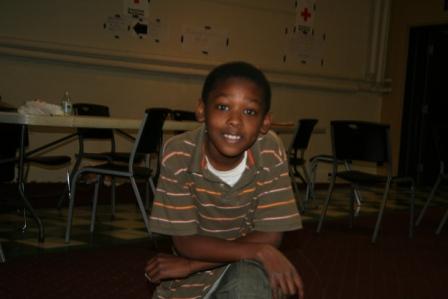
Bashir relaxing on a chaise in the room with a view:
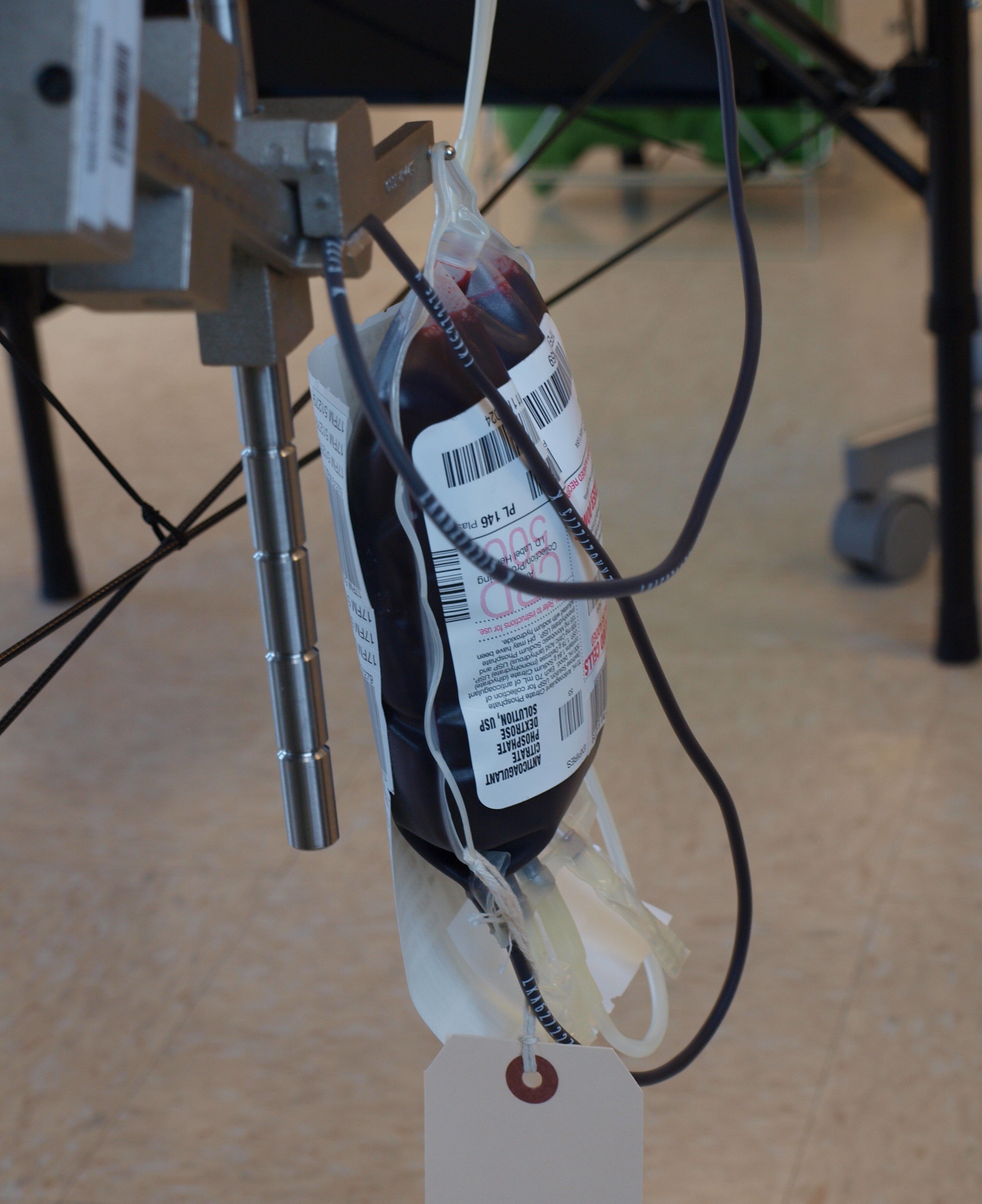
A life-giving gift from Bashir in the room with a view:
Thank you, Bashir, for donating to one human from another in the room with a view:Click here to schedule a blood donation appointment in the room with a view.
Denny Smith before before the cancer. Photo courtesy of the Denny Smith family.
It is with a great sadness that that we say goodbye to Red Cross disaster action team member and dispatch volunteer Denny Smith, who passed away in late September. For the past 14 months Denny had been fighting a courageous battle with brain cancer, a fight that he did not give up easily.
After his retirement from law enforcement, Denny started volunteering on the Red Cross Emergency Medical Services Team with his wife, Karen, and in 2009, became one of our most active disaster responders. With his cheerful spirit, wonderful sense of humor, and passion to serve, Denny promptly became a valuable teammate and friend to many of us.
Denny remained active during the early stages of his brain cancer, often sending email updates, and attending meetings to stay connected with the group.
Denny is dearly missed and our hearts go out to his grieving loved ones.
Girl Scouts Lydia, Kyla and Aisha, along with Red Cross CEO Phil Hansen, present the new "Fun Binz" that will help children affected by disaster. Photo credit: Ruth Talford/American Red Cross
Girl Scout Troop 50816 in Woodbury, Minnesota, worked all summer on a community project to help children affected by disasters. The outstanding result is the creation of “Fun Binz” that are filled with toys, games and activities that can be transported to a Red Cross emergency disaster shelter or used by Red Cross outreach when serving children.
The Girl Scouts presented the Fun Binz to the American Red Cross Twin Cities Area Chapter in mid-August. They toured the Red Cross offices and also had the opportunity to meet Northern Minnesota Region CEO Phil Hansen, Readiness Coordinator Ruth Talford, and Red Cross Volunteer Deb Nagurski, a long-standing disaster mental health relief worker who helped with this project. Many thanks to everyone!
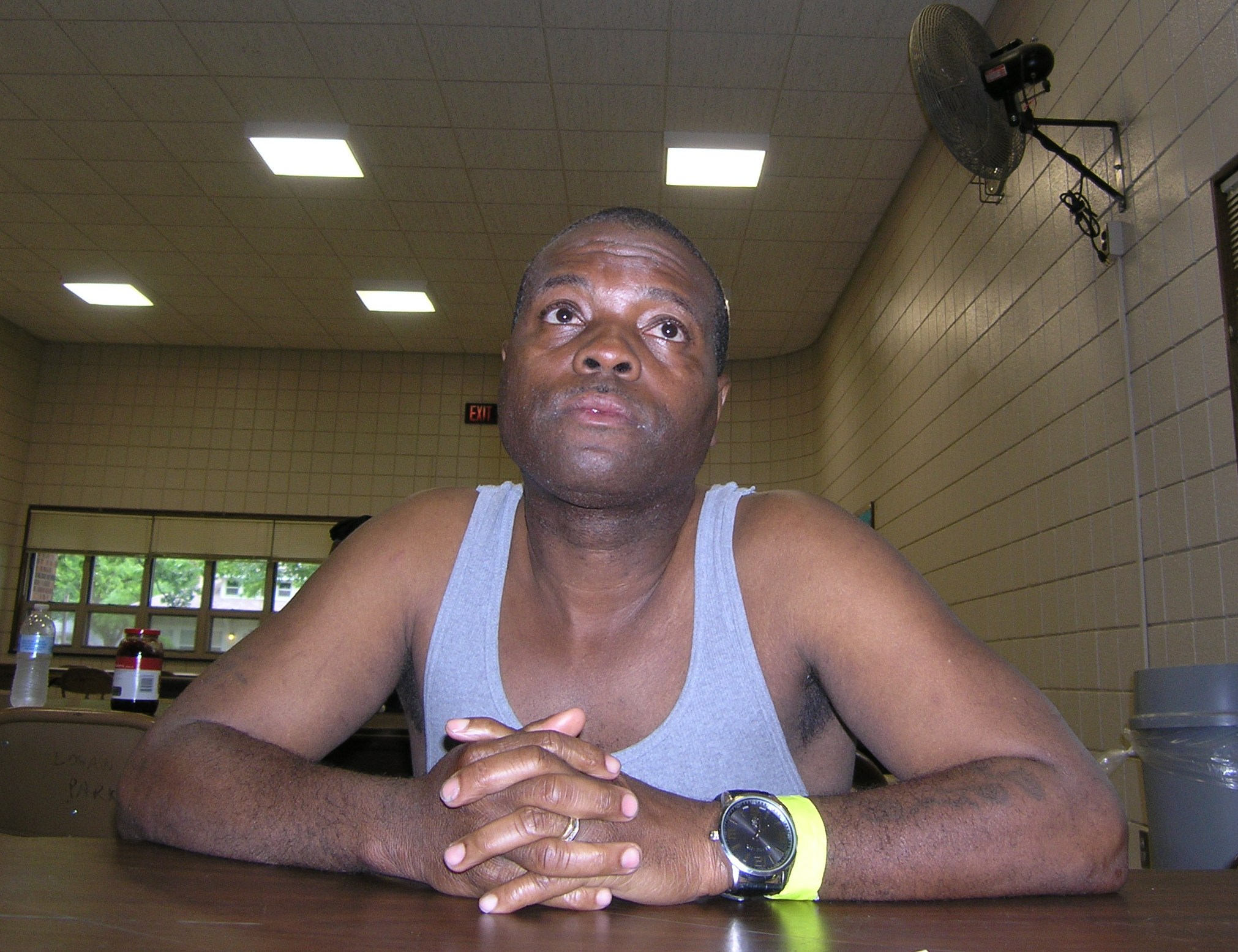
Dennis Parker is holding onto optimism that his family will soon have a new place to call home and move out of the Red Cross shelter in north Minneapolis for families displaced by the May 22 tornado. Photo credit: Bill Fitler/American Red Cross
“I’ll never forget that day,” says Dennis Parker Sr. while sitting down for breakfast at the Red Cross shelter at North Commons Recreations Center nearly 3 weeks after the tornado ripped through north Minneapolis.
“It started raining, it got real windy. I didn’t hear the siren until it was all over,” recalls Parker. “When the tornado came, it sounded like a bunch of trains. Bang! Bang! Bang! The tornado ripped the trees right out of the ground. It laid down five of them on our house, and we had a tree limb in our attic. Our basement flooded. It didn’t touch the neighbors on either side of us.”
Parker’s speech is animated as he describes how he, his wife, and four children sought refuge in their house during the storm, but his voice loses some intensity as he shares details about his family’s experiences looking for a new place to call home.
“My wife is in the computer room looking for other places for us to live. We’ll go visit anything she finds, and then we may go to the library. Yesterday we checked out a couple of apartments, but landlords don’t want to rent to us because we’re low income.”
Cots placed in a circle help families create personal spaces in the Red Cross shelter sleeping area at North Commons Recreation Center in Minneapolis. Photo credit: Amanda Mark/American Red Cross
For Parker, shelter life is something he has come to accept. The shelter’s sleeping area is in the North Commons gym. While not very private, each family has tucked their cots closely together, leaving any extra space they can manage between the different family groups. Families with small children have arranged a little play area in the middle of the cots for them.
“The Red Cross has been doing the best they can,” says Parker. “These people we call family, we’re all in the sandbox together. I kind of like being here. We really haven’t had any problems.”
During a graduation party held in the park behind North Commons a few days ago, and how the party organizers donated the rest of their food to those living in the shelter. He helped by cooking at the center’s outdoor grill.
That night, Parker met with a local group that’s helping people find new places to live after the storm. Parker says he’s holding onto optimism for him and his family.
“They were very uplifting, very reassuring,” he says. “They say ‘soon.’ Maybe we’ll find out today.”
(Reporting by Bill Fitler, Red Cross disaster relief volunteer)
Sharing her story: Silena Vega, a Red Cross disaster relief worker, turned to the Red Cross when a tornado hit home in Minneapolis while she was down river helping flood victims in Mississippi. Photo credit: Bill Fitler/American Red Cross
Silena Vega became a Red Cross disaster relief worker because of her mother.
“The last disaster my mother worked on was the Minneapolis bridge collapse,” says Vega. “When she finished she came home and told me to go sign up and volunteer for the Red Cross.”
Vega did exactly that and has not stopped since. Recently, disaster response became even more personal when tornado struck her home in Minneapolis on May 22. At the time, Vega was hundreds of miles away helping flood victims in the South.
“I tell people I was ‘chasing the river.’ First I deployed for the floods in Fargo, and then I moved down to Mississippi,” Vega explains. “And then I heard about the tornado back home.”
The news was filled with the Minneapolis event. Right away, Vega got a call.
“My fiance phoned to let me know that his father—my future father-in-law—could not be reached at his home in north Minneapolis, one of the hardest hit areas,” says Vega.
North Minneapolis was the hardest hit during the May 22 tornado, forcing hundreds of families to flee their homes and seek shelter with friends, family, or the Red Cross. Photo credit: Bill Fitler/American Red Cross
Suddenly Vega was caught in what every family separated during disaster experiences: are the people we love okay? While the storm may have torn up the street and houses in our neighborhood, we can be physically safe and still torn up inside from the uncertainty of wondering whether we would see our loved ones again. During the next 24 hours, Vega was in a state of turmoil while waiting to learn more.
“I went back to work,” says Vega, “But just imagine what it was like. I felt like I was working in a fog. A friend said I sounded scared and on the verge of crying. So, I phoned my local chapter to see if they could help me find my family.”
The Red Cross has provided comfort and hope around the world to families separated because of natural disaster or human conflict. (Photo credit: Anne Florenzano/American Red Cross)
The American Red Cross has been facilitating communication between family members separated by disaster since World War II. Today, people can use the “Safe and Well” website to let their families know that they’re okay.
Knowing her future father-in-law might not have internet access, Vega decided to reach out to the Red Cross. Within a short period of time, she received an update. Her future father-in-law was fine and checked in at the Red Cross tornado shelter in Minneapolis.
“He was out of touch for so long because downed trees made it very difficult to get around, because he had no cell phone, and because his cordless phone stopped working when the power failed,” Vega explains.
The news, she says, was a huge relief and comfort, especially while being far away from home. “With help from the Red Cross I got the information I needed.”
(Reporting by Bill Fitler, Red Cross disaster relief worker)
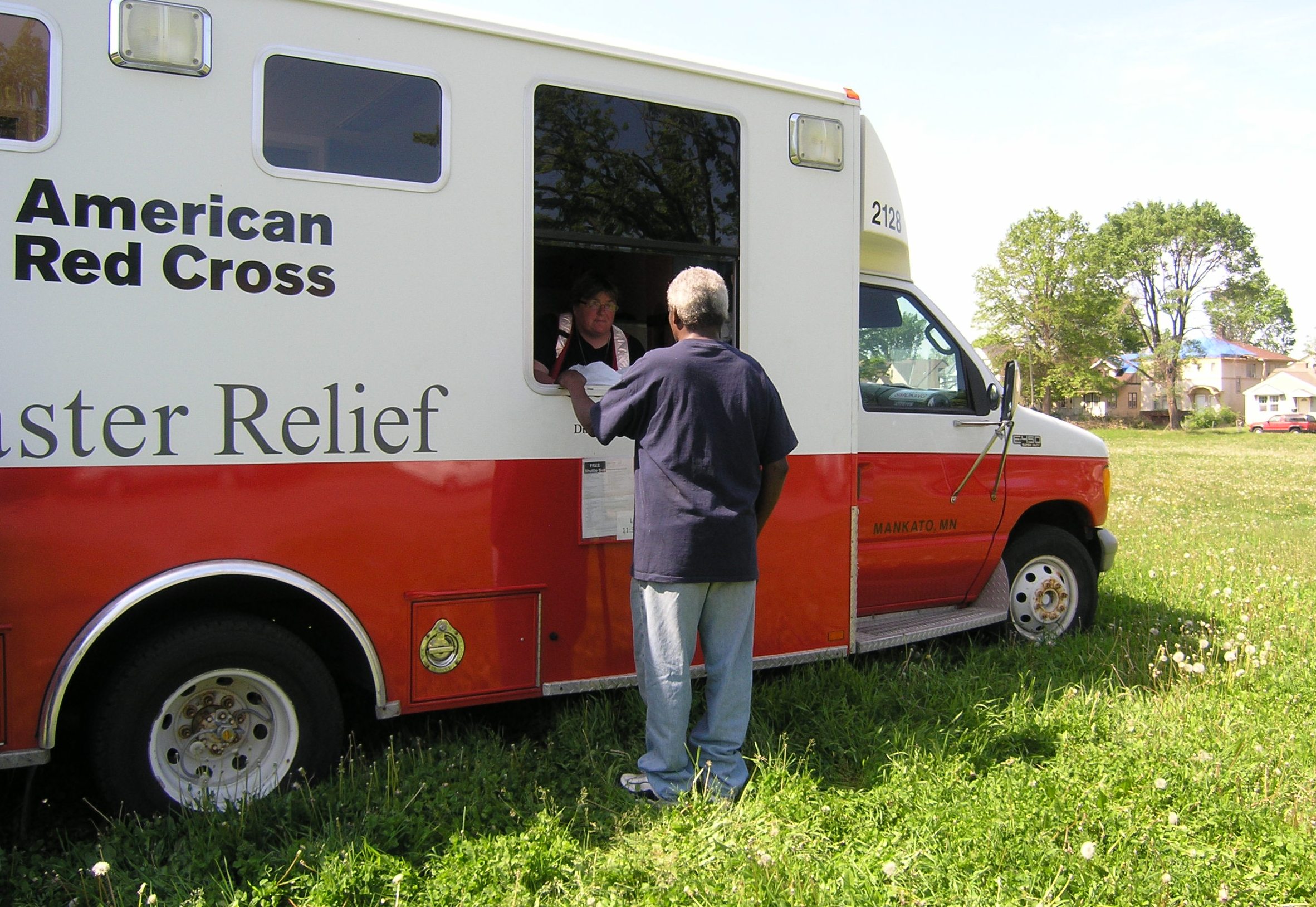
North Minneapolis resident Julian Branker stopped by a Red Cross aid station where people affected by the May 22 tornado can receive food, water, and other Red Cross emergency services. Photo credit: Anne Florenzano/American Red Cross
More than a week following the May 22 tornado disaster that struck north Minneapolis, the sun was shining and the wind was blowing while city workers and other helpers were in the neighborhood busy removing tree debris in the most affected areas.
Julian Branker, a local resident who prefers to be called JB, stopped at a recently opened Red Cross emergency aid station located at Willard Park. He says that during the storm a tree fell on his house and a nearby fence.
“I was standing outside watching the tornado come thinking that if it’s my time to go then it’s my time, but I think I still have another thirty years left,” said Branker.
Branker picked up lunch for him and his wife at the Red Cross aid station, which is one of two that the Red Cross is operating in conjunction with the City of Minneapolis disaster recovery shuttle buses in the neighborhood. The second station is at Jordan Park.
The Red Cross aid stations are also providing medical and mental health services; and referral services for information about disaster recovery for affected families.
The fallen tree has been removed from Branker’s home. He says that his family is doing well and that he’s thankful for the Red Cross help.
(Reporting by Red Cross disaster responders Anne Florenzano and Nicole Baier)
By Adam Wolfe, American Red Cross Twin Cities Area Chapter, Community Presentations Coordinator
So far my experience with the Red Cross has been amazing. More than one month ago, I joined the American Red Cross Twin Cities Area Chapter as the Community Presentations Coordinator. I will be here for a total of ten months through the AmeriCorps “Public Allies” program. The work I’m doing here has its challenges, but I am enjoying it and feel as if I’m making a positive impact on the community.
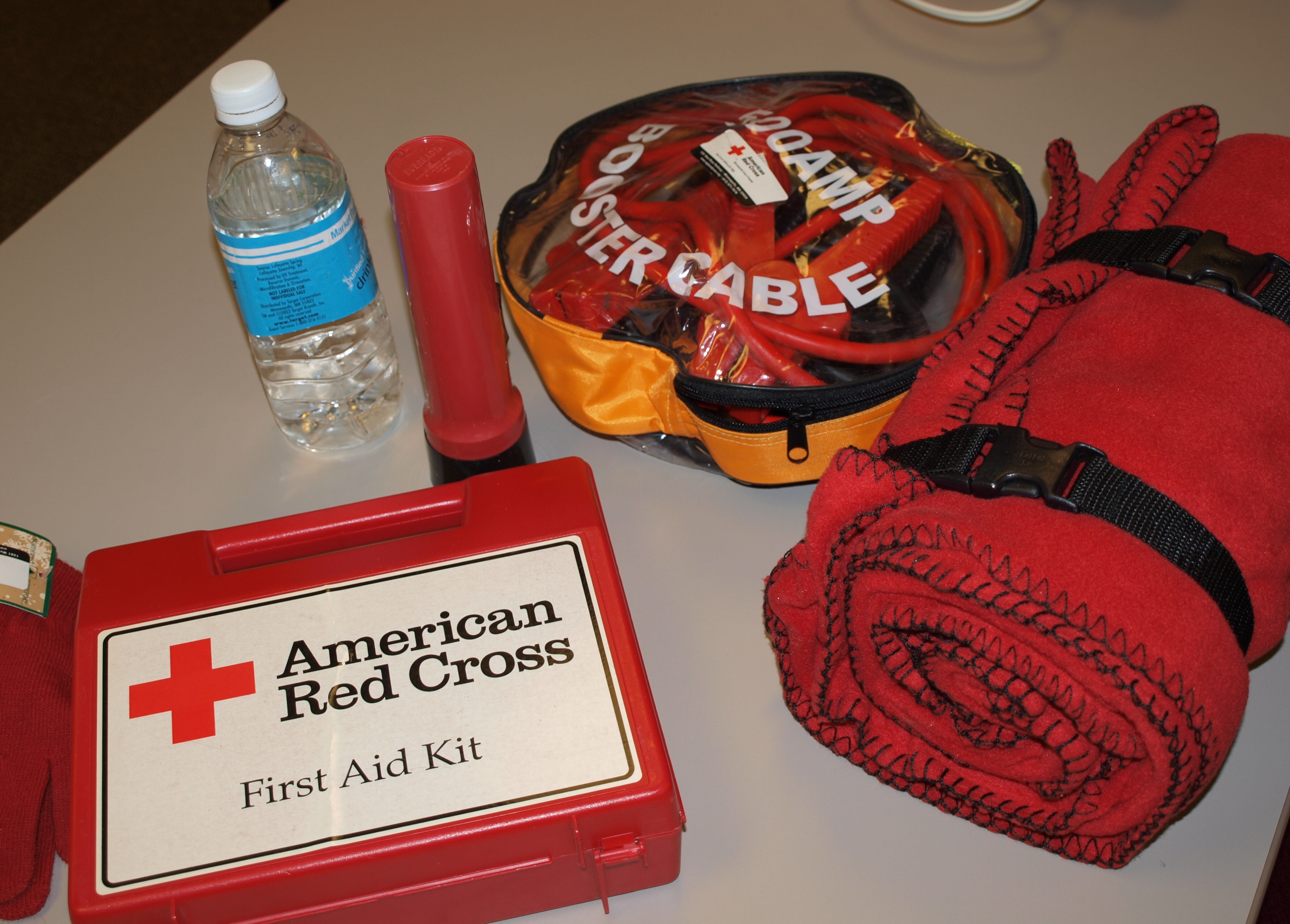
Winter weather safety presentation tools. Photo credit: Grace Thompson, American Red Cross
My job consists of giving various health and safety presentations in the Minneapolis and St. Paul metro area. I addition, I manage a group of around 25 volunteer presenters and also promote our programs to local community organizations. We present on a wide range of topics, such as fire safety, basic first aid, winter weather safety, heart disease, and flu pandemic preparedness. After observing a few presentations and getting a feel for how things were done, I was able to become a presenter myself. I taught high school math for a year, so speaking in front of groups was nothing new for me, but talking to adults is slightly different than talking to pubescent teenagers. I got the hang of it without too much trouble though and the presentations have gone well.
Adam practicing his community presentation techniques. Photo credit: Grace Thomopson, American Red Cross
One presentation that stands out in my mind was a winter weather safety talk I gave at the Lao Center in St. Paul. It was to a diverse group of adult English language students, many of whom were recent immigrants to the United States. Their teacher called me because many of the students were still wearing sandals even though the temperature had dropped into the teens! It was a challenging group to talk to. The group was from all over the world and spoke many different languages. Because their English was not so good, I created a new slide presentation with simple terms and many pictures. I enjoyed the challenge of communicating effectively with this group, and also saw that this was the type of group that could benefit the most from important Red Cross disaster and safety information. While I’m sure some of the tips were not completely understood, I generally felt that the class learned a lot and appreciated this outreach.
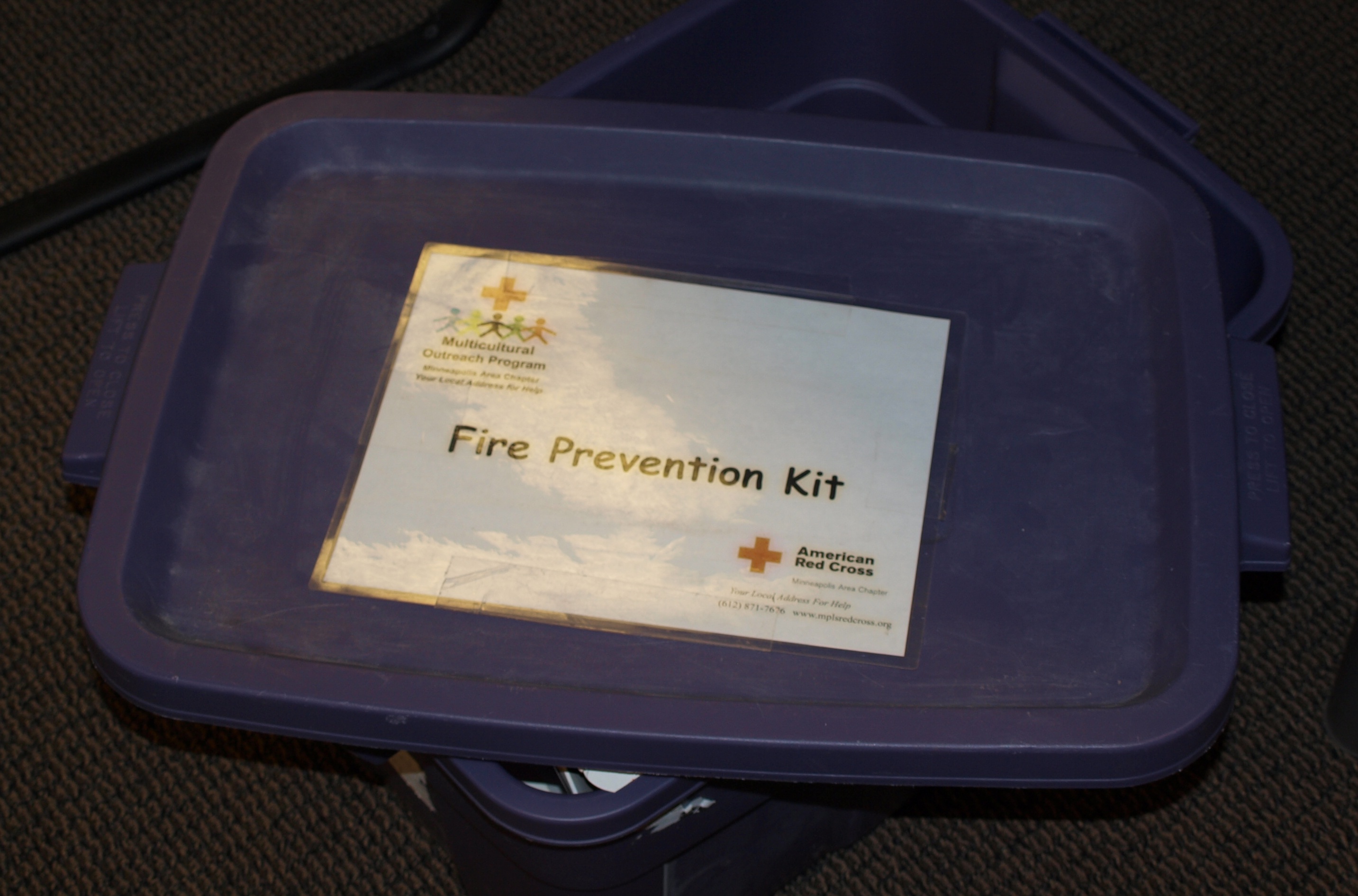
Fire Prevention Presentation Kit. Photo credit: Grace Thompson, American Red Cross
By far, the biggest challenge I’ve faced has been letting people know that the Red Cross provides these presentations. This has been very surprising to me. We provide information on relevant, important topics, and we have flexible hours that work around almost any schedule. In addition to all of this, the presentations are absolutely free! Initially, I thought we would have problems with overbooking and trying to fit everyone into our schedule, but unfortunately this has not been the case. Despite countless phone calls and emails to community organizations, the presentations schedule has been slow to fill up. This is an issue I will continue to struggle with and will hope that begins to change soon.
Now that I’m familiar with the work here and I’m beginning to get to know the rest of the Red Cross staff, I feel very optimistic about the coming months. My Red Cross coworkers and supervisors have been helpful and have made me feel at home. I’m confident the outreach I’m doing will begin to show results. I hope to have the much more desirable problem of having too many presentations to schedule, and not enough time to do them! The next nine months will be exciting.
If you or anyone you know is interested in scheduling a presentation in the Twin Cities metro area, please call (612) 871-7676 and ask for Adam Wolfe or email awolfe@redcrosstc.org.
By Mark Smith, Disaster Public Affairs Volunteer, American Red Cross Twin Cities Area Chapter, October 21, 2010
Mozell, 8, and Zyiomna, 2
The Blaisdell Avenue fire in Minneapolis displaced more than 90 people, forcing several dozen to stay overnight in a Red Cross shelter.
Two of them were Mozell, 8, and his sister Zyiomna, 2.
Mozell started his day out by keeping an eye on his little sister, letting mom get a little extra sleep after a long night.
Zyiomna
Being the watchful brother, he helped his sister get a plate of food for breakfast and sat with her as she ate her breakfast.
After I took his picture, Mozell asked to use the camera and, with my help, he was able to take pictures of his sister.
Of course little sister, seeing what big brother was doing, wanted to review the picture and was excited to see herself and her brother on the camera.
Mozell
Zyiomna insisted in taking his picture as he had taken hers.
With a little help, she was able to snap the shot of her brother and push the buttons to take a look at her efforts.
The Red Cross shelter was a safe and warm place for families to stay.
The Red Cross will continue providing immediate recovery assistance, such as shelter, food, clothing, and emotional support, to the families affected by this disaster.
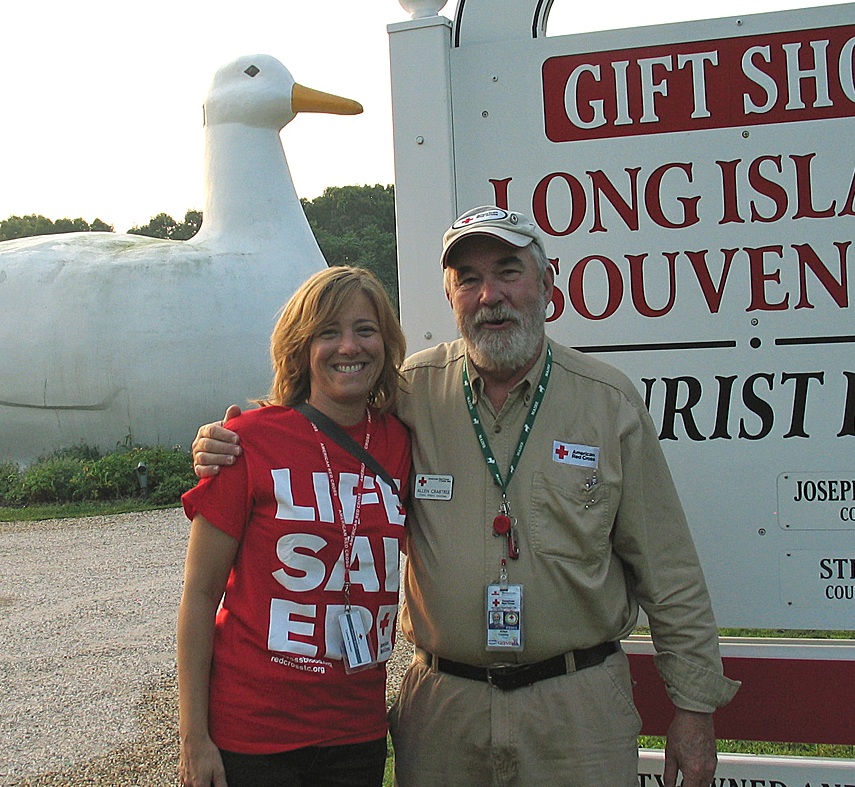
Red Cross disaster response means making new friends: here are Lynette from Minnesota and Allen from Maine meeting up on Long Island in response to Hurricane Earl. Photo credit: Craig Cooper/American Red Cross


 Click here to schedule a blood donation appointment in the room with a view.







 American Red Cross Minnesota and Dakotas Region